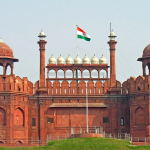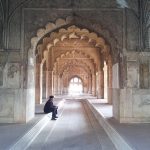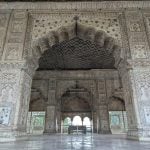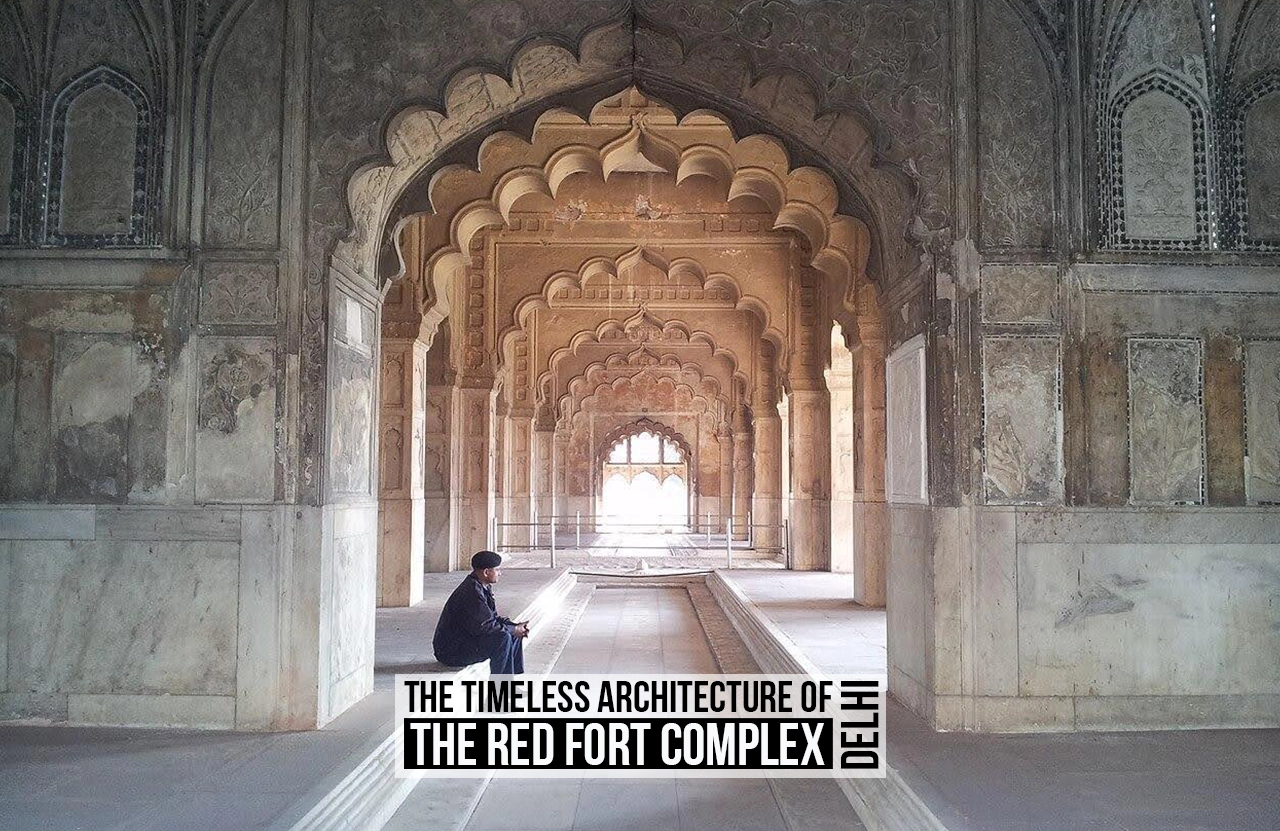
The Red Fort Complex in Delhi, also known as Lal Qila and Qila-e-Mubarak, is a masterpiece of Mughal Architecture, unmatched in its historical and architectural wonders. Commissioned by Emperor Shah Jahan and built in the historic capital of Shahjahanabad, it symbolises the Mughal Empire in its golden era. Despite wars and conflicts, the Red Fort exists in its timeless glory to this day. It attracts historians, archaeologists, and tourists from all over the world. It was classified as a UNESCO World Heritage Site in 2007.
Emperor Shah Jahan, whose title literally translates to Emperor of the World, left no stone unturned to ensure that his palace would be a paradise on earth. To achieve this vision, he employed the best artisans and was influenced by notable architectural typologies. Thus, the Red Fort became an awe-inspiring blend of Persian and Timurid Architecture. On the interior wall of the Diwan-e-Khas, a famous Persian couplet is inscribed, “Agar fardos ba rue Zamin ast, Hamin ast a hamin ast a hamin ast.” This couplet translates as follows: If paradise be on the face of the earth, it is this, it is this, it is this.
Strategic Location of Red Fort
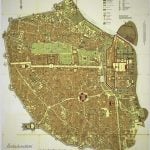
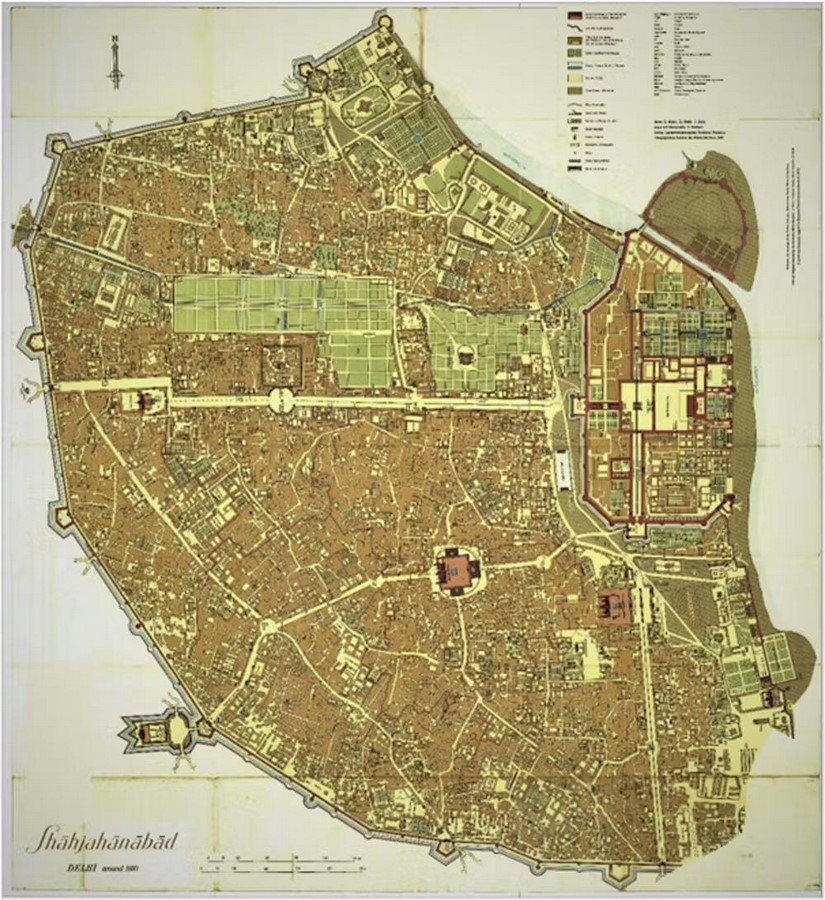
The Red Fort’s location establishes it as the most significant building in Shahjahanabad. Emperor Shah Jahan shifted the capital of the Mughal Empire from Agra to Shahjahanabad in 1638. Renowned architects of that time, Ustad Ahmed Lahouri and Ustad Hamid, were the key figures in planning Shah Jahan’s capital. This walled city was laid out on the bank of the Yamuna River, naturally protected by the river on one side and the Delhi Ridge on the other (Ehlers and Krafft, 1993). The plan of Shahjahanabad follows both Hindu and Islamic architectural influences. Its design is based on the Karmuka from Manasara, an ancient Hindu treatise on architecture – a semi-elliptical or bow-shaped plan for a river bank or seashore site. The juncture of the two main streets in Shahjahanabad formed the prime spot of the entire plan, where the Red Fort was situated. As for the Islamic influences, the walled city symbolised the cosmos, and the eight gates symbolised the four cardinal directions and the four gates of heaven (Blake, 2002).
Planning and Layout of the Red Fort Complex
The Red Fort Complex was meticulously planned to reflect the grandeur of Emperor Shah Jahan’s court. A patron of arts and architecture, Shah Jahan desired that his palace would be a paradise on earth, blessed with every luxury and amenity. Thus, the Red Fort’s design blends elements from the prestigious Persian and Timurid Architecture while integrating local building traditions. Its overall plan is an irregular octagon, similar to the Persian imperial citadels. The eight‑sided pillars (hasht‑pahl) and the characteristic multi‑foliated marghulidār arches reflect the designs of Timurid court architecture (Nadeem, 2010).
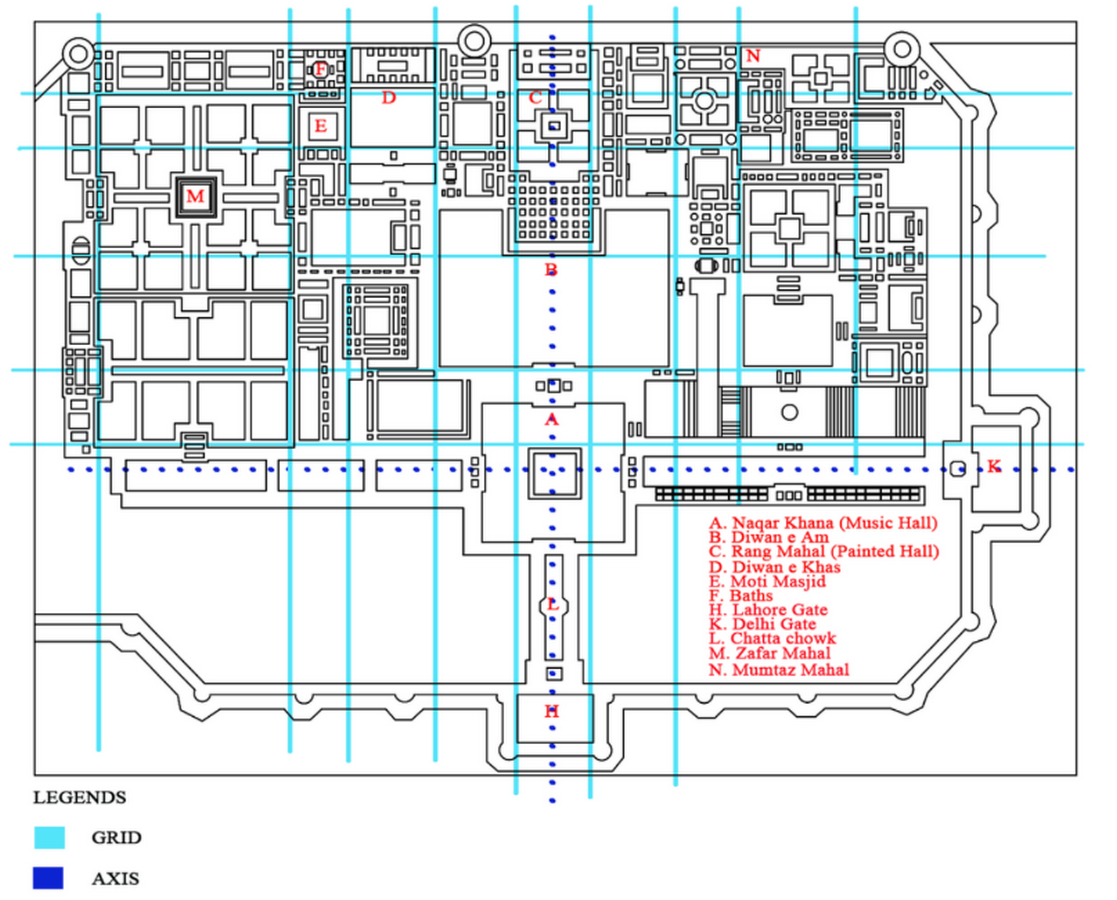
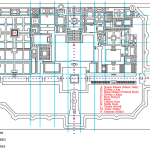
As shown in the image above, the Red Fort Complex comprises the Imperial Enclave (Rang Mahal, Diwan-e-Khaas, Khaas Mahal, and Mumtaz Mahal) situated facing the Yamuna River, and the Public and semi-private zones (Diwan-e-Aam, Hayat Baksh Garden, Chatta Chowk/Bazaar-i-Musaqqaf, Moti Masjid, and Zafar Mahal) situated close to the gates and fortifications. Moti Masjid was later built by Emperor Aurangzeb and is the only mosque within the Red Fort Complex.
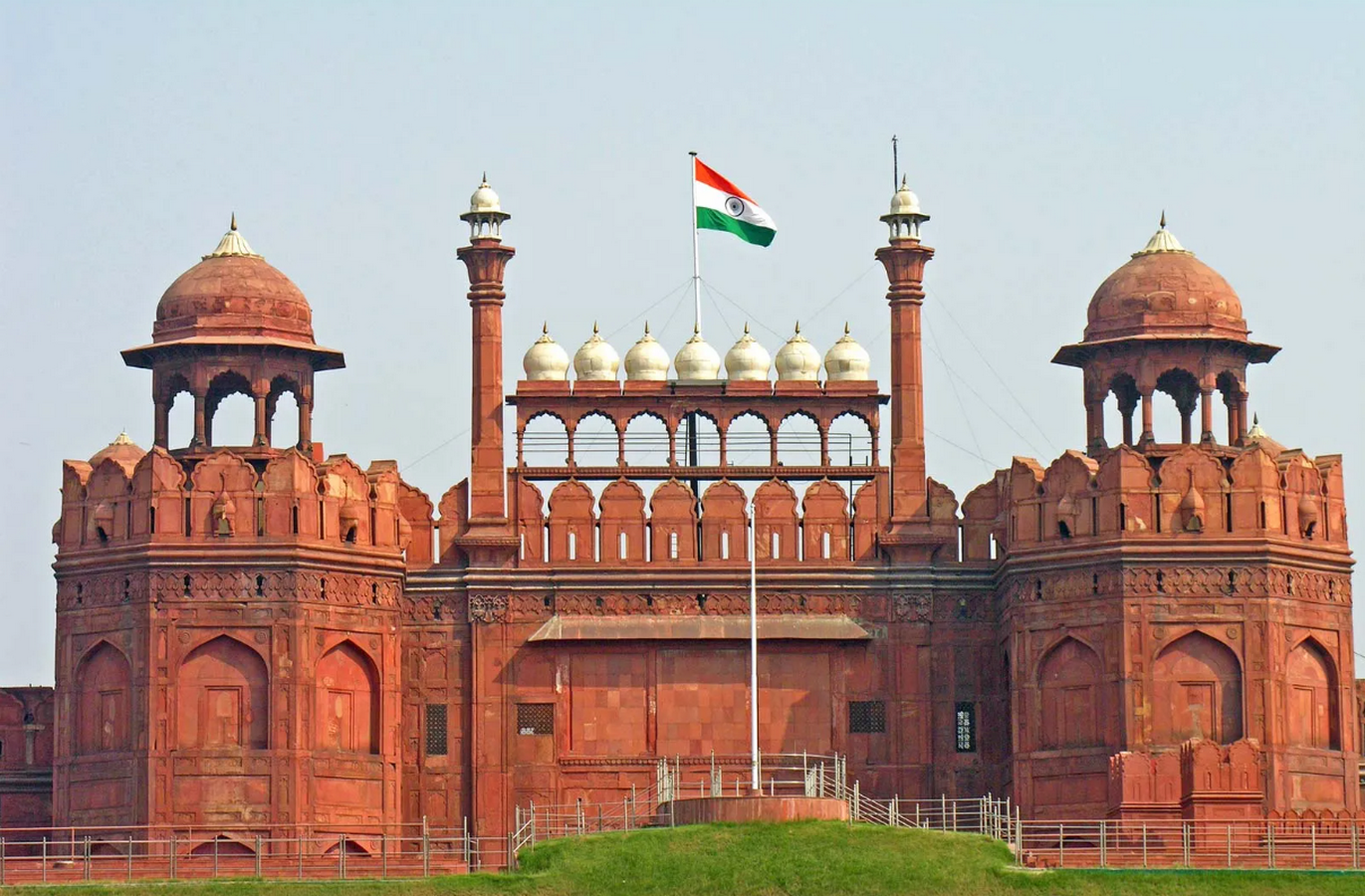
Interestingly, the material choices also reflect a clear comparison between the Imperial Enclave and the public and semi-private zones. The Red Fort Complex is primarily built out of red sandstone obtained from the quarries of Fatehpur. These areas include fortifications, the Naubat Khana, Diwan-e-Aam, Zafar Mahal, Chatta Chowk and the famous Lahore and Delhi Gates. Only the Imperial Enclave facing the Yamuna River, exclusively used by Emperor Shah Jahan, his family, and select nobles, is constructed out of white marble and white plaster (sang‑i nihāli) sourced from Gujarat and Makrana (Nadeem, 2010).
Connected Social and Cultural Narratives
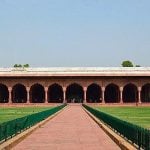
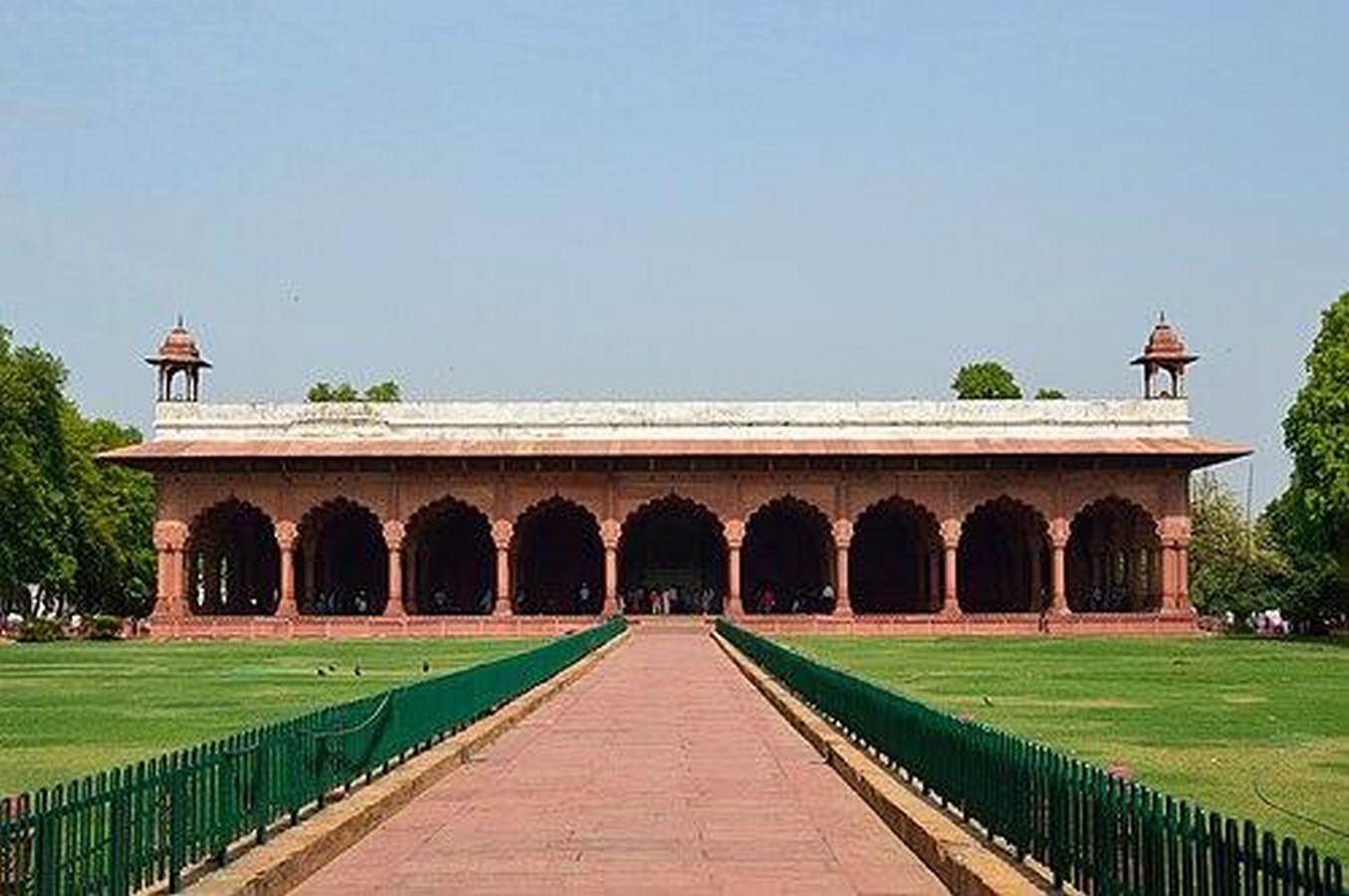
An interesting narrative connected to the Lahore Gate of the Red Fort is that its axis was used to instill the emperor’s power in the hearts of the people. Legends state that as far as the emperor could see, no man would be allowed to approach on horseback or any other transportation. During Shah Jahan’s reign, the Diwan-e-Aam provided him with a clear view of the axis that penetrated from the Diwan to the Lahore Gate and beyond. For an hour, he would sit on his marble-carved throne in the Diwan-e-Aam to grant audience to the public. Therefore, people had to travel to the Red Fort on foot since the Emperor had a clear view of the entire road. Later, the bastion in front of Lahore Gate was built by Emperor Aurangzeb, which obstructed the view from Diwan-e-Aam to Chandni Chowk, thus relieving the obligation to travel towards the palace on foot.
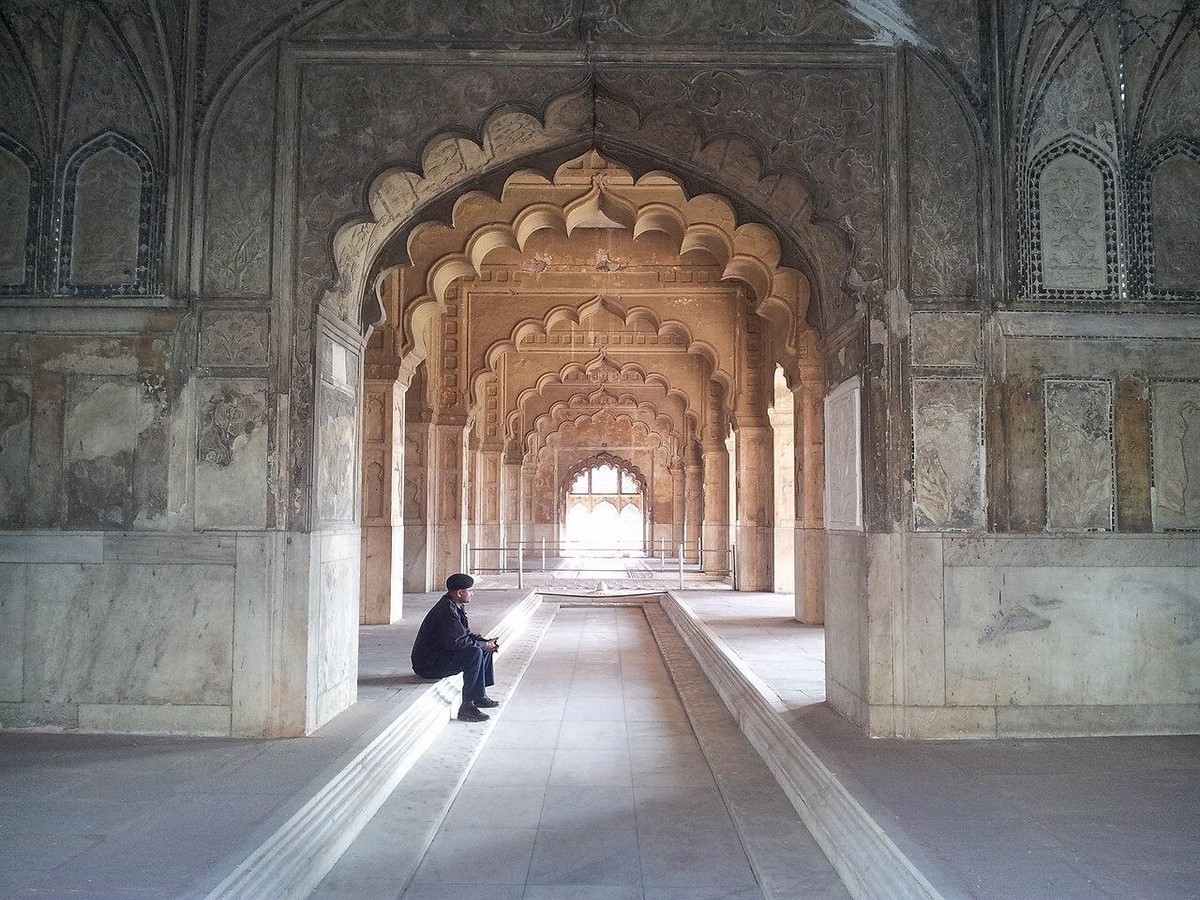
The Nehar-e-Bahisht (Stream of Paradise) was a pure water channel flowing through the Imperial Enclave. This water channel started from the Rang Mahal, passed through the Diwan-e-Khaas, and ended at the Tasbih Khaana of the Khaas Mahal. It was considered a physical embodiment of the Islamic concept of Paradise flowing through the complex. Similarly, the Hayat Baksh gardens around the Zafar Mahal reflect the Persian chārbāgh concept. The design of these heavenly gardens focused on symmetry as well as integrating water channels, cascades and reflective pools into the built environment (Kasera, 2024).
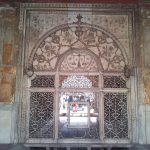
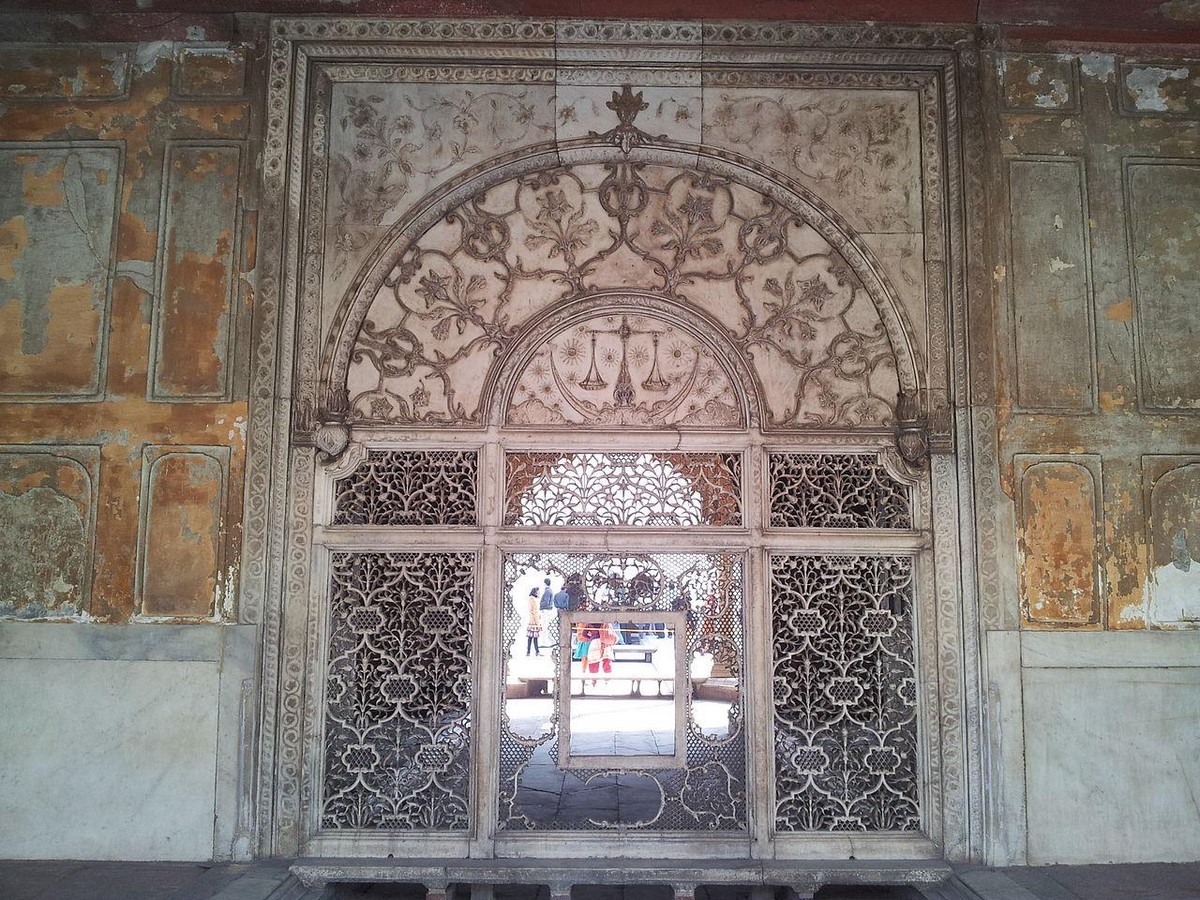
The Khaas Mahal was Emperor Shah Jahan’s private palace within the fort. It was divided into three zones: Tasbih Khana – a platform covered by red shamianas where the emperor observed the Yamuna River, Tosha Khana – the royal dining hall, and Khwabgah – the emperor’s private chamber. The emperor performed the daily ritual of Jharoka Dharshan and appeared before his subjects from the projecting octagonal balcony of Khaas Mahal. The Khaas Mahal also features the Mizan-e-Adl (the Scale of Justice) in the central chamber. A white marble screen with intricate latticework covers the opening underneath the scale. The inner surface of this marble niche is adorned with ainakari, which reflects light directly onto the bronze cast scale. White marble cornices top the surrounding arches, creating a glamorous pedestal for the Mughal Emperor. The use of these materials and architectural practices symbolise Shah Jahan as a just ruler who balances the scales of justice (Nadeem, 2010).
Architectural Influences
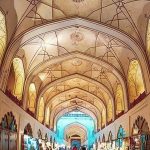
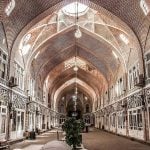
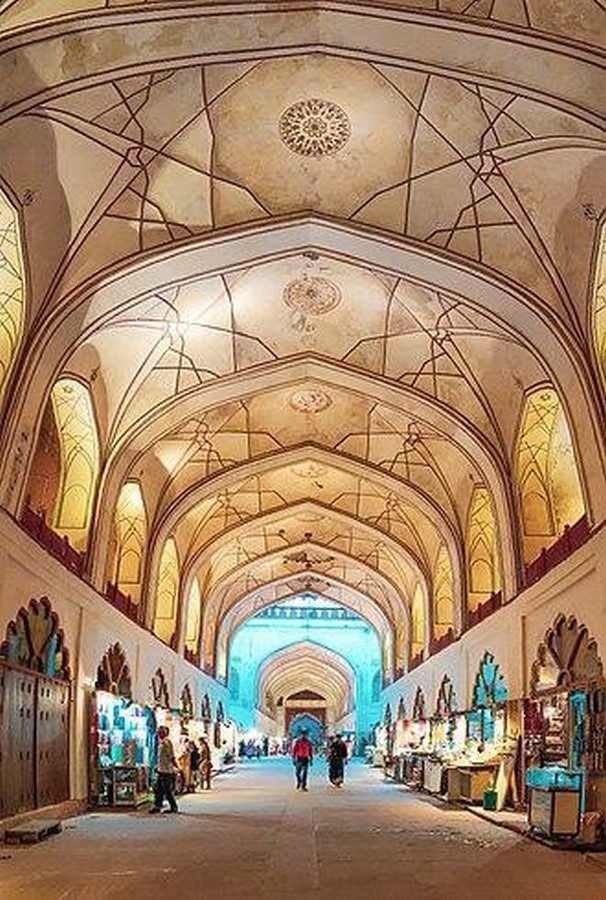
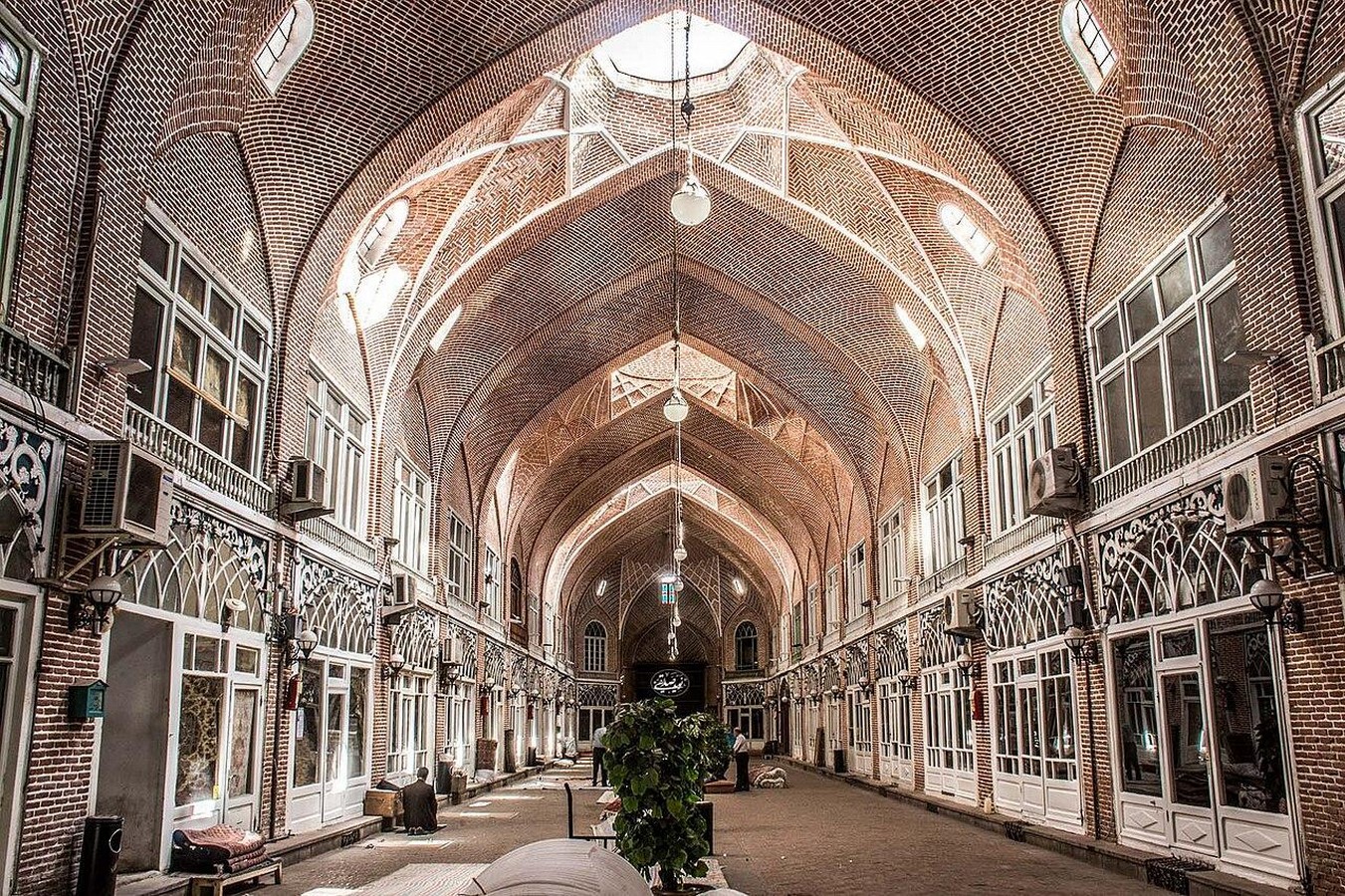
The Lahore Gate has distinct Persian influences. Inspired by the covered bazaars of Persia, Shah Jahan incorporated a covered bazaar known as the Bazaar-i-Musaqqaf past the Lahore Gate entrance. The design is similar to the bazaars of Tabriz and suits the hot climate of Delhi. Earlier, the markets in Delhi were usually open-air, so the Bazaar-i-Musaqqaf was an architectural innovation at the time. The interior and exterior of this market were stuccoed, painted, and gilded, and the roof featured ladau inlay work (Kasera, 2024). Presently, this market is known as Chatta Chowk Bazaar or Meena Bazaar. The images below show the similarities in the design of Chatta Chowk and the Mozafferiyeh Corridor in the Grand Bazaar of Tabriz, Iran.
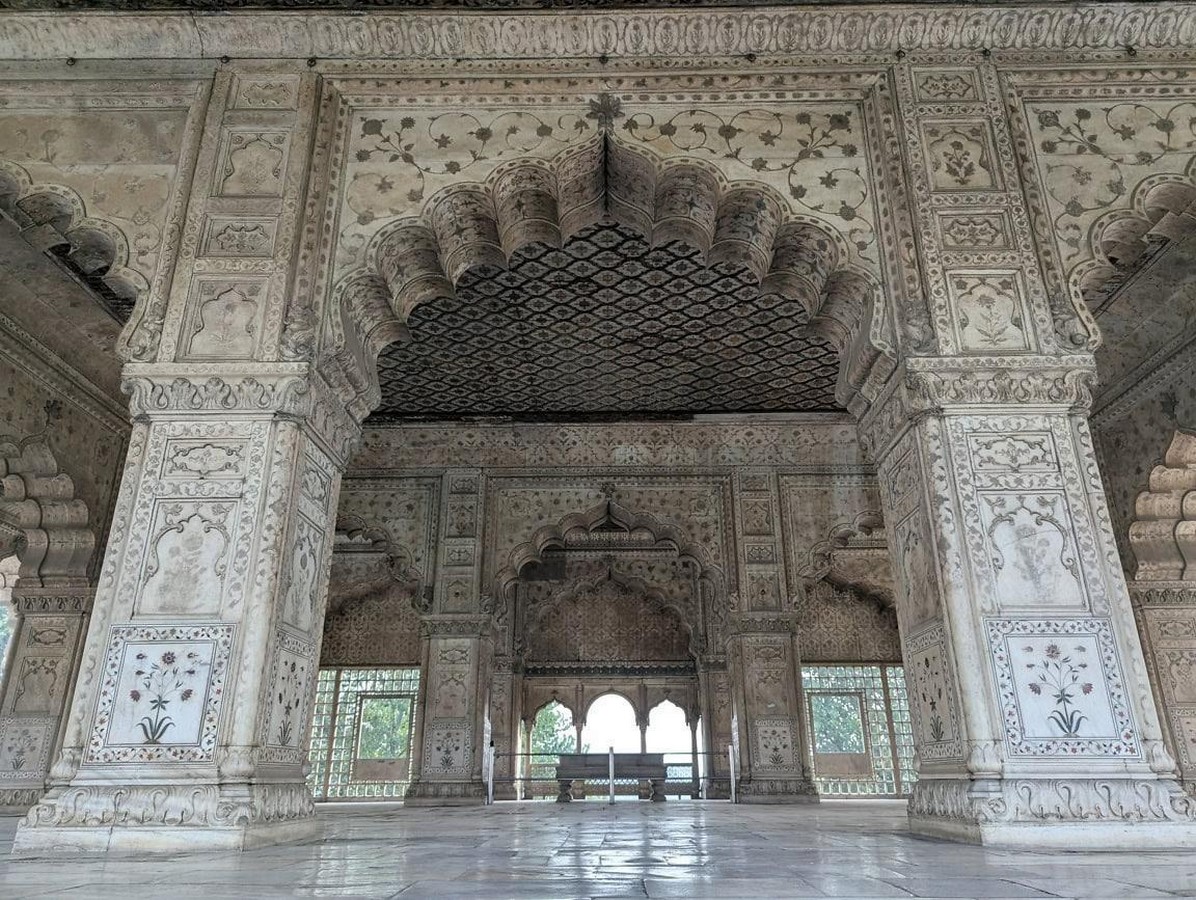
The interiors of the Imperial Enclave were heavily influenced by the Safavid architecture. Extensive mirrorwork (ainakari), pietra dura inlay of semi-precious stones, and stone-cut motifs throughout Rang Mahal, Khaas Mahal, and Diwan-e-Khaas reflected light, making the walls and fountains sparkle like celestial mirrors. The Diwan-e-Khaas was a collonaded hall with five trefoil arches. It was reserved for the emperor, his favourite nobles, and guests from contemporary empires. The central chamber of Diwan-e-Khaas also housed the beautiful Peacock Throne, which was stolen later during Nadir Shah’s invasion of Delhi.
The Red Fort Complex is no doubt a timeless masterpiece in the subcontinent. Every design choice in this complex reinforces Shah Jahan’s vision for the Red Fort to be a man-made heaven. The fusion of traditional and contemporary influences also represents the cosmopolitan nature of the Mughal Empire under Shah Jahan. In Badshahnama, Muhammad Waris describes the Red Fort as “a celestial fortress” that “glitters like the sun” and has “heavenly gardens” in every corner (Nadeem, 2010). To this day, the Red Fort is a symbol of Mughal grandeur and architectural prowess.
References:
Blake, S.P. (2002). Shahjahanabad: the sovereign city in Mughal India, 1639-1739. Cambridge, England; New York: Cambridge University Press.
DHNS (2011). Chatta Chowk: A market for all reasons. [online] Deccan Herald. Available at: https://www.deccanherald.com/content/129444/chatta-chowk-market-all-reasons.html.
Ehlers, E. and Krafft, T. (1993). S̲h̲âhjahânâbâd, Old Delhi. Franz Steiner Verlag Wiesbaden GmbH.
Encyclopedia Britannica. (n.d.). Red Fort | Old Delhi, History, & Facts. [online] Available at: https://www.britannica.com/topic/Red-Fort.
Kasera, Y. (2024). The Architectural Splendor of Red Fort New Delhi: A Complete Guide. [online] Building Material Reporter. Available at: https://www.buildingmaterialreporter.com/influencers/articles/the-architectural-splendor-of-red-fort-new-delhi-a-complete-guide.
Mishra, S., Kuffer, M., Koeva, M., Pfeffer, K. and D’Agostino, G. (2023). Cultural heritage and historic preservation: creating a digital twin of Shahjahanabad. [online] doi:https://doi.org/10.64628/aak.7hde3hag9.
Nadeem, A. (2010). ‘THE MIGHTY DEFENSIVE FORT’: RED FORT AT DELHI UNDER SHAHJAHAN – ITS PLAN AND STRUCTURES AS DESCRIBED BY MUHAMMAD WARIS. Proceedings of the Indian History Congress, [online] 71, pp.1108–1121. doi:https://doi.org/10.2307/44147579.
UNESCO World Heritage Centre (2017). Red Fort Complex. [online] Unesco.org. Available at: https://whc.unesco.org/en/list/231/.