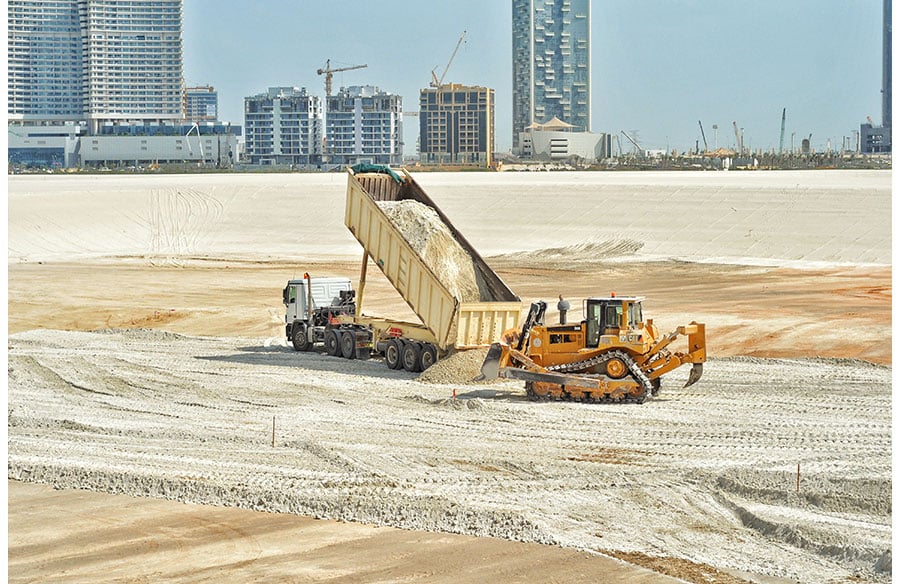
Urban infrastructure is often evaluated through what is visible – skyline, facades, and spatial planning. Yet, beneath every structure lies a foundational layer that rarely enters architectural discourse: ground materials.
Sand, gravel, and aggregates are typically treated as commodities – interchangeable and abundant. But in reality, they form the structural, functional, and environmental backbone of modern construction. From load distribution to drainage systems, these materials quietly determine how cities perform over time.
To rethink the future of urban development, we must start by rethinking what lies beneath it.
The Material Dependency We Overlook
Modern construction is deeply dependent on aggregates. Concrete alone – arguably the most used construction material globally – is composed primarily of sand and gravel. Roads, foundations, drainage systems, and landscape structures all rely on these materials at scale.
Yet, this dependency is often underestimated at the planning stage.
The issue isn’t just availability – it’s material suitability. Variations in grain size, composition, and compaction properties can significantly impact structural stability and long-term durability. Poor-quality aggregates can lead to settlement issues, inefficient drainage, and increased maintenance costs.
In other words, ground materials are not passive inputs – they are performance drivers.
Structural Performance Starts Below Grade
Every structure transfers its load to the ground. The efficiency of this transfer depends heavily on the quality and composition of the underlying materials.
Well-graded aggregates:
- Improve load distribution
- Reduce void spaces
- Enhance compaction stability
This directly affects:
- Foundation integrity
- Pavement lifespan
- Resistance to environmental stress
Conversely, inconsistent or poorly processed materials introduce variability – something engineers and architects strive to eliminate.
What appears as a “material choice” at the procurement stage becomes a risk factor at the structural level.
Drainage, Erosion, and Environmental Interaction
Urban environments face increasing challenges related to water management – flooding, runoff, and soil erosion. Aggregates play a critical role in addressing these issues.
Permeable layers built with the right materials:
- Facilitate controlled water flow
- Reduce hydrostatic pressure
- Minimize surface runoff
In landscape architecture, materials such as decomposed granite and crushed stone are not just aesthetic choices – they are functional systems that support sustainable site design.
This intersection of material science and environmental performance is where aggregates move from commodity to design element.
From Construction Material to Design Consideration
The traditional separation between design and material sourcing is becoming increasingly obsolete.
Architects and planners are now required to think beyond form and function – to include:
- Material lifecycle
- Site adaptability
- Infrastructure resilience
Ground materials influence all three.
For example, selecting the appropriate aggregate for a project can determine:
- How a site handles heavy rainfall
- How surfaces respond to long-term wear
- How infrastructure adapts to changing environmental conditions
This shift reframes aggregates from a backend decision to a frontline design parameter.
The Hidden Risk: Supply Reliability
While much attention is given to design innovation, less focus is placed on supply chain consistency. Yet, material variability and delivery delays can compromise even the most well-designed projects.
Reliable sourcing ensures:
- Consistent material quality
- Timely project execution
- Reduced rework and cost overruns
In large-scale developments, this becomes critical. A disruption in aggregate supply is not just a logistical issue – it’s a project risk with cascading effects.
For teams working on complex site development, access to dependable sources of sand and aggregates – such as those provided by specialized suppliers like Select Sand & Gravel – can play a crucial role in maintaining both quality and continuity across project phases.
Toward Material Intelligence in Urban Development
As cities expand and construction demands increase, the conversation around materials must evolve. The future of infrastructure is not just about smarter designs – it’s about smarter material decisions.
Material intelligence involves:
- Understanding performance characteristics
- Aligning materials with environmental conditions
- Integrating sourcing strategy into design planning
Aggregates sit at the center of this shift.
They may not define the skyline, but they define how long it stands.
Conclusion: Designing from the Ground Up
If architecture is about shaping the future, then it must account for every layer that supports it – especially the ones we don’t see.
Rethinking ground materials is not just a technical exercise. It is a strategic imperative for building infrastructure that is resilient, efficient, and sustainable.
Because in the end, the strength of our cities depends not only on what we build – but on what we build upon.