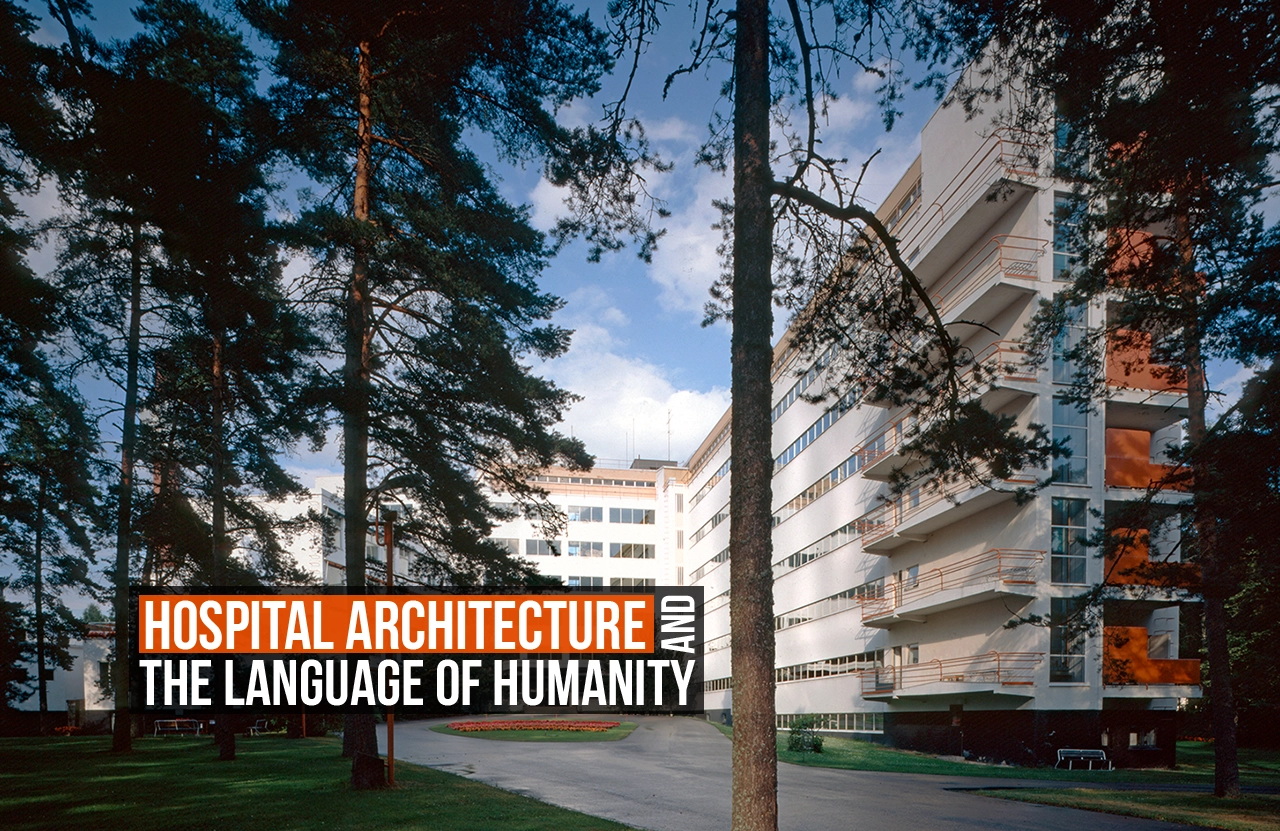
Hospital architecture is one of the most constrained creative fields in architecture – not because architects lack imagination, but because functionality is, quite literally, a matter of life and death. A corridor must be wide enough for two gurneys to pass. A ward must admit natural light without creating glare that hampers diagnosis. A surgical suite must be sealed, sterile, and accessible under crisis conditions. Within these parameters, the building itself becomes almost irrelevant as an expressive medium. But is there anything that fills that missing space?
The Brief Problem
Ask why most hospitals look the way they do and the answer is not aesthetic timidity. It is the accumulated logic of clinical governance, infection control, departmental adjacency, and engineering infrastructure, all compressed into a building form that must serve thousands of people simultaneously under the most acute physical and emotional pressures imaginable. The result is almost universal: deep-plan rectangular blocks, neutral palettes of white and pale grey, double-loaded corridors repeated across identical floors, and a general suppression of anything that might complicate wayfinding or create maintenance burden. This is not bad architecture – it is architecture with an extremely demanding brief.
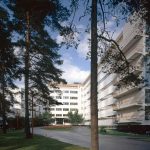
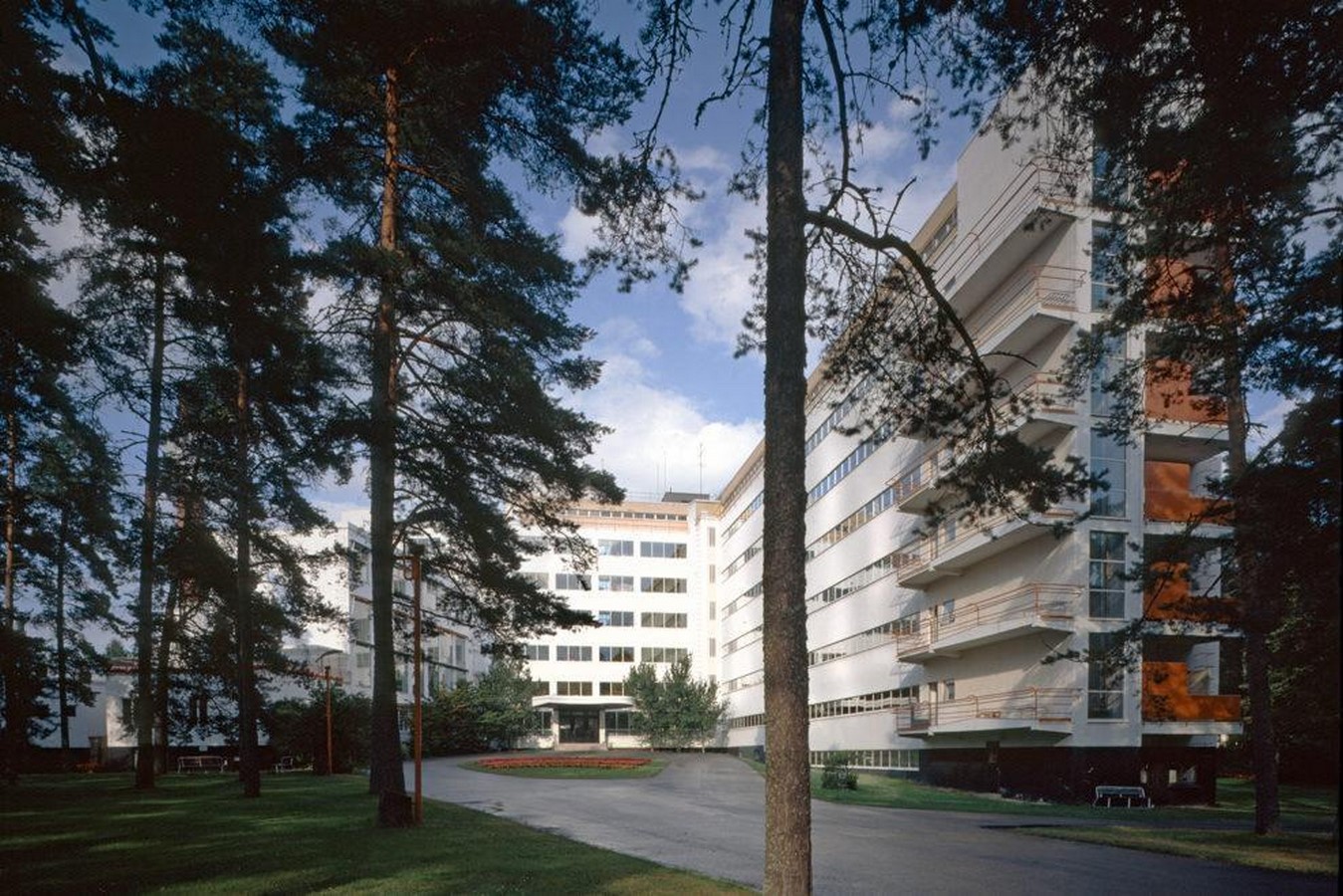
One building illustrates the logic with particular clarity. Alvar Aalto‘s Paimio Sanatorium (1933), often cited as an early attempt to integrate patient experience into hospital design, described the building as a medical instrument – every decision calibrated to minimise patient discomfort and support recovery (Aalto Foundation, 2016). The result established the lineage of the modern hospital block: long patient wings, ribbon windows and the total dominance of the utility principle. A very clear example of a building whose primary duty is to preserve life.
The Parallel Vocabulary
If the building itself cannot be the spectacle, something else could be. Over the past three decades, a distinct approach to hospital environments has emerged that operates parallel to – and often independent of – the clinical architecture surrounding it. Art, landscape, spatial intervention, and site-specific installation have become the medium through which hospitals communicate something beyond function. In the most considered examples, this complementary layer is not decoration applied to a finished building. It is a deliberate programme of humanisation, as carefully researched and specified as the clinical infrastructure it accompanies.
The Miraculous Journey – Sidra Medicine, Doha
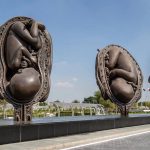
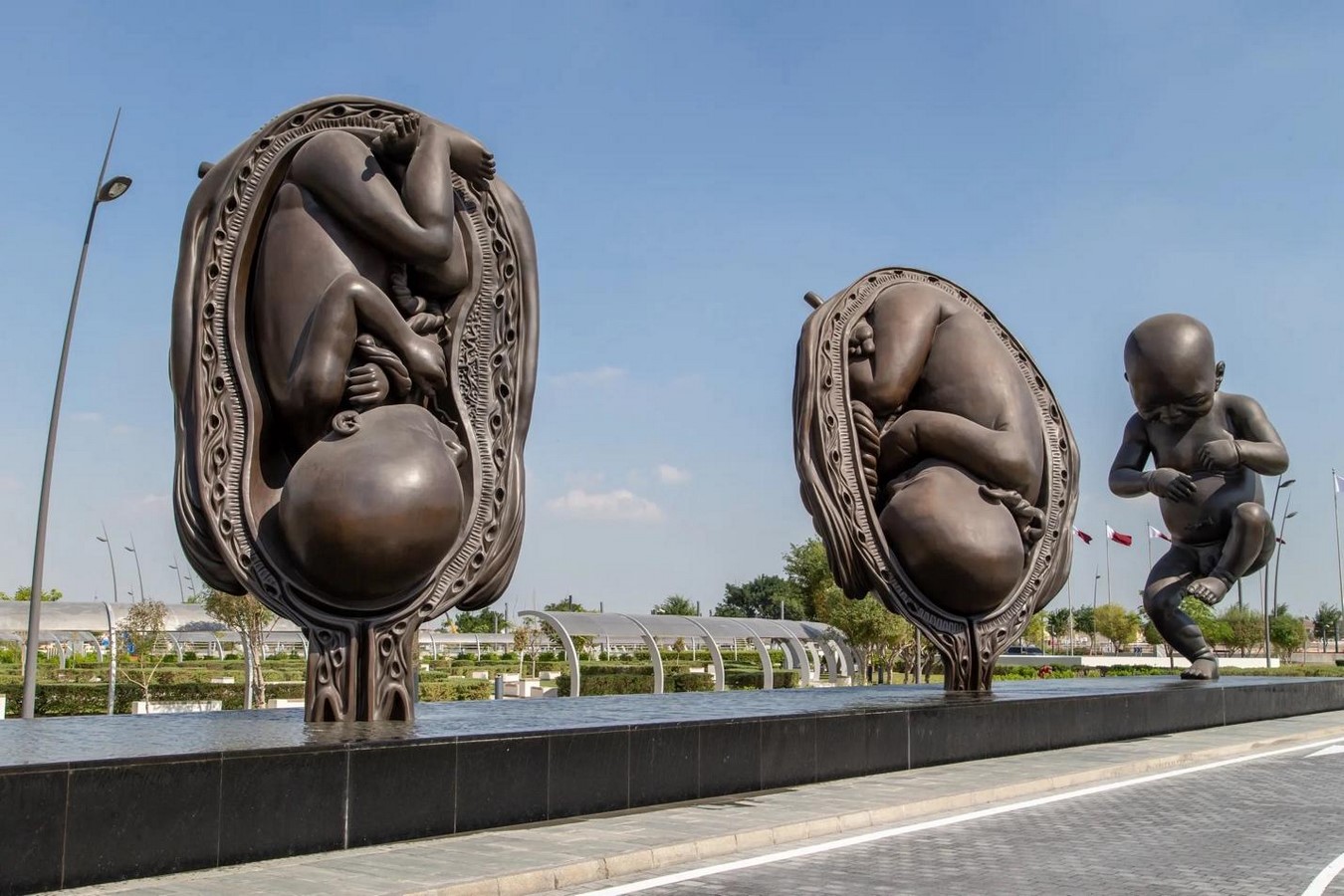
The most provocative example is Damien Hirst’s The Miraculous Journey (2005–2013), a series of fourteen monumental bronze sculptures sited on the external grounds of Sidra Medicine in Doha, Qatar. Sidra is a specialist hospital for women and children, and the sculptures – commissioned at a reported cost of approximately USD 20 million – chart the development of a human foetus from conception to birth, the final figure standing 14 metres tall. The work was first unveiled in 2013, covered during construction, and permanently reinstated in November 2018.
The installation is significant precisely because it operates where the building cannot. Sidra’s architecture is technically accomplished but formally restrained; the building’s exterior offers little expressive purchase. Hirst’s sculptures, by contrast, are unapologetically spectacular – and they articulate the hospital’s mission directly. The sculptures generated considerable controversy in Qatar on both religious and cultural grounds. What that controversy makes visible is the degree of institutional ambition that drove the commission: the building could not carry that meaning, so an artwork was asked to do so instead (CNN, 2018).
New Karolinska Solna Art Programme – Stockholm
And the New Karolinska Solna (NKS) in Stockholm (White Tengbom Team, 2016–2018) extends this logic to an almost theoretical extreme: 330,000 square metres of glass, steel, and white tiles, every departmental decision subordinated to a clinical workflow ethos (White Arkitekter, 2018).
Their model, operating at a considerably larger institutional scale, is the art programme integrated into NKS. Developed by Stockholm County Council and described as the largest single investment in public art in Swedish history, the programme commissioned site-specific artworks alongside paintings, sculptures, and mixed-media acquisitions distributed throughout the hospital’s public and patient spaces (White Arkitekter, 2018). The art programme is the counterweight to a deliberately restrained, minimalist building: a systematic attempt to introduce specificity, warmth, and visual narrative into a structure that, by its own logic, tends toward the generic.
When a hospital is at its most efficiently designed – when every surface and corridor has been optimised for clinical performance – it has typically also eliminated the spatial conditions that make environments feel human. The art programme at NKS was not an afterthought. It was recognition, built into the project from its earliest stages, that the building’s own vocabulary was insufficient to carry the full range of human experience a hospital must accommodate (FX Design, 2017).
A Discipline of Two Registers
The argument that hospital architecture is a creative dead end misreads the evidence. What hospital architecture has done, under the pressure of its own constraints, is develop a parallel vocabulary – a set of spatial, artistic, and landscape strategies that operate alongside the clinical building and carry the expressive and emotional freight the building itself cannot.
The Hirst sculptures at Sidra and the art programme at NKS represent a different answer to the same problem. Each acknowledges, explicitly or implicitly, that the hospital as a building type has structural limits as a medium of meaning. Each then deploys something else – monumental sculpture and systematic art commissioning – to address those limits.
Perhaps the more productive question is not whether hospitals can be architecturally ambitious, but whether architectural ambition is even the right instrument for what hospitals are required to do. The building handles the body. The parallel vocabulary handles everything else. And everything else, for someone lying in a hospital bed, is considerable.
References:
Aalto Foundation (2016) Paimio Sanatorium Conservation Management Plan. Helsinki: Alvar Aalto Foundation.
CNN (2018) ‘Damien Hirst’s giant uterus sculptures re-emerge at Qatar hospital’, CNN Style, 19 November.
FX Design (2017) ‘New Karolinska Solna Project by White Tengbom Team’, FX Design.
White Arkitekter (2018) New Karolinska Solna. Project description. Available at: https://whitearkitekter.com/project/new-karolinska-solna/