“May the odds be ever in your favour”
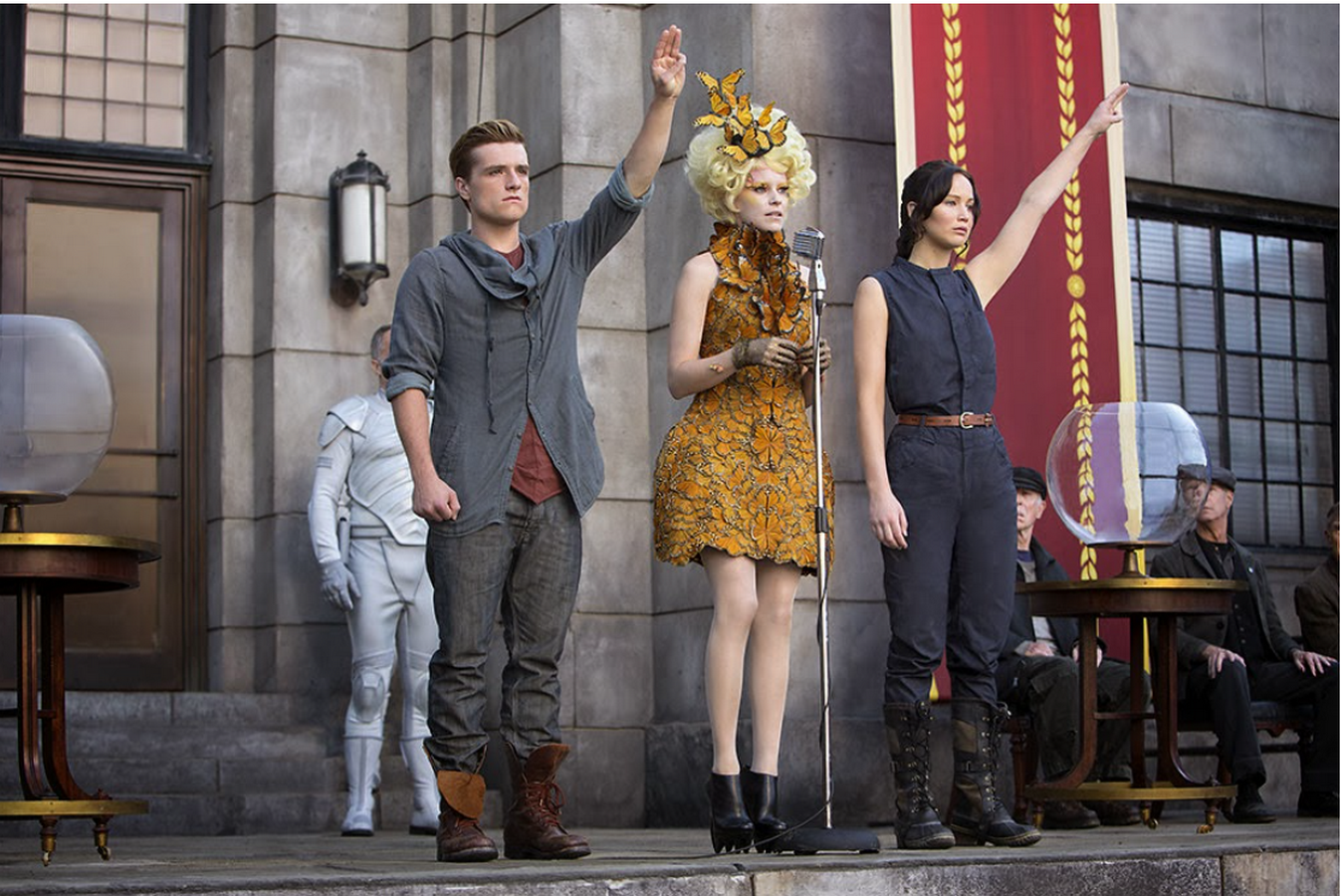
A line voiced out at every instant before the Hunger Games and peak moments of battle, dripping in feigned optimism of the Capitol’s intentions.
The Hunger Games follows a dystopian narrative with headstrong characters who grow in their decision-making and understanding of the reality of the perceived ‘wealthy’ and the differences created by society as the story progresses. Dystopian narratives have come a long way, serving not only to entertain but also to forewarn of the consequences one may face if ignorant of their present reality.
The Capitol in The Hunger Games
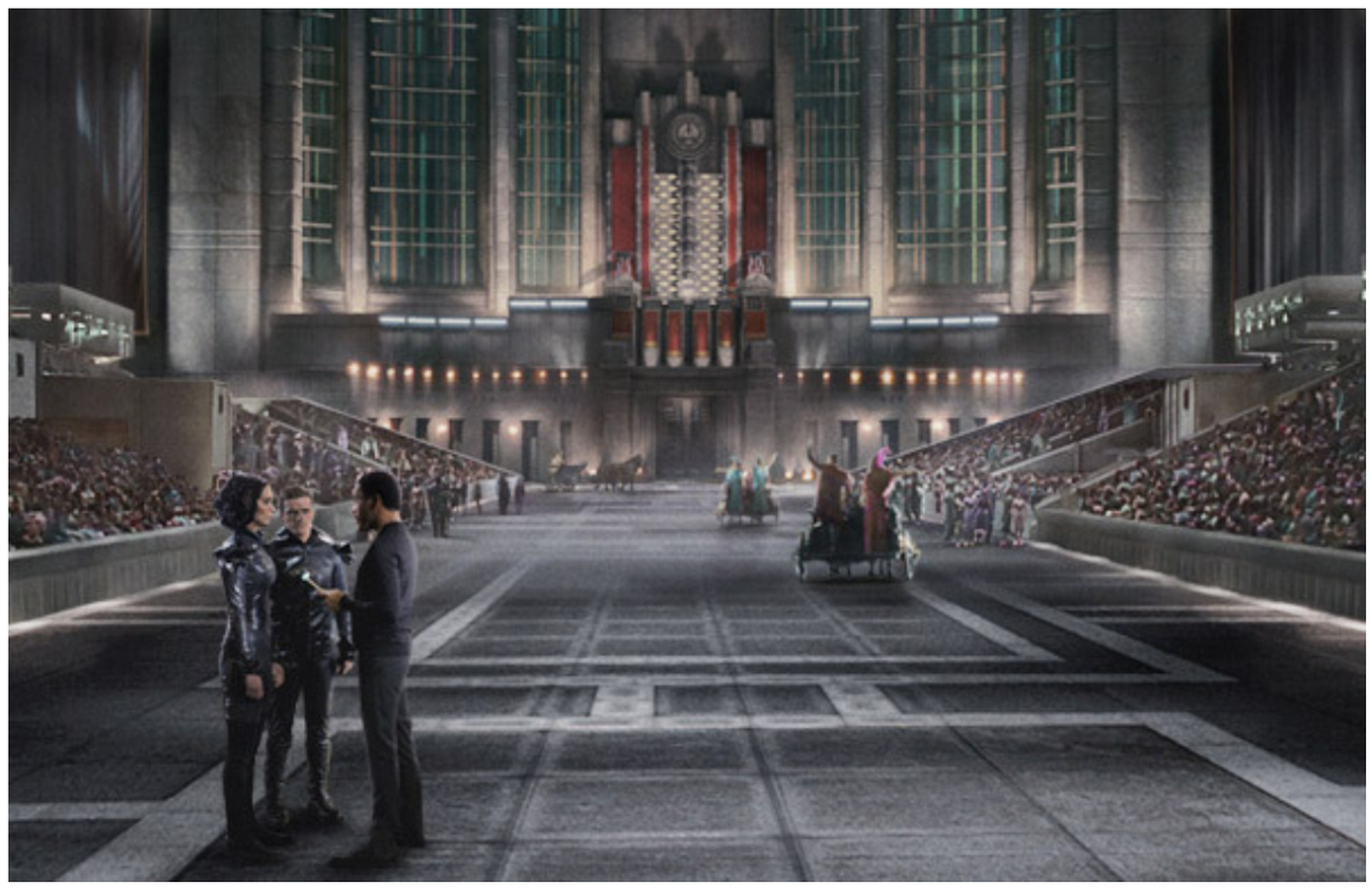
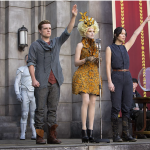
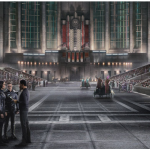
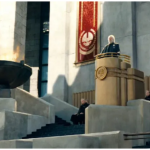
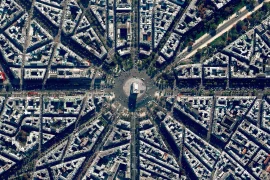
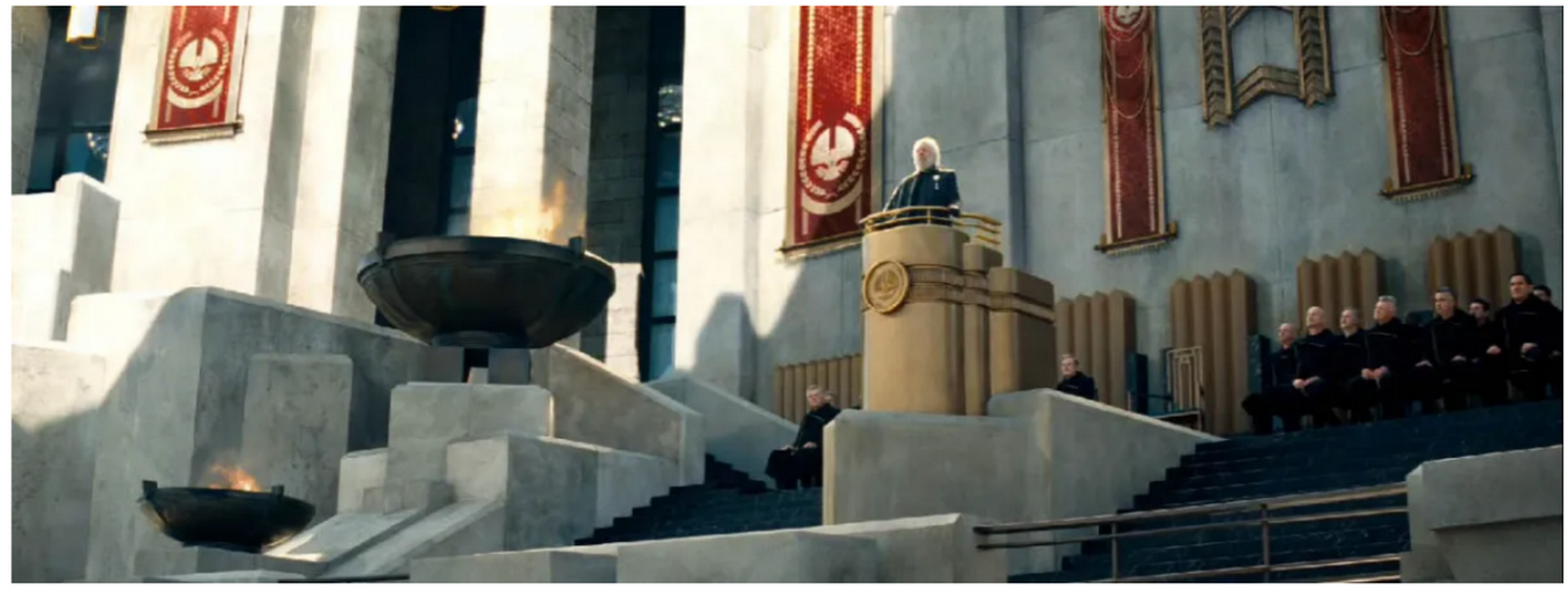
The Hunger Games is set in a post-civil war America, Panem, where children aged 12-18 are forced to participate in the games as an act of penance for the uprising. There is a stark contrast between the lifestyle of the Capitol and that of the districts’ residents. As the seat of Panem’s Power, it is located in the western Rocky Mountains, with twelve districts surrounding it. The Capitol stands tall, a seat of power both visually and physically. This is further emphasised by its towering walls, large public spaces, extravagant elements such as chandeliers and spiral staircases, and large private gardens with fountains, pruned plants, and walkways in its residences. One notices these additional details in the kind of clothing the residents of the Capitol wear: flashy colours, rich in material and texture – another reflection of their status. (architales, 2015)
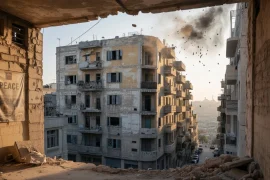
On the other hand, the districts resemble the unitary profession they serve. For example, the coal miners of district 12, the factories of district 11, etc. Rather rugged, serving only their function, these residences are less homes and more monotonous structures devoid of character and identical in design. Residents of the Capitol are seen attending parties, and this is where the Hunger Games fits into the Capitol’s daily life as yet another form of entertainment at the expense of the districts’ residents. What seems to be an exchange between the Capitol and the Districts, where the former provides security in return for the latter’s goods, is a veil of repression. (Gitta Ramania, 2024) (Giles, 2024)
Setting of the Games
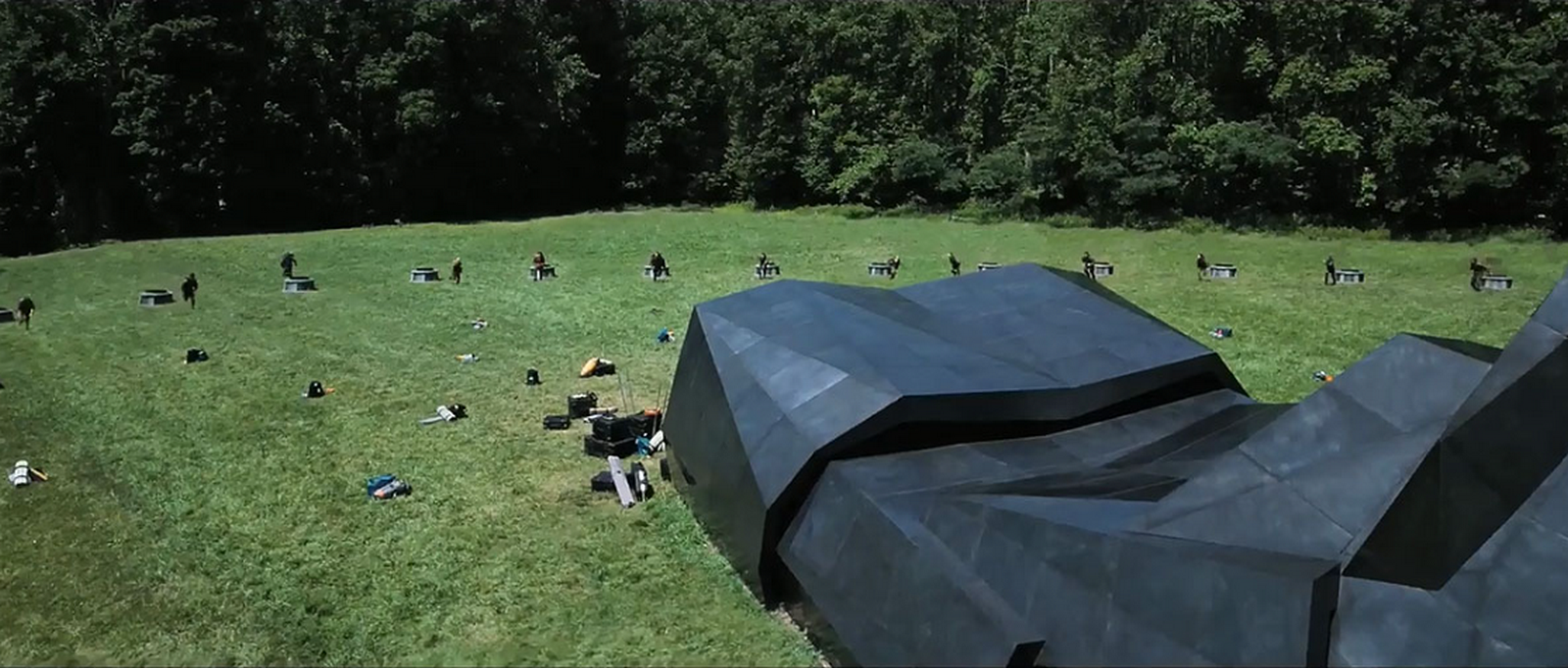
Presented as a way out for those born into the districts, the games are a chance to rise through the ranks if they win and join the elite, or so they are marketed to them.
Drawing heavily on Ancient Rome, the games feature many public spaces and arenas that serve as focal points for delivering punishments, sentences, speeches, information, fights, etc. The heart of Roman city was the town square, around which other civic buildings would be constructed.
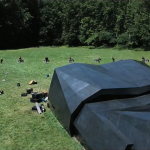
Similar to how Ancient Rome built structures focused primarily on these gatherings and battle arenas, the Hunger Games design centres on creating artificial environments that mimic real-world settings, such as forests, riverbanks, and central structures inspired by architects like Daniel Libeskind. These environments, once entered by the tributes (chosen participants from each district), function just as they’re designed. But with the addition of effects such as smoke that sets a series of warts on the skin of tributes, genetically engineered mutations – creatures programmed to hunt down the tributes, and other forms, all of which take a toll on the mental and physical state of the tributes.
Gamemakers, the Architects of the Games
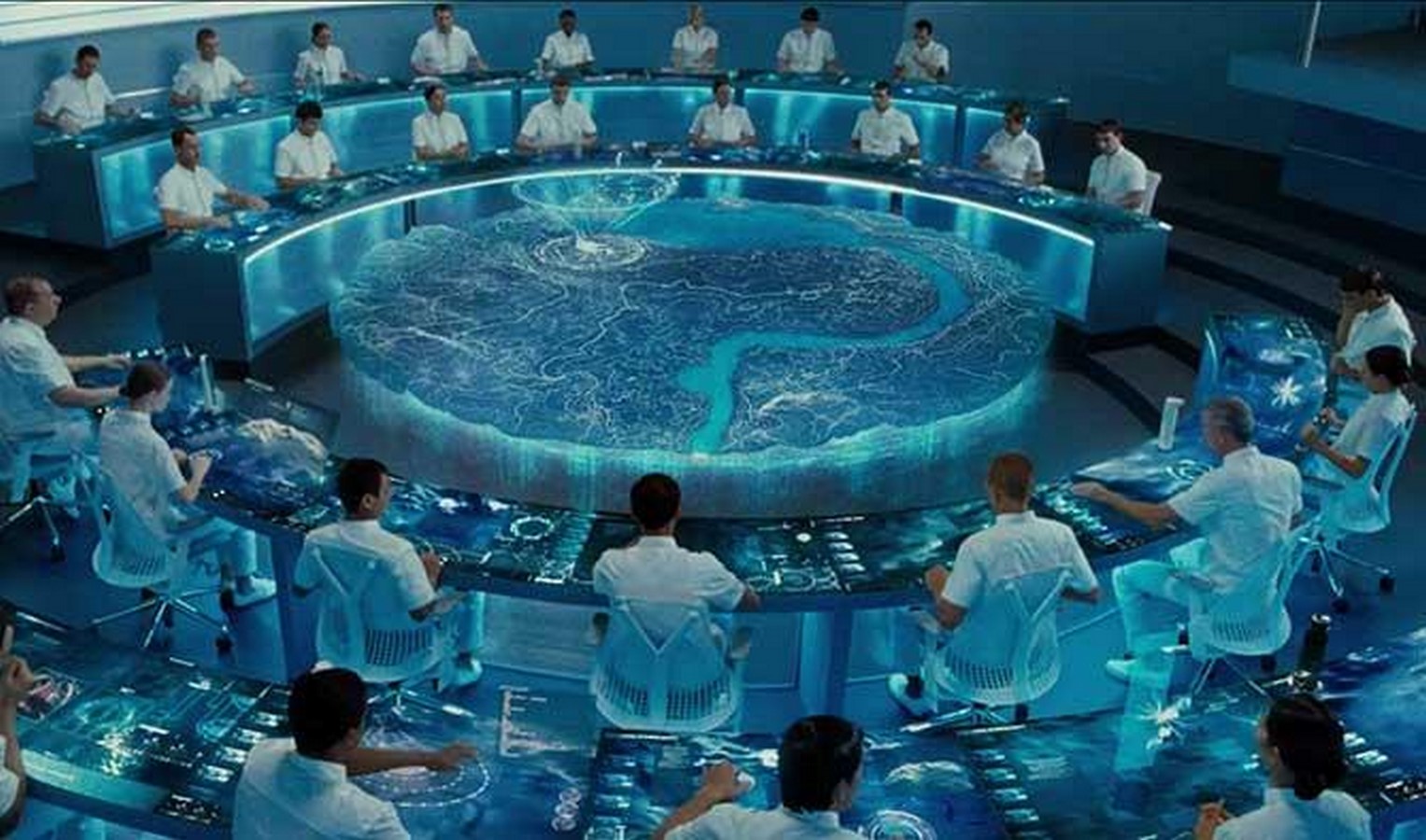
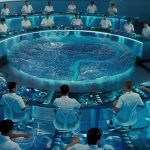
Following a careful process of structuring the games, the fate of the tributes is in the Gamemakers’ control. Given the power to design, plan, and sequence the annual butchery, the gamemakers of the Hunger Games must ensure it’s deadly to the tributes and captivating to the Capitol’s audience.
A brief training period allows the gamemakers to assess each tribute’s skills; post-training culminates in private sessions, during which each tribute is assigned a score that is broadcast to the districts. The last stage of this period is the interviews, which give the tributes the opportunity to present themselves in a way that appears either heroic or villainous, ultimately pleasing the eyes of the Capitol.
What’s striking about each stage of this process is that during the private sessions, the tributes enter the vast space below, while the evaluators stand above on a mezzanine structure that signifies the power they hold over their fates. The arena is where the gamemakers’ skills in torture are put to the test, at the expense of the tributes, specifically targeting their skills and weaknesses. This arena is controlled by its weather and temperature, which can trigger catastrophic events like fires and avalanches. (oreate.com, 2026)
The ultimate goal is to force tributes to confront each other, enhance the drama for the audience, and engineer deaths as reminders of the power they wield.
Sound, Imagery and Colour
Something that immediately captures attention is the thought behind how music and sound contribute to the movie’s overall emotion. Whenever a scene indicates the arrival of a rebellious moment, a song related to that setting is introduced, backed by sheer silence, drawing attention to the lyrics and the intent of the larger rebellion or cause. (Fowler, 2023)
Colours used in the films carry symbolism. Bold, vibrant hues evoke the lifestyle of excess in the Capitol, while the monotonous tones of the districts suggest a quiet struggle. Katniss, the protagonist, plays a major role in advancing the narrative through symbolism. One such symbol or prop is the pin on her costume. This symbol, like many other reminders, serves the purpose of acting as a mode of consciously driving people to serve the cause of the rebellion, and to “Remember who the real enemy is” (a line from the films that helps the Protagonist stay grounded)
Colour as a Medium of Power
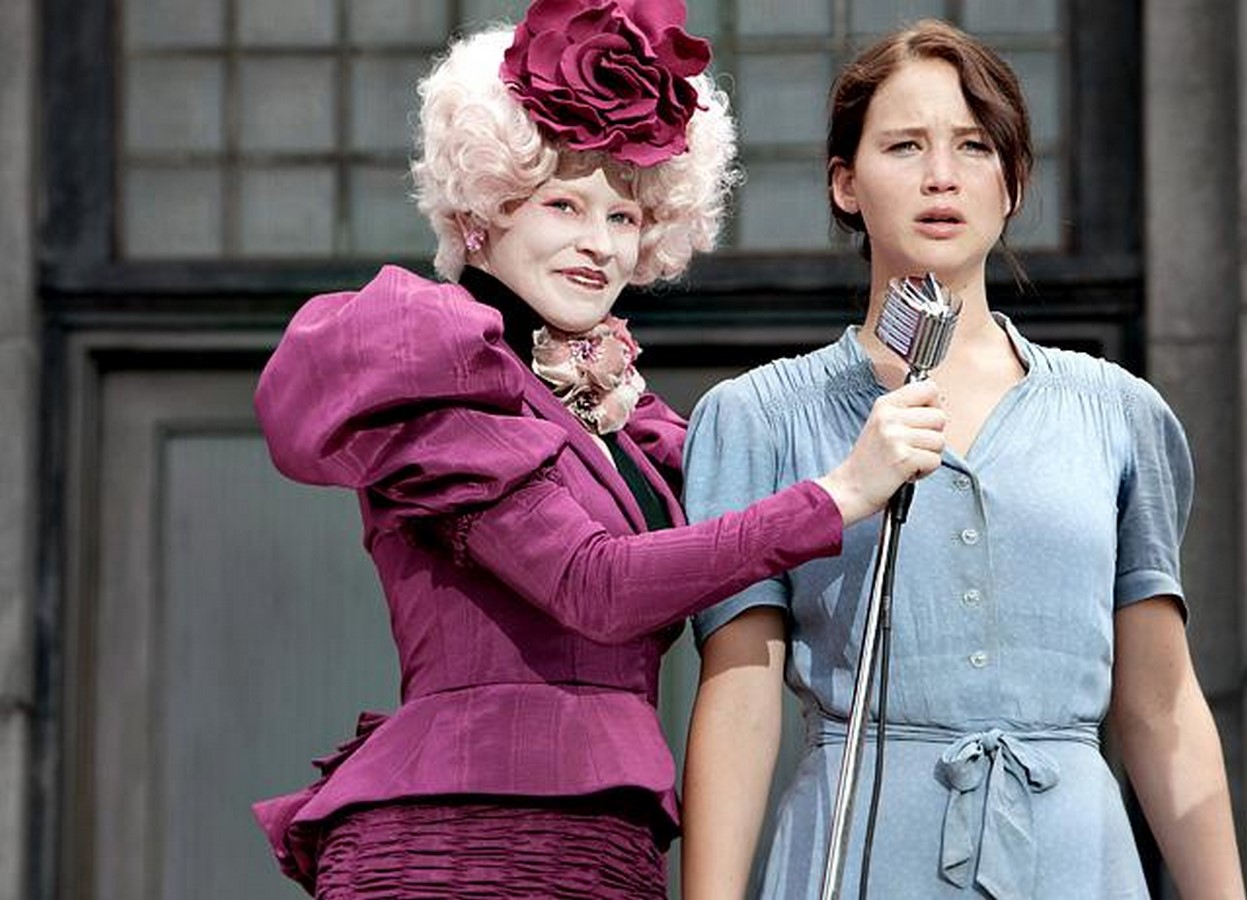
White, though often associated with purity, is portrayed differently in the movie, where it denotes the unsettling personality of President Snow, the antagonist. The colour weaves into his personality, false promises of safety and order while serving the greater cause, but succumbing to greed for control and blind worship. (Qiu, 2023)
Taking a look at the colours Katniss (the protagonist) wears, it is evident that they are always in stark contrast to the antagonist’s colours. The two colours represent a game of chess.
The Hunger Games film series is a brilliant adaptation of the Hunger Games book series; one that is visually striking and rightfully sets the stage for a dystopian narrative to come forth through its use of bold lines, muted colours to depict a rising rebellion, contrasting lifestyles, greed for control, engineered artificial environments designed to entertain and torture simultaneously, to name a few. The Hunger Games is a prime example of what reality might eventually become: one in which all humanity is stripped of individuality purely because those in power crave control.
- Online sources
Citations for websites:
architales (2015). The Architecture of the Capitol from ‘The Hunger Games’. [online] architales. Available at: https://architales.wordpress.com/2015/02/22/the-architecture-of-the-capitol-from-the-hunger-games/ [Accessed 18 Feb. 2026].
Epperson, A. (2025). Brutalist Architecture – The Complete Guide – Monograph. [online] monograph.com. Available at: https://monograph.com/blog/guide-to-brutalism-and-brutalist-architecture [Accessed 18 Feb. 2026].
Fowler, B. (2023). We Need to Talk About the Colors in ‘The Hunger Games’. [online] Her Campus. Available at: https://www.hercampus.com/school/kenyon/we-need-to-talk-about-the-colors-in-the-hunger-games/ [Accessed 18 Feb. 2026].
Ghoshal, N. and Wilkinson, P.O. (2018). The Hunger Games: A portrayal of PTSD in teenage fiction. British Journal of Psychiatry, 211(4), pp.191–191. doi:https://doi.org/10.1192/bjp.bp.117.199414.
Giles, B. (2024). The Politics of The Hunger Games – The Masterpiece – Medium. [online] Medium. Available at: https://medium.com/the-masterpiece/the-politics-of-the-hunger-games-445e25f2bf02 [Accessed 18 Feb. 2026].
Gitta Ramania (2024). The Architecture of Control – Gitta Ramania – Medium. [online] Medium. Available at: https://medium.com/@ramaniagitta/the-architecture-of-control-047e42e7fb2e [Accessed 18 Feb. 2026].
halebrockinteriors (2013). The Hunger Games: Set Design. [online] Hale Brock Interiors. Available at: https://halebrockinteriors.wordpress.com/2013/12/03/the-hunger-games-set-design/ [Accessed 18 Feb. 2026].
Kirill (2016). Production design of ‘The Hunger Games’ – interview with Philip Messina · Pushing Pixels. [online] Pushing Pixels. Available at: https://www.pushing-pixels.org/2016/04/25/production-design-of-the-hunger-games-interview-with-philip-messina.html [Accessed 18 Feb. 2026].
Literary Analysis. (2012). Movie Review: ‘The Hunger Games’. [online] Available at: https://literaryanalysis.net/2012/03/23/movie-review-the-hunger-games/ [Accessed 18 Feb. 2026].
Madsen, D. (2012). Deane Madsen | Architecture of the Hunger Games. [online] Deane Madsen Writing on Architecture. Available at: http://www.deanemadsen.com/dm/2012/03/architecture-of-the-hunger-games/ [Accessed 18 Feb. 2026].
oreate.com. (2026). The Architects of Agony: Unpacking the Role of Gamemakers in the Hunger Games. [online] Available at: https://www.oreateai.com/blog/the-architects-of-agony-unpacking-the-role-of-gamemakers-in-the-hunger-games/575be26036ec8c82678311b6d5939ce7 [Accessed 18 Feb. 2026].
PersephoneK (2012). The Hunger Games Movie Review: Rough Musings from a Crazy Fan | Persephone’s Path. [online] Persephone’s Path. Available at: https://www.persephonespath.com/the-hunger-games-movie-review-rough-musings-from-a-crazy-fan/ [Accessed 18 Feb. 2026].
Qiu, D. (2023). The significance of props and color in the Hunger Game (Extra credit) – Intro to Film 2023. [online] scholarblogs.emory.edu. Available at: https://scholarblogs.emory.edu/introtofilm2023/2023/12/16/the-significance-of-props-and-color-in-the-hunger-game-extra-credit/ [Accessed 18 Feb. 2026].
Staff, I. (2025). The Most Powerful Quotes from The Hunger Games. [online] InfoPlease. Available at: https://www.infoplease.com/culture-entertainment/film/the-most-powerful-the-hunger-games-quotes [Accessed 18 Feb. 2026].
- Images/visual mediums
Citations for images/photographs – Print or Online:
architales (2015). The Architecture of the Capitol from ‘The Hunger Games’. [online] architales. Available at: https://architales.wordpress.com/2015/02/22/the-architecture-of-the-capitol-from-the-hunger-games/ [Accessed 18 Feb. 2026].