Military architecture has played a crucial role in the world of architecture; it has historically reshaped structures by constantly evolving through technologies of warfare, shifting political ideologies, and changing understandings of territory. From the monumental stone forts of antiquity to contemporary surveillance infrastructure embedded within the landscapes and borders, military architecture has undergone many transformations. While early military structures relied on physical barriers and visible dominance, contemporary systems are highly dependent on technology, including surveillance, monitoring, and the control of movement.
This shift in broader transformations reflects on how power operates spatially. Military architecture is not dependent on forts, bunkers, or bases; rather, it relies on border infrastructure, checkpoints, restricted zones, and digital surveillance networks. These surroundings do not merely defend territory, but rather it controls behavior, visibility, and mobility. Therefore, the transition of forts to surveillance reflects not only technological change but also a deeper reorganization of architecture as a tool of control
- Early Fortifications and Defensive Design:
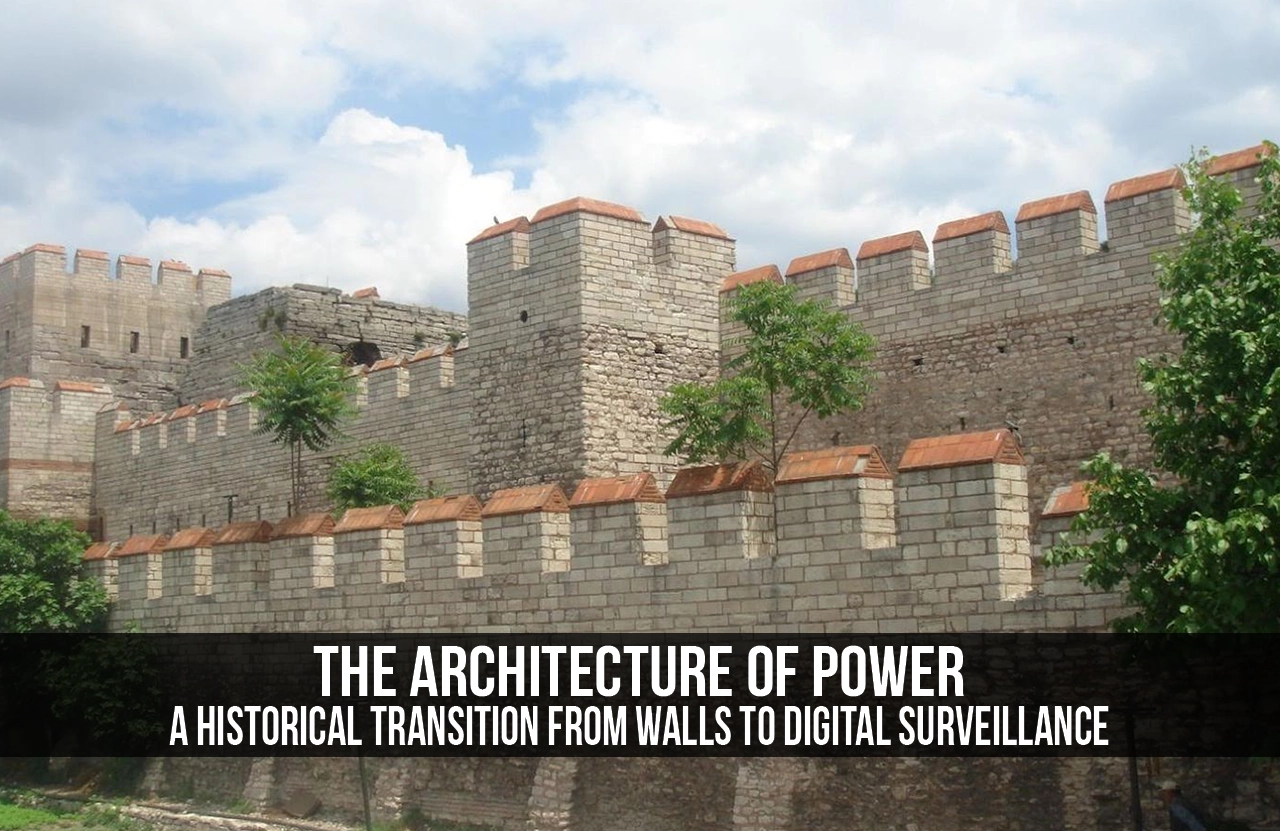
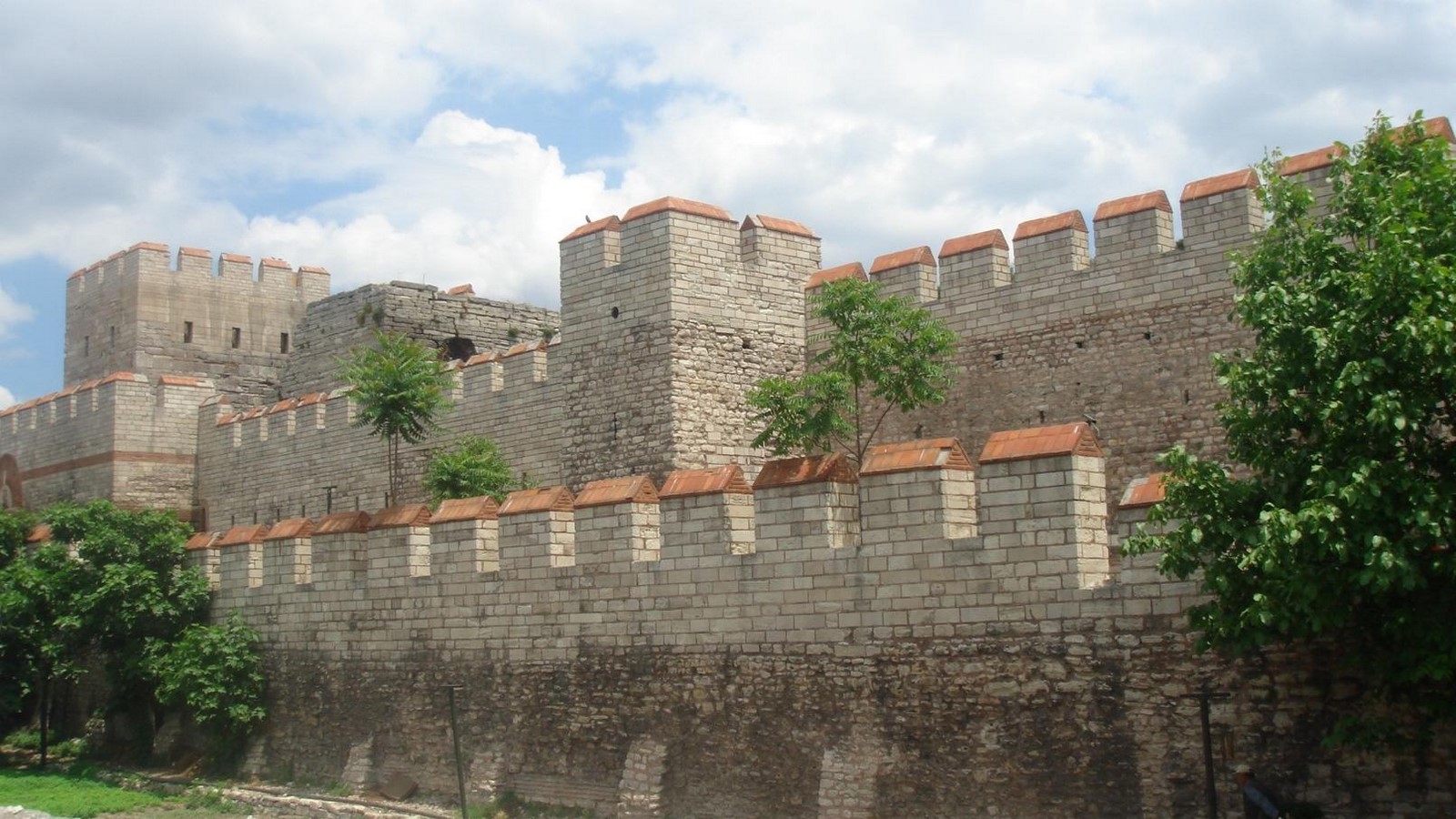
The earliest forms of military architecture emerged as defensive enclosures designed to protect from external threats. Ancient city walls, fortified gates, and watchtowers marked a clear physical boundary between inside and outside. These structures were designed to delay the attackers from attacking the city by providing elevated vantage points and reinforcing territorial authority. See figure 1.
During the medieval period, castles became a highly utilized and recommended defensive system. Fortifications can also be communal defenses, such as forts, moats, walls, or the “strategic missile defense,” a proposed network of satellites positioned in outer space to protect against attacking ballistic missiles. In the study of warfare, “fortifications” generally refer to temporary or permanent communal defenses against attacks by human enemies. (Arieti, James, 2023). Their visual dominance projected authority and reinforced political power, making architecture an instrument of both protection and representation (Keeley, Fontana, and Quick, 2007).
At this stage, military architecture was primarily concerned with enclosure and permanence. Walls defined territory in a clear and visible manner, and power was expressed through mass, scale, and monumentality.
- Gunpowder and the Reconfiguration of Defensive Space
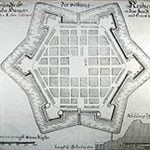
The invention of gunpowder in the late fourteenth and early fifteenth centuries marked a decisive turning point. Vertical walls became vulnerable to cannon fire, forcing architects and engineers to rethink defensive strategies. Bastion fortifications, or star forts, emerged as a response to this new form of warfare.
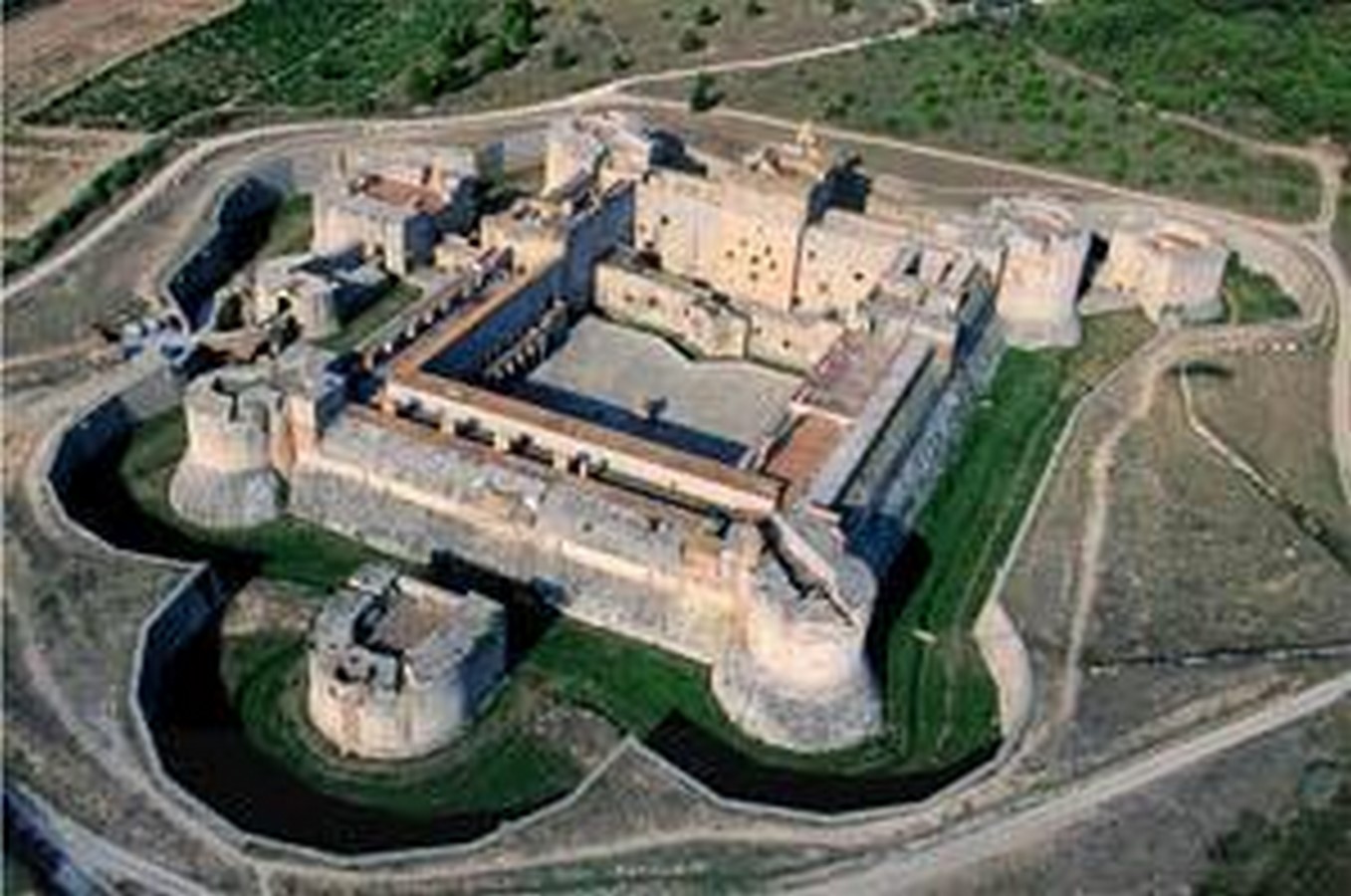
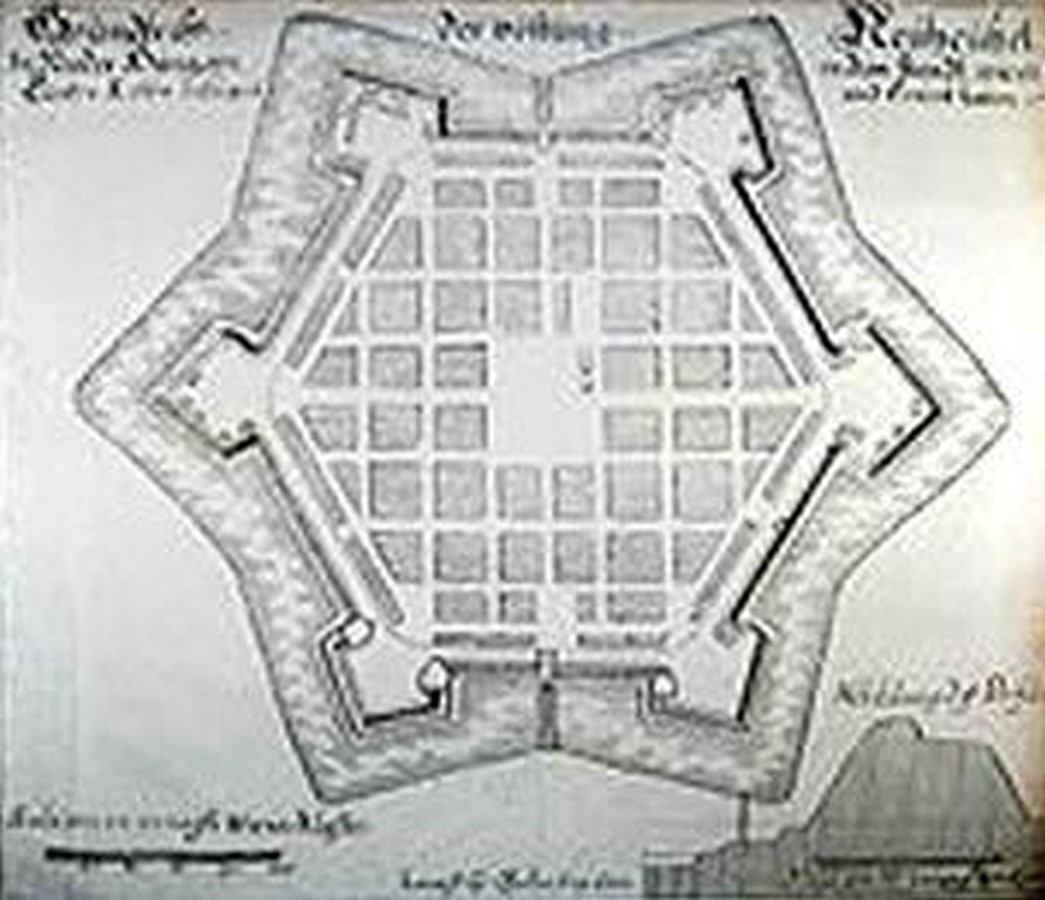
Unlike medieval castles, the star forts relied on geometrical patterns rather than height. The star fortress was a very flat structure composed of many triangular or lozenge-shaped bastions designed to cover each other, and a (typically dry) ditch. However, they were further modified when the French army was equipped with new cannon and bombards that were easily able to destroy traditional fortifications built in the Middle Ages. As shown in Figure 2, to counteract the power of the new weapons, defensive walls were made lower and thicker. (N.A, 2017). Defense became a matter of spatial calculation, where sightlines, angles, and overlapping fields of fire shaped the design of entire landscapes (Duffy, 1996).
This transformation demonstrates an important shift: military architecture began to operate not only as a physical barrier but also as a spatial system organized around visibility and surveillance. Control of sight became as important as control of territory.
- Industrial Warfare and the Disappearance of Monumentality:
The industrialization of warfare in the late nineteenth and early twentieth centuries further transformed military architecture. The introduction of aerial bombardment, long-range artillery, and mechanized warfare rendered large fortifications increasingly ineffective. Defense moved underground. This era witnessed conflicts such as the Napoleonic Wars (1790-1814) and the World Wars.
According to Viollet-le-Duc, it was time for a change in military architecture. Traditional castles and city curtain walls were strengthened and upgraded to withstand artillery bombardment. The fortification of the late 19th century had become heavy but ineffective, leading to the new method of construction, such as temporary structures, lines of bunkers, camouflage super surfaces, and ditches. (Vardanyan, 2023). Castles were useful until the end of the 19th century, when the main defence problem was not the high position, but the camouflage. Thus, the role of trenches and underground infrastructure in the design increases. (Denman, 2020)
However, this was only effective for a short period of time. By the time of World War I, different types of weapons were being used, and airspace also became a new threat, making it difficult for fixed defenses to survive. As a result, the architecture struggled to keep pace with these changes. (Baghdasaryan, 2018)
- The modern era
In the modern era, military architecture has shifted from physical fortification to surveillance-based control. Defensive systems now rely heavily on monitoring technologies, data collection, and remote observation. Radar installations, drones, satellite imaging, and biometric checkpoints have transformed how territories are secured.
Foucault (1977) explains that modern systems of power increasingly operate through surveillance and regulation rather than direct force. Architecture becomes a mechanism for organizing visibility and controlling movement.
The rate of utilization of airspace has increased over time, emphasizing the need for thorough territorial defense strategies. Due to which the geographical positioning of cities has evovled overtime. Historically, the fortification of cities was robust, yet the internal construction of houses and buildings was not. But due to the advancement of contemporary technologies, architectural solutions have evolved: curtain walls have been eliminated, although the internal structures within the settlement remain fragile. (Vardanyan, 2023).
Residential buildings, schools, churches, streets, and parks can lose their everyday functions and be adapted for various military purposes. They can become defence structures, military warehouses, military units, hospitals, combat positions, and observation posts (Balakliets, 2021).
- Surveillance and the Architecture of Control
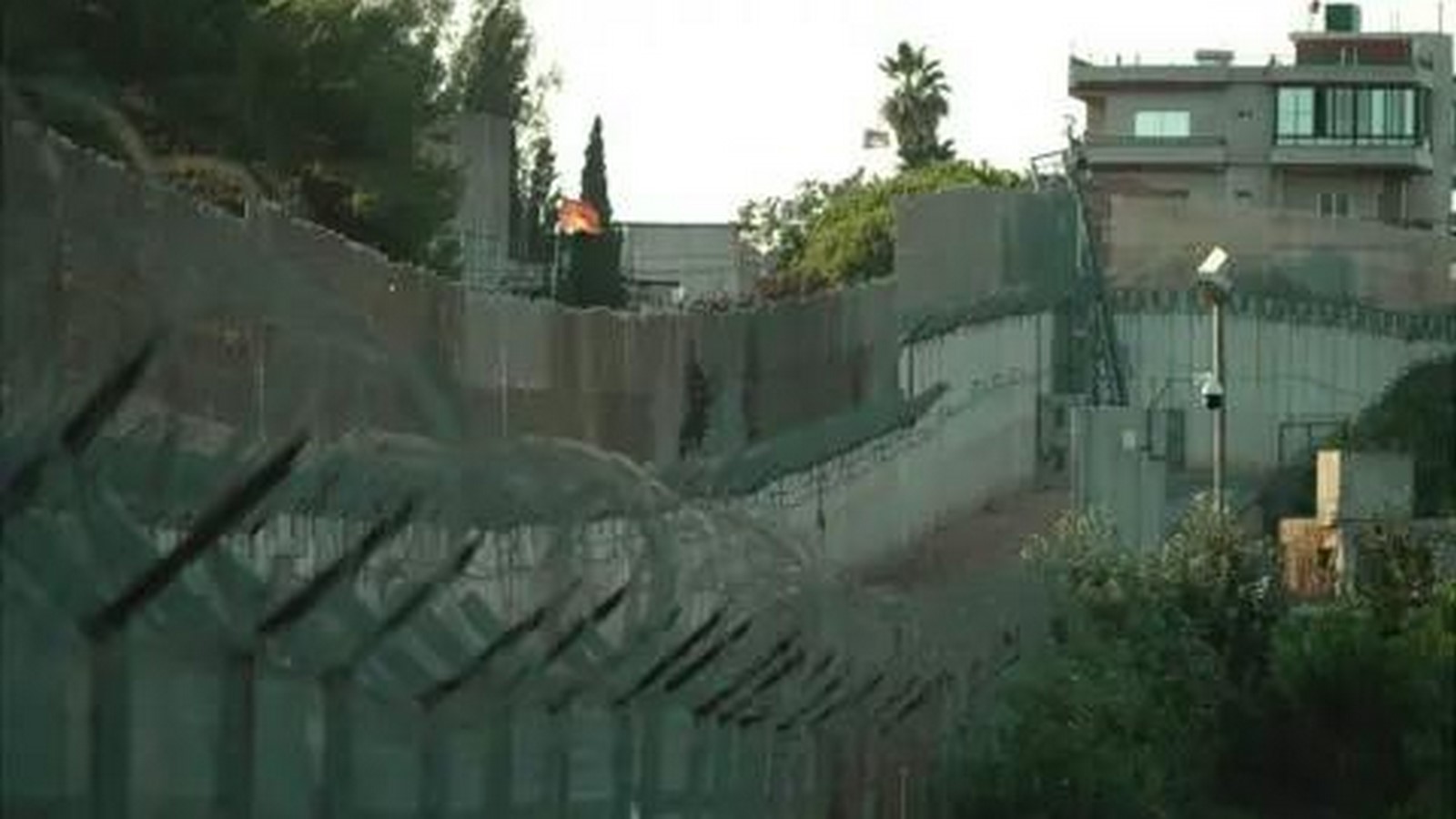
Moreover, at present, one of the most visible and spatially defined contexts in which surveillance-based military architecture can be observed today is at international borders, where built form, infrastructure, and technology combine. Borders provide one of the clearest contemporary examples of how military architecture has shifted from forts (physical barriers) to a system of surveillance and control. With the help of modern spatial systems design, it organizes visibility and regulates the movement and management of flows of people.
Scholars have argued that the built environment itself plays an important role in reinforcing power relations, as architecture and spatial organization shape behavior and embed systems of watching within everyday environments (Flynn and Mackay, 2019). Surveillance, in this sense, is not limited to cameras or technological devices but is frequently embedded within spatial arrangements, territorial boundaries, and controlled landscapes.
This change in military architecture is important because it demonstrates that observation and protection can be accomplished with just a single border segment, instead of constructing large defensive structures.
So, to conclude the evolution of military architecture from forts to surveillance borders, it reflects how power is exercised through space. Early defensive structures relied on enclosed mass and visibility to protect territory and project authority. However, the introduction of gunpowder and industrial warfare gradually reduced the effectiveness of monumental fortifications, leading to the emergence of bunkers and a camouflaged defensive system.
Furthermore, in the modern age, surveillance emerged as the primary method of territorial control, entirely replacing forts because they were unable to carry out their duty of protecting the city with contemporary weapons. Thus, this transformation reveals that military architecture is no longer defined solely by walls or fortresses. Instead, it exists as a dispersed and often invisible system embedded within everyday space. Understanding this evolution is essential for recognizing how architecture participates in the production of power, division, and control in the modern world.
Reference List (Harvard Style):
Arieti, James, A (2023). Accessed on [07th Feb]. (Online) Available at:
https://www.ebsco.com/research-starters/history/ancient-fortifications
Castles and Manor Houses (n.d.) Star forts. Accessed on [05th Feb]. (Online) Available at: https://www.castlesandmanorhouses.com/types_10_star.htm
Duffy, C. (1996) Siege Warfare: The Fortress in the Early Modern World. London: Routledge. Accessed on [05th Feb]. (Online) Available at: https://api.pageplace.de/preview/DT0400.9781136607875_A23837737/preview-9781136607875_A23837737.pdf
Figure 01: Accessed on [07th Feb]. (Online) Available at: https://en.wikipedia.org/wiki/Bastion_fort
Figure 02- 03: Star Forts Accessed on [07th Feb]. (Online) Available at:
https://www.castlesandmanorhouses.com/types_10_star.htm
Figure 04: Israel-Lebanon border tension raises fears of bloody escalation. Accessed on [07th Feb]. (Online) Available at: https://www.bbc.com/news/world-middle-east-66304498
Flyn, S, Mackay, A (2019) Surveillance, Architecture and Control Accessed on [07th Feb]. (Online) Available at: https://content.e-bookshelf.de/media/reading/L-12107748-5fa355ddc5.pdf
Foucault, M. (1977) Discipline and Punish: The Birth of the Prison. New York: Pantheon Books. (Offline)
Keeley, L., Fontana, M. and Quick, R. (2007) ‘Baffles and Bastions: The Universal Features of Fortifications’, Journal of Archaeological Research, Accessed on [06h Feb]. (Online) Available at: https://gwern.net/doc/history/2007-keeley.pdf
Vardanyan, A (2023). The impact of war generations on the spatial environment and military resistance challenges in urban planning: Accessed on [06th Feb]. (Online) Available at: https://www.e3s-conferences.org/articles/e3sconf/pdf/2023/73/e3sconf_iced2023_12010.pdf