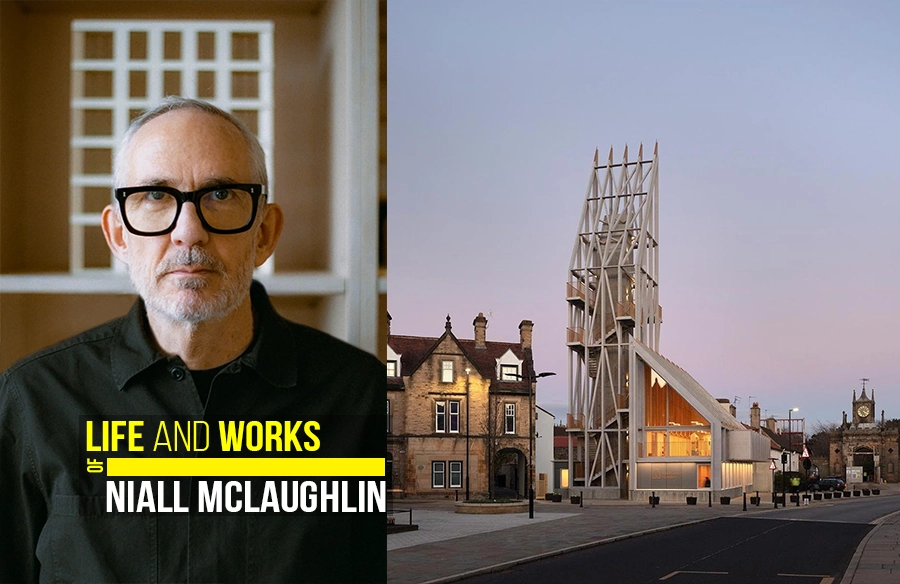
Niall McLaughlin is an Irish architect, educator and writer who currently practices through his own firm, Niall McLaughlin Architects (NMLA) in London. Their projects have been worthy of several global and regional awards, and more recently, the Royal Institute of British Architects announced McLaughlin to be the recipient of the 2026 Royal Gold Medal for Architecture as a way to highlight his sustained contribution to the field of architecture.
McLaughlin was born in Geneva, Switzerland, in 1962, but raised and educated in Dublin, Ireland, which drives and influences his distinct architectural style. He graduated from University College Dublin with a Bachelor of Architecture Degree in 1984, and during his course, he grew as a student to respect the interaction of materials and space with building, which in turn crafts human experiences within them.
Career And Core Philosophies
McLaughlin kick-started his career right after graduation by working with Scott Tallon Walker, a well-established Irish firm that strives to create timeless, innovative and well-crafted buildings that enhance wellbeing, the public realm and the environment. McLaughlin worked with them for 4 years at both their Dublin and London offices.
1990 marked a crucial point in this architect’s life. It was the year in which he founded his own firm, Niall McLaughlin Architects (NMLA), in Camden Town, London, around 3 miles away from Buckingham Palace. Níall McLaughlin Architects is now known for its high-quality modern buildings with a special emphasis on the inventive use of building materials and detail, the qualities of light and the relationship between the building and its surroundings.
The firm also leans strongly into advocating for practices to mitigate the climate and biodiversity emergency the planet faces currently. This includes focusing on producing better architecture along with a better routine for the members of the organisation. As a result, they currently follow their Carbon Reduction Plan, which reflects their commitment to achieving net zero emissions by 2050. Through a human-oriented lens, they are also committed to addressing issues of inequality within the profession through internship programmes and equal opportunity employment practices.
McLaughlin himself won Young British Architect of the Year in 1998. His designs have won many awards, including RIAI Best Building in the Landscape and the RIBA Stephen Lawrence Award. He also pursued teaching architecture at institutions like University College London, University of California and Yale. He was the chair of the RIBA Awards Group from 2007 to 2009. Currently, he lives in London with his wife Mary, son Diarmaid, and daughter Iseult.
The 2026 RIBA Honours Jury described him as a “pivotal figure in contemporary architecture,” noting that his projects challenge conventional approaches to architecture and regeneration while keeping to his values of working with the environment, culture and user experience.
- The International Rugby Experience
Location: Limerick, Ireland
Project Year: 2022
Awards: 2024 Wienerberger Brick Award Grand Prize, 2023 RIAI Public Choice Award
The International Rugby Experience is an ambitious cultural project built to honour the worldwide game of rugby. Located in the Irish city of Limerick (considered “Cathedral to Rugby”), the project embodies the ability of sport and architecture to revitalise a community.
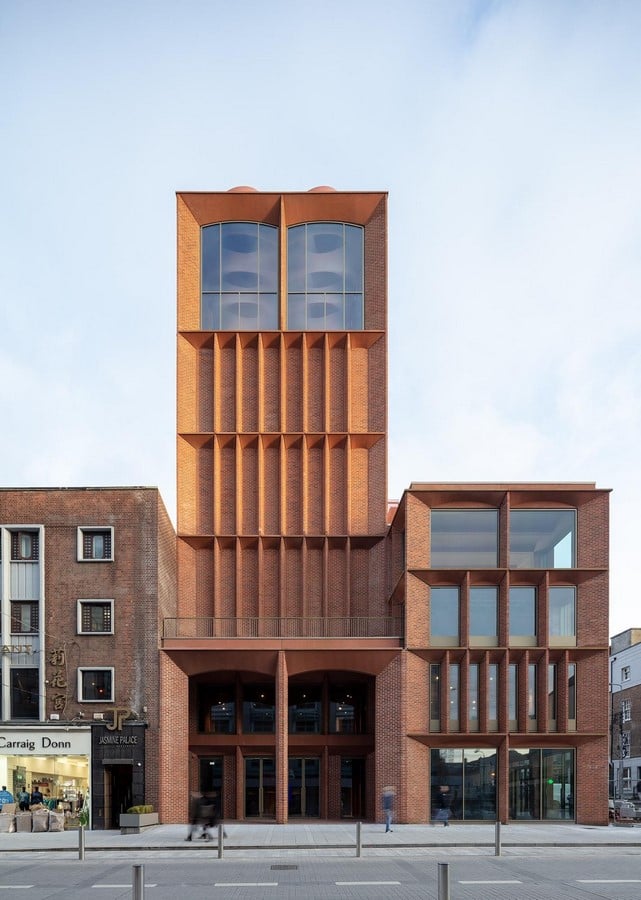
Tucked into a row of buildings on the roadside, the tower stands out for the public hall on the top floor, designed with double-height windows that connect the viewer with views of the city and serve as a local beacon. A pedestrian walking by would be greeted by a large-scale entrance portico that evokes a similar feeling to that of prominent civic buildings. It provides shade to the public and a place to gather for fans on match days. The building follows a controlled structural rhythm using vertical brick piers and horizontal precast concrete. This interplay, coupled with the dynamic effect of daylight and shadow throughout the day, gives the building a sense of life.
The distinctive red brick was chosen according to the context of Limerick’s history, which, from the 12th century onwards, has boasted an eclectic collection of medieval churches. Charnwood brick is used throughout the structure, on its facade and pillars, floors and walls. Like this, the design is one with a traditional-meets-contemporary quality.
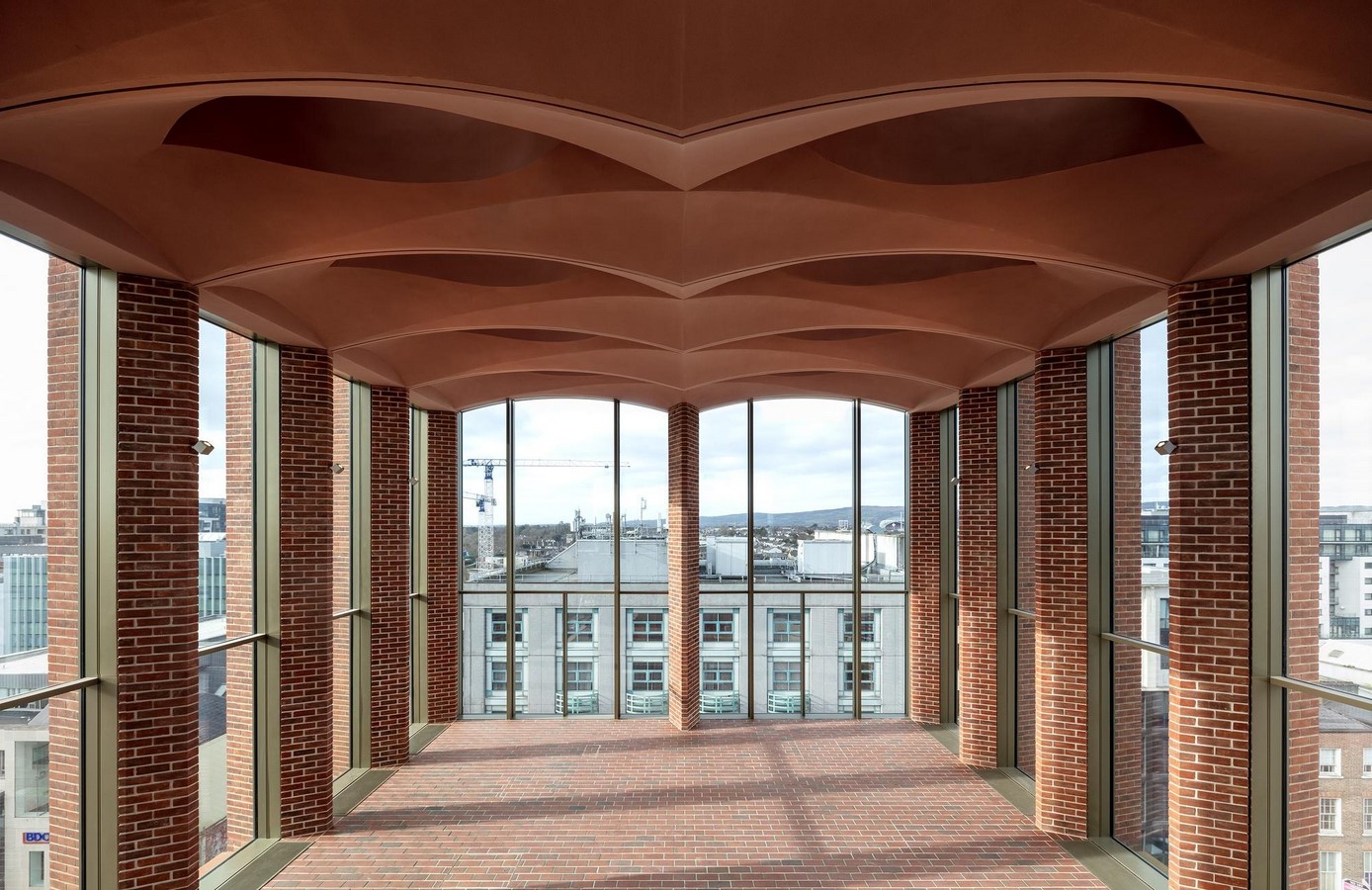
“The entire building is a steel frame structure, and we initially thought about using prefabricated vaults made of glass reinforced plaster, but the costs were prohibitive,” explains McGlynn, one of the main architects on the project. The lightweight vaults were finally constructed using bent plasterboard, as concrete vaulting would have had carbon footprint issues. The key benefit has been the ability to use an acoustic plaster. It has a concrete-like appearance and will acoustically temper each space.
- Auckland Tower
Location: County Durham, England
Project Year: 2020
Awards: Mies Van Der Rohe Award for European Architecture (Nomination)
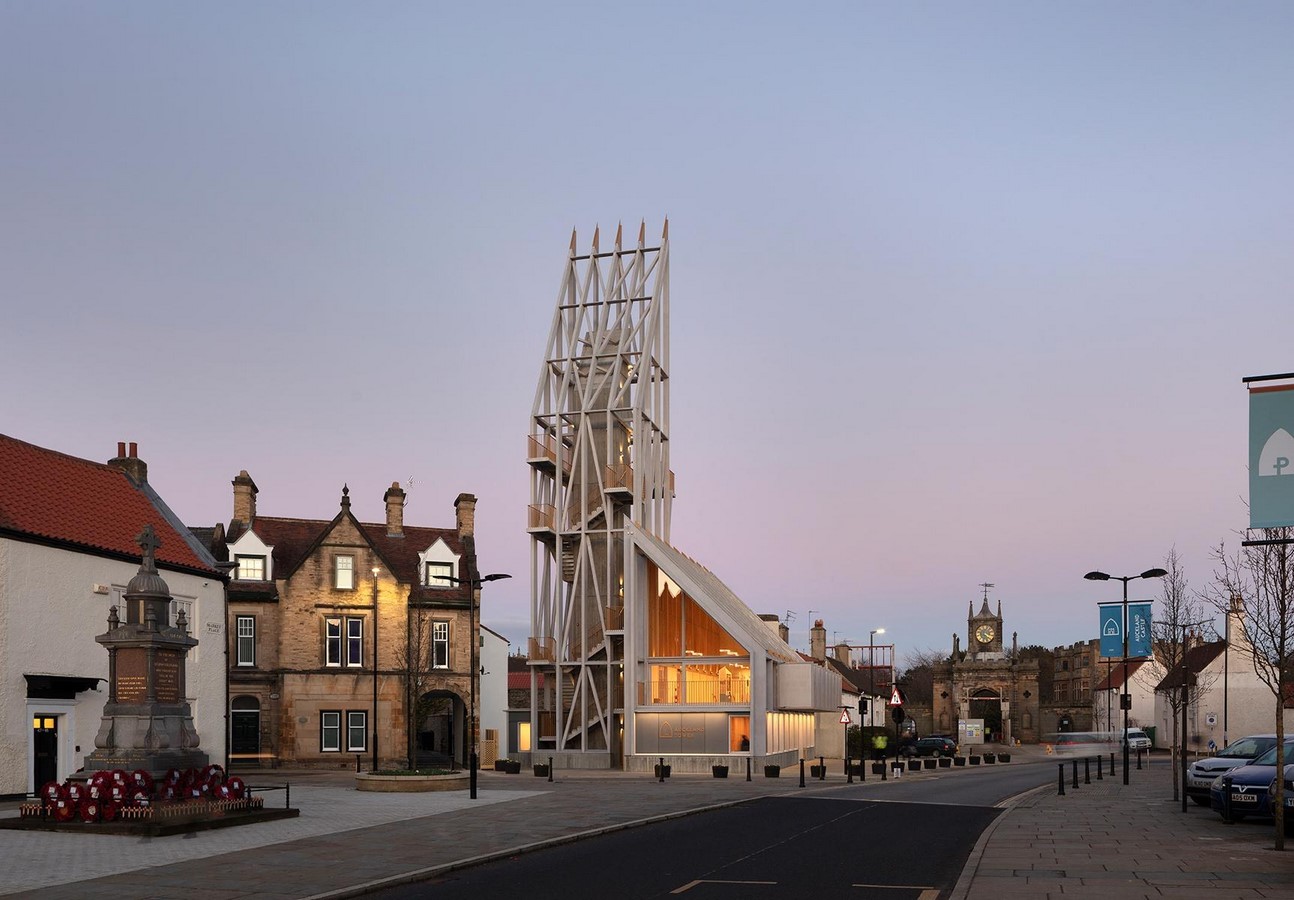
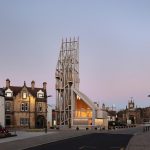
Auckland Tower in Bishop Auckland acts as an access point and gateway to The Auckland Project, which includes the Auckland Castle, a heritage destination of international importance. The building provides ticketing, information, and orientation for the refurbished Castle and the new Faith Gallery. The tower is designed to offer scenic views of the town and the landscape beyond. The timber building is conceived as a long hall, reminiscent of a market hall. The form and construction of the tower are inspired by the old method of providing a group of lightweight provisional supports to castle walls. This allows the people to understand the hidden world inside the castle.
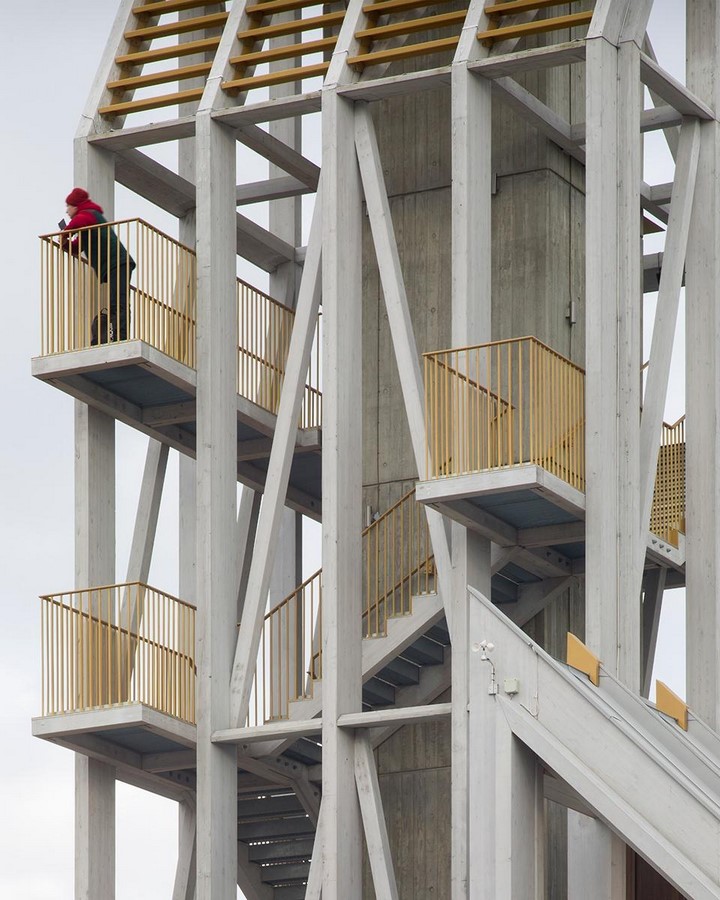
The material used here for the timber frame is European larch glulam. Historically, larch is known to have remained undamaged during fires set by Caesar’s army.
- Hampshire House
Location: Hampshire, England
Project Year: 2017
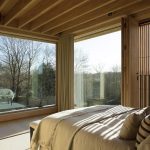
This house sits next to a river valley, and was conceived from the client’s request to create a contemporary house which provides a connection to the lush landscape on the side. In order to do this, the masses within the house are staggered both horizontally and vertically. Despite its large size when viewed from the outside, the majority of the spaces are relatively smaller. Large sliding doors allow themselves to be closed during quiet periods and open up for large gatherings.
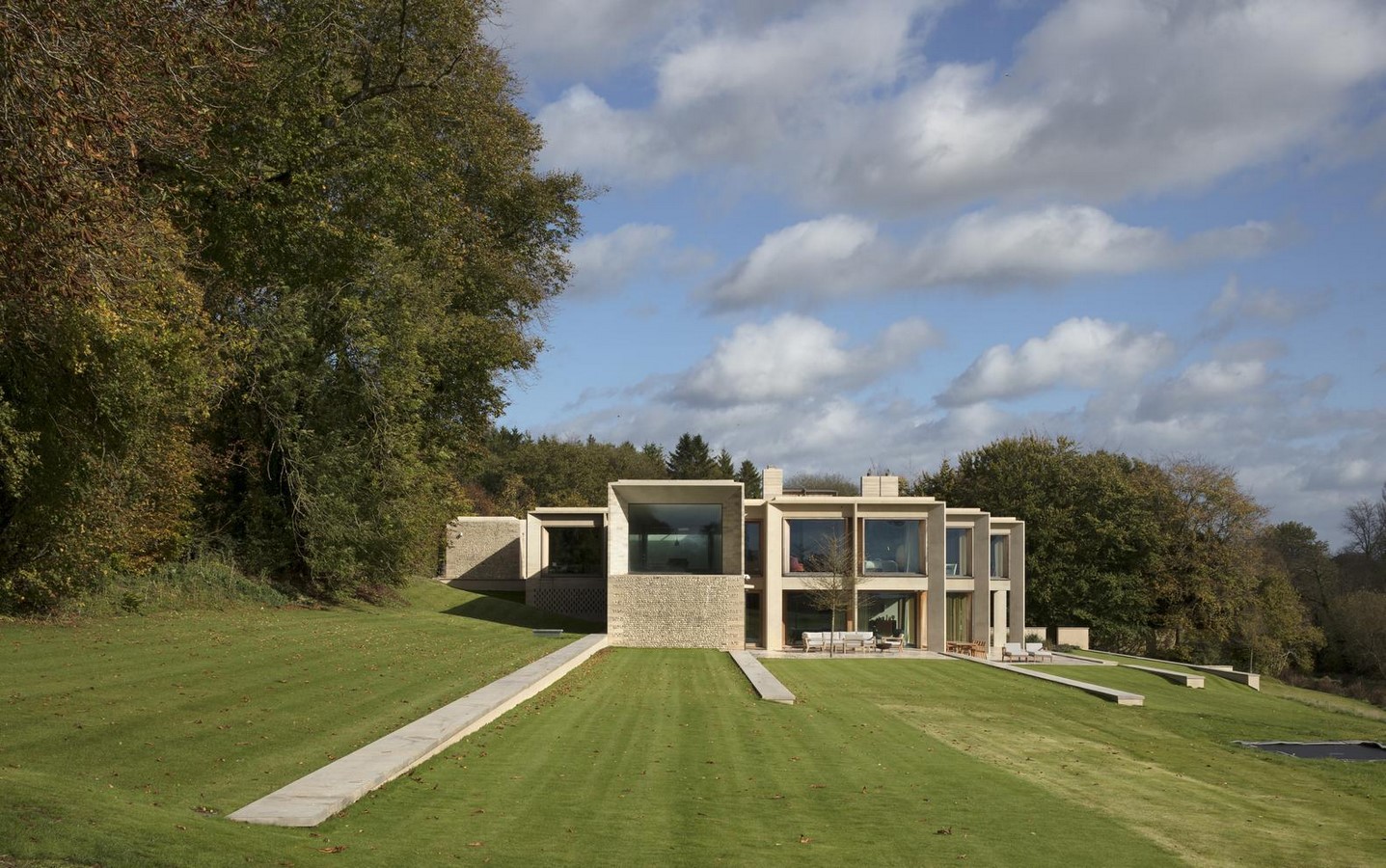
“The house can expand and contract,” explained McLaughlin. “On a busy weekend, it might accommodate parents, children, grandparents and a visiting family with their children housed in the bunk room.” A diverse portfolio of materials includes Purbeck stone for the main staircase with cantilevered precast concrete treads. Untreated oak wood for windows and cladding so that it may gradually weather to silver-grey to match the colour of the stone and flint of the demesne walls in the locality.
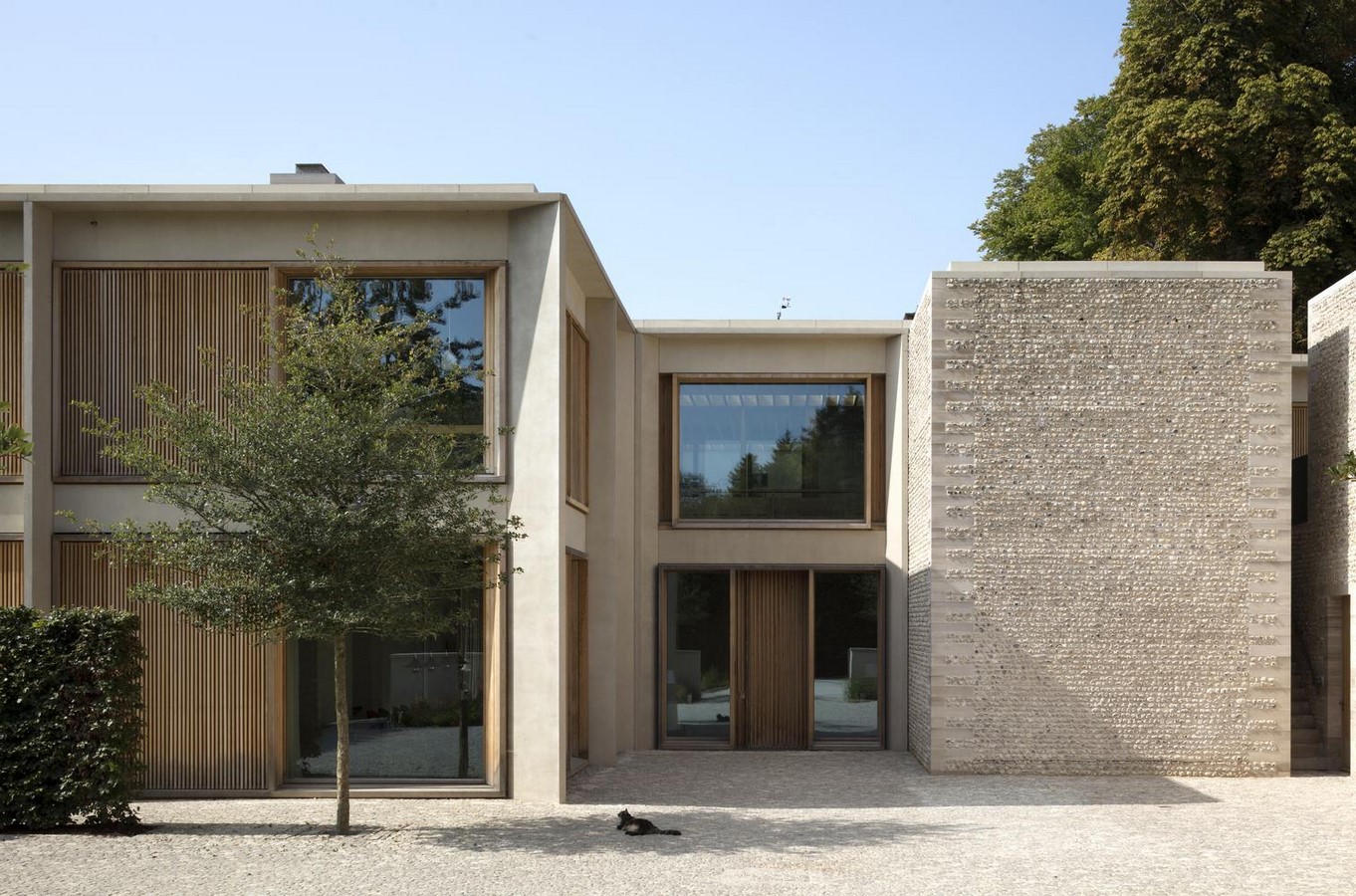
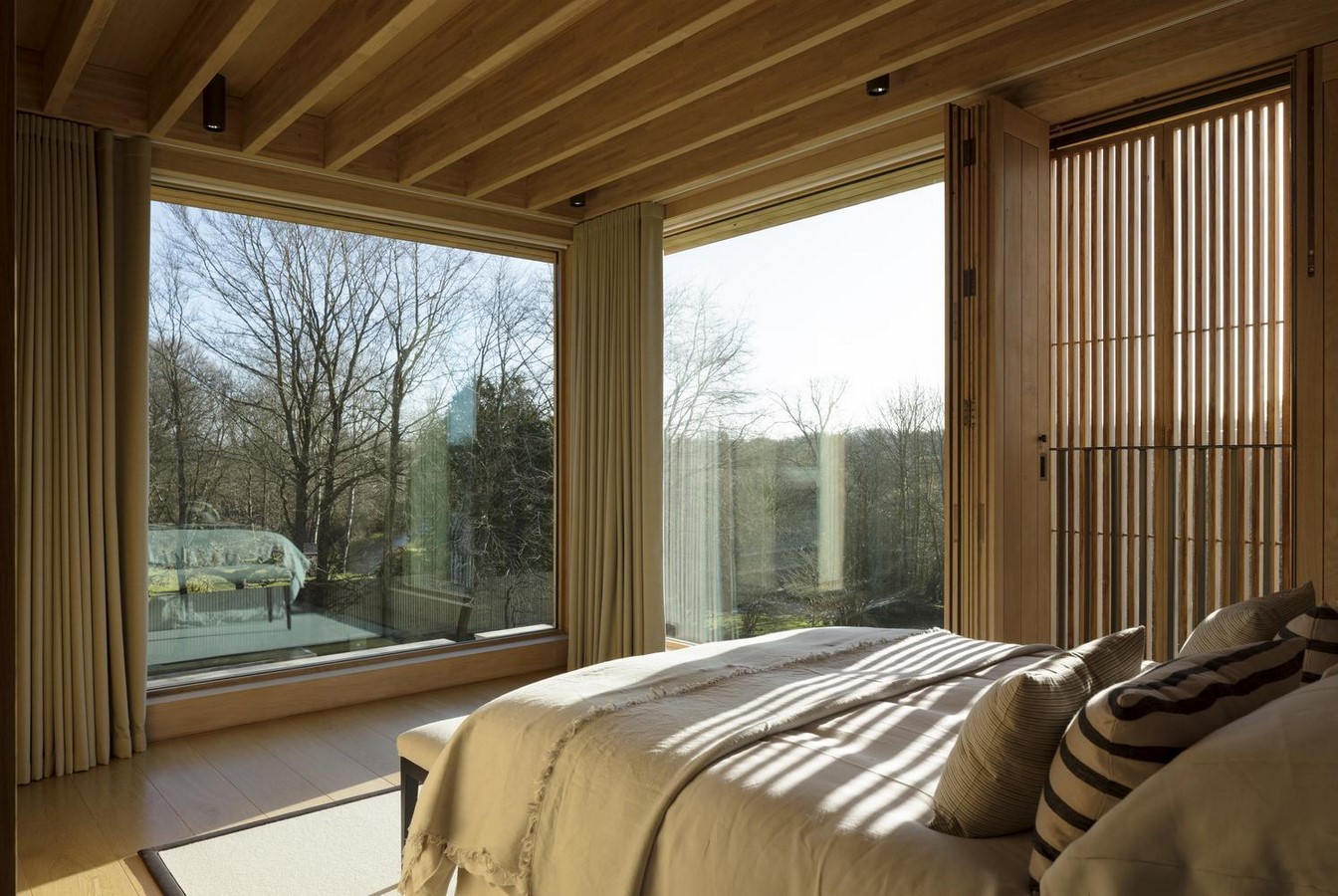
Moving on to the interior spaces, they are oriented to frame the 3 key views of the surrounding landscape: the meadows, the lakes, and the gardens. The structural frame is of steel and concrete, with the load from the upper floor and roof slab countered by oak joists. The house also incorporates a heating system (GSHPs) that utilises the constant moderate temperatures found underground to heat and cool the buildings above ground.
- Magdalene College Library
Location: Cambridge, England
Project Year: 2017
Awards: RIBA Stirling Prize, RIBA National Award, RIBA East Award, Gold Wood Award, American Institute of Architects UK Award
“Students come to the library so they can work separately but together,” said deputy librarian Tom Sykes. “It’s motivating to see other people working, but you also need to be able to concentrate, or hide away. This building provides a wonderful mix of spaces, so there’s something for everyone.”
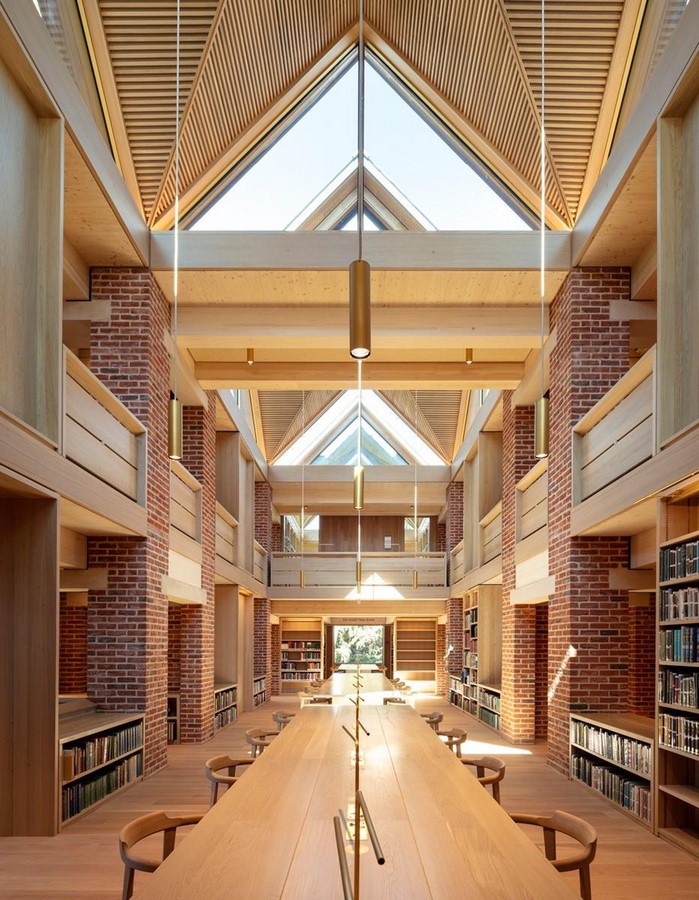
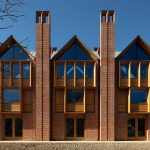
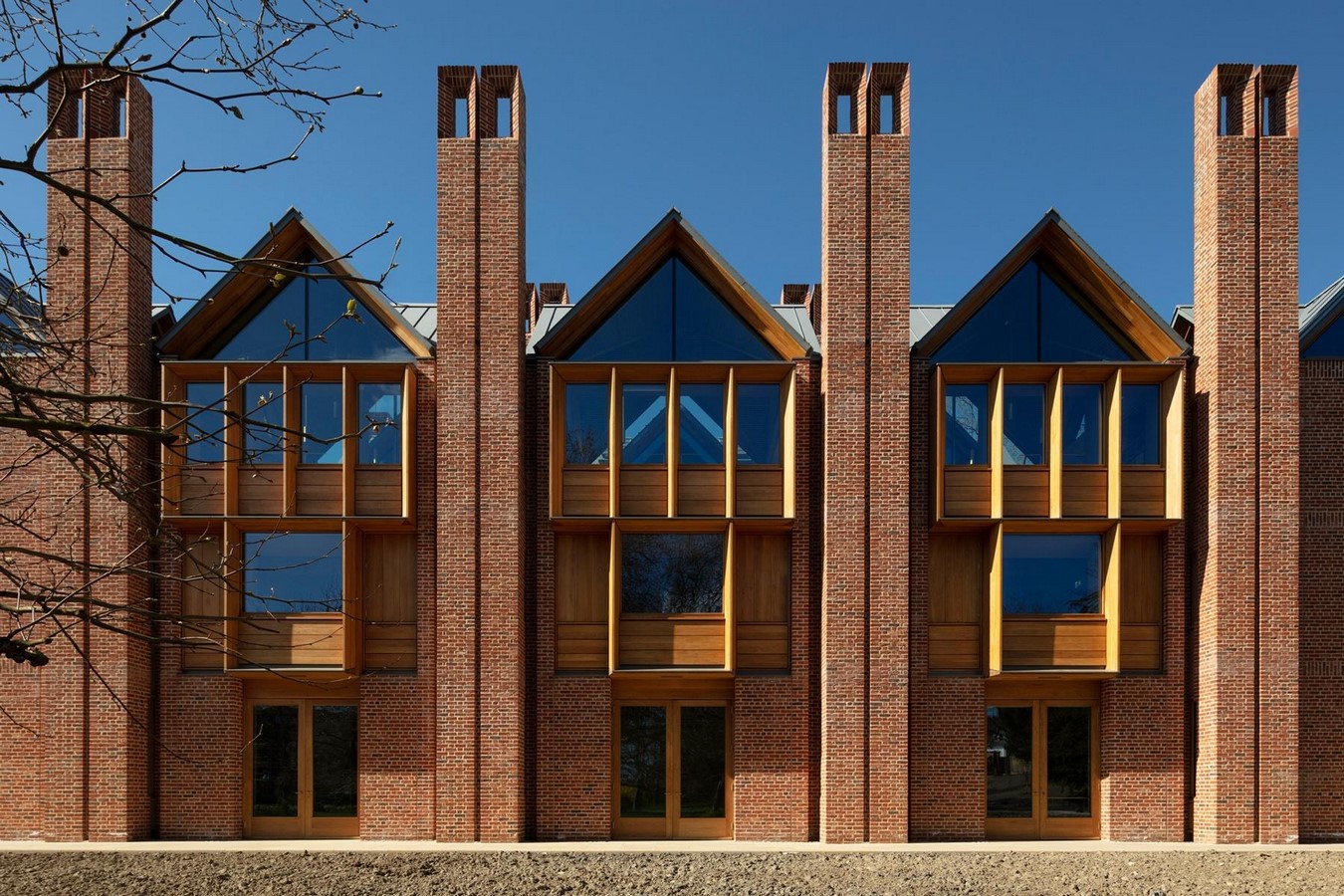
This describes the primary feeling of the users experiencing this space. Built next to the old 17th-century Pepys’ library with cramped spaces, this new library is informed by simple, yet thoughtful brick volumes that reinterpret the medieval architecture of the campus’s older buildings. Materials used include load-bearing brick walls, cross-laminated timber floors and glulam wooden beams, all integrated to result in a long-lasting structure. Past the entrance, students enter into an airy and timeless triple-height space where the columns may remind them of trunks growing upwards and branching into wooden decks and bookshelves so that they may sit under this forest-like canopy of learning.
The skylights are internally clad within a grid of wooden panels through which light enters before bouncing off the beams closest to the ceiling and into the reading halls with a gentle, uniform light, minimising glare at any point within the space. Brick chimneys provide natural ventilation, and fresh air is drawn in through arrow-slit ventilation flaps.
- Bishop Edward King Chapel
Location: Oxford, England
Project Year: 2013
Awards: Oxford Preservation Trust Award, Wood Award, RIBA Award (2013)
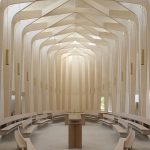
The design’s primary aim was to capture the qualities of a memorable space within the campus of Ripon Theological College. It’s inspired by the natural character of a clearing among mature trees on nearby high ground. Full of wind and light and the rustling of leaves.
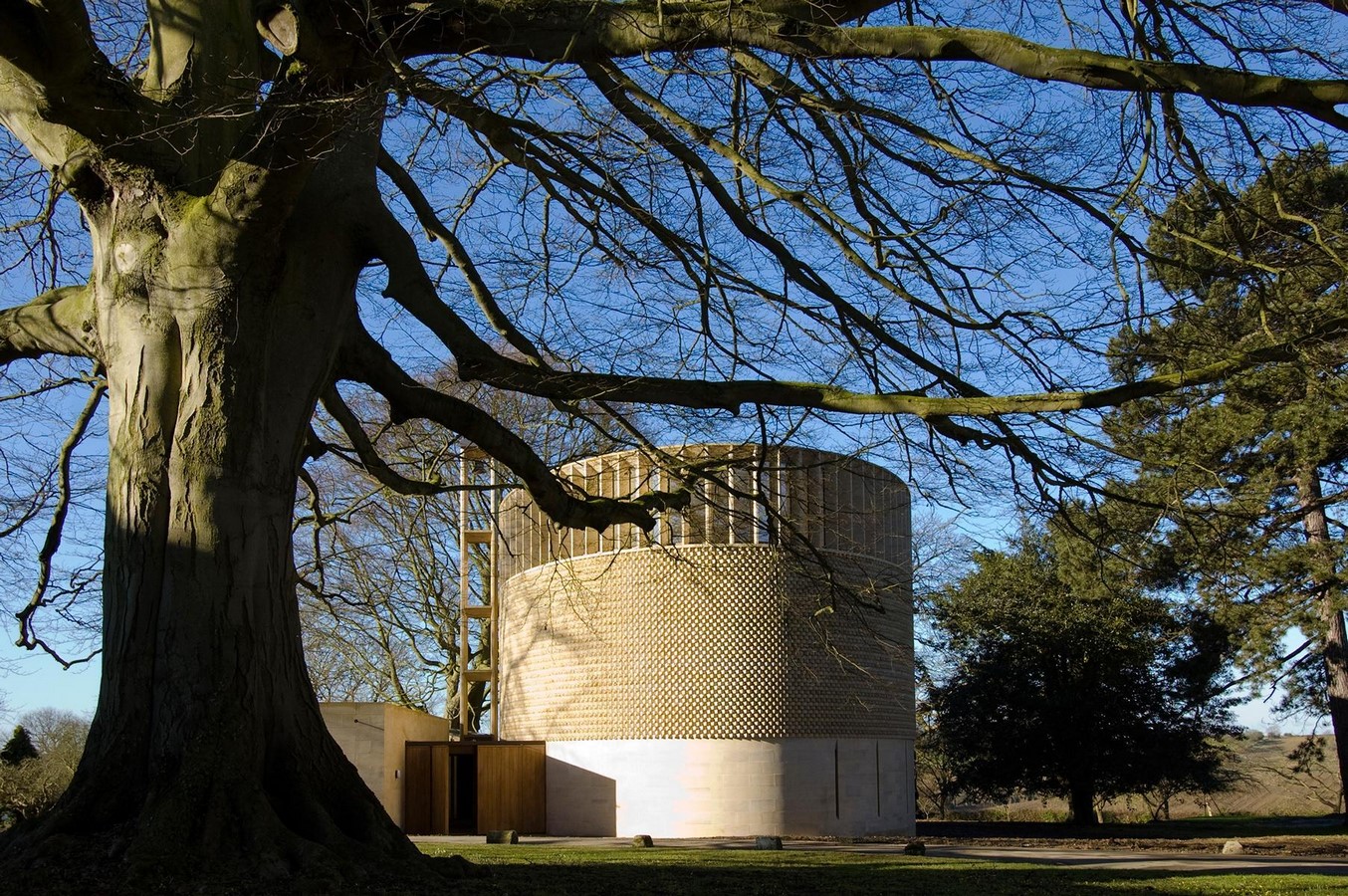
The design consists of two strong images, one of a gentle carving in the ground as a meeting place and the second of a ship-like wooden structure through which light scatters as it does through the leaves of a canopy. These two opposing forces of ground and buoyancy work off each other and give the building the intended character.
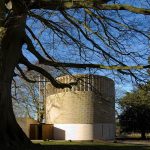
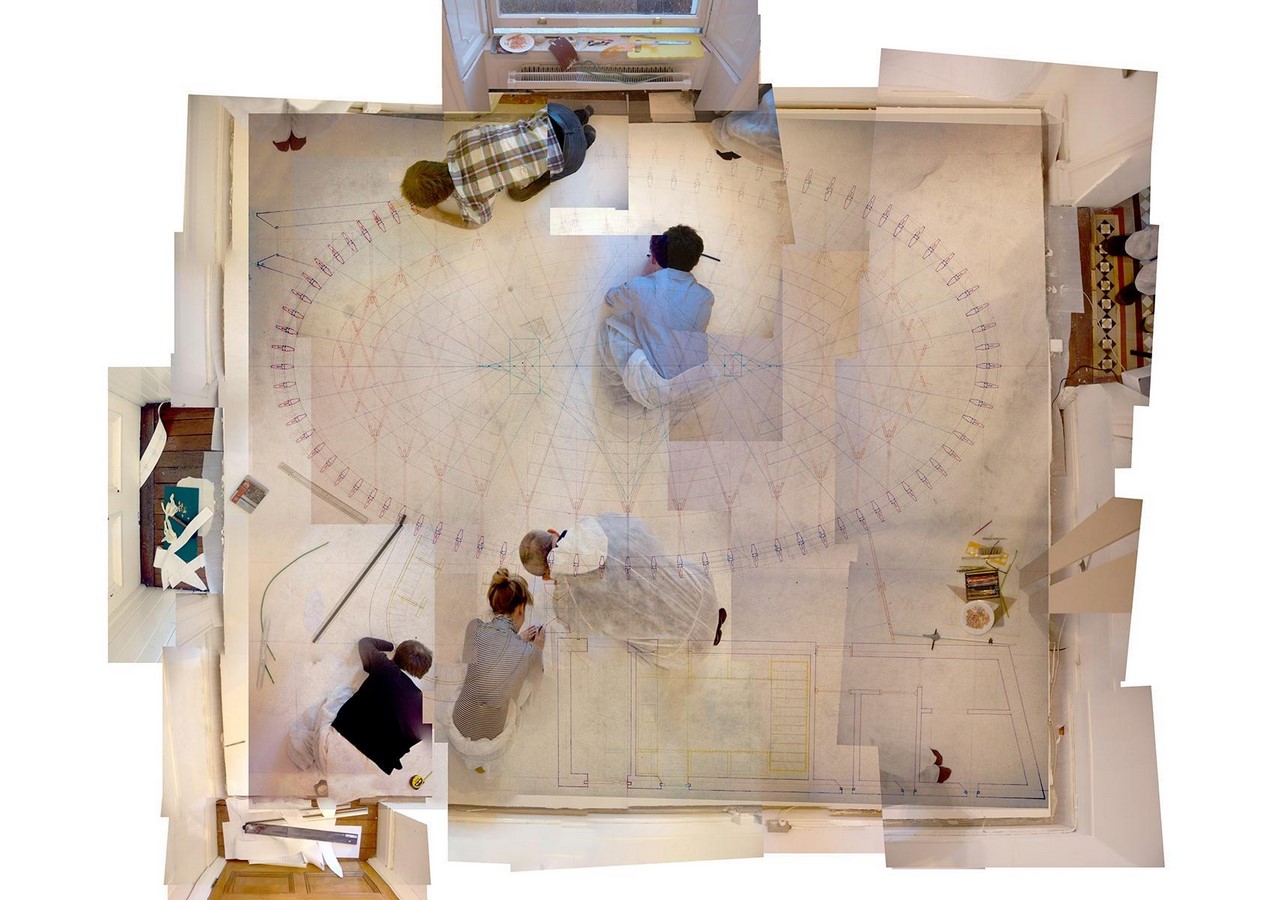
In terms of form, the chapel is the result of several influences. The interior space has clear echoes of English Gothic tradition and the sacred typology of centralised churches in both the elliptical geometry of the floor plan and the slender supports and beams of timber veneer.
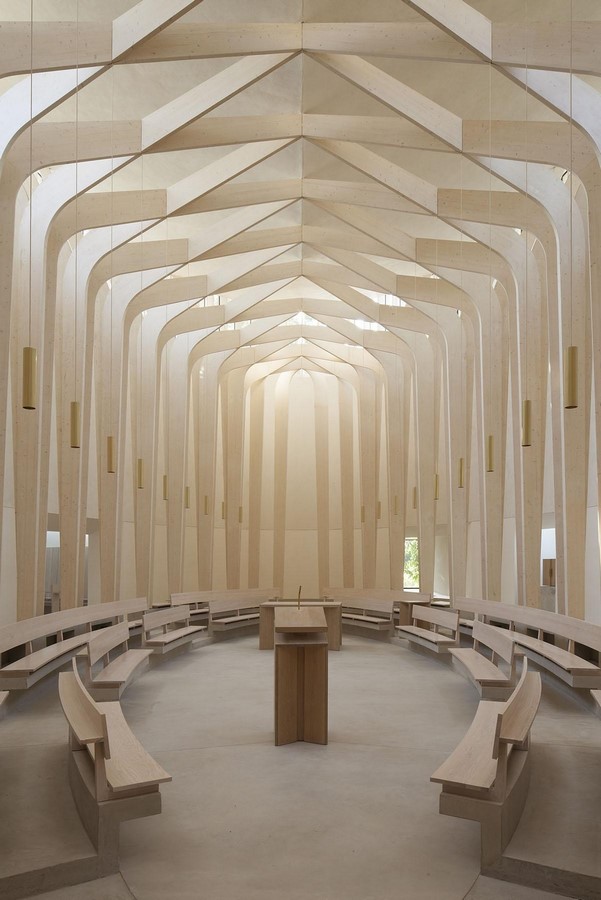
The building is made from Clipsham stone, a kind of limestone present in the history of British architecture, which here is bonded in a masonry of small ashlars placed in such a way that the pieces of each course are positioned at a 45º angle with respect to the previous ones. It is surmounted by a carousel of clerestory windows with stone mullions. Inside, there is an overarching timber frame supporting the roof and simple wooden benches for the congregation.
REFERENCES LIST:
Níall McLaughlin architects (2026) Níall McLaughlin. Available at: https://www.niallmclaughlin.com/ (Accessed: 08 February 2026).
Arquitectura Viva (2024) Bishop edward king chapel, cuddesdon (United Kingdom) – níall mclaughlin architects, Arquitectura Viva. Available at: https://arquitecturaviva.com/works/chapel-for-the-ripon-college (Accessed: 08 February 2026).
Arquitectura Viva (2024b) Magdalene College Library, Cambridge (United Kingdom) – níall mclaughlin architects, Arquitectura Viva. Available at: https://arquitecturaviva.com/works/biblioteca-del-magdalene-college-en-cambridge (Accessed: 08 February 2026).
Wainwright, O. (2022).Cosy Nooks in a thicket of books: Time-Straddling Library is Britain’s Best New Building, The Guardian. Available at: https://www.theguardian.com/artanddesign/2022/oct/13/magdalene-college-cambridge-library-riba-stirling-prize (Accessed: 08 February 2026).
Tapia, D. (2019) Hampshire House / Niall McLaughlin Architects, ArchDaily. Available at: https://www.archdaily.com/913208/hampshire-house-niall-mclaughlin-architects?ad_medium=office_landing&ad_name=article (Accessed: 08 February 2026).
Astbury, J. (2019). Niall McLaughlin Architects creates English country house in Hampshire, Dezeen. Available at: https://www.dezeen.com/2019/03/22/niall-mclaughlin-architects-hampshire-house-england/ (Accessed: 08 February 2026).
Pintos, P. (2021) Auckland Tower / Niall McLaughlin Architects, ArchDaily. Available at: https://www.archdaily.com/958969/auckland-tower-niall-mclaughlin-architects?ad_medium=office_landing&ad_name=article (Accessed: 08 February 2026).
Niall McLaughlin, Nick Kane · The International Rugby Experience (no date) Divisare. Available at: https://divisare.com/projects/477178-niall-mclaughlin-nick-kane-the-international-rugby-experience (Accessed: 08 February 2026).
c3editor (2025). The International Rugby Experience, C3GLOBE. Available at: https://c3globe.com/the-international-rugby-experience-by-niall-mclaughlin-architects/ (Accessed: 08 February 2026).
Peacock, A. (2023). Niall McLaughlin Architects creates red-brick beacon for Rugby Museum, Dezeen. Available at: https://www.dezeen.com/2023/04/06/niall-mclaughlin-architects-international-rugby-experience-limerick-ireland/#comment-6156022648 (Accessed: 08 February 2026).