Minimal architecture, explaining the best from its name. Less, cleaner, and clearer, yet one of the most outspoken styles in architectural forms. The style is characterized by clean lines, open spaces, and a focus on functionality, mostly designed based on a few of the principles of some famous architects. Despite the lack of multiple common elements in the structures, the clean design speaks to the calm and composition in the bustling nature of cities. During recent times, minimal architecture has been considered one of the features to describe modern design forms despite its simplicity. In hyperactive and crowded cities, minimal architecture is a go-to structure for peace of mind, calmness, and relaxation in everyday busy and loud life in fast-forward cities.
Minimal Architecture: Emergence and principles
Inspired by the modern designs and Bauhaus designs, minimal architecture started appearing within its roots. The impact of Bauhaus designs was highly influenced by the minimal style of designing, as it takes on multiple features from Bauhaus designs. During the post-war regime, architects such as Walter Gropius and Mies van der Rohe, who were associated with the Bauhaus architecture, brought their minimalist sensibilities to American architecture. Minimalism started as a movement and gained popularity during the mid-20th century, which later reflected in architecture as well.
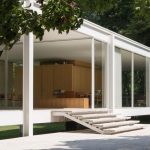
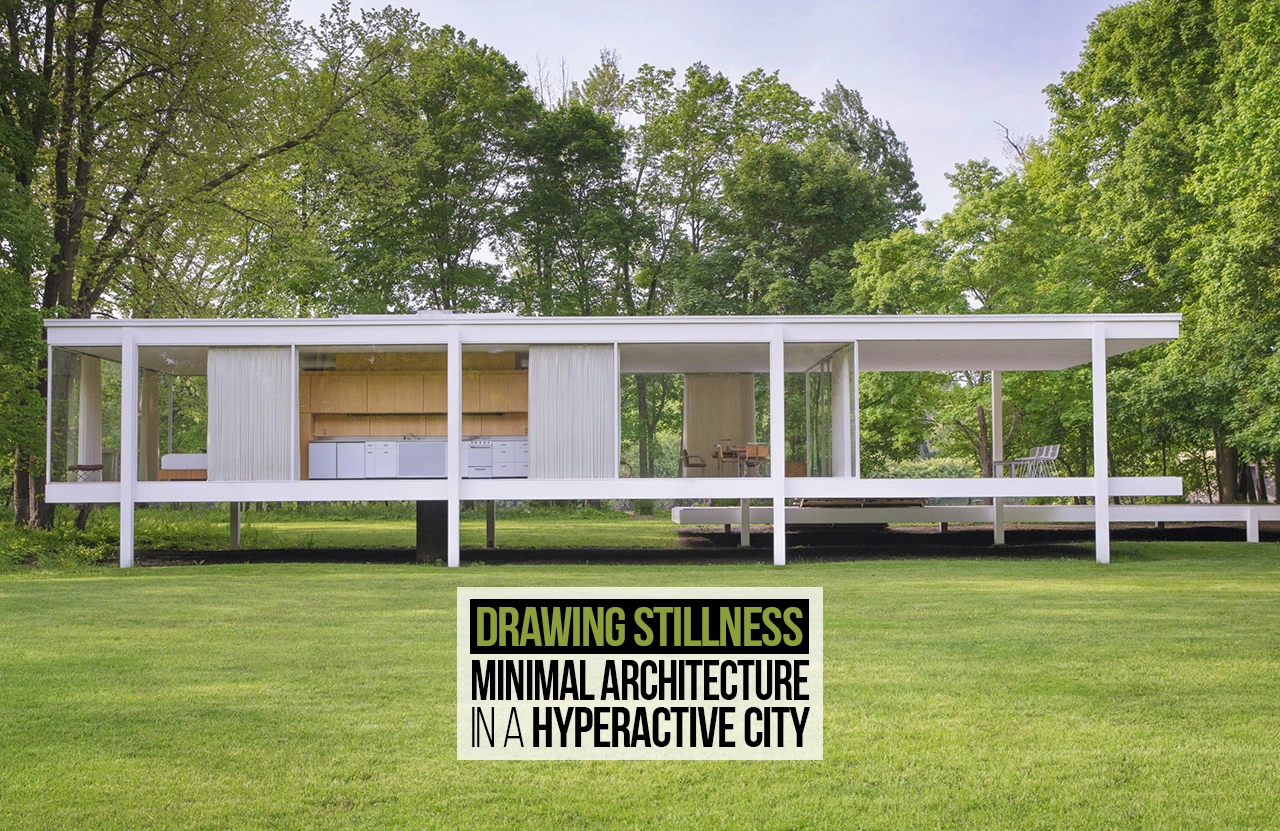
Influenced by multiple architects, a few of the statement principles that are noted to be currently followed are believed to be based on stillness, calmness, and openness.(Fig 2) The planning of the structures includes clean lines, smooth surfaces, and a lack of unnecessary ornamentation, which cuts the excess and focuses on the essentials. The design usually avoids the quantitative number of spaces within the design using unnecessary walls or partitions; large and open fluid spaces are prioritized to show flexibility. The open floor plan designs lead to direct and clear function of the design without any unwanted extra ornamentation for enhancement, as every detail of furniture, fixture, and fitting serves its own clear purpose. (Pattnaik,2025)
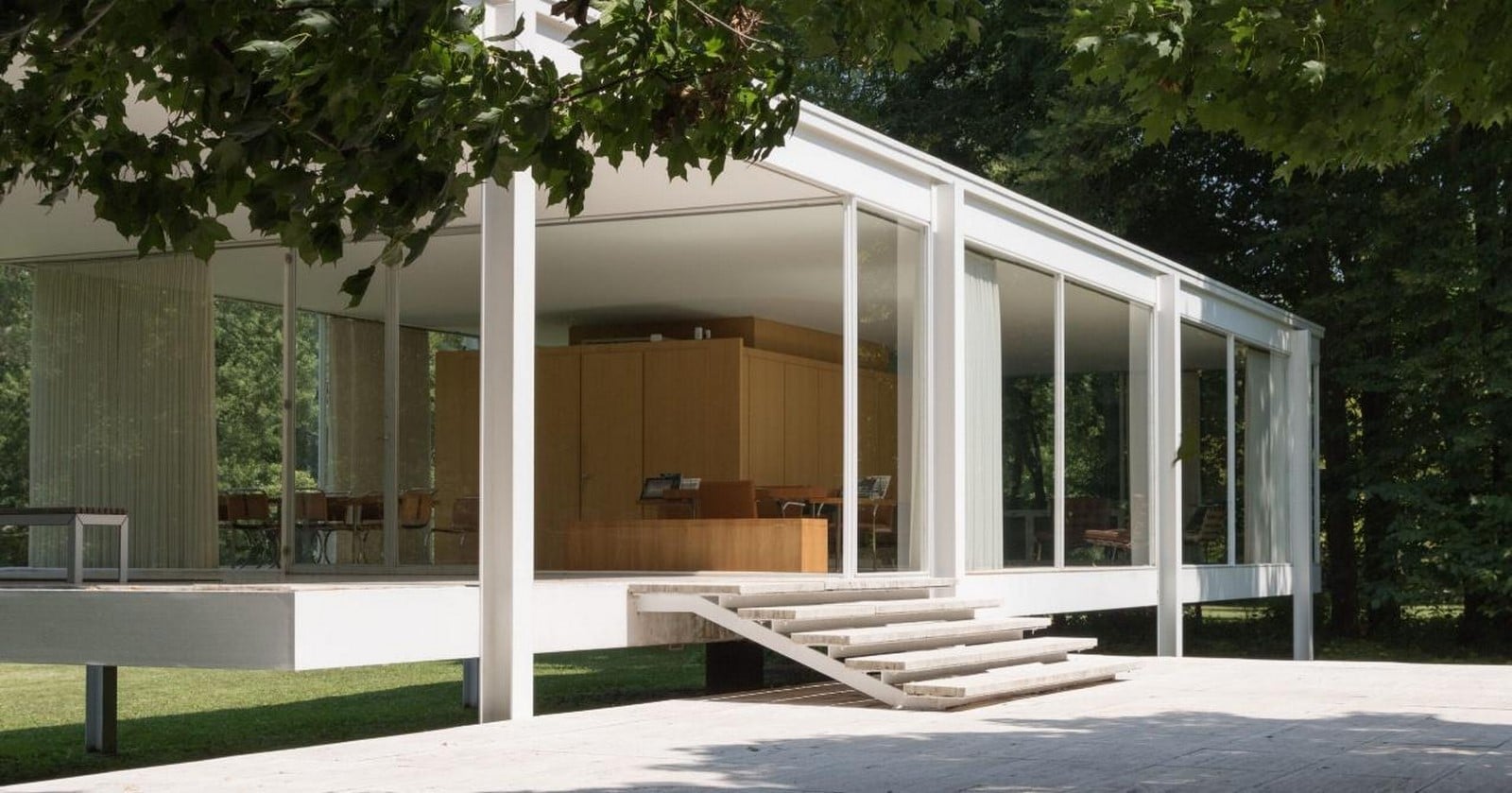
Minimal Architecture assuring peace of mental well-being
In the advanced hyperactive cities such as Dubai, New York, and Paris, people are often seen struggling with calm mental well-being, where they tend to escape from everyday life’s busy life hustles. Minimal architecture plays a significant role out there in one’s life. The soft detailing and clean lines create a room where the crowd, noise, and dense public is neglected, and a sophisticated environment that soothes the mind is provided. Every corner, every detail, every element within design serves its very own purpose. (emkaan, n.a.) Every person wishes a calm, peaceful environment where their space seems to be intentional and relaxing. With minimal architecture, the city’s noises fade, the mind erases everything, and hence, a relieved sense of mind is felt.
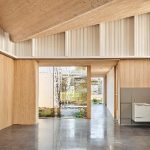
In this advanced yet fast-moving world, where people work at each other’s pace, a minimally designed home is a place where one can peacefully find a space. Minimal does not mean removing everything, but just catering to essential elements that balance life, just like a ship’s anchor. (emkaan, n.a.) A place to feel at home. A place to keep the mind calm. A place where one relaxes from the world. Minimal architecture is not just about designing spaces to cater to, but spaces that reflect a person’s mind. Design forms that not only serve functional purposes but also function as an architectural refuge for people to remind them that mental peace is equally important yet possible with the right way of designing. This is the power of minimal designs, where simplicity isn’t about emptiness; it speaks loudly by affecting mental well-being in positive terms.(Fig.2)
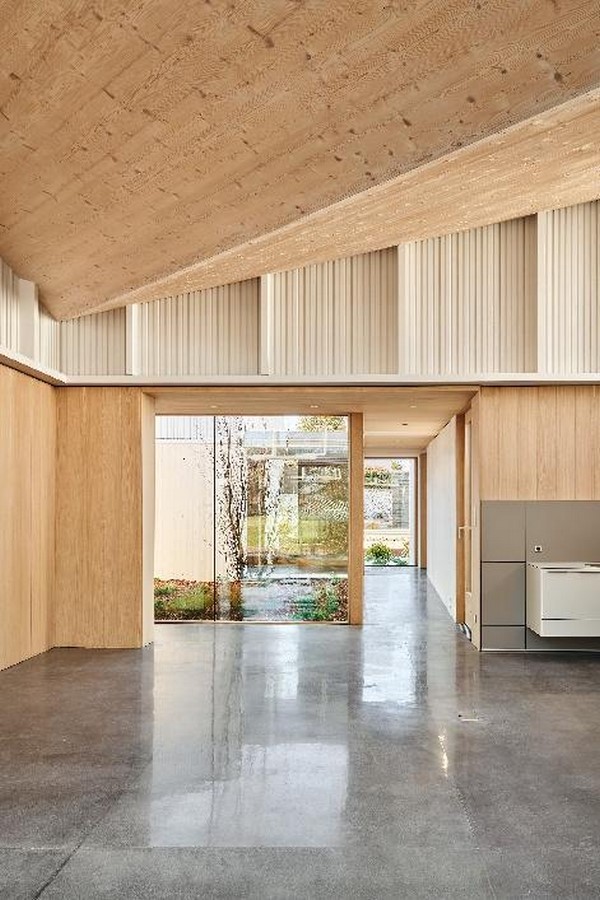
Minimal architecture and mental well-being of a living being are linked to each other, as the environment that surrounds a person affects a person’s mind. As per multiple studies, it is reported that if a person lives in a closed, dark, dull, poorly ventilated room, they are seen to be dealing with stress, anxiety, aggression, and similar emotions. Whereas if a person is seen to be living in an open, airy space and a connection to nature, calming and reducing stress levels while improving mood can be seen.
Architectural design can decide the mental health of an individual, from reflecting mood and productivity to the ability to relax and concentrate. With the recent studies and increased concerns about mental well- being, multiple spaces such as workplaces, hospitals, schools, or homes, architects lean towards following the principle of minimal and living architecture to ensure a positive living environment.
Architectural features encouraging mental well-being
Features that enhance mental well-being are a new priority for designers. Large glass panels not only feature aesthetics but also maximize natural light sources, which affect human circadian rhythms, which monitor sleep and overall mood. Spaces with enhanced natural light provide more stable sleep patterns and improve productivity. Along with natural lightning, indoor air quality and proper ventilation are equally important, as poor indoor air quality can lead to the development of headaches, fatigue, or impaired cognitive function, all of which negatively affect mental health. Spatial planning and layout are equally important, as crowded and cluttered layout planning leads to nervousness and an overstimulated mind. Unlike those who aim for minimalism and open layouts to bring comfort and serenity to the space.( Rawshack,n.ad)
Reference list:
Emkaan (n.d.). How minimalism reduces mental clutter. [online] Available at: https://emkaan.com/how-minimalism-reduces-mental-clutter/ [Accessed 9 Jan. 2026].
Pattnaik (2025). The evolution of minimalist architecture in urban spaces. [online] Available at: https://www.meer.com/en/89800-the-evolution-of-minimalist-architecture-in-urban-spaces [Accessed 9 Jan. 2026].
Rawshack Architects (n.d.). Designing for wellness: how architecture can enhance mental well-being. [online] Available at: https://rawshackarchitects.com/designing-for-wellness-how-architecture-can-enhance-mental-well-being/ [Accessed 10 Jan. 2026].
For images:
Architizer Architizer Journal (2024) Architecture 101: What is Minimalism in Architecture?. [online] Available at: https://architizer.com/blog/practice/details/architecture-101-what-is-minimalism-in-architecture/ [Accessed 10 Jan. 2026].
Wallpaper* Stathaki, E. (2025) Minimalist architecture: homes that inspire calm. Wallpaper*. [online] Available at: https://www.wallpaper.com/gallery/architecture/minimalist-architecture [Accessed 10 Jan. 2026].