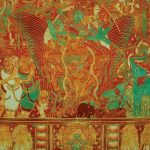
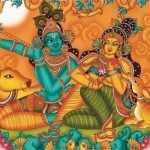
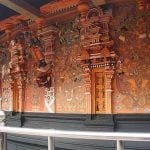
Kerala Mural painting is one of the finest and most unique traditional forms of Indian Art, developed in a culturally, spiritually, and architecturally rich culture of Kerala. These paintings are not created on cloth or paper but instead are painted directly onto the walls of temples and palaces. They are thus permanently associated with the structure on which they are painted. The paintings are distinguished by their bright color, stylized human forms, and iconographic imagery. The Kerala paintings serve more than decoration; they are also graphic depictions of mythologies, philosophies, and devotional thoughts.
Historical background
The origin of Kerala mural painting can be traced back to the 8th-9th century A.D., and continued to be practiced primarily during the period of royal patronage from the 16th to 18th centuries. The walls of many temples and palaces in Kerala served as a canvas for artists who created large-scale images based on epic poems and sacred texts. The murals were part of the ritualistic environment of the temple and provided visual representation and reinforcement of the religious teachings of the times for a majority of people who did not read or write.
In contrast to most other styles of painting from India, which focused on the creation of portable items, the style of Kerala mural painting remained firmly connected to the architectural spaces in which the painting appears. A belief in the permanence of these epic tales led to the enduring presence of the murals within sacred spaces.
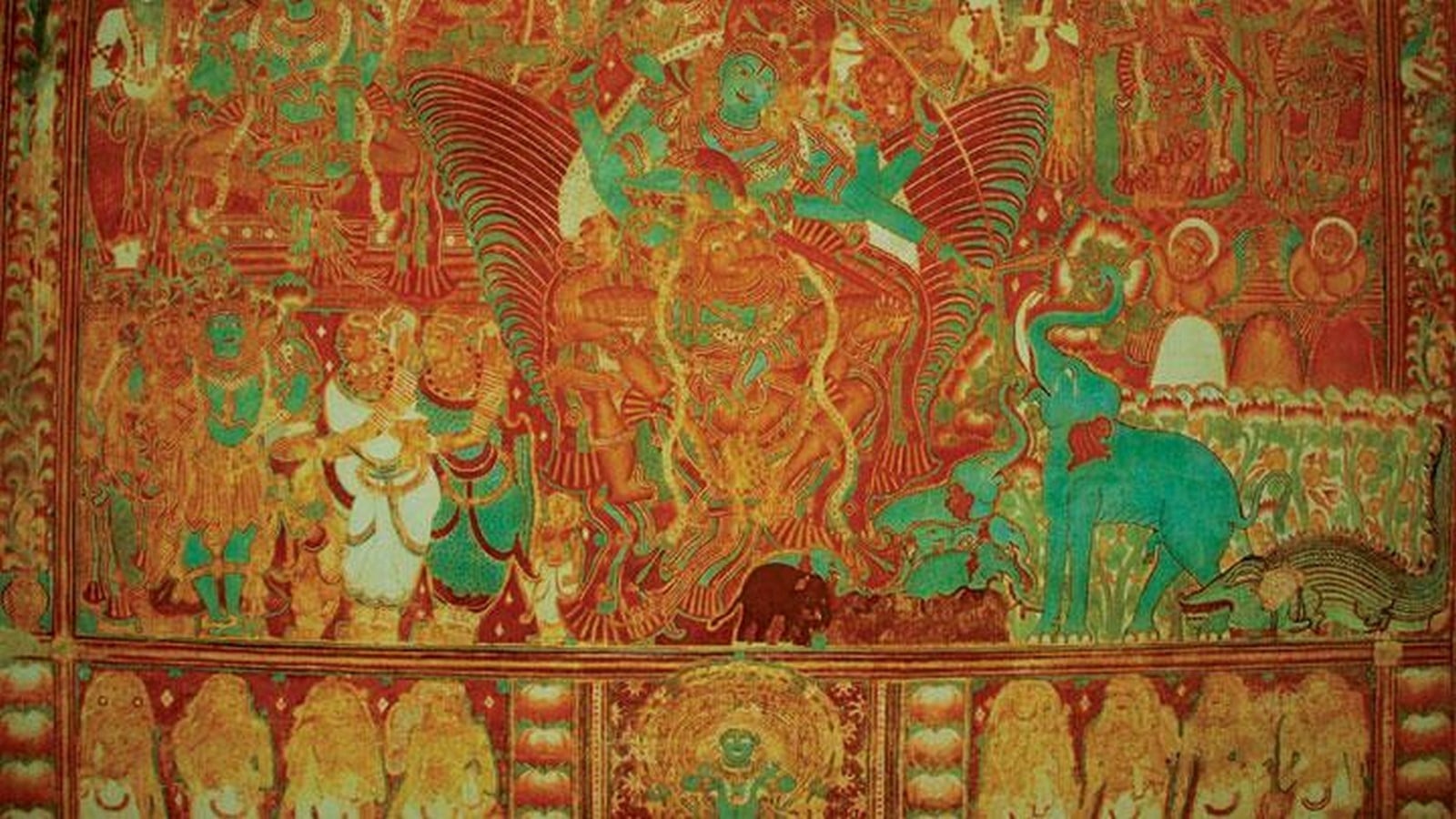
Themes and iconography
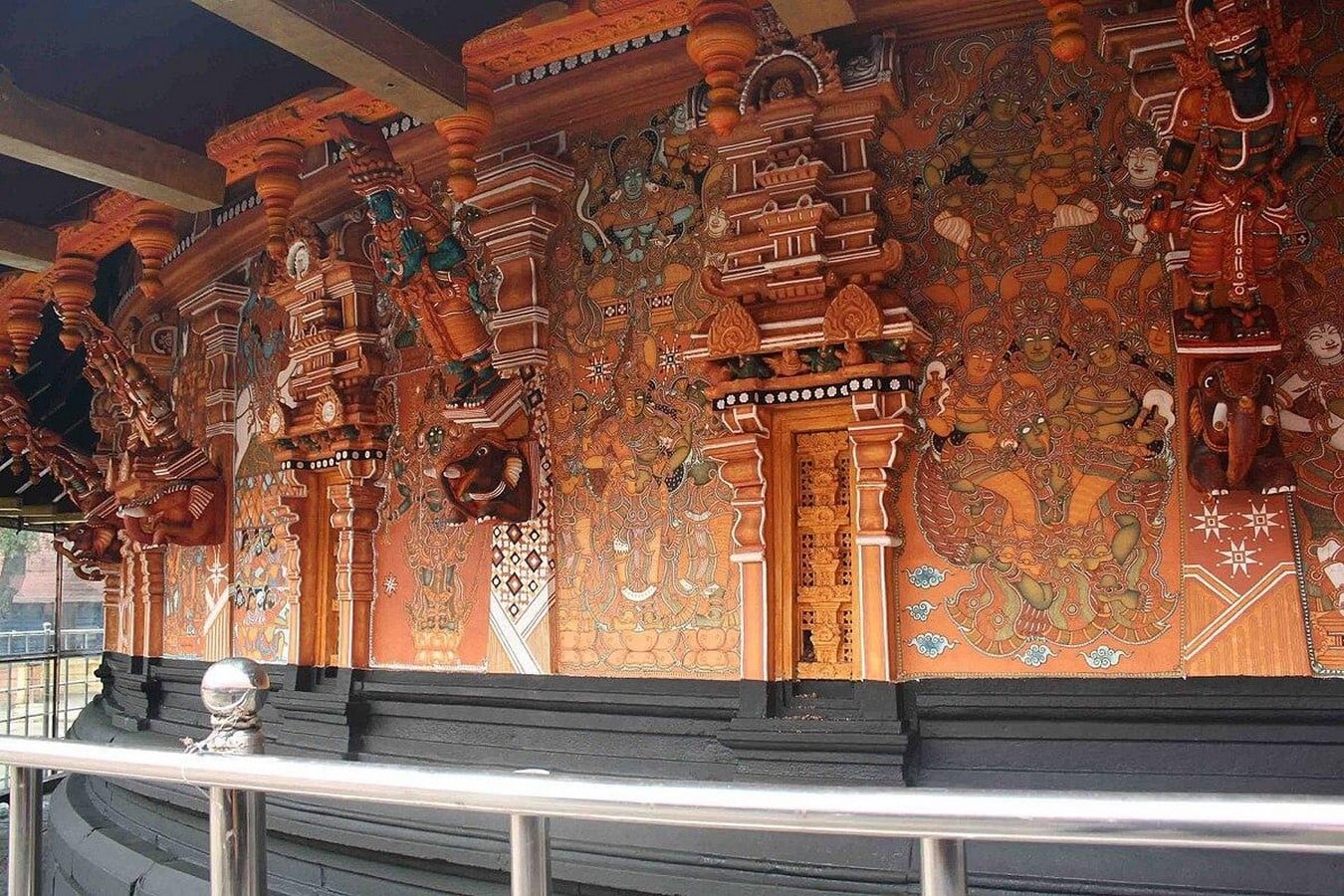
Kerala Mural Paintings are considered mostly to be representative of scenes from the great epics of Hindu mythology, such as the Ramayana, Mahabharata, and Puranas. Deities such as Vishnu, Shiva, Devi, and their various incarnations are portrayed with a strong emphasis on divine proportion and symbolism. Kerala mural paintings have developed their own unique and strict color symbolism, such as green representing divinity, balance, and nobility, red representing passion, power, and aggression, yellow representing knowledge and learning, black representing demonic or negative forces, and white representing purity and spiritual ascendance. Facial expressions, eye shapes, and body proportions follow canonical guidelines, which ensure consistent images of the deities and provide for a measure of divine correctness rather than any opportunity for individual expression.
Material and technique
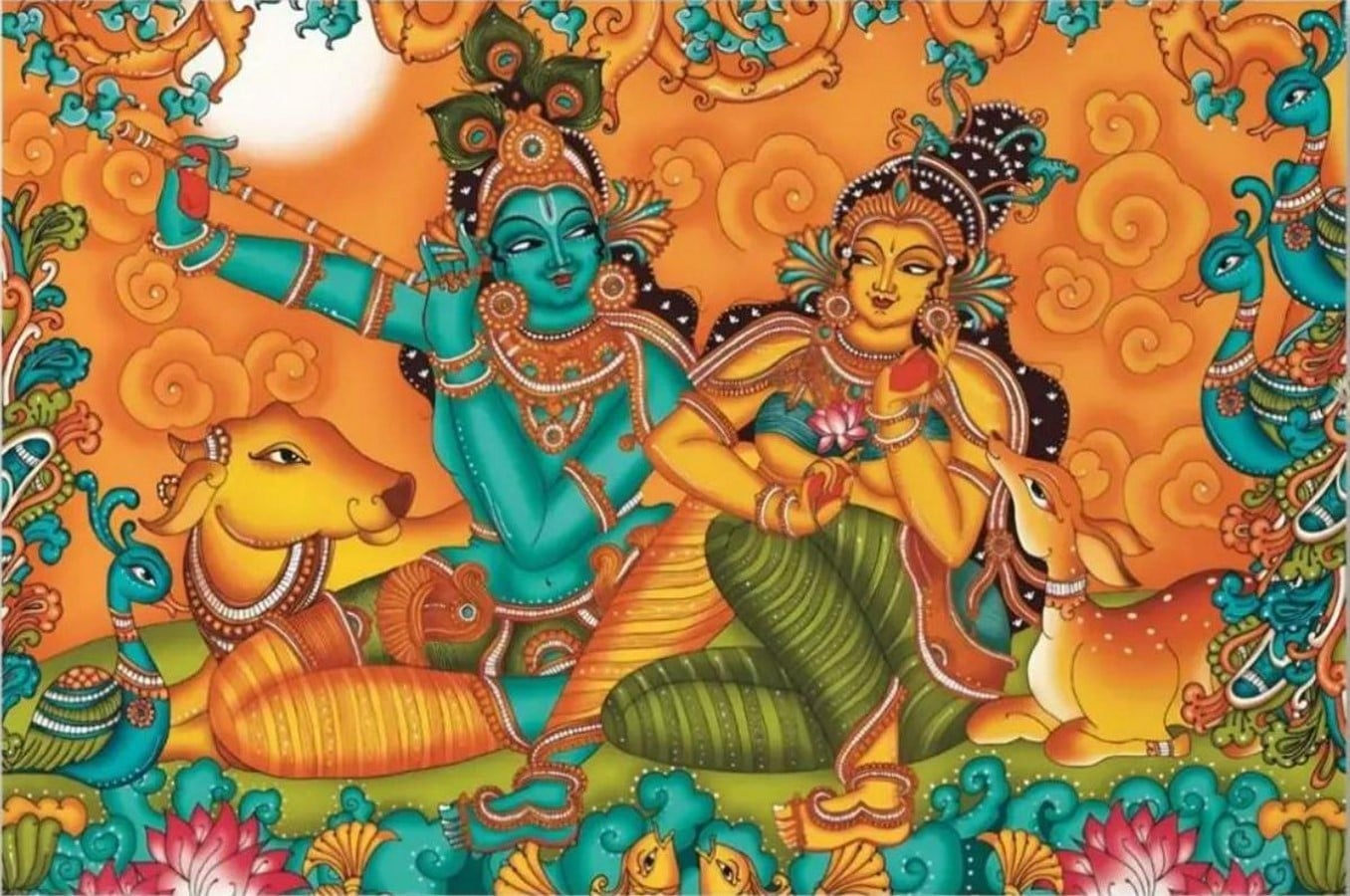
An exceptional feature of Kerala mural painting is its employment of natural pigments sourced from minerals, plants, and organic substances. Colors are made from materials like laterite stone, lime, indigo, turmeric, and soot, combined with natural glues.
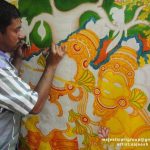
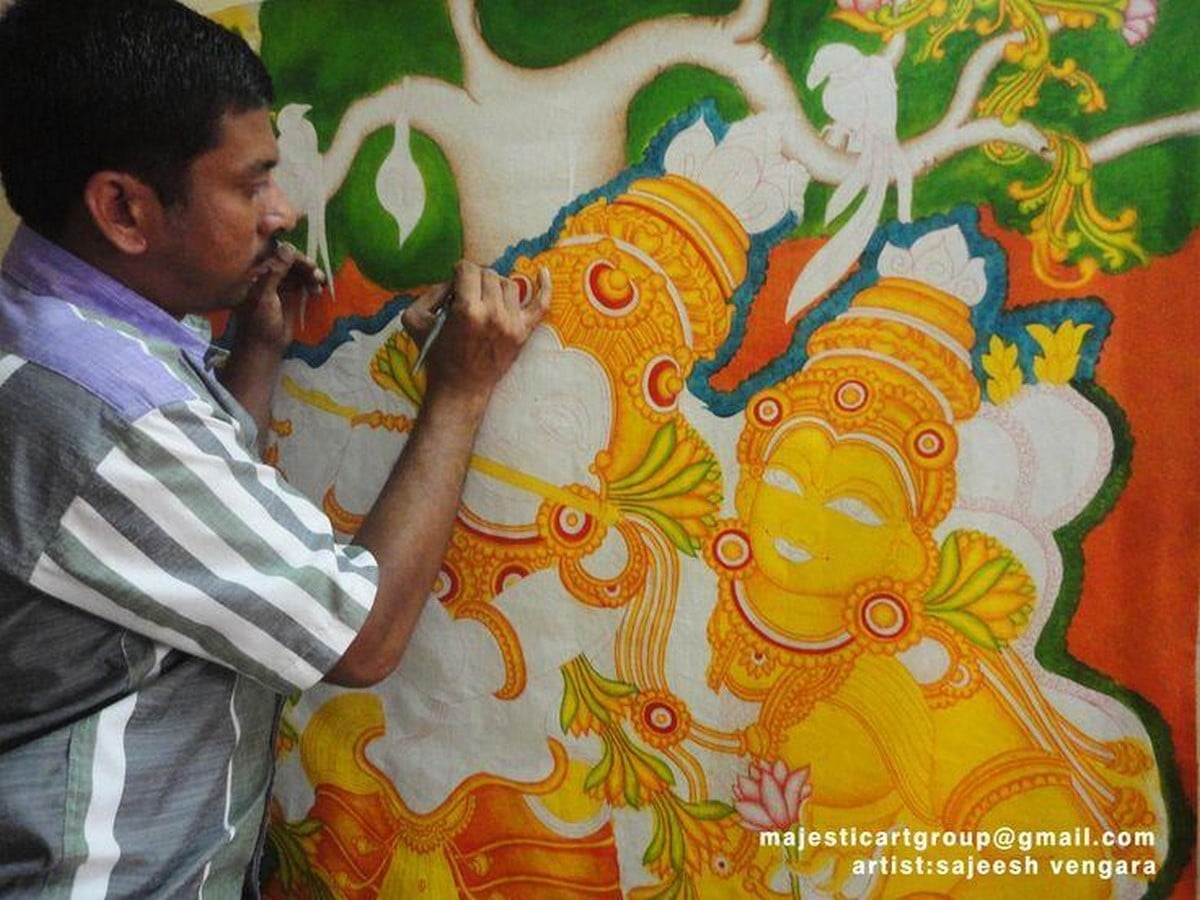
The method of painting adheres to a careful and multi-layered approach, starting from surface preparation of the wall with lime plaster, then drafting the shape using natural charcoal, and then using color in a specific order, and ultimately finishing with a precision brush crafted from animal hair.
Relationship with architecture
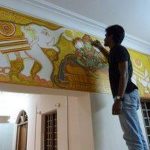
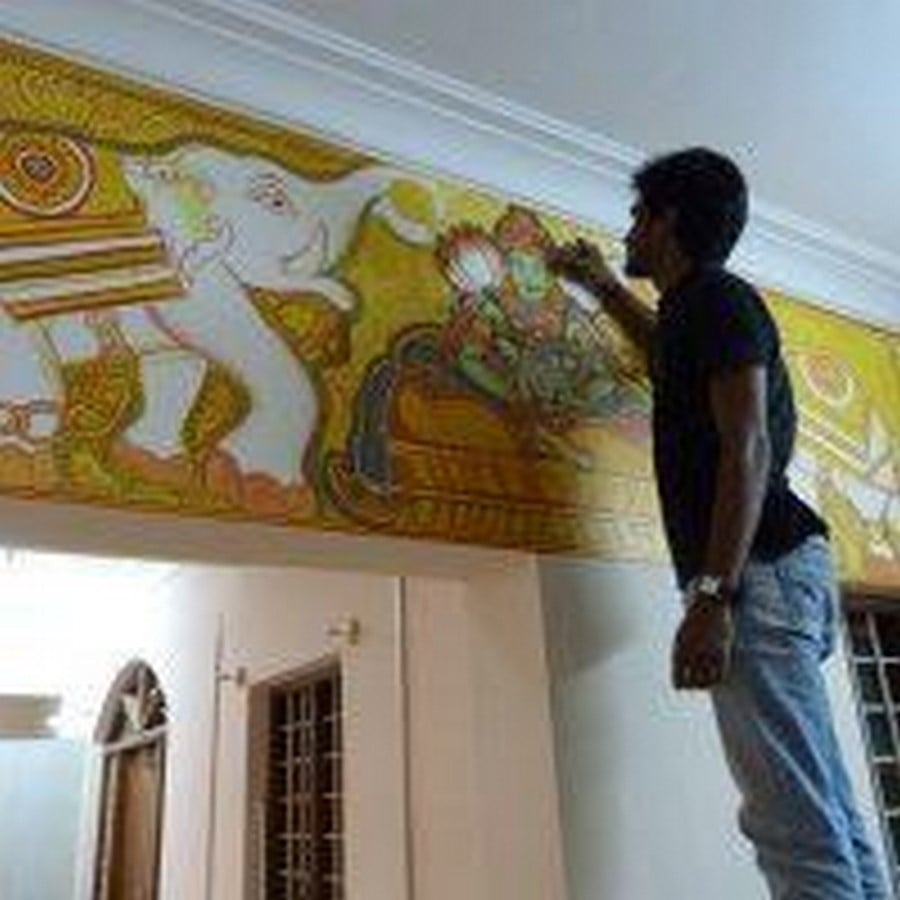
Kerala mural paintings cannot be comprehended separately from architecture. They are intentionally positioned within temples on the walls of the sanctum, hallways, and ceilings, enhancing spatial flow and the experience of rituals. Architectural features like columns, doorways, and niches frequently influence the location of the murals.
The restrained light inside the temple amplifies color richness and fosters an immersive, reflective ambiance. Consequently, the murals do not overpower the space but rather exist in harmony with the architecture, enhancing the spiritual purpose of the building.
Cultural and social significance
Besides artistic significance, Kerala murals act as visual archives of shared memory. They maintain mythological stores, societal values, and spiritual beliefs through the ages. Traditionally, these artworks serve an instructive purpose, conveying cultural information through visuals instead of written words.
In modern times, Kerala murals have transformed beyond temple surfaces to canvases and other public structures, preserving tradition and making it available to broader audiences.
Kerala mural painting exemplifies India’s capability to blend art, architecture, and spirituality into a cohesive cultural manifestation. Its rigorous technique, symbolic richness, and architectural harmony set it apart from other mural styles in India. In a period characterized by digital images and fleeting visuals, they highlight the importance of permanence, artistry, and narratives deeply connected to Kerala.
But the question remains, as contemporary environments change swiftly, how can these profoundly contextual art forms maintain significant expression in current architecture?
References:
Nair, D. S. (1998). Kerala Mural Painting. Thiruvananthapuram: Department of Cultural Affairs, Government of Kerala.
Dehejia, V. (1997). Indian Art. London: Phaidon Press.
Goswamy, B. N. (2004). Indian Painting: Essays in Honour of Karl J. Khandalavala. Mumbai: Marg Publications.
Menon, A. G. (2012). Symbolism and technique in Kerala mural paintings. Journal of South Indian Art and Culture, 6(2), 45–58.
Namboodiri, K. R. (2015). Architecture and wall paintings in Kerala temples. Indian Journal of Traditional Knowledge, 14(3), 412–419.
Indira Gandhi National Centre for the Arts (IGNCA). (n.d.). Mural traditions of Kerala. Ministry of Culture, Government of India.
Kerala Lalithakala Akademi. (n.d.). Kerala mural painting tradition. Government of Kerala.