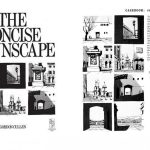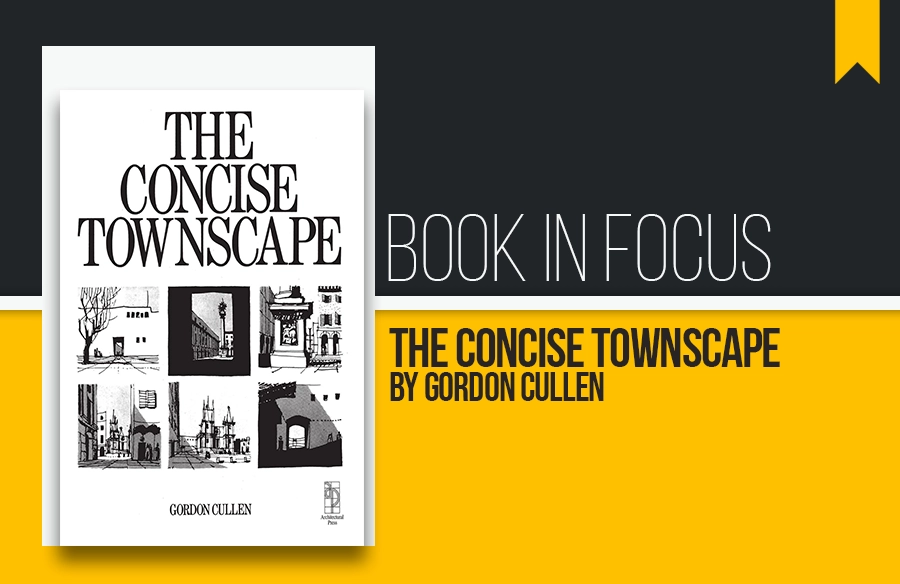
In the canon of twentieth-century urban design literature, few texts have exercised as pervasive and enduring an influence as Gordon Cullen’s The Concise Townscape. Originally published in 1961 under the title Townscape and later abridged and refined in 1971, this work stands not merely as a manual for architectural arrangement but as a philosophical manifesto for the human experience of the built environment. Emerging from the intellectual crucible of The Architectural Review in post-war Britain, Cullen’s theories offered a profound, almost subversive counter-narrative to the dominant modernist orthodoxies of the time. While the disciples of the Congres Internationaux d’Architecture Moderne (CIAM) and Le Corbusier advocated for the “Radiant City”—a rationalized landscape of isolated towers, functional zoning, and vast, sanitized open spaces—Cullen championed the intricate, messy, and emotionally resonant “art of relationship” found in the traditional European town.
The urgency of Cullen’s work must be understood against the backdrop of a Britain in the throes of reconstruction. The post-war period was characterized by the rapid expansion of New Towns and the proliferation of suburban sprawl, a phenomenon that Cullen and his colleague Ian Nairn fiercely critiqued as “Subtopia”—a leveling of the distinct characters of town and country into a bland, homogeneous continuum. In this context, The Concise Townscape was not a retreat into nostalgia, as some detractors later argued, but a radical attempt to codify the visual logic of the traditional town so that it could be defended against the steamroller of technocratic planning. Cullen’s method was explicitly visual and phenomenological; he argued that while scientific planning addresses the quantifiable amenities of life—housing density, transport efficiency, hygiene—it often fails to address the “visual impact” which dictates whether a city is emotionally inhabitable.
By distinguishing between the technical “structure” of a town and its visual “scenery,” Cullen identified a critical gap in professional practice. He posited that one building standing alone is architecture, but “bring two buildings together and an art other than architecture is made possible”—the art of Townscape. This Article provides an exhaustive, critical analysis of Cullen’s theoretical framework, dissecting his triad of Optics (Serial Vision), Place, and Content. It explores how his taxonomy of urban experiences—ranging from the “grandeur” of the vista to the “intimacy” of the enclave—established a vocabulary that continues to inform urban design, heritage conservation, and the psychological analysis of public space.
The Theoretical Triad: Optics, Place, and Content
Cullen structures The Concise Townscape around three primary categories of urban experience: Optics (concerning vision and movement), Place (concerning the body’s position and relationship to the environment), and Content (concerning the intrinsic quality and fabric of the city). This tripartite division allows for a granular analysis of how humans perceive and inhabit space, moving beyond the static two-dimensional planning maps that dominated the era.
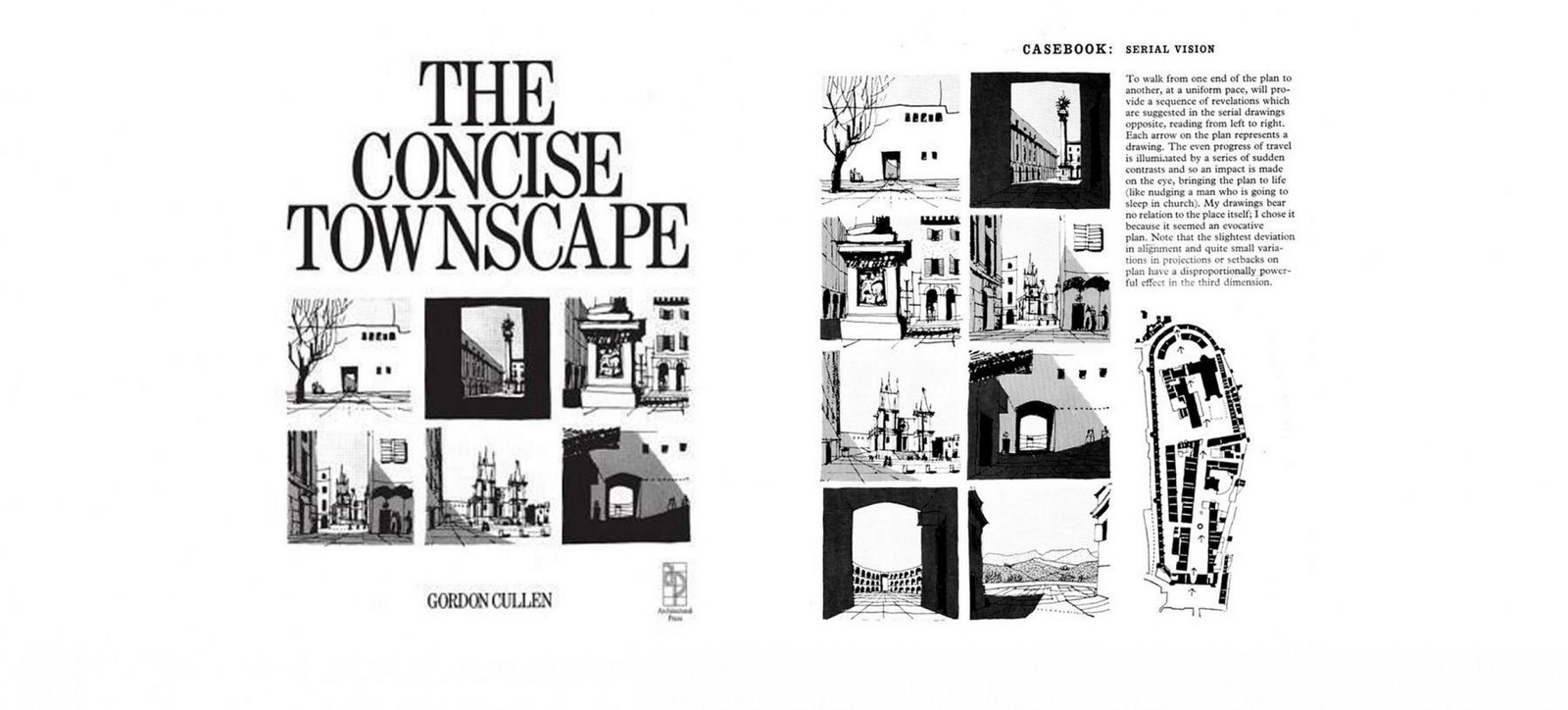
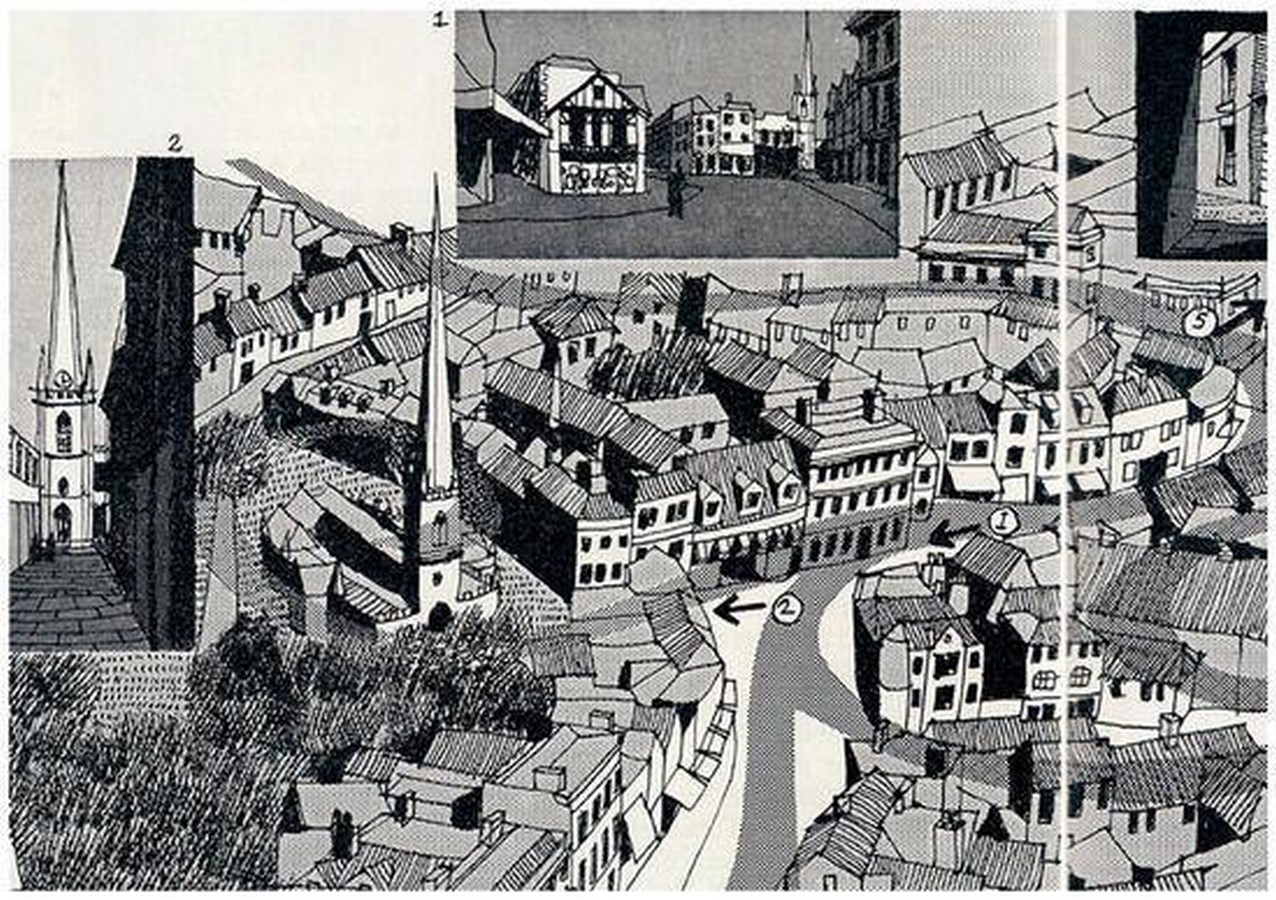
The most enduring and transformative contribution of Cullen’s work is undoubtedly the concept of “Serial Vision”. This principle challenges the static Beaux-Arts tradition of designing cities around fixed, monumental axes viewable from a single point. Instead, Cullen introduces the fourth dimension—time—into urban analysis. He observes that although a pedestrian may walk through a town at a uniform pace, the visual environment is revealed in a series of “jerks or revelations” rather than a smooth, continuous flow.
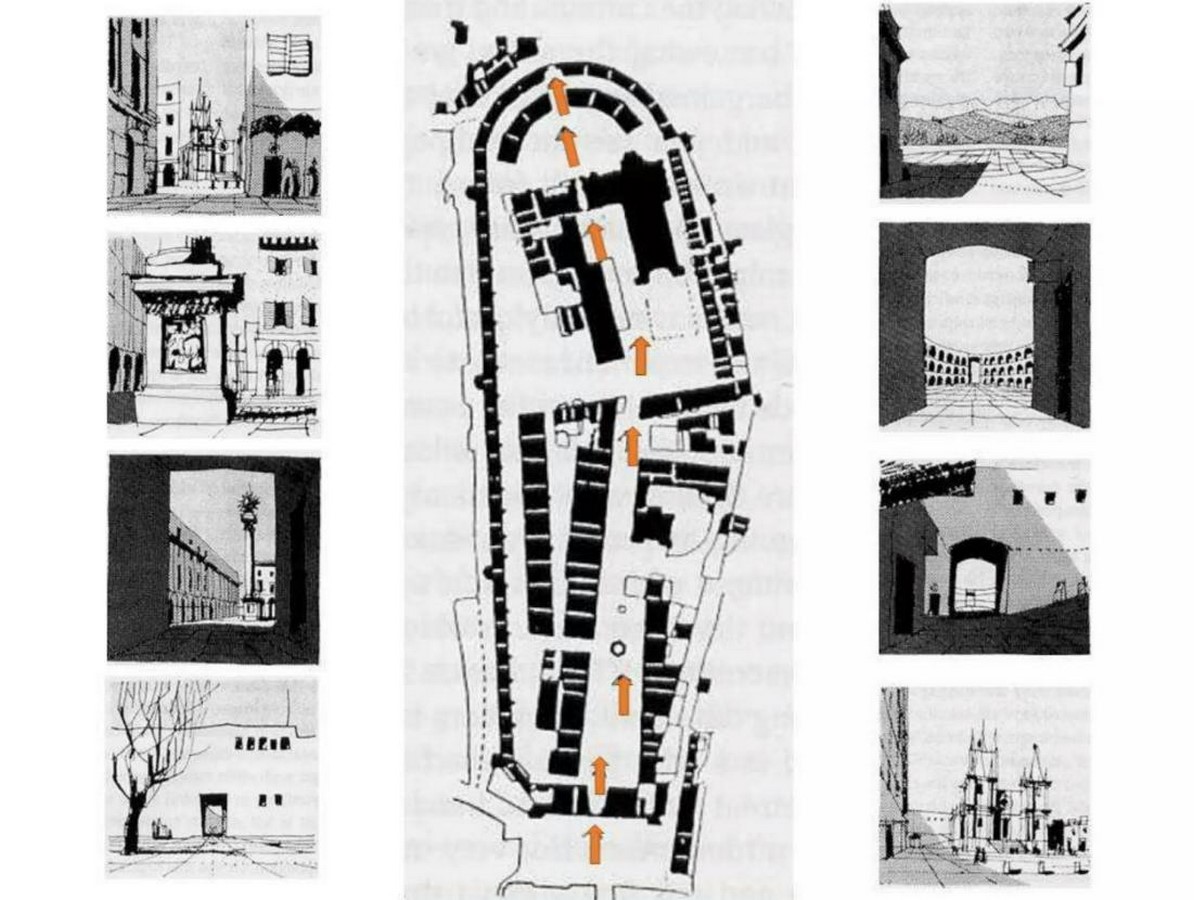
At the core of Serial Vision is the dialectic contrast between the “Existing View” and the “Emerging View”.
- The Existing View: This represents the immediate, known environment that the observer currently occupies. It is the “here and now” of the pedestrian’s experience.
- The Emerging View: This is the glimpse of what lies ahead—a tower appearing over a rooftop, a vista unfolding around a curved street, or a sudden opening into a square. It represents the “future” of the journey, the anticipation of the next spatial event.
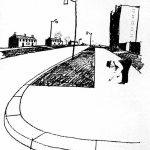
Cullen argues that the human mind reacts sensitively to contrast. It is the tension between these two views—the known and the unknown—that creates urban drama. If a street is straight, wide, and endless (typical of the “Prairie Planning” Cullen despised), the existing view is identical to the emerging view. There is no mystery, no anticipation, and consequently, no engagement. The pedestrian is visually bored because the environment offers no narrative progression.
By manipulating the sequence of these views, the urban designer can craft a “dramatic and theatrical” journey. This is akin to a cinematic experience where the city is viewed as a sequence of frames. A sudden constriction in the street (the “narrows”) might heighten tension, which is then released upon entering a spacious piazza. This “unfolding” quality keeps the observer in a state of active engagement with the environment, transforming the commute or the stroll into an emotional event.
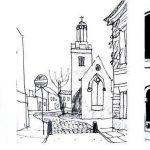
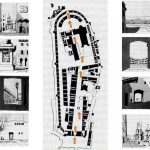
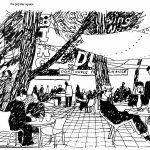
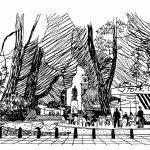
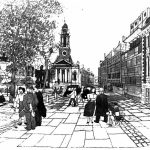
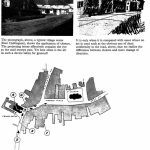
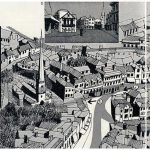
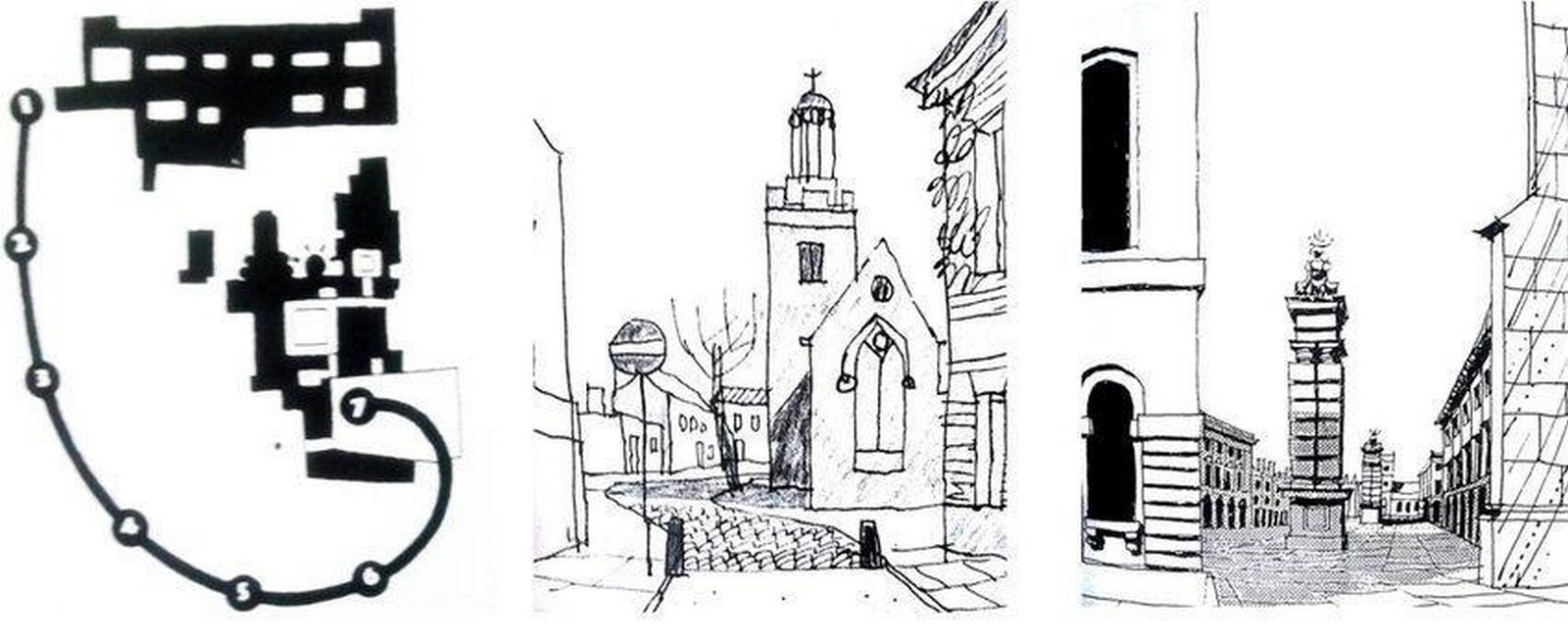
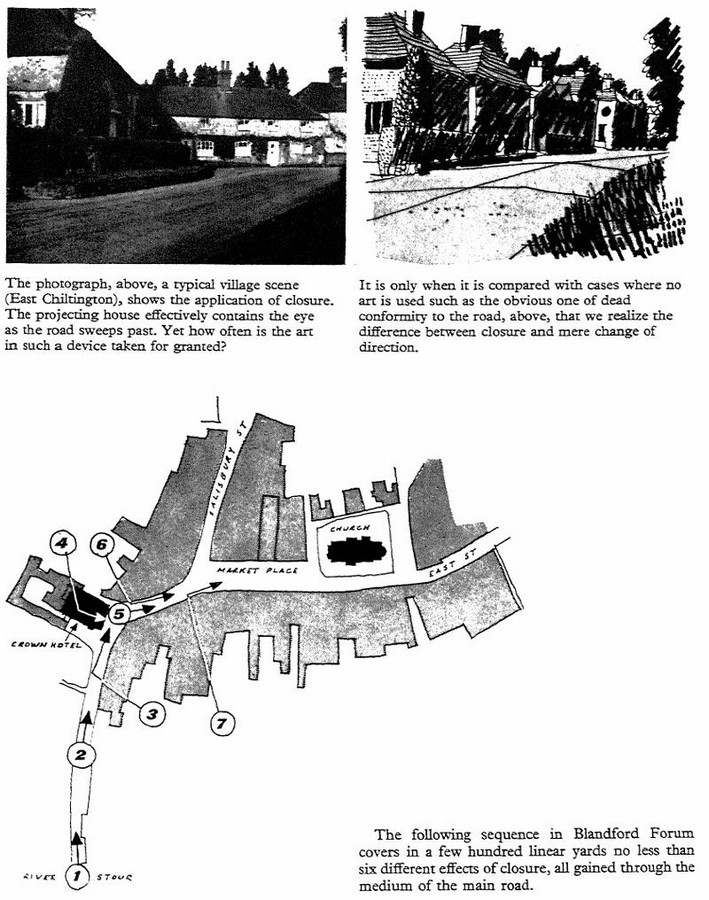
To illustrate Serial Vision, Cullen employed a distinct graphic technique: the storyboard. He would sketch a sequence of perspectives from the pedestrian’s eye level, accompanied by a plan map with arrows indicating the viewpoint and direction of movement. This method was revolutionary because it forced designers to evaluate their proposals not as abstract geometric patterns from above, but as immersive experiences from the ground.
The storyboard captures the “undulating skyline,” the interplay of light and shade, and the rhythm of facades, demonstrating how “slight deviations in alignment” or the placement of a projection can radically alter the perception of space. For example, in his analysis of Oxford’s High Street, Cullen used these sketches to show how a curve in the road (deflection) preserves the sense of enclosure while promising a future revelation, thereby maintaining the pedestrian’s interest.
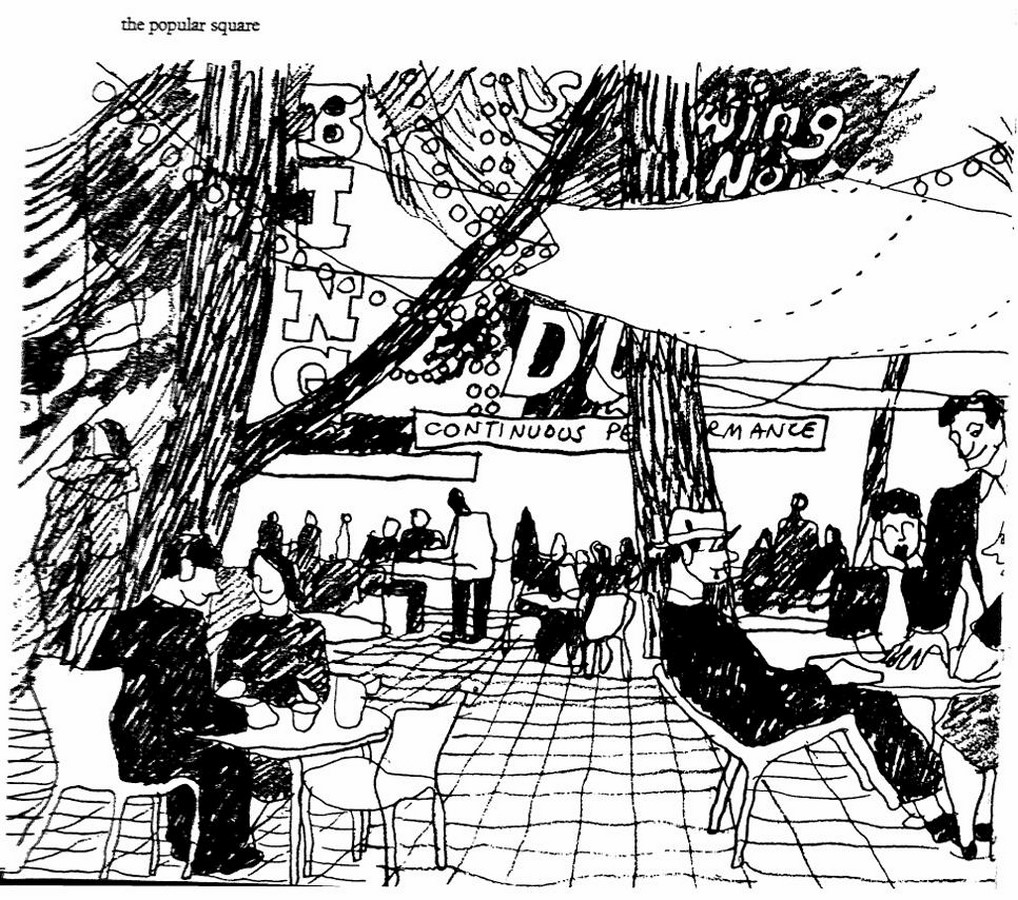
While Optics deals with what the eye sees, the category of “Place” concerns what the body feels. Cullen emphasizes the “somatic” or “kinesthetic” experience of the environment—the sense of “position” the body occupies within the urban matrix. He argues that humans possess an instinctive desire to locate themselves relationally: “I am in IT, or above IT, or below IT, I am outside IT”. This section of the book catalogs the spatial devices that trigger these feelings of possession and relationship.
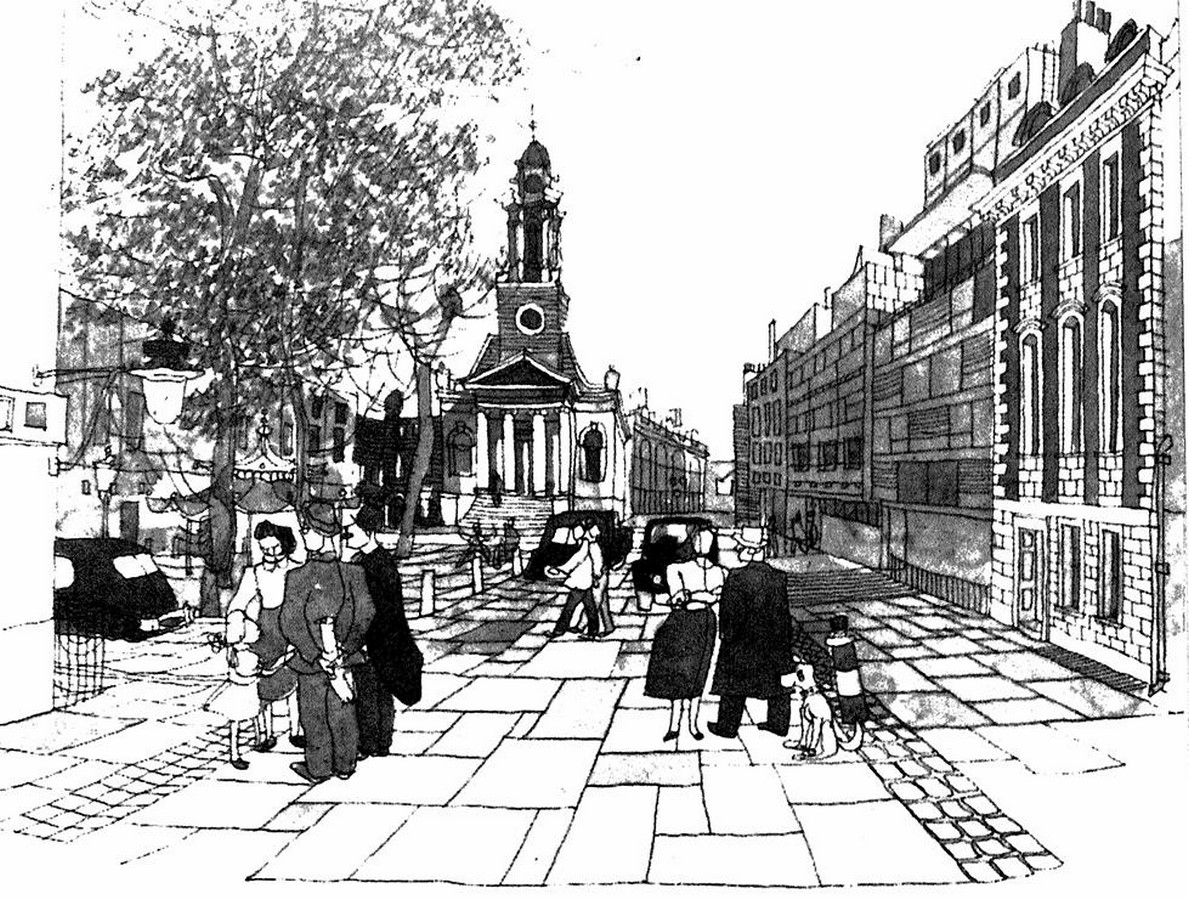
The primary sensation in this category is “Enclosure.” Cullen posits that the “outdoor room” is the most powerful device for instilling a sense of identity and “hereness”. When buildings define a space, they create a volume that is distinct from the endless void of the “prairie” or the undifferentiated sprawl. For an enclosure to be effective, it must be visually “digestible”—the walls (buildings) must relate to the floor (pavement) and the ceiling (sky) in a way that creates a coherent whole.
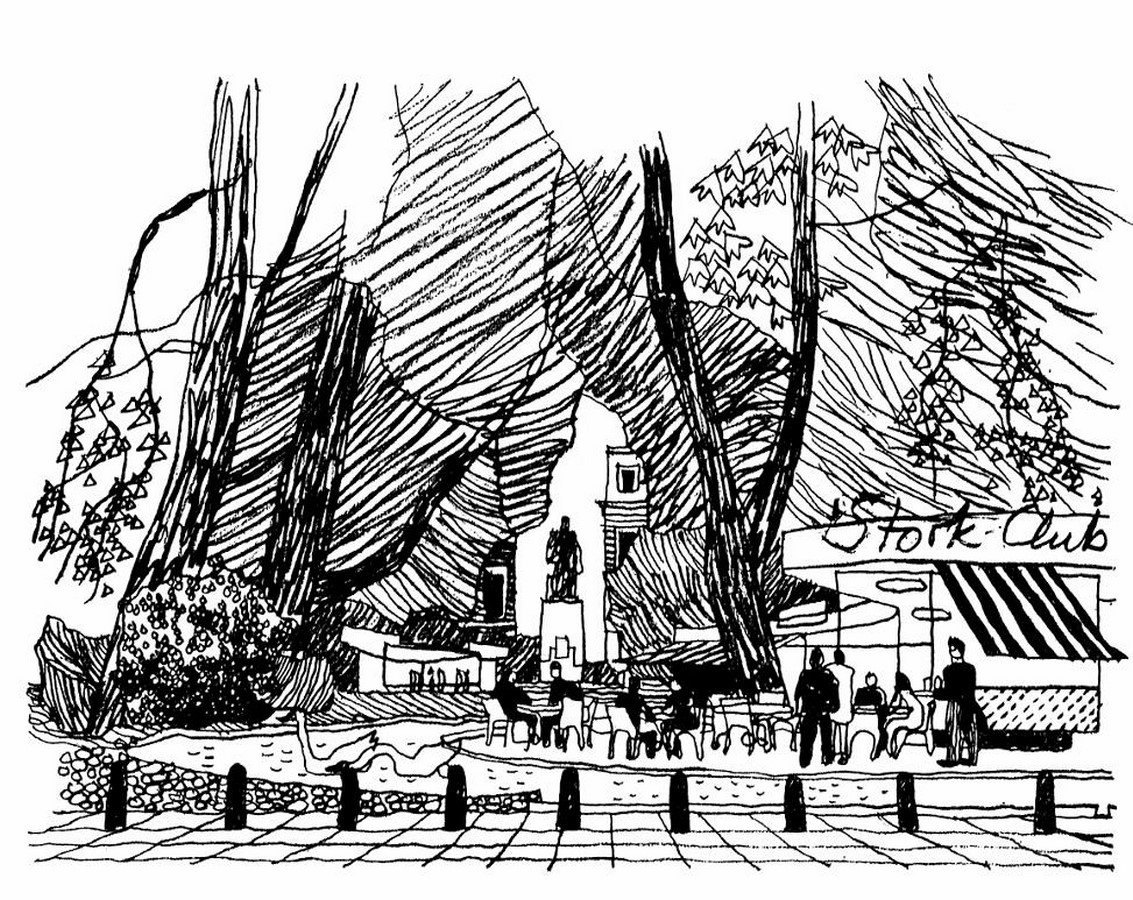
However, Cullen warns against total enclosure, which can lead to claustrophobia. He advocates for “Punctuation” or “Escapes”—glimpses out of the enclosure that connect the “Here” (the known, static space) with the “There” (the unknown, dynamic space beyond). This interplay between “Here and There” adds depth to the urban experience. A man standing in a secure square (Here) looking through an archway at a distant spire (There) experiences a complex emotional state combining security with anticipation.
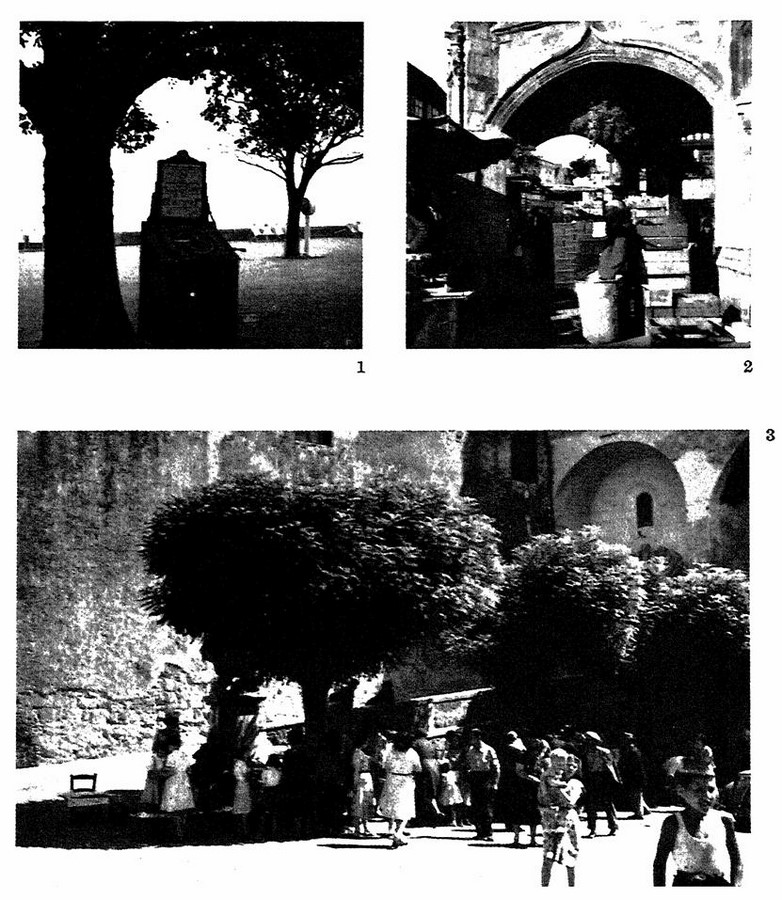
A crucial, yet often overlooked, concept in Cullen’s lexicon is “Viscosity.” He defines this as “a mixture of static possession and possession in movement”. In many modern cities, streets are designed solely for rapid movement (low viscosity). However, in a successful townscape, there are zones where the flow of movement thickens and slows down—market stalls, groups of people chatting, outdoor cafes. These elements create “resistance” to rapid transit, encouraging people to pause and “possess” the space.
“Possession” itself refers to the feeling of ownership or belonging in a public space. This can be achieved through “occupied territory” (e.g., the shade of a tree, a marked-out pavement) or “enclaves” (recessed spaces that offer sanctuary from the traffic stream). Viscosity and possession are biological metaphors that describe the “vitality” of a town; they transform a thoroughfare into a social stage.
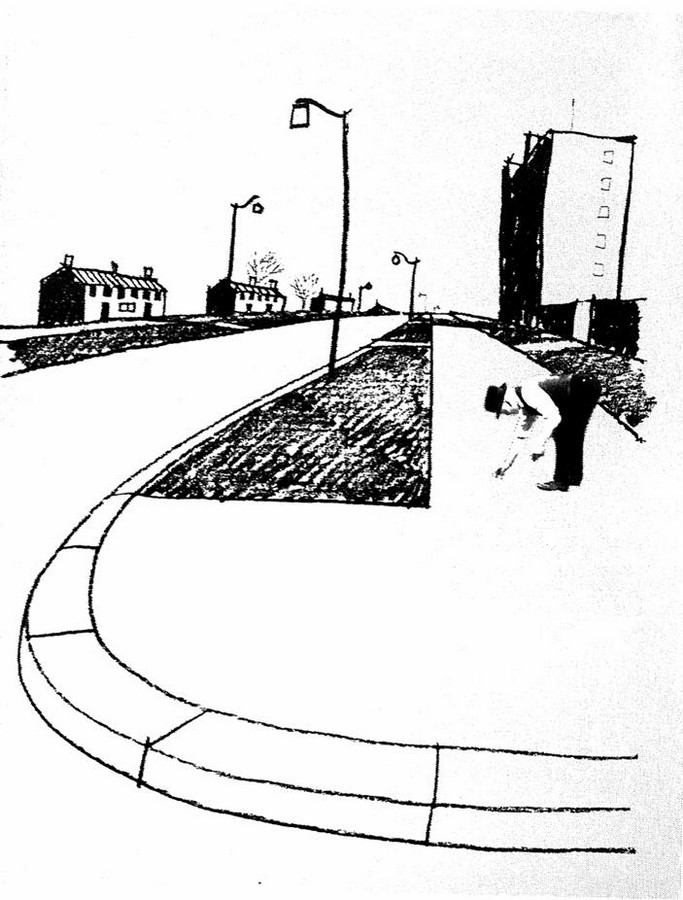
Cullen also distinguishes between different scales of place. He identifies the “Heroic” scale—monuments, grand vistas, places of collective power—and contrasts it with the “Intimate” scale of the domestic enclave or the “secret town”. A successful townscape weaves these scales together, allowing the individual to move from the exposure of the public square to the shelter of the private close. This variation prevents the monotony of a single, relentless scale, which Cullen identified as a failing of both suburbia (relentless intimacy/boredom) and modernist super-blocks (relentless heroism/alienation).
The third category, “Content,” moves beyond spatial geometry to address the “fabric” of the town: texture, color, style, character, and uniqueness. Cullen argues that the material reality of the city—its “Thisness”—is vital for emotional connection.
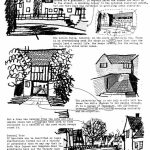
“Thisness” is Cullen’s translation of the philosophical term haecceitas (quiddity). It refers to the unique, intrinsic quality of a specific place or object that distinguishes it from all others. It is the opposite of standardization. In a world of mass-produced architecture, Cullen championed the idiosyncrasies that give a town its personality. This could be a specific type of local stone, a unique style of lettering on a shopfront, or a peculiar juxtaposition of historical layers. He urged designers to recognize and enhance these unique qualities rather than erasing them in favour of a universal “international style”.

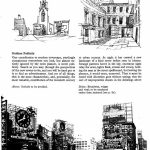
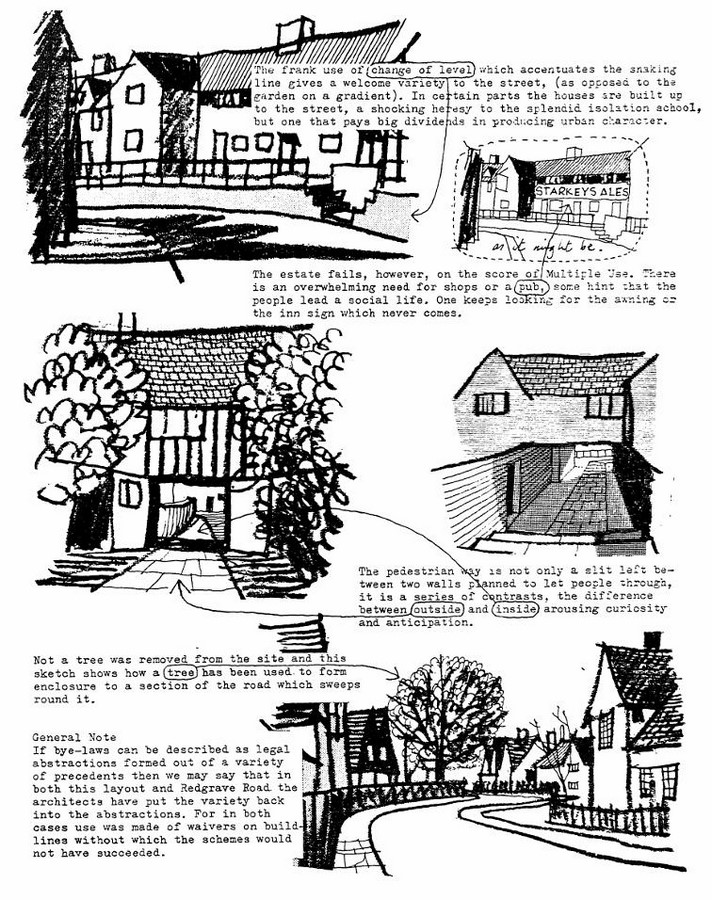
Cullen also explored the concept of “Animism” in the urban environment—the idea that buildings and objects can “talk” to each other and to the observer. Through “Juxtaposition,” unrelated elements (e.g., a church spire and a gasworks, or a tree and a brick wall) are brought into a visual relationship that releases a new meaning or drama. This surrealist influence—often linked to the “found object”—suggests that the city is a collage of disparate elements. The shock of contrast (old vs. new, rough vs. smooth, industrial vs. bucolic) is a source of visual energy. Cullen criticized the “segregated” planning of Modernism where industrial zones, residential zones, and commercial zones were kept apart, resulting in a dull, monocultural environment. Instead, he favoured the “intricacy” of the mixed-use, layered city.
Toward a More Humane City
Gordon Cullen’s The Concise Townscape remains a cornerstone of urban design literature because it provides a “vocabulary of seeing”. It taught a generation of architects and planners to look at the “jumble” of the city and see not chaos, but a potential “art of relationship”.
The book’s impact lies in its validation of the subjective, emotional experience of the city. By categorizing the environment through Optics (the drama of revelation), Place (the emotional connection to location), and Content (the texture of reality), Cullen elevated the “pedestrian perspective” to a primary design driver.
In an era increasingly dominated by algorithmic planning and mega-scale developments, Cullen’s plea for “Thisness” and “Viscosity” serves as a critical reminder. It reminds us that the city is not merely a machine for living, but a “dramatic event” to be experienced. The goal remains the same: to create environments that speak to the human spirit, transforming the “nowhere” of Subtopia into the “somewhere” of a true Place.
Reference:
- Urban Design Group – Townscape Resources. [online] Available at: https://www.udg.org.uk/resources/townscape
- The Architectural Review – Gordon Cullen Archive. [online] Available at: https://www.architectural-review.com/gordon-cullen
- Designing Buildings Wiki – Gordon Cullen. [online] Available at: https://www.designingbuildings.co.uk/wiki/Gordon_Cullen
- RIBA Collections – Gordon Cullen Drawings. [online] Available at: https://www.architecture.com/image-library
- Urban Realm – The Legacy of Gordon Cullen. [online] Available at: https://www.urbanrealm.com/features/
- Academia.edu – Townscape and Serial Vision Papers. [online] Available at: https://www.academia.edu
- Cambridge Urban Design Resources – Imageability & Visual Order. [online] Available at: https://www.arct.cam.ac.uk/
- Phenomenology Online – Architecture & Perception. [online] Available at: https://phenomenologyonline.com
- Norberg-Schulz Online Archive – Genius Loci Concepts. [online] Available at: https://tectonicablog.com/tag/norberg-schulz/
- Architecture Theory Readings – The Eyes of the Skin Commentary. [online] Available at: https://architecturetheoryreadings.wordpress.com