In this non-stop growing world, many buildings arise where the sky slowly disappears behind those tall buildings. People no longer can admire the beauty of the sky. Among the pollution created by this growth, one of the pollution that people won’t consider and overlook as pollution is noise pollution.
If the city expands, automatically the population increases, so as vehicles, the constant horns, engine sounds which can make anyone feel frustrated. Whereas homes nearby the busy streets will experience this disturbance every day. It’s not possible to make sound completely vanish, but it’s possible to soften, redirect or obstruct it.
This is where green architecture plays an important role, offering ways to reduce noise while improving comfort, well-being, and the overall quality of daily life.

Noise as an Environmental Stressor
Waking up to the sudden sound of a car horn feels terrible, does it not? When sound stays within a gentle limit, the human ear accepts it, but once that threshold is crossed, it becomes noise. Noise behaves like a form of environmental stress, entering daily life without permission. In fast-growing cities, background disturbances such as constant traffic, loud engines and construction sounds are always present, yet rarely acknowledged. Studies show that prolonged exposure to urban noise increases stress levels and disrupts emotional balance, even when individuals believe they have adapted to it (Basner et al., 2014).
Within homes, noise from nearby roads, crowded junctions and dense neighbourhoods affects sleep, concentration and overall calmness. When the mind is repeatedly interrupted, it struggles to regain focus, making simple routines feel heavier than they should. Over time, constant noise contributes to fatigue, irritability and a decrease in productivity. It shapes daily behaviour quietly, influencing how a person reacts, thinks and moves through their day. Noise may seem insignificant, yet it remains one of the strongest unseen stressors in an urban lifestyle (Aletta et al., 2018).

How Sound Affects Human Well-Being
Sound interacts with the human mind more deeply than most people realise. When the soundscape is calm, thoughts settle with ease. But when an environment is filled with intrusive or repetitive noise, the body reacts with stress. Studies show that prolonged exposure to unwanted sound increases irritation, disrupts focus and raises physiological stress responses such as elevated heart rate and mental fatigue (World Health Organization, 2018). Noise does not simply disturb the ears; it unsettles emotional stability.
Green architecture offers a quiet form of protection. Trees, shrubs and landscape buffers act as natural barriers that absorb and deflect sound before it reaches living spaces. Materials such as earth, timber and dense planting reduce the intensity of harsh frequencies and soften the overall soundscape. Research suggests that exposure to natural sounds restores clarity and lowers stress levels, helping the mind regain balance in spaces surrounded by vegetation (Gidlöf-Gunnarsson and Öhrström, 2007). Within homes, workplaces or public areas, thoughtful integration of greenery improves acoustic comfort. When sound meets nature, the harshness reduces and calmness grows. Through this, green architecture becomes not only sustainable but emotionally supportive, helping people move through their day with comfort and clarity.
Green Space as Natural Sound Buffer
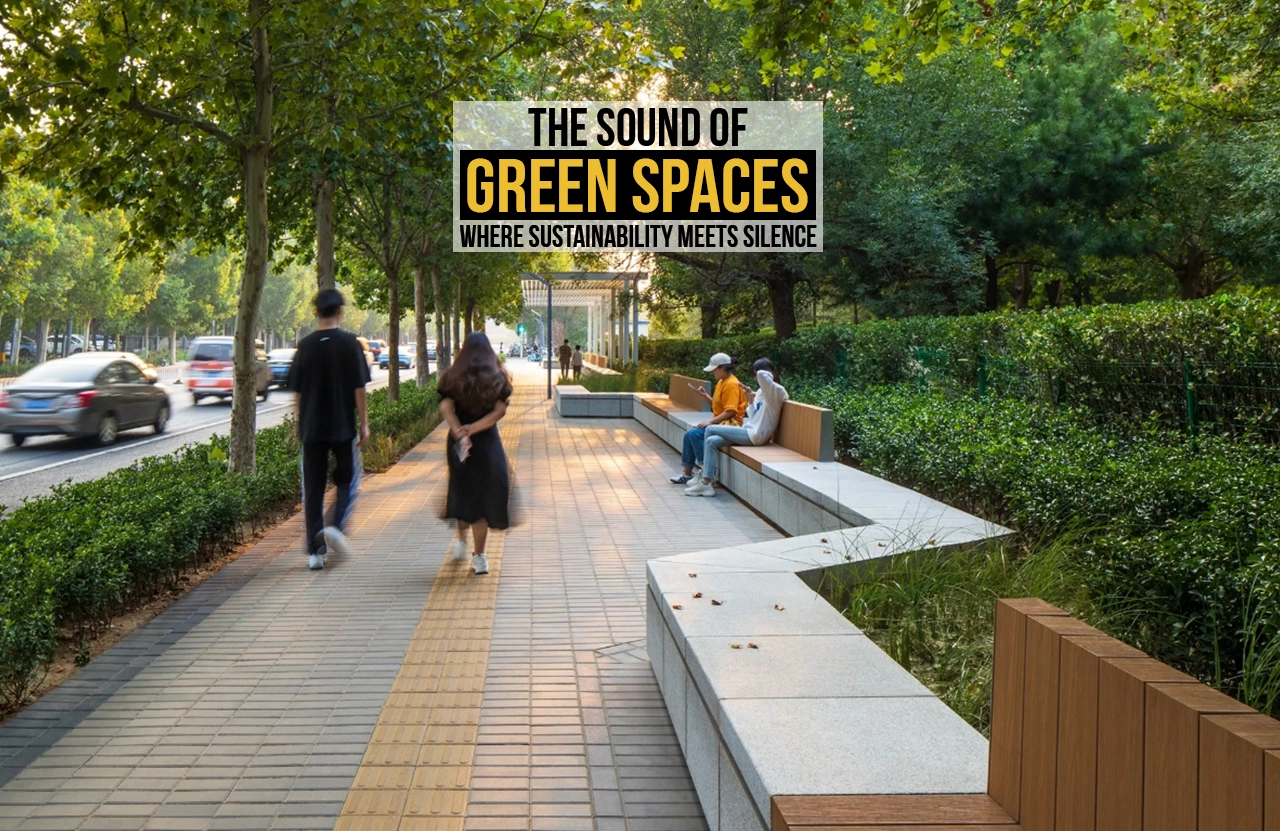
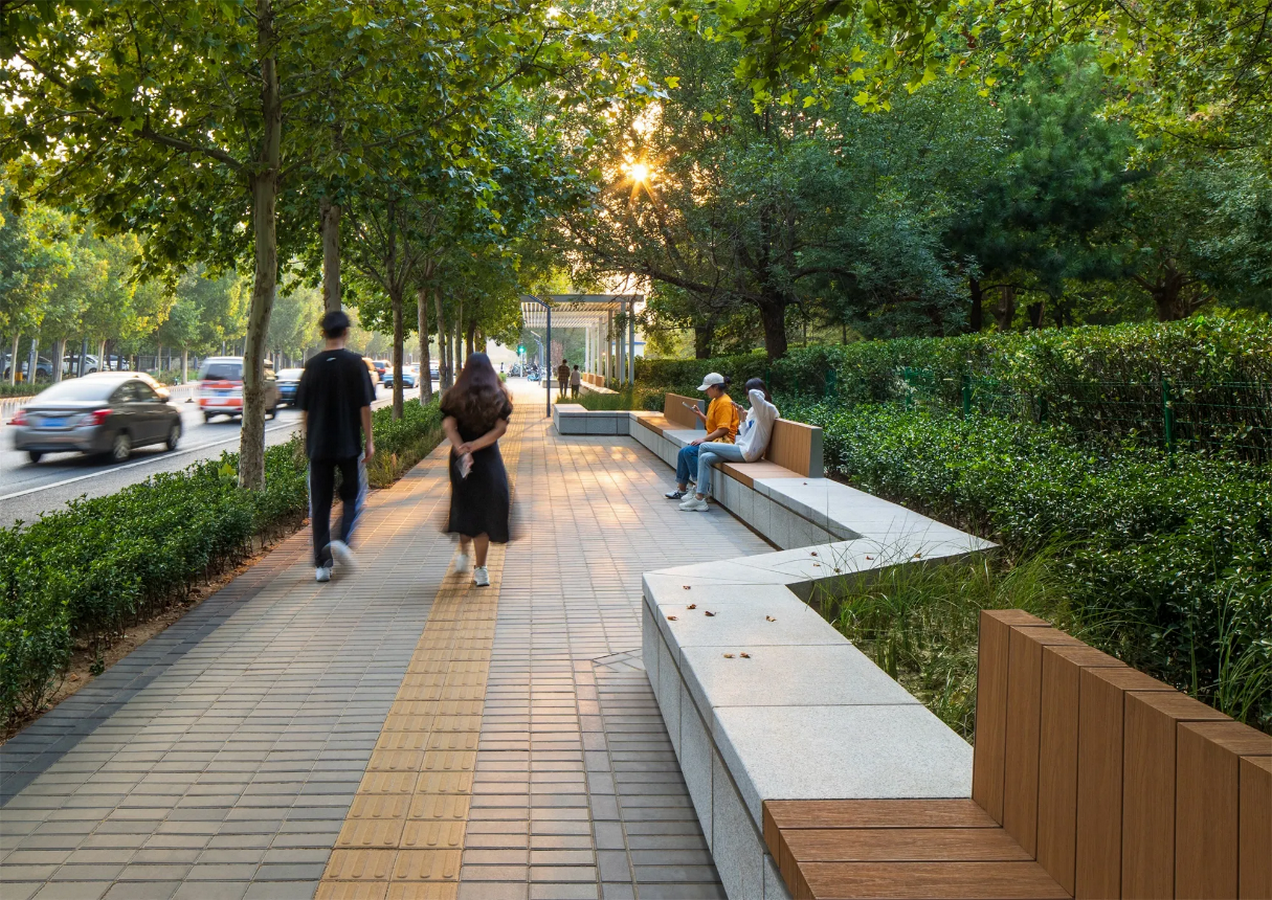
Green spaces hold an ability to soften the world around them. In cities where layers of noise merge into a constant hum, even a small patch of vegetation can shift the way a space feels. Plants absorb, scatter and reduce sound before it reaches the human ear, creating a gentler acoustic environment. Research shows that dense planting, tree canopies and green surfaces lower sound levels by interrupting the movement of noise through the air (Van Renterghem and Botteldooren, 2016). When these elements are included intentionally in design, the surroundings begin to feel calmer and more balanced. Green architecture uses this natural behaviour to create quiet pockets within otherwise restless environments.
These green spaces do more than block sound. They create sensory relief that the mind recognises instantly. The rustle of leaves, the filtered light through branches and the softness of natural textures work together to restore clarity. Studies indicate that people feel more relaxed and mentally present when surrounded by vegetation, partly due to the calming acoustic effect of natural environments (Gidlöf-Gunnarsson and Öhrström, 2007). Whether part of an urban park, a residential courtyard or a workplace terrace, green spaces act as quiet buffers that support emotional ease.
The Quiet Impact of Green Architecture
Green architecture proves that sustainability is not only about materials, energy or efficiency; it is also about shaping environments that support emotional well-being. When vegetation, natural materials and thoughtful planning blend into the built environment, sound transforms from a harsh intrusion into a gentle presence. A quiet courtyard, a tree-lined balcony or a shaded pathway becomes more than design, each becomes a moment of relief in a noisy world. Research shows that environments enriched with greenery improve concentration, reduce stress and restore mental clarity, allowing people to reconnect with themselves even in dense urban settings (Gidlöf-Gunnarsson and Öhrström, 2007).
Sustainable design, therefore, is also emotional design. By reducing noise and enhancing comfort, green architecture creates spaces where individuals can think clearly, rest deeply and move through their routines without strain. Whether in homes, workplaces or public spaces , the integration of nature becomes a quiet companion, reminding people that calmness is also a form of sustainability.
Bibliography:
Basner, M. et al. (2014) ‘Auditory and non-auditory effects of noise on health’, The Lancet, 383(9925), pp. 1325–1332.
Aletta, F., Kang, J. and Axelsson, Ö. (2018) ‘Soundscape descriptors and a conceptual framework for developing predictive soundscape models’, Urban Science, 2(1), p. 6.
World Health Organization (2018) Environmental noise guidelines for the European region. Copenhagen: WHO Regional Office for Europe.
Gidlöf-Gunnarsson, A. and Öhrström, E. (2007) ‘Noise and well-being in urban residential environments: The potential benefit of green spaces’, Landscape and Urban Planning, 83(2–3), pp. 115–126.Van Renterghem, T. and Botteldooren, D. (2016) ‘View on outdoor noise control from indoor’, Building and Environment, 99, pp. 87–96.