Architecture and cinema share a secret: both are about shaping human experience. Architects and designers shape how people move, live, and feel in space; filmmakers shape how we perceive and imagine spaces, even ones that don’t exist. When film and architecture meet, imagination becomes the bridge. It allows us to wander through worlds that are at once real and dreamlike, tangible and emotional.
But while cinema continues to embrace imagination, much of today’s built environment seems to have forgotten it. The contrast reveals an urgent truth: to design spaces that inspire, architects must look not only to their own history but also to the lessons offered by film.
Cinema as Architecture’s Dreaming Ground
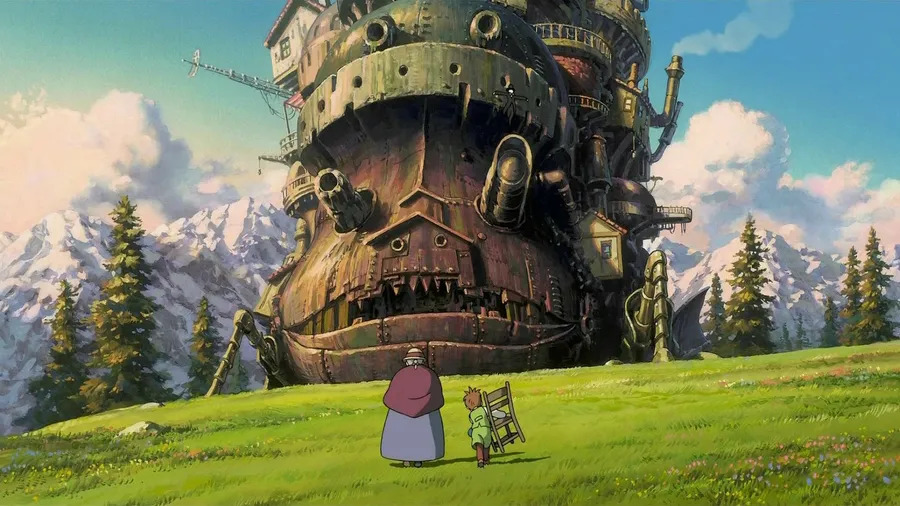
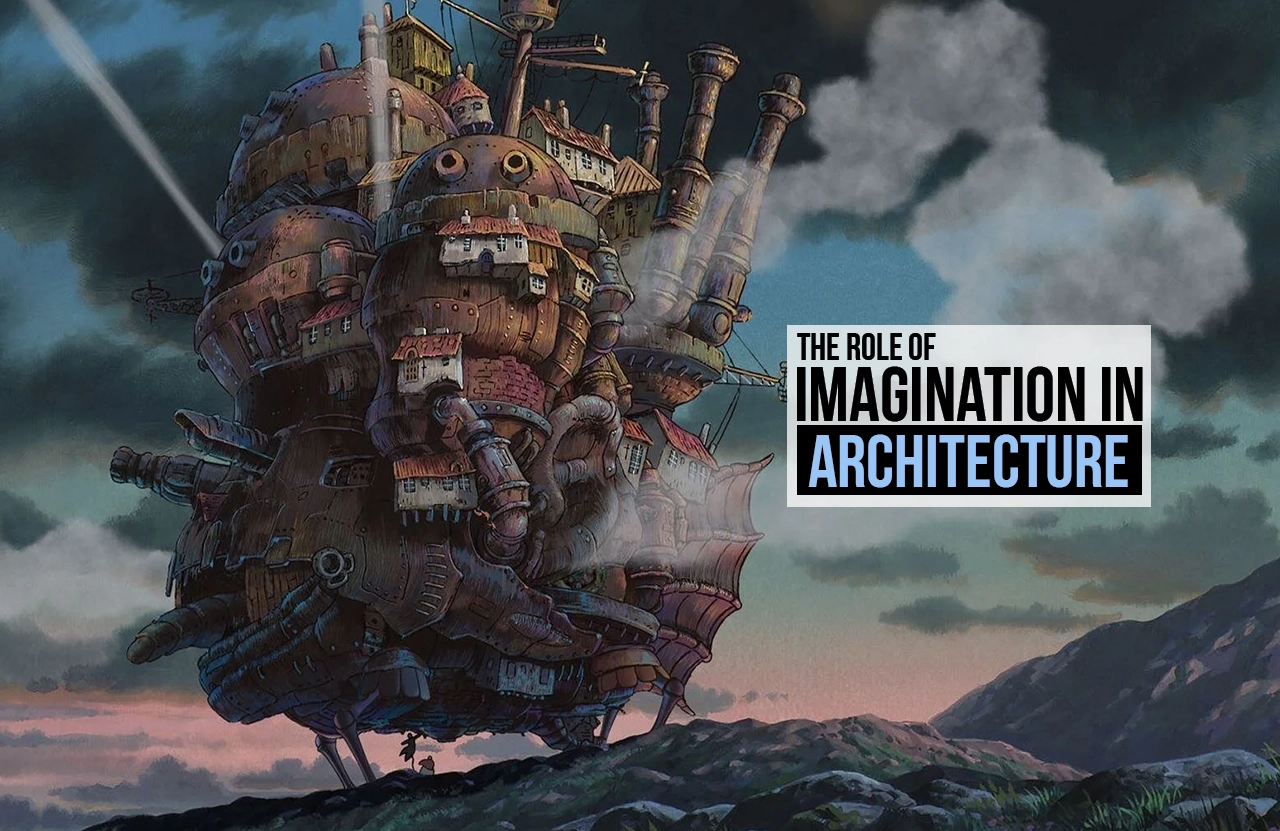
Consider Howl’s Moving Castle (2004). At first glance, it is a story of magic, war, and love, but at its heart, it is a study in playful architecture. The castle shifts and folds into itself like a living organism. Each chimney, tower, and wheel has its own personality. What feels fantastical is also remarkably logical: a viewer can trace the logic of space, see how rooms connect, and understand how the structure moves across landscapes. It is architecture that tells a story, reflecting the life of its inhabitants.
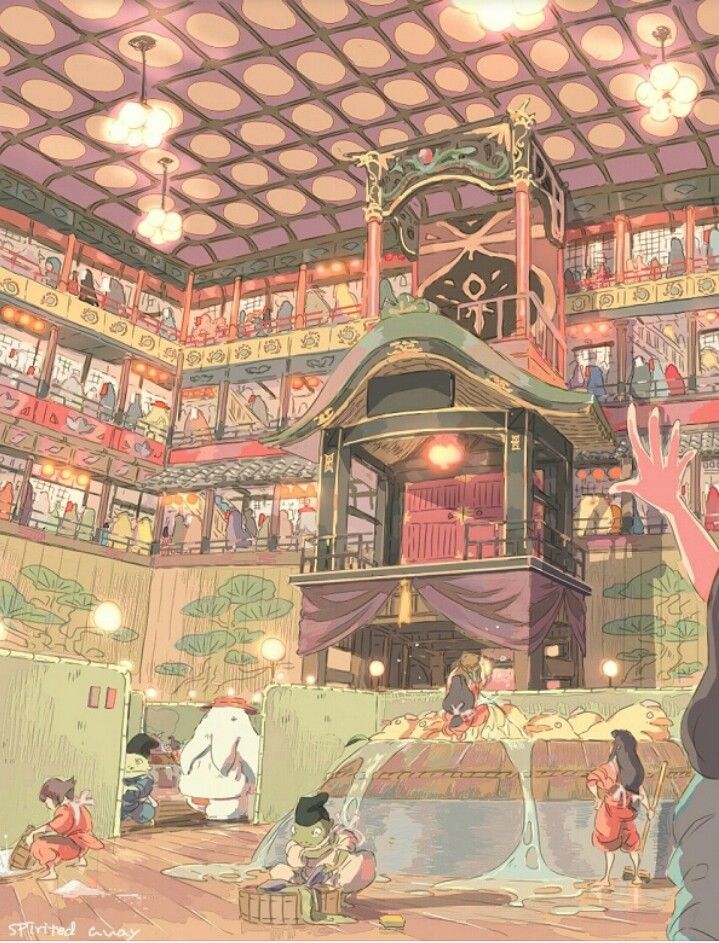
Or take Spirited Away (2001). The Bathhouse is multi-layered, endlessly intricate, and deeply rooted in Japanese tradition, yet it stretches into something wholly immersive. Corridors twist, staircases hide, balconies peer over bustling floors. The design mirrors the story’s rhythm, discovery, fear, wonder, and growth. Every level feels intentional; every shift in scale demands exploration. Miyazaki doesn’t exaggerate for spectacle; he designs for experience. A building’s character is inseparable from the way people move and live through it.
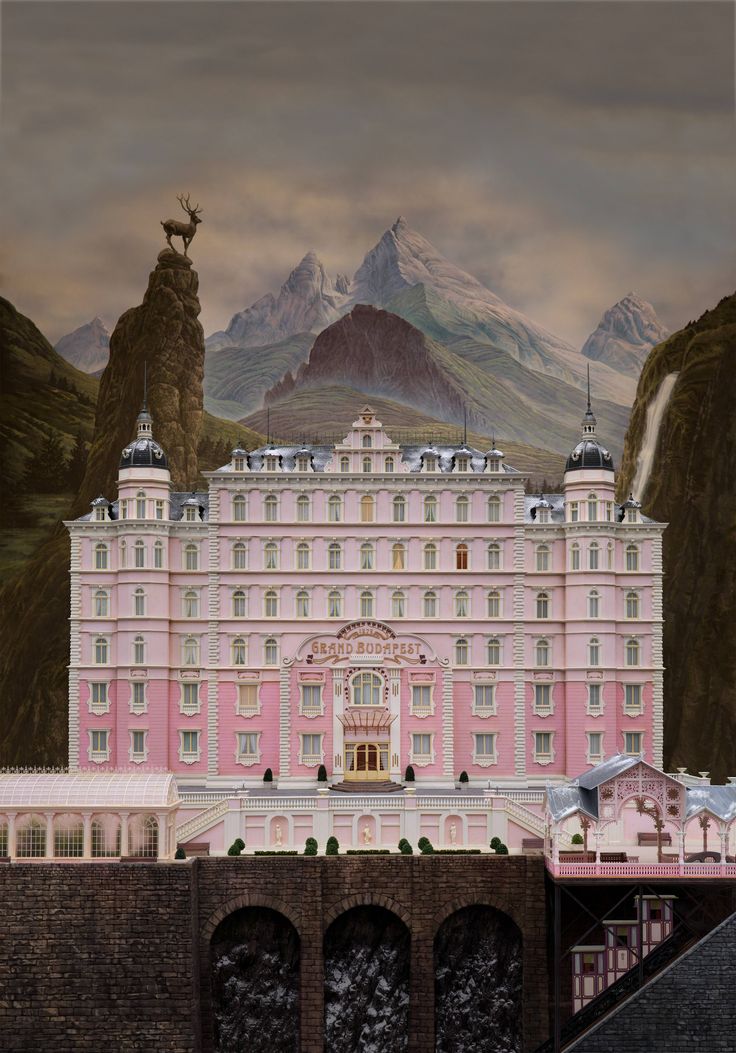
Even in more grounded films, architecture becomes alive. In Wes Anderson’s The Grand Budapest Hotel (2014), the building is neither magical nor impossible, yet it feels like a character. Its grand lobby, pastel façade, and symmetrical hallways convey nostalgia, order, and theatre. Here, architecture shapes behaviour: guests wander, employees perform, and every interaction is framed by design. Anderson reminds us that even within the laws of physics, architecture can resonate with rhythm, personality, and emotional charge.
Cinema teaches that architecture can breathe, move, and surprise us without losing coherence. Its most memorable spaces are not about spectacle but about being felt, legible, human-scaled, and emotionally rich.
History’s Proof That Imagination Once Ruled
If cinema offers a vision of what architecture could be, history shows us what it once was. Columns in classical architecture were never just supports; they were symbols and stories carved in stone. Doric austerity, Ionic elegance, and Corinthian flourish conveyed hierarchy, culture, and craftsmanship. A column was structured, but also identity.
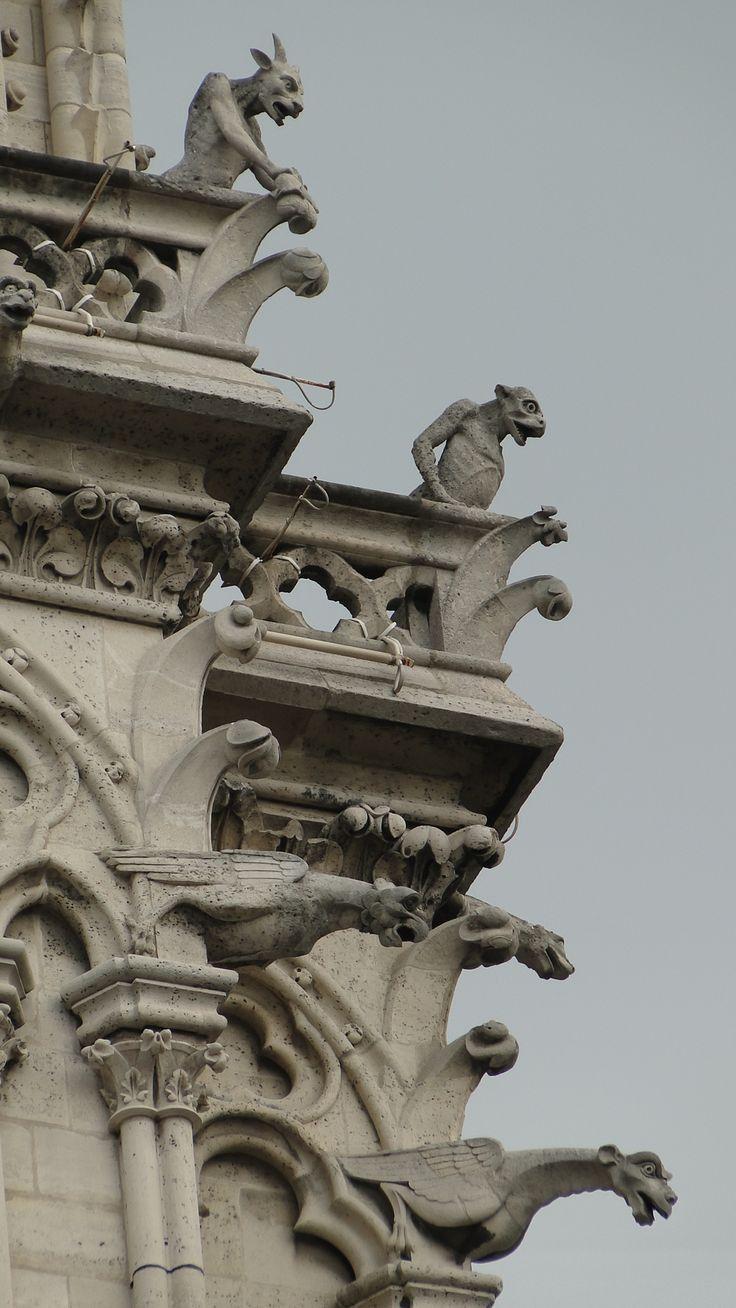
Gargoyles perched on Gothic cathedrals served as both water spouts and whimsical guardians. They channelled rain while animating facades with humour, menace, or myth. Doors, too, spoke of imagination. In castles, monasteries, and grand homes, entrances could soar multiple stories, evoking awe, or remain hidden behind playful disguises such as a library wall. Human proportion guided design, but it did not confine it; scale was bent, drama was amplified, and architecture became a theatre of experience.
Every detail mattered because architecture was understood as a dialogue with the human eye, mind, and spirit.
The Problem of Today
Much of contemporary architecture, by contrast, has traded imagination for efficiency. Columns are often stripped to plain cylinders or squares, their symbolic flair abandoned. Doors are standardised, their playfulness lost. Ornamentation is dismissed as unnecessary. Budgets, codes, and speed of construction dominate decisions.
The result is architecture that is safe, functional, and predictable. Buildings may serve their purpose, but they rarely surprise, delight, or provoke wonder. Even the human scale, once a source of creative freedom, has become a rigid boundary. In many modern projects, architecture has lost its poetry.
Lessons for the Present
The less use of imagination, however, is not irreversible. Architects today can reclaim it, drawing inspiration from cinema and history.
From cinema, we learn about rhythm and narrative: how to guide movement through space, how to layer interiors for emotional effect, how to use scale to inspire curiosity. Miyazaki’s layered Bathhouse or Anderson’s symmetrical hotel remind us that design is not just about function, but about orchestrating experience.
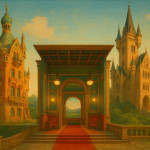
From history, we inherit not just ornament but the birth of entire styles and innovations. Think of how Antoni Gaudí reimagined the cityscape of Barcelona, transforming organic forms into stone and colour, letting buildings twist and ripple like living organisms. Or how Bavaria’s Neuschwanstein Castle, inspired by Wagner’s operas, turned myth and music into towering spires of stone, a fairytale structure that still sparks wonder centuries later. These were not flights of excess but acts of imagination that reshaped identity and culture.
Together, these lessons show that imagination need not conflict with modernity. A column can remain minimal yet tell a story through material or proportion. A door can be functional yet extraordinary in placement or scale. Even minimalism can accommodate narrative: a simple hallway can feel monumental, a hidden staircase can spark delight, a play of light can turn emptiness into poetry.
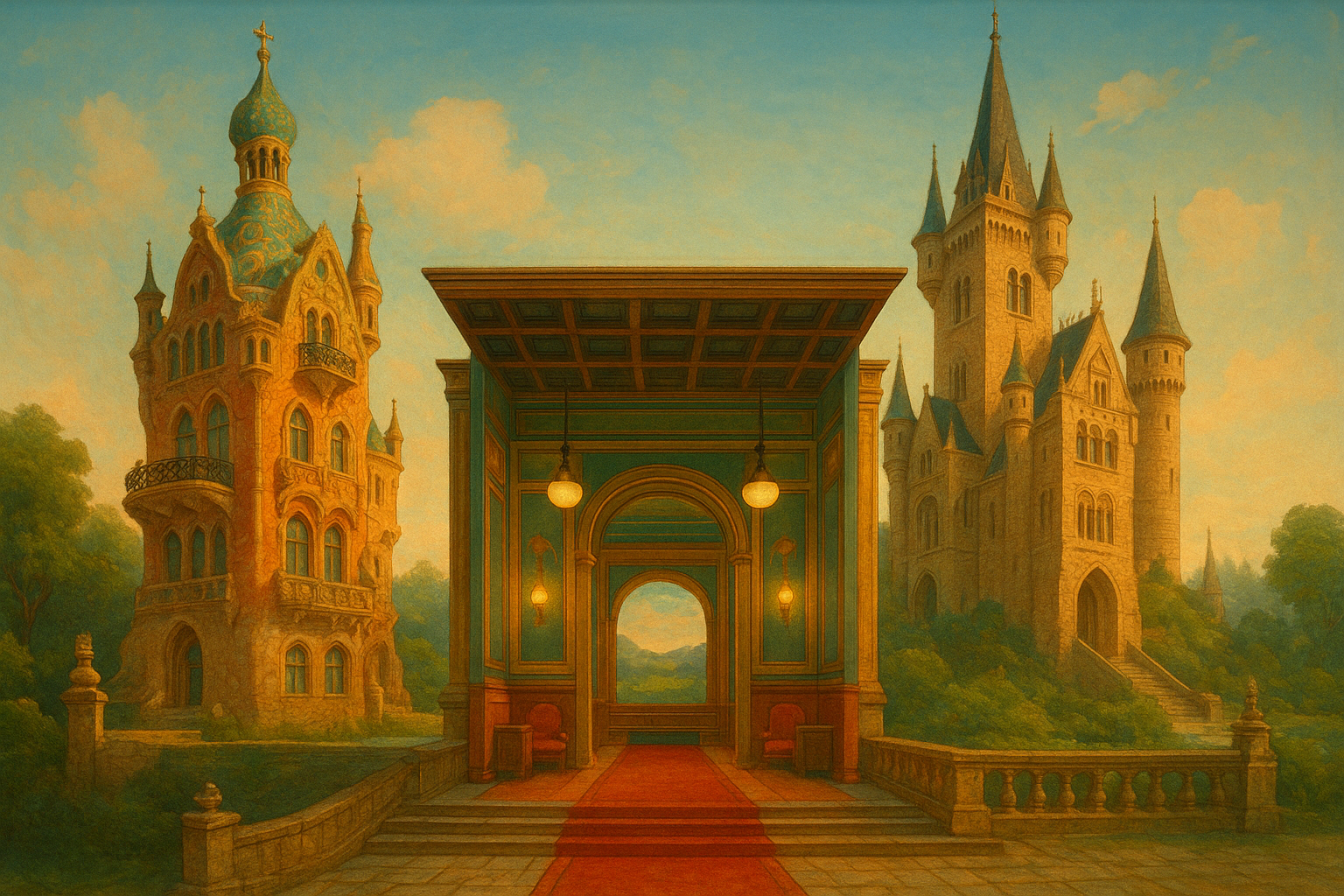
At its core, architecture is all about human experience, and so is cinema. Films like Howl’s Moving Castle, Spirited Away, and The Grand Budapest Hotel remind us that space is never neutral. It carries story, emotion, and identity. Historical architecture proves the same: gargoyles, columns, and monumental doors were never mere function, but invitations to wonder.
The challenge of our time is whether we dare to reclaim imagination as an essential part of architecture. Cinema shows us that even impossible spaces feel alive when designed with coherence and empathy. History shows us that even functional elements can become poetry. Contemporary practice has the tools to combine both to create spaces that are safe, efficient, and still wondrous.
From script to structure, imagination is the first blueprint. It is what allows architects to translate emotion into form and to design spaces that resonate long after they are left behind. Reclaiming imagination is a necessity. It is the bridge between story and space, dream and dwelling, proof that architecture’s most enduring tool has always been wonder.