Human beings aren’t the only ones who breathe; spaces tend to breathe too. In the clustered Newari settlement, courtyards are the lungs that make the entire space breathe. It reflects the voices, memories, and warmth of the community. It is a place where people tend to bond, connect, and reflect. From small alleys to big open spaces, courtyards play a crucial role in creating a healthy environment.
Hierarchy of Newari courtyards
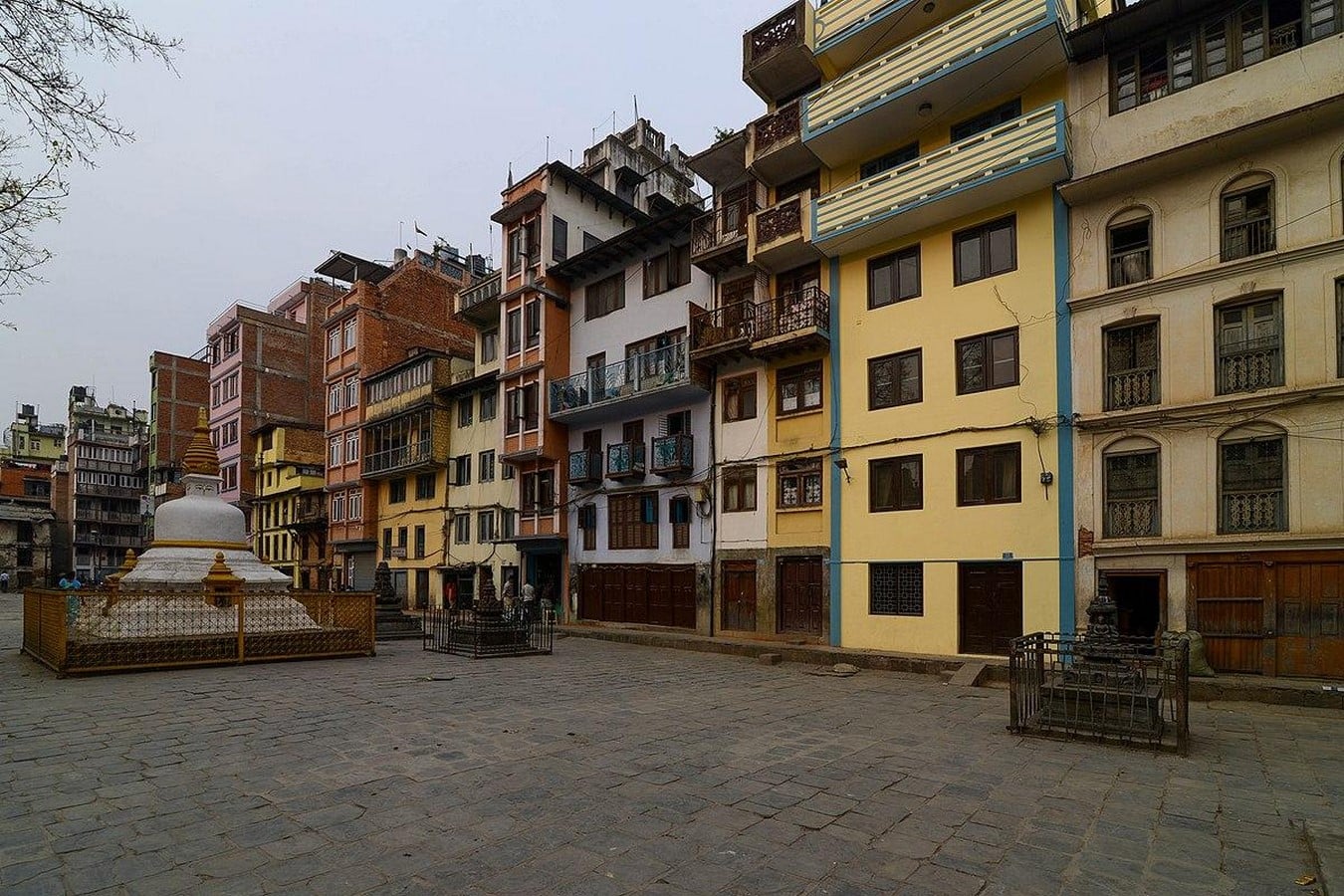
Alleys
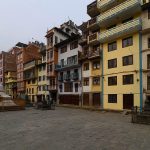
Alleys are the narrow pathways that connect residential households. This alley serves as an intimate corridor that provides interaction between the neighbouring houses while also maintaining privacy. They often lead to residential chowks and community spaces.
Residential Courtyard (Chowk/Nani)
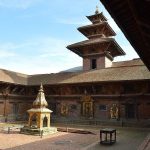
Chowk or nani is the open space enclosed by a small group of houses or an individual house. These courtyards act as a private space for family activities, small gatherings, and daily chores. Since they are generally enclosed by residential houses and palaces, it fosters a sense of privacy. Chowks of palaces are larger than those of residential chowks.
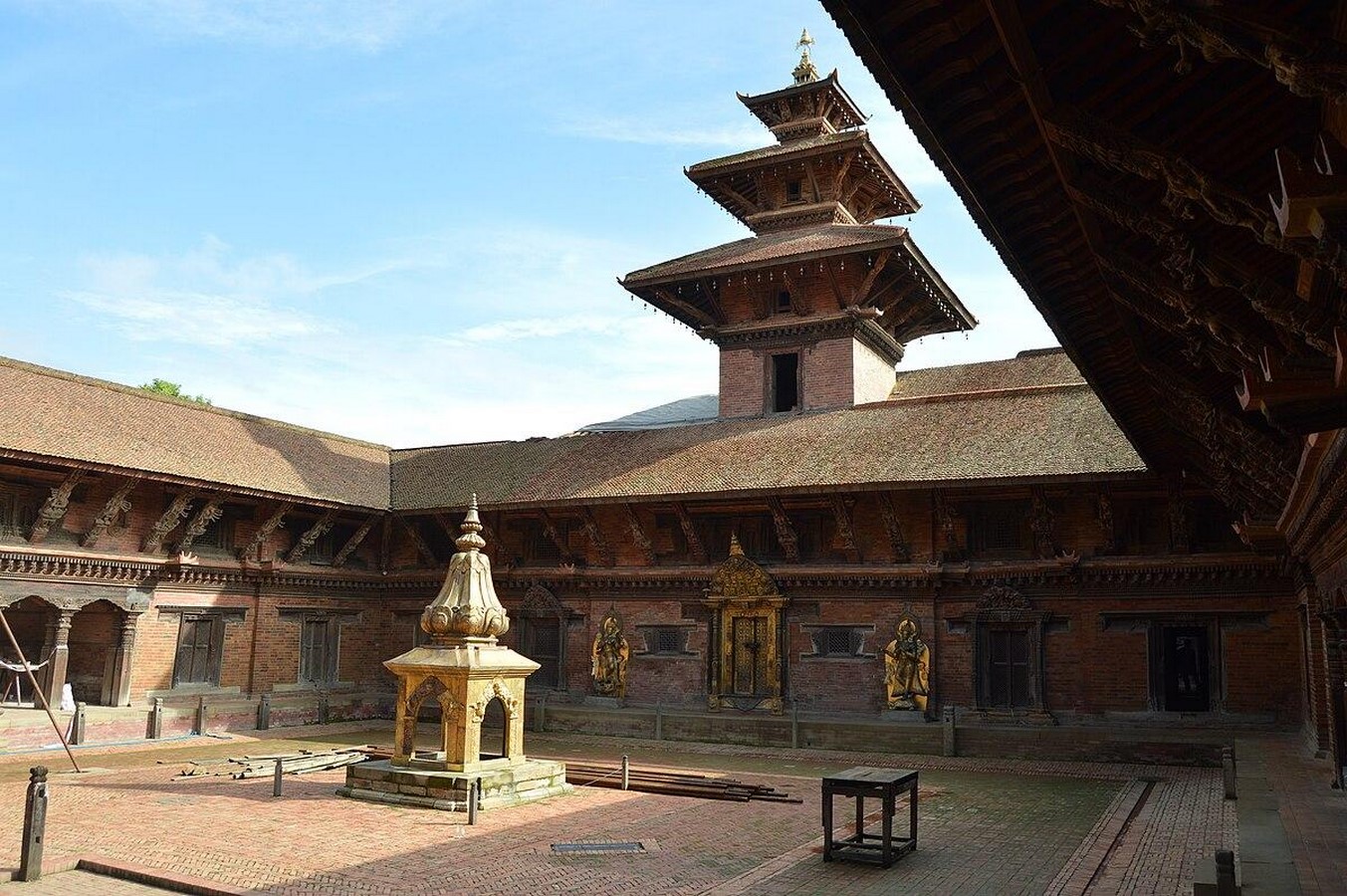
Community Courtyard (Bahal/Bahil)
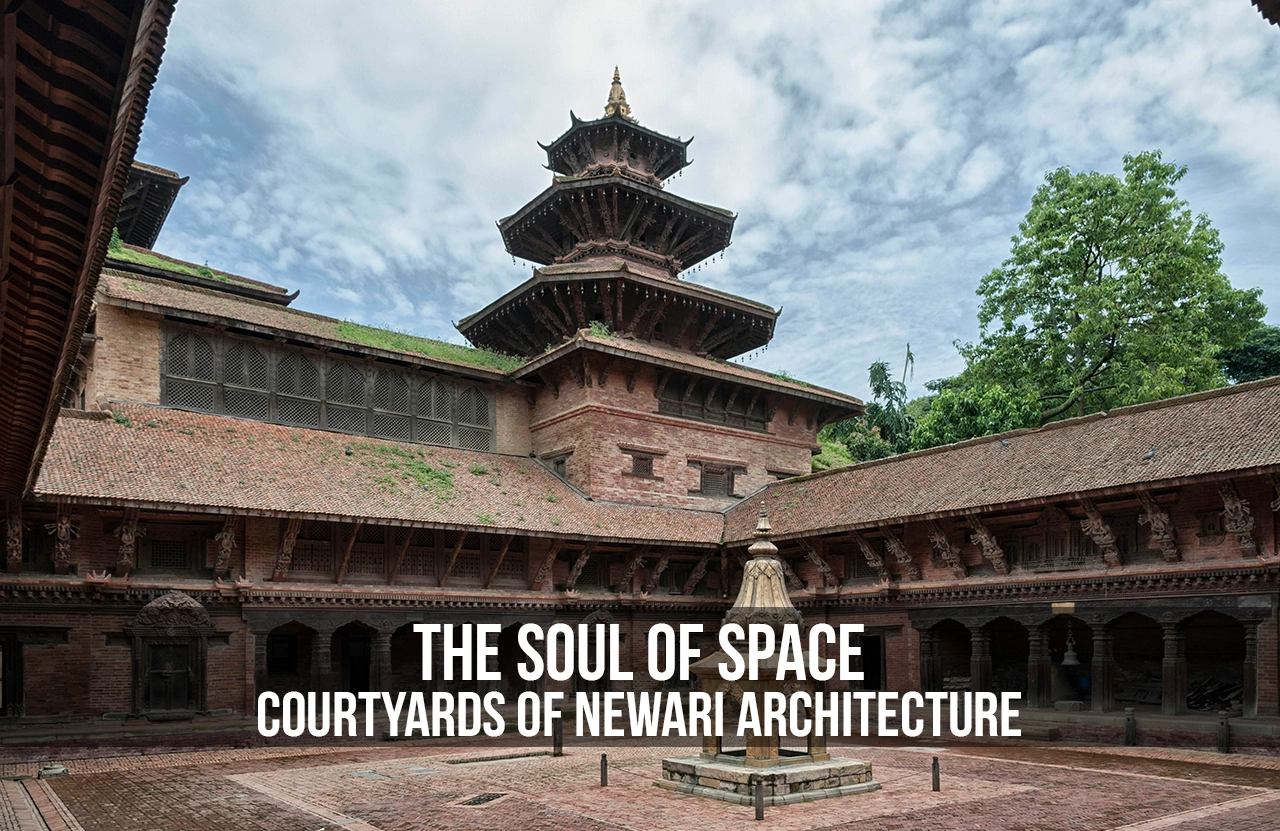
Bahal is an open courtyard, often a Buddhist monastery, providing a central gathering space for the community. It is enclosed by structures that are raised above the level of the courtyard and is generally used for cultural gatherings. While bahil is a smaller courtyard enclosed on all sides. It is used for ritual spaces rather than communal gatherings. It is more of a semi-private courtyard of Newari architecture. Through their design and use, both bahal and bahil reflect the cultural identity of the community.
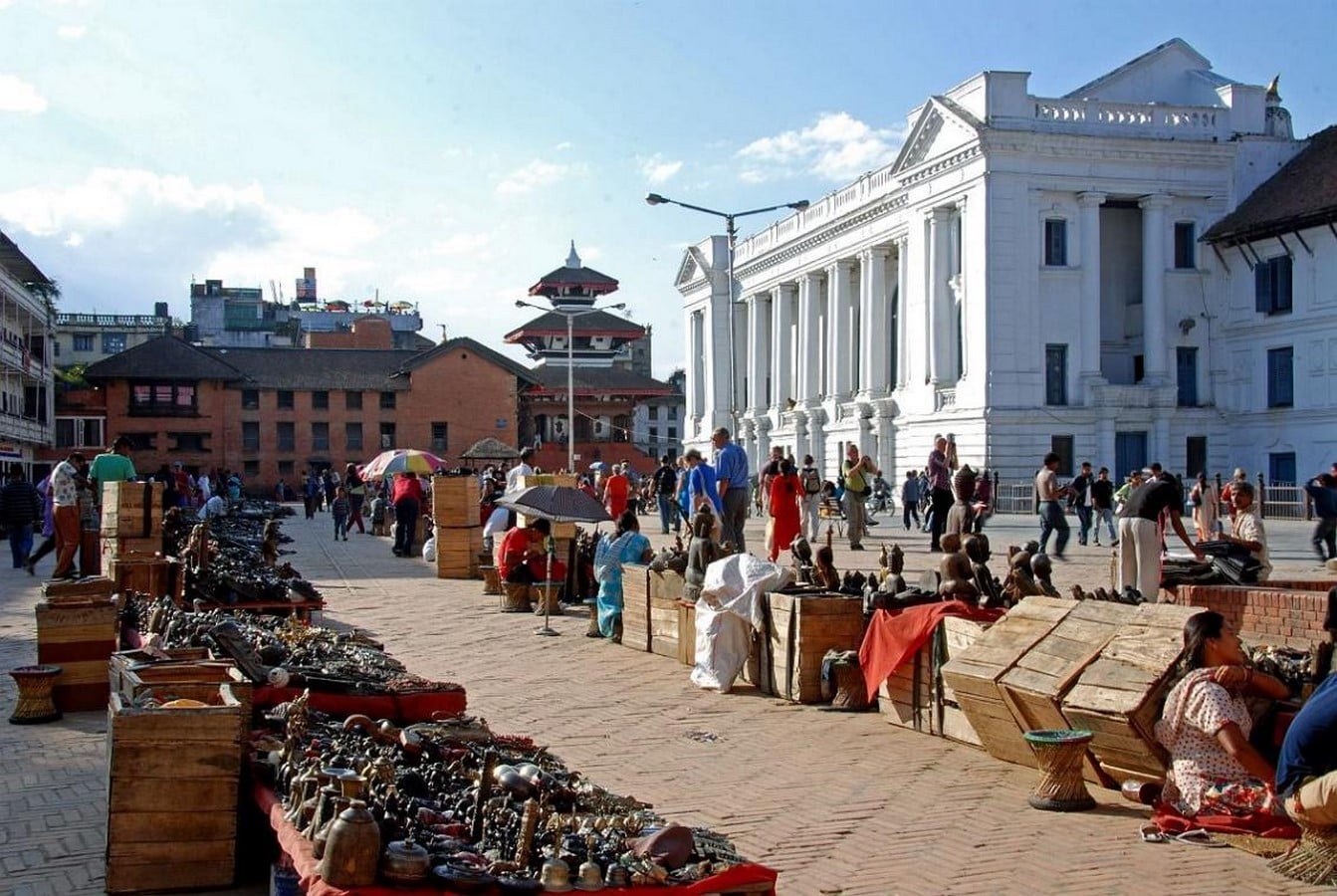
Squares
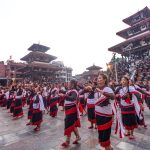
At the top of the hierarchy of Newari courtyards are the squares, which are typically large open spaces used for public gathering, cultural gathering, and also for entertainment. Unlike other courtyards, squares are open, highly accessible, and multifunctional. It is surrounded by temples, royal palaces, and public buildings, which function as a space for celebrating festivals, market activities, and gatherings. It draws people from narrow alleys to private courtyards and to the public squares. The squares also include a raised platform called a dabali, used for various activities. Moreover, squares also act as refuge spaces during disasters.
Social and cultural significance
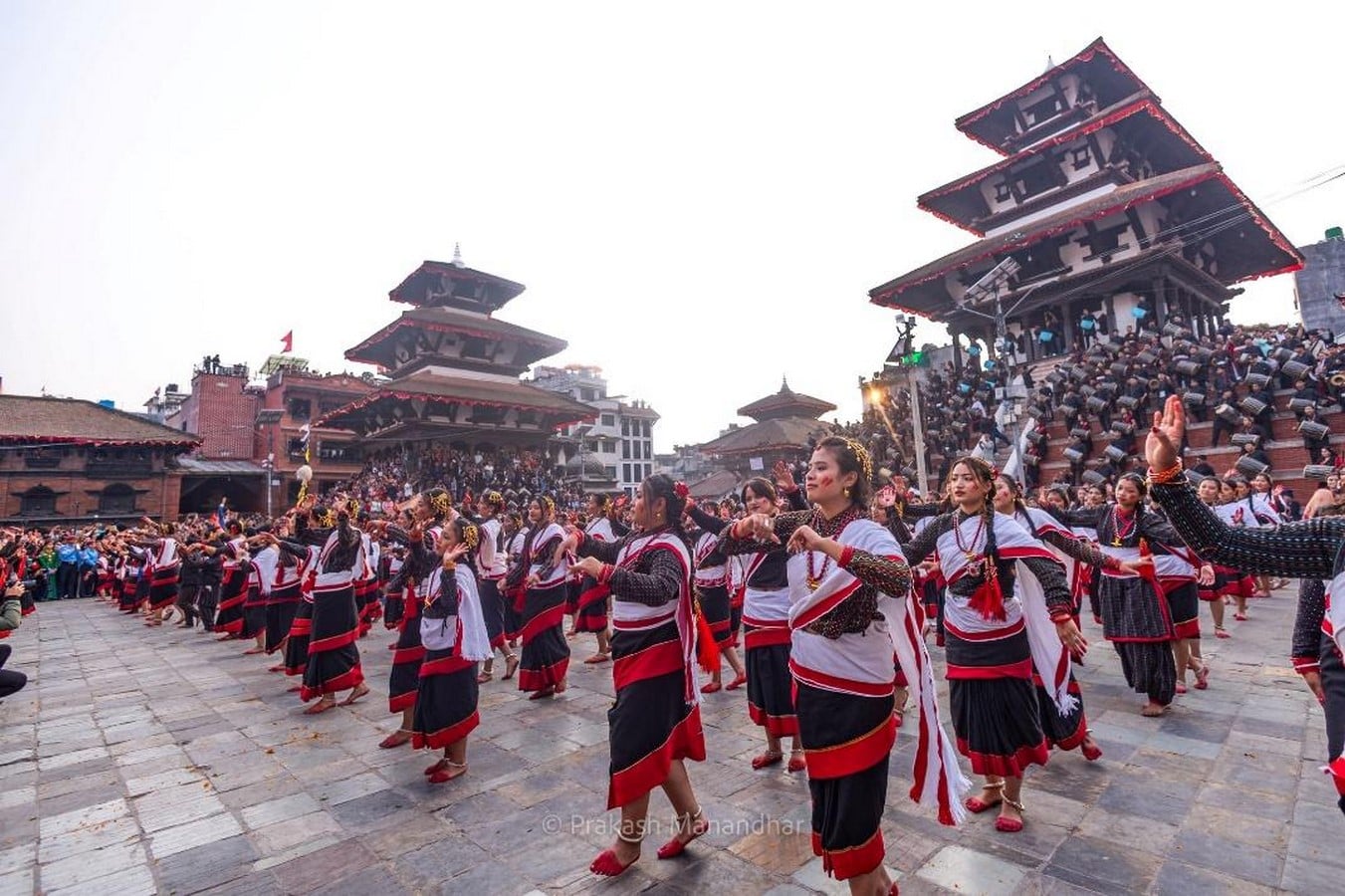
The courtyard serves as a private, secure outdoor space for daily chores, social interaction, and rituals. It fosters community interaction and bonding. Courtyards are inclusive spaces that have no age restrictions, allowing children, adults, and elders to share the same environment. While different people use courtyards for different purposes, they fulfill everyone’s needs by creating a vibrant space. Squares may be used for business purposes as market space or a play area for children. This makes people interact and form bonds with each other.
Some courtyards, like bahal and bahil, consist of a shrine integrating religious practices. Festivals like Indra Jatra, Bisket Jatra are held in large squares, blending both social and cultural life. The courtyard helps to reflect the cultural identity of that space. It acts as a space for storytelling, communal work, and informal interaction, encouraging different generations to connect.
Architectural significance
Newari courtyards are highly functional and culturally significant. The courtyard planning fosters a strong sense of community bonding. Within the dense Newari settlements, the courtyard acts as a space to breathe in. Architecturally, a courtyard serves to improve ventilation and bring natural light into densely packed houses.
Moreover, it helps to moderate the microclimate. This type of planning fosters sustainability in daily life, long before modern systems came into play.
Courtyards define the character of Newari architecture, featuring intricately carved windows, lattice doors, and stone paving. The proportion and harmony of the courtyard contribute to the harmony of the urban fabric. It allows different generations to use the same space in different ways. Courtyard creates a sense of place, giving each neighbourhood its own identity while fostering connections between public and private spaces.
Modern Relevance
Traditional courtyard planning has influenced modern structures, guiding architects to create spaces that are bright, ventilated, and foster community interactions. Nowadays, schools, apartments are being designed in courtyard planning, creating a harmony between the built and open spaces. They also reconnect people with nature through natural light, greenery, and open sky. It has shown how a courtyard can shape a comfortable, connected, and vibrant space today.
References:
Tiwari, S.R. The ancient settlements of the Kathmandu Valley. Available at: https://pahar.in/pahar/Books and Articles/Nepal/2001 Ancient Settlements of the Kathmandu Valley by Tiwari s.pdf (Accessed: 05 October 2025).
The soul woven in wood and brick: Exploring traditional newari architecture in the Kathmandu Valley (2025) Prayag Samagam. Available at:https://prayagsamagam.com/newari-architecture-in-kathmandu-valley/ (Accessed: 05 October 2025).
(2016) A study on public open spaces of Kathmandu Metropolitan City. Available at:https://healthbridge.ca/dist/library/Study_report_Public_Space_Policy_Review.pdf (Accessed: 03 October 2025).