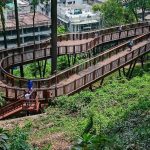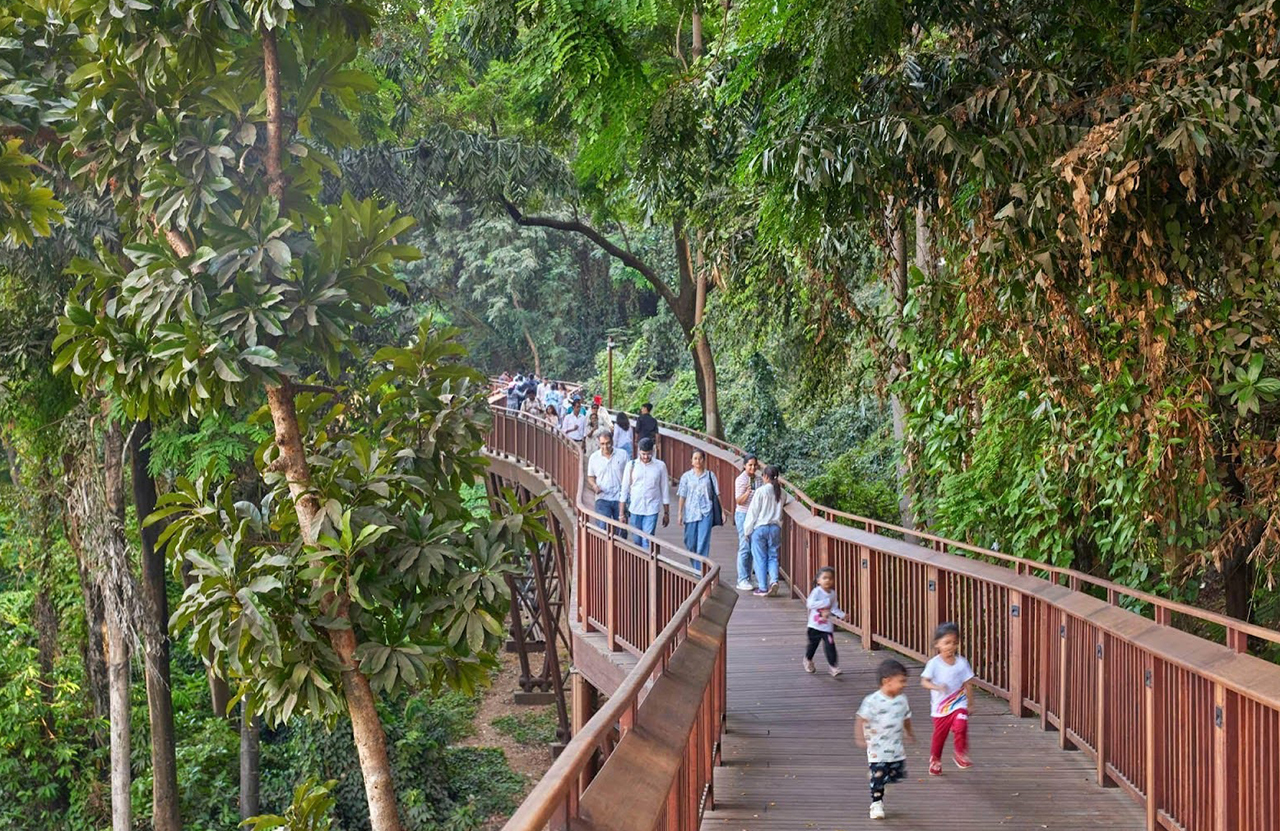
Curling through clusters of trees, within the dense urban fabric of Mumbai, the Micro Forest Trail at Malabar Hill, officially the ‘Nisarga Unnat Marg’, emerges as a quiet intervention that redefines the relationship between city life and nature. This initiative, developed by the Brihanmumbai Municipal Corporation (BMC), transforms a previously overlooked edge of the urban fabric into a thriving living ecosystem, where native species flourish and residents reconnect with nature. More than a walking path, the trail embodies a design philosophy rooted in sustainability and urban resilience, offering the city not just a retreat but a renewed perspective on coexisting with its natural heritage. Its significance lies not in grandeur but in its ability to respond sensitively to the needs of the present, using local materials, reintroducing native species, and creating a resilient urban common for generations to come. By framing movement as an immersive journey, the design encourages visitors to slow down, notice seasonal change, and engage deeply with the woodland character of the site.
Weaving a Forest Trail into the City
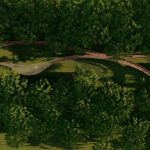
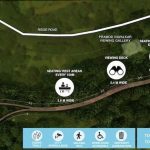
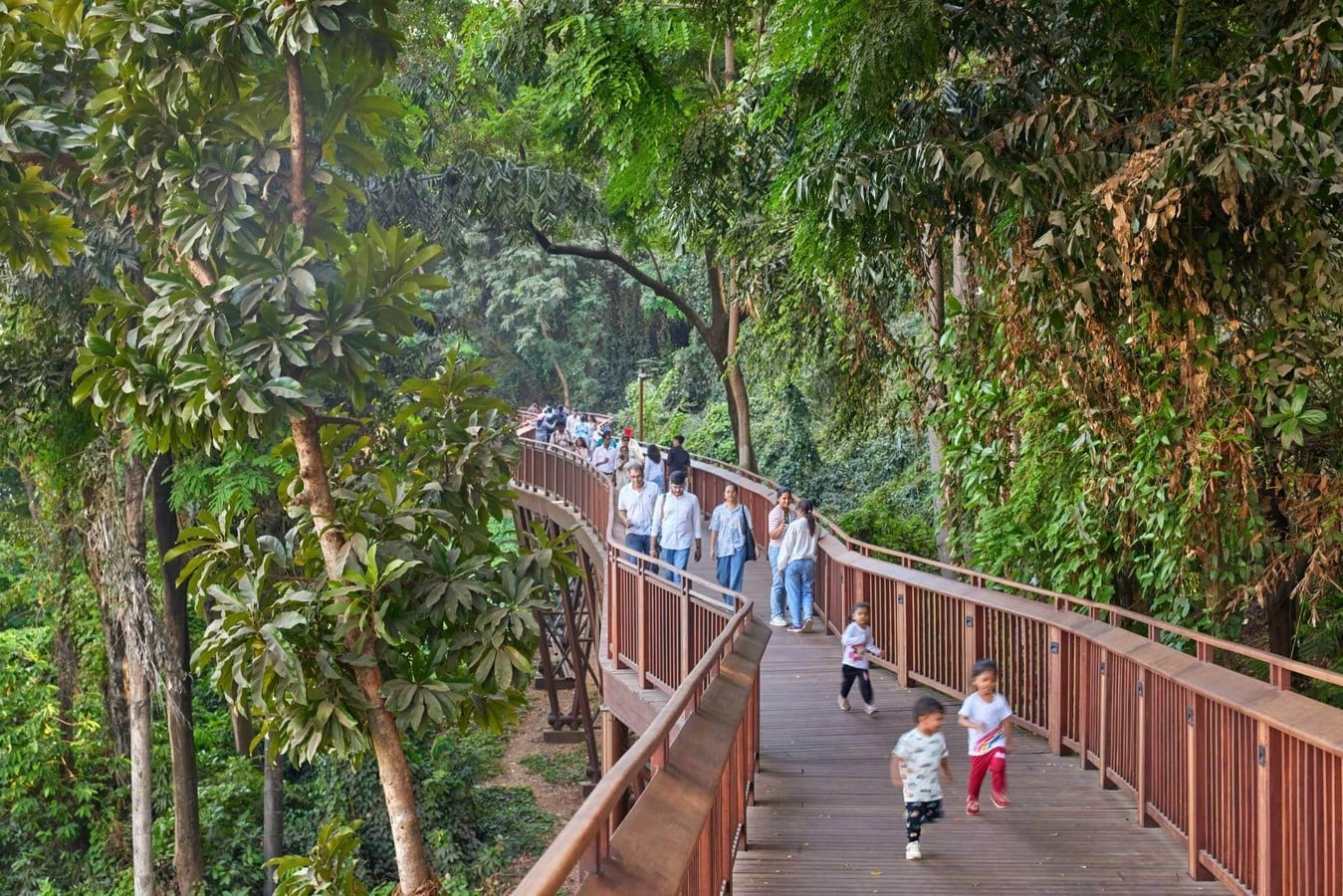
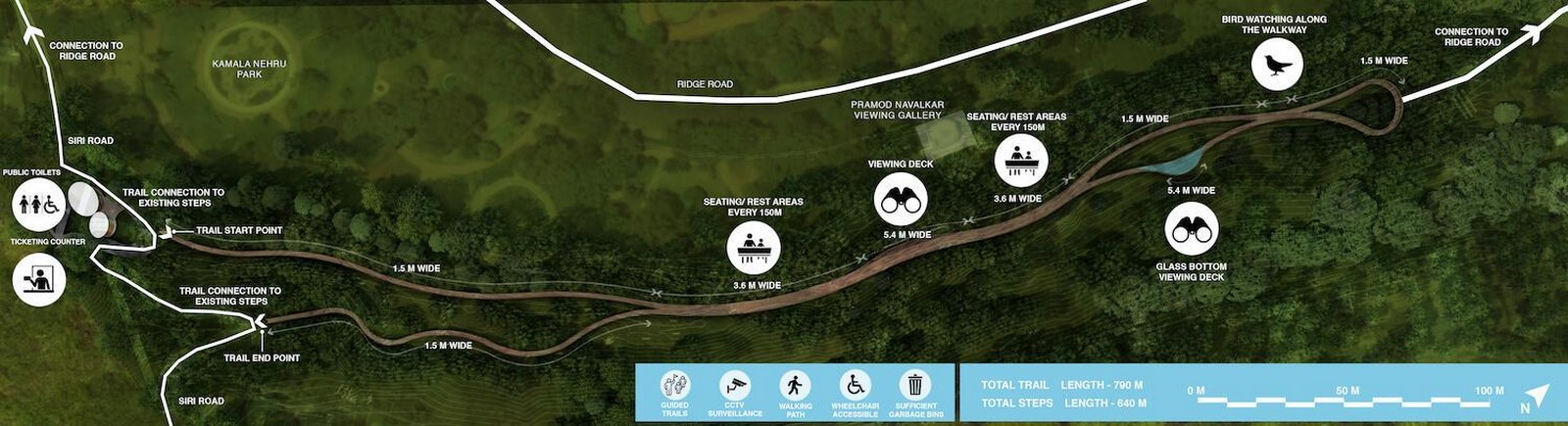
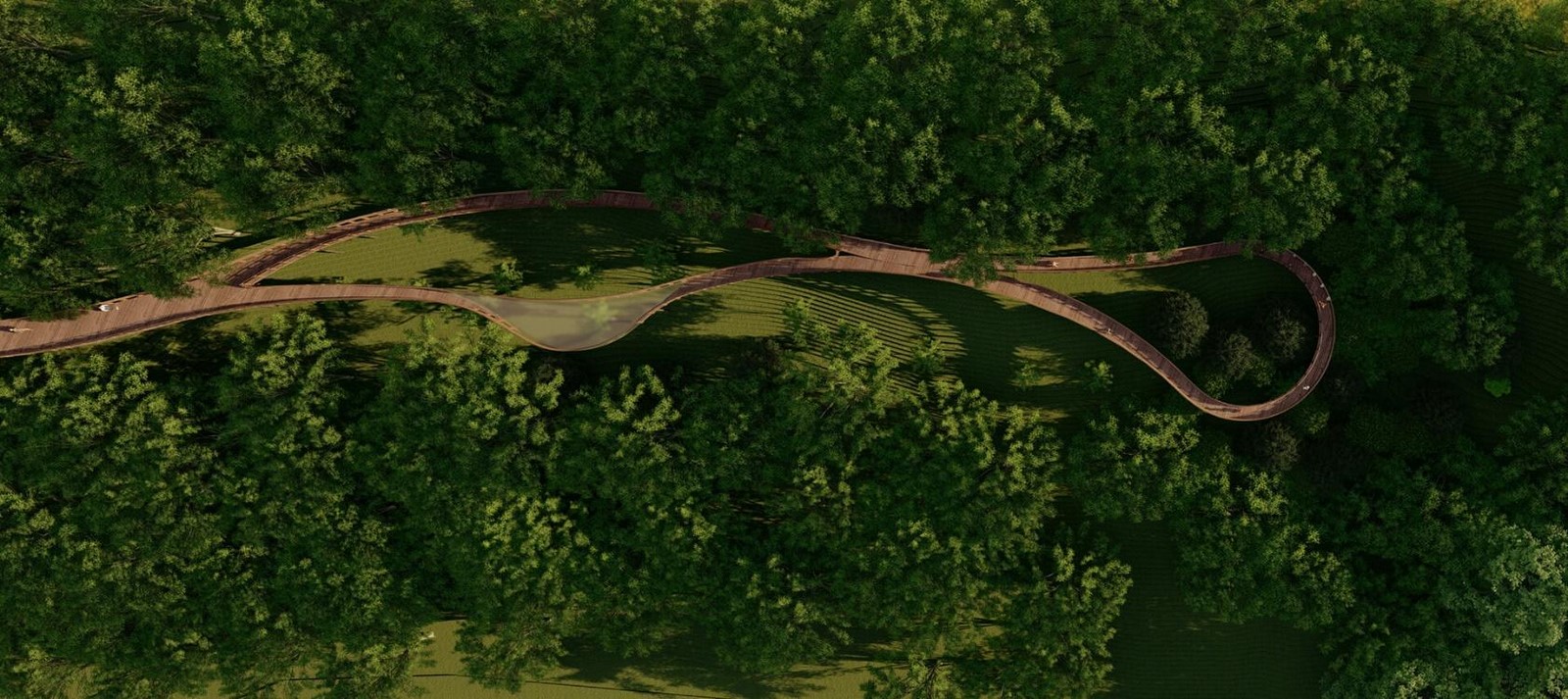
A 485m long and 2.4m wide “treetop walkway” carpeted by towering tree canopies, creepers, and bushes is a collective initiative of the Malabar Hill Citizens’ Forum, the Nepean Sea Road Citizens’ Forum (NRCF), and IMK Architects, supported by the JSW Foundation and funded by the Brihanmumbai Municipal Corporation (BMC). Amidst the densely populated urban landscape of Mumbai city, this green pocket of land houses a diverse mix of flora and fauna and a dozen rare birds. Rather than a conventional park layout, this trail is designed considering natural contours, encountering shaded alcoves and framed views that transform a simple walk into an unfolding sensory experience. This decision redefines public space not as a constructed amenity but as a shared ecological common, accessible to the urban landscape and meaningful for all. Not limiting itself to just a walkway, they have created a glass-bottom deck and a birdwatching zone, providing an unhindered view of the Arabian Sea.
Employing Context-Sensitive and Low-Impact Construction Methods
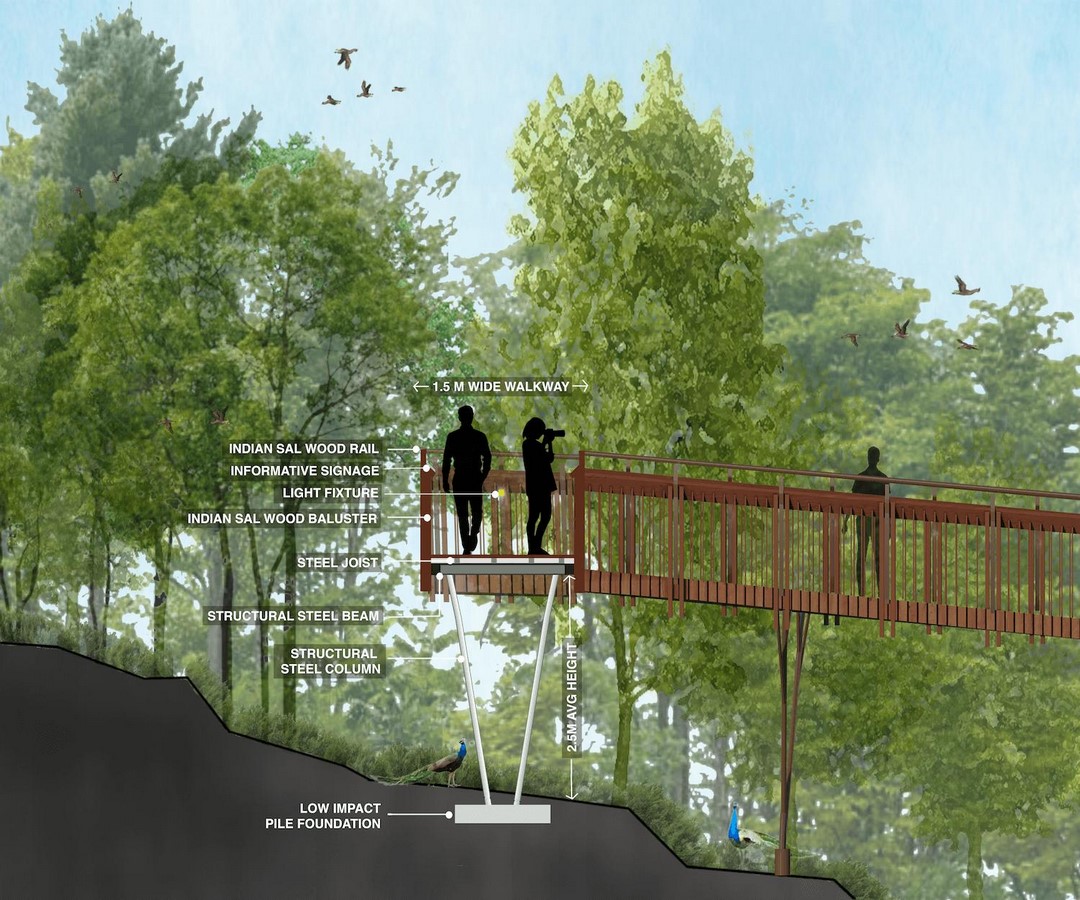
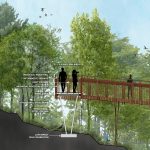
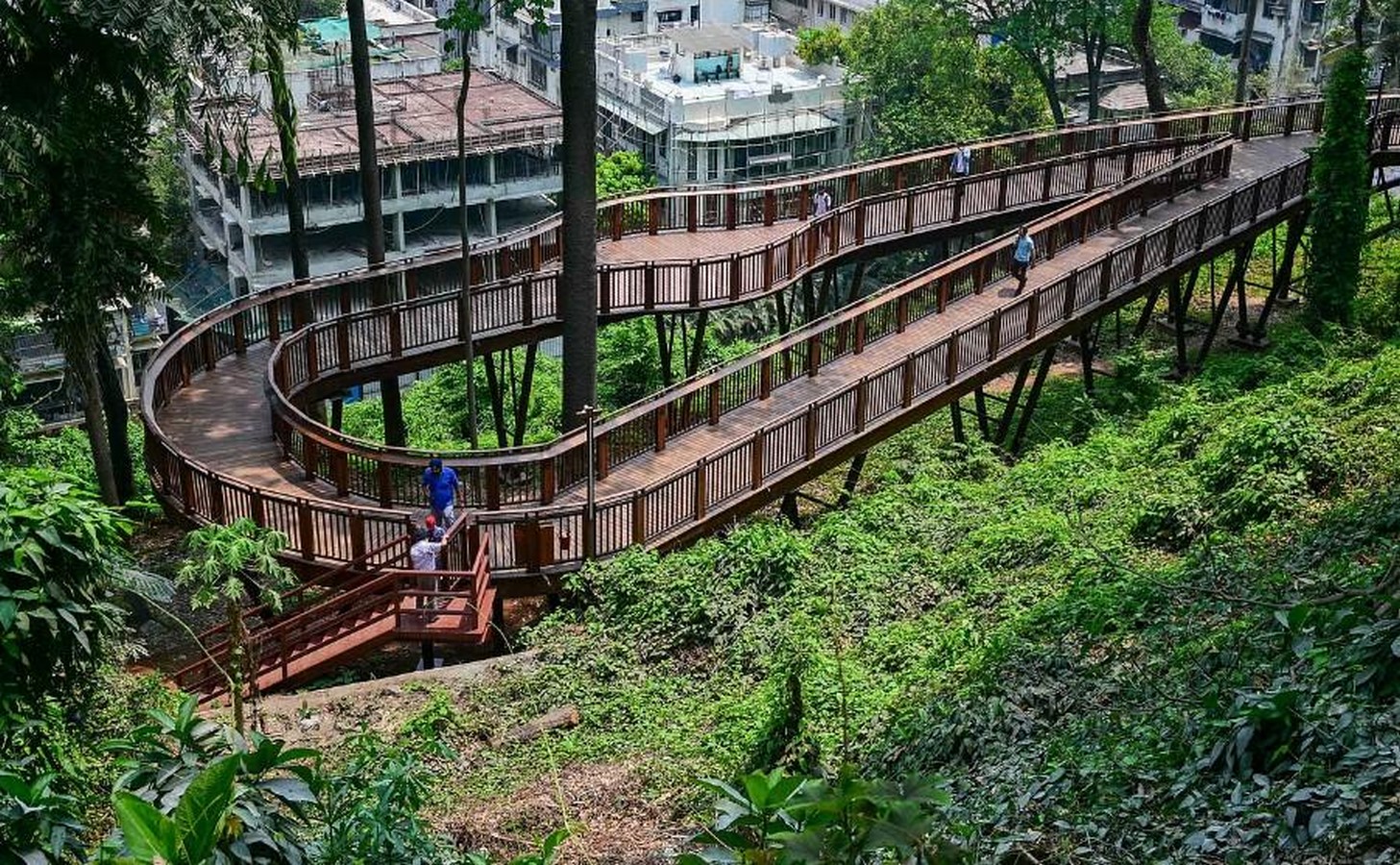
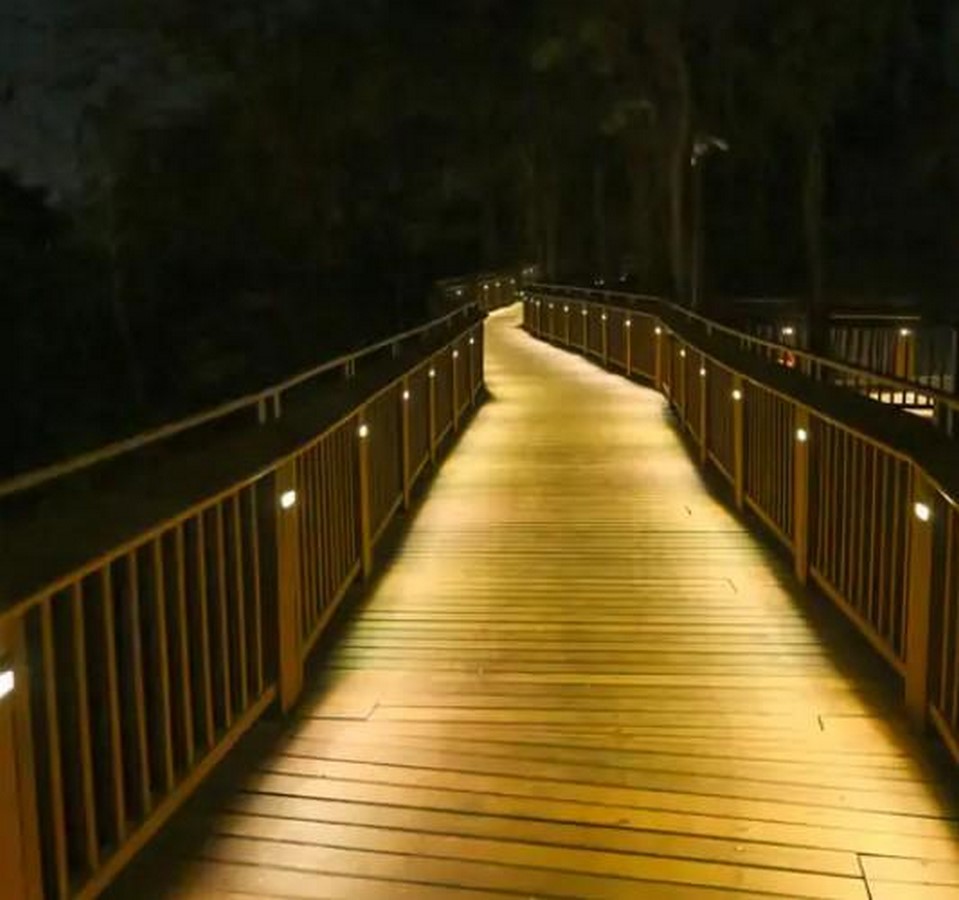
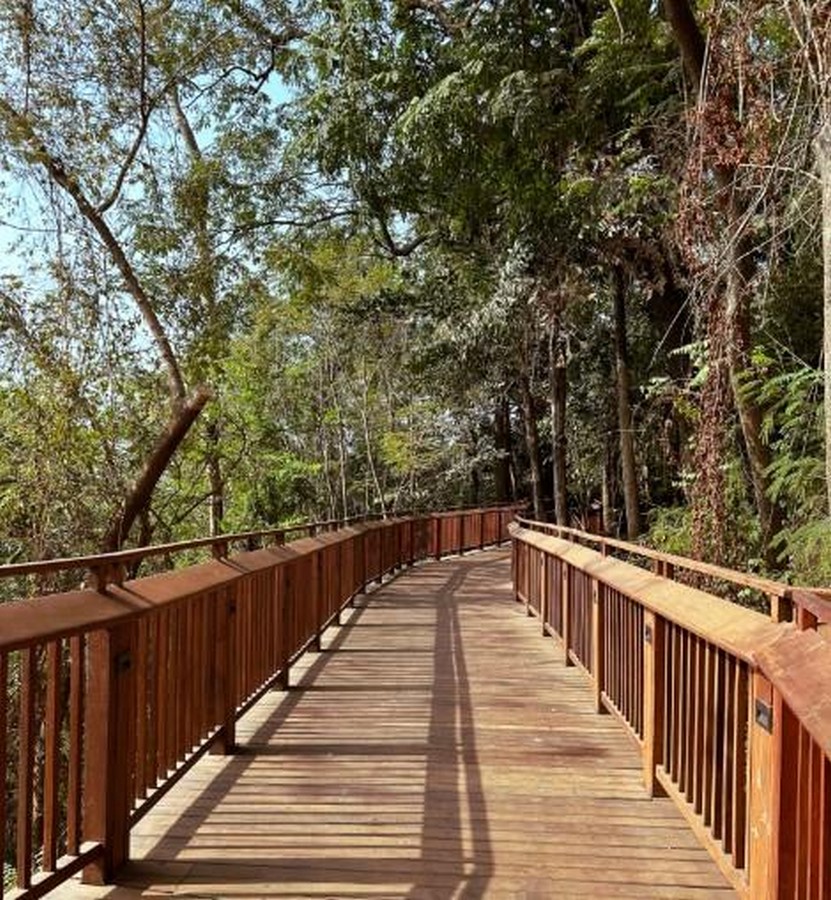
Crafted with context, the choice of materials was guided by the idea of invisibility. Use of weathered Sal wood and supported by steel joists over structural steel beams, led to minimal excavation, water-sensitive detailing, ensuring the forest ecosystem remained undisturbed, forming a loop across the upper and lower slopes of Siri Road. Additionally, the trail stands on low-impact pile foundations to limit interference with existing root systems in the soil. One of its side’s rests on a rocky incline, designed with construction strategies, while the other bends towards a deep valley, providing views of the bustling, concrete city. Every detail, from signage to lighting, was kept unobtrusive, ensuring the forest trail experience remains rooted in nature rather than architecture. Information panels and small kiosks along the walk provide essential information to first-time or infrequent visitors. The design avoided heavy structures, focusing instead on light, durable elements that could coexist with the site’s ecology, amplifying the site’s natural processes rather than altering them. In doing so, it not only provides a pedestrian link but also reinforces the city’s memory of a landscape where community and environment once thrived in balance.
Sustainability & Legacy
At its core, the Micro Forest Trail is a project of ecological restoration, but sustainability here extends beyond ecology into the realm of community. The trail is designed as a shared resource where residents can walk, reflect, and reconnect with nature. By fostering ecological awareness and daily engagement with green spaces, the project seeds a culture of collective responsibility toward the environment. By reintroducing native plant species and strengthening biodiversity, the trail acts as a microclimate regulator within the dense urban sprawl of South Mumbai. The forest now functions as a carbon sink, a biodiversity pocket, and a natural regulator of heat and air quality, creating resilience in an otherwise concrete-heavy landscape. Beyond the environmental impact, the project sets a precedent for reimagining public spaces not as ornamental landscapes but as resilient ecosystems that foster well-being, cultural connection, and environmental awareness. As an intervention, the trail represents a model for future urban projects where small-scale, sensitive design solutions generate large-scale ecological and cultural benefits. Its legacy lies in proving that restoring native forests and integrating them into the city is not nostalgia but a necessity and an essential framework for resilient urban living.
Mumbai is known for many things—the noise, the traffic, the hurried pace of life, crowded train stations, towering skyscrapers, and unforgiving humidity. By reactivating a neglected public edge, the Micro Forest trail in Malabar Hill creates a democratic space where heritage, ecology, and urban life intersect. It has become one of those rare architectural projects that isn’t just successful in its own right, but the one that leads to a demand for other nature-led (design) experiences, as well as a greater understanding of their value.
In a city defined by vertical growth and hard infrastructure, this trail reflects a softer, more sustainable approach to urban design, where heritage, ecology, and human well-being converge.