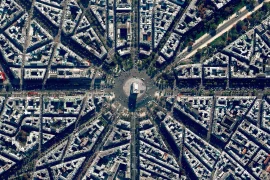
Architecture in movies is more than just a backdrop; it shapes narratives, creates ambiences, and often plays the role of a silent character. Released in 1988, The Truman Show, directed by Peter Weir, is one of the best testaments to this. It is a satirical drama about media, surveillance, and free will; however, when seen from an architectural perspective, it is an influential demonstration of how urban planning, interior design, and atmospheres can shape human life.
The film follows the life of Truman Burbank, who believes he is living in the seaside town of Seahaven, except that nothing about this world is normal. Every building, every street, even Truman’s friends, neighbors, and family are actors, a part of a massive film set built inside a dome. While Truman gradually discovers the truth, forming the plot through his awakening and desire for freedom, the movie is a revelation for architects and urban designers, showing that architecture can both liberate and confine.

Seahaven: A Town Too Perfect
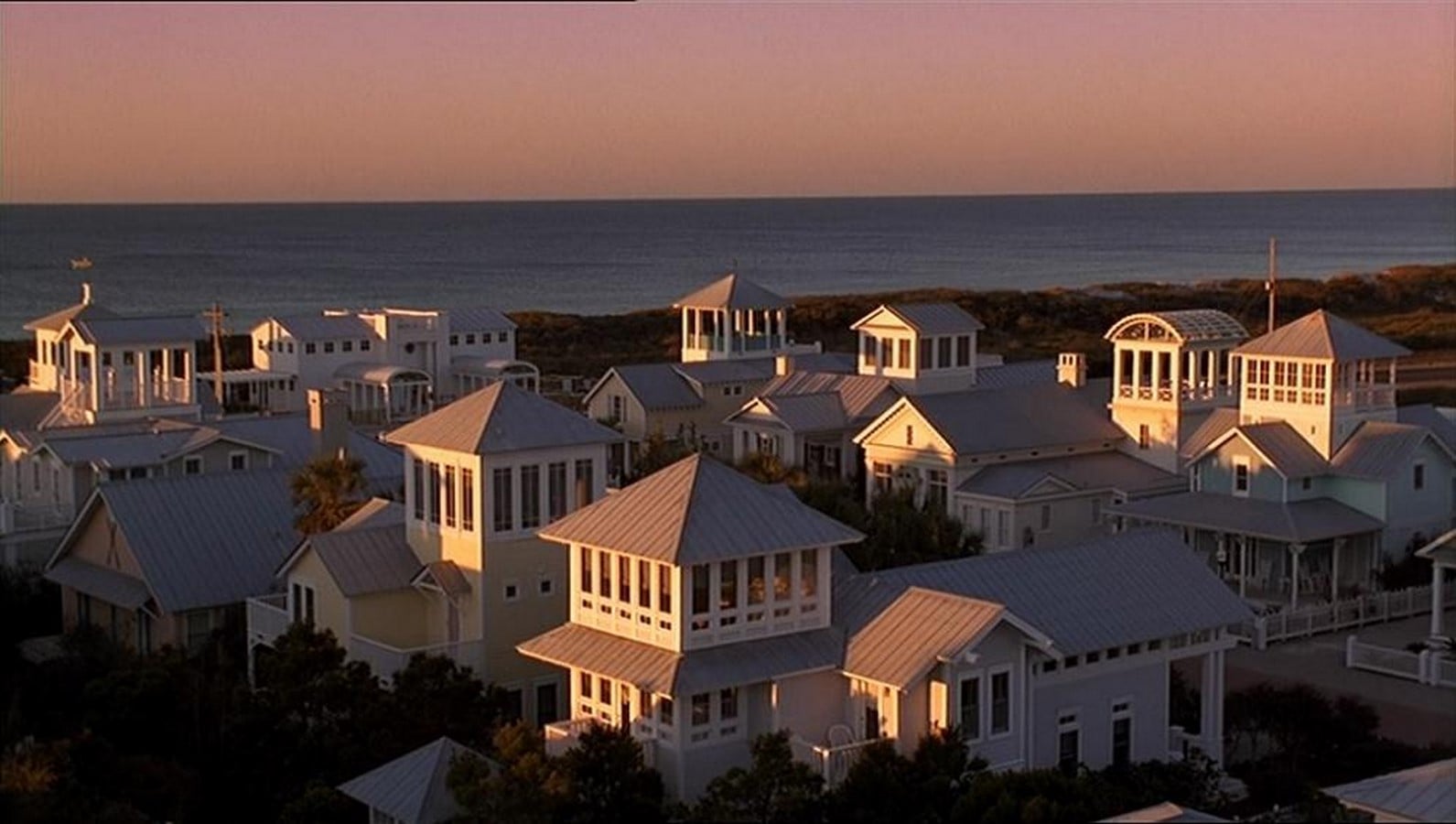
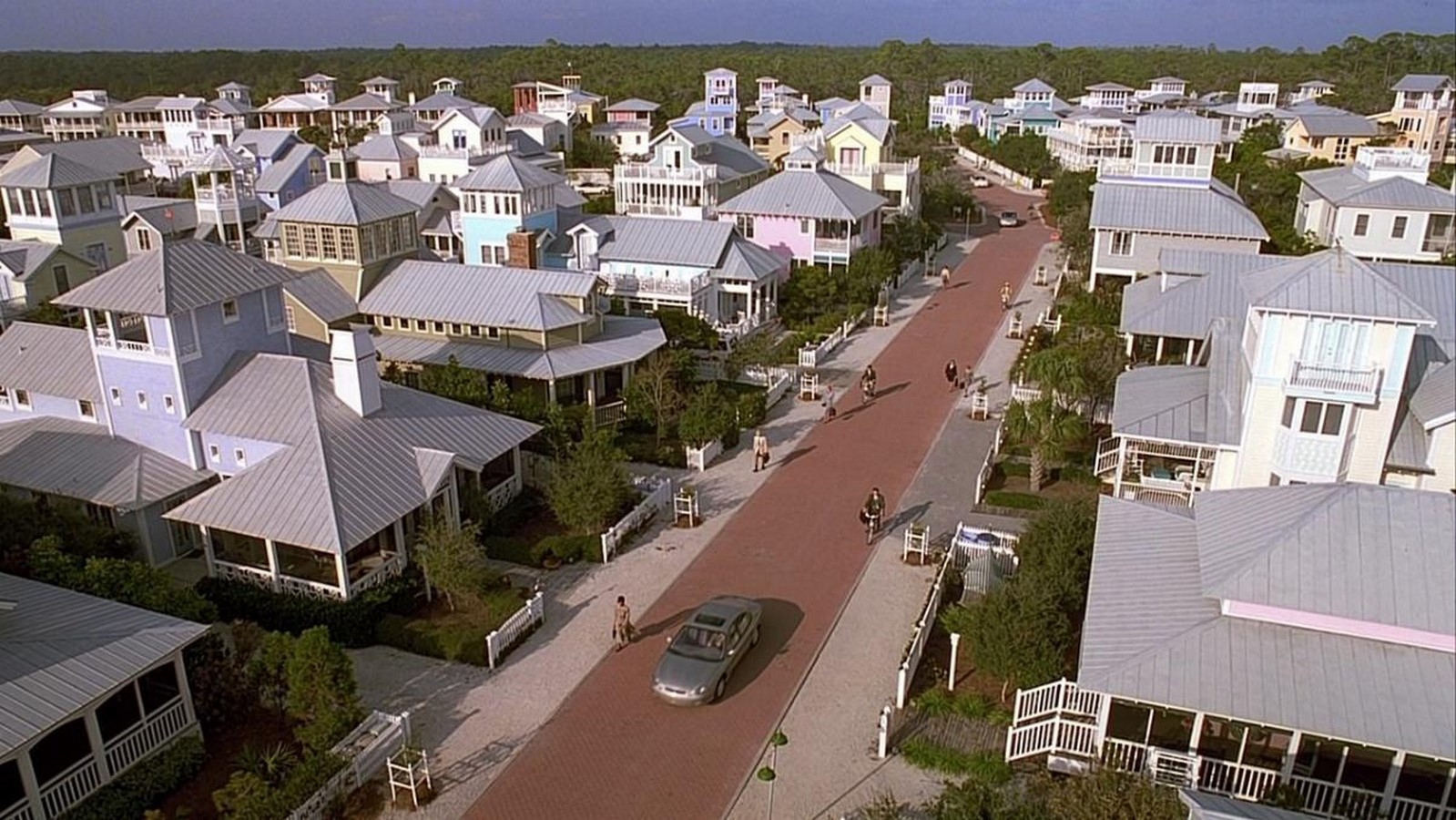
designed to look like a perfect American town, the fictional Seahaven, where Truman lived his entire life, is a massive film set, shot in Seaside, Florida. Designed by Andres Duany and Elizabeth Plater-Zyberk in the 1980s, Seaside is most praised for its New Urbanist communities. Small-town America nostalgia can be felt through the grid layout, pastel colored clapboard homes, white picket fences, and compact yet pedestrian-friendly streets that encourage sociability.
Through the movie, Seahaven appears to have coastal aesthetics, charming and picturesque; however, for the designers, it demonstrates urban order as a tool for control. The town’s perfection for Truman’s case is what masks the artificiality of his life.
Storytelling through Spaces
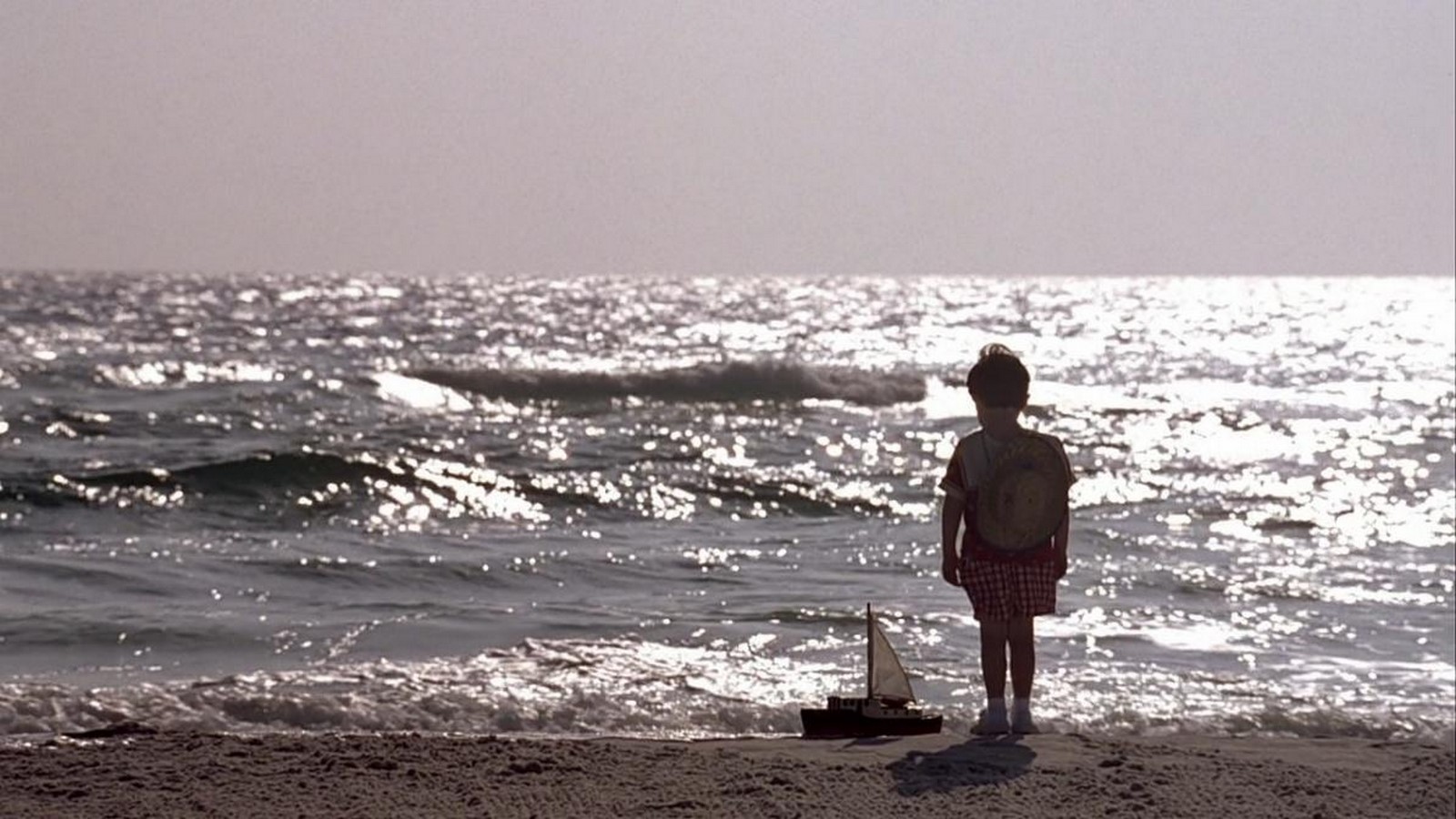
The Seahaven’s design is intertwined with Truman’s daily experiences. The town’s grid layout ensures his movement, directing him along the familiar routes. His fear of water as a child strengthens the use of the coastline, which is both beautiful and intimidating, to keep him contained. The story further reveals that even the sky is painted as the horizon inside the dome.
At the core of the story, Truman starts noticing discontinuities, a stage light from the sky, stranger’s movement being repeated, and the predicted daily routines. This all led to the seamless architecture of Seahaven’s town, revealing its artificiality. As Truman explores these spatial boundaries, his journey becomes a confrontation with architecture, which is an active narrative device controlling his reality.
Interior Design: House as a Set
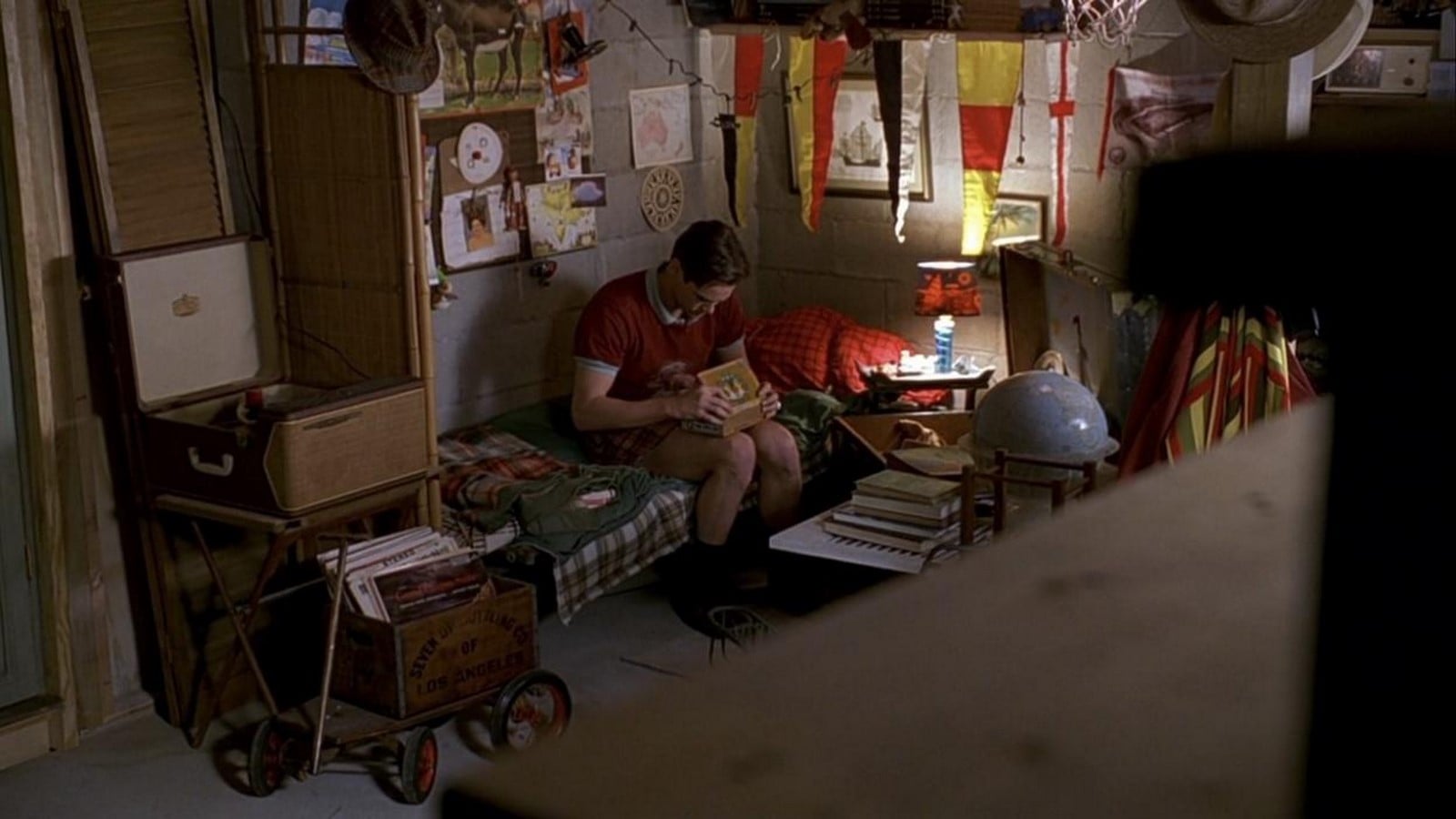
Design plays an equally significant role in Truman’s house. All the product placements in the interiors, especially in the kitchen and the living spaces, are arranged meticulously for visibility and performance for the television audience. Kitchen cabinets open towards hidden cameras, characters are framed neatly through the furniture positions, and the camera angles capture the circulation beautifully.
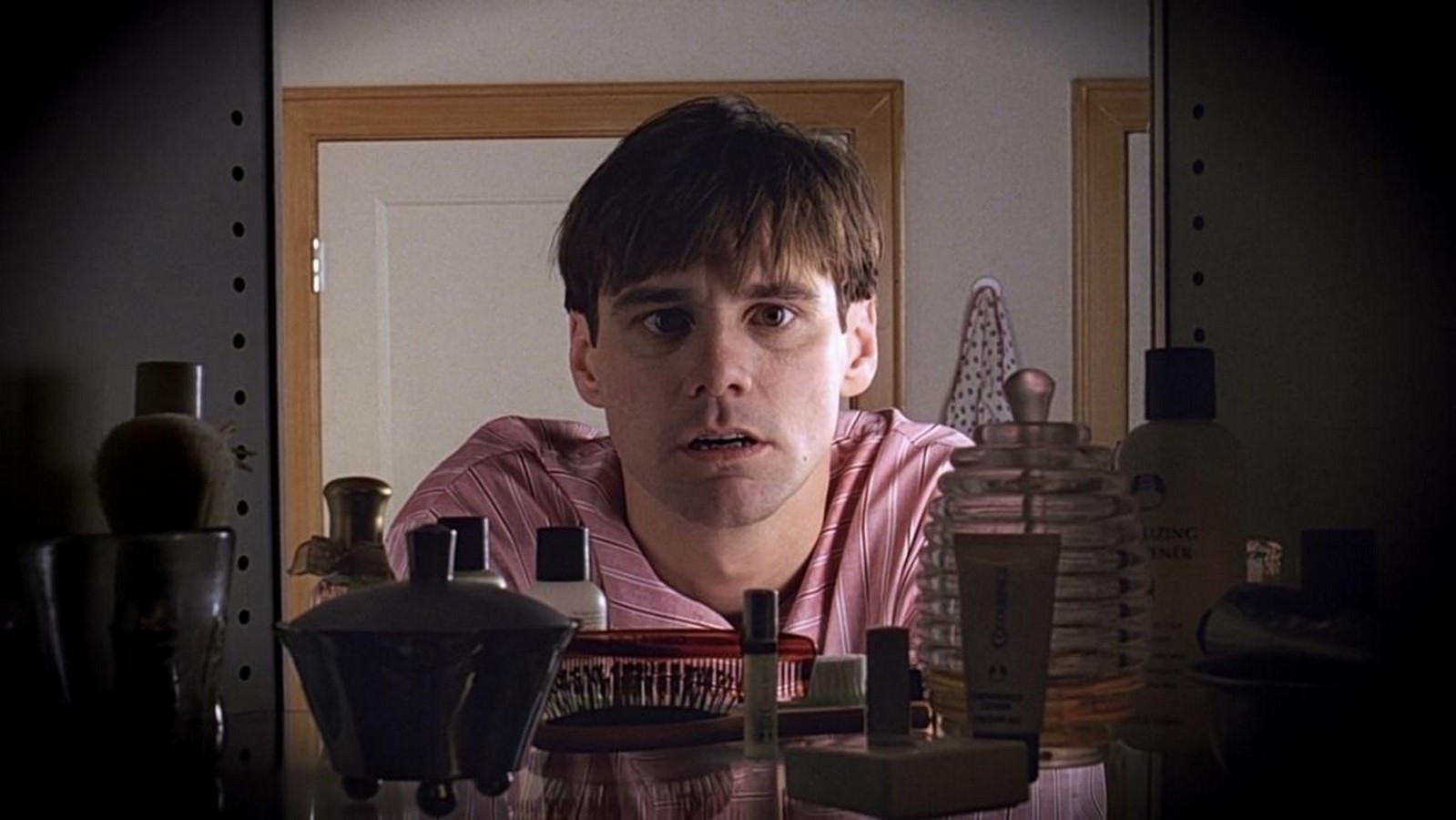
Through this interior design, it reminds the designers that interiors are never neutral; they can be designed prioritizing surveillance and visibility. This home of Truman is more of a display showroom designed to function as a stage while maintaining a realistic appearance. Today, in the age of influencer culture, The Truman Show is more relevant, where homes are used as locations for content creation.
The City as Atmosphere and Set
Seahaven’s atmosphere is carefully constructed to create an ambience full of timeless charm, pastel facades, and sunny skies of a perfect American neighborhood. The set is created to evoke the nostalgia of the mid-20th century, which creates comfort, convincing both Truman and the audience that life in the small town is real. This shows how design can create emotions beyond just providing functions. Here, the atmosphere becomes a design tool shaping people’s feelings and behavior in space.
However, Seahaven is more than just a nostalgic, charming town; it is a city built as a massive film set. All the buildings, streets, and even streetlamps are placed for visibility rather than authentic living, all to look good on camera. This town that appears so flawless eliminates the authenticity and surprise of everyday life. A lesson can be learned from this city: when aesthetics and images are placed above freedom, cities become a stage for performance rather than a space where real life can unfold.
The Edge of the World
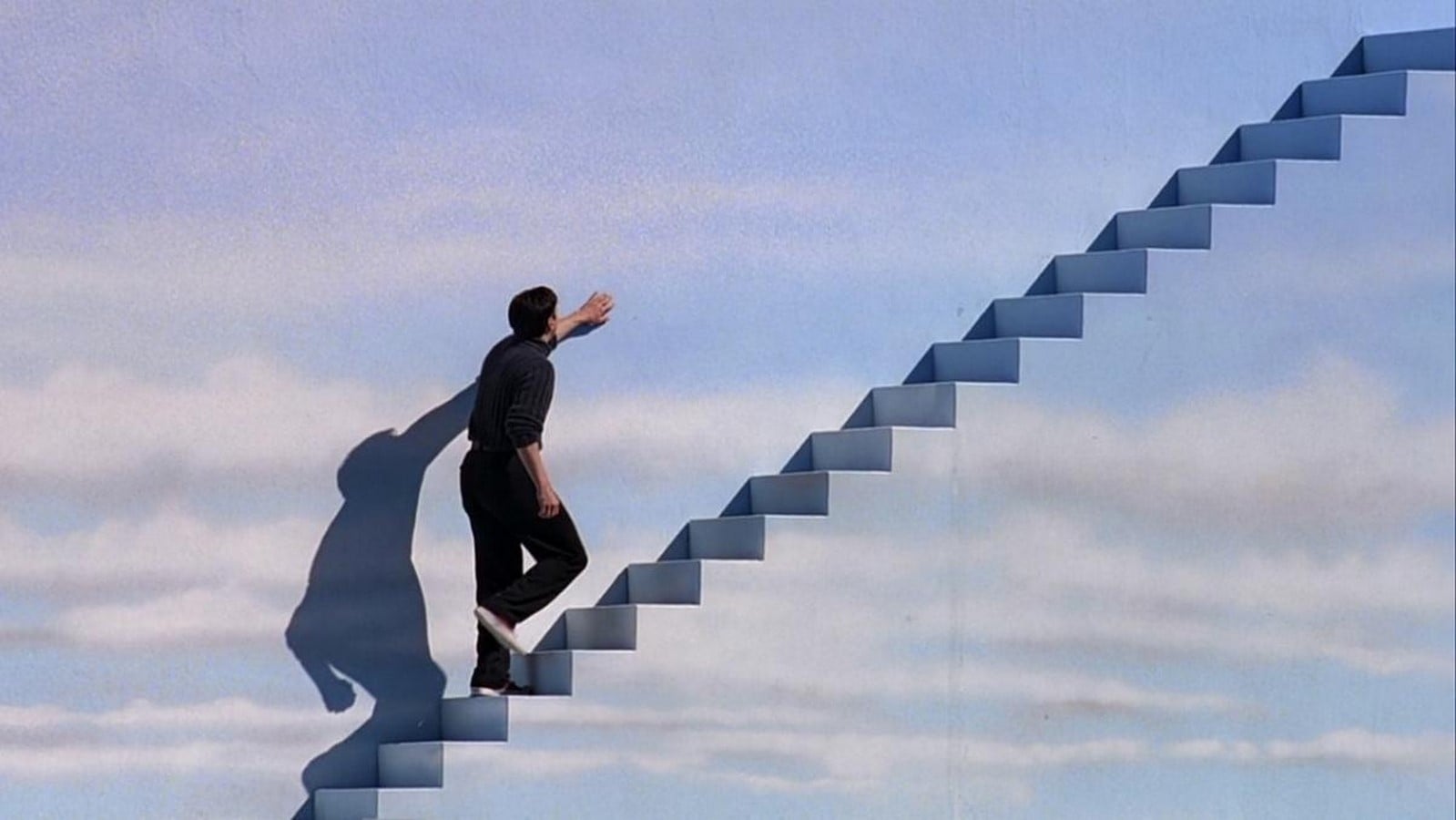
Truman’s discovery of the edge of his world in Seahaven is one of the iconic moments of the film. The door to the world beyond is opened once he touches the painted horizon of the dome. The door here leads to an unknown reality outside. The boundaries of his environment are exposed when what appears to be infinite is revealed to be finite and staged.
The town’s environment serves as a reminder of how, through an architectural lens, the nature of a space can be constructed. Boundaries, codes, and frameworks all characterize the environment, regardless of how vast it seems. However, Truman’s encounter with the dome illustrates how human curiosity overcomes architectural control.
Final Thoughts
The Truman Show is one of the few movies where architecture plays a significant role in both storyline and significance. It narrates the story of a man searching for the truth, but it also depicts a town that is set up to prevent him from finding it. It is an engaging and interesting drama about illusion and reality for the audience; however, for the designers, it demonstrates how design has the power to both inspire and control.
The movie, in my opinion, does a fantastic job of portraying the potential and risk of planned environments. Seahaven embodies all the qualities the designers strive to create in a town, showcasing its beautiful, walkable, and harmonious town planning. Today’s designers are challenged to ensure cities are designed not only to be visually appealing but to be truly livable, diverse, and free.
In the end, the movie The Truman Show raises the question: are we designing spaces for people to live in, or are we just creating sets for them to act within?
Citations:
American Cinematographer. (2023, May 3). This is Your Life: The Truman Show. Retrieved from American Cinematographer: https://theasc.com/articles/this-is-your-life-the-truman-show
Evan Richards. (2011). The Cinematography OF he Truman Show (1998). Retrieved from Evan Richards: https://www.evanerichards.com/2011/1172/
Film Grab. (2021). The Truman Show. Retrieved from Film Grab: https://film-grab.com/2013/10/31/the-truman-show/#
McGuire, J. (2001). The Truman Show. Retrieved from Philosophy Now: a magazine of ideas: https://philosophynow.org/issues/32/The_Truman_Show
NTVB media. (2025). The Truman Show. Retrieved from tvinsider: https://www.tvinsider.com/show/the-truman-show/
Portilla, D. (2012, November 20). Films & Architecture: “The Truman Show”. Retrieved from Arch Daily: https://www.archdaily.com/295301/films-architecture-the-truman-show