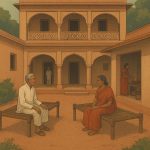
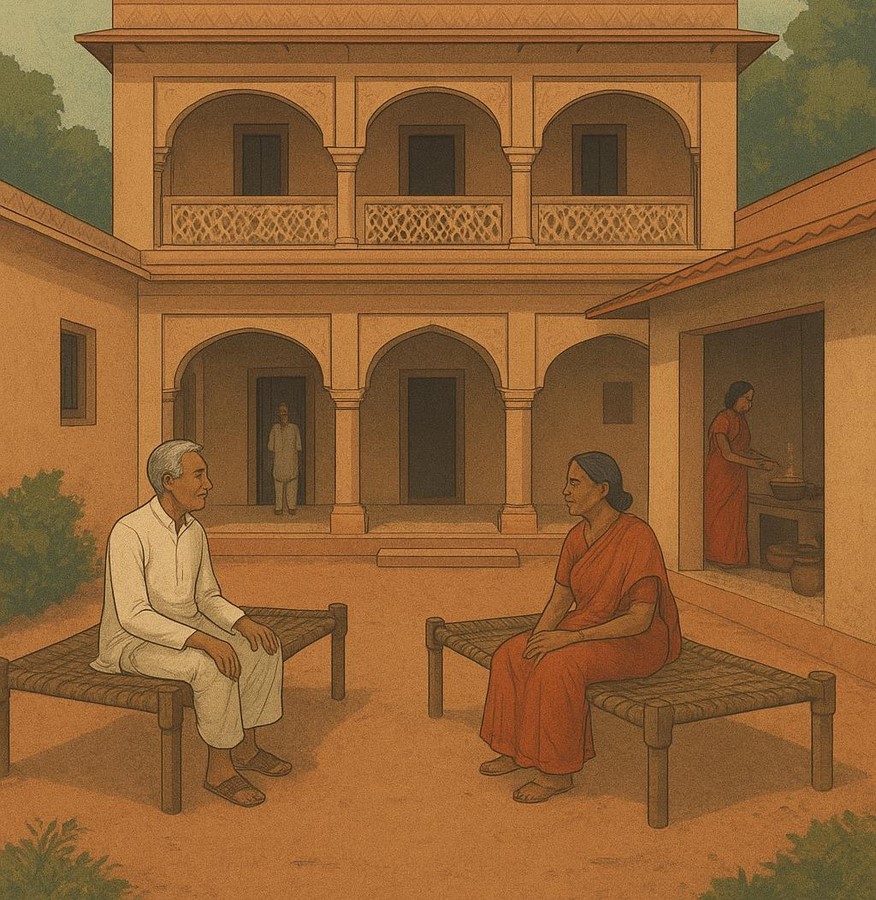
I remember when I was a kid, listening to my mother’s childhood stories about her nana-nani ka ghar (maternal grandparents’ home), and wondering how a house could have two aangans, a spacious verandah, and a kitchen under the open sky. In summer, they would sleep on takhats (woven beds) beneath the moonlight, a detail that made my imagination run wild every time she spoke about it, yet I always missed the mark of how it might look, feel!
Now, as an adult and an architect, I find myself revisiting those stories with new curiosity. My mother explained how the homes were planned: how her nana’s room was closest to the public area – the entrance, because he was the one who greeted visitors, the face of the house, the head of the house, his room came first in sequence; and how nani’s room was tucked near the kitchen, more private and hidden from guests. The spaces women occupied, where they gathered, conversed, and worked, were designed in locations shaped by the social norms of the time.
The more you read and observe, the clearer it becomes that architecture is rarely neutral. In many cultures, societal structures dictate spatial arrangements. I once read about traditional homes in Saudi Arabia, where separate entrances for men and women, distinct private quarters, and carefully planned circulation patterns ensured women would not encounter men from outside the family.
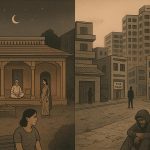
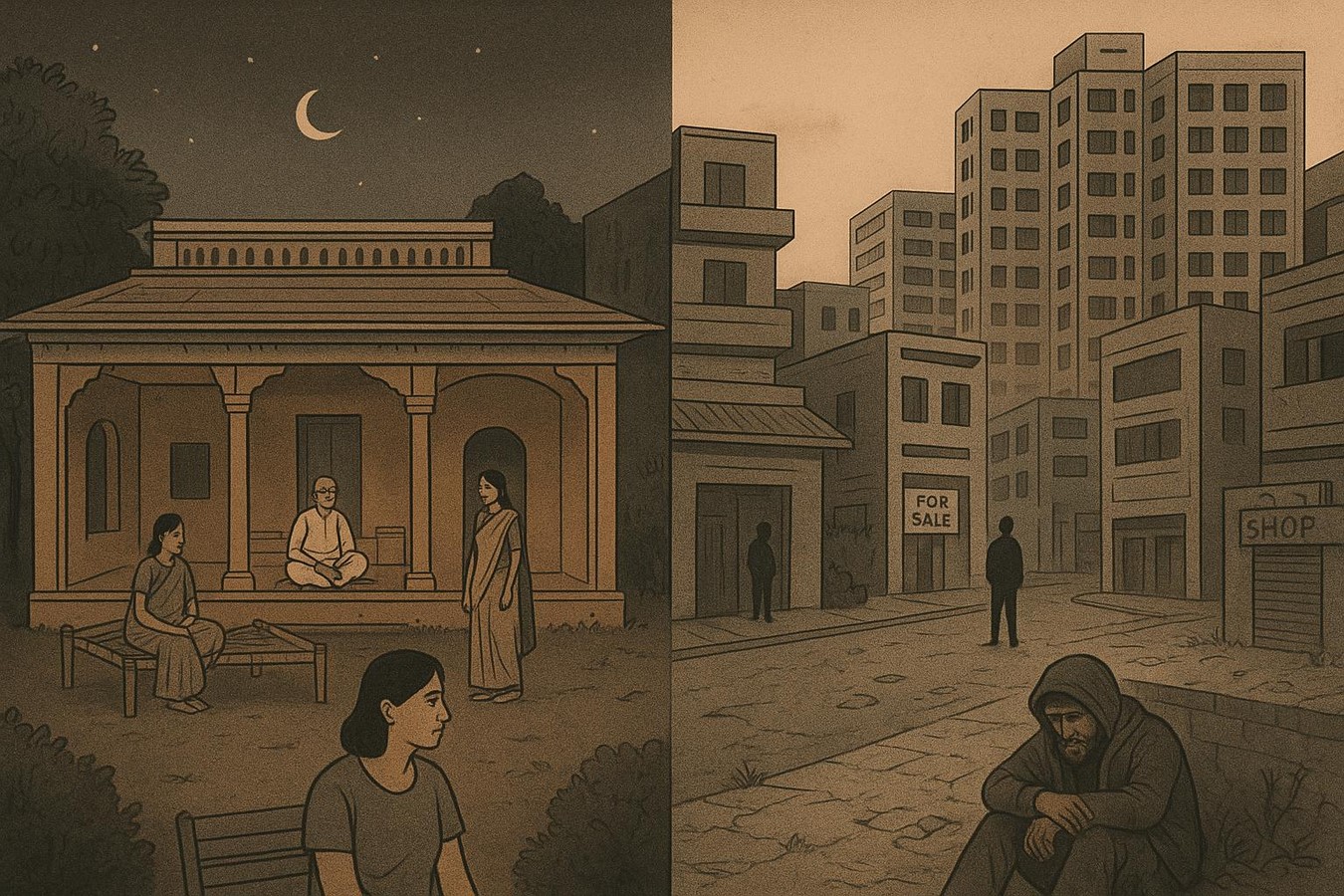
It’s fascinating to see how architecture becomes a mirror of society’s values. As mindsets shift, so do the spaces we inhabit. The open, inviting, and expansive homes of smaller hometowns reflect a slower, more communal way of life. By contrast, in cities where the pace is relentless, we compress ourselves into compact 3BHK apartments, efficient, but stripped of the leisurely courtyards and shared spaces that once defined home, now relegated to the category of vacation homes.
As houses grow smaller and narrower, our towns stretch wider and denser, filled with countless stops to look at, admire, and update on. Yet, every so often, someone will say, “Don’t you remember? An old Nawab house used to stand here.” Now, it’s an apartment complex.
Instead of taking time with traditional materials, it has become common to opt for plain RCC construction, which is faster and cheaper, but devoid of the craft that once defined our built environment. Technological and artistic advancements flourish in the posh metropolitan areas, while smaller rural towns still endure power outages, relying on the loud hum of diesel generators.
Even our community centres reveal this divide: in affluent neighbourhoods, they’re polished, curated, and lined with elite stores; as a contrast to the lower strata areas, weeds grow through cracked pavements, shops stand empty, and roads crumble.
Political priorities reflect this divide. Election campaigns often target lower-income areas, not out of genuine concern, but because the larger population is there, a ready gold mine of votes. These communities have grown used to new faces making the same old, unfulfilled promises. Those with money can call out leaders publicly; the poor are expected to adjust, not question, and even if they do, their concerns can be dismissed or delayed.
All of it, from the grandeur we’ve replaced, to the disparities we’ve accepted, is a reflection of society.
It’s almost subconsciously understood that utopian cities don’t exist. Even in novels, there is always a reveal at the end, that it was all a lie, a mistake, a carefully built sham. Somewhere in the shadows, there are people excluded, hidden, and rejected from the world on display because they are different or indifferent to the idea of utopia.
Urban planning plays a role in reinforcing these hidden unspoken hierarchies. People of different income levels live in vastly different realities. The affluent enjoy larger, greener parks, air-conditioned department stores, and gated, guarded complexes that are beautifully maintained. It almost feels true that you get fresher air if you can afford it.
There is a non-inclusive architectural practice that keeps me wondering a lot. I find it both fascinating and unsettling: crime prevention through urban planning. It involves using materials and spatial strategies to deter crime – CCTV cameras, contrasting pavement textures, barred benches, and overly lit public spaces. While it can enhance safety, it also sends another, less spoken message: exclusion. Many of these measures are designed to keep certain people, especially the homeless, away. It’s a loud, physical way of saying you don’t belong here.
All in all, architecture is the story of the places we live in and memories made within. Every action we take leaves an impression on these spaces. In all its forms and functions, architecture remains a reflection of our society.