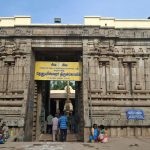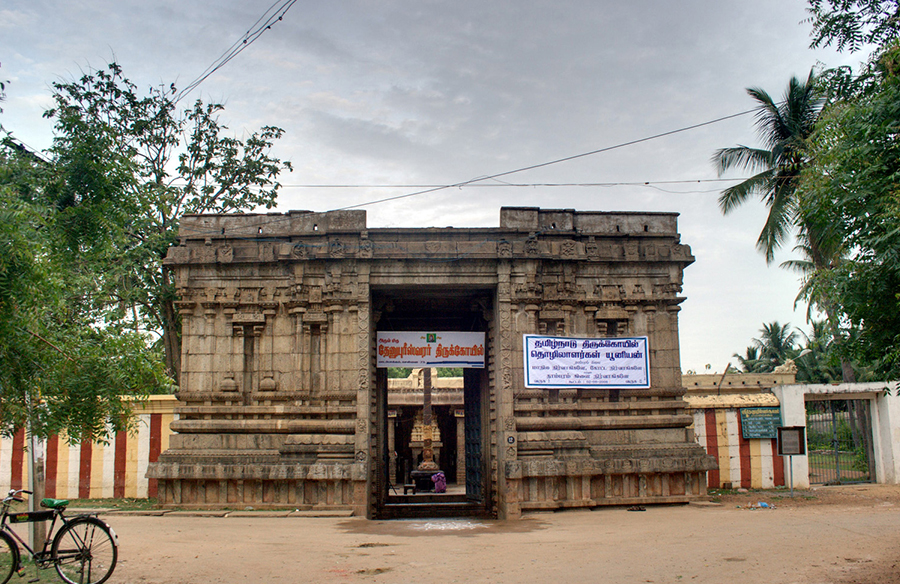
Dhenupureeshwarar Temple. Through the hustle and endless space utilization of an urban patch stands this sanctum of solace, underrated or undernoticed. It is not just a temple but a living remnant of the unbeaten legacy of South Indian temple architecture. But it was a surprising fact that nearly 90 percent of the people I interacted with were not even aware of the history of the temple. The unfinished tower, which appears to be an ordinary temple, is not just an incomplete structure but standing as a prodigy to three distinct prominent architectural styles of powerful rulers—the Cholas, Pandiyas, and Pallavas.
History and Site context-
Situated amidst the densely populated residential area, the temple stands out as unique with its rich historical glam. According to local folklore, a saint named Kabilar, once cursed to take the form of a cow, offered his milk every day to the Suyambu lingam, which was visionary only to him. Angered by what seemed like waste, the cow’s owner struck the cow, which turned the river nearby red, silencing the village in fear. As they prepared to report the incident, King Kulothunga Cholan 3 had dreamt of the sequence the very night that led to the construction of this massive historical benchmark in the year 954 AD. The legacy of expanding this temple was taken care of by the Pandyas, who added the Dhenukambal sanctum and pallavas, who built the Kalyana mandapam, and included so many other holy deities into the compound. The temple is rectangular in plan, and it also houses a pond adjacent to it, which is of the same size. Measuring 2.25 acres in area, this pond was a major source of water to the villagers at that time.
Planning:-
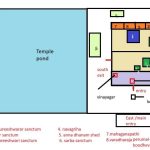
Site Plan:-
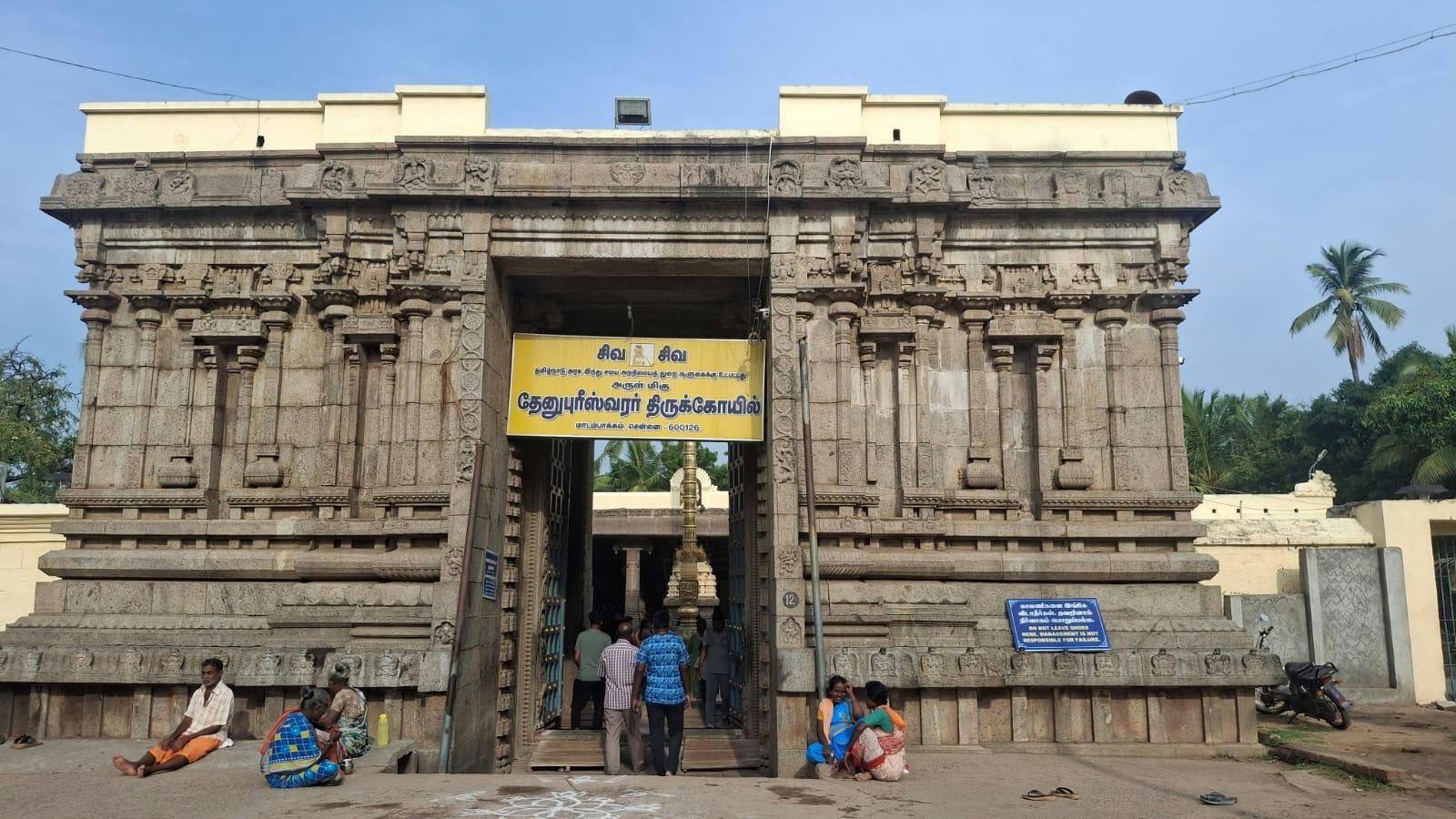
While all historic temples impart their first impression of majestic nature with a tall gopuram, this temple with 140+ statues still stands unique with an incomplete entry gate, which is speculated either to be left incomplete like many other Chola temples or wasn’t able to be completed due to political reasons, which is unknown.
Temple plan: –
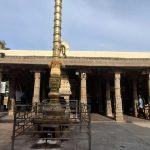
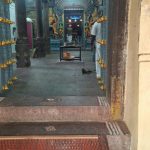
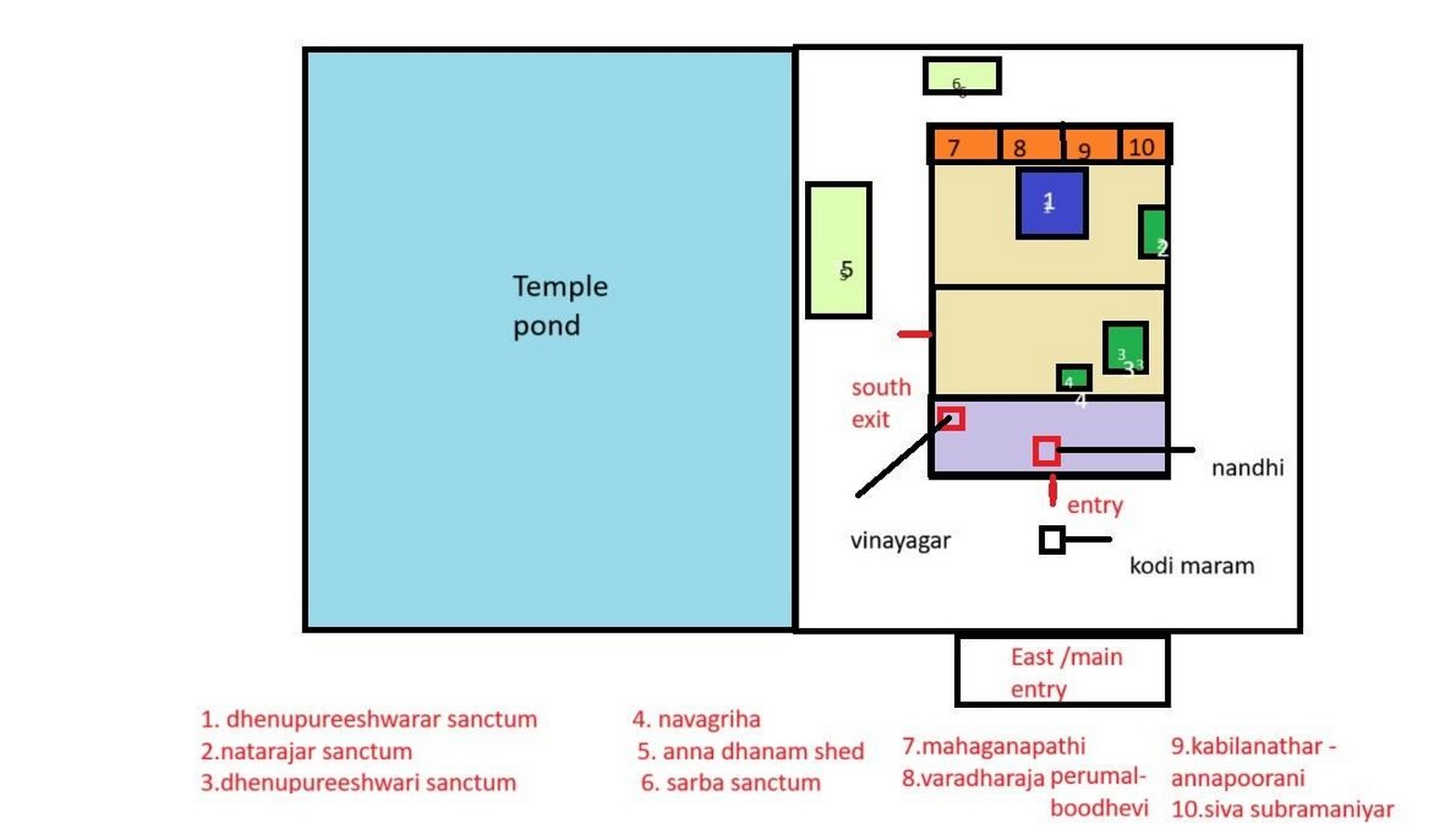
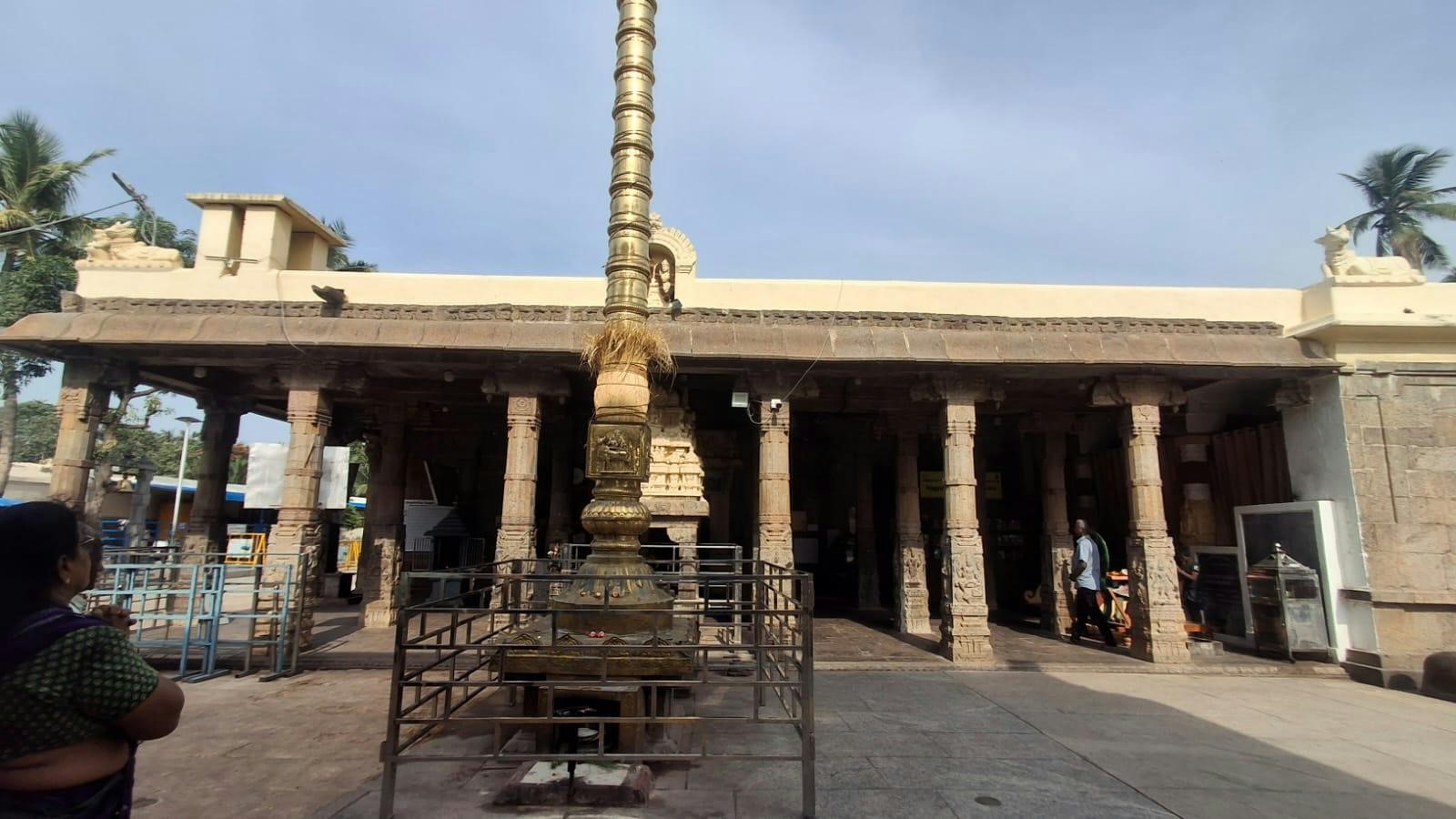
The temples in South India are mainly known for their entrances from all cardinal points. By this fact, this temple is again unique, as unlike other temples, it has just one entrance towards the east. Right after the entrance, we can spot a kodimaram or sthamba pillar, which is adorned with brass. The main sanctum is located in the centre with good circulation space around, with at least 10′ on each side for walking, which is adorned by granite slab flooring. After the Kodi Maram, we can get to experience the 18-pillared Kalyana Mandapam, which was built during the Pallava Empire.
Kalyana mandapam: –
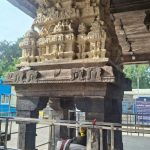
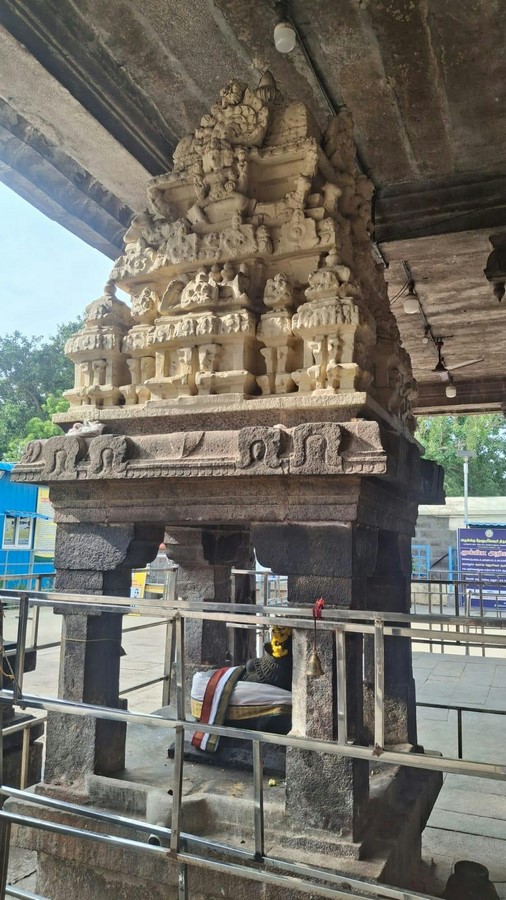
This open-air pillared mandapam houses a Pillayar sannidhi and a nandhi, while Pillayar is placed in the top left corner, and nandhi is placed in the centre facing the Dhenupureeshvarar garbagriham. This mandapam isn’t just a transition zone from circulation to devotion; it also provides us with astonishment at how intricate artistry was carried out during that period. With fluted shafts and distinct figures that include Krishnar, fierce Kali, the Crowning ceremony of lord Ram, Sundhareshwarar, and Thirungyana Sambandhar, who belong to Nayanmargal and much more, this space exhibits diverse beliefs in a single space.
Dhenukambal Sanctum:-
Right after the open-air mandapam, we are hierarchically entering into a slightly bigger mandapam, which is enclosed on two sides. Unlike the temple complex, this mandapam has two entrances – East and South. The south entrance serves as an exit, completing the circulation of the temple. This mandapam houses 28 columns, which are classic pillars from the later Chola reign. The pillar’s lower half features kumbha-shaped motifs, which is believed to symbolise prosperity. The middle portion is a cylindrical shaft with an upper capital of symmetrical and floral motif detailing. To the right of the entrance, we can see the navagriha stationed within 4 pillars, and the devi sannidhi is placed facing the south. The navagriha position engraved in the right side entrance wall, coupled with the deities positioned on the right side of the mandapa, provides us with the duality of cosmic symbolism and representation. Since the older Madambakkam was a place of Vedic scholars, it can be easily perceived that this temple was not only a place of worship but also a dedicated zone for planetary worship.
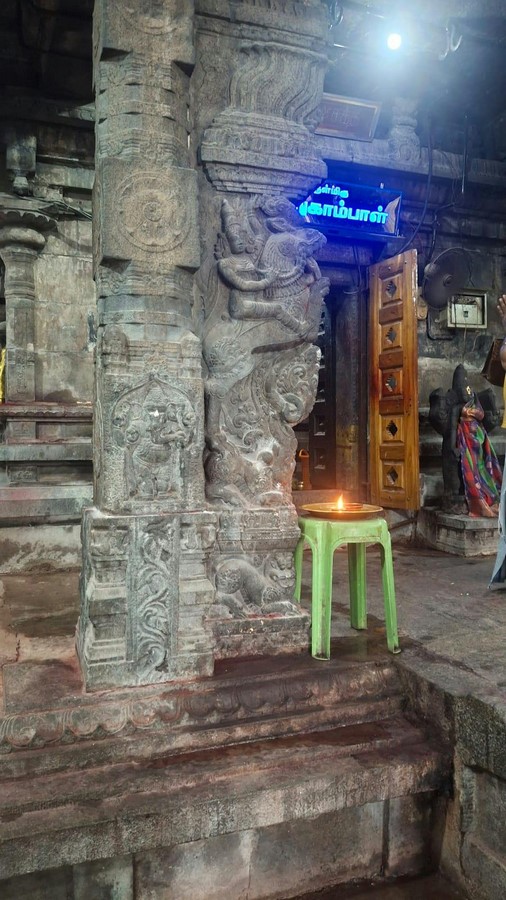
There is another exit door opening towards the south which gives ample lighting and a transition from the open air to a semi-enclosed space, providing a hierarchical enclosure which automatically impacts the focus. The devi sannidhi also has a circulation path of approximately 5′, providing a feel of enclosed divinity.
Dhenupureeshwarar garbagriham: –
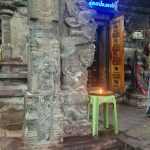
After the divine encounter with Devi, we could approach the divine denupureeshwarar garbagriha. With Dwarabalahars guiding the entry, we can reach the central aisle, which is 10′ wide, wider than any paths we transitioned through, providing an open feel to us while being completely closed. The other pillars are placed in a 6′ gap, marking it an intentional structural integration. The garbhagriha of Dhenupureeshwarar is built in the traditional Chola style that resembles an elephant’s back, and it also houses various idols in its outer wall, like Amman and Durga in the north and south.
The most striking and compulsory feature of any Shiva temple would be the Lingothbavar situated behind the Shiva statue. But here, like its other unique characteristics, a Vishnu statue is present in place of Shiva, which marks the beauty of the Hariharan concept, which developed its popularity during the Vijayanagara reign. It might also be a conscious change to impart inclusivity among two rival beliefs of that time, Shaivism and Vaishnavism. The garbagriha is at least 10′ x 10′ in area. In the rear end, a series of deities is placed in a linear way. The deities are Mahaganapathi. Varadharaja Perumal and Boodhevi, Kabilanathar – Annapoorani, SivaSubramaniyar Valli Dheivanai, which seems to be the latest additions.
The garbagrihas are surrounded by a water channel, like a moat, which connects to the main drainage seamlessly, keeping it dry. The corridors are wide in the Dheenupureeshwarar Sannidhi, while there is a Natarajar Sannidhi on the left, which is small, occupying just 5′ x 5′, providing a tribute to the lord of dance. The entire Garbagriha was filled with silence and echoes of chants which were made more divine by not enabling any exits in that space, justifying the term – garbagriham ( cosmic womb chamber )
After the dharshan, we are directed back again through the devi sannidhi mandapam,which again provides a transition to the outer arena. Right after the exit through the South exit, a new annadhanam shed is constructed for a capacity of 100 people with a handwash facility housed nearby.
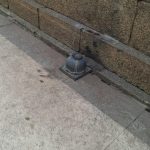
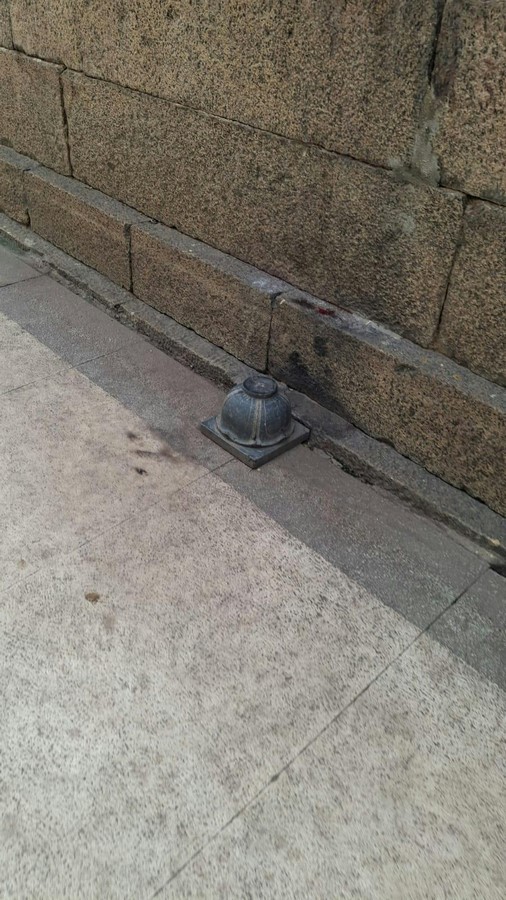
In the rear end is Sarba Sannidhi under an open space. Along the temple’s circumambulatory path, a rhythmic sequence of small, lotus-like stone forms is spotted —The Padma Peedams, which are generally integrated flush with the pathway. Though they are typically associated with Vijayanagara ceremonial routes, their modest presence here possibly reflects early Pallava or transitional Chola intentions, where symbolic geometry is used to mark chaka points and guide the trail. The corridors are 12- 16′ wide, and in the entrance, we can see the offering store to the left and the temple office on the right, completing the plan of the temple.
Materials-
Similar to traditional temple architecture, this temple is also built using Granite from the floors to the ceilings. The blocks are fixed using dry-stacked granite masonry inside the garbagriha and throughout the temple. while in Nandhi sanctum, the lower parts of load load-bearing granite masonry, while the tower is made of stuccoed granite, enabling detailed carvings in it.
The foundation could be similar to that of a compact sand foundation in the Brihadeeshwara temple, yet no proper evidence could be found. The granites are oxidised in a few places, like the entry to Dhenupureeshwarar garbagriha, marking the age of the temple. Traditional Ornamental wooden teak door with gilt-bronze projection is used for entrance doors.
For lighting, the temple walls are adorned with lamp-like carvings, which are inbuilt in granite and triangular niches in the walls for lighting the lamps. While for providing natural light and ventilation, short windows with mesh are attached in the walls, which is a later addition, while the older structure houses a gap between the ceiling and the garbagriha, allowing the natural light and oxygen to seep in.
Iconography:-
- Saptamatrika sculptural panel in entrance – Saptamatrika is a concept of placing form of female deities ( badrakali, varahi, parvati, saraswati, and others ) from agamic texts are distinct from later Chola and Pallava reign. This feature is also spotted in rock-cut temples of the Pallavas. This is engraved in the entrance as it is believed to provide protection.
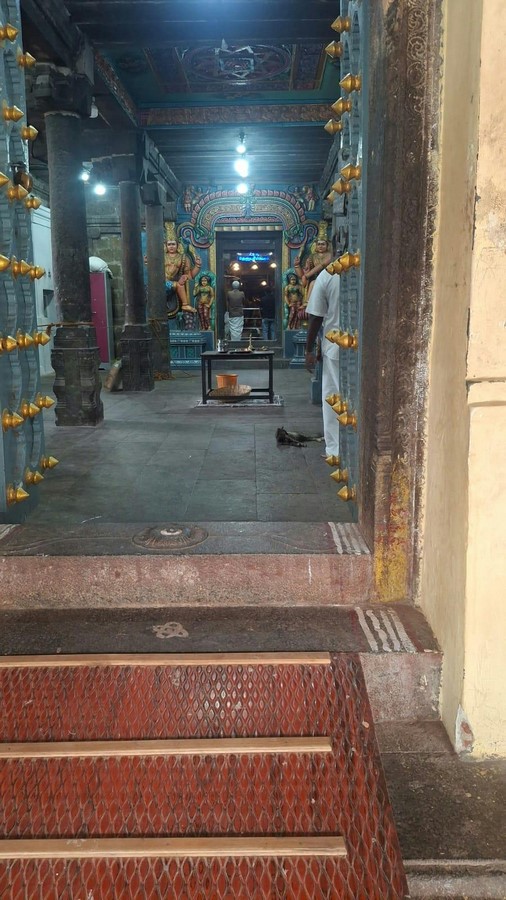
- Dhvarabalakas with characteristics of ayyanar .
This adaptation of folk styling the deities was profoundly common in the Pandya period while they adapted the big eyes and fierce body shape from the village side into their construction . The dwarabalahas before garbagriham is possibly built in that style due to pandyan intervention as the Dhenukambal was also established by them
The Dhenupureeshwarar temple might not be the majestic fallacy of intricate detailings with 1000’s of statues in it . Yet it stands as an epitome of legacy from the past with an ever-changing urban patch. This remains as a reminder to our glorious past, still standing strong in the present, waiting to open a window into the past to curious minds in the future.
REFERENCE :-
-ASI information board inside the temple.