India is widely celebrated for its cultural diversity; however, it is often overlooked how ecologically and climatically diverse it is. From cold Himalayan villages to humid coastal coasts, from heavy monsoons to arid heat of Rajasthan, India encompasses a variety of landscapes with their unique stories. Each region demands a specific architectural response, yet due to the rise of urbanization leading to the ‘glass box’, a sense of detachment can be felt in these varied climates and cultures.
This emerging discourse around contextual intelligence signals a paradigm shift. More than a design approach, it is the way one thinks about the sensitivity to a site’s physical, cultural, and social realities. For a country as layered as India, embedding site-specific cues into architectural form becomes a sustainable approach. It re-establishes dialogue with the surroundings, allowing built form as an extension of the environment.

Understanding Contextual Intelligence
Contextual Intelligence is an architectural approach to integrate and reflect site conditions in a coherent way. It operates on multiple levels:
- Environmental- response with respect to solar orientation, wind patterns, and vegetation
- Cultural- to acknowledge local traditions and spatial hierarchies
- Materials- incorporating locally sourced materials and construction methods
- Understanding site evolution and its attached memory.
India, with its variety in vernacular architecture, through this approach, can reinterpret vernacular practices through a contemporary lens. From passive cooling strategies of stepwells and jaalis of Rajasthan to sloping roofs and verandahs to adapt to heavy rain in Kerala, intelligence is rooted in the context and not just for aesthetic choices. A country where every region has its own unique story, contextual intelligence bridged the gap between modern aspirations and ecological sensitivities.
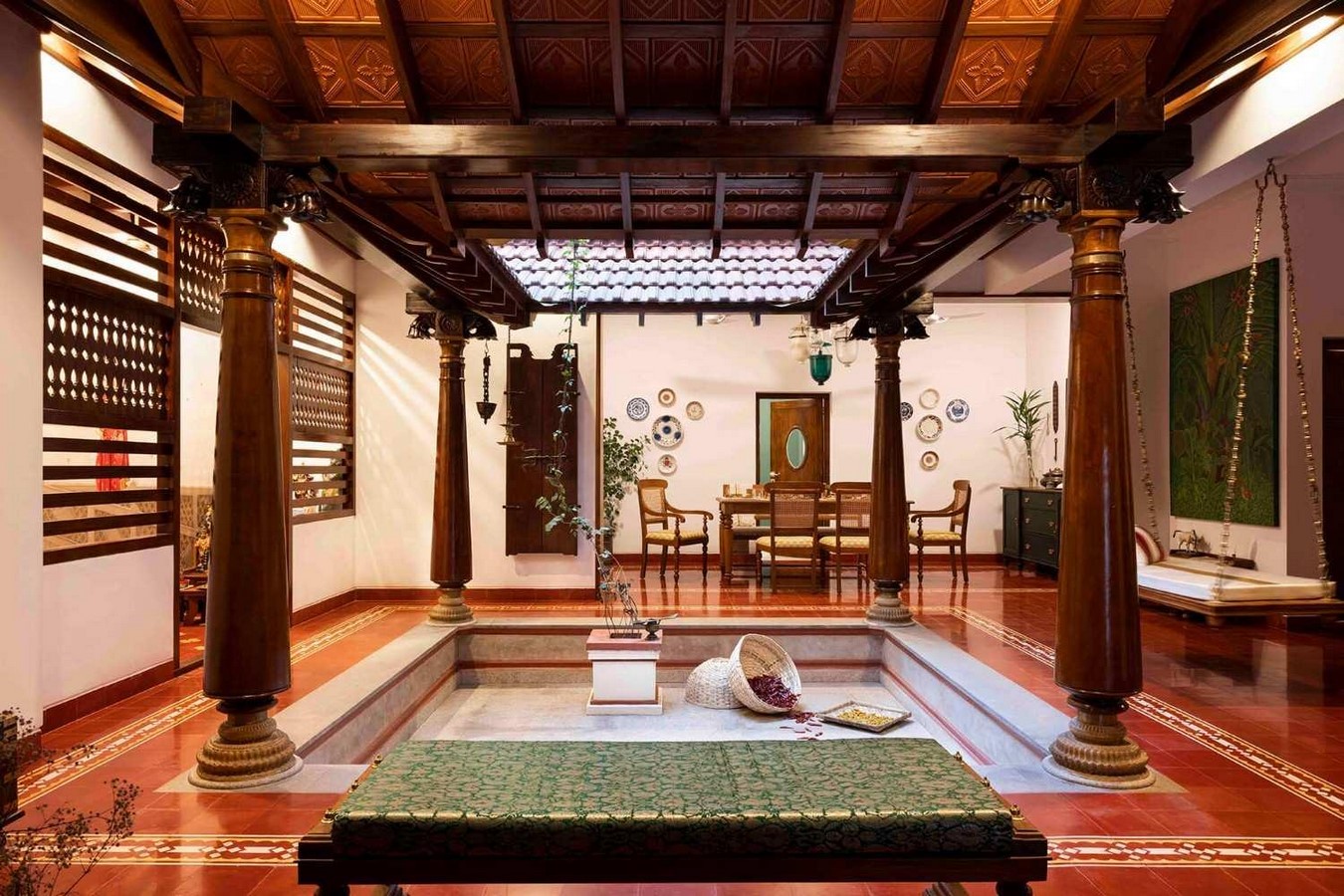
Embedding City Cues into Form
From aligning temples with the solar path to negotiating water scarcity through stepwells, India’s architectural legacy is deeply rooted in site-responsive traditions. Even today, modern Indian architecture continues this lineage by embedding site-specific cues into architectural form. Key approaches explaining contextual intelligence are demonstrated through the following projects.
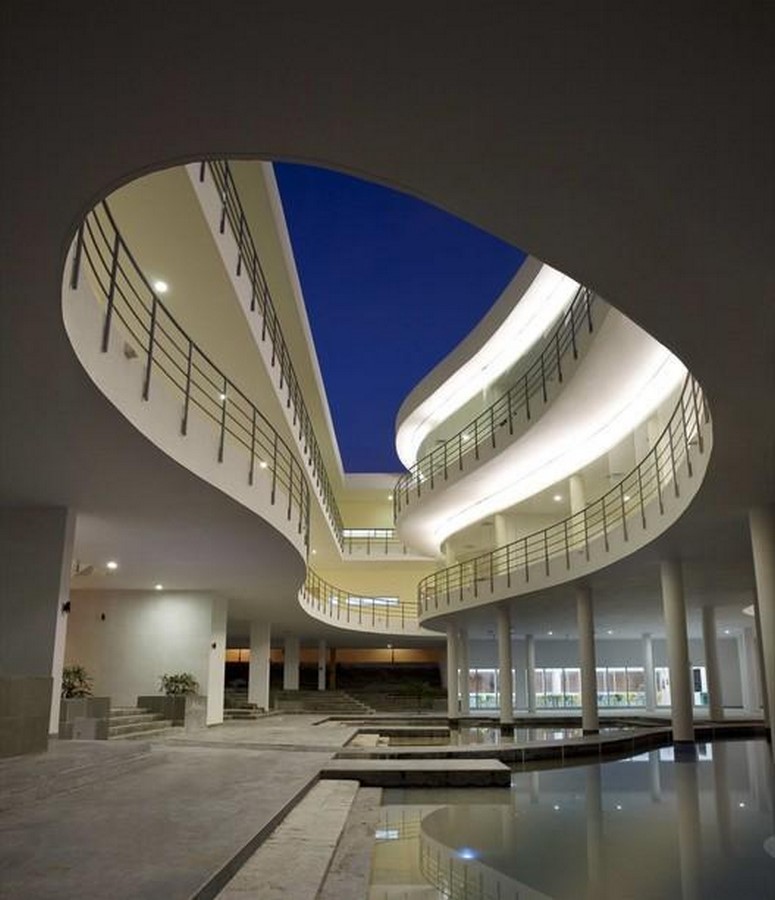
- Topographic influence – Pearl Academy of Fashion in Jaipur, designed by Morphogenesis, is a radical fusion of traditional and contemporary architecture. The architecture of the institute is a modern adaptation of traditional elements and passive cooling strategies used in Rajasthan, such as courtyards, baolis, and jaalis.
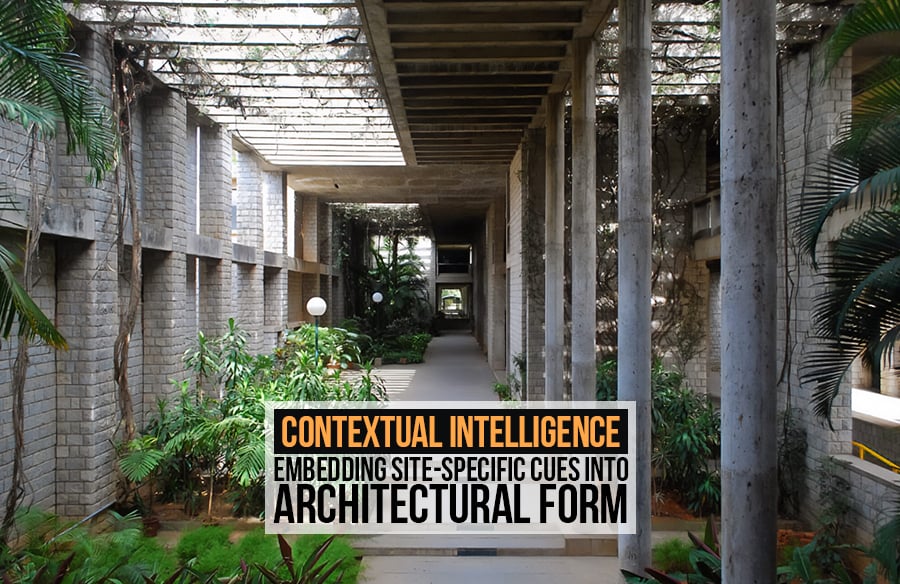
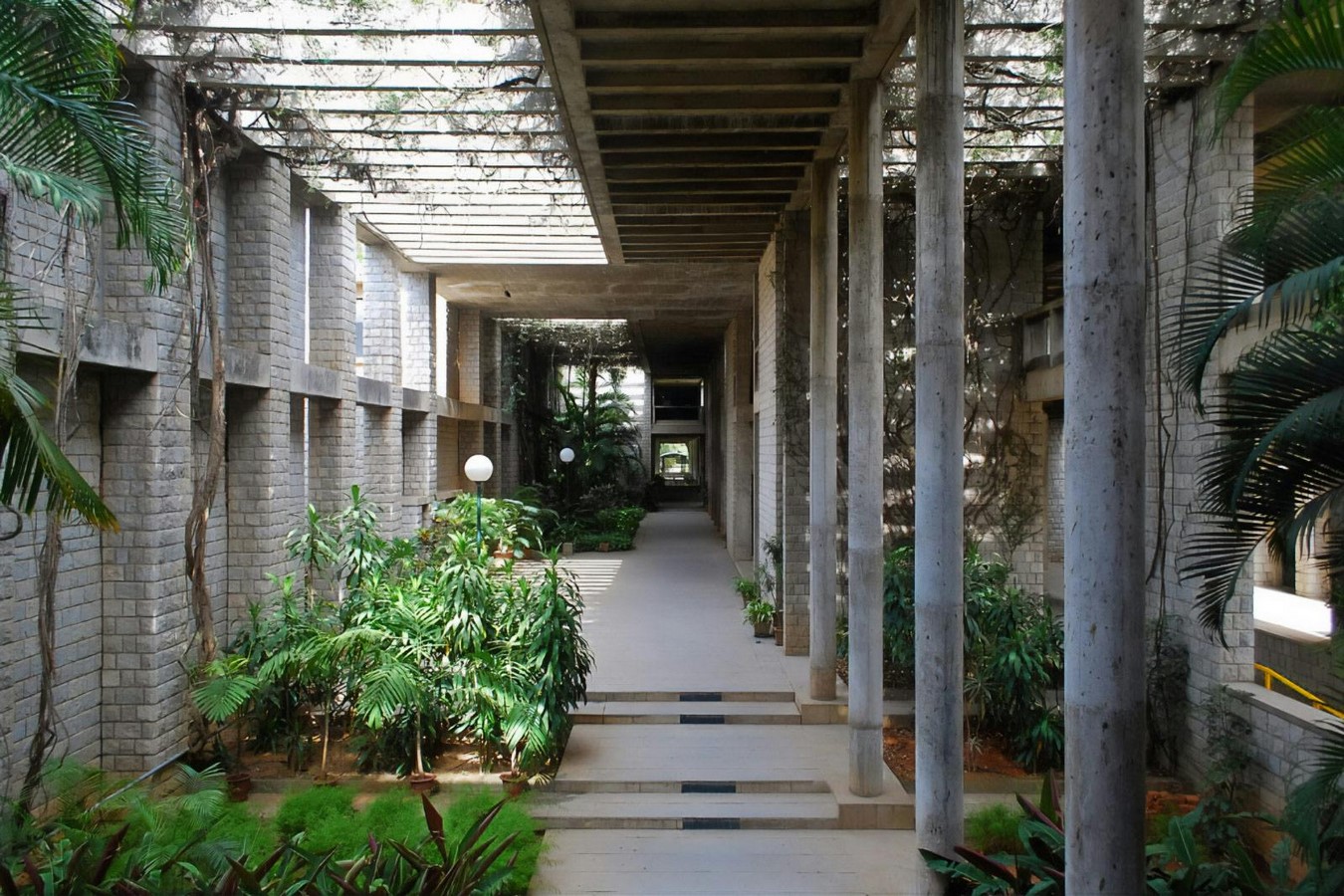
Climate responsive – B.V.Doshi’s Indian Institute of Management, Bangalore, is an excellent example of how architecture is driven by climate. Designed for thermal comfort suited for Bangalore‘s temperate climate, the architectural form of the building is an interplay of solid and void, mass and permeability. Envisaged to facilitate human interaction, through courtyards and corridors, the building showcases how life and architecture can co-exist.
2. Material Localism- Laurie Baker’s own house, The Hamlet in Thiruvananthapuram, Kerala, beautifully embeds local materiality into architecture. Nestled amidst a lush landscape, the residence used locally sourced materials like laterite stone, mud mortar, wood, and reused Mangalore tiles. The choice of the material was not for aesthetic minimalism but about structural honesty and cost effectiveness, core principles of Baker’s philosophy.

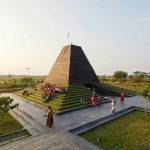
3. Cultural continuum- Designed by Sameep Padora and architects, the Temple of Steps in Nandyal, rewrites the traditional architecture through a contemporary lens. It is a civic and spiritual space tied to the local traditions, which mimics stepped water temples responding to the fluctuating water levels. This synthesis of land and water not only sustains ecological balance but also honors cultural traditions, creating a harmonious temple environment.

4. Ecological response- The Wall House in Auroville by Anupama Kundoo exemplifies ecological intelligence through local materials, passive cooling strategies, and climate-responsive orientation. Dependence on mechanical systems is reduced by porous wall design that maximizes light and ventilation. It incorporated age-old materials that combine with local craft traditions alongside knowledge-based scientific systems.
India is a diverse country with diverse microclimates, materials, social and cultural patterns; contextual intelligence becomes a necessity. The concept of contextual intelligence is about understanding sites as a living, active member. It urges the architects to pause, observe, and design with sensitivity rather than for aesthetic purposes. Embedding site-specific cues into form encourages buildings to be ecologies of empathy, i.e., spaces that breathe with climate and community and evolve with time. With increasing urban stress, environmental degradation, and architecture demands, buildings that feel like they could never have been built anywhere else.
Citations:
AnupamaKundooarchitects. (2021). Anupama Kundoo architects. Retrieved from https://anupamakundoo.com/portfolio-item/wall-house/
ArchDaily. (2009, November 13). Arch Daily. Retrieved from https://www.archdaily.com/40716/pearl-academy-of-fashion-morphogenesis
Bahga, S. (2024, February 18). Arch Eyes. Retrieved from https://archeyes.com/the-indian-institute-of-management-bangalore-by-b-v-doshi/
JaipurTourism. (2023). Jaipur Tourism. Retrieved from https://jaipurtourism.co.in/jawahar-kala-kendra-jaipur
LaurieBaker. (n.d.). Laurie Baker. Retrieved from https://www.lauriebaker.net/index.php/photos-and-videos/walkthrough-of-the-hamlet/hamlet-photo-set-1-the-doghouse-and-niecerie
SameepPadoraandAssociates. (n.d.). Sameep Padora and Associates. Retrieved from https://sp-arc.net/temple-of-steps-balaji-temple-at-nandyal-andhra-pradesh/
Sebastian, J. (2025, March 24). Instagram. Retrieved from https://www.instagram.com/p/DHleZPVSvLw/?img_index=3