In today’s time, there is a major technological advancement happening which is reshaping every industry. The use of vernacular techniques with modern technology provides a precise and sustainable outcome. This adaptation is not merely for aesthetic or technical but a shift that is redefining the architect’s role as both the digital innovator and custodian of local understanding.

Revaluing the vernacular techniques for architecture
Vernacular techniques are rooted in the tradition of their place. It represents its generation of knowledge passed through culture and continuous learning. It is a system where architecture is deeply influenced by its weather, geography, locally available materials, social values and cultural identities. From mud architecture in the deserts of India, to bamboo joinery in Southeast Asia and dry stone walls in the cold regions of Europe, these architectural techniques are embodying centuries of environmental intelligence. They are deeply responsive, adaptive and communal, crafted as per the human need.
However, urban expansion and industrialisation over the last century have made a shift towards modernisation, leading to the displacement of regional tradition and techniques in the name of speed and efficiency. This has resulted in the loss of craft, knowledge and cultural identity. The vernacular architecture is invaluable today because of its resilience and ability to function without any mechanical or industrial interventions.
With climate change and limited natural resources, an architectural practice needs to rethink the vernacular techniques and make them relevant in today’s time.
Digital fabrication is a current architectural trend
Digital fabrication has become a new architectural trend as it assists in meeting the demand with precision. The CNC milling, 3d printing, robotic use and algorithmic design software help in translating an idea into physical objects, allowing architects to seamlessly produce parametric designs and customisations.
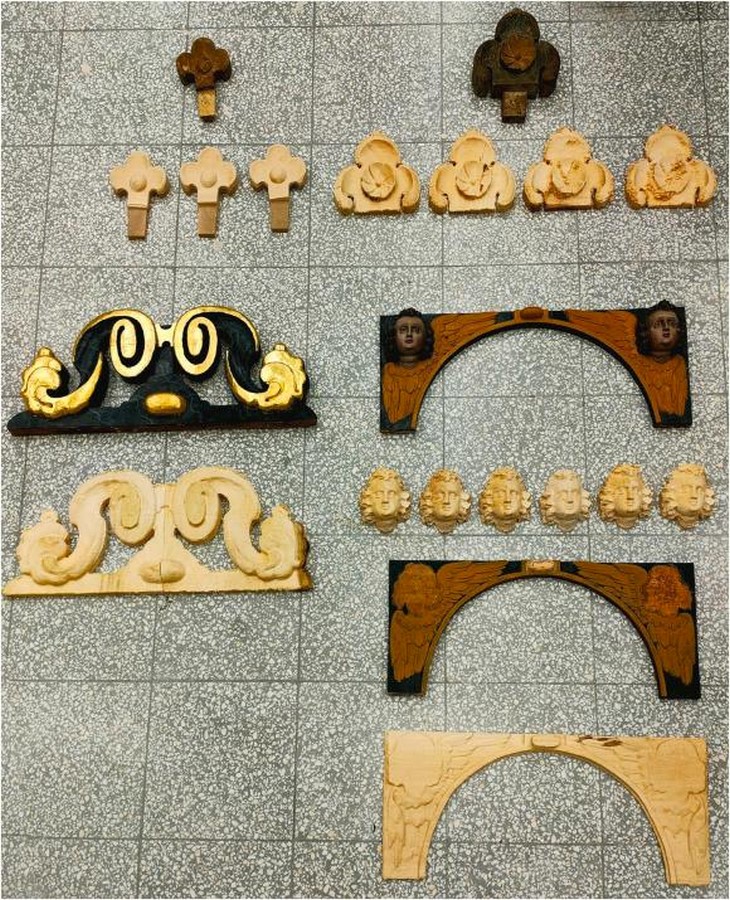
Digital fabrication introduces several advantages such as customisation of each piece without added cost, accelerating the design process through speed and scale, automated optimisation through precision and minimal wastage and experimenting with new recyclable materials to use vernacular techniques to its full potential.
Now the architect can create new systems and performance-based structures, but without the local context, the digital fabrication can become abstract and ecologically intensive if mass-produced.
A hybrid practice where craft meets code
Integrating vernacular techniques with modern technology is not to replicate the past architecture but to interpret the concept with modern tools. This idea assists the maker in expanding the heritage structure with the form and function capabilities of architecture.
- Digital documentation of the traditional techniques and knowledge
Techniques undocumented can now be archived digitally through 3d scanning and parametric modelling. This assists in preserving the knowledge and to be analysed and made adaptive for future use. It can be used in modern buildings with cultural continuity.
Digital modelling and studying of ancient construction methods and being revived with new geometrical forms and added structural reinforcement to meet today’s needs. Similarly, traditional joinery methods can be studied and interpreted in a CNC machine to be produced with precision on a larger scale in quick time.
- Interpreting vernacular design through parametric fabrication
The new technology and tools allow the architect to interpret the vernacular principles and design an innovative built form. Such as the perforated screen found in traditional Indian architecture can now be fabricated to its optimal use, such as natural light control, airflow and privacy in a precise form.
The biomorphic and vernacular patterns have been reinterpreted by the architects in recent times to build building envelopes and structural systems to be site-specific and provide optimal performance.
- The artist and the robotic craftsmanship
The robotic intervention doesn’t mean complete neglect of an artisan. The collaborative workflow allows a repetitive task with control that truly defines craftsmanship. A human touch can adjust and improvise with robotic assistance, and can craft a complex organic form in a repetitive process.
Considering culture and ethics to create a new architectural ethos
The ownership and authorship are two different aspects to be considered while digitising and reinterpreting traditional techniques. Involvement of modern technology doesn’t mean to replace the local artisans, the beauty of vernacular architecture is anchored in its cultural specificity and not be used on a universal scale directly. Integration of modern technology must empower the community from where the vernacular techniques originate traditionally and enable the locals to participate in the design processes.
Integrating local artisans with digital fabrication creates an architecture that is eco-centric, sustainable inherited and innovation that respects the local culture and traditions. This creates a symbiotic relationship between human and machine which can be digitised and analysed globally.
The term “Craft meets Code” is not just an architectural trend but an ethical and ecological responsibility. It is a movement that creates structures that are material intelligent, culturally expressive and technologically advanced.
It need not be a debate between old and new but a symbiotic practice where innovation doesn’t mean elimination but an evolution. This will assist the past and present to shape the future where structures have stories that resonate across generations.
References:
- (No date) Towards a legal theory of digital ecosystems. Available at: https://www.ucl.ac.uk/cles/sites/cles/files/cles-1-2024.pdf (Accessed: 03 August 2025).
- Cluster of excellence intcdc: Integrative Computational Design and Construction for Architecture (no date) Cluster of Excellence IntCDC: Integrative Computational Design and Construction for Architecture | News | Dec 1, 2025 | Institute for Computational Design and Construction | University of Stuttgart. Available at: https://www.icd.uni-stuttgart.de/news/Cluster-of-Excellence-IntCDC-Integrative-Computational-Design-and-Construction-for-Architecture/ (Accessed: 03 August 2025).