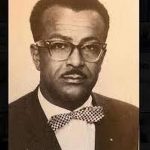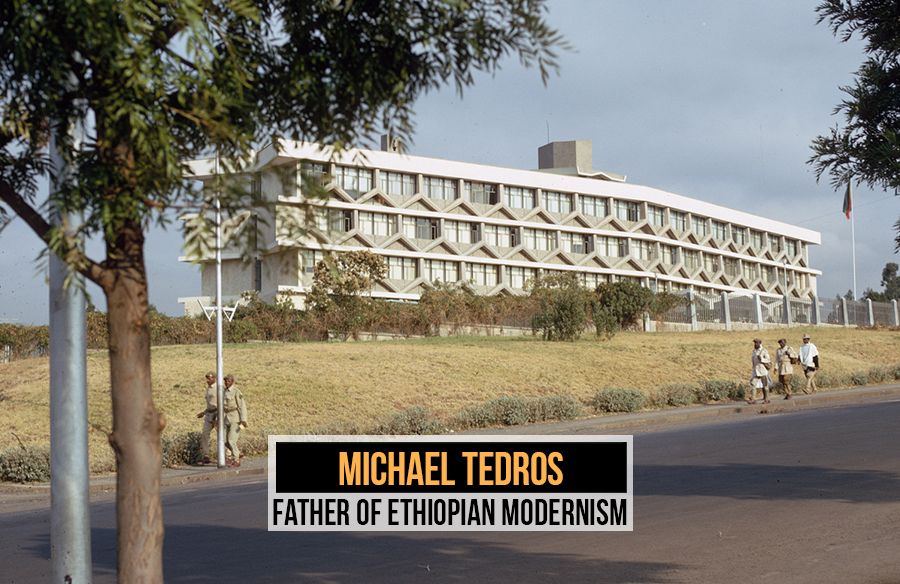
It is hard to talk about Ethiopian and African Modernist Architecture without mentioning the name Michael Tedros. Born in 1921, Michael is Ethiopia’s first formally trained architect. He was more than a designer, he was a nation-builder who helped shape Ethiopia’s post-war imperialist architectural landscape. Architect Michael Tedros is one of the pioneers of Ethiopian Modern architecture. A visionary figure in Ethiopian architecture, he helped define the country’s unique modernist identity in the mid-20th century. Bridging global influences and local traditions, his career embodies a turning point in Ethiopia’s architectural and educational landscape. He went on to study architecture in England. He was the first Ethiopian trained architect. In 1952, he replaced the head architect in Addis Ababa after being summoned by Ethiopia’s Ministry of Education. He was tasked with designing low cost schools all over the country. This was during the post-war imperialist modernization period of Ethiopia by Emperor Haileselassie.
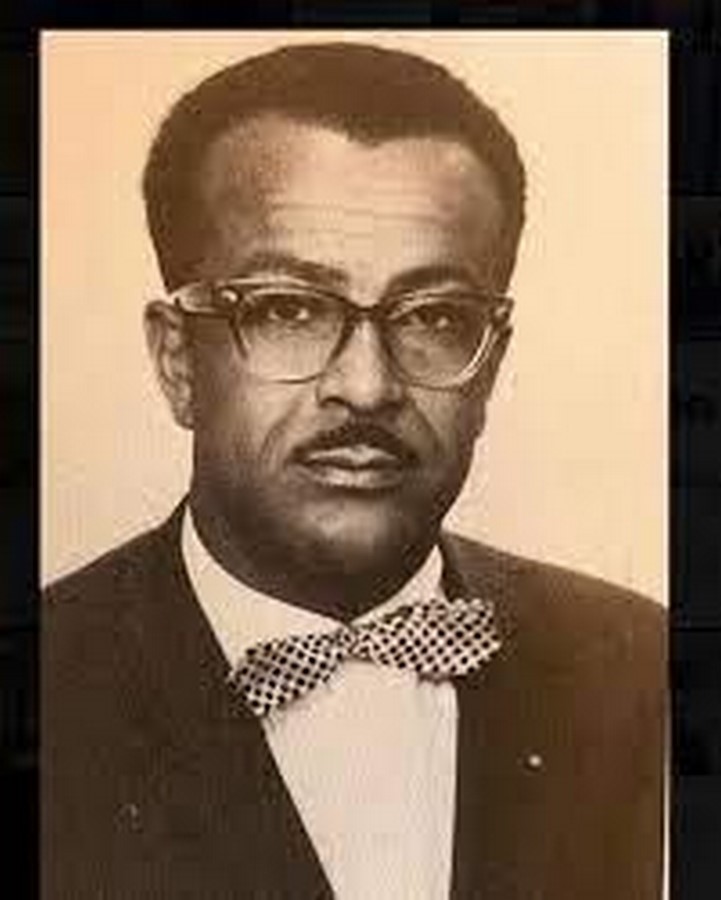
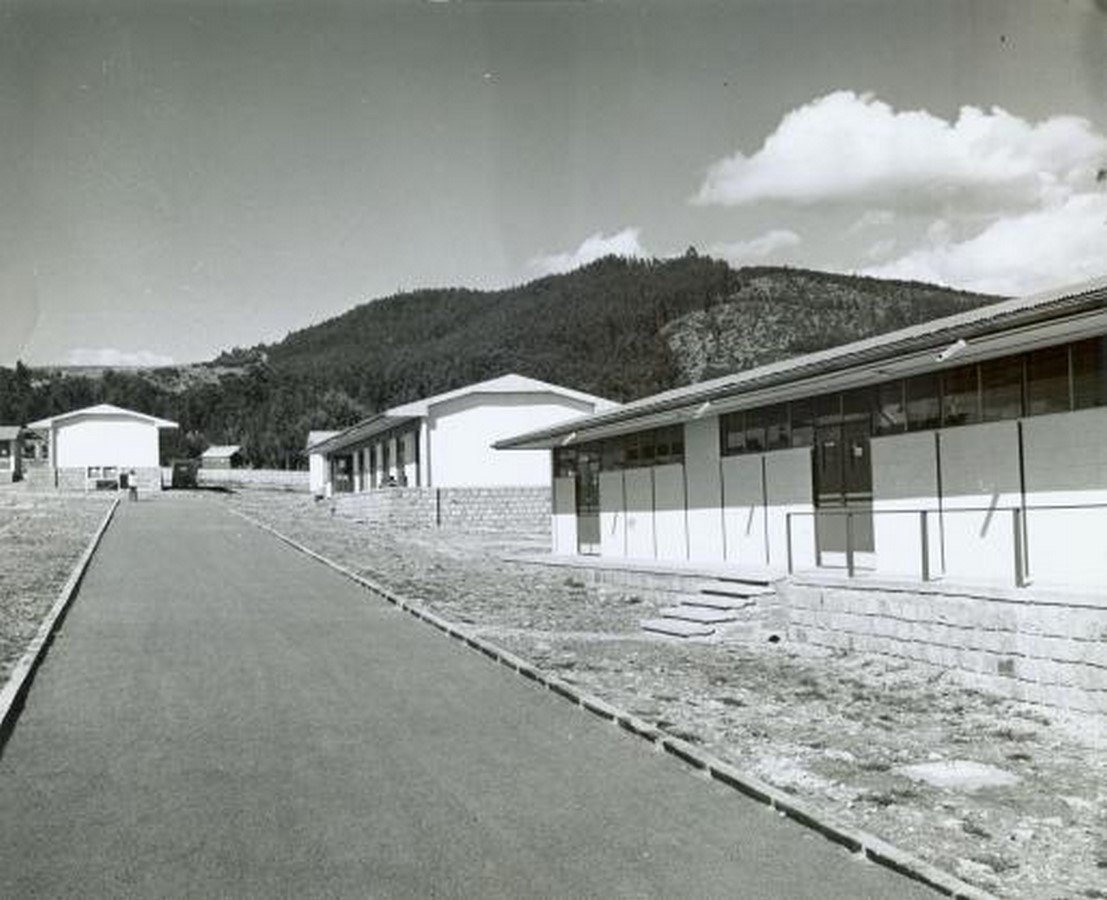
These early years of his career reflect not only his technical skills but his commitment to Ethiopia’s nation building agenda. The country was on a path to modernize its institutions, expanding education and positioning itself as a sovereign African empire. His ability to address both practical and symbolic functions through design laid the foundation for the new architectural landscape of Ethiopia.
After three years of work he went to the University of Pennsylvania in the United States where he trained under the famous Modernist Louis Khan. This experience had a major influence in his later designs.
Notable Designs
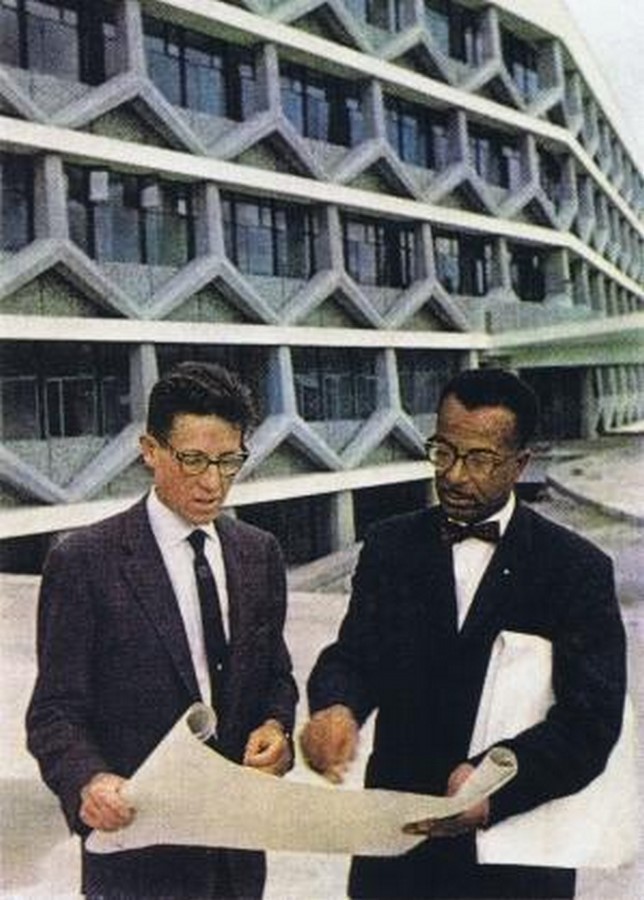
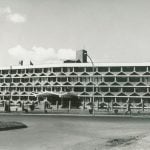
He went back to Ethiopia after completing his education. In 1964 he was tasked to design the Ministry of Foreign Affairs Building with the Israeli architect Zalman Enav. The building looks monolithic on the outside but it opens up to a diamond shaped court. The court allows for ventilation and light to get to the interior. The offices are grouped around the interior court.
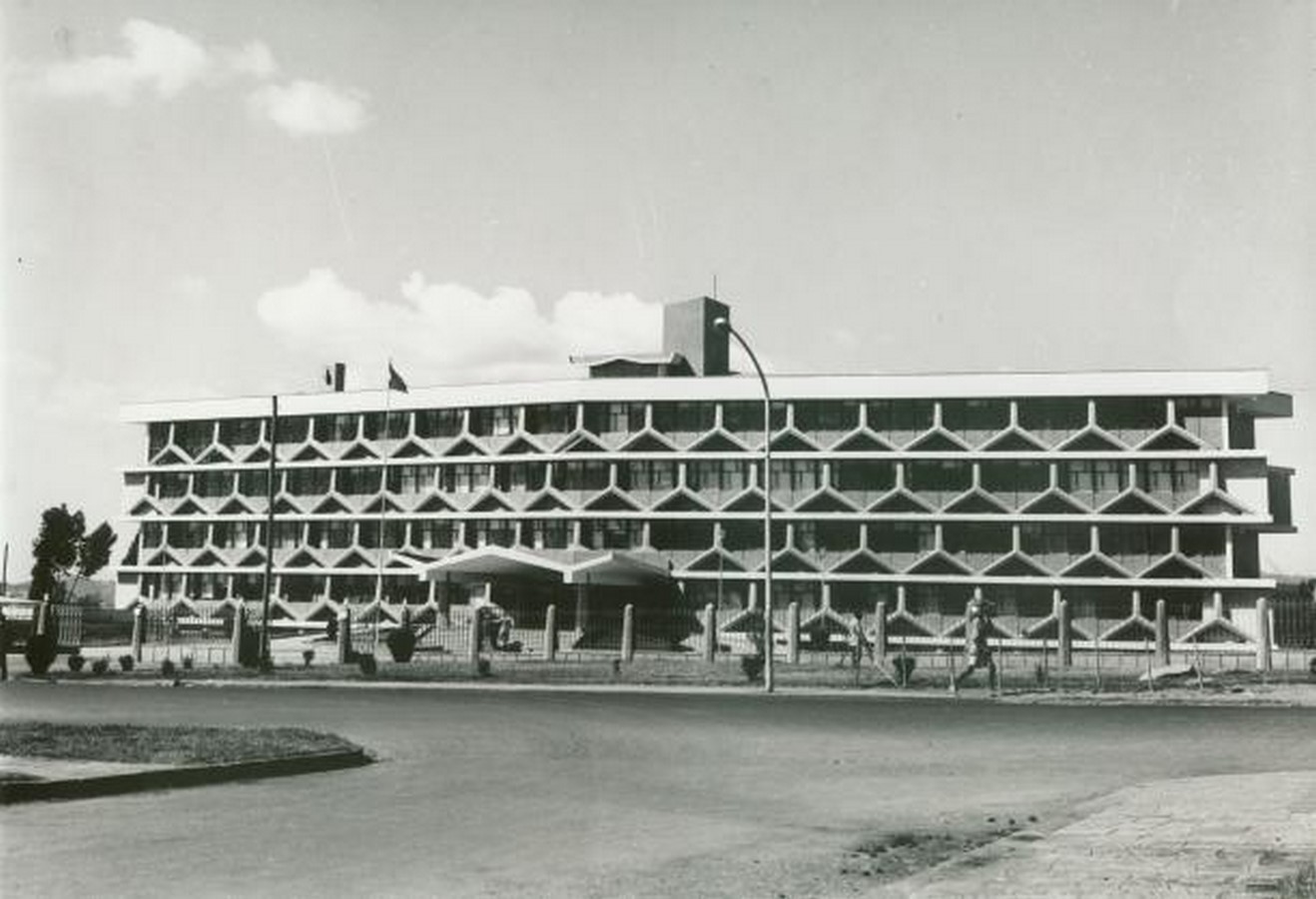
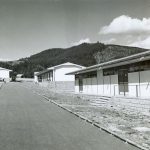
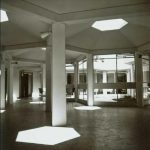
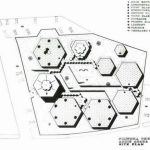
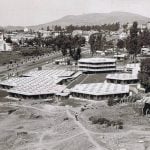
Ministry of Foreign Affairs Building by Architect Zalman Enav and Michael Tedros_©Ispada ArchiveIn the same year he worked on the design of Filwoha Thermal Baths and Hotel. The had a cellular organization inspired by Ethiopian dwelling compounds of small huts arranged around a central space. He used local soil, concrete and brick for the construction. The construction system is based on load-bearing brick walls carrying prefab concrete pyramidal roofs. Each building is composed of hexagons grouped around a central public hall. They all had unique skylights that allowed for natural light and ventilation. The building includes 130 baths, 10 showers and 2 pools.


The Mapping and Geography Institute in Addis Ababa, Ethiopia – also in 1964. The building was designed with floors free of columns for maximum flexibility due to the wide-ranging nature of its functions. The structure is based on waffle floor slabs resting on exterior tapered columns. The building is finished with small mosaic tiles and windows.
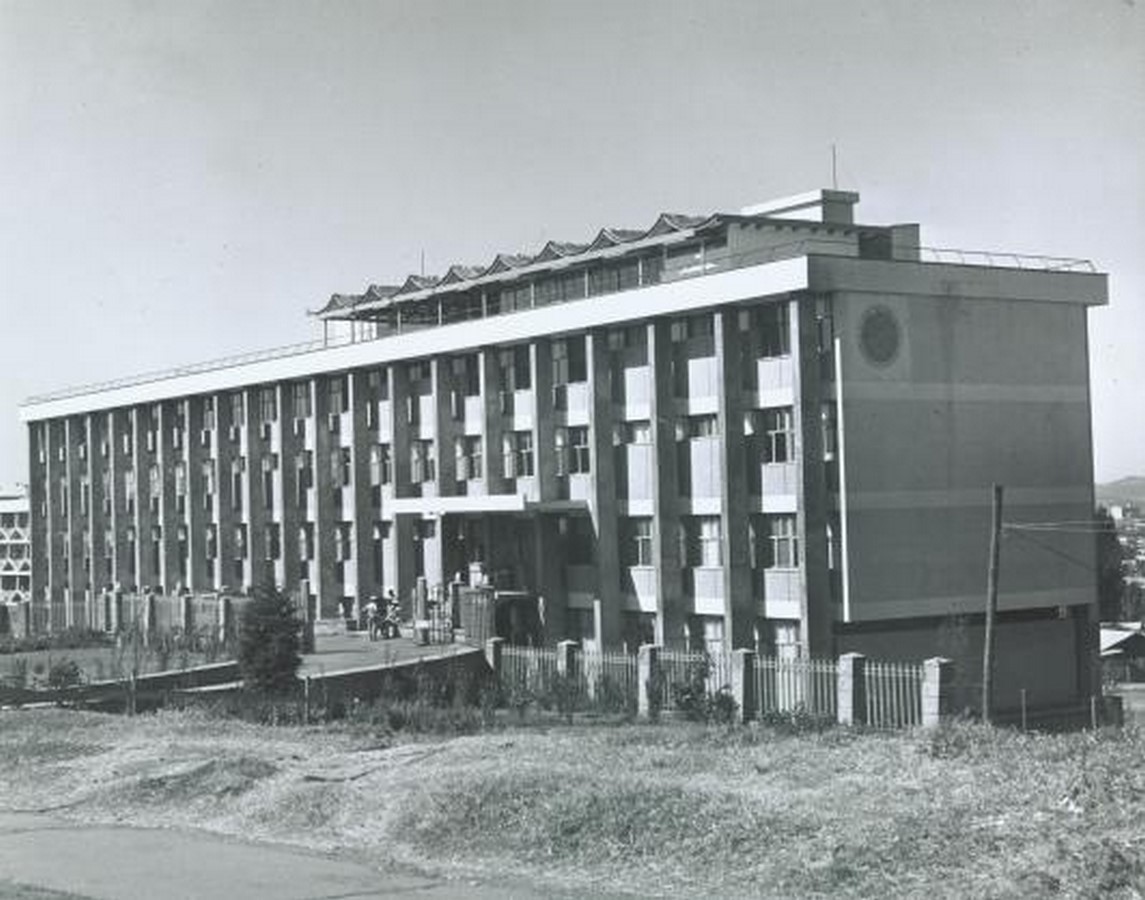
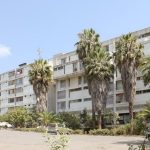
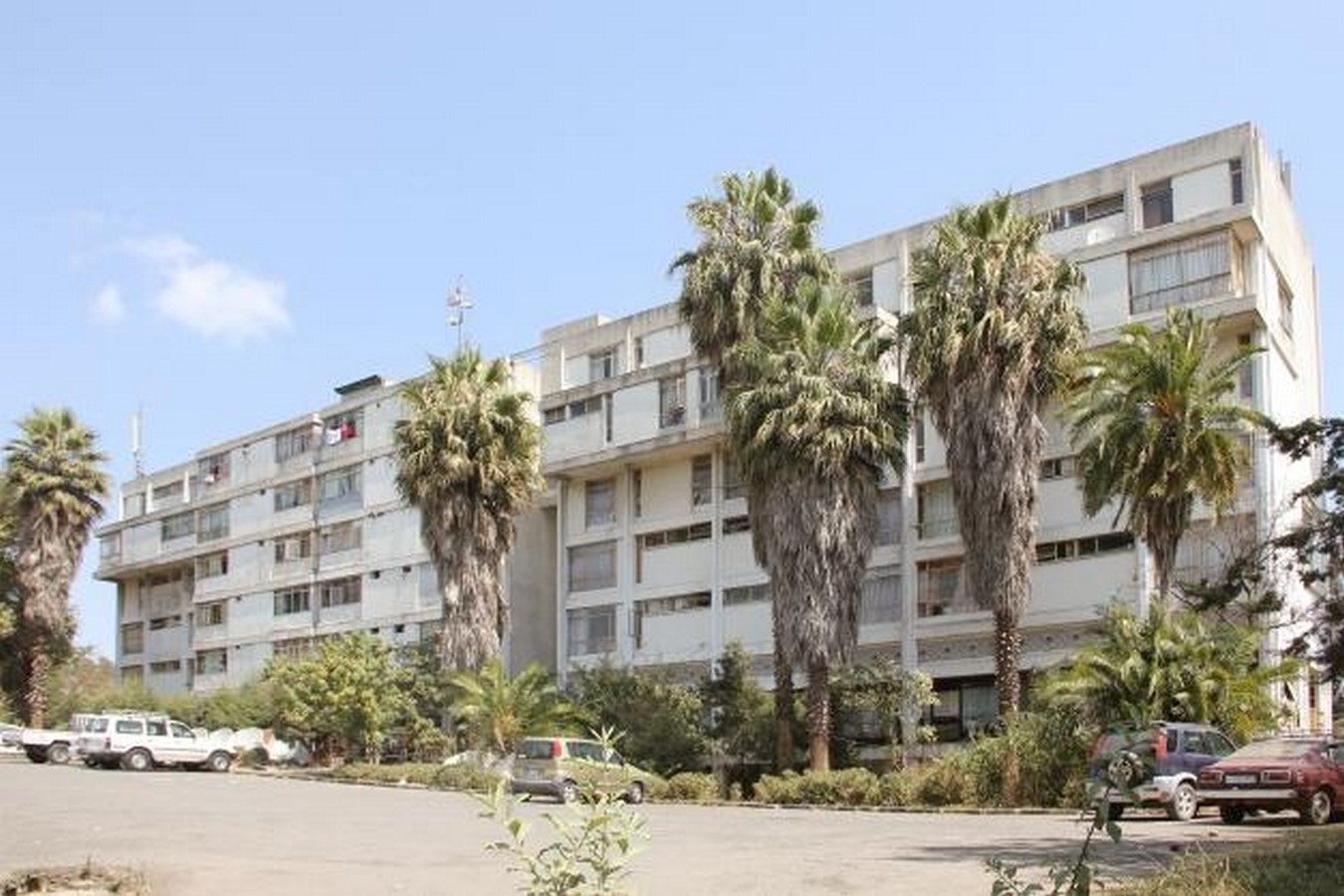
He also designed the 82 Government Apartments (1962). Designed mainly for Government and UN personnel, the five story building has two corridors served by glass elevators in the center. It was finished with mosaics. The buildings mainly include small units for singles and 2-3 bedroom apartments with two levels. It includes stores on the ground floor.
Design Philosophy
Michael Tedros’ design philosophy follows Modernism style architecture with local materials and cultural elements integrated. He created this fusion between Modernism and Ethiopian construction techniques instead of applying international Modernism wholesale. This is reflected in his choice of materials and spatial arrangement. For instance, in the Filwoha Hotel design he used Ethiopian traditional court arrangement and local materials while maintaining a sleek and modern look.
He is also known for his human centered design. Most of his works incorporate the thoughtful use of form and structure to provide ventilation, daylight and circulation.
There seems to also be a recurring use of hexagons in his designs. This might be linked to the fact that the Star of Solomon/David is an emblem used by imperialist Ethiopia. It might be a way of implying modernization of the state which was led by Emperor Haileselassie I at the time.
Contributions
A.rchitect Michael Tedros is widely regarded as a trailblazer of Ethiopian modern architecture, not only for his innovative designs but also for laying the institutional foundations of the profession in Ethiopia. He founded the Architecture School at the University of Haileselassie I, currently known as Addis Ababa University (AAU), the first architecture school in Ethiopia. He is also the co-founder and the first president of the Ethiopian Association of Architects and Engineers (EAAE).
He helped in showcasing Ethiopia as a modern African state through its post-war imperial modernization era. He’s also partly responsible for the wide expansion of education and literacy across the country with these low cost school designs.
He passed away at the age of 91 in 2012. Many of his buildings remain in use today, a testament to their thoughtful design, durable construction, and cultural relevance. Their continued functionality reflects his commitment to human-centered, context-responsive architecture.
Citations:
- Black Wall St Media. (n.d.). Architect of Ethiopia’s Resilience and Identity: Michael Tedros. [online] Available at: https://blackwallst.media/architect-of-ethiopias-resilience-and-identity/ [Accessed 29 Jul. 2025].
- ISPADA Archive. (n.d.). Michael Tedros & Zalman Enav Projects. [online] ISPADA-Archive. Available at: https://ispada-archive.com/page.php?id=73 [Accessed 29 Jul. 2025].
- Levin, A. (2016). Haile Selassie’s Imperial Modernity: Expatriate Architects and the Shaping of Addis Ababa. [online] Available at: https://www.researchgate.net/publication/311466792_Haile_Selassie’s_Imperial_Modernity_Expatriate_Architects_and_the_Shaping_of_Addis_Ababa [Accessed 1 Aug. 2025].
- Ethiopian Ministry of Culture. (n.d.). National Architectural and Heritage Archives (Referenced in secondary literature). [Limited online access].