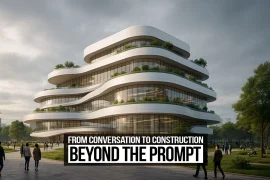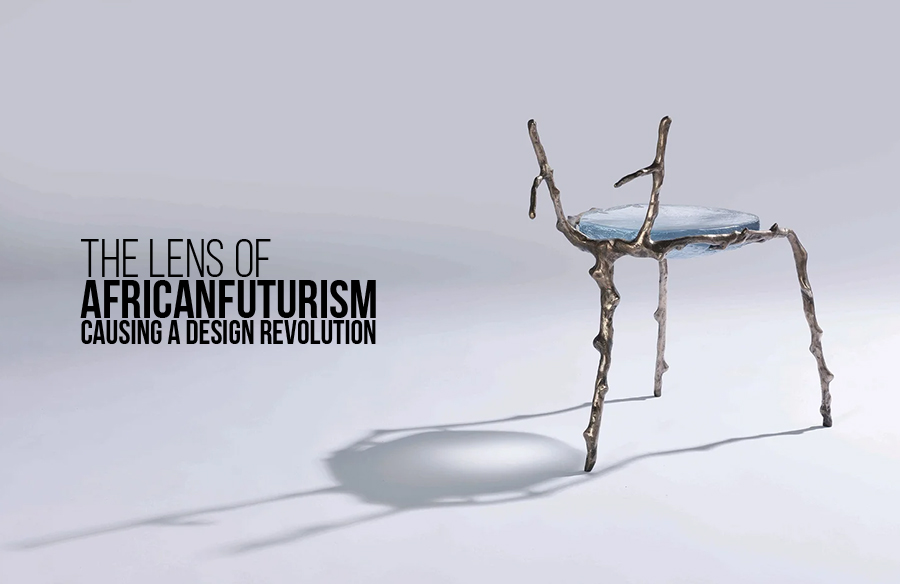
The yearning of the African is for his identity. We say that for us to truly move forward, we need to learn the past. Some go ahead to say that we should filter our histories to curate our identity. “Who is African?” is the question we answer every day. In architecture and design, we question what is our architecture? “African design is what we say it is. The African is who we say we are,” according to Mrs. Osaru Alile in her Design House session.

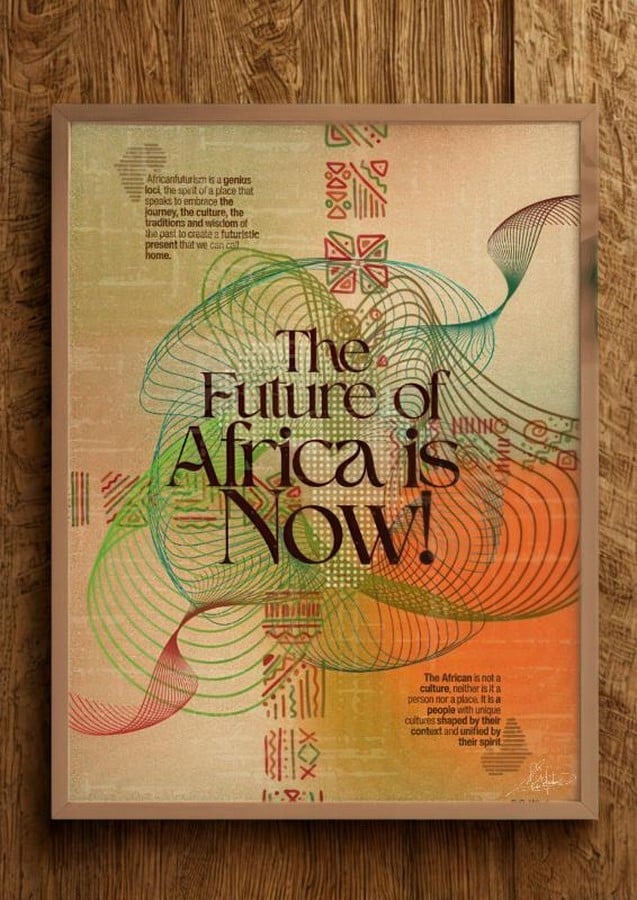
Yes, the term African is European. Yes, there are heavy colonial and western influences in the history of Africa, and yes, there are still struggles and scars in our fight to emerge as Africans, but even more truthfully alarming is our focus on others’ fault that we forget that we are the Africans and it is we that will create that Africa. So the African is not a culture, neither is it a person nor a place. It is a people with unique cultures shaped by their context and unified by their spirit. This is the African.
When Nnedi Okorafor coined the term Africanfuturism, she wanted a word that would describe our futuristic present through our heritage as Africans, not as African Americans or as suggested by

Western actors. This term is able to shape and bring together our histories and give us a future that we can call home (Okorafor, 2019). An Unlearning and A Relearning
I came across Africanfuturism when searching for a term that would help me curate an architecture that works for us as Africans. I wanted to move past the victim mindset that I found in conversations while presenting a platform to create solutions that we can call Home. Watching the movie Black Panther led me to Afrofuturism and further investigation led me to Africanfuturism. After hearing Nnedi’s “why?”, it became my term.
I further explored that term in architecture with my friends in our joint BSc dissertation. We explored how its impact can foster the African’s health and wellness. We used the Yoruba tribe as our cultural case study (Africanfuturist Collective. 2024). During this research, we spoke to great minds in African architecture: Sir Demas Nwoko, Arc. Anyibofu Ugbodaga, Prof. Ola Uduku, Prof. David Aradeon, Arc. Paul Isiuwe, Rev. Kiri Wakama, Arc. Benedict Ezem, Arc. Joe Addo, Arc. Inedu George, our wonderful supervisor, Assoc. Prof. Ekhaese and other wonderful architects (Africanfuturist Collective. 2024).
During our research, we discovered how resilient the Asian culture was, especially in their architecture, so we interviewed Arc. Saul Kim and Arc. Daeho Lee to explore patterns in developing adaptive and resilient cultures in architecture.
So we could see from the various conversations and research that the African designed in response to his environment. He saw the world as his canvas and made sure to explore every bit of it. He had a disruptive mindset, a yearning for the standard of excellence, a fearless spirit, creative mind, and the spirit of love for himself, his family, his people, and his God.
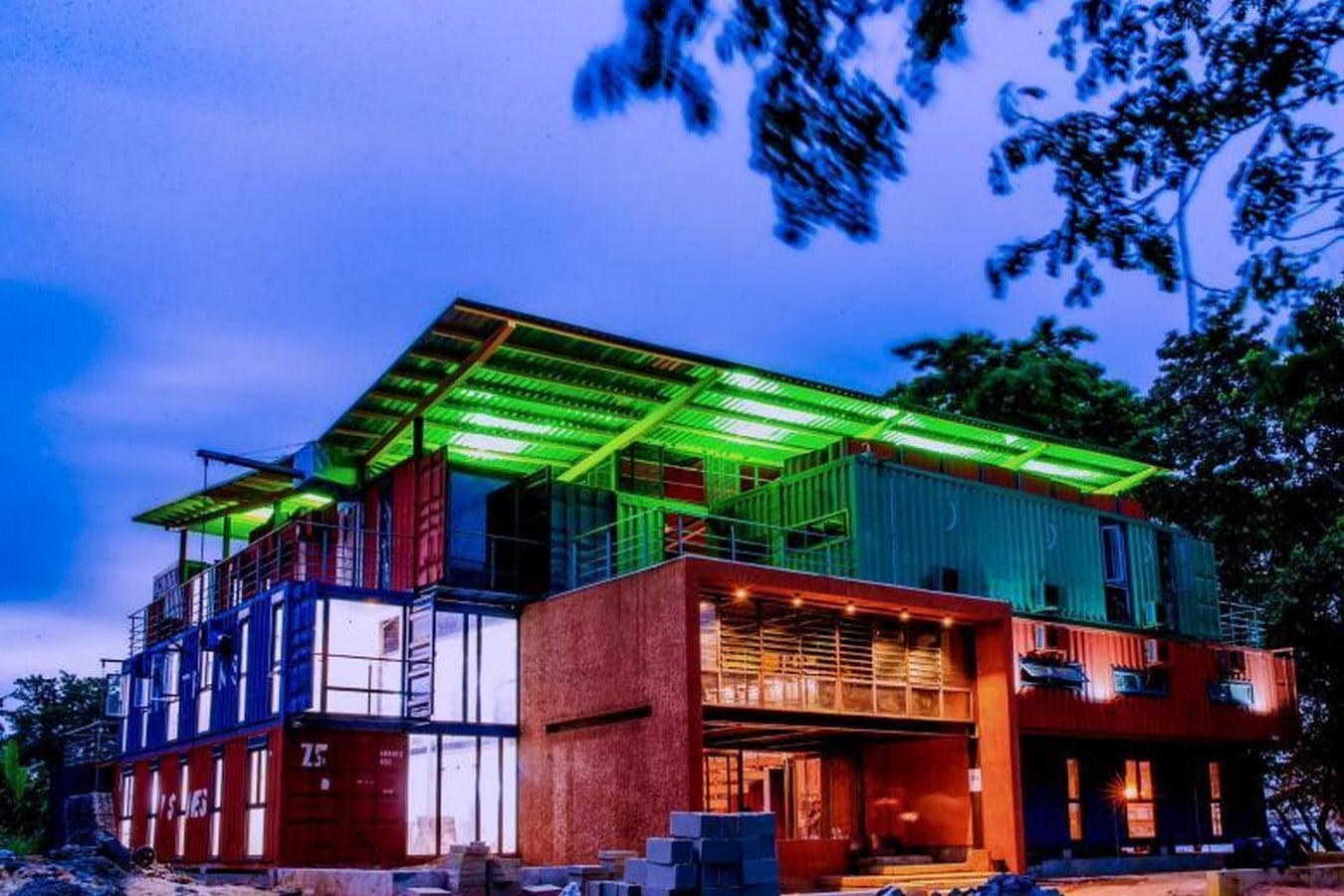
In architecture, from the ruins of the Benin Empire, to the unique Yoruba residential designs, to the Egyptian empire, to the modern interpretations in Francis Kéré’s structures, Sir Demas Nwoko’s creations, to the imaginative speculation of African culture, design, and architecture in Black Panther, shows the expressions of this spirit (Kéré, 2021; Guthrie, 2019).
So in Africanfuturism we ask, what was our past like? What was our intention in our design approach? What was the result? What exactly were the external influences? What was their direct impact and result? What can we imbibe in our approach? What should the future look like? How can we get there? What are the challenges we will face? What are the current steps in that direction?
A Revolution and A Legacy
Africanfuturism is not a movement or a construct. Africanfuturism is a genius loci, the spirit of a place that speaks to embrace the journey, the culture, the traditions, and wisdom of the past to create a futuristic present that we can call home.
In architecture, it is investigating the purpose, methods, and impact of how we designed in response to our environment as influenced by various factors to create frameworks, principles that can be applied to any geographical context in Africa to craft solutions that cater to the man, his spirit, and his environment.
From our research, some of these major principles include: an individual-communal process, cultural resilience, interconnectedness with nature, an inclusionary design approach (Africanfuturist Collective. 2024).
Now one would question these principles, claiming ‘won’t it give a universal architecture or universal design?’ They question the fact that African architecture might actually be universal. Our answer to that is yes, from the context of the principles, but never in the result or the outcome. After all, Africa is the mother of civilization. So every culture draws its threads from Africa (Mawere, 2014; Njoh, 2016).
Real history has shown us proof of the origin of tech in Africa long before the external influences. Everything starts and ends in Africa. So the point of these Africanfuturistic principles and values is that when applied to a particular context, we create solutions and designs that cater to the man, his spirit, and his environment. We create solutions that shape the unique identity of that rotation. The results? Our identity as Africans, the African identity.
This is a revolution of its own. So for the African to be truly African, he must dare to question himself, he must dare to stand out. He must dare to root himself in the wisdom of his past to create a future that we can live in the present. Only then can we create a trans-generational legacy that we call home.
Till next time, cheers.
References:
- Okorafor, N. (2019). Africanfuturism Defined. African Speculative Fiction Society. Available at: https://africansfs.com/africanfuturism-defined
- Guthrie, R. (2019). Black Panther and Afro-Modernism. [Film Review].
- Kéré, F. (2021). Kéré Architecture Projects. Available at: https://www.kerearchitecture.com
- Mawere, M. (2014). Culture, Indigenous Knowledge and Development in Africa. Langaa RPCIG.
- Njoh, A.J. (2016). Tradition, Culture and Development in Africa. Routledge.
- Africanfuturist Collective. (2024). Africanfuturism in Architecture and Its Impact on the African’s Health and Wellness [Unpublished undergraduate dissertation]. Covenant University.