Zoning laws function as the DNA of cities. They are the foundational framework of urban development, formulated by governmental bodies to ensure order and coherence in city planning. They establish how well a city is planned, structurally and functionally. Land is classified into categories such as residential, commercial, and industrial. Further, in each land use category, some parameters are set in place, like the height of buildings. These regulations influence the quality of life in a certain city, and these laws are the tangible representations of architectural policy.

How do Zoning Laws Affect the Quality of Life?
The design of a city plays a critical role in shaping the quality of life of its inhabitants. Zoning laws are instrumental in preventing conflicting land use, like avoiding the overlap of industrial and residential areas and designating the least pollution-prone areas for the development of housing zones.
Beyond the immediate spatial arrangement, it is also a factor in the creation of a walkable city; inefficient pedestrian infrastructure or unnecessary distance between residential and commercial zones increases vehicular reliance, exacerbating pollution and hampering public health.
Zoning laws also oversee the building height restrictions, which in turn affect the microclimate. If the vertical density is high, it becomes an obstruction for the sunlight to penetrate up to the street level, and thus alter temperatures.
The creation of adequate and accessible neighbourhood public areas, such as parks, libraries, and community centres, is a key to balanced urban living. Zoning laws are meticulously crafted to prioritise people-centric development of a city. Their impact spans from an environmental to an individual level, thus reinforcing their importance.
Types of Zoning
Euclidean Zoning
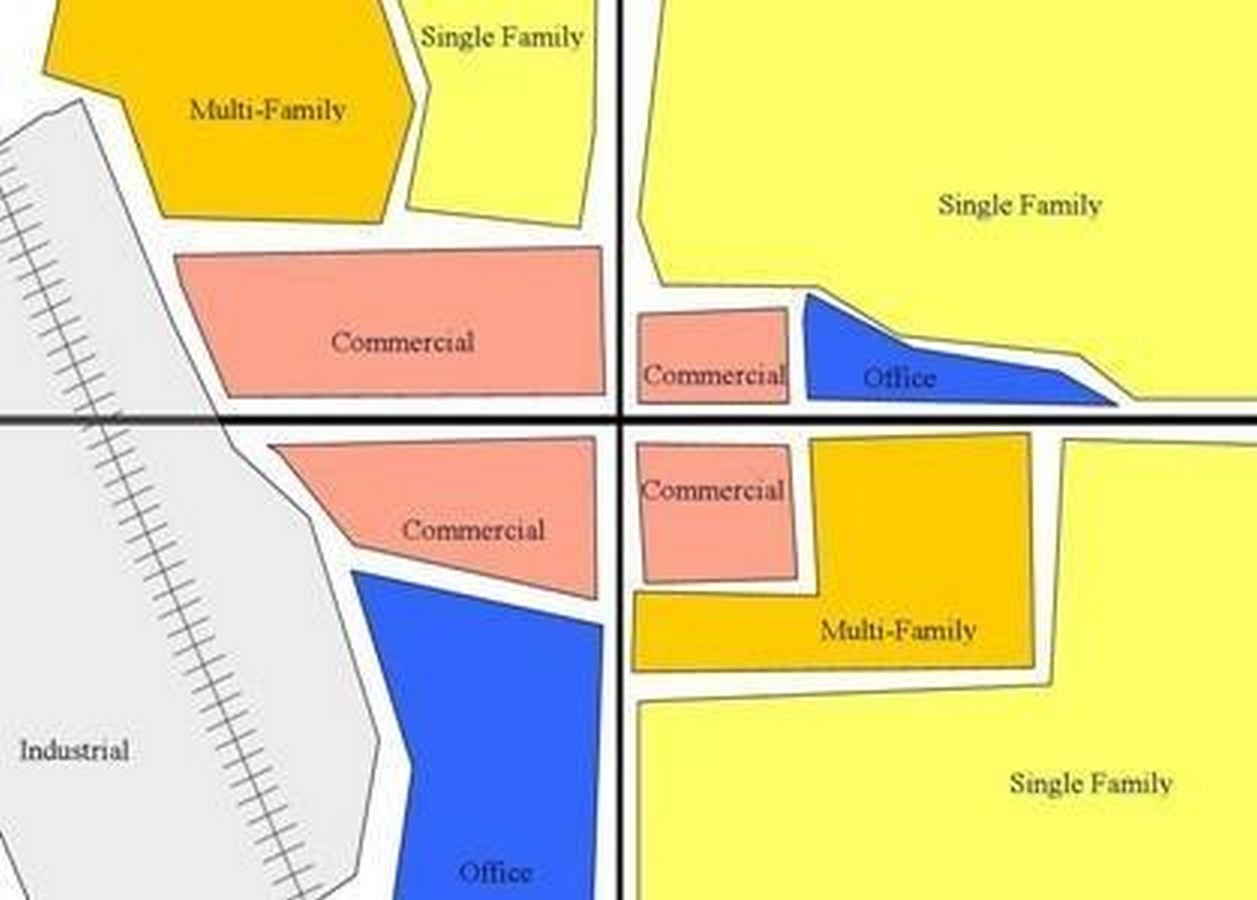
It is a use-based zoning where land is categorically divided for residential, commercial, industrial and mixed-use purposes. It is the most well-known and commonly used type.
Performance Zoning
Also called impact zoning or flexible zoning, this is a more sensitive and performance-based version of the typical land use zoning. Natural features like slopes, waterbodies, and manmade features like historic landmarks are mapped, and often preserved and built around. It also examines the impact of the zoning laws on the local community and makes changes if needed, for the betterment.
Incentive Zoning
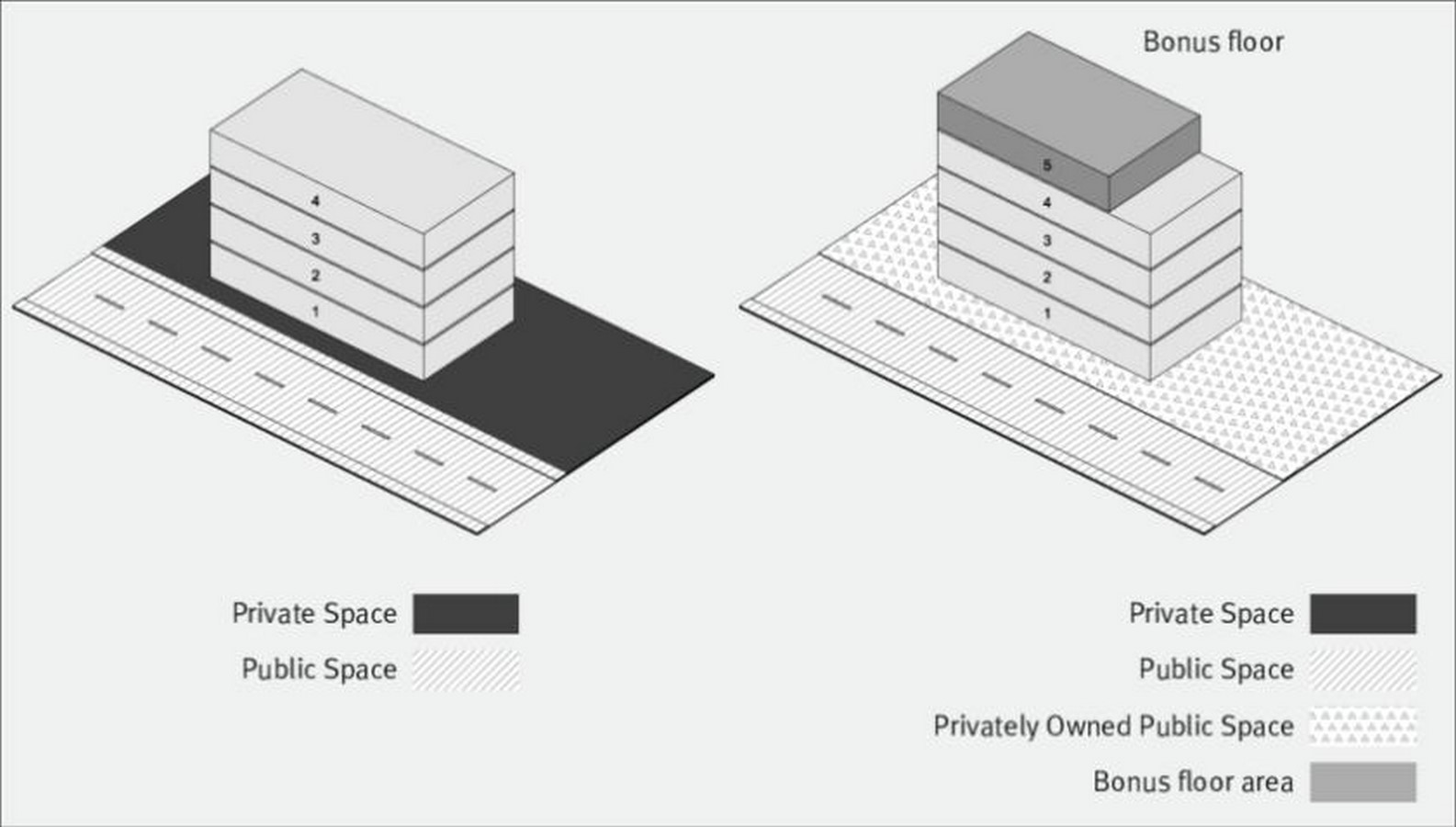
It fosters collaboration between private developers and public interests via the government. Developers receive incentives to provide public amenities; these spaces are called POPS(Privately Owned Public Spaces) and include public plazas, affordable housing units, etc.
Form-Based Codes
They emerged as an alternative to Euclidean zoning, where land use is decided based on the form of the building. It focuses on the interaction of building facades, form, and massing with the public and with one another. The purpose is still similar to the Euclidean model, the need to instil a sense of visual and spatial harmony in city planning.

Influence of Zoning on City Development
- Impact on housing prices: high density development or restrictive zoning can increase demand, thereby inflating property prices; similarly, low density development or development in areas which, in comparison to their surroundings, are under-utilised, can decrease property prices.
- These laws, if created with thought, can be solution starters to the housing crisis by the creation of affordable housing and promoting social equity. This can also be a representation of how architecture transcends socioeconomic barriers.
- Urban Sprawl is the phenomenon of expanding the geographical extent of a city to accommodate the rapid urbanisation. This is often attributed to low-density developments or single land use and is responsible for increasing pollution, adding to the housing crisis, migration, water wastage, etc. Strategic enforcement of zoning laws, managed high-density development can serve as a solution to mitigate urban sprawl.
- Growth of businesses can also be promoted by planning the land use to place commercial activities in locations conducive to their growth. Restrictive zoning laws come into place here to make sure that this growth is not at the cost of decreased quality of life. Local economies can also benefit in the same way, by strategically zoning in a mixed way to promote synergistic interactions between the various typologies.
- Zoning can help preserve the historic and cultural character of a city, or if built from scratch, curate a character for the city. All these add to the creation of an identity for the local communities and can impact them positively or negatively, depending on the regulations implied.
- Creation of green spaces, public areas, designated areas for wildlife, and open spaces is known to reduce the urban heat island effect, an effect which states that the temperatures of urban areas are higher than rural areas due to the absence of natural elements that absorb heat and the presence of heat-retaining infrastructure. Creation of well-managed open spaces serves as a tool in alleviating this climatic imbalance.
The Evolution of New York City: A History of Modern Zoning
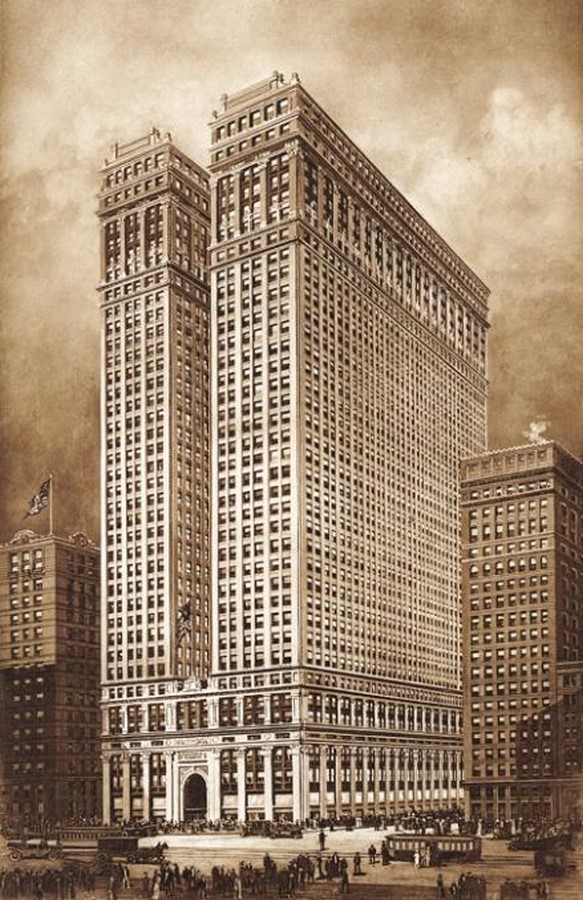
While early forms of zoning originated in Germany and Sweden in the 1900s, NY’s 1916 Zoning Resolution was a pivotal milestone in modern city planning. Its principal catalyst behind the inception of this resolution was the gigantic skyscrapers overshadowing the streets. The major shift came when the Equitable Building was constructed, and its extensive shadow led to a public outcry and ultimately the enactment of these laws. It defined setbacks and their requirements and outlined the land use pattern by dividing districts into industrial, residential and commercial. Height restrictions were regulated in relation to street width, ensuring adequate light and air.
This resolution was revised and replaced by the zoning resolution of 1961, which introduced the concept of FAR (Floor Area Ratio). This revision enforced a more balanced spatial experience by adding the concept of FAR to the height restrictions. Further, incentive zoning was introduced, which prompted the construction of POPS, exemplified by the public plazas in Times Square. Special Zoning Districts were introduced in 1969 to achieve specific objectives and adhered to a different zoning framework. For example, the Brooklyn Heights special scenic view district or the Broad Channel coastal risk district of Queens, and multiple more citywide districts, each designed to preserve unique cultural or environmental aspects.

NYC’s evolving and dynamic zoning framework has shaped its iconic skyline, the concrete jungle reputation and contributed to its identity as a walkable metropolis.
Zoning laws are more than simply a set of rules; they are instruments in orchestrating a city’s character and cultural identity. They influence its sustainability, livability and impact quality of life for the inhabitants. By balancing human-centric development with addressing required urban and environmental phenomena, these policies ensure the thoughtful growth of cities. As urbanisation continues at a rapid pace, the constant evolution of these strategies is key to building resilient, inclusive, and humane cities.
Citations:
- Cottle, Sara. “A Comprehensive Guide to NYC Zoning: Past, Present and Future.” Www.milrose.com, 24 Sept. 2019, www.milrose.com/insights/-nyc-zoning-history.
- Homsy, George, et al. Incentive Zoning: Understanding a Market-Based Planning Tool Incentive Zoning: Understanding a Market-Based Planning Tool. 2015.
- Kenton, Will. “Zoning: What It Is, How It Works, Classification Examples.” Investopedia, 24 Feb. 2022, www.investopedia.com/terms/z/zoning.asp.
- Lee, Sarah. “The Impact of Zoning on City Development.” Numberanalytics.com, 2025, www.numberanalytics.com/blog/the-impact-of-zoning-on-city-development.
- Planning Implementation Tools Overlay Zoning.
- “What Is a Form-Based Code? | Planopedia.” Www.planetizen.com, www.planetizen.com/definition/form-based-codes.