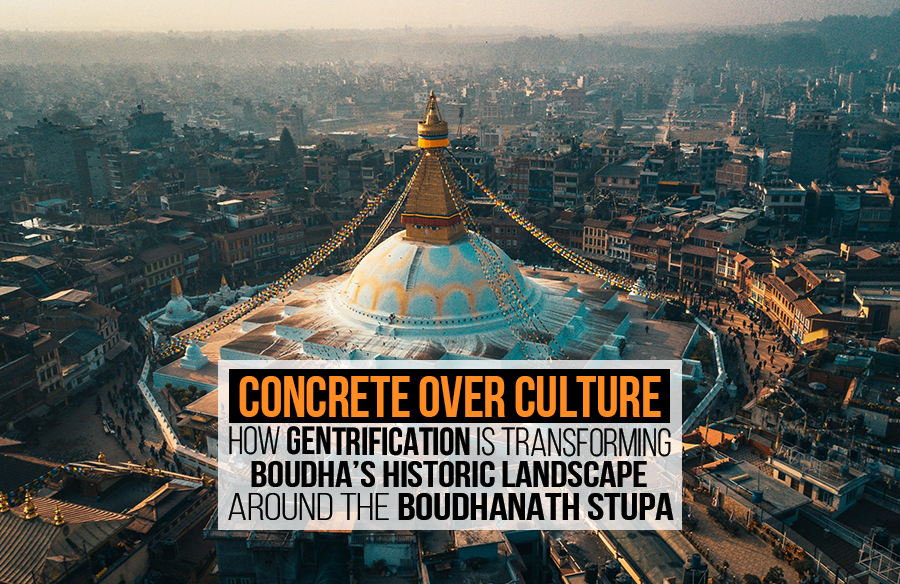
In the heart of Kathmandu, the Boudhanath Stupa is a towering remnant of peace, spirituality, and Buddhist heritage. A UNESCO World Heritage Site since 1979, it stands as a focal point of Buddhist spirituality, drawing pilgrims and tourists from around the world. Surrounding the ancient dome, Boudha’s vibrant neighborhood is lively, with a multicultural mix of old architecture and ethnic communities, including Tibetan refugees, Tamang, and local businessmen. In recent years, Boudha’s old landscape has been transforming in a basic way as a result of gratification because of concrete high-rises, luxury hotels, and tourism-based businesses spreading like an epidemic; the cultural heritage of the area is facing extinction.
Historical and Cultural Significance of Boudha
Boudhanath Stupa, being one of the oldest and most venerated structures in Nepal and the wider Himalayan area, has enormous historical value. The history of Boudhanath Stupa dates back to the 5th-6th century AD, but some suggest it might have been constructed even earlier, during the Licchavi period. Local tradition believes that the stupa was founded by a widow named Ma Jhyazima, who requested a plot of land from the king upon which to build a shrine to accommodate holy Buddha relics. The narrative symbolizes the accessibility of enlightenment and spiritual merit to all, regardless of social status and gender.
The stupa’s design, a white dome that symbolizes the universe, gilded spire represents the path to enlightenment, and the prayer wheel that encircles the base symbolizes Buddhist cosmology. The neighborhood of the stupa, Boudha, was once a Tamang village with mud-brick houses and farmlands. Since the Tibetan exile of the 1950s, it has become a thriving center for Tibetan Buddhism, housing institutions with over 50 monasteries, thangka painting centers, and momo and thupka-selling street stalls. This cultural blending of Nepali, Newari, and Tibetan traditions made Boudha a unique oasis of spirituality and resilience.
The Rise of Gentrification in Boudha
The gentrification in Boudha has accelerated over the last two decades, which is fueled by Kathmandu’s urbanization, tourism boom, and real estate speculation. The Boudha area is in proximity to the Tribhuvan International Airport, and its significance as a must-visit destination for local as well as international visitors made it a prime attraction for the developers. The traditional mud-brick houses and low-rise structures are being replaced by multi-story concrete structures, such as luxury hotels and boutique guesthouses. The local Tibetan and Tamang houses have been largely taken over by tourist restaurants, cafes, and stores selling everything from thangka paintings to cashmere products.
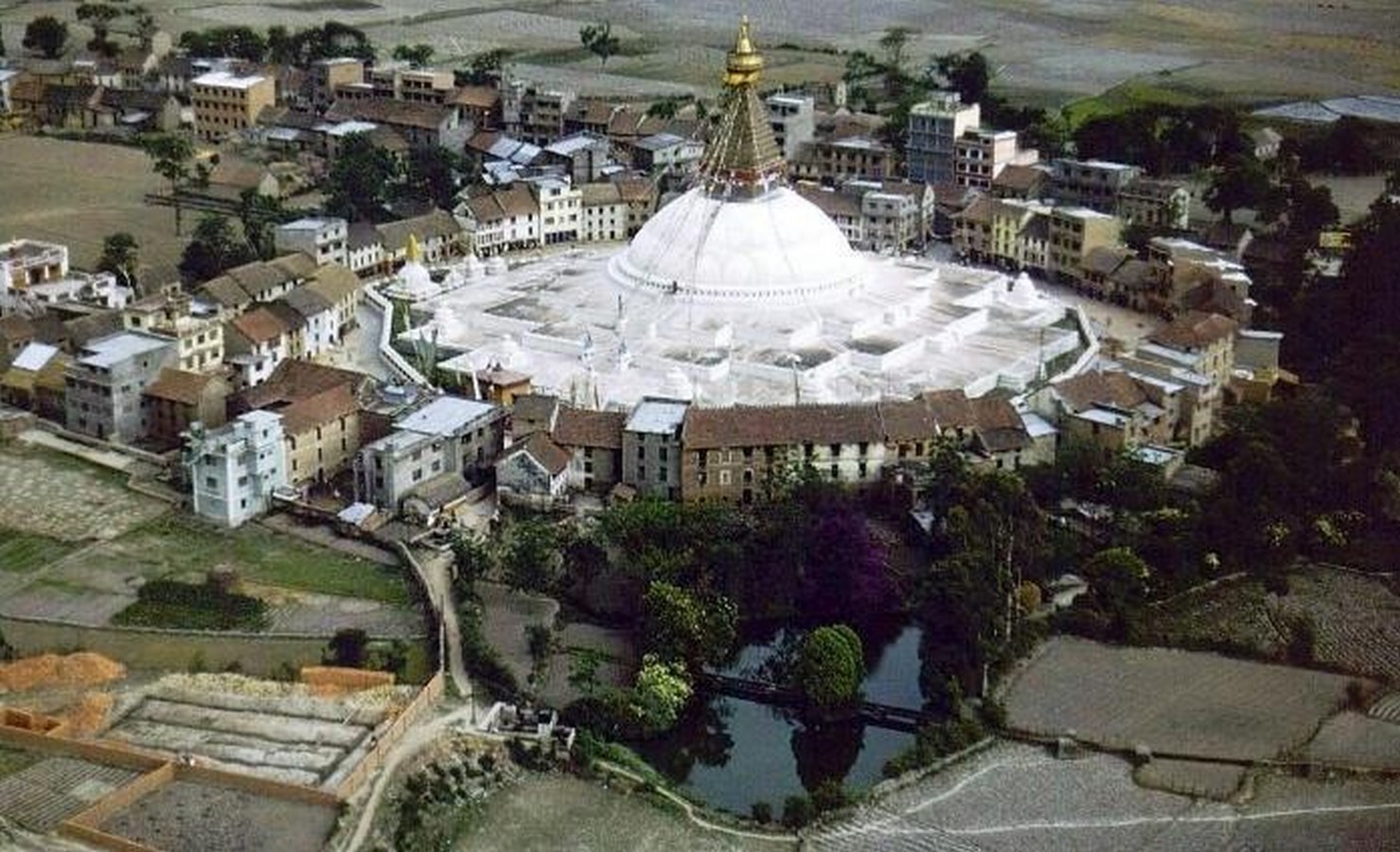 1979 Photo of Boudha_©Johan Reinhard
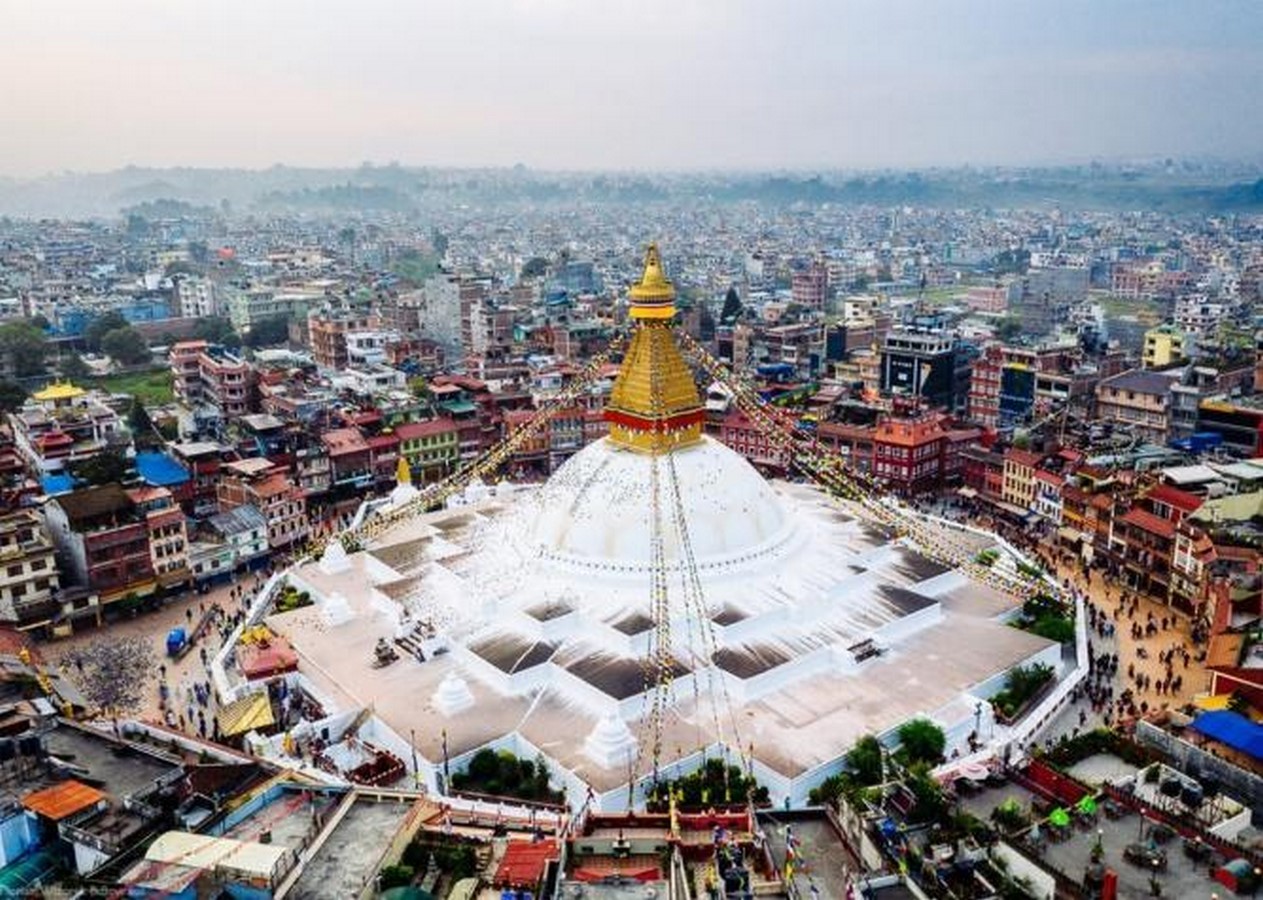
There is an evident contrast between the environments of Boudha over the decades. During the 1970s, the stupa was surrounded by low-rise houses and empty farmland, which also provided a sense of community and spirituality. But now, the stupa’s symmetry is broken by the encroachment of residential high-rises and commercial skyscrapers. The incense-fumed alleys, which were once filled with the murmur of prayers, now resonate with the whine of tourist crowds and constructions. This shift reflects the trend of Kathmandu, where urbanization has prioritized economic growth over cultural preservation.
Impacts on Culture and Community
Gentrification of Boudha has a significant impact on the social and cultural life of the locality. The invasion of tourism-oriented businesses has marginalized the locals, primarily the Tamang and Tibetan communities. They have sold their family property to developers, as they were unable to compete with the rising property values or the promise of quick profit. The population structure of this region is transforming, with wealthier Nepalese and tourists moving in, while the residents are pushed to the periphery.
The cultural practices that defined Boudha are also under pressure. The daily practice of kora-spinning prayer wheels while walking around the stupa is still lively, but the commercialization of the area dilutes the spiritual atmosphere. Monasteries, which were once retreats for meditation, are now surrounded by shops and cafés. The Losar festival, a longstanding tradition in Tibetan society, has become a commercialized tourist destination, losing its sense of community.
Economic Gain and Cultural Losses
Advocates of Boudha development argue that gentrification has economic benefits. Tourism has created job opportunities, such as tour guides, restaurant staff, etc., and also boosted the local businesses. The restoration of the stupa after the 2015 earthquake was partly funded by the tourism revenue and private donations, which shows the economic gain of global popularity of Boudha. Luxury hotels and amenities also attract the wealthier tourists, which contributes to Nepal’s economy.
However, these gains come at the cost of the loss of cultural aspects. The commercialization of the heritage of Boudha risks turning it into a solely tourist attraction, disconnecting it from its living tradition. Architectural harmony of the surrounding neighborhood is under threat as concrete structures clash with the ancient style of the stupa. Urban planner Christopher Alexander’s concept of “living architecture” highlights Boudha’s ancient harmony with nature, but that harmony is lost due to uncontrolled expansion.
References:
- https://articles.atticinn.com/index.php/historical/boudhanath-stupa-2/
- https://www.apihimal.com/boudhanath-stupa-and-its-cultural-historical-and-architectural-significant/
- https://www.insidehimalayas.com/boudhanath-stupa/
- Young, T. O. (2014). Boudhanath Stupa: Reflection of Living Architecture. Academia.edu. Retrieved from https://www.academia.edu/8543144/Boudhanath_Stupa_Reflections_on_Living_Architecture
- https://www.yakandyeti.com/enjoy-the-spiritual-energy-of-boudha-stupa
- https://www.holidaynepal.com/nepal/boudhanath.html
- https://en.wikipedia.org/wiki/Boudha_Stupa
- Boudhanath Stupa: Top Reasons to Visit this UNESCO Site Retrieved from https://bymountainpeople.com/boudhanath-stupa-top-reasons-to-visit-this-unesco-world-heritage-site-and-tibetan-cultural-hub/
- https://enlightenmentthangka.com/blogs/thangka/navigating-boudhanath-stupa-a-thorough-guide-to-history-practical-tips-and-visitor-attractions
- https://thestupa.com/buddhist-sites/rare-old-photos-of-boudhanath-stupa-kathmandu-nepal/
- https://www.easemytrip.com/holidays/group-departure-nepal-3-nights-tours-package/