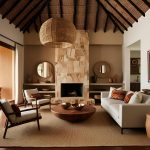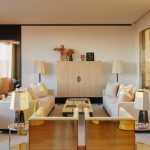
Grab your tea and take an imaginary walk with me into your favourite space. What makes the space your ‘fave’? Three things: the way it made you feel, the way it fulfilled its purpose, the way it moved you and the memories it left with you. The unique blend of these things is what we call Interior Aesthetics. The space itself, the furniture, the décor and the user are the 3-4 ingredients that make the Interior Aesthetics of that space. But we will continue our journey with just two — the furniture and the décor.
The Furniture and the Décor
To define these two interior architecture elements, we have to redefine Architecture in Interior Aesthetics. Architecture goes beyond just designing spaces. It is the art of blending different architectural elements to create a unique identity for the user. It results in a space that the user can call ‘Home’. The furniture and the décor play a vital part in this.
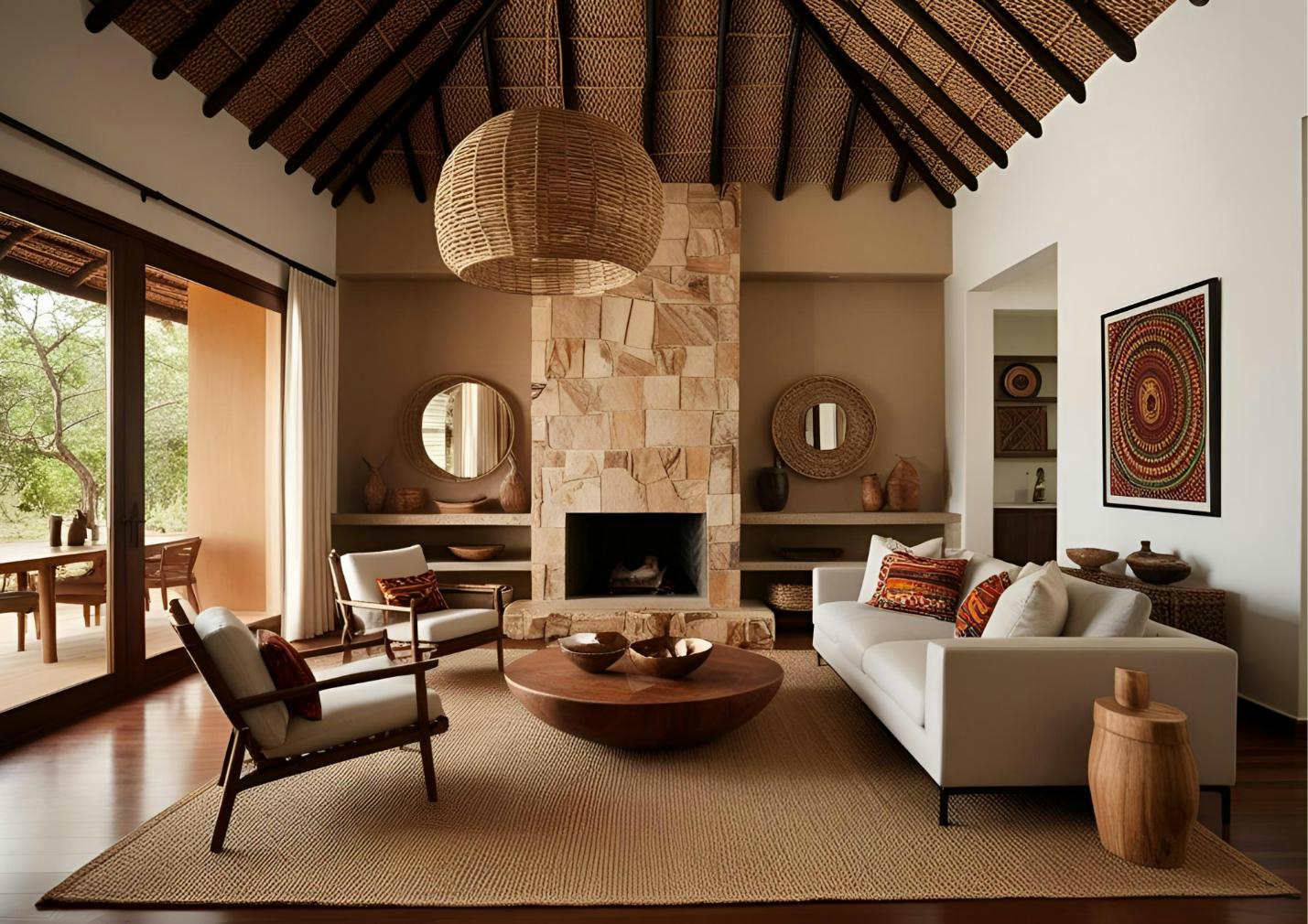
Furniture comes from the French word, ‘fourniture’ meaning equipment or the art of furnishing. It is any product or object that makes a room functional beyond aesthetics (Ali & Al-Ali, 2018). People often mistake furniture for fixings. The simple difference is that fixings are ‘fixed’, literally, and are not moved easily but the furniture is not necessarily fixed. Examples of fixings are light holders, curtain frames etc. Examples of furniture include chairs, tables, stand-alone cabinets, etc.
The décor, on the other hand, is intentionally designed to bring enhancement to a space. The word is a back-formation from its French origin word ‘décorer’, meaning to decorate. Décor goes beyond adorning just for ‘aesthetics’. It is the intentional and proper use of décor elements in a space that can be the making or breaking of that space.
Recent times in interior architecture have brought about the importance of integrating behavioural psychology, sensory architecture, and health/well-being when creating spaces (Sailer & Budgen, 2019). The lack of these processes has created inadequacies in interior spatial programs, leading to fatal consequences from poor productivity to poor mental and physical health. Thus, synthesizing interior elements like furniture and décor makes a space for the man, his spirit, and then the environment.
The Way the Space Makes You Feel
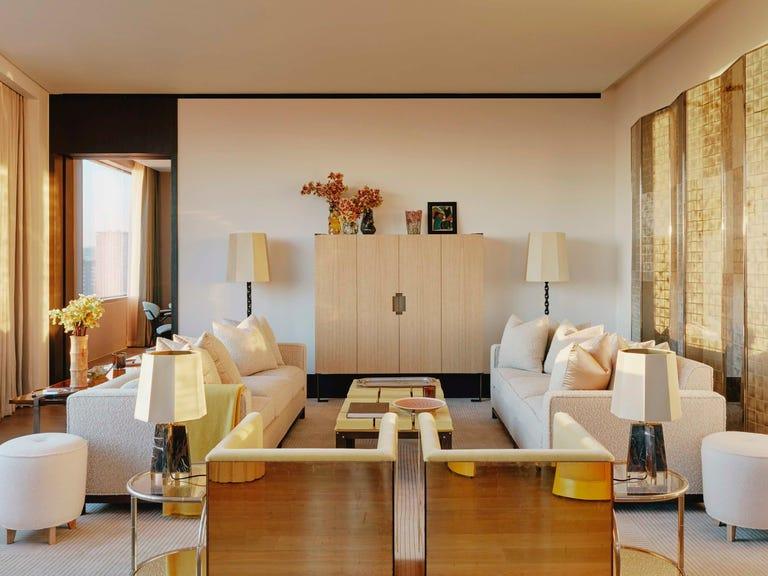
Imagine coming back from a long day at work to see your home scattered. The furniture is disarranged. Nothing is neither here nor there. How does it make you feel? I’m sure none of the happy emotions will be part of your options. God help you if you’re on the OCD spectrum; you will feel physically drained. This is the role furniture plays in a space. Furniture must be designed to be well-arranged, context-crafted and properly maintained to take care of the users’ emotions and spirit at all times.
Using design elements like symmetry and harmony is only one of the first steps. Careful attention must be taken to the shape, style, and texture of the furniture relative to the users of that space. We must be able to teleport ourselves into the design and feel like the person will create a solution rather than another problem (Poldma, 2013).
We spoke about the scattered furniture. Let’s transport ourselves to our primary school classrooms (p.s.: this scenario will relate to those of us who went to under-designed Primary Schools). You are running late to school while trying to hide from the teacher. You are a literal chaos. As you step into the classroom, the space also adds to your chaos: from colour clashes to depressing bare concrete walls that add to the echo, of equipment that is on life support. The space deadens your brain rather than energizes you for learning that day.
Now, imagine if the classrooms were intentionally designed along the principles of interior aesthetics. What do you think would have been your productivity levels, your level of assimilation, and even your results? This is the role décor plays. It is the breath of a space.
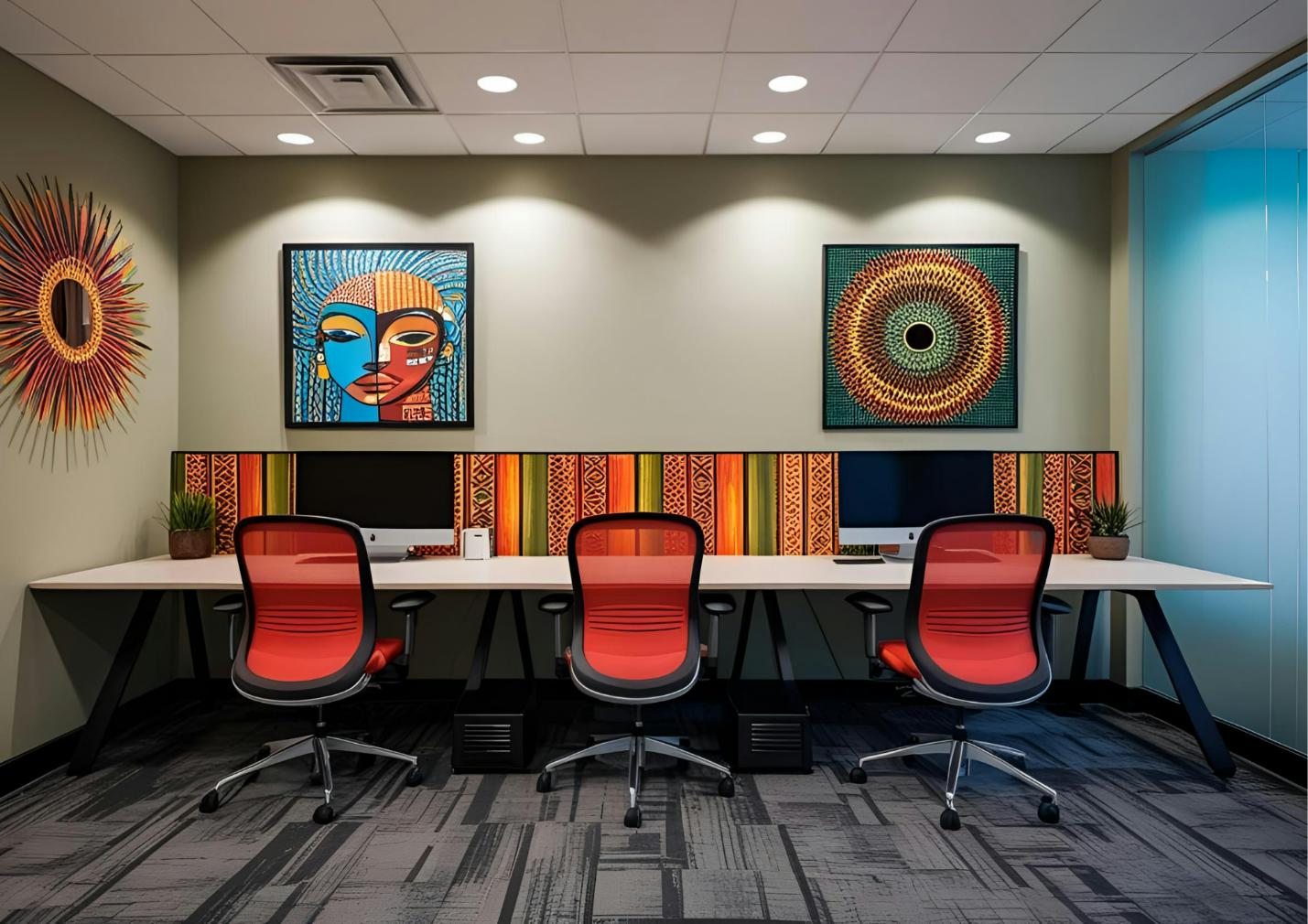
The Way It Fulfilled Its Function/Purpose
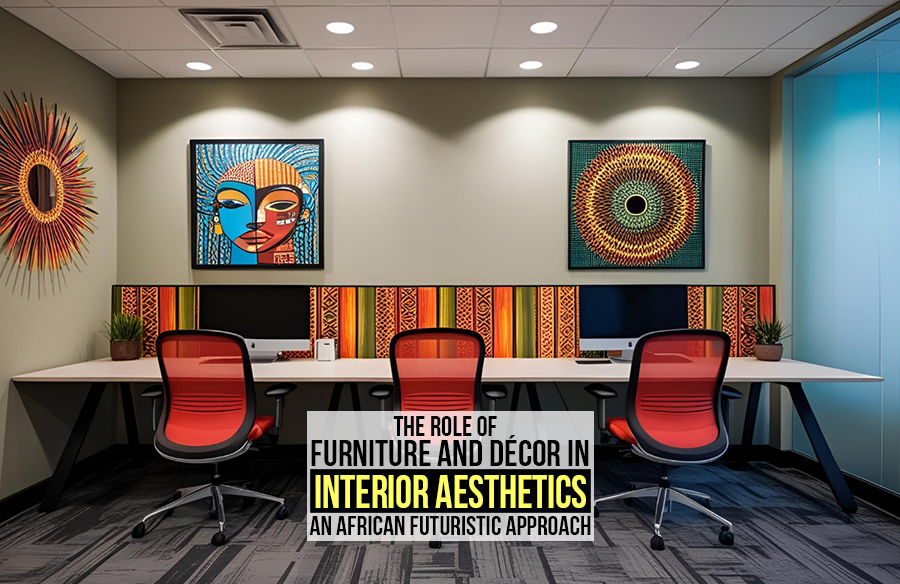
In interior aesthetics, spaces become useless if they have no function. That makes them a waste both to the user and the environment. Furniture and décor are used to give purpose to a space. When we see lounge chairs, settees, and a dining set, we usually think of the living room in a home. When we see tables with ergonomic chairs, we think of work, corporate.
A décor, as simple as decorative paint or signage can be used to intentionally separate spaces without partitions, making the entire program more accessible and comfortable (Kim & Lee, 2020). Having the wrong function and décor in a space can redefine it and cause user impropriety.
For example, no matter what comfort or wellness you wish to integrate into a workspace, you have failed that space if you pair the work tables with an armed settee. If you paint or decorate children’s spaces with dark moody finishes — Lord help you. A workspace must have clearly defined work areas, rest areas, and creativity areas. The furniture and décor must be properly implemented to allow each space to achieve maximum productivity while creating holistic satisfaction for the user.
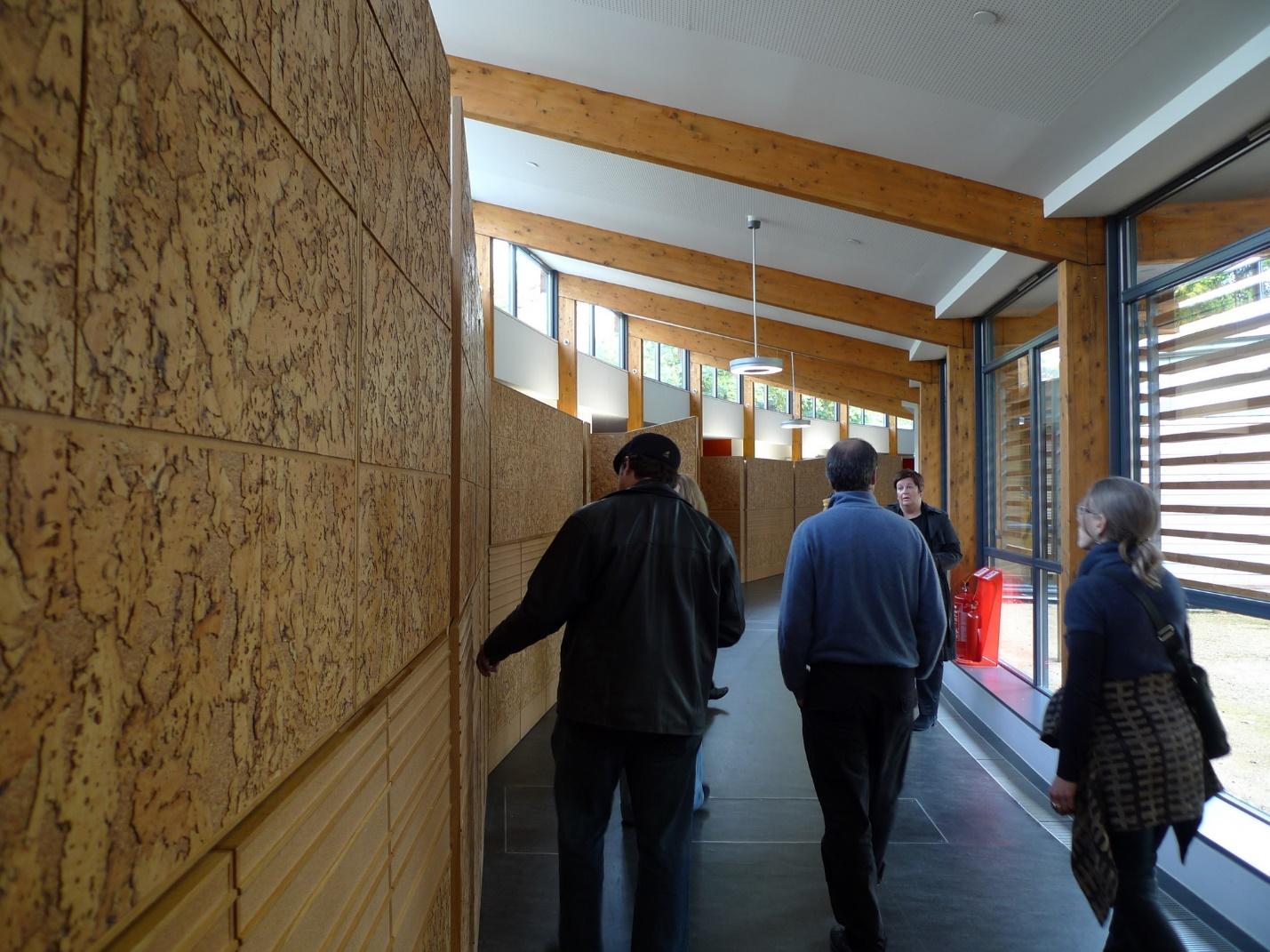
The Way It Moves You
That brings me to the world of influence, and this is one of the indirect consequences of our designs as architects. Our design shapes culture. We shape the way people live. This, in turn, shapes socio-cultural and socio-economic planes.
Not putting enough waiting chairs on the reception floor of a bank can cause overcrowding. This can lead to a lot of chaos that can have micro-economic effects. When we don’t design parking spaces and vehicular roads on sites well, we allow people to do illegal parking which can cause accidents — little actions lead to bigger consequences.
In our ever-evolving world of trends and lifestyle, our role as architects is to intentionally design furniture and décor with adaptability and sustainability in mind (Kaya & Cengiz, 2020). Let your knowledge of furniture and décor help you influence culture in spaces — from railings that can serve as sitting support for abled people to the use of unique finishes in spaces that allow all users to navigate easily. Furniture and décor shape the way your users live, so if it must be done, it must be done well.
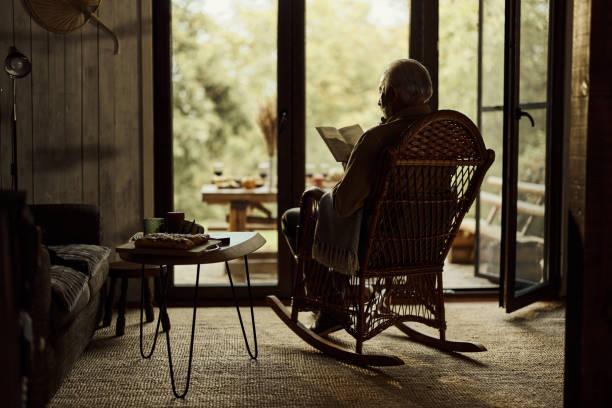
The Memories It Left You
Spaces are the keepers of memories. They carry all of our memories that occur within that space, growing and changing with us, but never letting go of its essence. Interior aesthetics is what makes this possible.
In the creation of our memories, we had to interact with elements of that space. The role of the furniture and decor cannot be overlooked because they are the first point of contact. It is known that even to help a person suffering from amnesia recover his memories, you must take the person back to the spaces he calls home (Chaudhury & Cooke, 2014).
Furniture can be trustees of memories, whether good or bad. Hence, people renovate their home when a loved one dies because it was too painful, or hold onto a chair used by a loved one because they want to hold onto the memories created with that loved person. So furniture, the décor, and the space must become a unique blend of architectural elements that users create memories with. They never forget your stories.

An Africanfuturistic Approach
Having an Africanfuturistic approach can help us remember how the old used furniture and decor in Interior Aesthetics. They designed their walls to capture their stories, and their history, and it lasted for decades to come. Most of the time, the patterns from these inscribed stories became the Aesthetics.
The Africanfuturistic architect designs for man, his spirit, and his environment. He must design furniture and décor to celebrate the person’s individuality while fostering social interaction and health/well-being (Okeke-Agulu, 2015).
At the end of this, you should be able to grasp these words: a line drawn is a depth created. You should be able to fully understand and appreciate your role in design as an architect and how elements such as furniture and décor can create a transgenerational Legacy in interior aesthetics.
Till next time…cheers.
References:
- Ali, A. & Al-Ali, A.R. (2018). Furniture Design: Craftsmanship to Computation. Springer.
- Sailer, K., & Budgen, A. (2019). Human-Centric Workplace Design: Enhancing Well-being and Performance. Frontiers in Psychology.
- Kim, S., & Lee, J. (2020). Impact of Office Interior Design on Productivity. Sustainability, 12(4), 1406.
- Kaya, S., & Cengiz, B. (2020). Design for All: Accessibility and Inclusive Design in Architecture.
- Chaudhury, H., & Cooke, H.A. (2014). Design Matters in Dementia Care. Generations, 38(3), 78-85.
- Okeke-Agulu, C. (2015). Postcolonial Modernism: Art and Decolonization in Twentieth-Century Nigeria. Duke University Press.