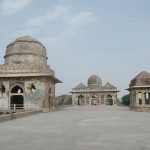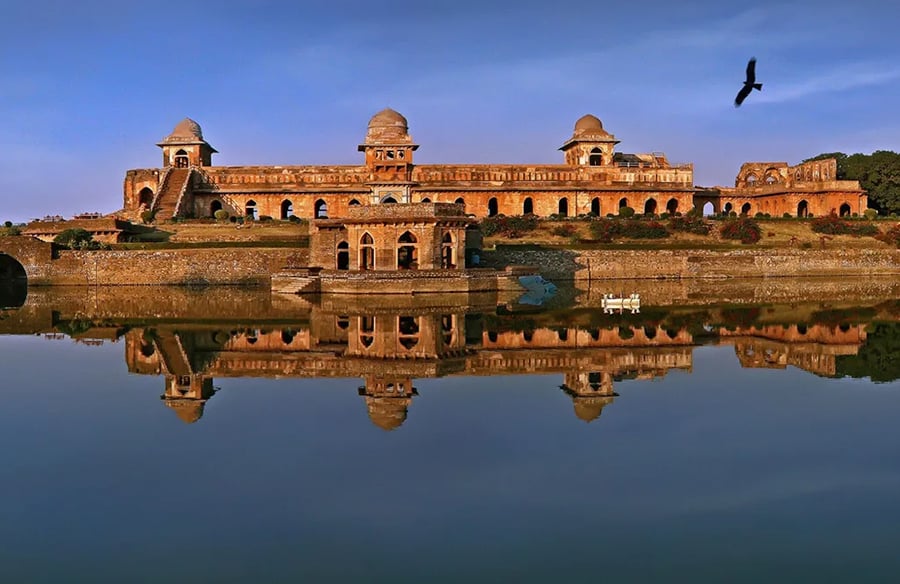
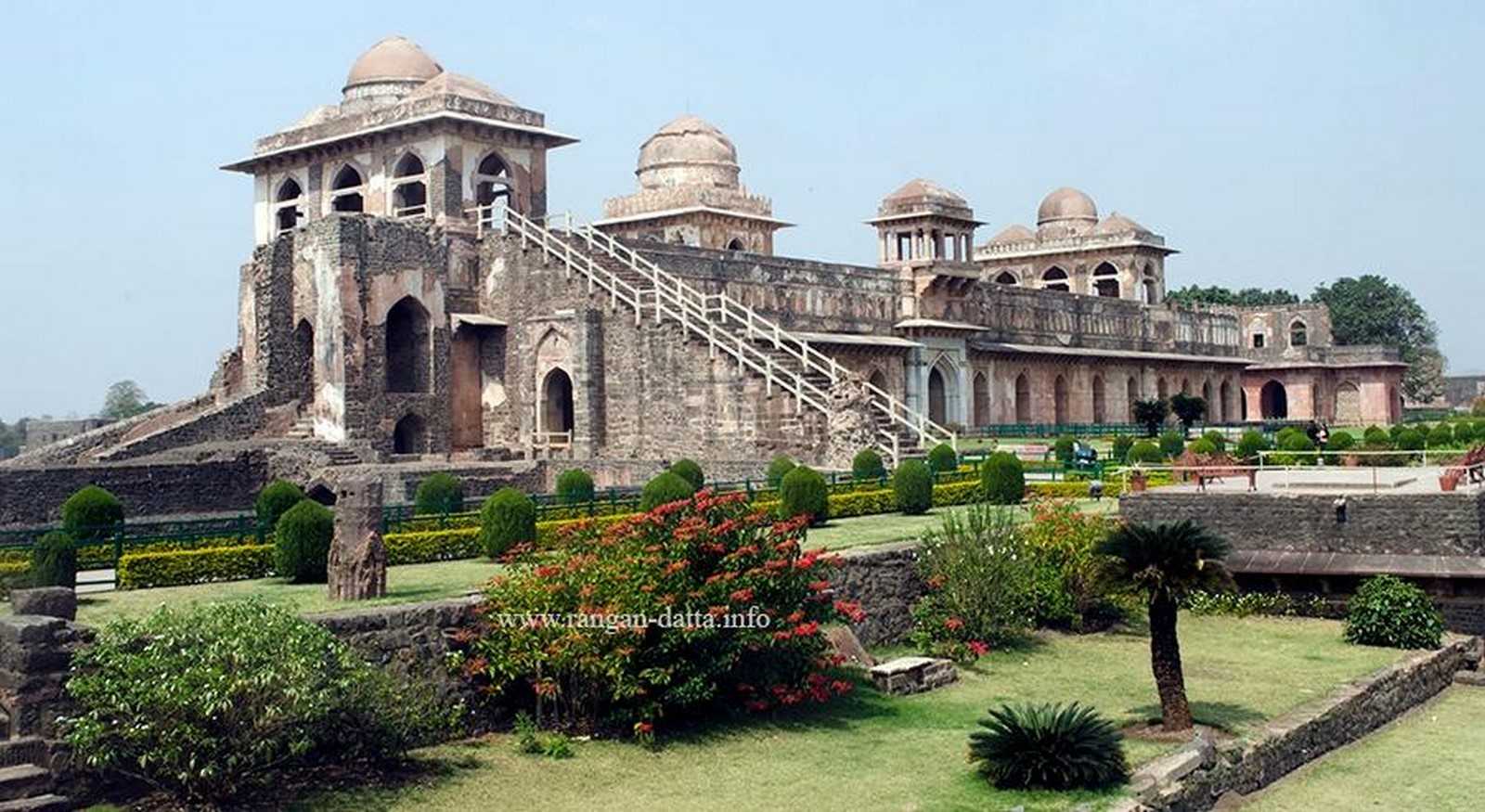
Situated in the historic town of Mandu, Madhya Pradesh, the Jahaz Mahal—commonly referred to as the Ship Palace—presents a compelling example of early Indian architecture that intertwines aesthetic sensibility with environmental awareness.
Constructed during the reign of Ghiyas-ud-din Khilji in the 15th century, this elongated palace appears to float between two artificial lakes, symbolizing harmony between built form and natural elements.
Historical Significance
Mandu, once the capital of the Malwa Sultanate, thrived as a hub of cultural and architectural innovation. During a time of peace and prosperity, Jahaz Mahal was commissioned to house the women of the royal court and serve as a venue for leisure and celebration.
Unlike other opulent palaces of its era, the structure displayed understated elegance using local materials such as stone and lime plaster.
Its structure creates an optical illusion — the narrow, elongated shape between two water bodies gives the impression of a ship floating on water. The visual trickery was intentional to reflect Mandu’s romantic and aesthetic sensibilities.
Architectural Layout and Materials
The architecture blends Afghan, Mughal, Hindu, and Persian styles.
One can find lotus motifs (Hindu), jharokhas (Rajasthani), Islamic arches, and Persian-inspired water features — all in one structure.
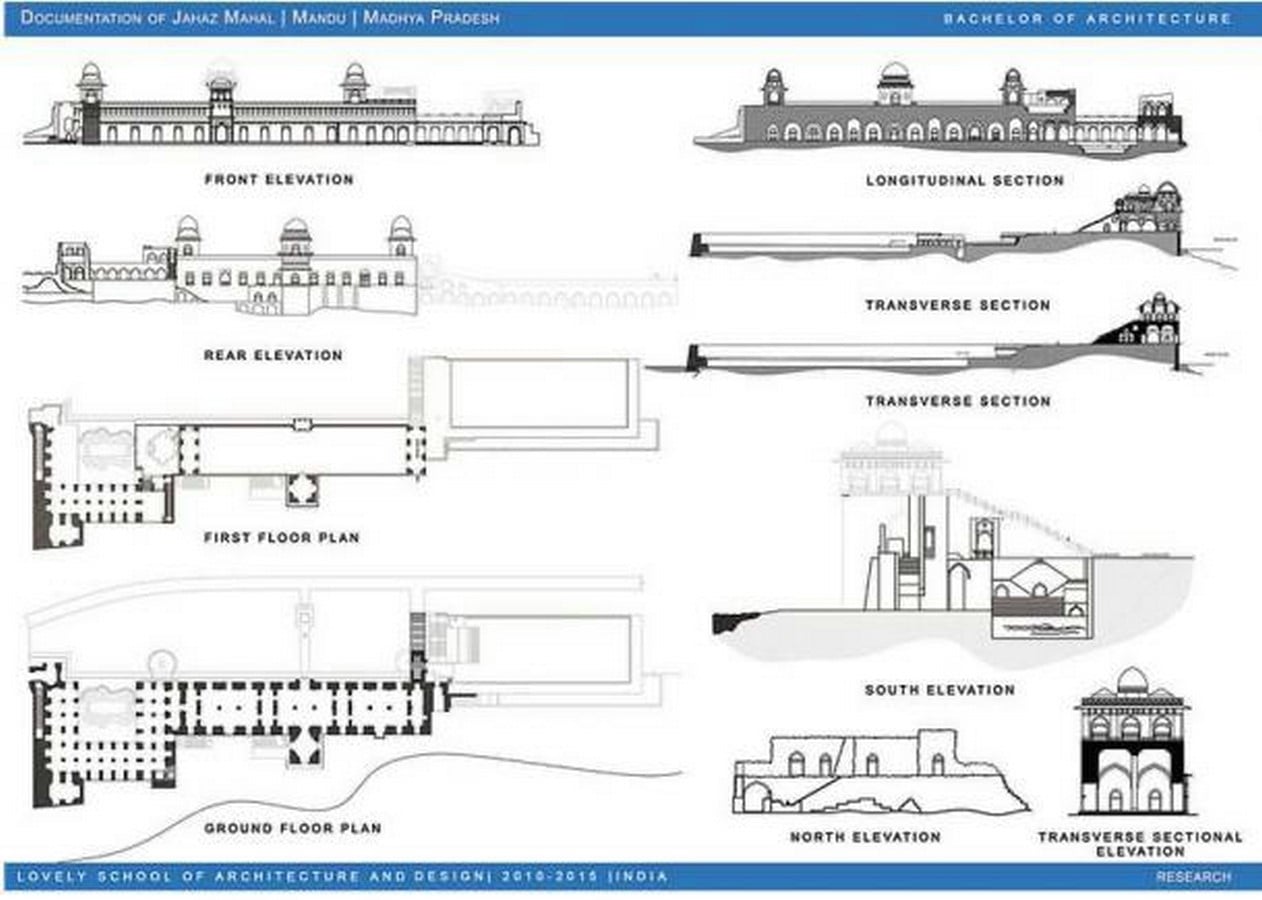
Measuring over 100 meters in length, the structure’s ship-like form and strategic placement between two lakes enhance its visual drama.
Features like-
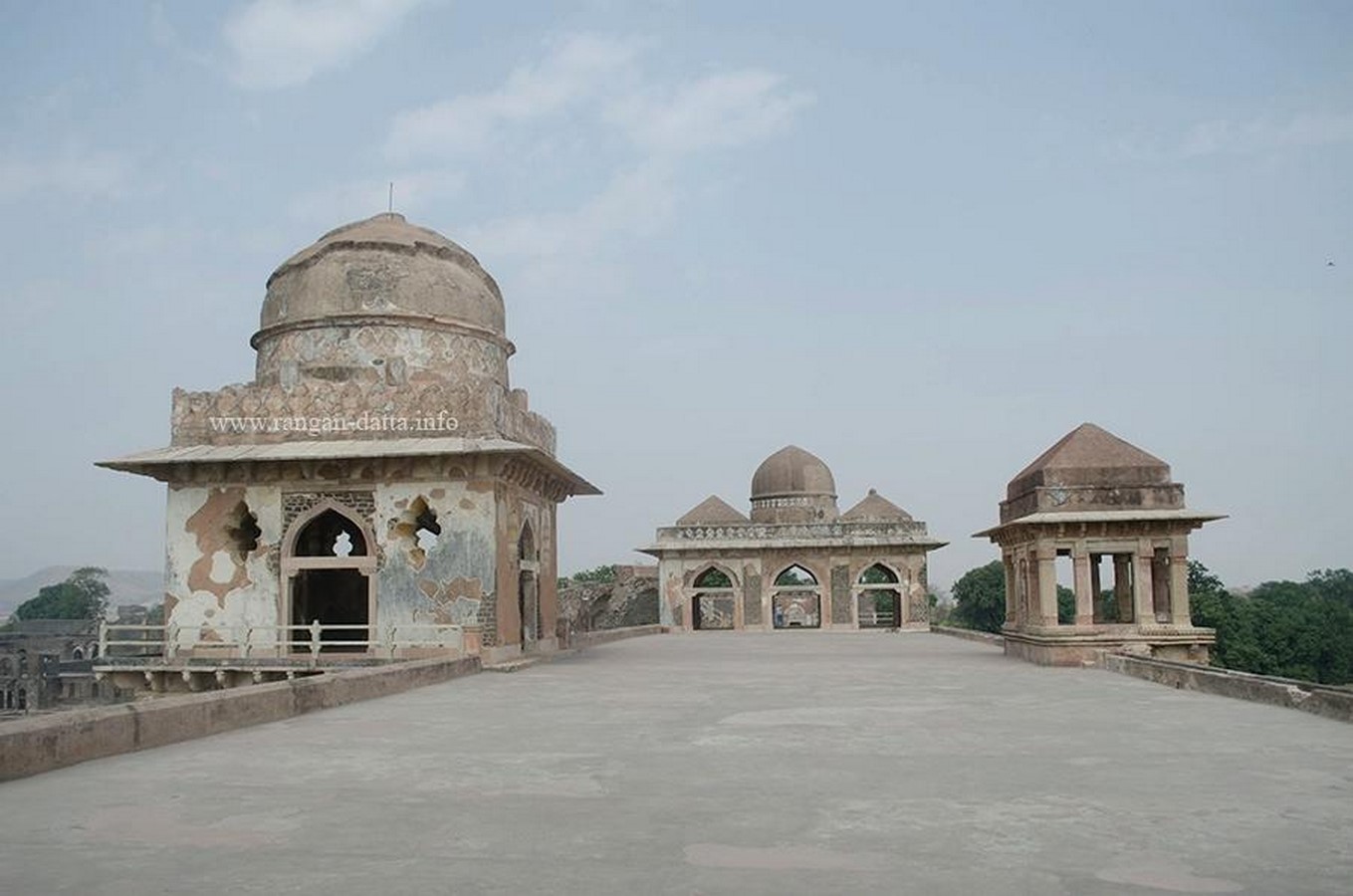
domed chhatris,
intricately carved jalis,
and arched openings
contribute to both its beauty and functionality. These design choices encourage natural ventilation, shade, and filtered daylight—serving as early examples of passive cooling strategies.
Climate-Responsive Design
The layout of Jahaz Mahal reflects a thoughtful understanding of climate and comfort. High ceilings, interconnected halls, and breezy walkways facilitate airflow. The surrounding water bodies offer evaporative cooling and are part of an advanced hydrological system that helped sustain the city’s environmental balance.
Functional Aesthetics
Design features like jalis and chhatris were not purely ornamental. The jalis diffuse harsh sunlight and enable air movement, while the chhatris provide shaded, airy retreats. The overall structure encourages exploration, revealing shifting views of the sky, water, and landscape—a multisensory experience deeply tied to its environment.
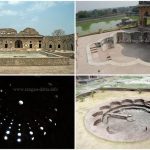
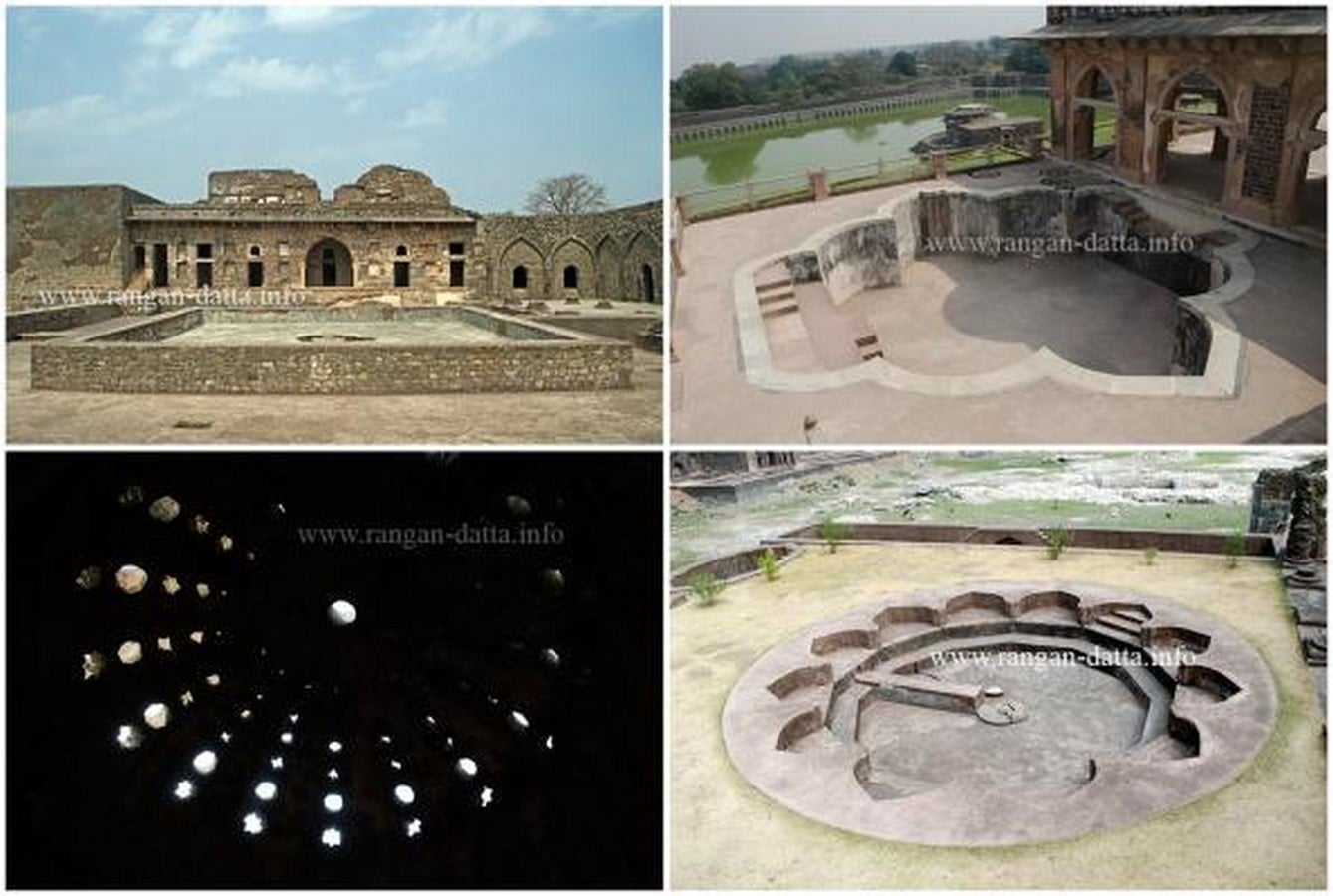
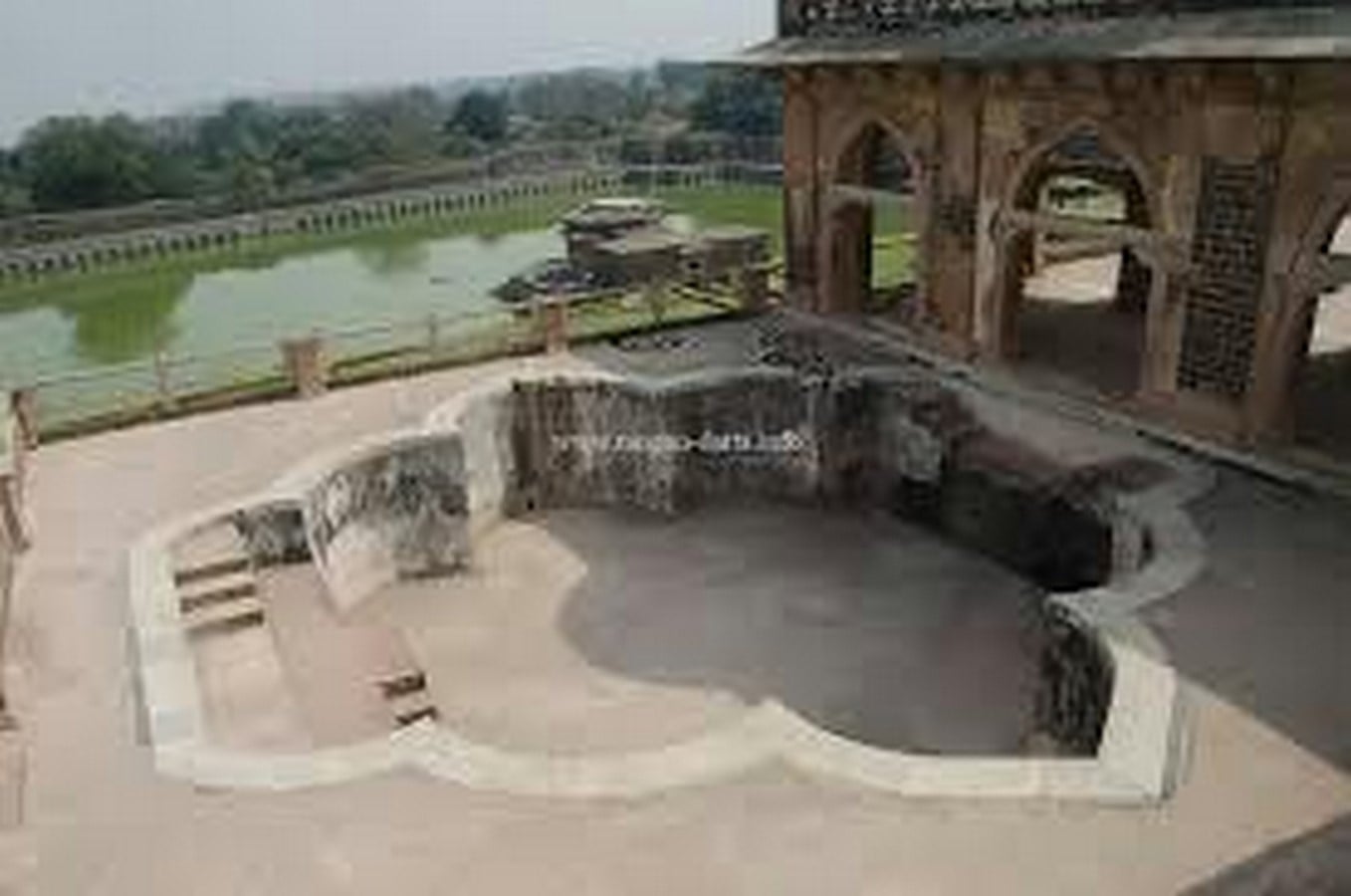
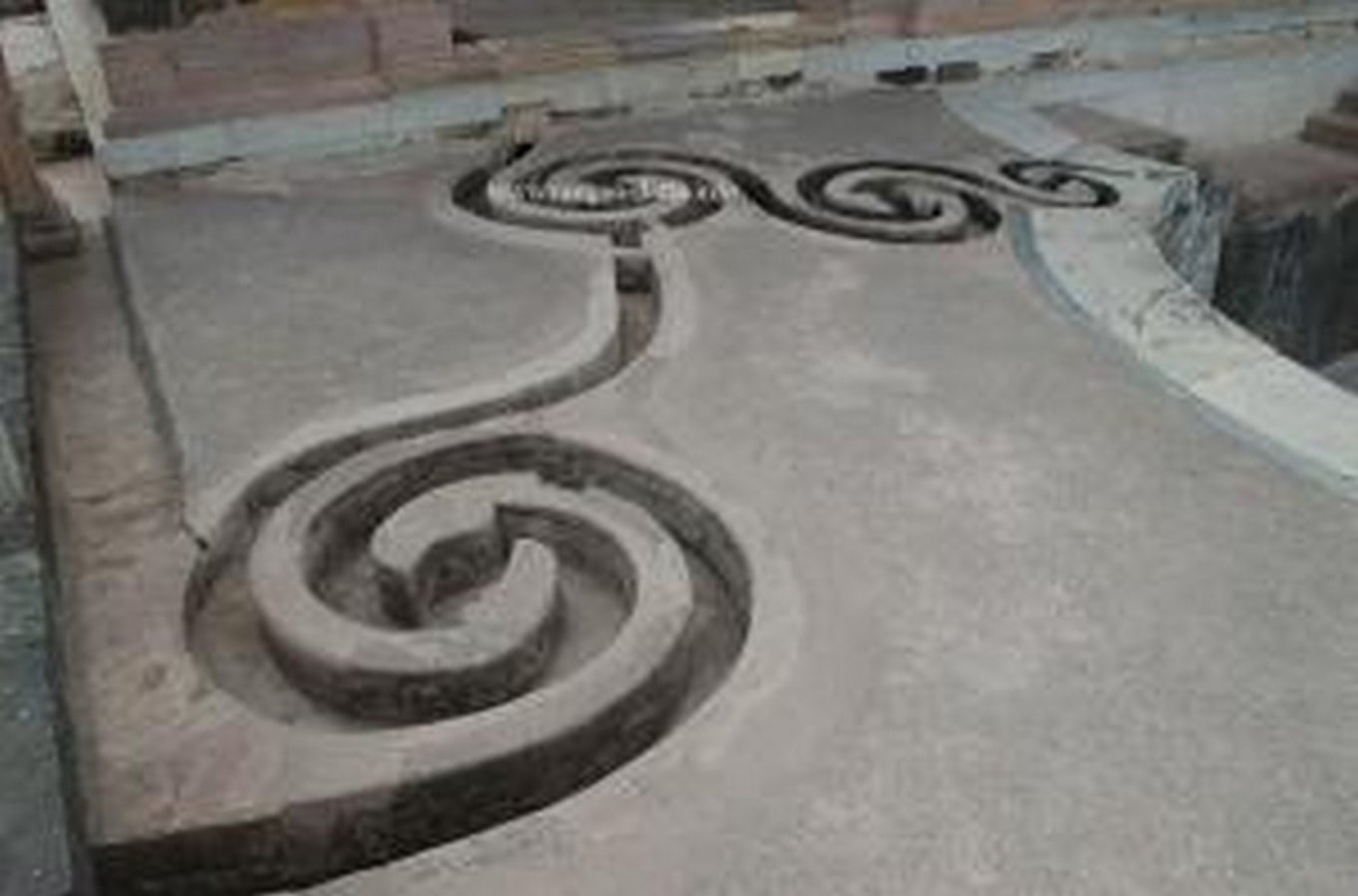
One of the most interesting aspects of Jahaz Mahal is its advanced water architecture, especially the different types of swimming pools and water features built within and around the palace. Here’s an overview:
Types of Swimming Pools at Jahaz Mahal:
1.Main Central Pool (Hauz)
Located at the center of the palace courtyard.
Shaped in a geometrical pattern, often rectangular or star-shaped.
Used for royal leisure and possibly by women of the harem.
2.Lotus-Shaped Pool
A smaller decorative pool with petal-shaped design.
Symbolic of purity and beauty, associated with Mughal aesthetics.
Likely used for aesthetic appeal and personal bathing.
3.Stepwell-Like Pools
Some pools were designed like baolis (stepwells), allowing access to water during different seasons.
These had steps leading down into the water, which also helped in maintaining water levels.
4.Private Zenana Pools
Meant for the women of the royal harem (Zenana).
Smaller, more secluded pools located near the private chambers of the palace.
Ensured privacy and comfort, often richly decorated.
5.Rainwater Collection Pools
Designed to harvest and store rainwater.
Interconnected with channels to maintain water supply in all seasons.
Showcases the sustainable water management system of the time.
Architectural Significance:
The pools were part of a passive cooling system, regulating temperature during hot seasons.
The palace had an intricate water supply system, including underground channels, terracotta pipes, and tanks.
Combined beauty, functionality, and environmental consciousness — way ahead of its time.
Cultural and Architectural Relevance
Jahaz Mahal stands as more than just an architectural wonder; it symbolizes a period marked by royal extravagance and the complex dynamics of courtly life.
The structure, believed to have accommodated a large number of women from the royal harem, offers insight into the gender roles and social structures of the time. While its luxurious design suggests an environment of comfort and beauty, it also reflects the secluded and controlled existence that many women in royal households experienced.
Some scholars view this duality as reflective of the broader societal attitudes toward women during the medieval period—where they were both revered and restricted.
The design of the palace, with its private baths, enclosed quarters, and elegant courtyards, may have provided a space for cultural refinement, yet it also reinforces the boundaries placed on female autonomy.
The placement of the palace between two serene lakes and amidst lush surroundings echoes the Islamic vision of paradise—a tranquil garden nourished by flowing water. This intentional symbolism suggests that the palace was not only a place of leisure but also an attempt to recreate an earthly version of spiritual serenity and divine beauty.
Conservation Challenges
Despite its enduring beauty, the palace faces serious conservation issues. Constant exposure to moisture, overgrowth, and tourist traffic contribute to its gradual decay.
While the Archaeological Survey of India (ASI) has implemented restoration measures, long-term preservation demands advanced documentation, community involvement, and responsible tourism strategies.
A Timeless Model of Sustainable Design
Jahaz Mahal’s legacy offers lessons that are more relevant than ever. In an age of climate urgency and resource scarcity, its design demonstrates how architecture can address environmental needs while maintaining cultural depth. This palace is not merely a structure of the past—
It is a template for sustainable design in the future.