AI has become an important part of our day-to-day life. We are moving between technological eras so quickly that we are unaware of how our dependencies are changing. From flip phones to smartphones, from the early days of the World Wide Web to the emergence of blockchain technology, and now to artificial intelligence (AI), which has permeated almost every business. The debate’s heating up, while some fear the erasure of human intuition in design, others see AI as the ultimate collaborator: supercharging workflows, solving complex problems, and unlocking ideas we couldn’t reach alone. So let’s ask it straight—is the architectural doomsday really near?

Rise of AI in Architecture
Architects can view hundreds or even thousands of possible designs by entering criteria like materials, structural performance, and environmental impact. This expedites the design process and guarantees that all important aspects are taken into account prior to completing a concept.
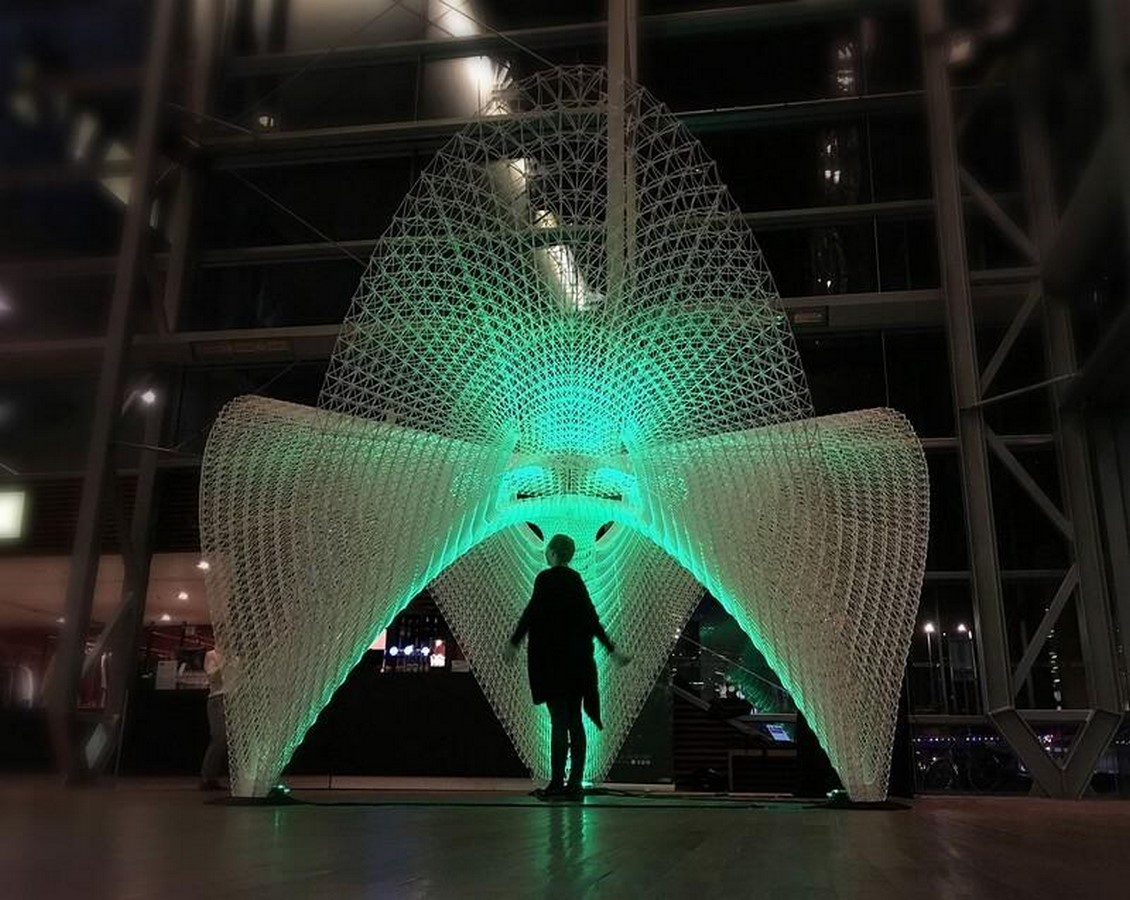
Case Study: Daedalus Pavilion by AI Build & ARUP
An AI-designed pavilion in London demonstrated how robotics and AI might combine to produce intricate, stunning buildings that would be extremely difficult to plan using traditional methods. AI had managed to complex geometry and simulations while robots assisted in 3D printing. Architects were able to concentrate more on imagination rather than calculations as a result. It is a very complex lattice that defies the standard construction methods. AI allowed for the exploration of daring, unconventional forms without running the danger of structural problems.
Case Study: Eco-Friendly Skyscrapers in Singapore
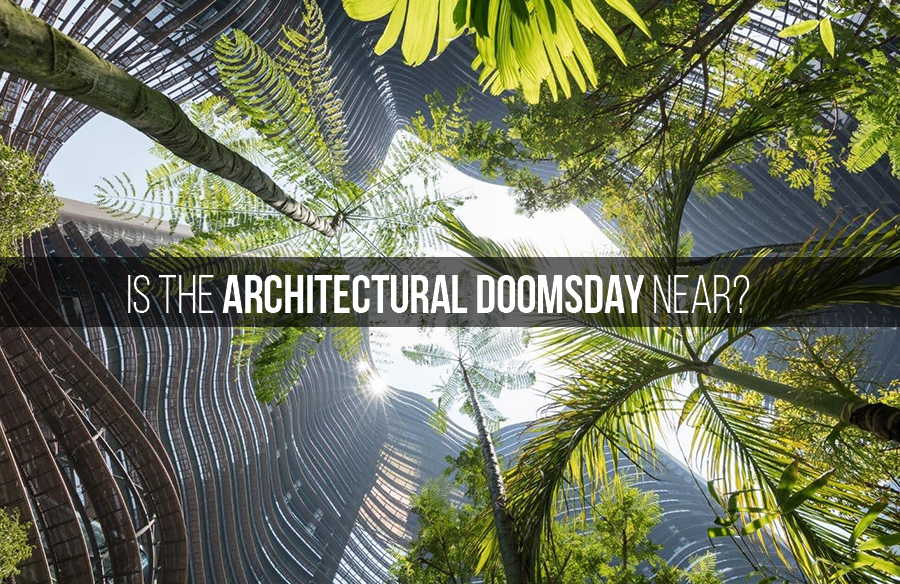
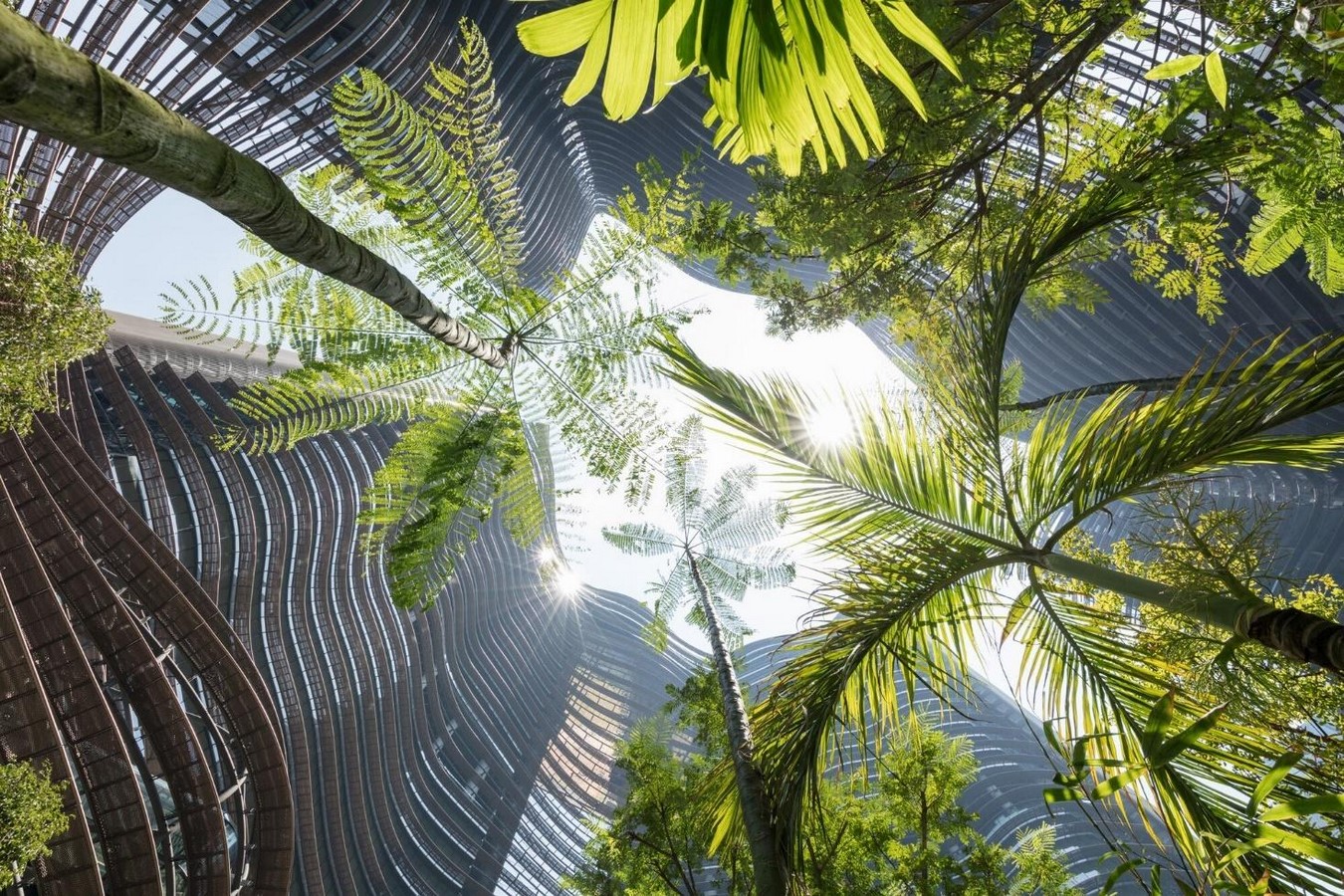
AI is assisting in the construction of green buildings in Singapore that are appropriate for the country’s hot, muggy atmosphere. AI was utilized in Marina One Tower, to enhance natural cooling, energy efficiency, and ventilation. So, without overusing air conditioning, the building’s gardens and water features provide cooling.
AI aids in the analysis of climatic data to ensure that buildings are both comfortable and energy-efficient. Additionally, it maximizes shading and ventilation systems. This demonstrates how AI may enhance sustainable design by fusing smart technology and nature to improve urban living.
The Human Edge: What AI Still Lacks
In the near future, architects and the design field will be impacted by the integration of AI. AI cannot, at least not now, fully replace human creativity and problem-solving skills, notwithstanding the possibility of disruption. AI works best when combined with human architects because it may enhance their abilities and speed up decision-making by taking into account data that is too complicated or time-consuming for humans to evaluate alone. Although AI can produce what looks to be the finished result, it is unable to comprehend the limitations of the actual world and the nonlinear creative processes that characterize these occupations. Instead of being afraid of this unavoidable shift, professionals need to modify their current abilities to work with AI, which will eventually open the door to a new era of creativity and innovation in architectural design.
Although AI has numerous advantages, there is a chance that it will reinforce prejudices. The data that AI systems are educated on may have historical or cultural biases in architecture.
This could limit creativity and variety in design solutions by producing designs that prioritize particular styles or populations over others. To guarantee that AI-generated designs are equitable and inclusive, architects must be aware of these constraints and exercise supervision.
The Future: Architects as AI Collaborators
AI makes it easier for architects to create eco-friendly and energy-efficient structures by simulating real-world environmental circumstances. AI enables architects to perform millions of simulations on various design configurations, guaranteeing that buildings are initially optimized for sustainability. This leads to a lighter environmental impact, cheaper operating costs, and less energy consumption—all of which are critical for the development of sustainable design in the future.
AI is becoming a strategic asset that can advance architectural careers and turn organizations into market leaders, not just a tool. Those who take advantage of AI’s potential will be at the forefront of a quickly changing profession as it develops. Whether you’re a firm trying to become more competitive or an architect hoping to advance your career, AI is the key to unlocking new levels of success.
Is Architectural Doomsday Near?
AI is there to modify the game, not to replace architects. AI is demonstrating that it can manage the heavy lifting, enabling architects to dream larger and create more intelligent designs for everything from crazy pavilions to climate-smart skyscrapers. However, the future is not a plug-and-play one. The true flexibility lies in working together to use AI to push the envelope creatively while retaining the human element that gives architecture its significance. Doomsday? Not coming—unless the industry refuses to evolve. Architects need to stop treating AI like competition and start treating it like a partner. The future is hybrid, and it’s already here. Adapt or get left behind.
References:
Architecturecourses.org. (2025). AI in Architectural Design – Real-World Examples | ArchitectureCourses.org. [online] Available at: https://www.architecturecourses.org/ai/ai-architectural-design-real-world-examples?utm_source=chatgpt.com#toc-ai-in-architecture-lessons-from-real-world-projects [Accessed 13 Apr. 2025].
Ahramovich, A. (2023). AI in Architecture: 10 Use Cases, Examples & Technologies. [online] www.itransition.com. Available at: https://www.itransition.com/ai/architecture.
Mortice, Z. (2023). Vision Setting and Problem Solving: AI in Architecture Is Changing Design. [online] Autodesk.com. Available at: https://www.autodesk.com/design-make/articles/ai-in-architecture.