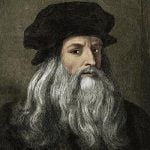
Widely known as an artist, inventor, and scientist, Leonardo da Vinci is a true Renaissance man. Da Vinci lived in a golden age of creativity with contemporaries like Michelangelo and Raphael and contributed to various sectors. Today, no name is better than Leonardo Da Vinci to describe the Renaissance age.
Leonardo da Vinci was born in a Tuscan hamlet named Vinci. At the age of 14, he began a 9-year apprenticeship under Andrea Del Verrocchio, a famous sculptor, painter, and goldsmith. Leonardo not only developed his skills in painting, sculpting, and drawing but also in various other fields like mechanics, carpentry, architectural drafting, and metallurgy during his apprenticeship in Florence.
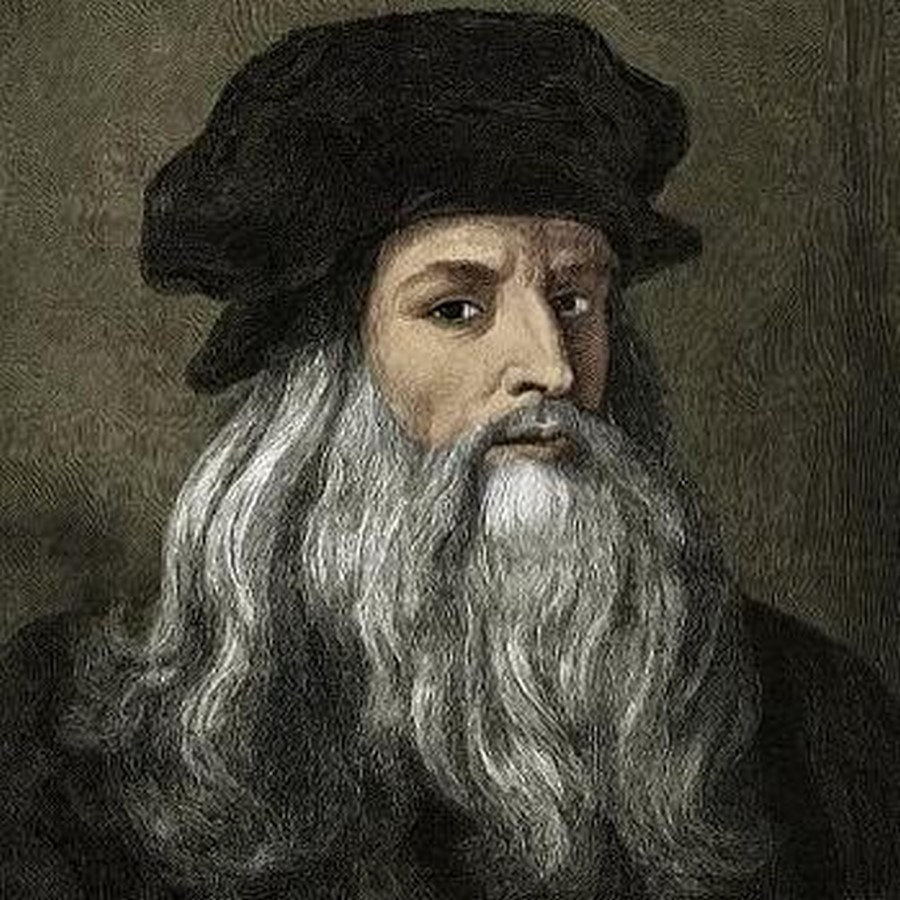
After leaving the studio of Verrocchio, he worked on many paintings, mostly religious, but also portraits. For around the next five years, he produced several paintings, including Madonna of the Carnation, and Adoration of the Magi. While in Milan, the artist also worked on various stage sets and military designs. During this time he worked on the piece, the Virgin of the Rocks also known as Madonna of the Rocks. This is an altar painting in which the artist has experimented with sfumato, a technique that he explored in almost all his paintings. He returned to Florence after the French invasion of Milan. In later years, he painted the Mona Lisa. The precise date of the Mona Lisa is still unknown, but many historians believe that the painting began in 1503.
Leonardo da Vinci returned to Milan in 1506 to accept a commission for a statue. Throughout this residency, he worked on drawings on topics that ranged from human anatomy to botany, sketches of war machinery inventions, and studies of birds in flight. The latter led to his exploratory drawings of human flight machines. All of these works represent the interest of da Vinci in how things worked and their relationships. Leonardo died on 2 May 1519 at the age of 67. He was buried at the Chapel of Saint Hubert, Amboise, France.
Sfumato: The Art of Subtle Transformations
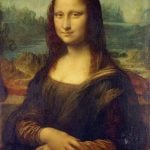
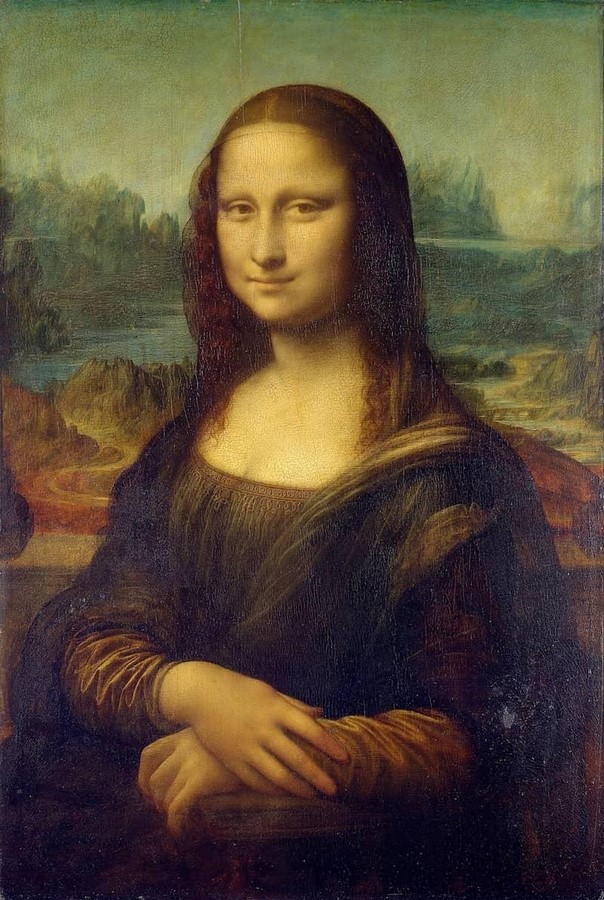
Sfumato, (from the Italian word, sfumare: ‘to tone down’ or ‘to evaporate like smoke’) is a painting technique most famous in association with Da Vinci paintings. Da Vinci described sfumato as ‘without lines or borders in the manner of smoke or beyond the picture plane.’ During the Renaissance, the attempts to change the flatness of paintings resulted in techniques like sfumato. ‘The Mona Lisa’ is considered the most successful painting in terms of sfumato.
Historians found that da Vinci applied thin layers of oil paint by hand over months to achieve the glowing texture of the painting, which resulted in a focused image of the Mona Lisa. He applied around 20 to 40 layers of paint. This technique allowed him to create the translucency of skin and create the 3-dimensional presence of the figure.
This technique is also said to be the reason for the enigmatic smile of the Mona Lisa resulting in a certain depth and aura for the subject.
Another notable example of sfumato in Da Vinci’s work is The Last Supper. By employing sfumato, da Vinci achieved unparalleled realism and emotional depth in his paintings, creating timeless masterpieces.
The Play of Perspective
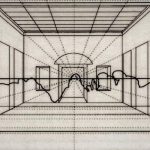
Da Vinci pioneered the technique of perspective. The two elements that are used by Leonardo in his works to achieve depth are architectural line and tonal gradation. The diagonal lines of elements like walls, columns, balustrades, and verandas are carefully arranged to meet at a point on the horizon. These lines help create depth and the feel of 3-dimensional space in a 2-dimensional surface. He also used the golden ratio for the composition in a painting.
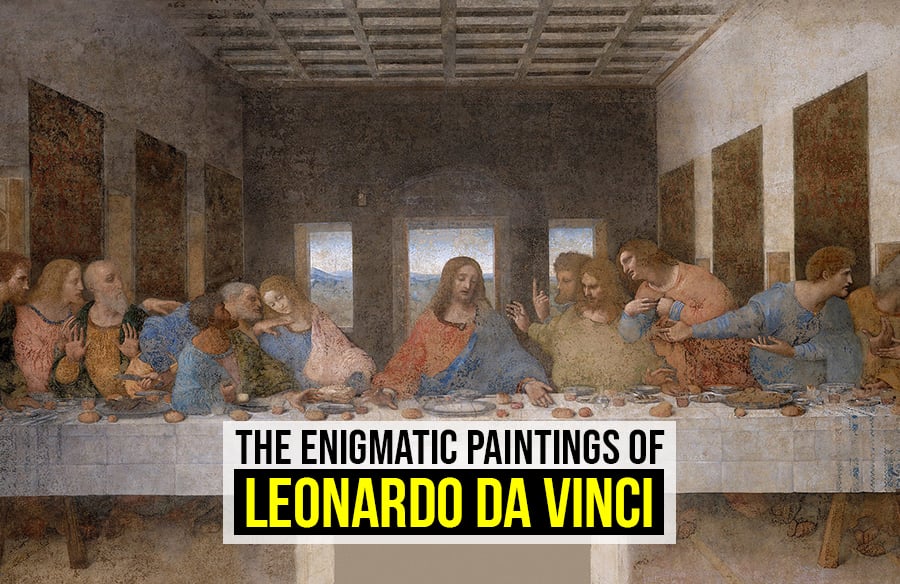
The Last Supper focuses on a single vanishing point. The whole fresco is directed towards the face of Christ – he is the focal point of the painting.
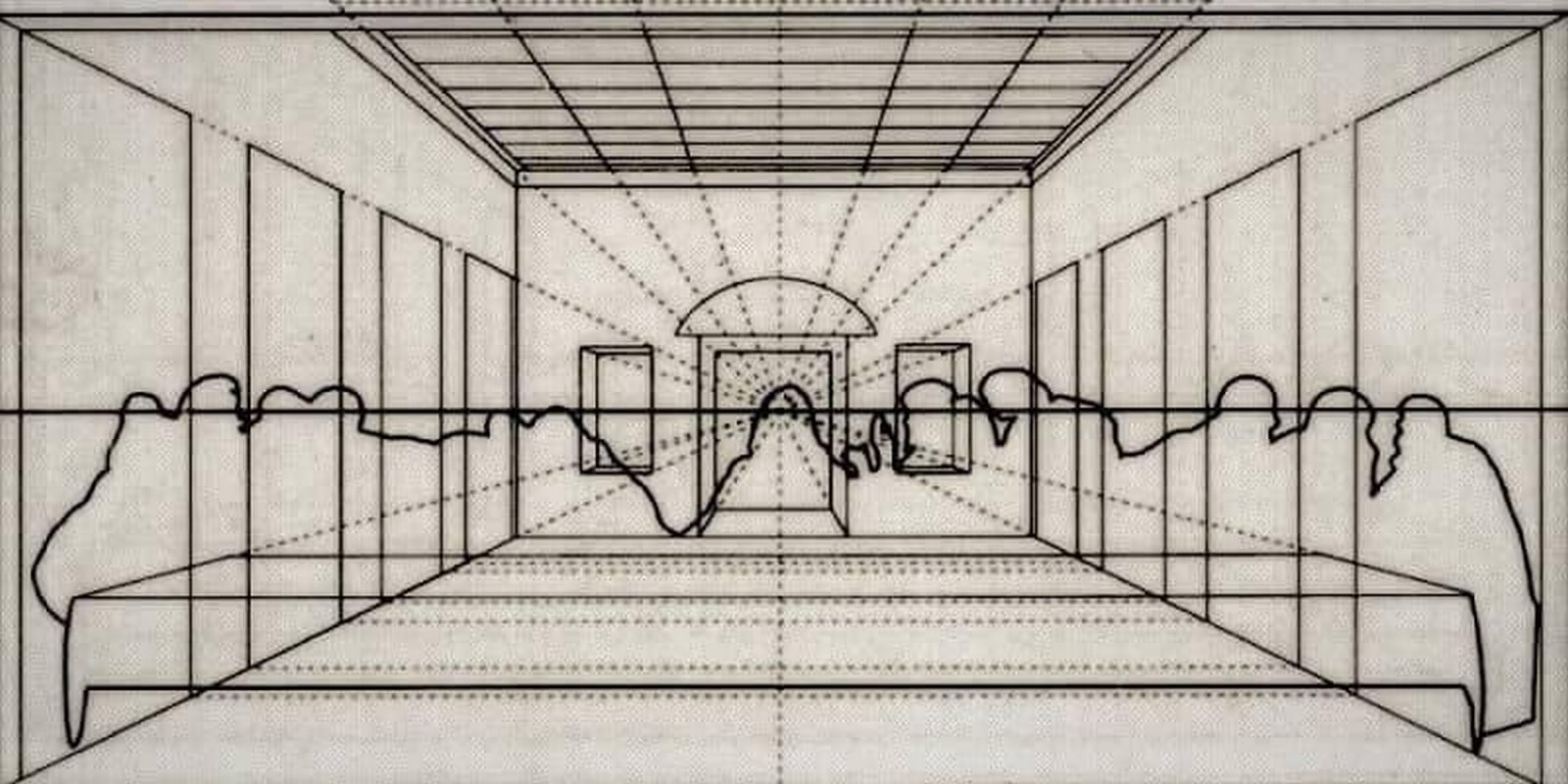
Last Supper also portrays Leonardo’s love for symmetry. The painting is horizontal with the same number of figures on either side of Jesus.
Mona Lisa and The Last Supper
Mona Lisa is an oil on wood painting on a 77 x 53 cm wooden plank. Some believe The Mona Lisa to be the self-portrait of da Vinci. Traditionally, the painting is thought to be of Lisa del Giocondo, the wife of a Florentine merchant. However, speculation surrounds the true identity of the individual, with several other women (including da Vinci’s mother) being candidates. Another belief is that he painted Monal Lisa due to his presumed homosexuality. Mona Lisa’s expression is both enchanting and unconcerned which has contributed to the fame of the portrait. The smokey outlines, enchanted figures, the contrasts of light and dark, and overall calm feeling are characteristic of da Vinci’s style.
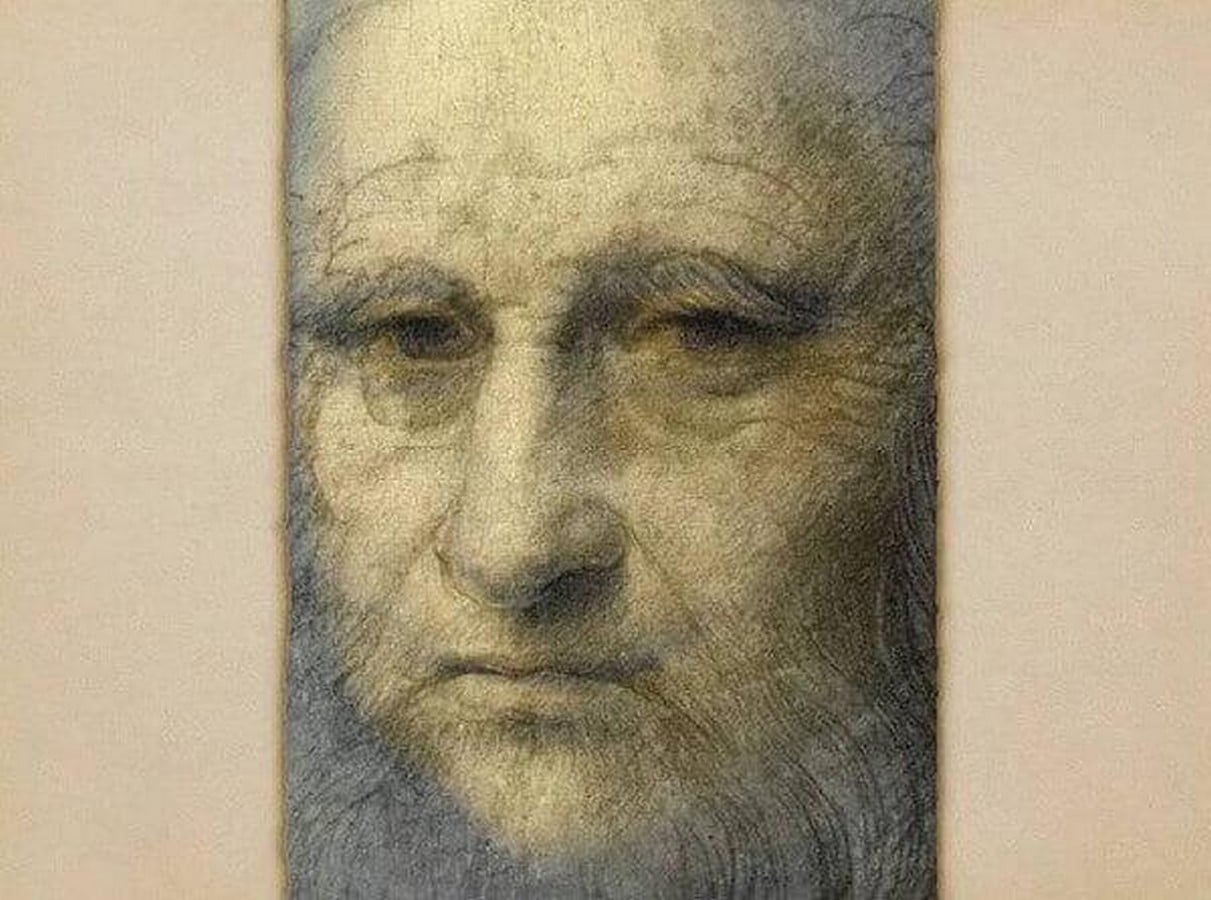
Another fact about Mona Lisa is that although it is a painting, it’s not on a canvas. Mona Lisa is painted on a wooden plank. Many Renaissance masters preferred wood for smaller artworks although canvases were available in the 14th century. Mona Lisa is a living enigma: the soul is here, inaccessible. Before Da Vinci, paintings lacked mystery. They were mainly of exterior appearances without a soul or the soul was expressed through gestures, symbols, or inscriptions.
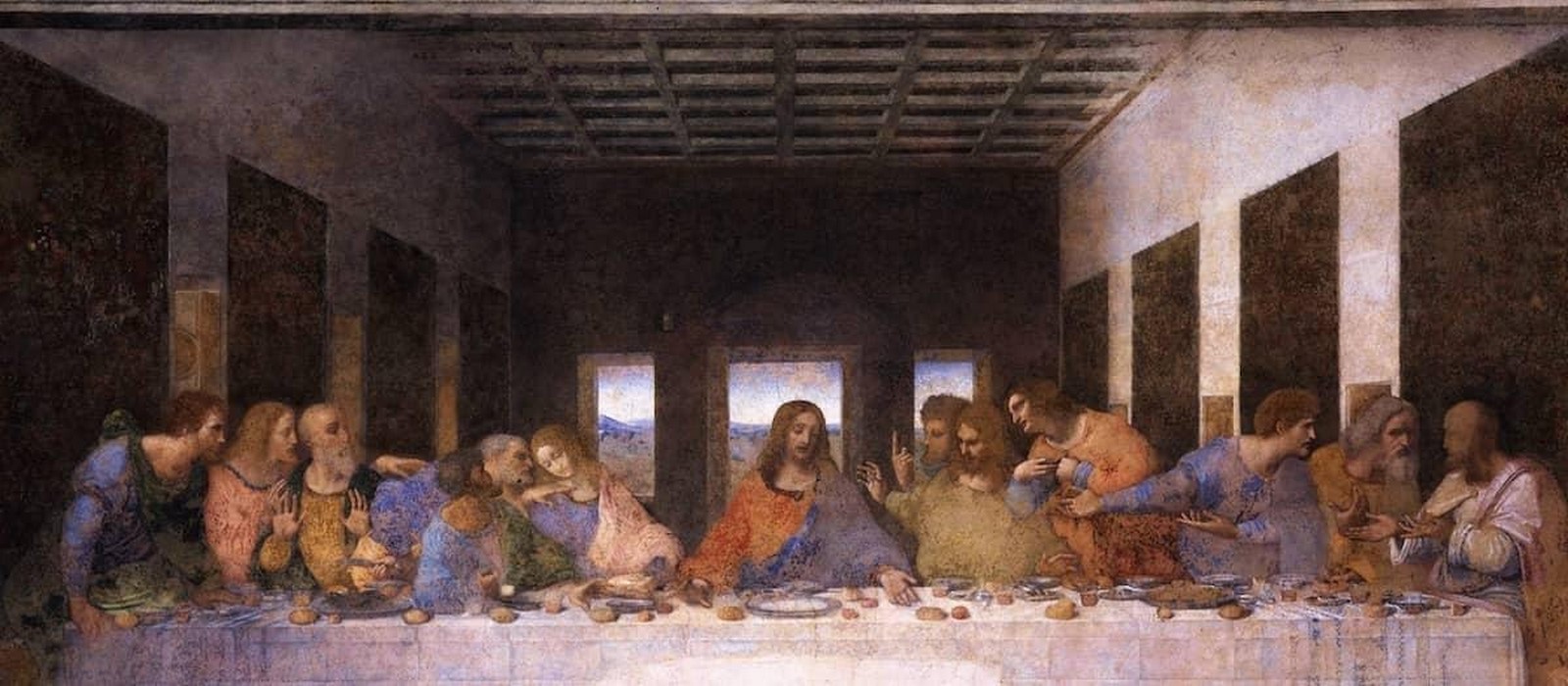
Last Supper was begun by Leonardo da Vinci in 1495 as a visual interpretation of an event mentioned in all four Gospels. The painting depicts the next few seconds after Jesus predicted that one of his disciples would betray him before sunrise.
Last Supper, unlike a fresco, was an experimentation of colours on drywall. This has led to flaking of the paint even before it was completed. The painting has stood the test of time. It has been vandalized and bombed and what we see today is very little of the original painting.
Unlike other artists before and after da Vinci, he decided not to put the halos on Christ. There are other hypotheses around the painting like the spilled salt may symbolize bad luck, loss, religion, or Jesus as salt on earth. There are disputes on whether the fish on the table is an eel or a herring as each has its symbolic meaning. Also, according to Italian musician Giovanni Maria Pala, da Vinci incorporated musical notes in “The Last Supper.” Pala created a 40-second melody from the notes that were said to be hidden in the painting, in 2007.
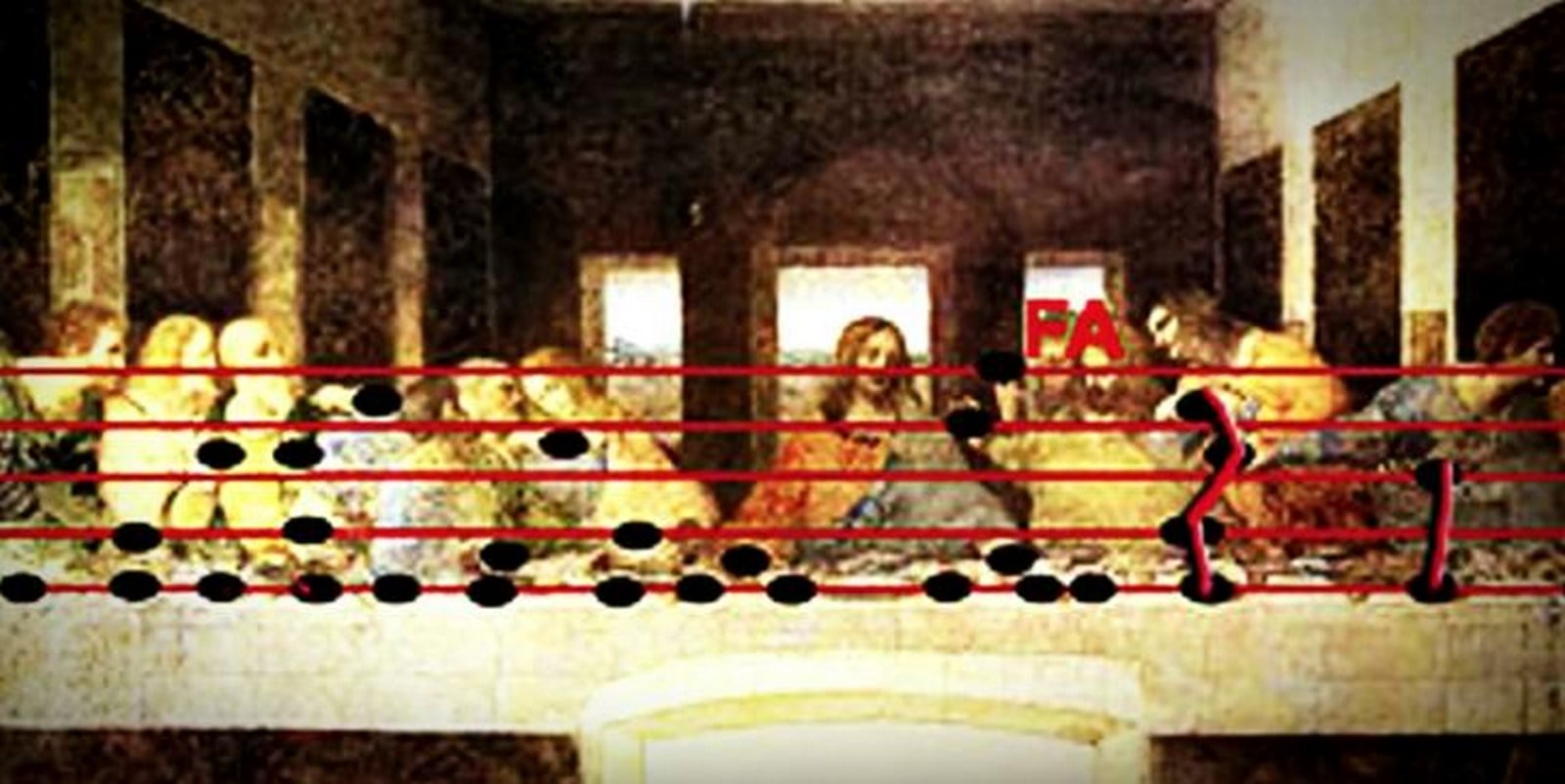
Scholars also believe that there is a secret code in the painting. There are 3 everywhere in the painting – the apostles are in three. There are 3 windows and Jesus is in a triangular shape. In catholic art three represents divinity. The number 4 also plays an important role- four sets of tapestries. The windows are framed by four supports. Some also believe that the numbers represent how the groups are set 3,3,1,3,3 represent a bible verse, Lamentations 3:31-33: “For no one is cast off from the Lord forever.” It can be about forgiving Judas or a bit personal to da Vinci.
According to Dan Brown’s best-selling book – The Da Vinci Code, the person sitting to the left of Jesus is not an apostle but Mary Magdalene. He even suggests there is a hidden ‘M’ in the painting representing Mary Magdelene or Marriage. There is also a belief that the V between Jesus and the claimed woman represents a woman’s belly, the holy grail secret.
Da Vinci’s paintings continue to captivate viewers not just for their brilliance but also for the layers of mystery they hold. Even after centuries, his works remain some of the most discussed and analyzed in art history inspiring artists and historians.
Reference:
- Articles
leonardodavinci.net. (2021). Leonardo da Vinci. [online] Available at: https://www.leonardodavinci.net/.
Hulsey, J. and Trusty, A. (2017). What’s Sfumato with You? | How Leonardo da Vinci Created the Mona Lisa. [online] Artists Network. Available at: https://www.artistsnetwork.com/art-mediums/oil-painting/whats-sfumato-with-you/.
Bianchi, L. (n.d.). Exploring the Sfumato Technique – Mona Lisa by Leonardo da Vinci. [online] Leonardo da Vinci’s Inventions and Paintings. Available at: https://www.leonardodavincisinventions.com/sfumato-technique/.
Zyga, L. and Phys.org (n.d.). Is the Mona Lisa a Self-Portrait? [online] phys.org. Available at: https://phys.org/news/2010-01-mona-lisa-self-portrait.html.
https://www.facebook.com/craftyhouse.diy (2019). 5 Secret Codes Hidden In Famous Paintings. [online] Crafty House. Available at: https://crafty.house/secret-codes-famous-paintings/ [Accessed 16 Mar. 2025].
Martina (2024). Decoding The Last Supper Painting Secrets by Da Vinci. [online] Travel Done Clever. Available at: https://traveldoneclever.com/2024/03/21/the-last-supper-painting-secrets/ [Accessed 16 Mar. 2025].
2. Images/visual mediums
leonardodavinci.net. (2021). Leonardo da Vinci. [online] Available at: https://www.leonardodavinci.net/
https://www.facebook.com/craftyhouse.diy (2019). 5 Secret Codes Hidden In Famous Paintings. [online] Crafty House. Available at: https://crafty.house/secret-codes-famous-paintings/ [Accessed 16 Mar. 2025].
Martina (2024). Decoding The Last Supper Painting Secrets by Da Vinci. [online] Travel Done Clever. Available at: https://traveldoneclever.com/2024/03/21/the-last-supper-painting-secrets/ [Accessed 16 Mar. 2025].