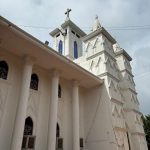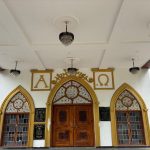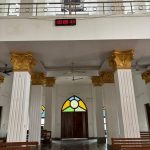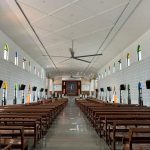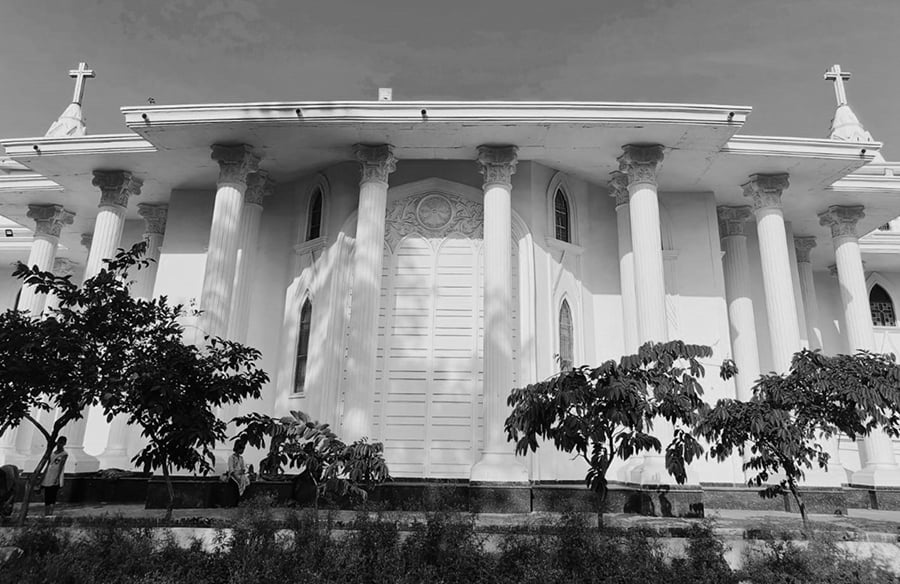
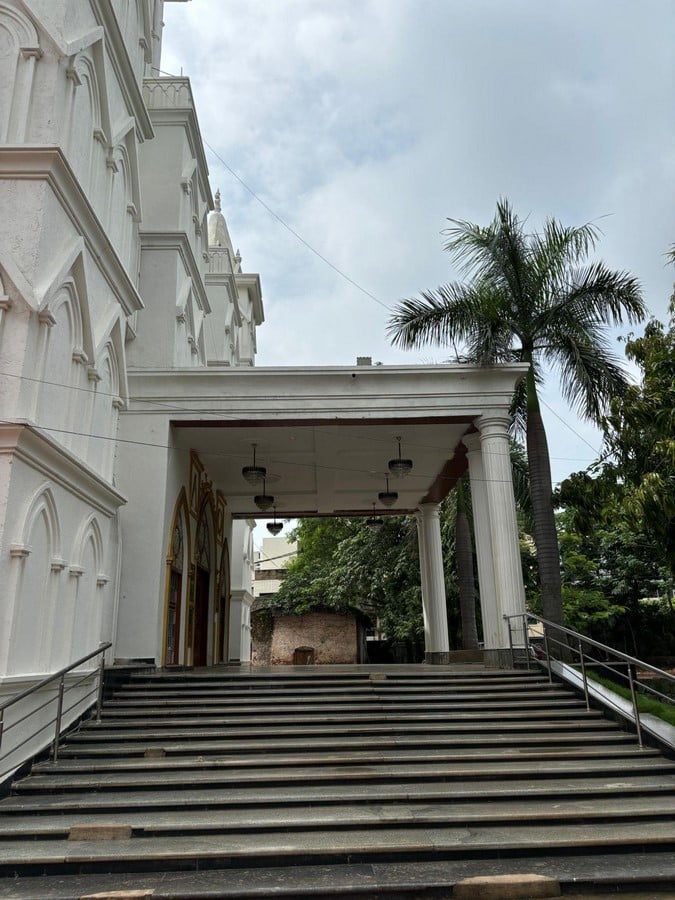
St. Paul’s Cathedral is one of the oldest churches in Chhattisgarh. Established by CNI (Church of North India), it is a pre-independence structure that exhibits colonial-era influences. Today, it remains an important landmark and a busy place of worship, which has been crucial in maintaining its condition and building integrity.
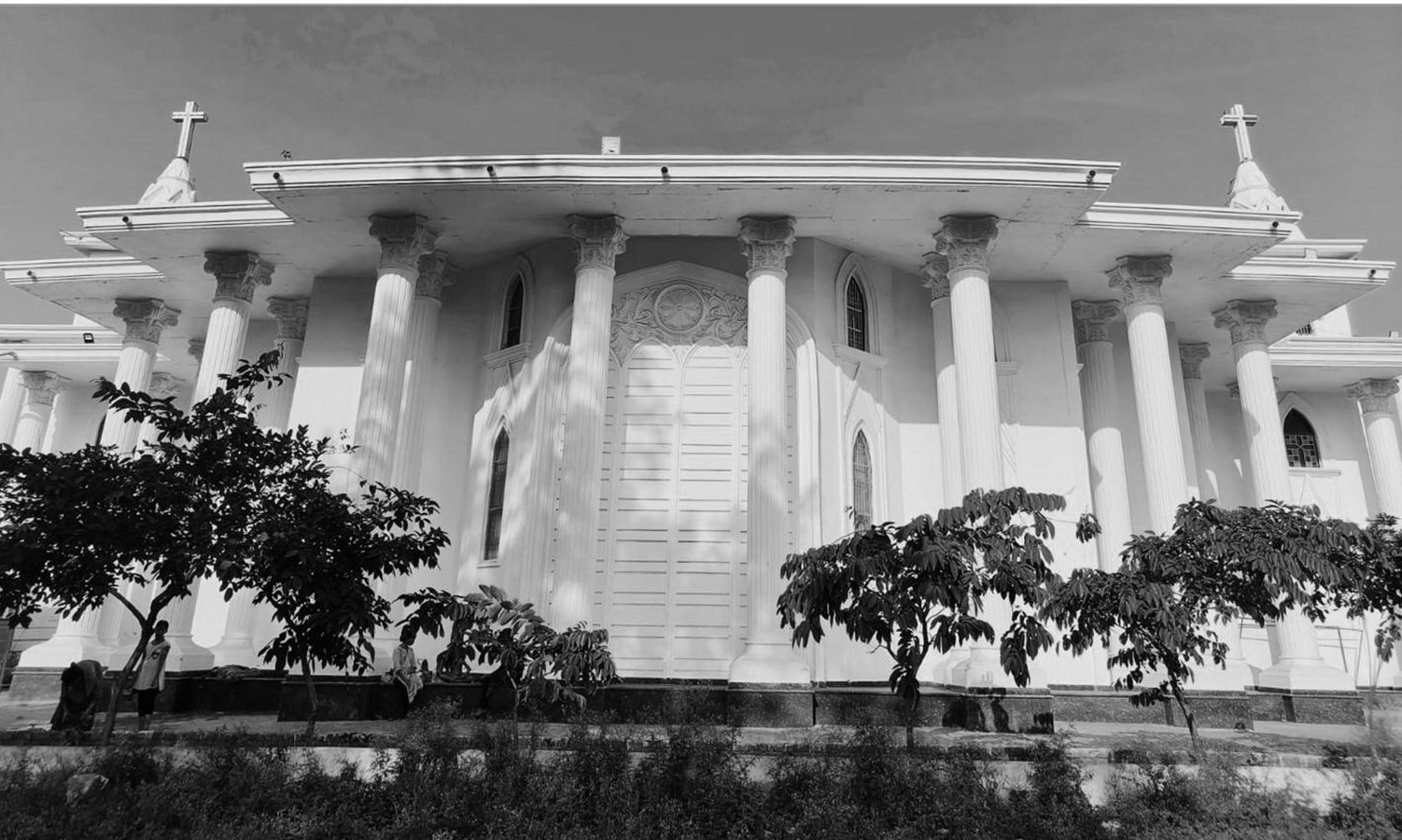
Since its construction many decades ago, the church has undergone several alterations and restorations. And though it shows some inevitable and natural weathering, as well as some minor deterioration, St. Paul’s Cathedral has maintained its functionality and continues to host regular services and events.
Historical and Cultural Significance
St. Paul’s Church reflects the social and historical context of a colonial era Raipur. It stands as a symbol of British influence and the cultural exchange between the colonisers and the locals, offering insight into the lives of British expatriates in Raipur.
The church initially served as a place of worship for British officials, and later for the growing Indian Christian community. Moreover, it augments the Architectural and Historical legacy of Raipur.
Today, the church plays a crucial role in the community by organizing and participating in events such as: anti-drug awareness campaigns, free dental check-up camps, blood donation drives and summer schools, contributing to children’s education. These events insist upon the church’s commitment towards the physiological and spiritual well being of the community.
Architecture Style
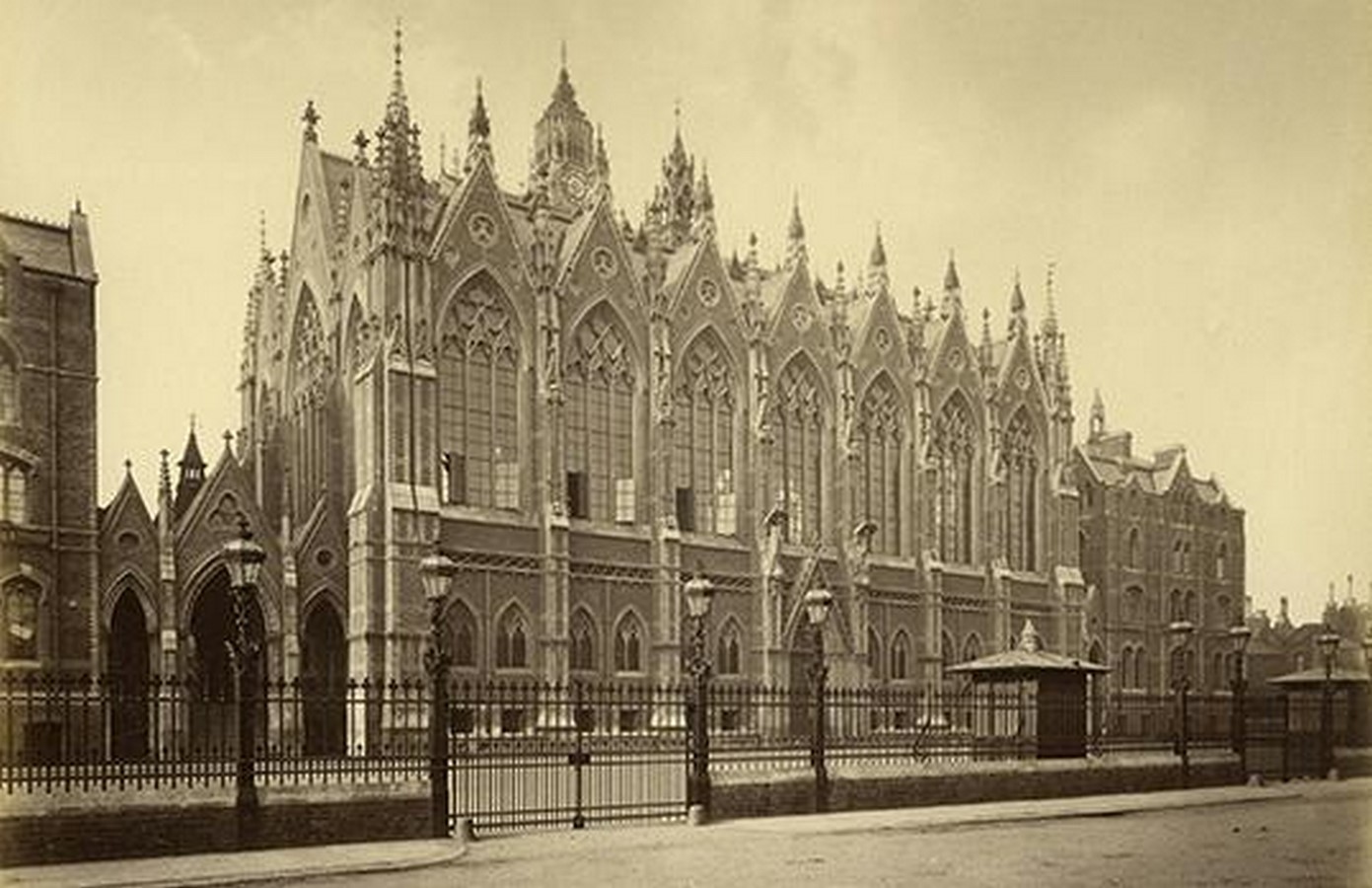
The church’s architecture exhibits a Gothic Revival style, characterised by its pointed arches, ribbed vaults, flying buttresses, and bell tower. This particular architecture style was a conscius movement that had begun in England in an attempt to revive medieval Gothic forms.
Christianity was first introduced in India in 52 AD, and colonization also resulted in the establishment of churches in different parts of the country. Many of these great cathedrals and churches express the Gothic style powerfully.
Plan
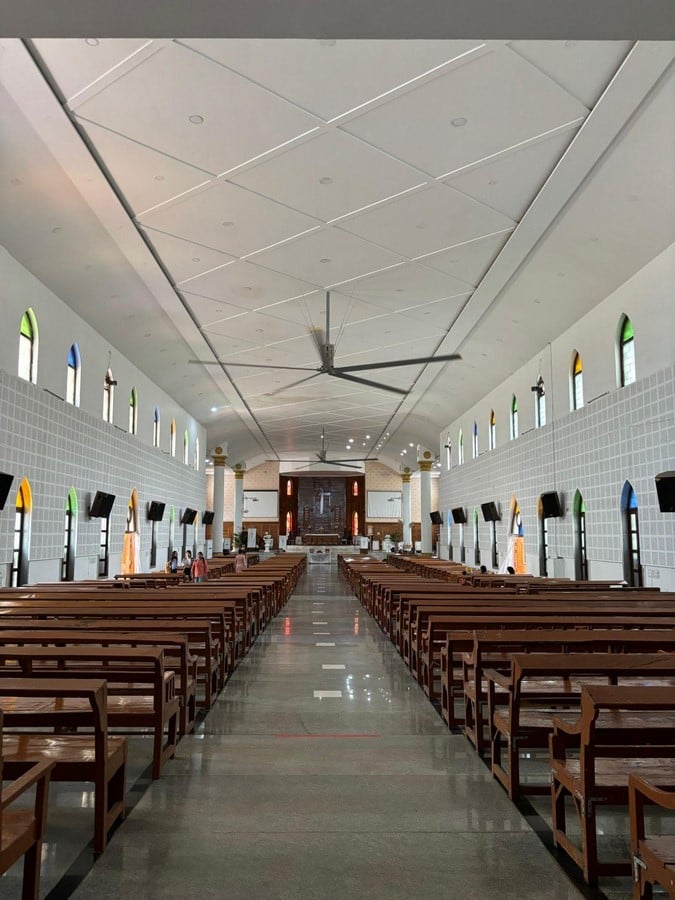
The church’s plan resembles a Latin cross, which in itself became relevant in India through the influence of European Colonial powers. The Latin cross is characterised by its long nave intersected by a shorter transept to form a cross shape. Its design represents that of a crucifix, emphasising Christ’s sacrifice. Thus, it can be seen as an emblem of Christian faith. The main entrance is at the western end.
Bell Tower
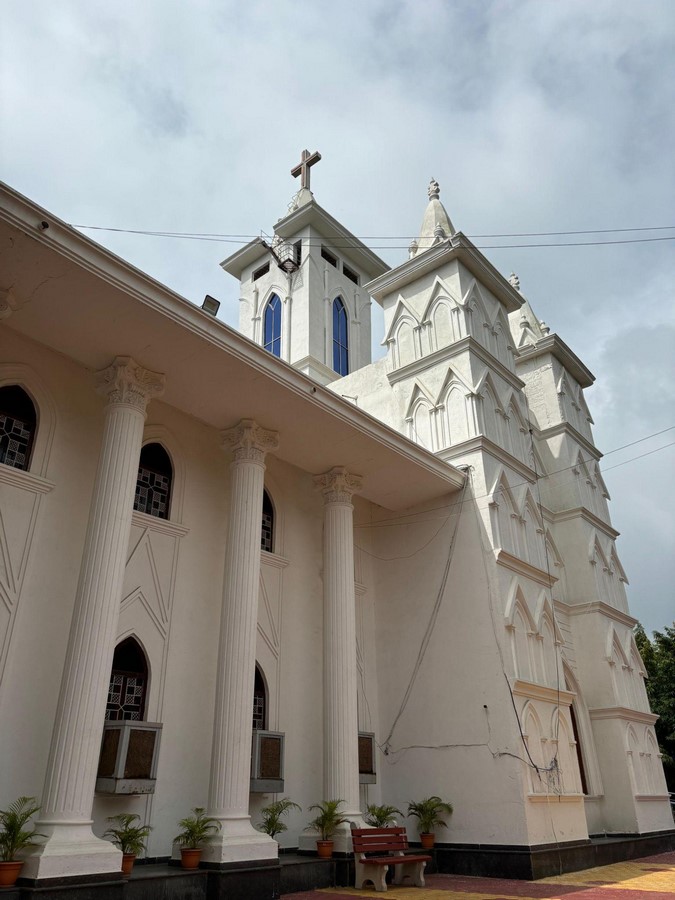
St. Paul’s Cathedral’s bell tower is one of its most prominent elements. In any church, a bell tower serves both functional and symbolic purposes. It houses a large bell that calls the congregation to service, signals the time and marks important events. The bell tower is typically a tall and slender structure, often designed to be visually striking.
In the case of St. Paul’s church, as one of the oldest churches in Raipur, the bell tower holds significant historical value, representing the influence of colonial-era Architecture and the role of christian missionary work in the region.
Windows and Arches
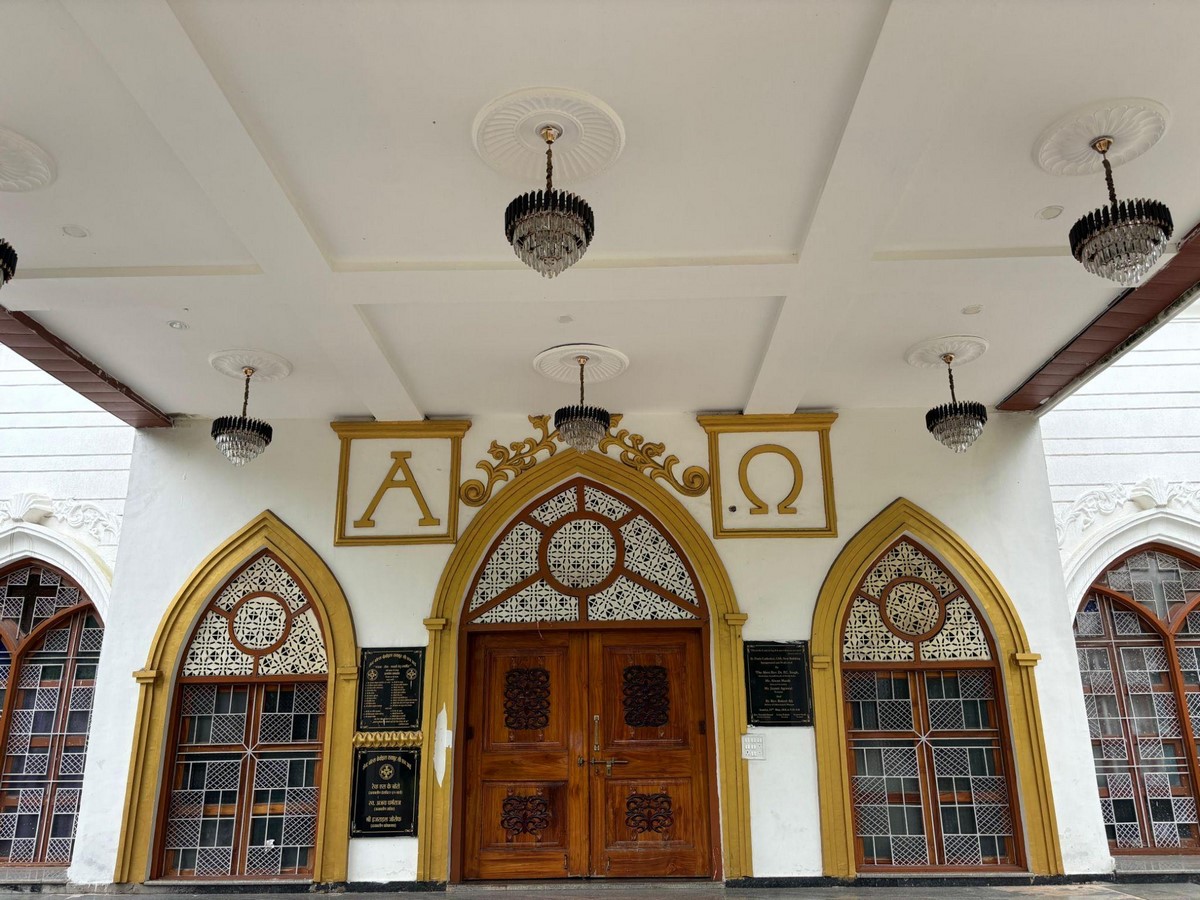
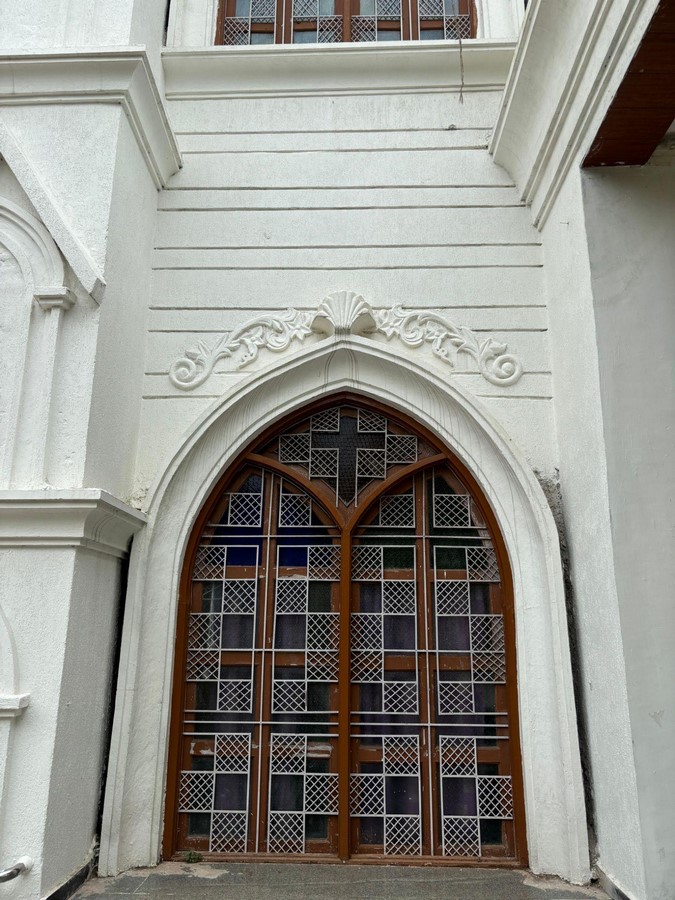
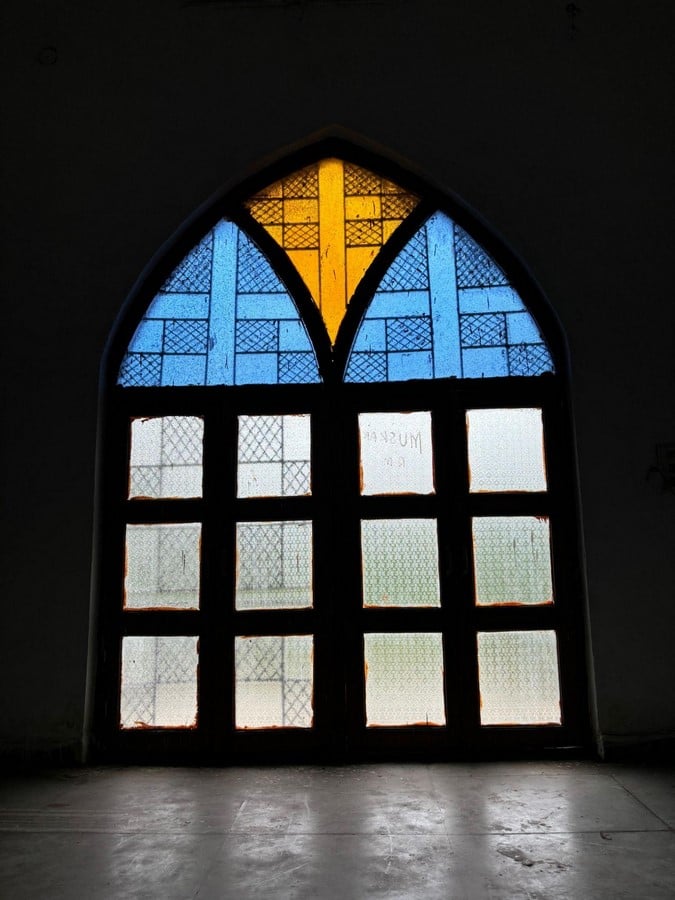
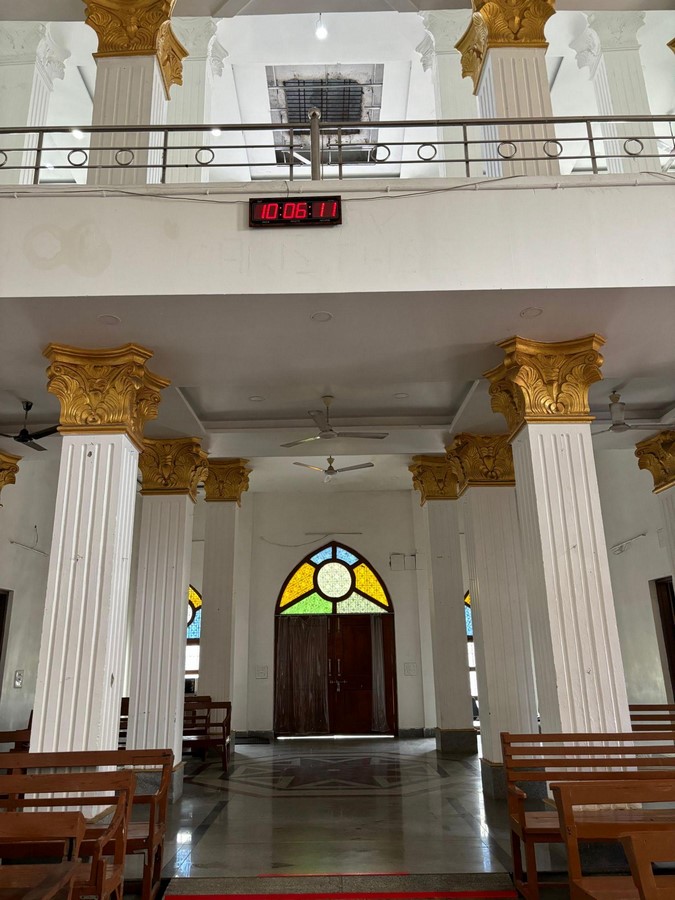
There are lancet arches used in the doorways and windows that may mix influences of Romanesque architecture along with the church’s Gothic Revival style. Along with the necessary structural support, these arches also provide a sense of grandeur to the church. The strategic placement of windows along the structure reduces the need for artificial lighting and also complements its overall aesthetic quality.
Columns
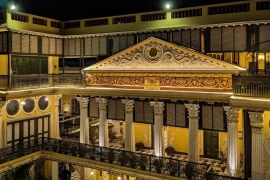
The cathedral houses a blend of Corinthian and Composite columns, reflecting a mix of classical Architecture styles. It also incorporates both square and circle columns.
The Roman Composite order combines elements from both: Corinthian and Ionic columns, along with a decorative capital featuring acanthus leaves and scrolls. It is tall, slender and used to express grandeur.
The Corinthian order too is tall and slender. Additionally, it is also the most elaborate of the classical orders, featuring a detailed base, fluted shaft and a richly decorated entablature with ornate friezes and cornices.
Materials
Materials like bricks and plastering, marble, glass, and wood have been employed in the church’s construction. Essentially, the structure is constructed using classic brick masonry and the exquisite plastering adds an artistic touch. The cathedral’s floor is made of marble with little ramps and steps spaced apart. Wooden planks were used in the making of the door, altar and the wooden pews. The building’s wooden frames were also filled with acoustic foam to dampen noise.
Impact on the Urban Fabric
Amidst the modern urban developments of the city, St. Paul’s Cathedral stands out as a piece of history and art. It is a reflection of the colonial era in Raipur, and of the people from the same bygone period. It also represents the coexistence of different faiths, in a city with a diverse population.
The church continues to uphold its historical integrity from the past and to serve its community in the present. Such pieces of history provide character to any modern city overrun with the same fast-paced and repetitive construction.
References:
- https://www.architecture.com/explore-architecture/Gothic-Revival?srsltid=AfmBOorEEXygYQQx7FtGrZRNw32B5Ij4i_kYE_6wUUMkR4GfpFpFizVf
- https://gosmartbricks.com/gallery-beautiful-gothic-architecture-styled-churches-in-india/
- University’s submission for LOUIS I KAHN TROPHY 2024-25