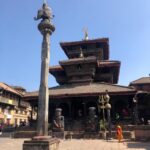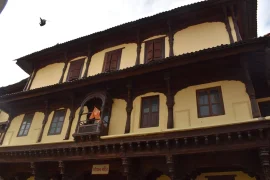

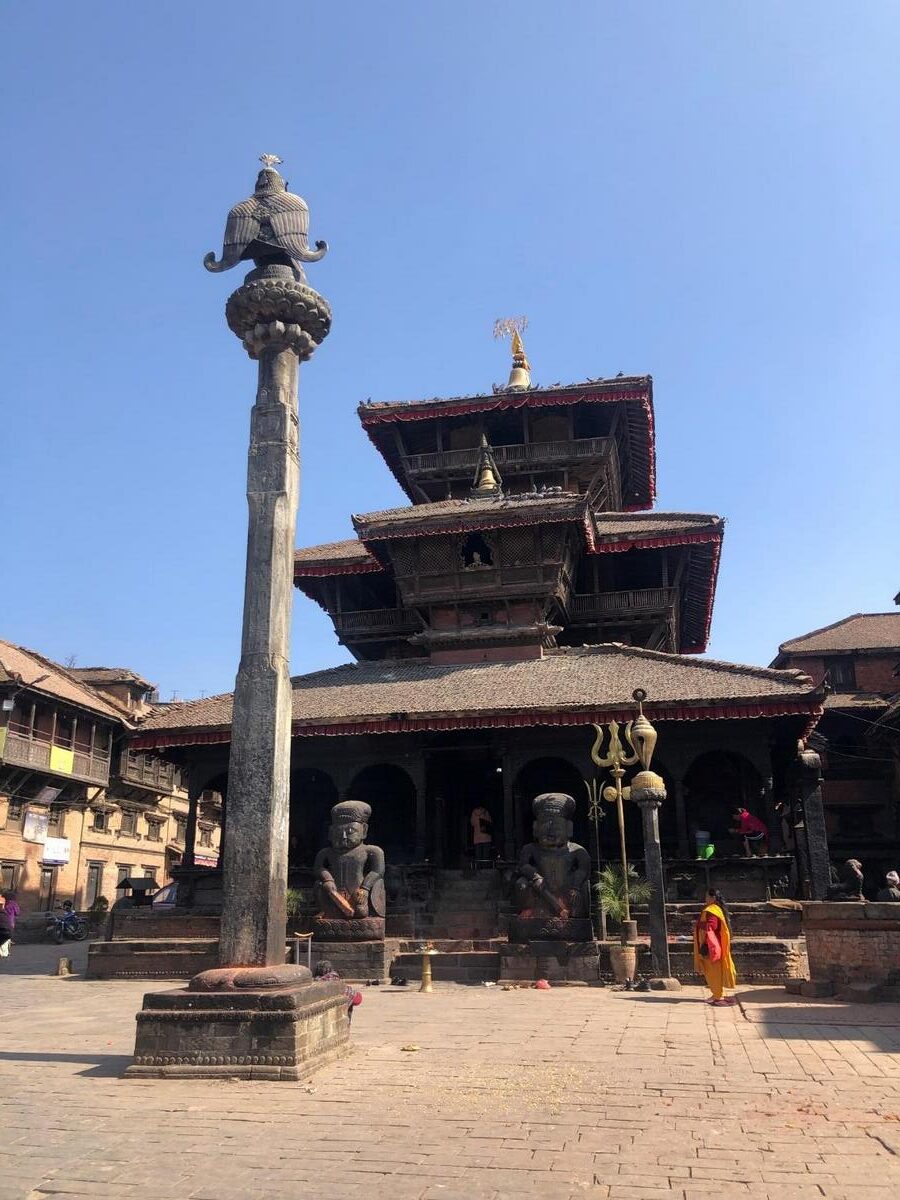
Dattatreya temple is a renowned Hindu temple located in Dattatreya Square, Bhaktapur Nepal. It is situated in Bhaktapur Durbar Square, a UNESCO World Heritage Site. The temple is believed to have been built during the reign of King Yaksha Malla in the 15th century. It is dedicated to Lord Dattatreya, regarded as the embodiment of the Hindu trinity of Lord Brahma (the creator), Lord Vishnu (the preserver), and Lord Shiva (the destroyer). Its impressive architecture, craftsmanship, and historical and cultural significance make it one of Bhaktapur’s most treasured landmarks and a true gem of Nepal’s cultural heritage.
The History of the Dattatreya Temple
The Dattatreya Temple was built between 1428-1467 A.D., by King Yaksha Malla. Initially, it was built as a Sattal which is a form of public rest house or Dharmashala. The design was later modified, most likely during the reign of Bishwa Malla (1547–60 A.D.), to convert the Sattal into a temple for worshiping Dattatreya. According to history, another alternative place for the wandering saints to live could have been offered by Pujari Math when it was converted into a temple. Pujari Math is a museum and former Hindu priest’s house situated near the temple. The Dattatreya Temple, built under the Malla dynasty, was more than just a place of worship; it was also a symbol of royal patronage and artistic excellence. According to legend, this temple was built from a single tree trunk. In terms of culture, while Dattatreya is the temple’s official deity, the Vishnu part of his divinity predominates. The pillars bear Vishnu’s conch and hibiscus, while a gilded Garuda sits on a tall pole in front of the temple. Also, a wooden depiction of Vishnu is seen looking from a cupola window on the porch.
The Architecture of the Dattatreya Temple
Location
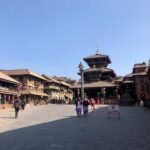
The Dattatreya temple is located in Dattatreya Square’s southeast corner along with Bhimsen Hiti, Bhimsen Temple, Pujahari math, peacock window, Narayan temple, and many more. Located in the center, the temple divides the square into two parts: one larger in the west and one smaller in the east. The square emphasizes the temple as the area’s major element, as well as its main landmark. The temple’s overall height is slightly higher than the nearby structures in this area, indicating its prominence.
Planning and Layout
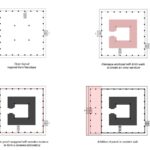
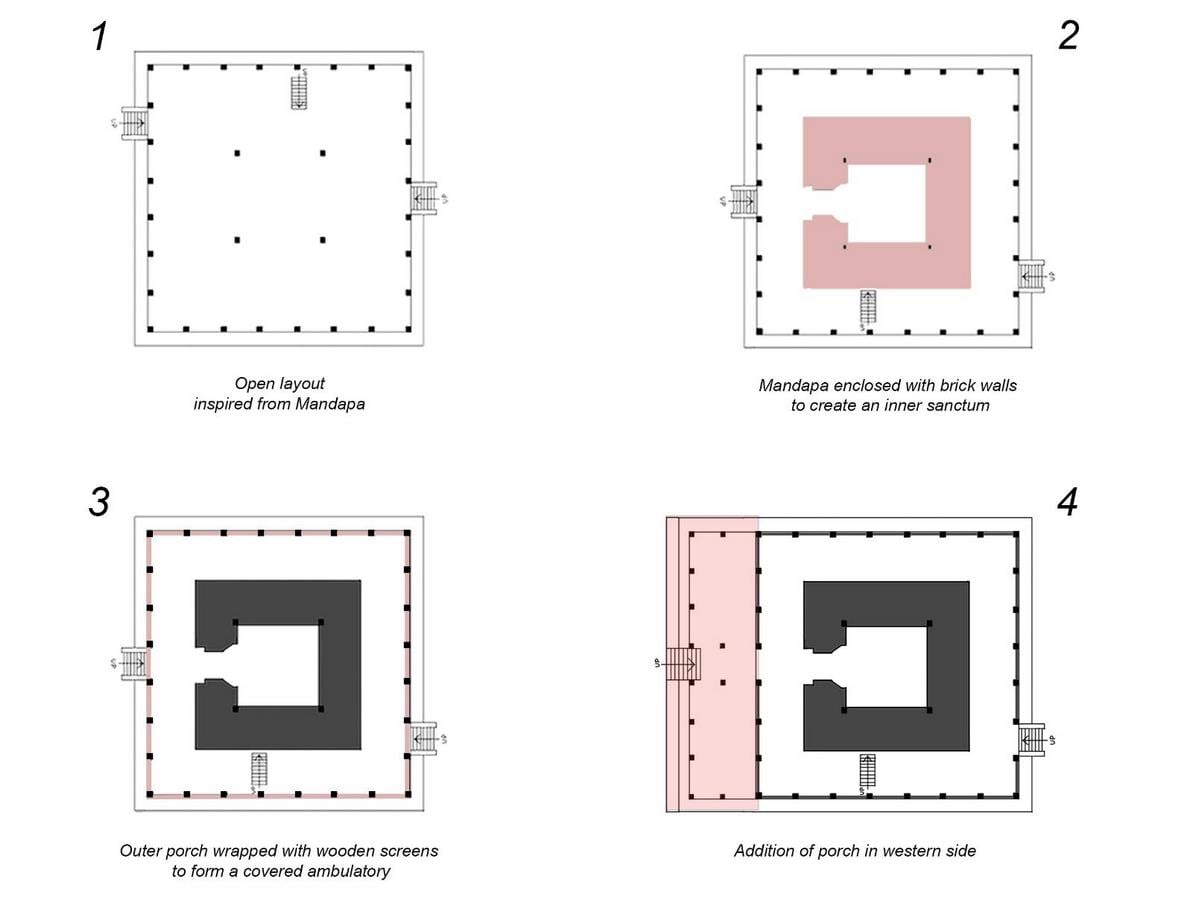
The Dattatreya temple is built on a square plan with equal columns on each side. The design of the temple is based on the concept of mandapa. Mandapa is a traditional open-pillared hall used to accommodate wandering holy men. Over time, the core of the mandapa was enclosed with brick walls to create an inner sanctum, or Garbhagriha (shrine room). The outer open porch surrounding the sanctum was wrapped with wooden screens to form a covered ambulatory, aligning with typical temple design principles. This transformation converted the structure into a secluded sanctuary, suitable for housing the deity. Later, in around 1849 AD, the temple underwent various modifications. A porch and cupola were added on the western side, breaking the original symmetry of the Sattal form.
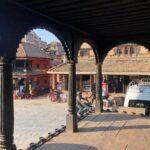
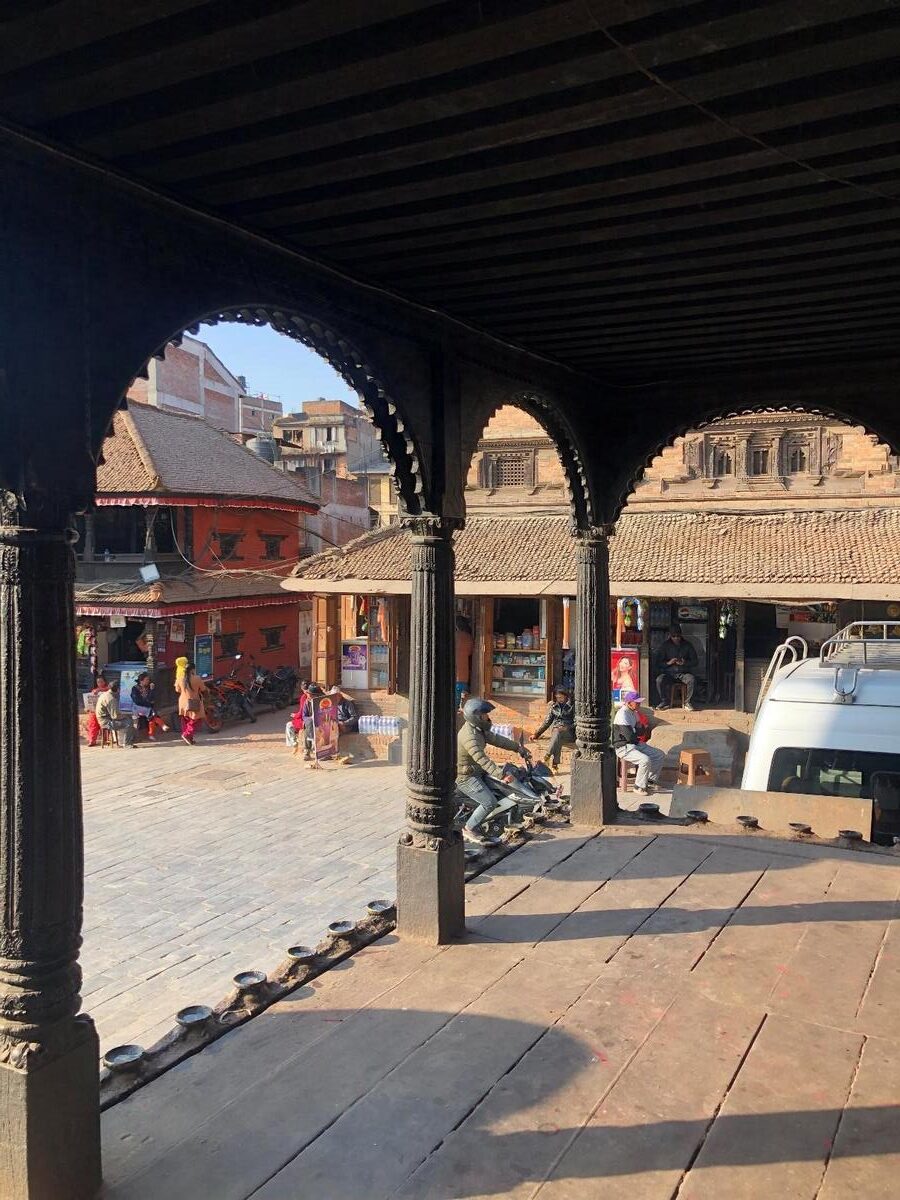
The porch is divided into three sections, including the two equal parts on the left and right with the main entry in the middle. It is supported by a row of single pillars and is connected by intricately carved arches. The most notable features of the Dattatreya temple are the three circumambulatory passages under each roof. The first-level passage is enclosed with window panels and grills, while the passages on the second and third levels are open and cantilevered. The floors of the cupola and the room behind it are not connected, although it looks like it is from the exterior as the porch gives the impression of being tightly attached to the main building. Instead, the balcony railings that encircle the middle level of the structure extend uninterrupted behind the cupola. From this, we can analyze that the cupola was not a part of the building’s original design.
Other Architectural Features
On the western face of the Dattatreya temple, there are some features which are added later such as the bell stand, extension of stairs, statues of guards Jayamel and Phattu who are the Rajput wrestlers, and the pavement of square stone slabs between the Garuda column and the plinth. These additions were made on the main entrance, enhancing the temple’s original architectural beauty. It reflects its evolving blend of traditional and later architectural influences to enhance its functionality and aesthetics. Today, the temple has three stories with a porch attached to the first level, topped by a cupola structure at the second level, crowned with its pinnacle. The temple roof has symmetrical pitches even though the temple was extended later. The roof features a red hanging banner or cloth at each level.
Architectural Style
The three-tiered structure of the Dattatreya temple reflects Newari architecture which is the signature of Kathmandu Valley. The size of each tier decreases as it rises upwards. This symbolizes the journey from the earthly to the divine. The temple has finely carved wooden struts which depict deities and mythological scenes. Struts serve for both structural and ornamental purposes. Overall, form and function are well-balanced in the design. There is harmony which makes it strong, durable yet aesthetic and beautiful.
Materials and Construction
The Dattatreya temple’s construction showcases a harmonious blend of traditional craftsmanship and local materials. Load-bearing masonry walls are used with the primary materials of brick and timber. The exterior walls have a glazed, conical brickwork form which is commonly known as Dachi Appa in Nepal. Whereas the interior walls are made of burned bricks and nicely plastered with a mixture of mud mortar. The roof of the temple is covered with Jhingati tiles like most of the traditional Nepalese temples. Horizontal wooden planks are placed over rafters on top of which is laid 4cm to 10 cm thick clay into which tiles are pressed. On the topmost roof, rafters meet at a point on a central post, which is covered with the pinnacle (Gajura). The whole roof dead load (tile) is supported by rafters, which are transferred to wall plates and purlins. Simple timber pegs are inserted through roof rafters to brace them against the wall plates and purlins in which they rest, which is the most common traditional timber joinery detail. Moreover, the inclined timber struts are the members that hold the roof by transferring loads from purlins to the wall section.
The floors of the Dattatreya temple are made out of timber planks whereas the extended plinth and series of steps leading to the temple are made of stone. The temple’s craftsmanship is amazing, with locally sourced timber being carved into intricate panels, struts, and doors. Bronze and copper details, including the temple’s pinnacle (Gajura), highlight the advanced metallurgical expertise of the region. Overall, the construction method is seen to have followed the vernacular approach to construction.
Impact On the Urban Fabric
Dattatreya is only the temple in Nepal, which is worshipped as a trinity of Brahma, Vishnu, and Shiva. The temple opens every morning and evening for priests, locals, and pilgrims. A group of locals, mostly elderly men, perform an evening hymn and sacred Dapha songs during the festive season. The temple significantly impacts both the local and national urban landscape. As a key cultural and religious site, it draws tourists, boosting the local economy through tourism and supporting traditional crafts. The temple also influences the spatial, social and cultural dynamics of Bhaktapur. Architecturally, it exemplifies the craftsmanship of the Malla period, contributing to Bhaktapur’s status as a UNESCO World Heritage Site. Moreover, The temple and the square also foster social cohesion by serving as a community hub, while its preservation highlights Nepal’s commitment to safeguarding cultural heritage.
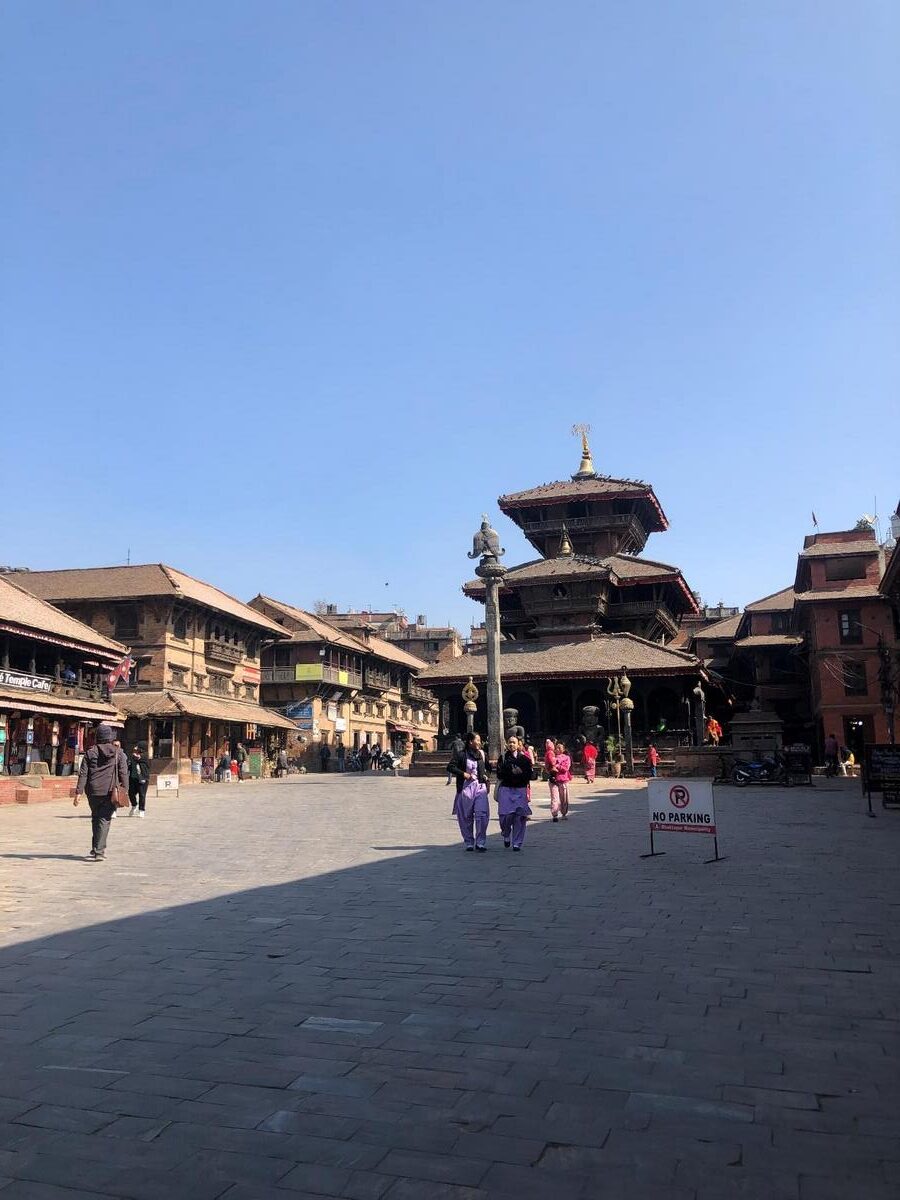
The Dattatreya Temple’s remarkable architecture, historical and cultural significance continues to mesmerize the people and specially inspire architects, historians, and conservationists, serving as a reminder of the harmonious blend of art, spirituality, and functionality that defines Nepalese heritage. Today, it stands as a vital link to Nepal’s past, offering insights into the architectural and cultural achievements of the Malla era. Its role in shaping the urban fabric, fostering community life, and attracting global recognition underscores its enduring legacy. Preserving the Dattatreya Temple is not only vital for safeguarding Nepal’s rich history but also for inspiring future generations with its timeless architecture and cultural relevance.
References:
Bhaktapur. (2022). Dattatraya Square; the square of temples, ponds and museums. [online] Available at: https://www.bhaktapur.com/discover/dattatraya-square-temples-ponds-museums/ [Accessed 2 Jan. 2025].
orientalarchitecture.com (2025). Dattatreya Temple, Bhaktapur, Nepal. [online] Asian Architecture. Available at: https://www.orientalarchitecture.com/sid/1495/nepal/bhaktapur/dattatreya-temple [Accessed 2 Jan. 2025].
Asianart.com. (2015). Mary Shepherd Slusser and Gautamavajra Vajrācārya: Two Medieval Nepalese Buildings. [online] Available at: https://asianart.com/articles/buildings/index.html [Accessed 2 Jan. 2025].
Google Books. (2025). Experiences in Preservation and Restoration in a Medieval Town (1974-1985). [online] Available at: https://books.google.com.np/books/about/Experiences_in_Preservation_and_Restorat.html?id=byqCHAAACAAJ&redir_esc=y [Accessed 2 Jan. 2025].