We are all storytellers. We all live in a network of stories. There isn’t a stronger connection between people than storytelling.
– Jimmy Neil Smith
Narratives are inseparable parts of one’s life. Everyone has a story to tell, and architecture also has much to narrate! It would be better to call it a built environment than just architecture because it is not only the building that makes the narrative. When the tangible and intangible aspects of the design are designed hand in hand, stories can be found. Stories can be in various formats, verbal, written, graphical, or built! There are two sides to it: how it is conveyed(intended reality) and how it is received (perceived reality). The former is the storyteller’s perspective and the latter is the listener’s.
Narrative: A Pedagogy

In ancient times storytelling was the art of teaching. Knowledge used to be passed down through generations verbally in the form of storytelling. It is the most interesting way of keeping one’s attention, and parallelly making them imagine what is being narrated. It allows the storyteller and listener to have creative imagination while retaining the intent. When it comes to architecture, the architect’s intent and the user’s intent must be the same, no matter how varied their narration is. It becomes the architect’s responsibility that while the design offers openness to interpretations, it retains the main intent.
Narrative: All Inclusive

One must question what contributes to these interpretations. Narratives are based on one’s experience, preference, and perceptions. Preferences are about likes and dislikes, while perception is the way of comprehension. It is based on sensory as well as memory. While a layman might only comprehend the function, comfort, and sensory aspects, a person trained in the design fraternity might be able to not only read into these aspects but also be able to reason with them. They might be able to see how all tangible and intangible elements come together to form these narratives. Architecture is not something that can be looked at and understood standing outside of it, it is something that humans are part of. Without a user, it is just a space, and with the user, it becomes a place. As the user becomes an inseparable part of the environment, it becomes very crucial that the user can comprehend the architect’s intent behind the narrative.
Space in the Image of man is place.
Narrative: Multi-dimensional and Multi-layered
The final product is one story. The process is another. By looking at the final product people may interpret stories. But what was the process, the architect only has to narrate. End users and visitors might see it in a completely different manner, while any designer may be able to weave a couple of narratives based on experience. The design is the mode of delivery of the architect’s story and it must be legible to the end user who is a layman when it comes to the design language.
As discussed above, there are two types of narratives: One is perceived reality and another is intended reality. The former is focused on the final product, the real-time experience of the physical space, while the latter is behind the scenes, the intentions, the motivations, and the challenges faced. Though these are two separate typologies, they are not alternatives to each other. It is not about one being right and the other wrong, not the case of either-or. It is dialectical being the case of this and that. Both might be different or opposite but still coexist.
Narrative: As intended as perceived

The Vietnam Veterans Memorial is an example of how by simple means the architect has told the story that she was asked to tell. The intent given was, (1) that it be reflective and contemplative in character, (2) that it harmonise with its surroundings, especially the neighbouring national memorials, (3) that it contain the names of all who died or remain missing, and (4) that it make no political statement about the war by VVMF(The wall 2024). Now the architect took a stand and designed the wall with reflective marble with names of people who died or went missing so that when one looks at the name of their loved one they also see their reflection. Use of visual sense, evoking people’s memory and reminding them of their individual stories.
Though everyone has a different story to tell, the intent remains the same! This is the beauty of architecture, it starts with a story, it tells a story, it gives openness to interpretation, and still, everyone feels oneness, a sense of belonging.
Narrative: Refuge versus Prospect

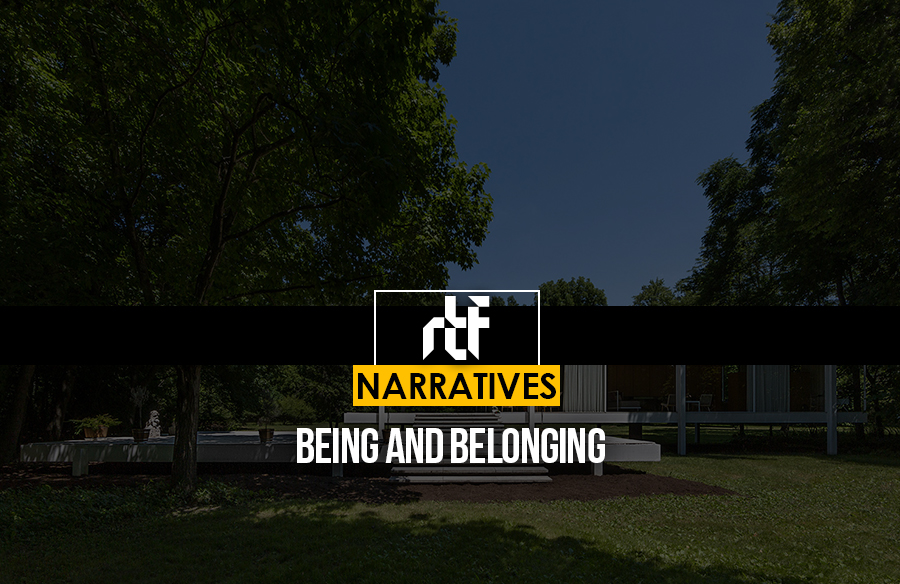
The Farnsworth House was designed and built by Ar. Mies Van Der Rohe for Dr. Edith Farnsworth. The brief given by the client was to build a weekend country house for her.
Intended reality
The design is a milestone in the modern style of architecture and construction of the time. It blends with the surroundings in a respectful way taking the nature inside. It has been designed for visual sense in such a way that the user can feel one with nature. Because of its minimalistic approach, it doesn’t dominate its surroundings and stands in its purest form. Open planning gives flexibility to the functioning of the house.
Perceived reality
Though it is a marvellous example of modern architecture, the user did not feel at ease in her weekend home. The transparency of the house doesn’t satisfy the basic need for refuge of human beings. It makes one feel constantly alert to the surroundings and hinders privacy. Because of the openness, the flexible planning still doesn’t let one be free inside due to the feeling of being watched.
As mentioned earlier, even though both narratives are different from each other, both are true and coexist. Functionally not serving the purpose doesn’t make it any less true that it was the purest modernistic approach of the time. And still, it wasn’t livable for the client. So, what went wrong was the difference in intent.
An architect may have his/her narrative and set of goals, but it can never overpower the user’s primary needs. The whole idea of having a narrative and storytelling has been to transcend knowledge and communicate ideas and values. As powerful as storytelling is, it has to be used wisely keeping in mind one’s intent. If the intent is lost in the process then it doesn’t take long for it to become a controversy.
A work of art doesn’t exist outside the perception of the audience.
–Abbas Kiarostami
References:
- Books
Keedwell, P. (2017) Headspace: The psychology of city living. London: Aurum.
Canter, D.V. (1977) The psychology of Place. London: Architectural Press.
Winters, E. (2007) Aesthetics and architecture. London: Continuum.
- Online sources
The Wall (2024) Vietnam Veterans Memorial Fund. Available at: https://www.vvmf.org/About-The-Wall/ (Accessed: 03 July 2024).
Perez, A. (2010) Ad classics: The farnsworth house / mies van der rohe, ArchDaily. Available at: https://www.archdaily.com/59719/ad-classics-the-farnsworth-house-mies-van-der-rohe (Accessed: 03 July 2024).
Edith Farnsworth house: National Trust for Historic Preservation (no date) Edith Farnsworth House | National Trust for Historic Preservation. Available at: https://savingplaces.org/places/farnsworth-house (Accessed: 03 July 2024).
Terrado, E. (2018) Why architects struggle to engage with clients?, LinkedIn. Available at: https://www.linkedin.com/pulse/why-architects-struggle-engage-clients-enrique-terrado/ (Accessed: 03 July 2024).
- List of Images
- Edu, T.L. (2022) Gurukul Education System, Leverage Edu. Available at: https://leverageedu.com/blog/gurukul-education-system/ (Accessed: 03 July 2024).
- Terrado, E. (2018) Why architects struggle to engage with clients?, LinkedIn. Available at: https://www.linkedin.com/pulse/why-architects-struggle-engage-clients-enrique-terrado/ (Accessed: 03 July 2024).
- Vietnam veterans memorial (no date) MAYA LIN STUDIO. Available at: https://www.mayalinstudio.com/memory-works/vietnam-veterans-memorial (Accessed: 03 July 2024).
- Agency, N.D. (no date) Farnsworth House – João Morgado – Fotografia de Arquitectura: Architectural photography, João Morgado – Fotografia de arquitectura | Architectural Photography. Available at: https://www.joaomorgado.com/eng/projects/farnsworth-house (Accessed: 03 July 2024).