Introduction
The Rashtriya Sainik Smarak or National Martyr’s Memorial in Bengaluru, India, is an honorary monument built to commemorate those who sacrificed their lives in wars or while maintaining peace for the country since independence, on 15th August 1947. The project was designed by Nisha Mathew Ghosh and Soumitro Ghosh from Mathew and Ghosh Architects and was completed in 2012.
The Rashtriya Sainik Smarak, Bengaluru sits on 7.5 acres of lush green space, approached by a central road of the city, and is prominently viewed despite the busy streets. The Memorial is conceived as a place of quiet remembrance and homage. It is a symbol of tribute by the country to the people who served the nation.
Design Concept
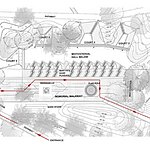
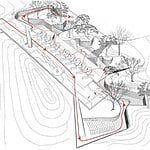
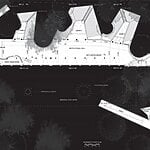
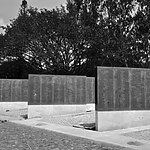
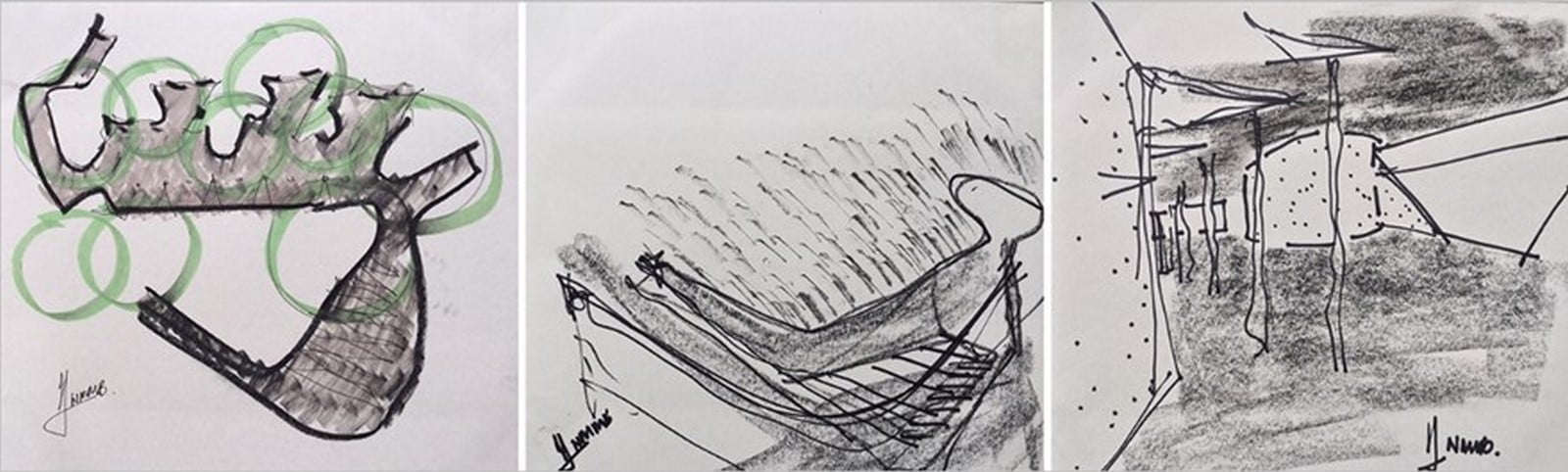
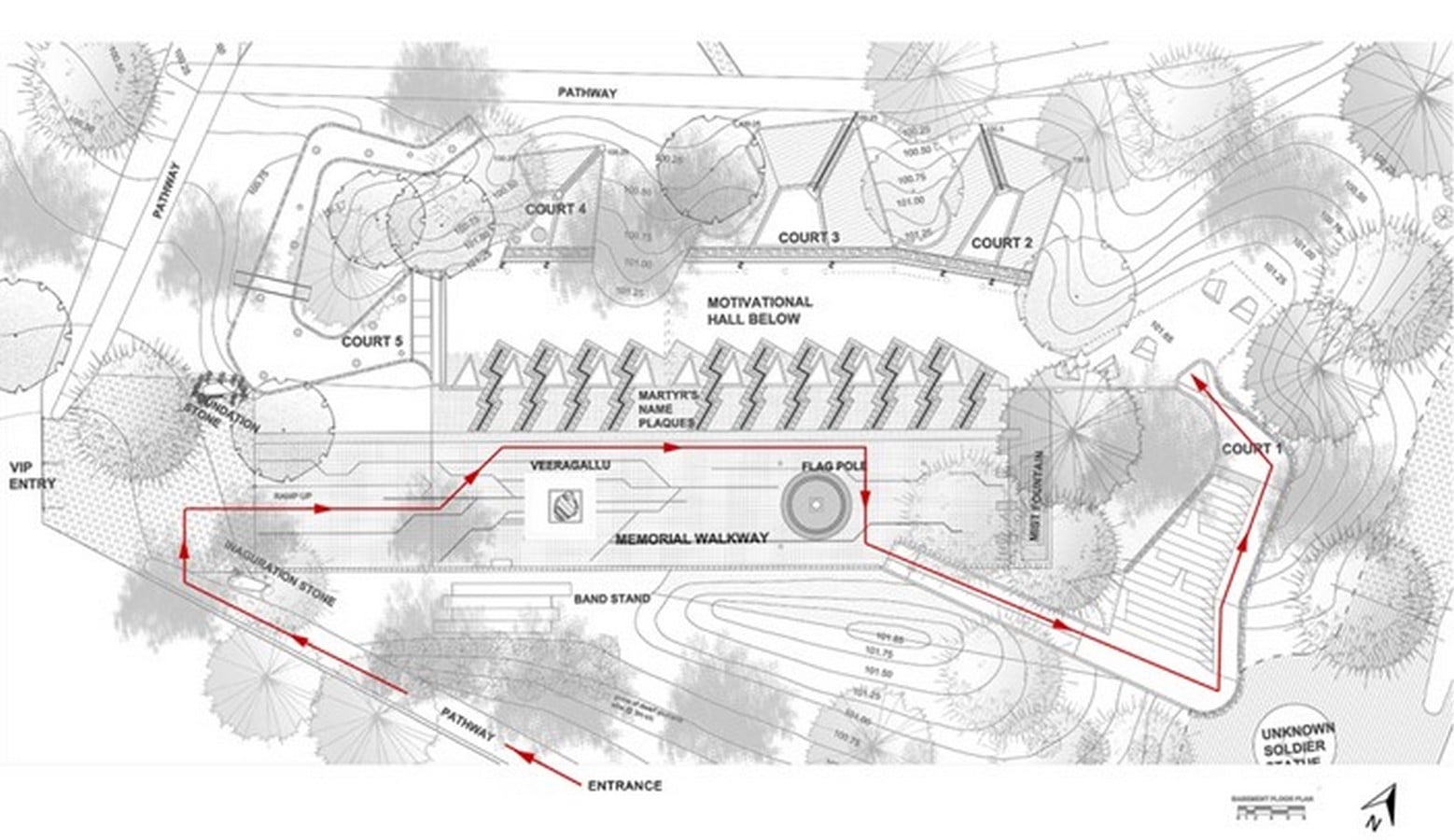
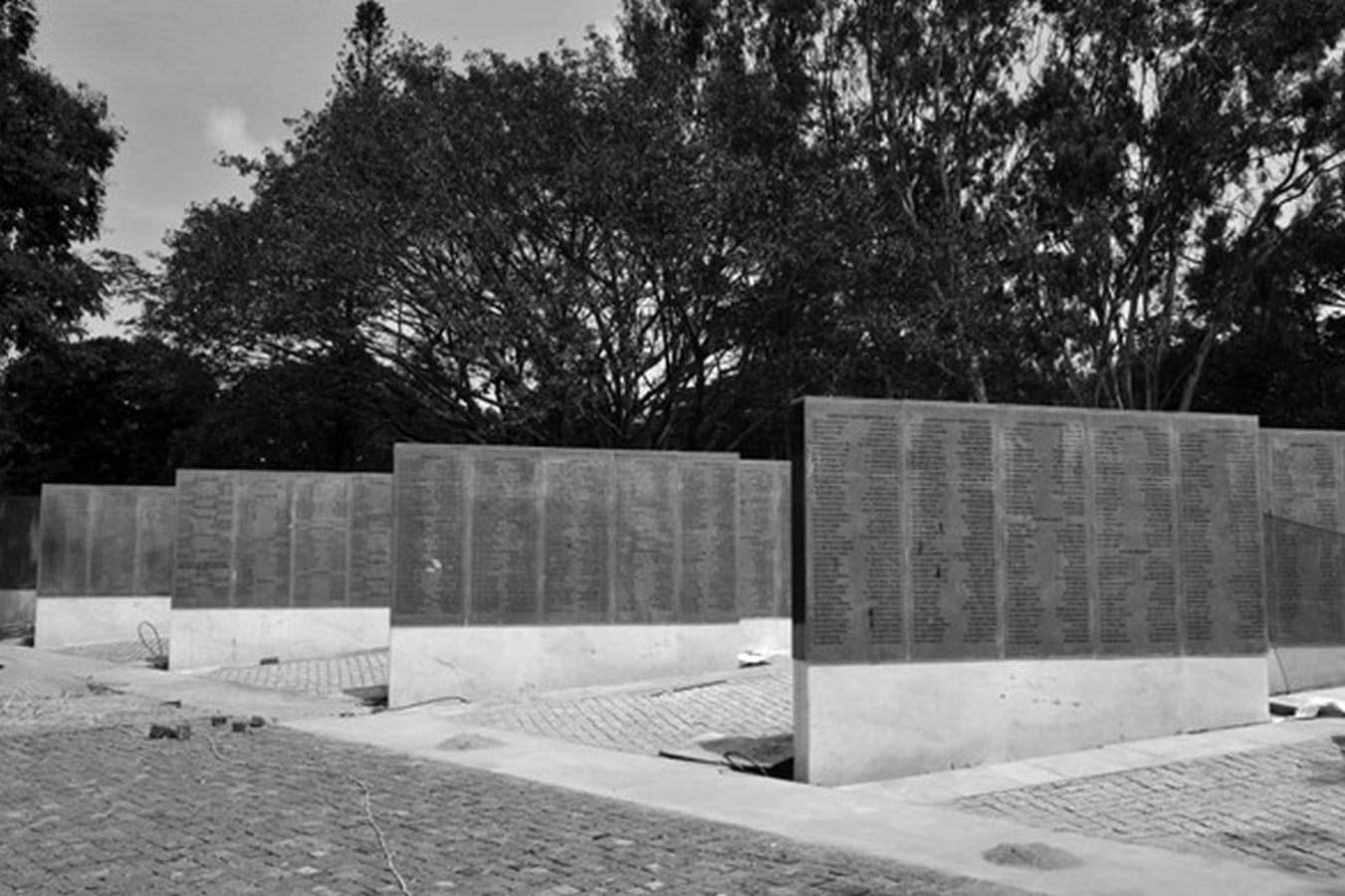
The primary concept of the design of the National Martyr’s Memorial was to create a ritual path while protecting the forest and tree-covered land. Therefore, a ceremonial path was designed which leads to an underground museum that houses the history and information in remembrance of the brave missions undertaken by the martyrs. The beginning of the ritual path is at the series of angled plaques with physically marked names of 21,763 martyrs. Adjacent to the magnificent 65-meter-tall national flagpole,
a Veergallu or hero stone is installed, as a symbol of the heroic death of a warrior in a battle, signifying the courage and valour of the Martyrs. It is also the second tallest stone memorial saluting the brave soldiers of the nation.
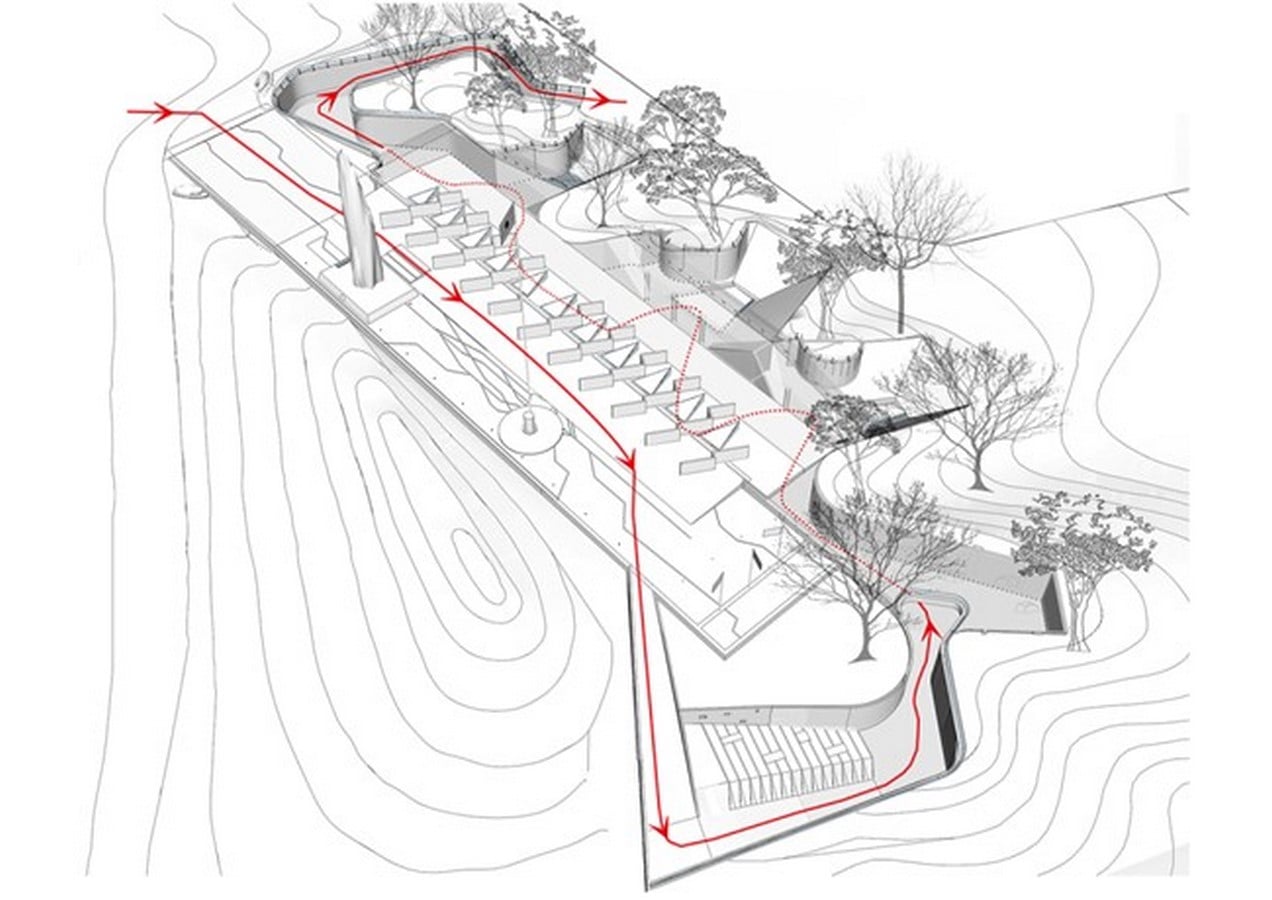
The memorial also hosts an installation consisting of a Mikoyan MiG 23 BN SM-255 aircraft granted by the Indian Air Force, a Vijayanta tank given by the Indian Army, a resized model of the INS Mysore (one of India’s largest and most powerful battleships), an Arjun battle tank, Tatra-based mobile bridging equipment as well as other contributions from the Defense Research and Development Organization (DRDO) and the Indian Space Research Organization (ISRO).
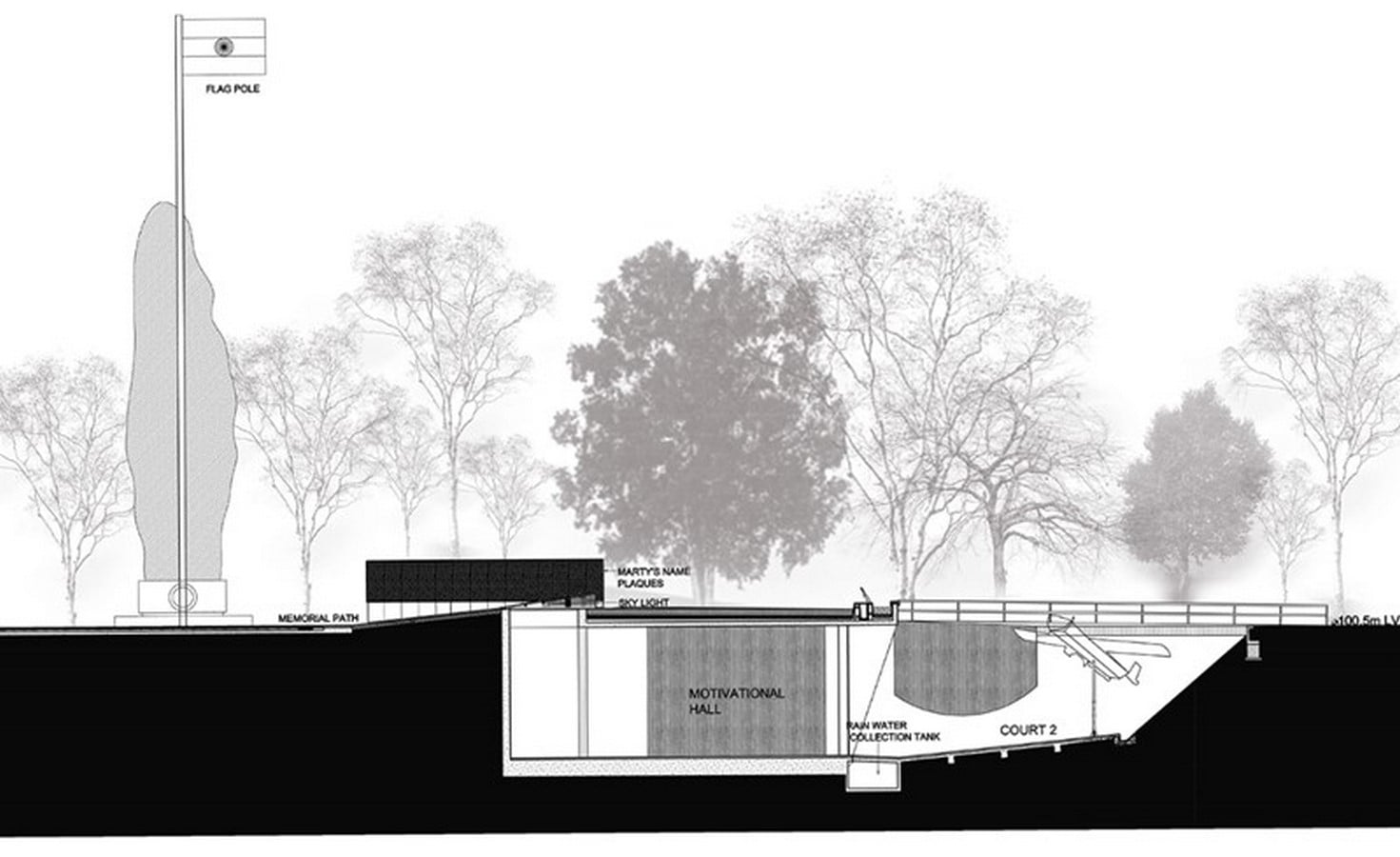
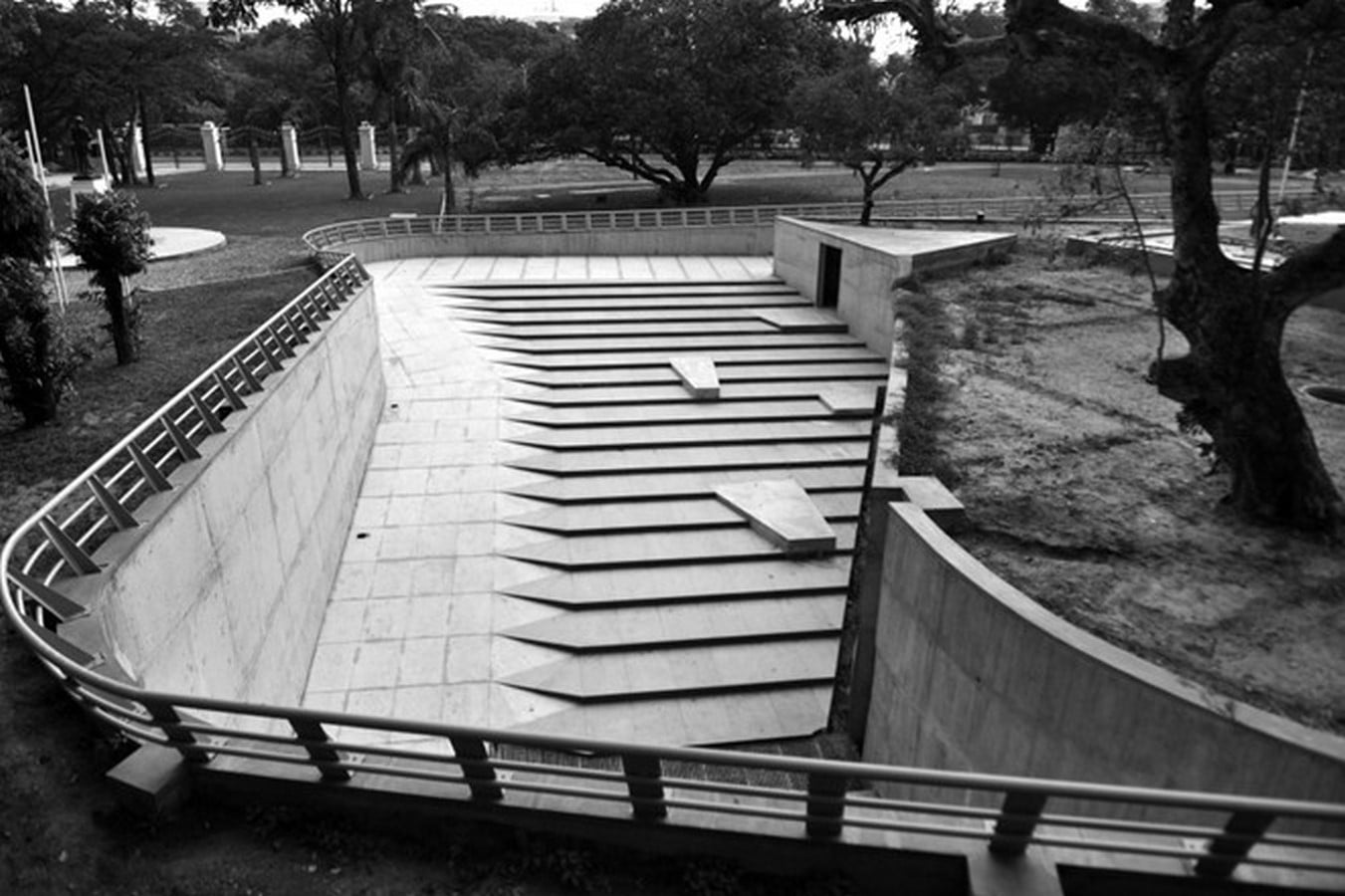
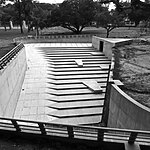
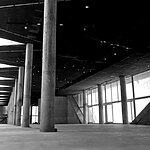
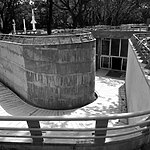
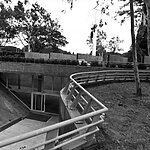
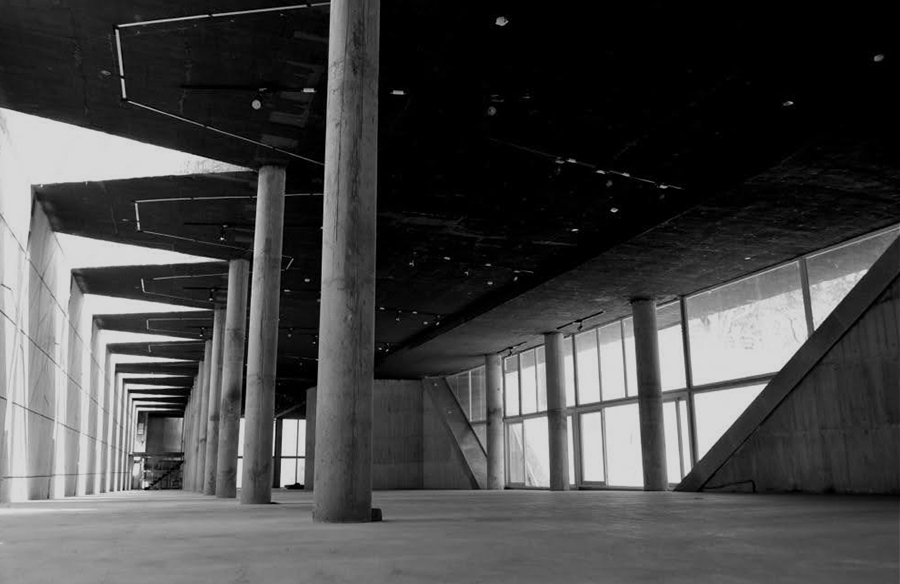
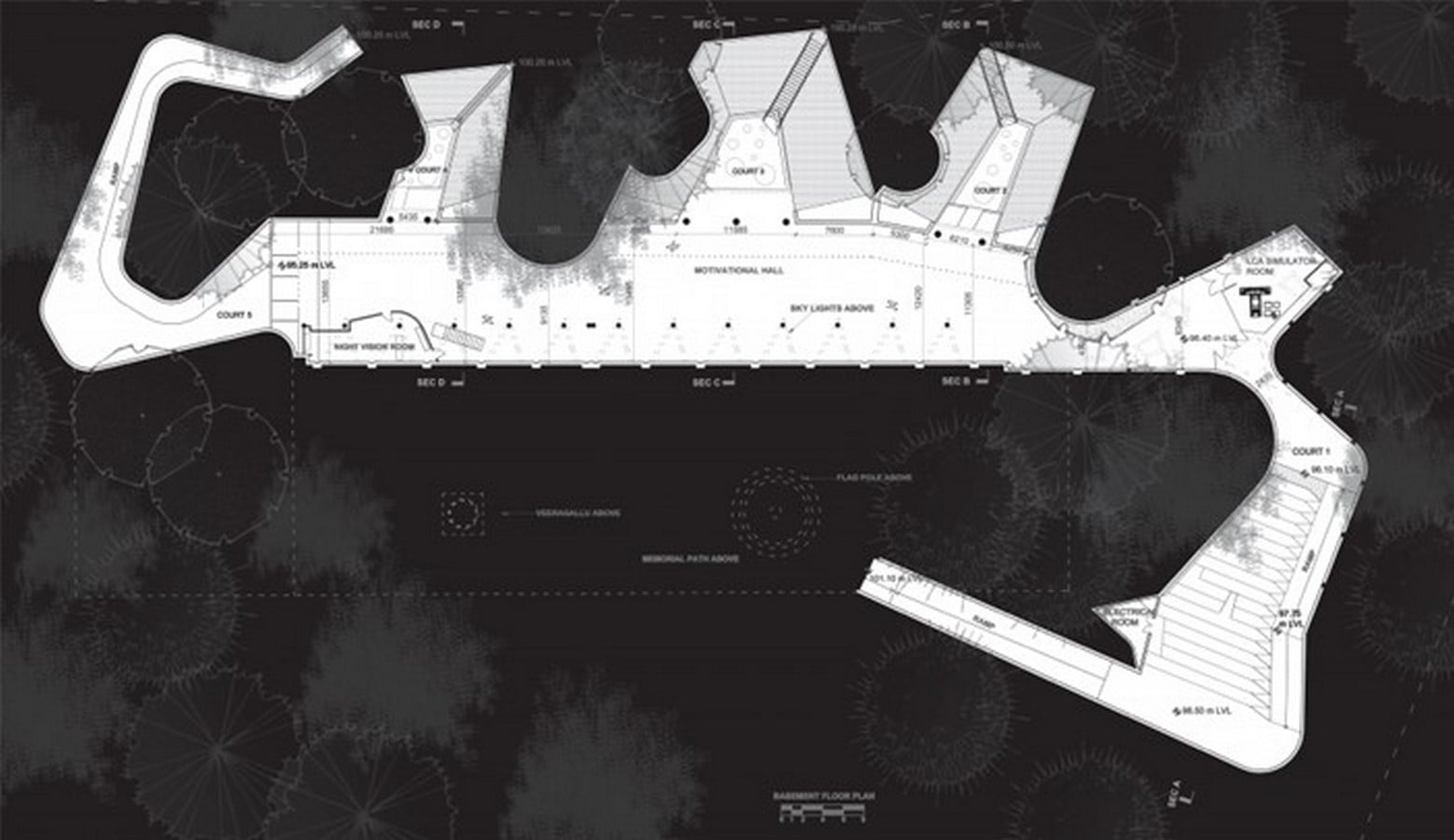
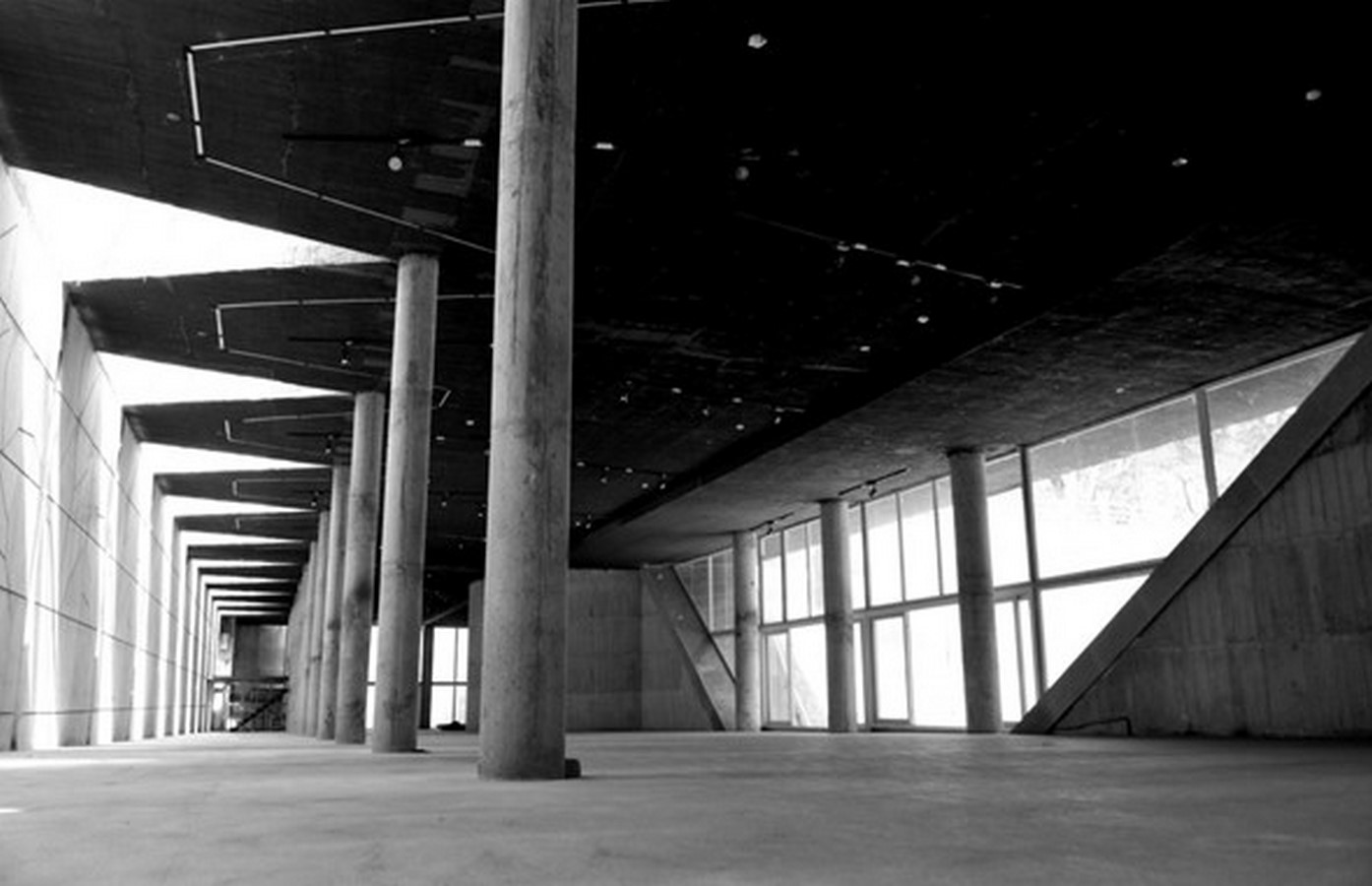
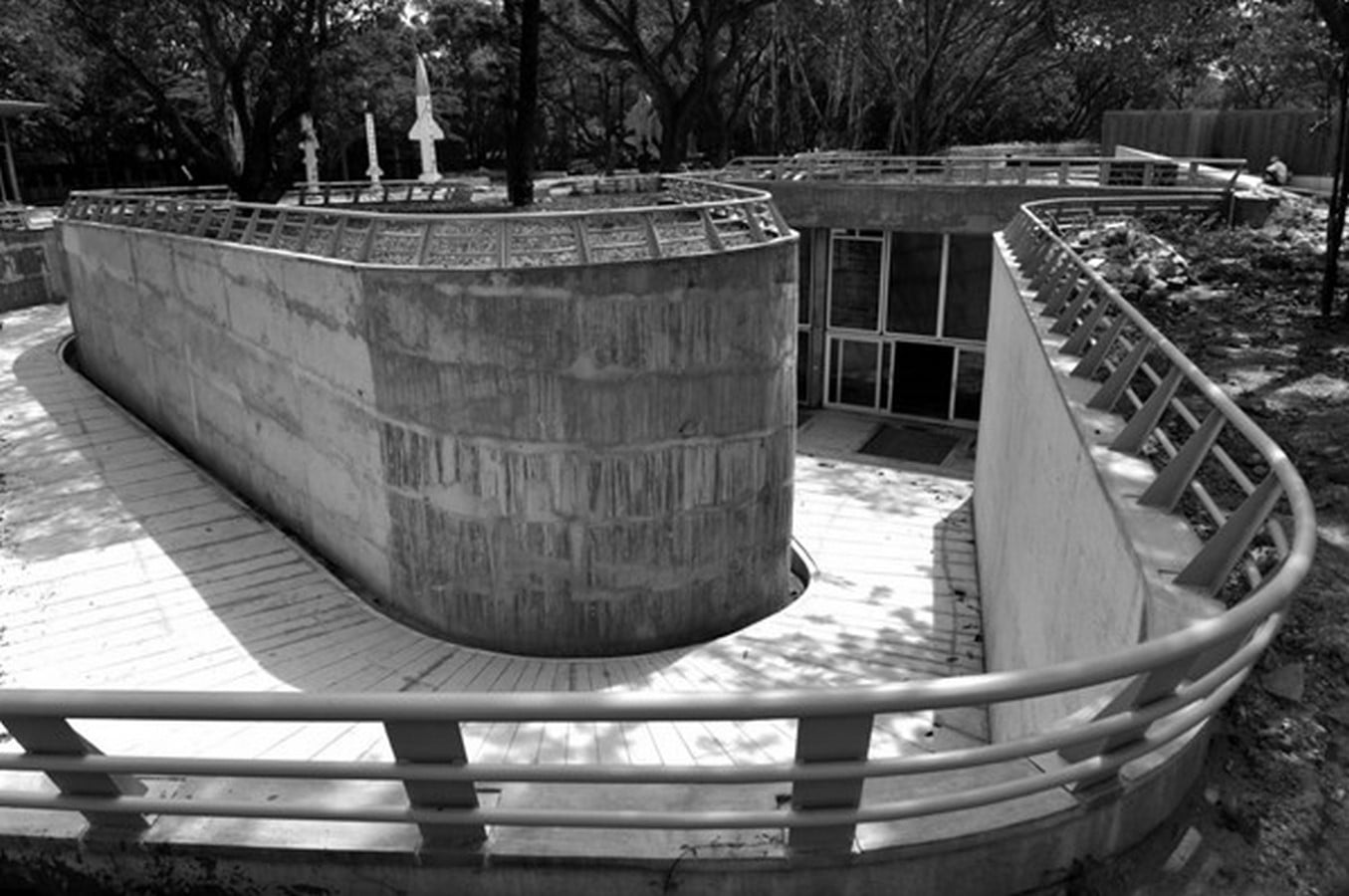
The underground memorial hall is approached by an entrance court that slopes gradually with amphitheatre-like steps. This is also one of the five courts which are designed for the provision of daylight and ventilation. Along with courts, the daylight is obtained by getting filtered through triangular skylights that create a play of light and shadow within the space. The underground memorial hall also showcases models of weapon systems, information on the various missions undertaken by soldiers, plaques with badges and crests of various units, regiments, and squadrons of the Indian Armed Forces, and sculptures of war heroes from Karnataka.
Materials used
The National Martyr’s Memorial is built in concrete and the nature of the material along with its casting process is still manual as much as in 1947. The memorial hall that lies underneath showcases this raw cast finish. The materiality and textures of this space give the impression of a concrete bunker because of its raw form of finished concrete. While the structure is built in concrete, the memorial pathway is fitted with Granite flooring. Granite is also used in the making of plaques on which the names of martyrs are etched. The Veeragallu – a traditional monolithic obelisk standing seventy-five feet high is also made of granite and weighs seven hundred tons.
Sustainability
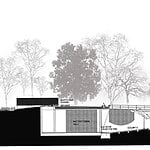
The underground layout of Rashtriya Sainik Smarak is designed in such a way that most of the green cover is protected and preserved. Out of the three hundred and twenty-four trees present on site, four eucalyptus trees were removed to accommodate the structure, and forty new trees were planted. The underground memorial hall ensures the protection of the roots of trees by keeping a certain radius of soil untouched and unbothered by the built form. Along with the roots, the alignment of the ceremonial path also considers the trajectory of the sun to save trees on the ground.
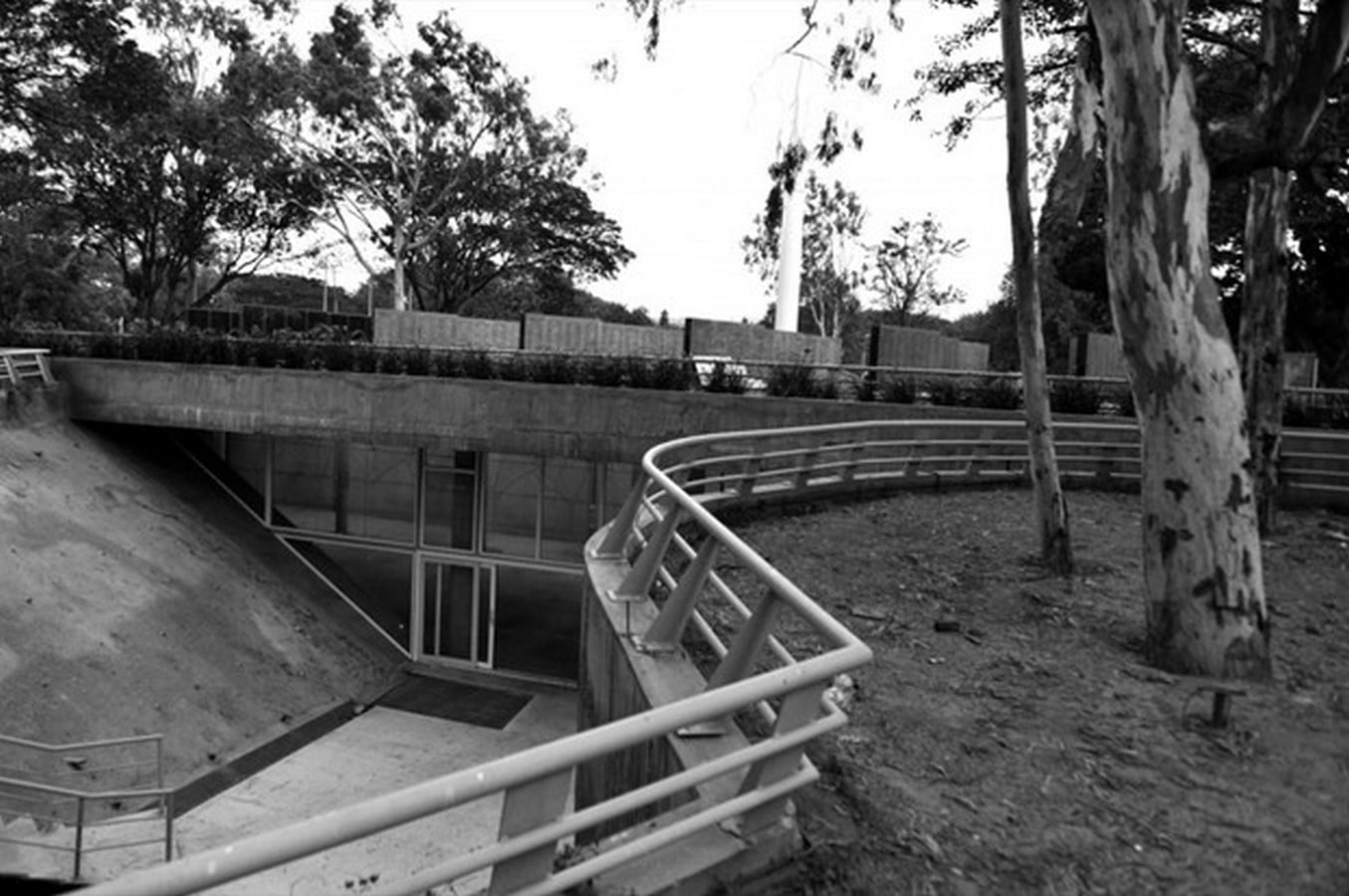
The hall is a simple structure like a box which is punctuated by the underground/sunken courtyards and structured through its more than 100 meters length by natural light. This thoughtful Architecture ensures minimal loss of vegetation and maintains a balance between the ecology on site and the flow of design. The insulation obtained from soil above the hall, and foliage covering above ground makes it a space where one can experience stillness surrounded by the stories of sacrifice and patriotism.
Conclusion
Rashtriya Sainik Smarak’s memorial hall is a reflective space where the ground is above the head and the trees are viewed from the perspective of roots while being underneath them. The ambience created in these spaces and the orchestrated pathways foster a sense of patriotism and pride, proving an architect’s proficiency in designing narratives that transcend time.
The National Martyr’s Memorial is not just a commemorative space capturing the essence of India’s military spirit, but also a testament to the architect’s craft, dedication, and approach while having a profound sense of responsibility to creating a space with a higher purpose having social sentiments attached to it. The architecture is an example of creating a fluid progression of spaces while allowing the users to engage emotionally with the narratives entrenched in the design.
Bibliography
M & G: Mathew and Ghosh Architects (no date) M & G | Mathew and Ghosh Architects. Available at: http://www.mathewghosh.com/memorials-nmmb.html (Accessed: 25 February 2024).
Architexturez (2020) National Martyrs Memorial, Aζ South Asia. Available at: https://architexturez.net/doc/az-cf-122821 (Accessed: 25 February 2024).
National Military Memorial (Rashtriya Sainika Smaraka) (no date) Sahapedia. Available at: https://map.sahapedia.org/museum/National-Military%20Memorial%20(Rashtriya%20Sainika%20Smaraka)/12047#:~:text=2013-,Established%20by%20the%20Government%20of%20Karnataka%2C%20the%20National%20Military%20Memorial,Indira%20Gandhi%20Musical%20Fountain%20Park (Accessed: 25 February 2024).