Who doesn’t like a good show at the theater? The beauty of theatrical productions is the result of many efforts. Similar to filming a movie, performing in a play requires a lot of sweat, blood, and tears. For the audience to witness a memorable performance, lighting, sound, props, and stage settings must all work in harmony. Audiences can only enjoy a show if the performers perform well, and actors can only feel comfortable on stage if the set is well-designed for them.

How are set designs produced?
A set designer is responsible for the design of the stage. A set designer is a person who visualizes the scenes beforehand and prepares the stage accordingly. In order to progress, they should work with the directors and read the scripts to envision the basic stage structure. Additional ideas and scenery are proposed for the set to give it more life. But first, all of this needs to be visualized, and for that to happen, a set designer should actively participate in script reading and during rehearsals to better understand all of the scenarios from various angles.

By now, one should have a general notion of the materials required. Later, other materials might be added or altered. The most crucial component of a set design is lighting. A set designer should be knowledgeable enough to play with lights from different angles. Similar to the other elements, lights could be modified during practice or as needed. (National Theatre, 2016).
Challenges faced by set designers
A set/scenic designer is supposed to read scripts and focus on the scenarios to visualize the stage. They frequently have to adapt large scenes for small venues or little sequences for enormous spaces, which is a significant problem. The scenes need to be sketched as imagined by the set designer; this sketch is then to be discussed with the design and creative team and again with the actors and director to finalize. But before that the designer needs to sketch multiple scenes and this can get quite confusing. Therefore, color codes can be used to organize similar scenes. All of the discussions can then take place for further changes and adjustments.

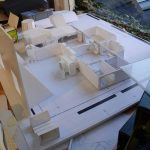
One way to start after sketching is to make models of the ideas. These can be miniature, rough models that allow the set designer to kick-start the creative journey. To advance, more meetings and discussions must be done at this stage to make things work better. With the aid of models, missing components may be incorporated, and any issues can be corrected. Once the draft is ready, the scenes can be rendered to move forward for finalization. The next step is making a scaled model without the application of any materials. The scaled models help the team to finalize the stage production and the things required for it.

Scenic designers then move on to the stage where they have to apply materials to the scaled models to understand the need for proper components. They play with textures, colors, and materials. And all of this is better to be done during rehearsals with the actors. This ensures that things will work out for all in a better manner and there are awkward or unwanted components seen on stage. It is natural for a designer to make major changes during rehearsals. Lighting and acoustics are also included in this process since they are the most important component of all. After the completion of stage production, a designer needs to assess the stage from the audience’s perspective also. Usually, the full production is completed a week or two before the final show. The duration allows the designer to make any changes, major or minor, in the production (Collier & Collier, 2021).

The set is flexible, therefore it can be used for a Broadway production, musical, or festival. The industry demands a stage that brings its performers and audience together and is involved in the created atmosphere. There are no proper steps to follow once it reaches the production stage. The basics might be the same, but the need of each stage is different from the other. A set designer may not be able to use the same plan for a new project. Therefore the individual needs to be very creative and open to collaboration. Many designers struggle with the issue of being constrained by the same concept. Thus it is required by the designer to have an open mind toward collaborating. A discussion needs to be done every now and then with the teams to ensure a smooth progress for the project. Different projects have different sets with various needs. The set designer is in charge of establishing the mood that must be conveyed throughout the space. The outcome of the set design must be immersive enough for the audience to feel like they have become a part of it (Katie, 2023).
Reference :
- Collier, R. and Collier, R. (2021) Read, Render, realize: A step by step guide to set design, THE 100 Introduction to Theatre OER Course Hub. Available at: https://openlab.bmcc.cuny.edu/introduction-to-theatre/2021/05/27/read-render-realize-a-step-by-step-guide-to-set-design/ (Accessed: 17 July 2023).
- (2016) YouTube. YouTube. Available at: https://www.youtube.com/watch?v=UVTRWx8_CKA (Accessed: 17 July 2023).
- Bright star Broadway reviews (2023) BroadwayWorld.com. Available at: https://www.broadwayworld.com/reviews/Bright-Star (Accessed: 20 July 2023).
- Scenic Design (no date) Department of Theatre and Dance – The University of Texas at Austin. Available at: https://theatredance.utexas.edu/graduate-programs/scene-design (Accessed: 23 July 2023).
- The set design process (no date) Melbourne Theatre Company. Available at: https://www.mtc.com.au/discover-more/backstage/the-set-design-process/ (Accessed: 21 July 2023).
- Inside the production design of Fox’s live version of ‘rent’ (2019) Variety. Available at: https://variety.com/2019/artisans/production/rent-live-fox-production-design-mark-roger-loft-angel-tree-1203109478/ (Accessed: 22 July 2023).
- 21, david neat on M. et al. (2014) ‘white card models’ for film/TV work, davidneat. Available at: https://davidneat.wordpress.com/methods/white-card-models-for-filmtv-work/ (Accessed: 22 July 2023).
- Cerullo, J.S., Fine, D. and Cyr, S. (no date) Set and Media Design, part 1, HowlRound Theatre Commons. Available at: https://howlround.com/set-and-media-design-part-1 (Accessed: 21 July 2023).