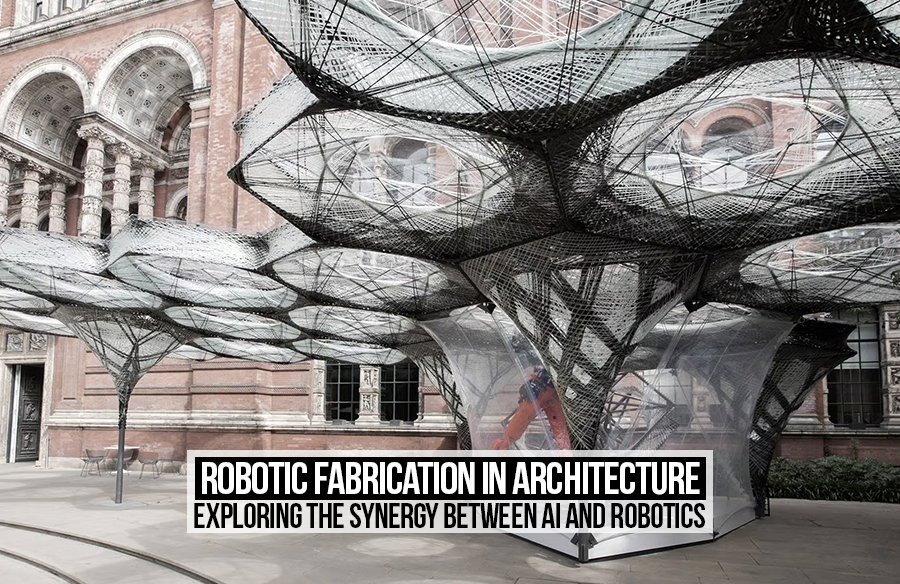
In other news, 8th June 2023 witnessed an event that will always be in the golden pages of history. United Nations AI for Good Global Summit in Geneva showcased the brilliance of human minds with their most advanced human-like robots. The AI-enabled social human robots claim that they can achieve great things and also can handle the world better than human! What a great time to be in a world where everything can be automated and robotised. The idea of metal statues with their vocals, vigour, and understanding goes back to the epoch of Hephaestus from Greek mythology. As this vision comes to reality, let’s get to how AI can impact the future of the Architecture & Construction Industry.

Chronicles of Robotics in Construction
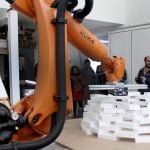
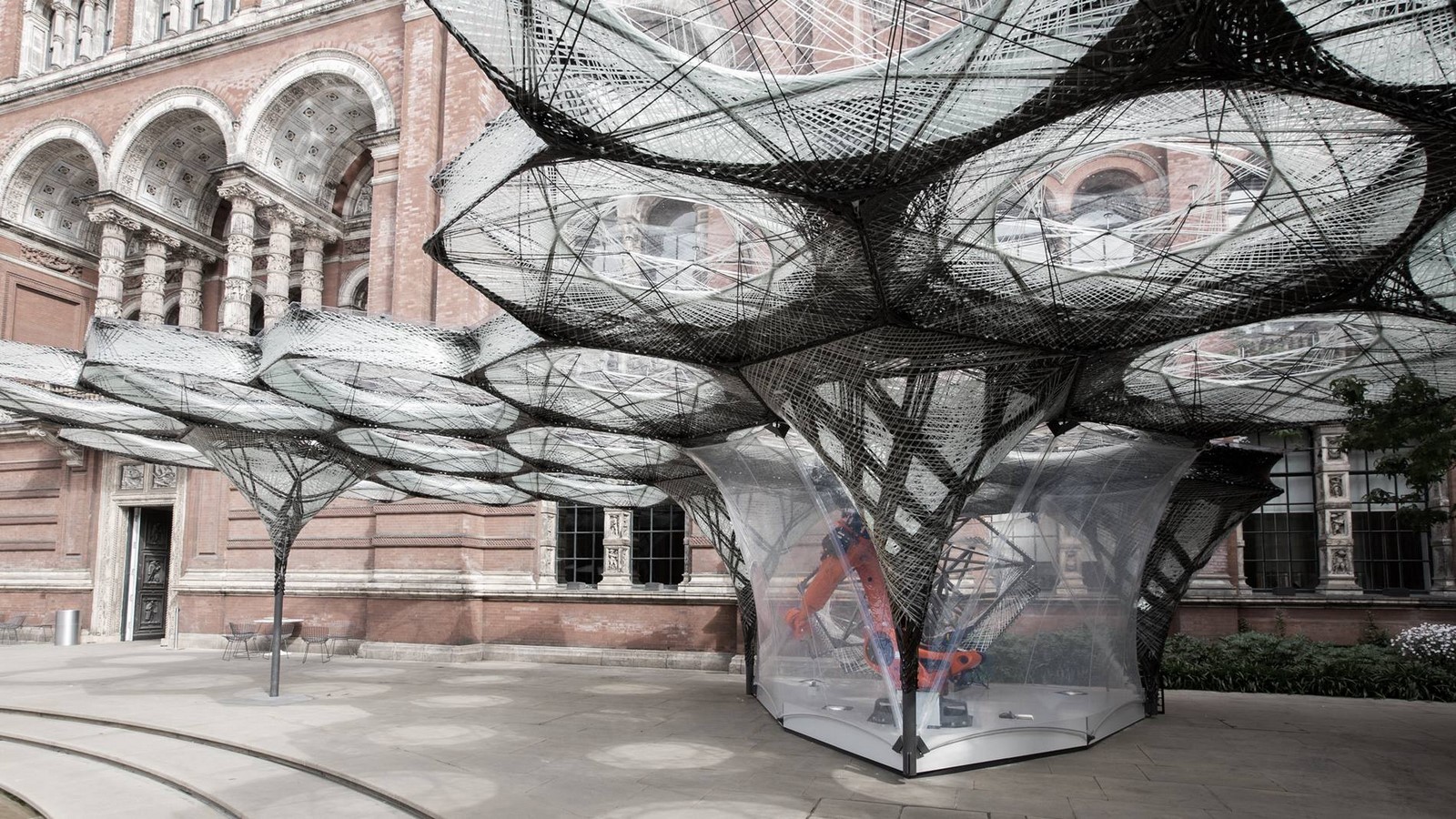
Robotics has been in constant development for ages. Early experimentation took place in Japan Takenaka Corporation came forward to bring about rapid development in the construction industry. This included the blooming of robotics and robotic arms to carry out tasks from material management to concrete emplacement & finishing to interior, exterior finishing. This provides not only precision and quality but also swift construction. Robotic arms serve as pliant tools. Hence a faction of architects called ROB|ARCH came to enhance robotics in the architectural industry in 2012, whereas Autodesk endowed Autodesk Robotics Lab in 2020.
Pacing with the Cyborgs
The world is facing different types of crises. The one with pandemic has led us to the loss of skilled mankind, whereas the population increase has left the world in splits. More opportunities and places of livelihood have been a never-ending requirement. Statistics show us 44% of the workforce of the construction industry has the possibility to be automated. Prefabricated housing is already on the verge of rising as it is more precise than traditional labour. One can even expect to have the structure ready in the span of 2 to 4 weeks if everything goes accordingly. AI is already progressing on one hand where the top software utilised in the industry is BIM (Building Information Modelling) & CAD (Computer Aided Design) but CAM ( Computer Aided Manufacturing) & robotics technology is still under scrutinisation for operations in-situ & ex-situ.
For instance, there have been constant developments in Brick-Laying Bots called SAM, Hadrian X was able to pull off brick-laying 3 times faster than human hands. A robot from the Chinese University of Hong Kong was able to carry out high-rise façade operations of repair works and painting at extreme heights.
Pioneers in future of the Matrix
The future is highly counting on automation and AI. As witnessed by Fosters+ Partners, Gensler has come forward to adapt to AI in full swing. Dubai, owning the first ever 3D printed structure known as the Office of the Future, has notified that one-quarter of its newer construction will be 3D printed.3D printing technique has come as a magnificent tool in terms of automation of construction. Such types of construction require a minimum amount of people on sight – the number of people in single digits. As said earlier the technology is under scrutiny yet there are hopes that with the help of AI more building codes can be fed into the system so that it could help the nations on their levels.

For The Office of the Future, a 3D printer with a robotic arm was installed in two days on-site, measuring 120 ft by 40 ft with 20 ft height. This helped in constructing the structure in 17 days, with finishing taking to three months. This overall reduced the labor cost to half of the normal standards with having an environmentally safe and sound impact by reducing the wastage as well.
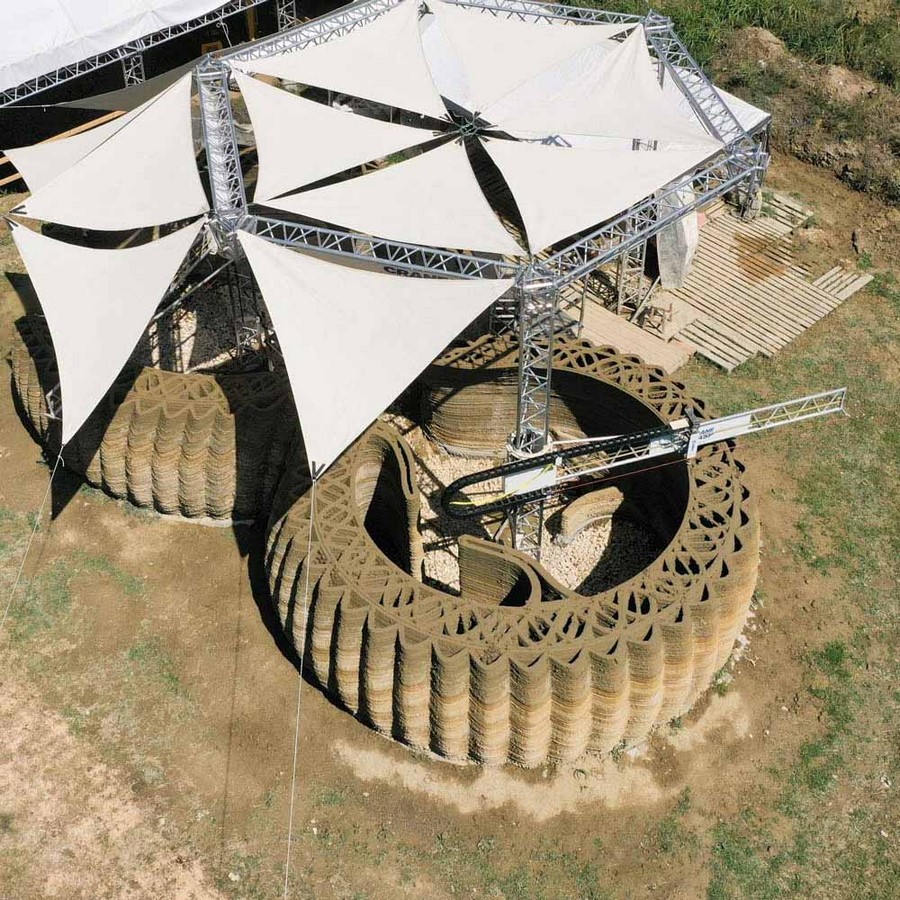
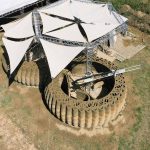
House of TECLA by Marcio Cucinella Architects was 3D produced using the raw clay from the locality, where 3D arms printed the house and gave a beautiful synergy for being environmentally conscious and technologically advanced.
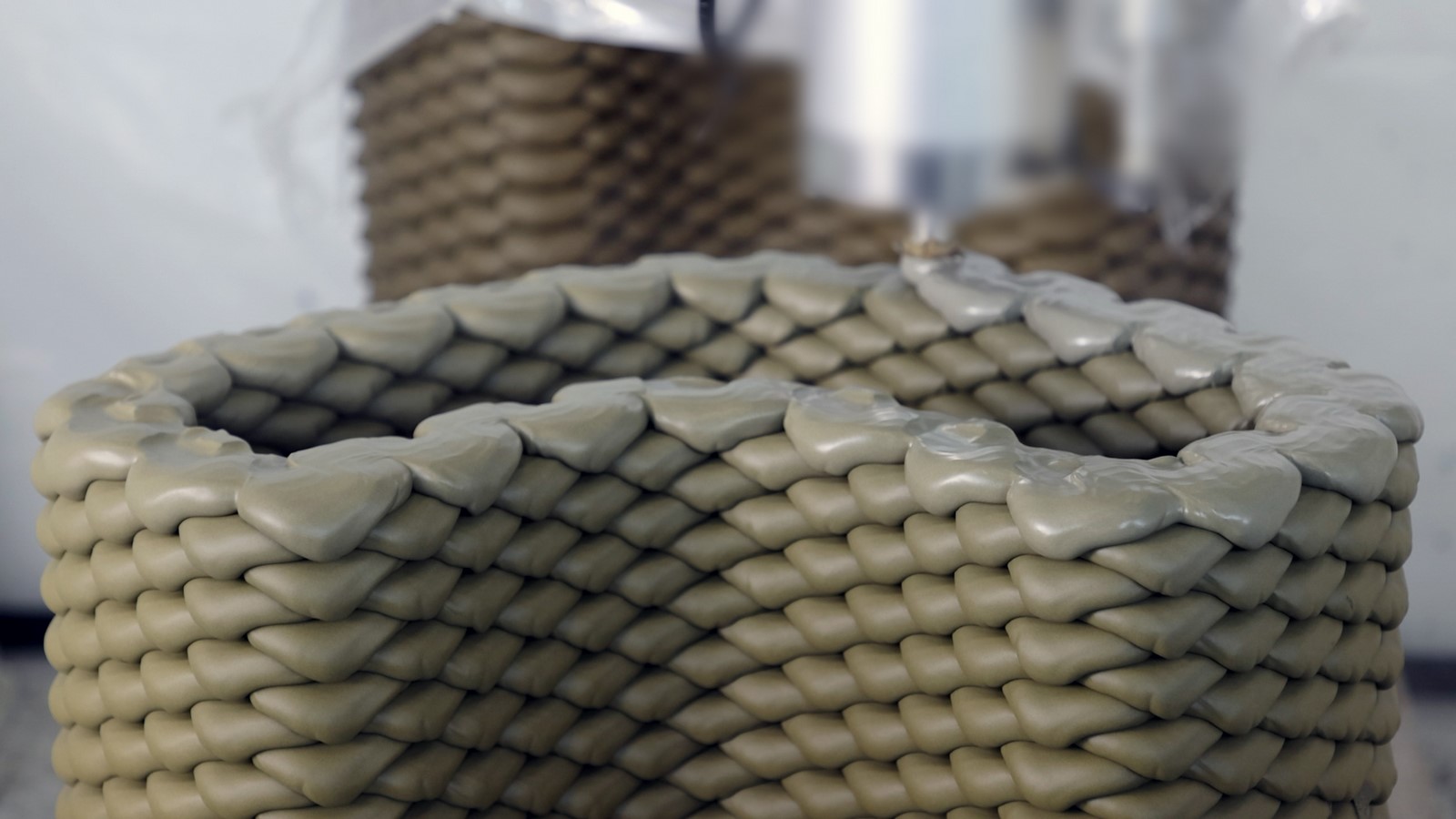
One such instance is also seen in a prototype wall project called Airlements, showcasing the congregation of four parts that are 3D printed into a monolith. Such monolithic walls can be used as non-structural external walls as insulations can be filled in the hollow of the wall, and the outer be plastered.
AI: The Coming of Age
Everyone in the industry currently will agree on the fact that there are always shortcomings in some or other aspects. With the help of AI, one can design every aspect of the construction, including operations, finance, structure, and costings labour, with a buffer to be ready for all the possible outcomes. Automated vehicles and flying drones with robotic arms will ultimately be helpful for the coordination and execution of the project. This not only allows us to foresee the imbalances in the designs but also helps us to research & innovate with implementation on smaller scales to get the expected results.
Despite the fact that, for the time being, automation and artificial intelligence won’t replace architects, the field will go through significant changes soon. Computers can take the place of laborious, repetitive tasks, maximising the output of technical content and, among other things, allowing for the optimisation of architectural office sizes. Each time, more complicated designs may be developed with fewer architects.
To interpret, analyse, and make sense of the enormous volumes of data created throughout the development, construction, and maintenance of a building, AI-powered technologies are used in conjunction with data. AI algorithms may be used to find associations and patterns in data, anticipate outcomes, and produce insights that can be utilised to guide various design choices. Additionally, the system grows better at learning the more and better data that is fed into it from sources like BIM databases, Internet of Things devices, climate and traffic data, and user feedback. However, certain irregularities in terms of data management, pieces of training to the AI, and usage of highly complex data have resulted in slowing down the overall switch.
The collection of the data involved computation or the use of some hypotheses. Simulated material should be upgraded with real-world information gathered via actual trials when more practical applications are carried out. Similar to this, as additional knowledge emerges, initial presumptions should be updated and eventually replaced with real values, thus bringing and keeping up with the synergy of AI and Robotics.
With the perfect synergy of AI & Robotics digital, adaptable, and accurate carvers, utilising technology to turn immediately recognisable solid items like a stone into fluid, organic, and light creations can perfectly help to innovate and achieve greater success.
References:
- Onsuwan, Songsak & Nakapan, Walaiporn & Kannasoot, Korapong. (2020). The Use of Robotic Fabrication in Architectural Design Education: An Experiment of a Robotic Hotwire Foam Cutting at an Undergraduate Level.
- AFP (2023). AI robots at UN reckon they could run the world better. The Economic Times. [online] 8 Jul. Available at: https://economictimes.indiatimes.com/tech/technology/ai-robots-at-un-reckon-they-could-run-the-world-better/articleshow/101598689.cms?utm_source=contentofinterest&utm_medium=text&utm_campaign=cppst [Accessed 13 Jul. 2023].
- Cutieru, A. (2021). Automating the Construction Site. [online] ArchDaily. Available at: https://www.archdaily.com/963301/automating-the-construction-site?ad_medium=widget&ad_name=related-tags-article-show [Accessed 12 Jul. 2023].
- Franco, J.T. (2023). 3D Printing Lightweight, Insulated Walls Using Cement-Free Mineral Foam. [online] ArchDaily. Available at: https://www.archdaily.com/1000867/3d-printing-lightweight-insulated-walls-using-cement-free-mineral-foam?ad_source=search&ad_medium=projects_tab&ad_source=search&ad_medium=search_result_all [Accessed 12 Jul. 2023].
- García de Soto, B., Agustí-Juan, I., Hunhevicz, J., Joss, S., Graser, K., Habert, G. and Adey, B.T. (2018). Productivity of digital fabrication in construction: Cost and time analysis of a robotically built wall. Automation in Construction, [online] 92, pp.297–311. doi:https://doi.org/10.1016/j.autcon.2018.04.004.
- Killa Designs (2017). Office of the Future / Killa Design. [online] ArchDaily. Available at: https://www.archdaily.com/875642/office-of-the-future-killa-design.
- Molloy, J.C. (2013). Architecture by Robots, For Humanity. [online] ArchDaily. Available at: https://www.archdaily.com/347905/architecture-by-robots-for-humanity?ad_source=search&ad_medium=projects_tab&ad_source=search&ad_medium=search_result_all [Accessed 12 Jul. 2023].
- Montjoy, V. (2023). What is the Future Role of Architects in the Age of AI and Data? [online] ArchDaily. Available at: https://www.archdaily.com/995781/what-is-the-future-role-of-architects-in-the-age-of-ai-and-data?ad_medium=widget&ad_name=related-tags-article-show [Accessed 12 Jul. 2023].
- Nast, C. (2019). Artificial Intelligence might soon take over architecture and design. [online] Architectural Digest India. Available at: https://www.architecturaldigest.in/content/artificial-intelligence-architecture-design-ai/.
- Paneru, S. and Jeelani, I. (2021). Computer vision applications in construction: Current state, opportunities & challenges. Automation in Construction, 132(103940), p.103940. doi:https://doi.org/10.1016/j.autcon.2021.103940.
- Shakeri, S. (2022). Top 5 Robot Manufactured Projects in Architecture and Design. [online] Parametric Architecture. Available at: https://parametric-architecture.com/top-5-robotic-applications-in-architecture-and-design/ [Accessed 12 Jul. 2023].
- Trippitelli, G. (2022). Robotics and Computer-Aided Manufacturing in New Digital Building Design Program. [online] ArchDaily. Available at: https://www.archdaily.com/981698/robotics-and-computer-aided-manufacturing-in-new-digital-building-design-program?ad_source=search&ad_medium=projects_tab&ad_source=search&ad_medium=search_result_all [Accessed 12 Jul. 2023].
- Waugh, R. (2023). Meet the AI human-like robots that can do our jobs. [online] The Independent. Available at: https://www.independent.co.uk/news/long_reads/ai-human-like-robots-jobs-androids-b2374052.html [Accessed 13 Jul. 2023].