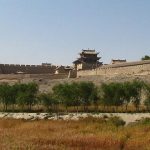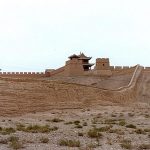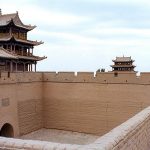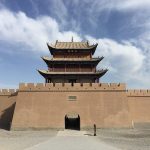
Jiayuguan Fort is not simply the western gateway of the Great Wall of China, it is the place where civilization pauses, inhales, and looks out at the infinite. Rising from the ochre skin of the Gobi Desert, the fort stands like a stone epilogue to empire, a final punctuation mark on a wall that spans continents and centuries. Its silhouette is sharp, geometric, almost defiant, a fortress built not merely to protect land, but to define it.
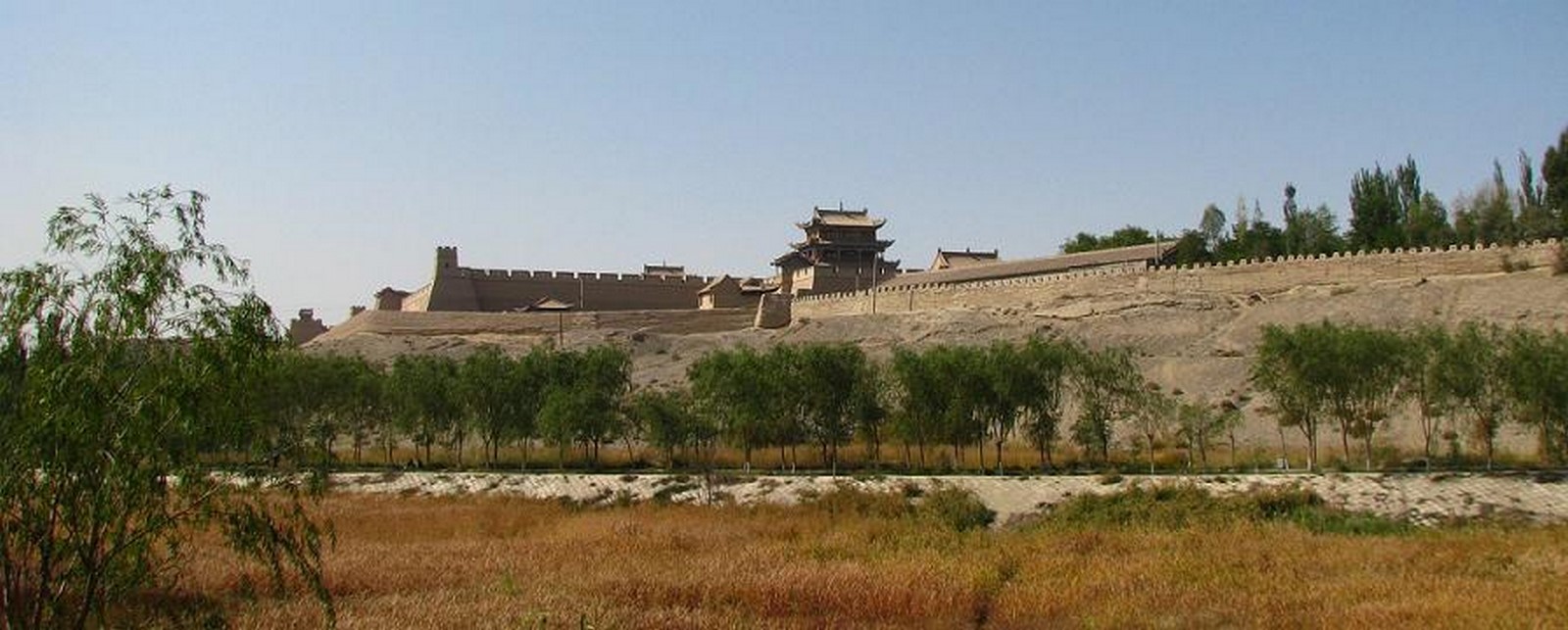
For traders on the Silk Road, soldiers of the Ming Dynasty, and exiles sent westward into uncertainty, Jiayuguan Fort was the last familiar shape under a Chinese sky. Beyond it lay desert, danger, possibility. The fort’s very existence whispered a question: How do you build order at the edge of the unknown?
A Fortress Sculpted by Desert, Wind, and Empire
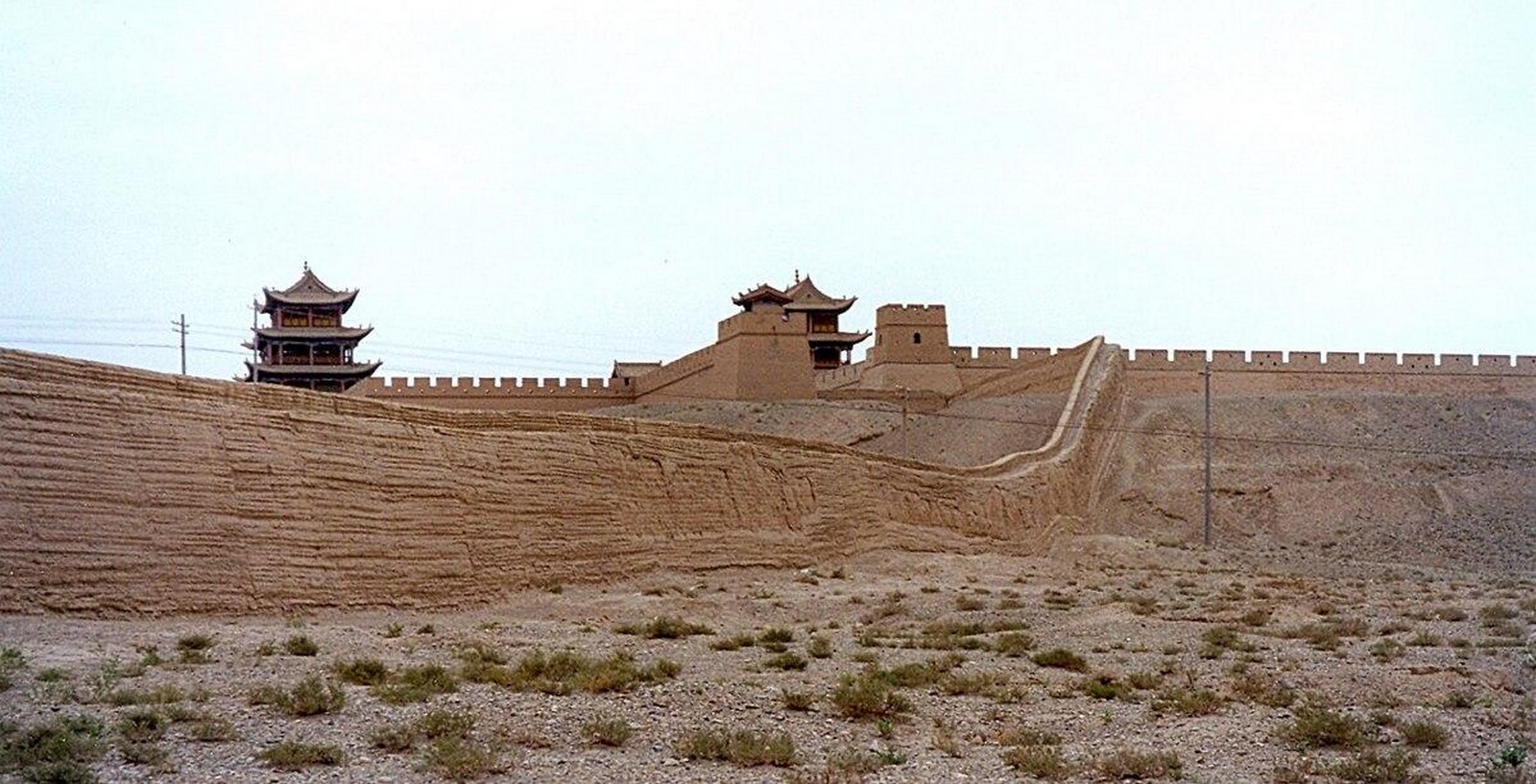
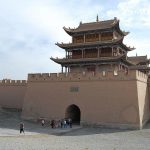
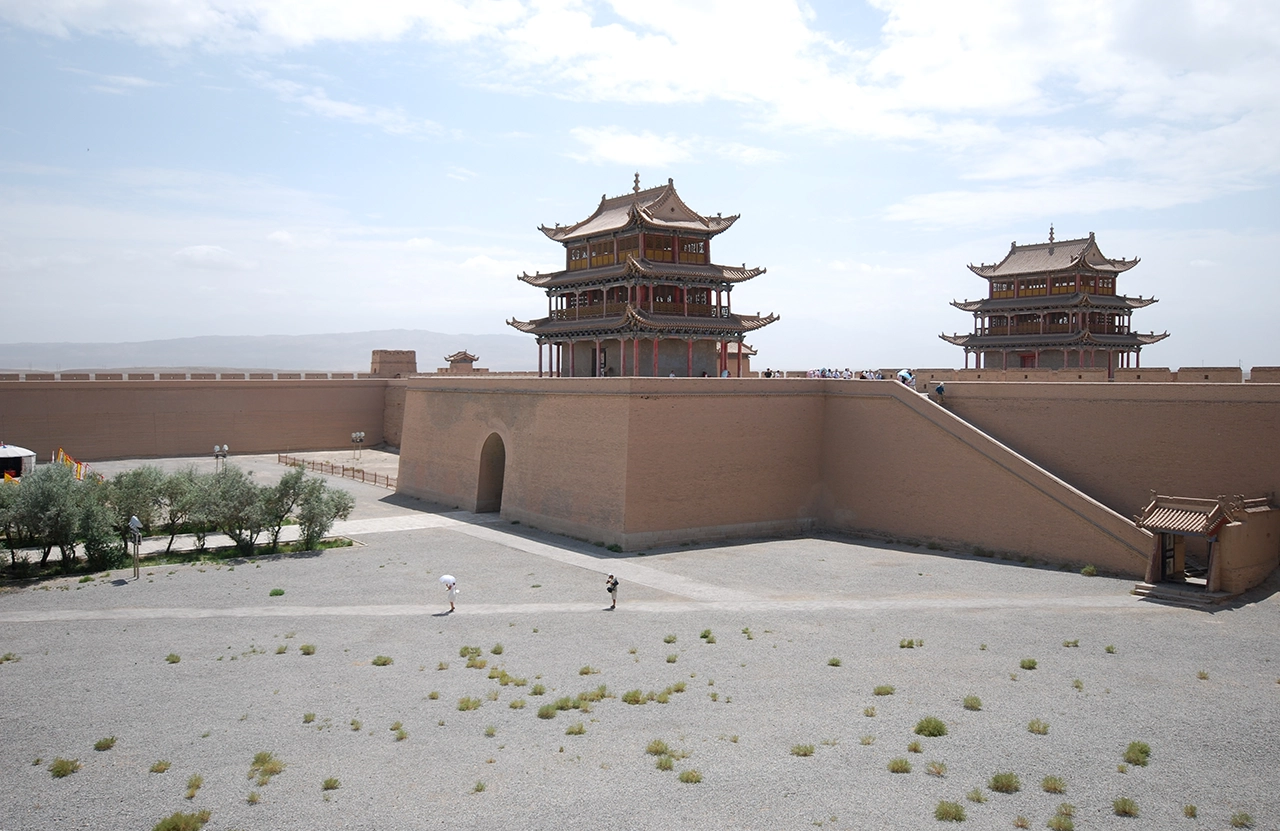
Built in 1372 under the Ming Dynasty, Jiayuguan Fort was engineered with a precision unusual for its era. Master builder Feng Sheng and military official Li Han selected the narrowest point of the Hexi Corridor, a natural bottleneck between the Qilian Mountains and the Black Mountains, ensuring the fort would serve as a choke point no enemy could easily bypass.
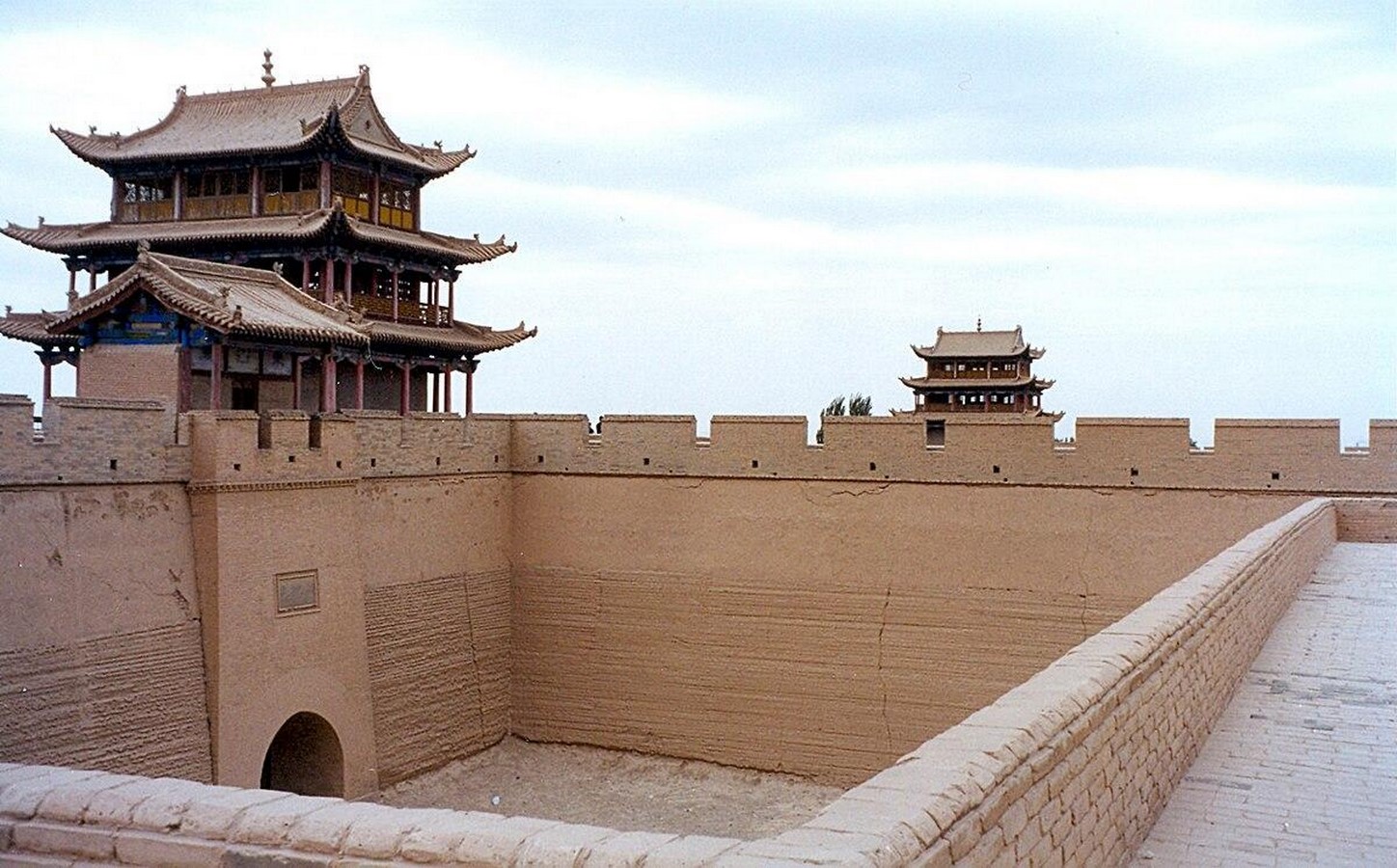
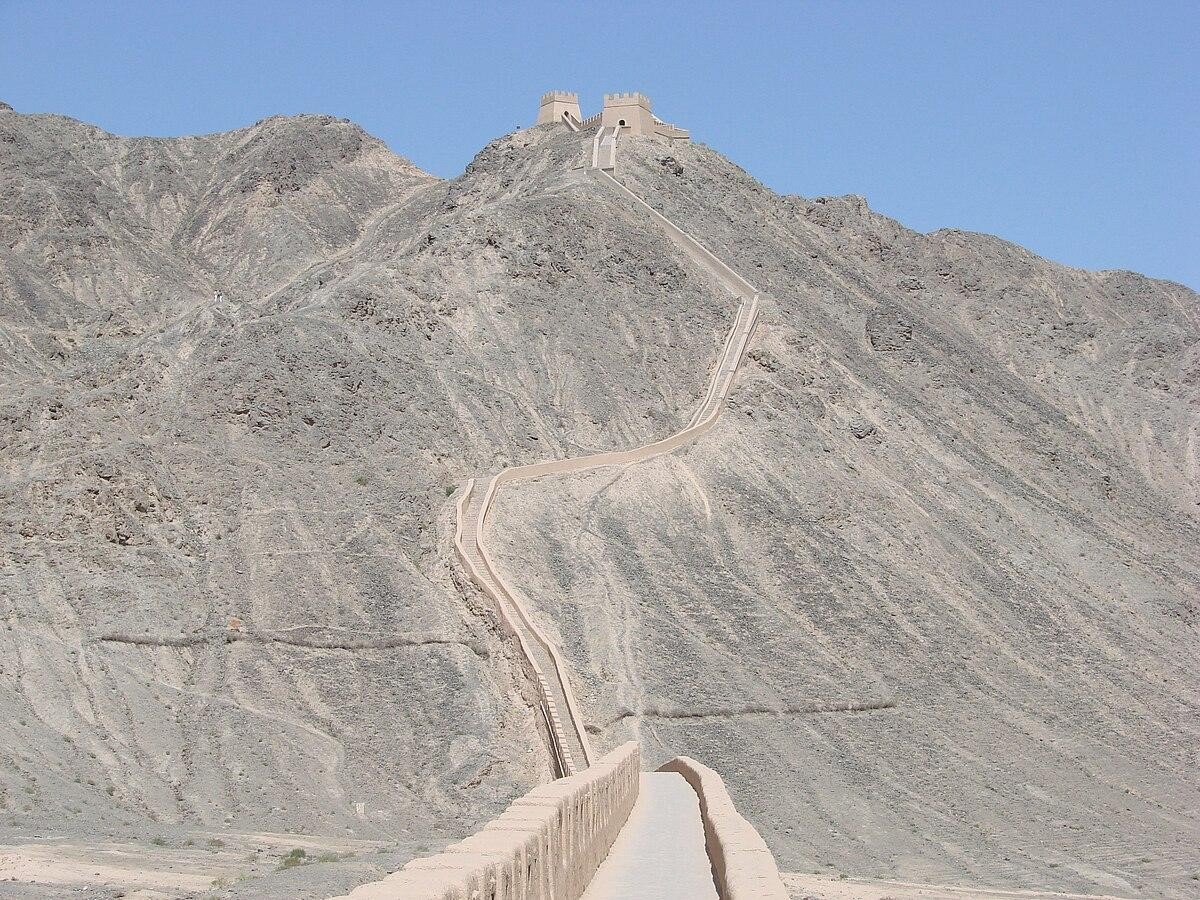
The fortified enclosure is a perfect rectangle, a disciplined geometry amid the shifting sands. Its eleven-meter-high rammed-earth walls rise in compacted layers, heavy and warm against the desert wind. Three-tiered gate towers sit like raised brows over the landscape, watching the Silk Road spread out like an unrolled scroll. A moat traces the perimeter, stark and deep. The inner and outer walls, positioned with layered intention, create dual lines of protection, while watchtowers stretch outward into the mountains like vertebrae continuing the spine of the Great Wall.
Rammed earth becomes more than a material here. It absorbs heat, pressure, and time itself. In a desert that devours weaker forms, Jiayuguan endures because it behaves like the landscape, monumental in stillness, patient in weather, vast in its refusal to disappear.
The Western Gate: Architecture as Drama
Approaching Jiayuguan is an act of theatre. First comes the desert, endless and shimmering under a sharp blue sky. Then the mountains, blunt and ancient. Only after that does the outline of the fort emerge from the heat-haze, a mirage resolving into certainty.
The closer you walk, the more the structure seems to enlarge, as if inhaling the space around it. Entering the fort is deliberately disorienting. Corridors narrow. Walls rise abruptly. Light fractures into hard-edged shadows. Movement becomes choreographed.
Jiayuguan’s architects understood that defense is not only physical but psychological. The experience of entry, tight passageways, sudden turns, compressed light, allowed defenders to study strangers long before strangers understood where they were being led.
Once inside, the atmosphere shifts. Light calms. Courtyards widen. Timber beams glow with the warmth of centuries. It is a place where architecture withholds and releases, constricts and expands, a rhythm that echoes the breath of desert air.
Where the Great Wall Ends, or Begins
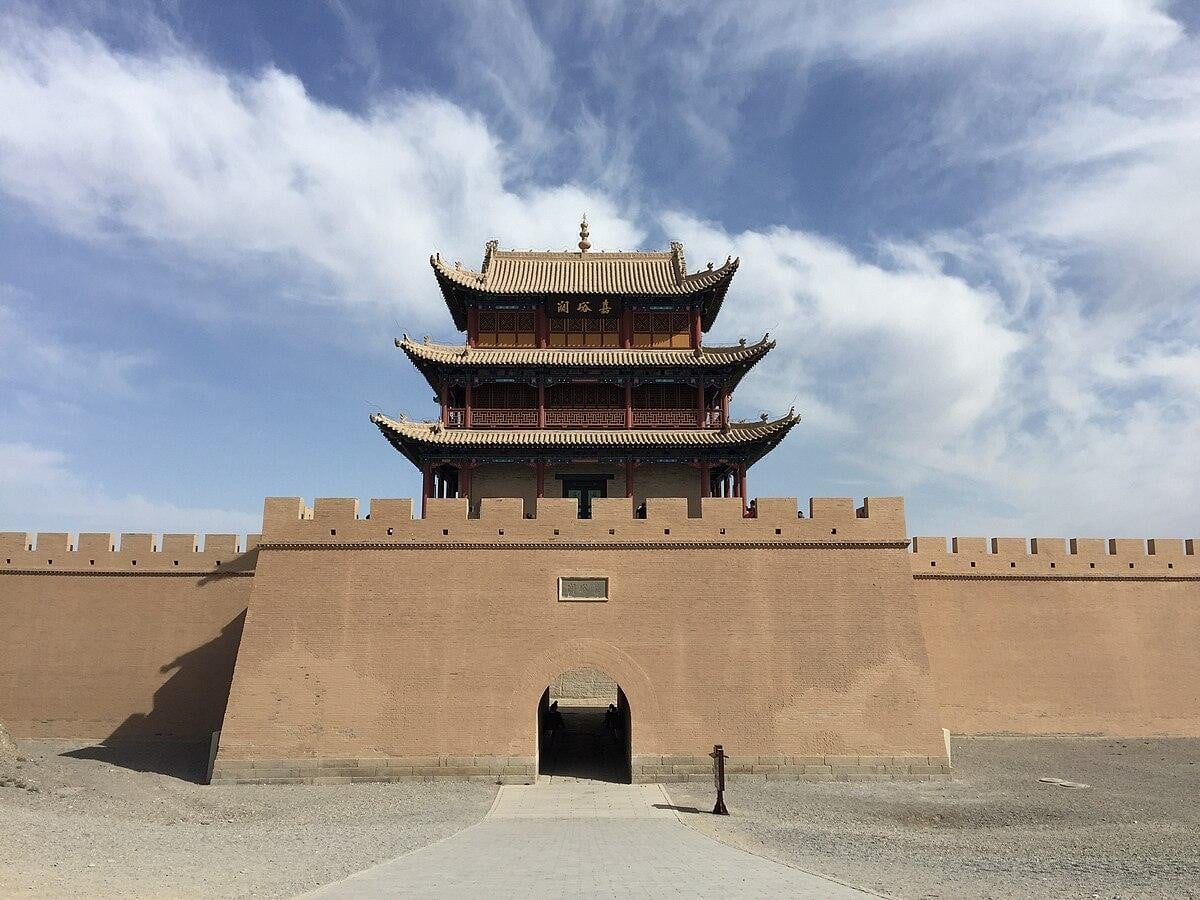
Legend says the fort’s chief architect submitted his construction plan with absolute confidence. When officials doubted his calculations, he claimed every brick was accounted for, plus one. And when the fort was completed, indeed one brick remained unused. It still rests atop the western gate tower, a quiet monument to precision and mythology intertwined.
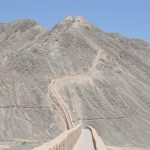
Jiayuguan does not just guard the end of the Great Wall; it transforms it. Here, the Wall softens its ferocity. It tapers, merges with the mountains, and dissolves into desert. Stone becomes sand. Architecture becomes landscape.
Standing on the ramparts, the Great Wall stretches outward like a brushstroke across a vast canvas. Then, without ceremony, it fades, as if acknowledging that beyond this point, the world cannot be contained by mortar or empire.
Life Inside the Desert Citadel
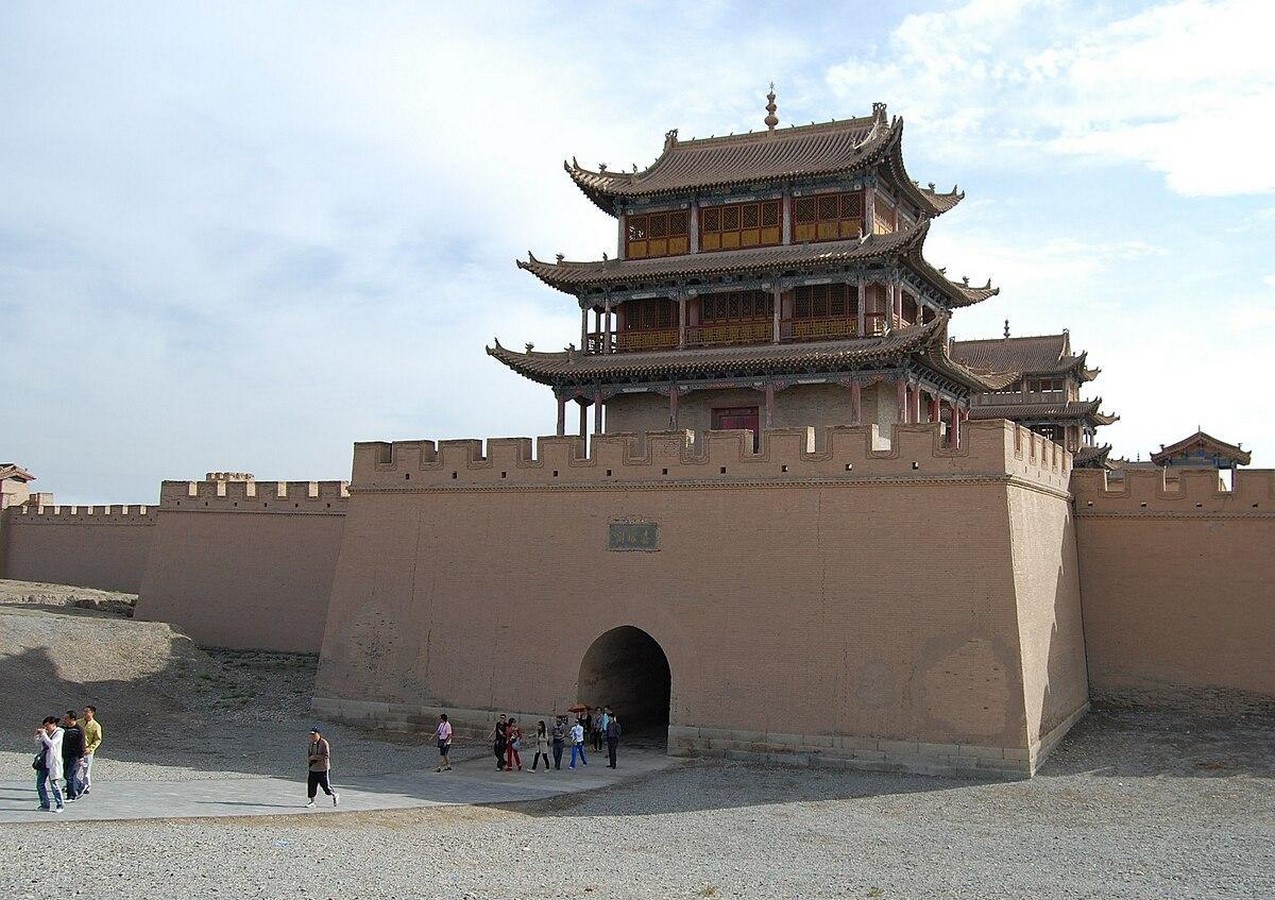
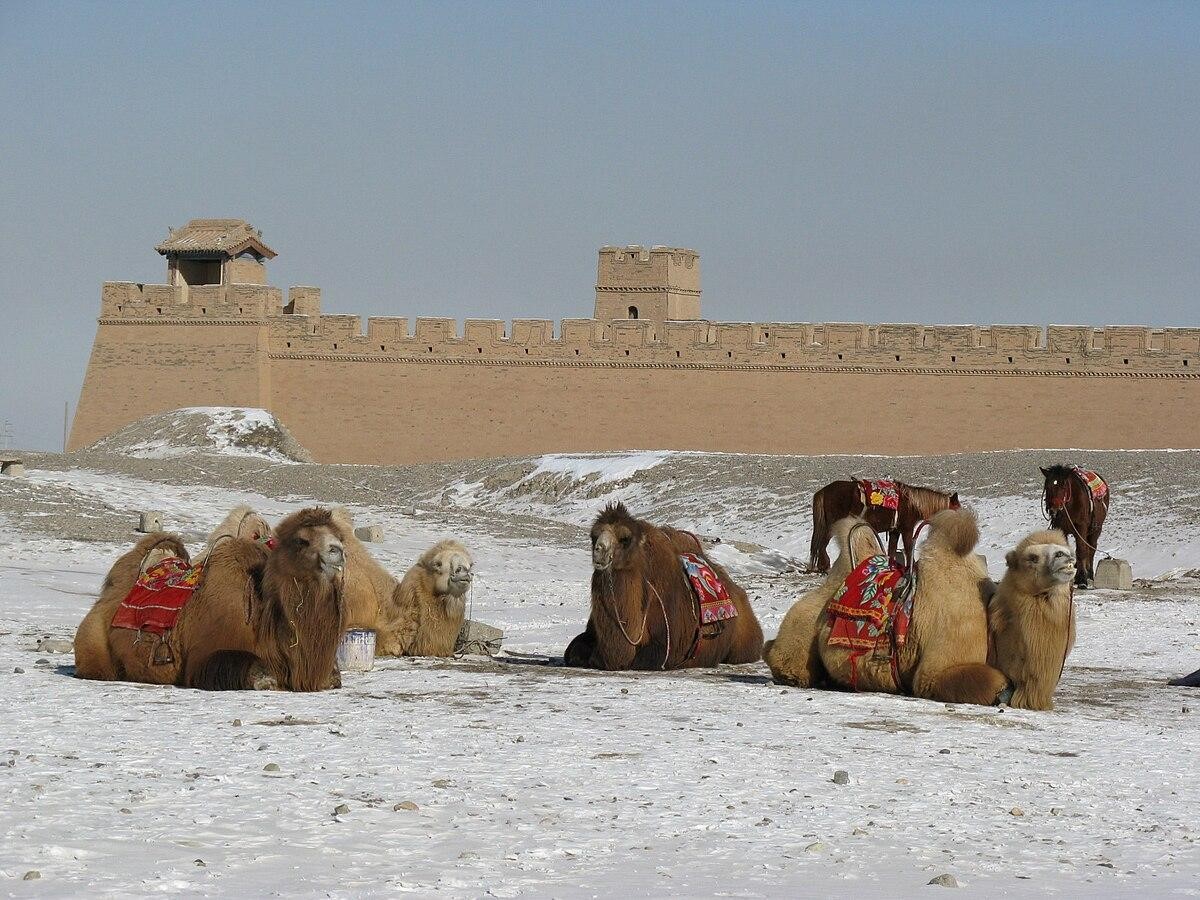
sun-baked walls. Commanders lived in orderly quarters clustered around open courtyards. Merchants traveled through caravans heavy with silk, jade, horses, and spices. Temples offered solace to travelers who had crossed months of desert and to those about to embark on more.
At night, torches flickered along the battlements. Shadows moved through the narrow corridors, and the wind, sharp, cold, and insistent, hummed against the earthen walls. Jiayuguan lived in two worlds: one of military precision and one of mythmaking. It felt both fortified and strangely alive.
Jiayuguan and the Theater of Defense
The fort’s defensive logic is layered and sophisticated. Enemies entering the outer city faced open exposure. Those who breached it would find themselves funneled into narrow passages where defenders controlled height and angle. From the gate towers, archers could strike from vantage points unseen from below. The inner city tightened the trap further, turning space into strategy.
Unlike coastal forts shaped by tides or forest forts shaped by terrain, Jiayuguan responds to the emptiness around it. The desert offers no cover. No shadows to hide behind. No natural obstacles. The architects countered this vulnerability with geometry, choreography, and perspective. Jiayuguan is a battlefield designed before battle begins.
The Poetics of Edge Architecture
Some structures sit within civilization. Jiayuguan sits at its edge, and that position changes everything. Frontier architecture is shaped by silence, threat, trade, cultural exchange, and the weight of the unknown. Jiayuguan reflects all of it. Its beauty is stark, born from necessity rather than ornament. Its drama comes from its placement, a fortress staring into infinity.
To stand here is to understand how empires imagine their boundaries, and how boundaries imagine them back.
A Model for Modern Resilience
In the era of climate consciousness, Jiayuguan feels unexpectedly modern. Its rammed-earth construction is low-carbon and thermally stable. Its walls are locally sourced, easy to repair, and naturally resistant to desert extremes. Its orientation uses the mountains as windbreaks and the open plains as early-warning systems.
In a world searching for sustainable architectural models, Jiayuguan reminds us that resilience is not new. It has been quietly perfected for centuries in places where survival demands it.
The Fort Built to Face Eternity
Jiayuguan Fort is a masterpiece carved from necessity and imagination. A frontier citadel engineered to outlast storms, armies, and empire. A structure whose power lies not in extravagance but in endurance.
Stand on its walls and the world widens, the desert stretching without end, the mountains rising like ancient ribs, the Great Wall thinning into a whisper. This is where architecture becomes more than shelter or statement. It becomes perspective. It becomes a memory.
Jiayuguan does not seek admiration. It commands it.
It stands at the edge of the world, not as a symbol of division but as a testament to human resolve, a reminder that even at the world’s farthest boundaries, architecture can still reach for eternity.
References & Sources:
- Jeans, Roger B. “The Great Wall of China: From History to Myth. By Arthur Waldron. [Cambridge: Cambridge University Press, 1990. 296 Pp. $39.50. ISBN 0 521 36518 X.].” The China Quarterly, vol. 132, Dec. 1992, pp. 1186–1187, https://doi.org/10.1017/s0305741000045719.
- “Jiayuguan, Jiayu Fort, Jiayuguan Great Wall – History, Location, Travel.” Chinadiscovery.com, 2019, www.chinadiscovery.com/gansu/jiayuguan-pass.html.
- “Jiayuguan’s Great Wall Fort — Western Ming Dynasty Frontier.” Www.chinahighlights.com, www.chinahighlights.com/greatwall/section/jiayuguan-pass.htm.
- “South China Morning Post.” South China Morning Post, 19 Sept. 2015, www.scmp.com/magazines/post-magazine/article/1858983/most-beautiful-place-china-jiayuguan-fort-gansu-province. Accessed 9 Dec. 2025.
- Veronica. “Jiayuguan Fort – the Greatest Pass of the Great Wall.” China Xian Tour: Private & Tailor-Made China Tours – China Xian Tour Offers Flexible Private China Tours with the Lowest Price & Best Service., 15 June 2023, www.chinaxiantour.com/jiayuguan-attractions/jiayuguan-fort.html. Accessed 9 Dec. 2025.
- —. “Jiayuguan Fort – the Greatest Pass of the Great Wall.” China Xian Tour: Private & Tailor-Made China Tours – China Xian Tour Offers Flexible Private China Tours with the Lowest Price & Best Service., 15 June 2023, www.chinaxiantour.com/jiayuguan-attractions/jiayuguan-fort.html. Accessed 9 Dec. 2025.