Picture this: Walking along the promenade, you notice several sailboats docked along the harbour. Their sails are fluttering dramatically, incapable of catching any wind. It appears as a rather peculiar sight, doesn’t it? Are the sails tied up the wrong way, you wonder. The sails appear to be laughing at the wind, metaphorically speaking, of course! This ensures the boats don’t sail away into the sunset, slipping off from their unsuspecting masters. One might say it is a rather pithy explanation for what would otherwise be a dreary, complicated lesson on the physics of sailing.
However, the sail-like structures we are about to take a gander at have more in common with the art of building than that of sailing. Despite being anchored over the cold Pacific waters, they are certainly in no hurry to head anywhere, but rest assured they are just as dramatic and colossal as the mighty sails of yore. A UNESCO World Heritage site and a fan favourite of architects worldwide, today we shall celebrate the life and architecture of the Sydney Opera House. In this article, we will follow its tumultuous journey from its inception in 1957’s architecture competition to its controversial construction period and finally enjoying its status as a world-renowned architectural marvel. So, let’s dive into Sydney Harbour—the place where it all began…
Sydney needs a brand-new, shiny opera house!

The Sydney Opera House is located on Bennelong Point (formerly called the Cattle Point), a promontory that lies south of the harbour, just east of the Sydney Harbour Bridge. The eponymous point, named after the Aboriginal who served as a liaison between the first British settlers and the locals, was once home to the man himself. Later in 1947, the acclaimed music composer and resident conductor of the Sydney Symphony Orchestra, Eugene Goossens, believed it was time to endow Australia’s thriving city with a state-of-the-art musical facility to call its own. He approached the New South Wales Government, which concurred with his initiative to transform Sydney into a world cultural capital, setting the plan into motion. Upon obtaining official approval, the Opera House Committee was elected as an advisory group to select a site for the project in 1954. Thus, Bennelong Point became home to one of the 20th century’s most fascinating and trailblazing icons.
Wish for symphonies and ballets galore? Jørn Utzon has got those covered & a lot more!
In 1956, the state government organised an open international design competition for a structure that would constitute two halls—the prominent one for hosting concerts and other large-scale dance and music programs, the second for theatrical productions and smaller music events. 1957 saw the Danish architect, Jørn Utzon, win the competition with his dramatic and groundbreaking proposal, heralding a new trend in design for the late 20th century. The winning entry granted Utzon international fame and went on to become the defining project of his career.
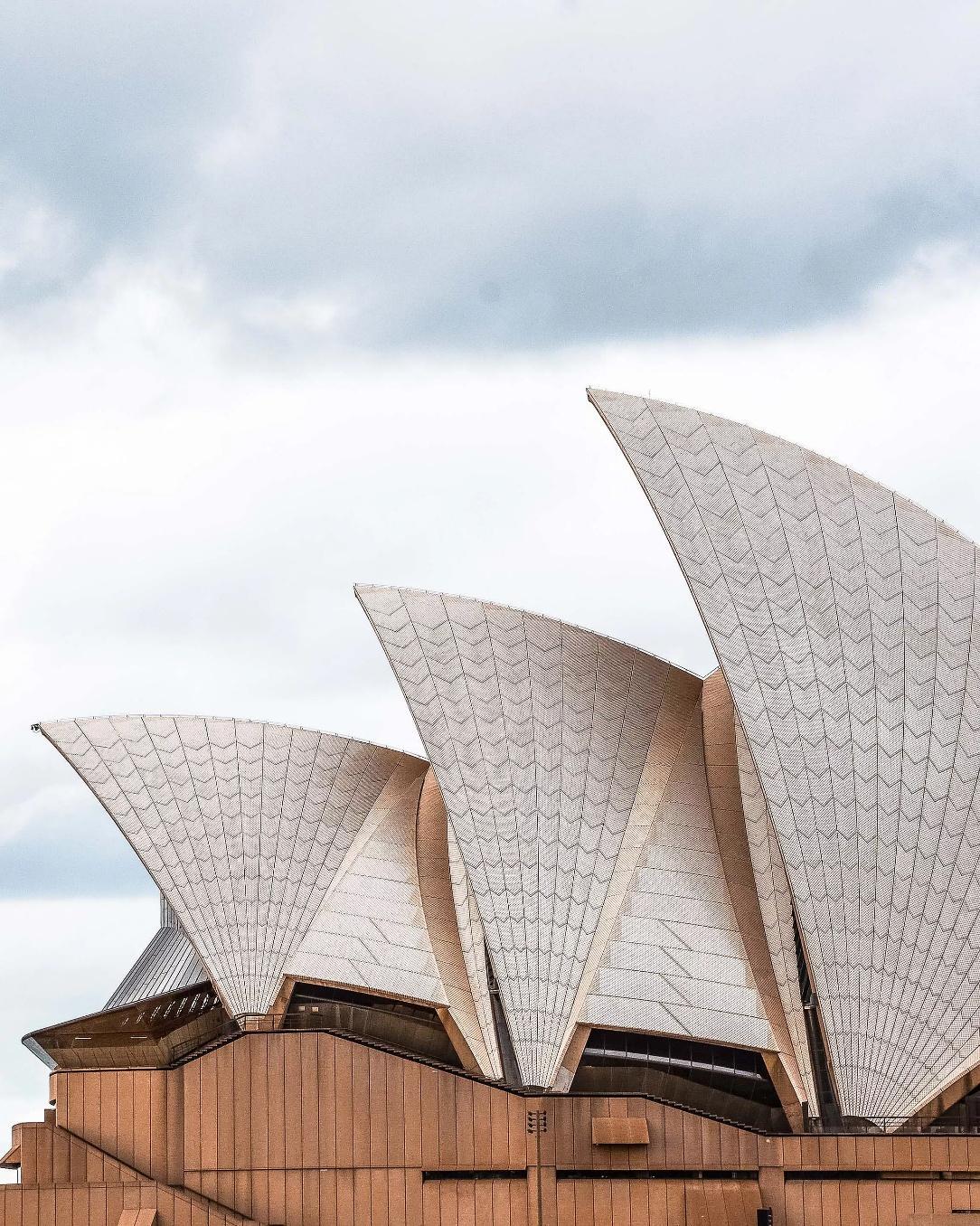
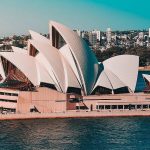
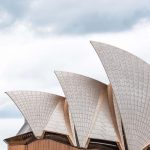
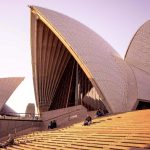
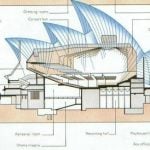
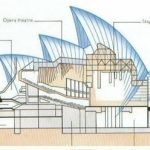
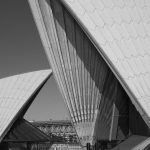
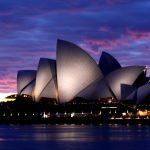
The design complex comprises a massive stepped podium that houses the many halls and rooms with ancillary services demanded by the program. Sat atop are rows of huge sail-shaped interlocking shells, made of precast concrete that shroud these cavernous halls, becoming both the roof and wall for the structure. The building footprint sprawls over 1.8 hectares of land, spanning 183 m long and 120 m wide at its widest point.
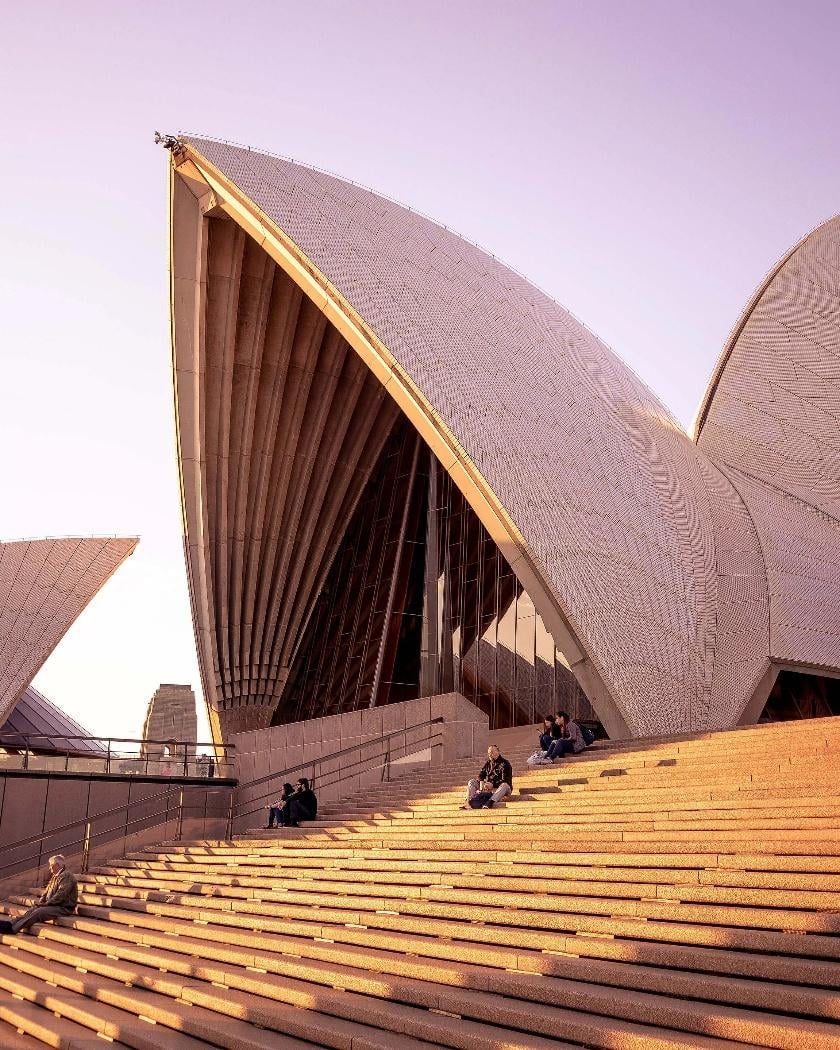
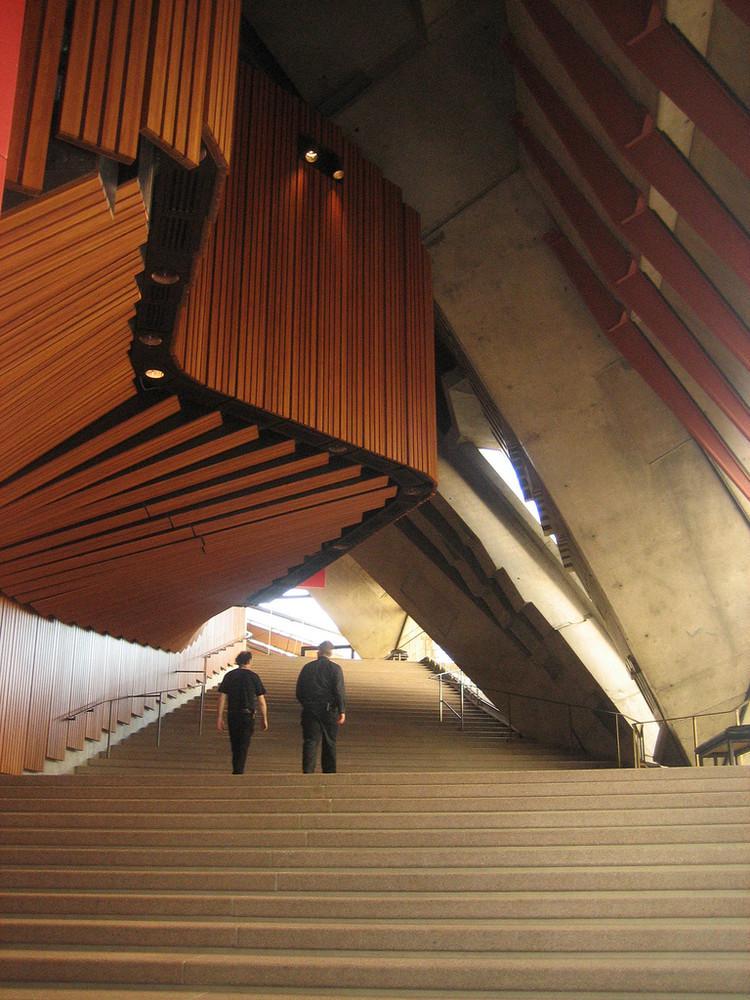
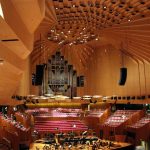
The Sydney Opera House, considered the most popular landmark across the city, is a multipurpose performing arts facility that attracts hundreds of thousands of tourists worldwide. The structure houses two halls—the largest being the Concert Hall (originally designed as a multipurpose theatre/opera venue), which accommodates 2,800 people; the minor hall, the Opera Theatre (earlier intended for stage productions), seats just over 1,500. Grand external staircases leading into these auditoriums make for an impressive entrance, leaving a lasting impact on its visitors. On the eastern side also lies the Forecourt, for outdoor performances.
Later additions to the original design included three smaller theatres, a library, a professional recording studio, and a cinema hall. It also integrated three restaurants, six bars, and sixty dressing rooms. The building complex boasts 1,000 rooms, accessed through a concourse circumscribing the entire building while linking the five performance spaces.
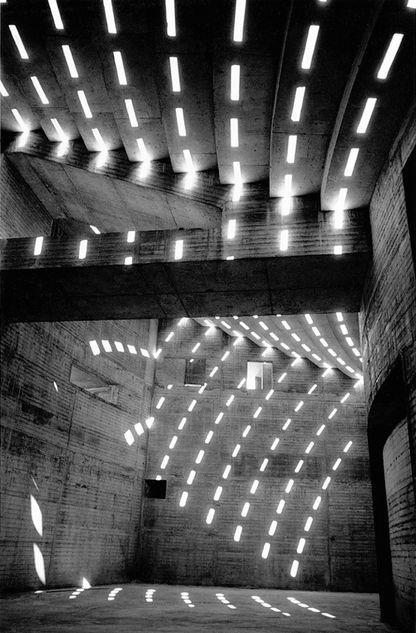

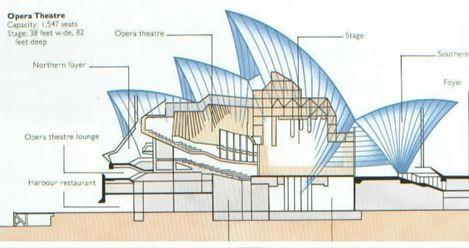
Form, materials & structure: The story of how it all came together
The construction of the building began in 1959, post-demolition of the pre-existing Fort Macquarie Tram Depot. Given the complexity of a futuristic design such as that of the Sydney Opera House, the construction proved challenging. As a result, the team decided to execute the project in 3 stages.
Stage I: The foundation and the building of the podium overlooking the eastern side of the Sydney Harbour.
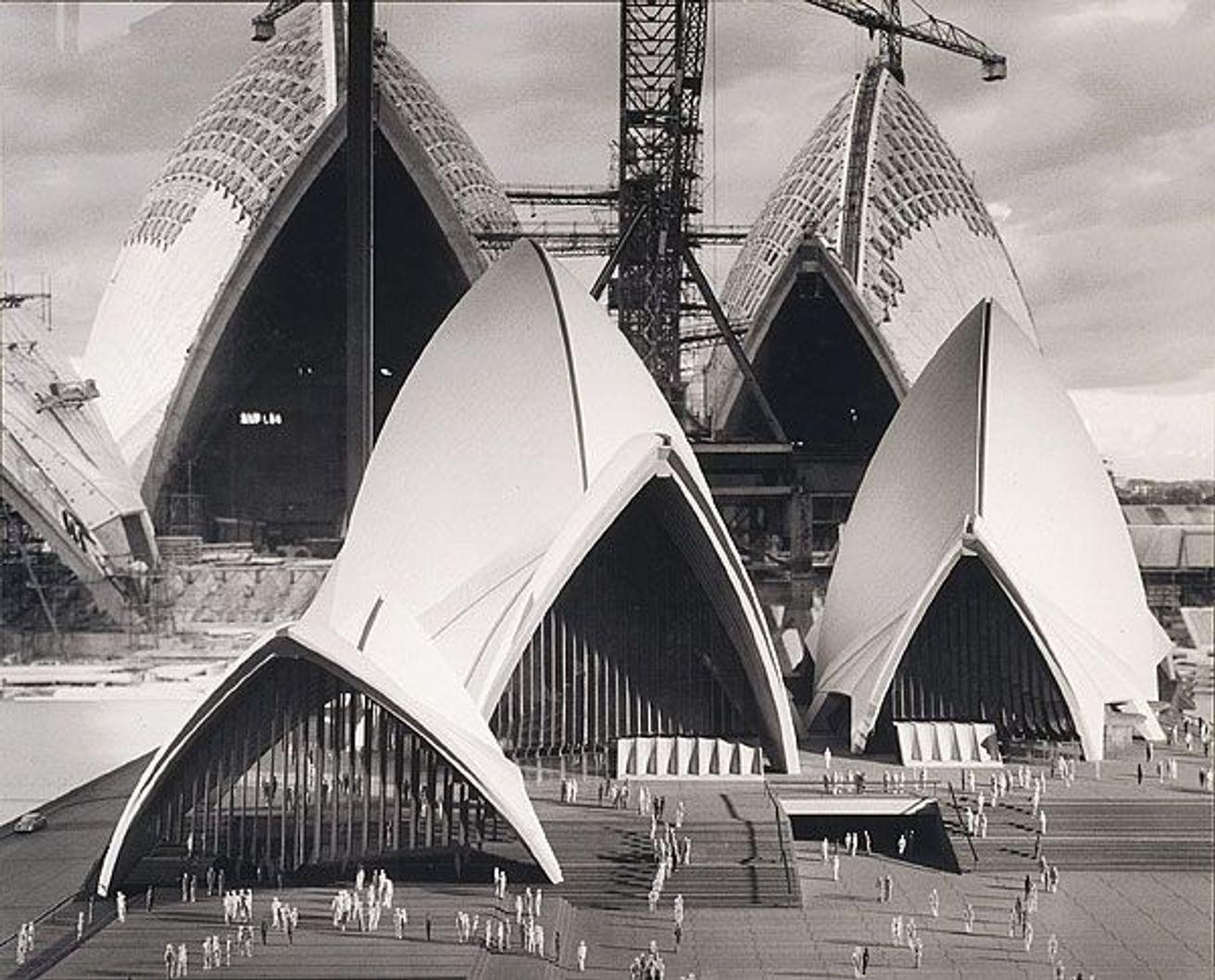
Fearing public opposition and criticism, the New South Wales government pushed for the construction to begin earlier, thereby commencing the podium’s construction. As Utzon was still working on resolving the above sail-shaped structures, the renowned engineering firm Ove Arup and team were brought into the project to serve as structural consultants and supervise the construction of the mammoth podium. Since construction began before the resolution of the upper-level structures, several parts of the podium had to be redesigned and rebuilt to account for the enormous weight of the concrete structures that it had to support. 588 concrete piers, going down 25 m deep below sea level, were used to support the building, providing it with an indomitable foundation. Lastly, the exterior surface was largely clad with aggregate panels fashioned from the pink granite quarried at Tarana.
Stage II: The construction of the outer shells
Designed in the Modern Expressionist style, the Sydney Opera House was one of the first to have a geometrically complex design in the late 20th century, paving the way for more experimentation and configurations in architectural design. The design pioneered the introduction of computer-aided designs into the world of modern architecture, revolutionising the industry.
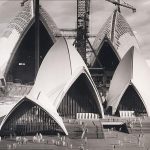
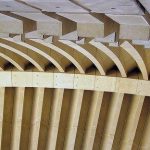
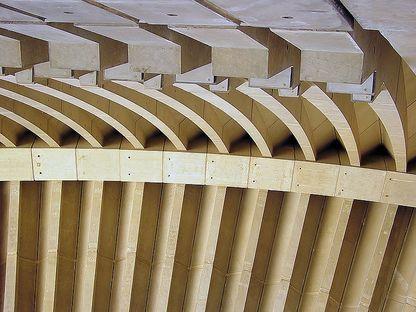
The iconic roof structure that became the highlight of the building was the most challenging aspect of the project. The shell-like structures were originally conceived as undefined geometry in Utzon’s proposal. Later, in the initial stages of design, they were defined as a series of parabolas supported by concrete ribs. However, owing to the incompatibility of the roof form with the structural system, the engineers were unable to find a suitable solution for it. Furthermore, the costs of the in-situ formworks for the foundation proved to be exorbitant. They had to cast each section individually as there were no repetitions in the structure. This proved strenuous and uneconomical. Consequently, the team scrapped the proposal. From 1957 to 1963, Utzon and Ove Arup went over twelve iterations before coming up with an economic and workable proposition. The design team subjected the designs to computer-programmed structural analysis to work out the multiple forces impacting the structure. Ultimately, they decided to derive the geometry of the shells from the smaller sections of a sphere. This, combined with a precast concrete ribbed system, would lend immense structural integrity while allowing for lowered expenses.
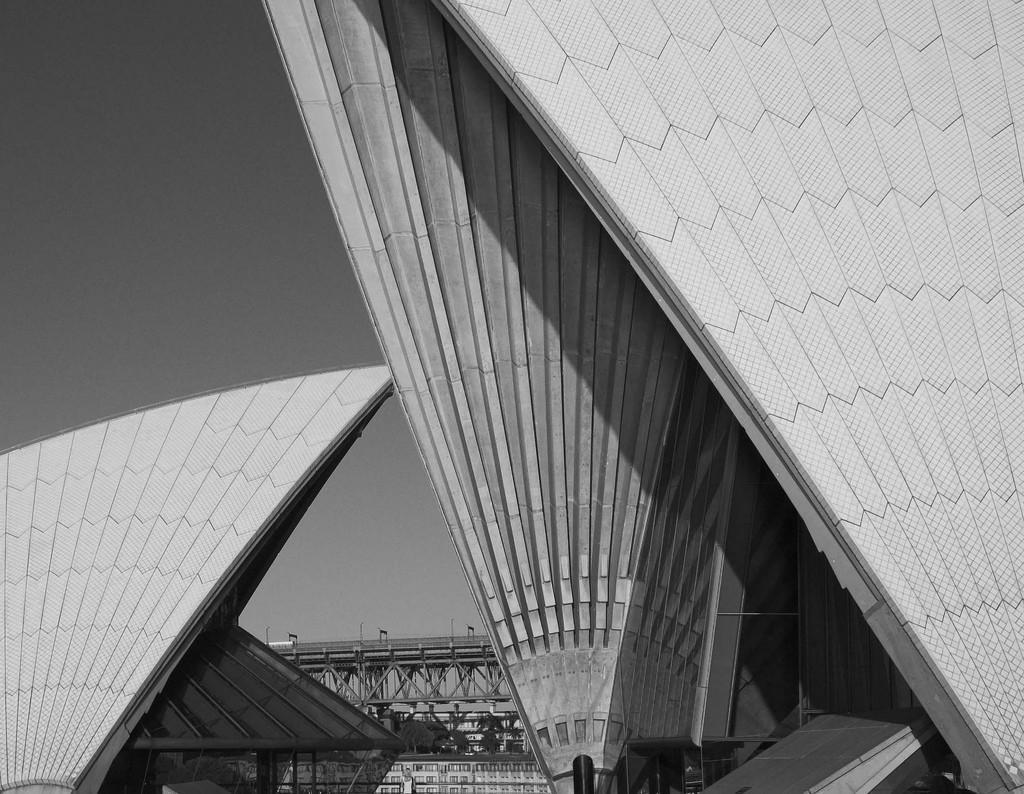
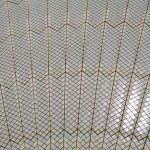
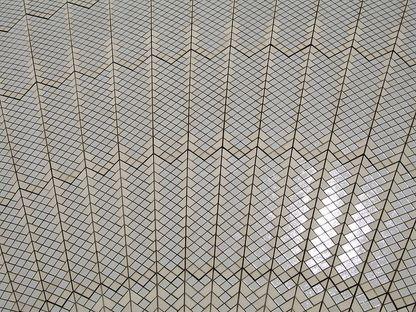
Jørn Utzon wished for the roof structure to resemble massive sails that contrasted with the deep blue waters of the Pacific. Thus, 1,056,006 ceramic tiles were used to cover the shell structures to achieve the likeness. Made in Sweden and crafted from clay and crushed stone, the glossy white and matte cream-coloured tiles were meticulously laid out in a subtle chevron pattern. The curtain wall and glazing designed by Ove Arup consisted of bronze mullions that ran across the height of the structure to support over 2000 glass panes. To account for better sound insulation, the glass panes were reinforced with a plastic interlayer. The roof alone took 11 years to complete owing to the difficulties posed by its sheer size and geometry.
Stage III: The construction of the interiors.
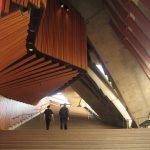
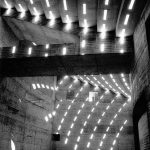
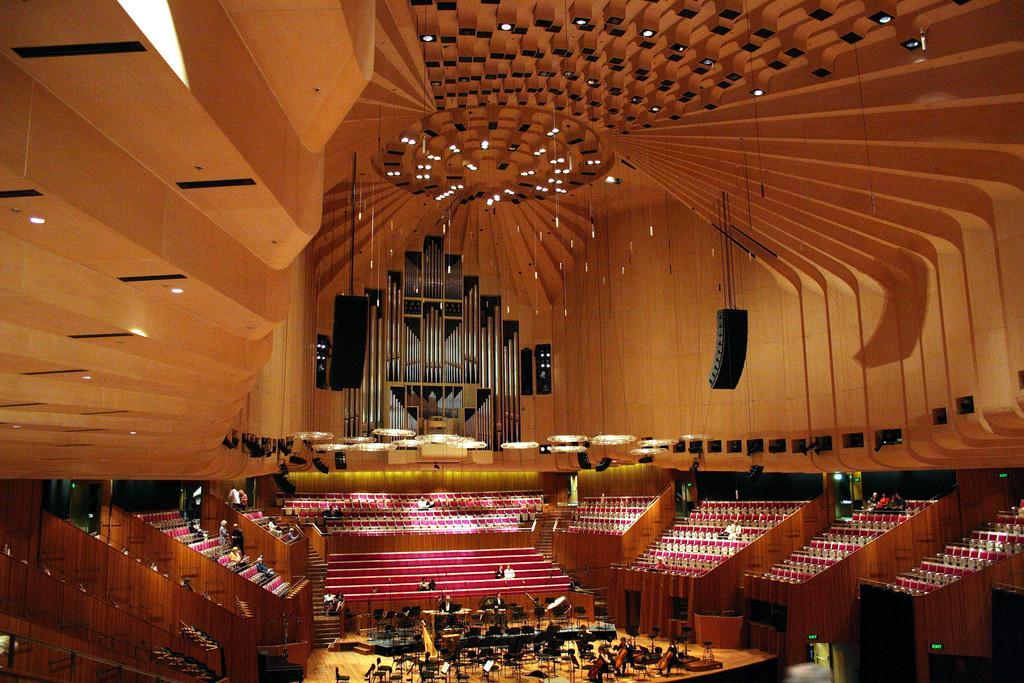
The interior works began in February 1963, with Utzon uprooting his entire office and moving to Sydney. However, continuous legal battles with the ruling government over the growing costs of the project led to Utzon resigning in 1966. This resulted in the government employing 3 architects to take over the execution of the project—Peter Hall, David Littlemore & Lionel Todd, with Peter Hall principally taking over the design of the interiors. Major interior surface treatments included off-form concrete, Australian white birch plywood, and brush box glulam.
Controversies are afoot!
Increasing legal disputes and disagreements between Utzon and the new Robert Askin government led to him resigning in 1966. With the second stage of construction still in progress, the project costs had only grown to $22.9 million from the original estimate of $7 million. Little did they know, the financial condition would only worsen from there onwards. Utzon’s dismissal, escalating costs and a prolonged period of construction resulted in public upheaval, with people protesting for the reinstatement of Utzon. Newer additions to the program, an increase in spatial capacity, and other alterations finally led the budget to skyrocket up to a whopping $102 million!
After undergoing a series of turbulent events, the Sydney Opera House was finally completed in 1973. The building was inaugurated by Queen Elizabeth II and was opened to the public. For his outstanding and visionary design, Utzon was awarded the Pritzker Prize in 2003.
Refurbishments, additions & alterations over the years: The never-ending cycle of maintenance & repairs
The Sydney Opera House, like most of its Modernist peers, has seen a great number of alterations and repairs in its lifetime. The cost projections for the repairs of deteriorated concrete ribs and fallen ceramic tiles and technological additions in 1989 were estimated at almost 86 million dollars. This was the price paid to transform the building into a state-of-the-art model for the 20th century.
Fast-forwarding to 1999, the Opera House recalled Utzon to oversee an improvement project. This led him to reconnect with his beloved masterpiece. During this period, he redesigned the reception hall—the only interior space that had stayed true to his plan. Eventually, the hall opened as the Utzon Room in 2004. Two years later, a new colonnade was added to the Opera House, making it the first modification to the building’s exterior since its completion in 1973.
The Opera House also underwent significant renovations, starting in 2013 for over 10 years, for its silver jubilee celebration in 2023.
Newsflash: Sydney Opera Elected UNESCO World Heritage Monument. Congratulations, Utzon and team!
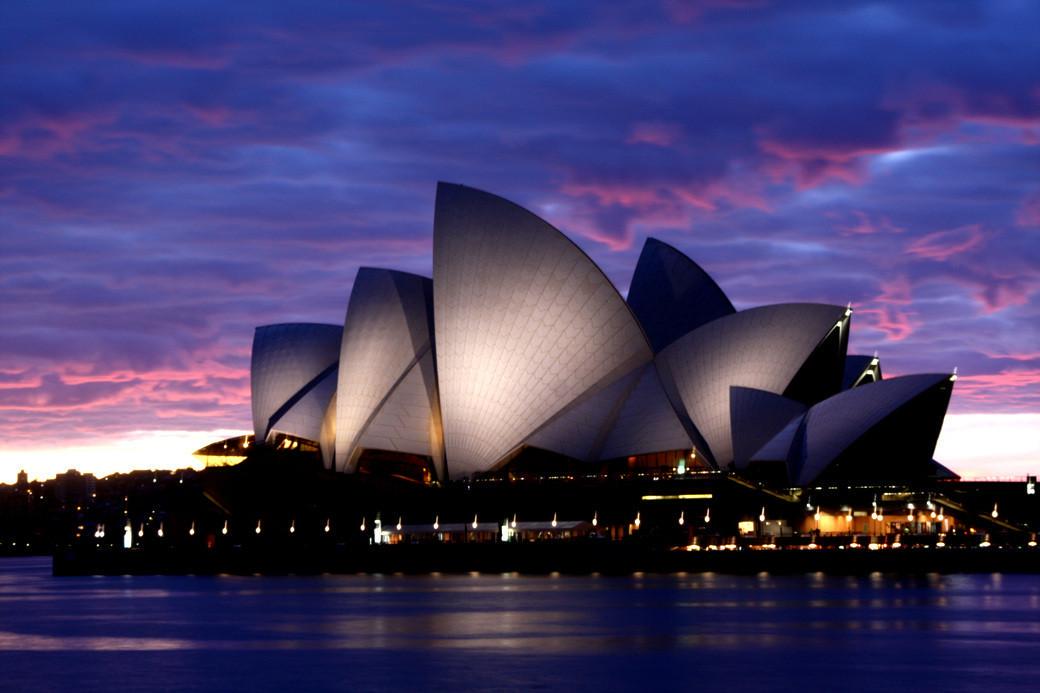
The Sydney Opera House was proclaimed a UNESCO World Heritage Site in 2007. Considered to be one of the greatest works of its century, it stands as a beacon of beauty and creativity, a great example of what the human mind can achieve. The building is cared for, keeping in line with the Conservation Plan and the Utzon Design Principles, so it continues to function both as an architectural monument & a state-of-the-art performance arts facility.
It was also included in the National Heritage List in 2005 under the Environment Protection & Biodiversity Act (1999) and on the State Heritage Register of New South Wales (2003) under the Heritage Act (1977).
Considering the momentous impact it has had on the city, the Sydney Opera House has been a catalyst for urban regeneration, transforming the skyline around it. Its effective presence has reshaped the northern end of Macquarie Street and, along with it, the urban development trends in Circular Quay (central business district). Given the site’s proximity to the Circular Quay and the Royal Botanical Gardens, the Opera House attracts millions of locals and tourists to the precinct.
All in all, the Sydney Opera House has certainly taken to its role as a remarkable architectural landmark as it makes itself comfortable amidst the shores of Sydney.
References List:
- Murray, L. (2018). Sydney Opera House | building, Sydney, New South Wales, Australia. In: Encyclopædia Britannica. [online] Available at: https://www.britannica.com/topic/Sydney-Opera-House [Accessed 28 Feb. 2025].
- Perez, A. (2010). AD Classics: Sydney Opera House / Jørn Utzon. [online] ArchDaily. Available at: https://www.archdaily.com/65218/ad-classics-sydney-opera-house-j%25c3%25b8rn-utzon [Accessed 27 Feb. 2025].
- Kivlehan, N. (2022). Buildings that elevated cities: Sydney Opera House. [online] ww3.rics.org. Available at: https://ww3.rics.org/uk/en/modus/built-environment/commercial-real-estate/buildings-that-elevated-cities–sydney-opera-house.html [Accessed 27 Feb. 2025].
- UNESCO World Heritage Centre (2013). Sydney Opera House. [online] Unesco.org. Available at: https://whc.unesco.org/en/list/166/ [Accessed 27 Feb. 2025].
- Utzon, J. (2024). Sydney Opera House. [online] Architectuul. Available at: https://architectuul.com/architecture/sydney-opera-house [Accessed 28 Feb. 2025].