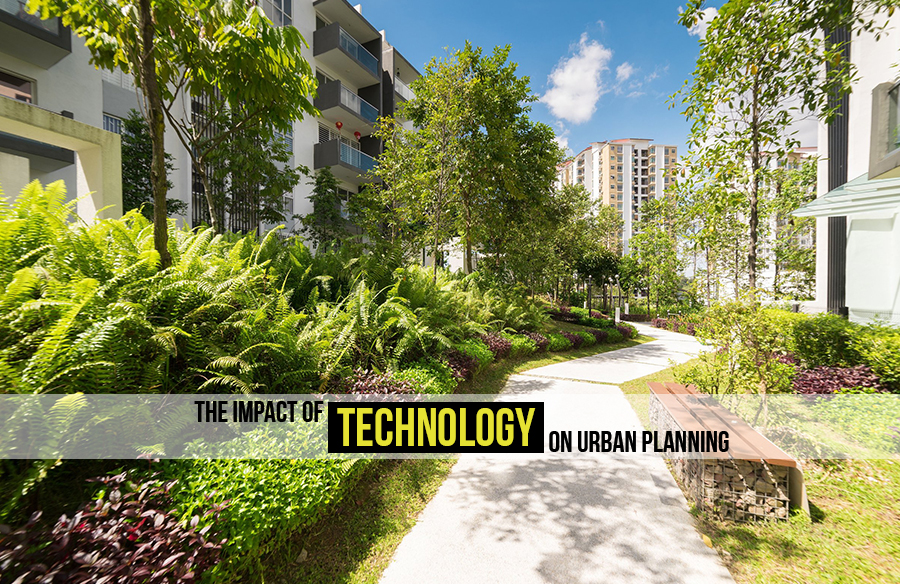
Urban planning is the process of creating and overseeing the growth of cities and towns to make sure that housing, transportation, infrastructure, and other necessities are met to accommodate populations. Over the past few decades, technology has developed at a rapid pace, which has had a significant influence on urban planning. With the advent of smart city technology and Geographic Information Systems (GIS), urban planners can access advanced tools that make planning more sustainable and effective. This article examines the many ways that technology has affected urban planning, considering both positive and negative effects.
Introduction of Geographic Information System (GIS)
Geographic Information Systems (GIS) are widely used in urban planning, and this is one of the biggest technical advancements in the field. Urban planners may more easily plan for land use, transit, and environmental protection because of GIS’s ability to visualise, analyse, and understand partial data. Planners can find links and trends by superimposing disparate data sets, which may not be immediately apparent. GIS may assist planners in choosing the optimal sites for new infrastructure projects by examining variables like environmental effects, traffic patterns, and population density. It may also be used to simulate the results of various planning decisions and anticipate future urban expansion. Due to this capability, urban planning is now a proactive process where choices are made using insights gleaned from data rather than reactive ones.

The Internet of Things (IoT) and Smart Cities
The emergence of the Internet of Things (IoT) has led to a notable increase in the popularity of the “smart city” idea in recent years. Physical infrastructure, including buildings, roads, and utilities, is integrated with sensors and linked to the internet in a smart city. Urban planners and decision-makers may get real-time data from these sensors on a variety of urban living issues, including traffic flow, air quality, and energy use. Smart city technologies have the potential to improve urban planning by increasing infrastructure and service efficiency. Nevertheless, the implementation of smart city technologies in urban planning also comes with challenges. To make sure that these technologies are used in a way that benefits all citizens, not just those with access to the newest technology, issues about data privacy, cybersecurity, and the digital divide must be addressed.
Sustainable Urban Development
Technology has been instrumental in advancing sustainable urban development. Urban planning is progressively using energy-efficient technology, green construction materials, and renewable energy sources. For instance, energy-efficient appliances, wind turbines, and solar panels are being incorporated into the architecture of new homes and buildings. Urban planning is using technology to create communities that support environmentally friendly mobility options including walking, bicycling, and public transportation. Planners can create bike lanes, pedestrian-friendly streets, and effective public transportation systems that minimise dependency on automobiles and cut greenhouse gas emissions by using tools like GIS and transportation modelling software.

Participatory Planning
Technology has changed how the public interacts with urban planning. Previously, public participation in urban planning choices was limited and they were frequently decided in private. However, social media and digital platforms are making it possible for planning procedures to be more participatory. Residents can take part in surveys, comment on proposals, and attend virtual public meetings using online platforms. A greater understanding of the needs and preferences of various populations by planners can result in more inclusive and equitable urban planning as a result of this improved public involvement.
3D Modeling and Simulation
The application of 3D modelling and simulation software to urban planning is a noteworthy technical achievement. With the use of these technologies, planners may produce realistic, in-depth models of urban settings that are useful for visualising planned projects and evaluating their effects on the neighbourhood. For large-scale projects like new residential buildings or transportation infrastructure, 3D modelling software can be helpful. Planners can save time and money by identifying possible problems before construction starts by building virtual models of these projects. Furthermore, the city’s future effects from various scenarios, such as population increase or climate change, may be modelled using 3D simulations.

Challenges in Adopting New Technology
Urban planning can benefit from technology, but it faces challenges like high costs for GIS software, smart city sensors, and 3D modelling tools, and a digital divide in smaller cities or underdeveloped nations. Secondly, urban planners face challenges in managing large volumes of data generated by IoT devices, big data analytics, and smart city technology, ensuring reliable, and easily accessible information for informed decision-making. Apart from that, cybersecurity is a growing concern in cities, with hackers potentially disrupting vital services like energy, water supply, and transportation through targeted smart city infrastructure.
The Future of Technology in Urban Planning
Future urban planning will continue to be shaped by technology in fresh and creative ways. Data analysis and planning will probably rely more on artificial intelligence (AI) and machine learning. AI has the potential to be utilised in several applications such as transportation route optimization, urban infrastructure prediction due to climate change, and neighbourhood design generation. More real-time data collection will be possible due to developments in communication technologies like 5G networks. The creation of hyper-connected cities, where every facet of urban life is tracked and enhanced for sustainability and efficiency, may result from this.
There is no denying that technology influences urban planning. The design and management of cities have been completely transformed by technology, ranging from big data and 3D meddling to GIS and smart city technologies. Urban planning is now more inclusive, sustainable, and efficient thanks to these developments. To guarantee that these technologies’ advantages are realised, however, issues like cost, data management, and cybersecurity must be resolved. Urban planners will need to continue embracing new technology as we go forward while also taking into account their wider social and environmental effects.
References:
Batty, Michael. Inventing Future Cities. MIT, 2018.
Goodspeed, Robert. Scenario Planning for Cities and Regions: Managing and Envisioning Uncertain Futures. Lincoln Institute of Land Policy, 2020.
Komninos, Nicos. The Age of Intelligent Cities: Smart Environments and Innovation-for-all Strategies. London, Routledge, 2018.
Silva, Carlos Nunes. Citizen E-Participation in Urban Governance: Crowdsourcing and Collaborative Creativity. IGI Global, 2013.
Townsend, Anthony M. Smart Cities: Big Data, Civic Hackers, and the Quest for a New Utopia. 1st ed., W. W. Norton & Company, 2013.