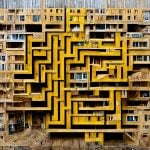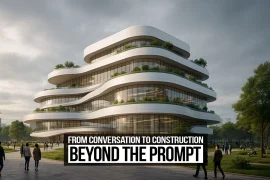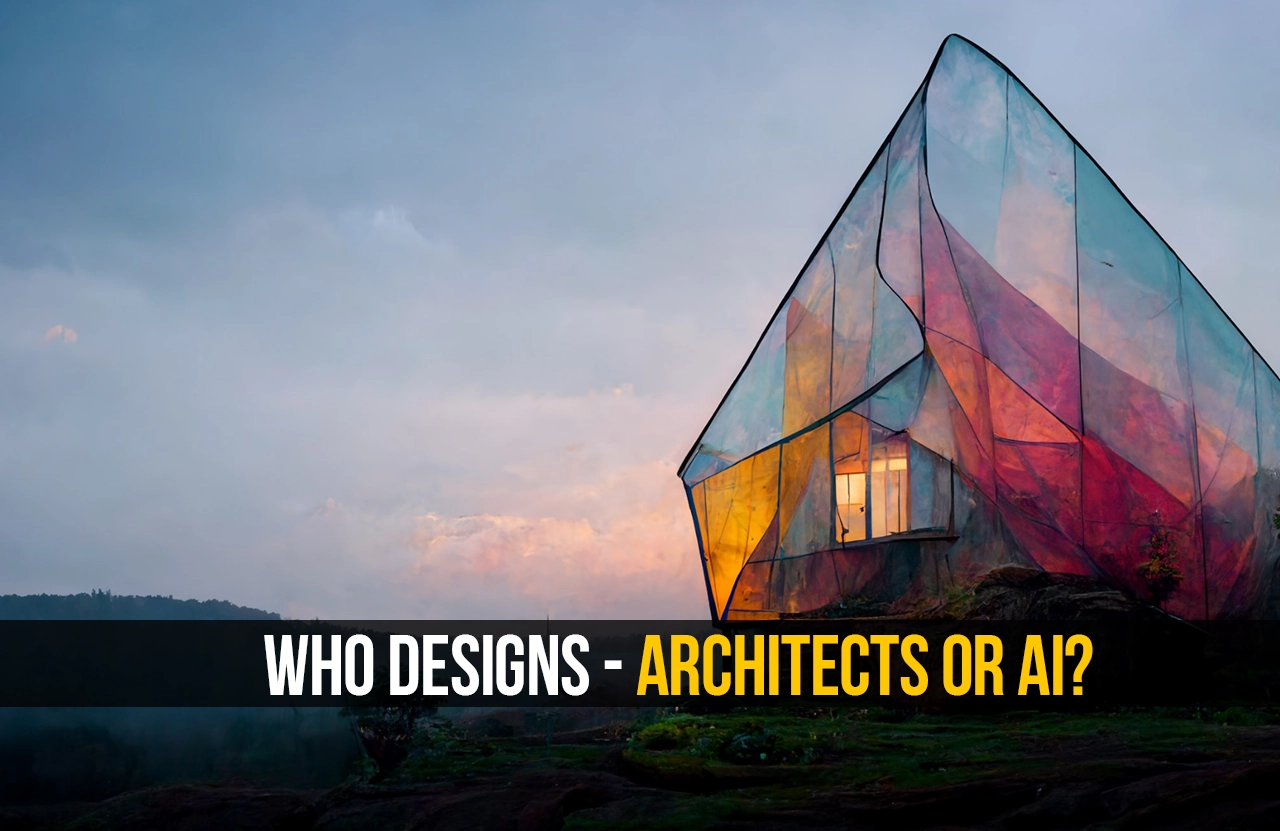
A peculiar question seems to be driving the anxiety of architects today, a question that triggers constant debate in the architecture fraternity – will AI replace architects or redefine their role? A slight matter of concern that no one seems to address, however, is that everyone seems to pick a side and stress over it. AI can generate plans, high-definition renders, analyse data, optimise layouts and create innumerable design iterations within a couple of seconds. Tasks that once required hours of labour from architects and demanded sleepless nights are now taken care of in seconds – architects were bound to feel redundant! This only made it easier to envision a future in which architects became mere spectators, with a machine taking over the role of design.

But what if we were looking at this relationship from the wrong angle?
The question shouldn’t be whether AI can replace architects. It should instead ask if architects can use AI to redefine what it means to be an architect.
Architecture and AI are not inherently competitors. They possess starkly different strengths from one another, which, when judiciously made use of, can create something powerful. AI is capable of processing vast quantities of data, recognising patterns and producing efficient outputs at remarkable speed. Architects, meanwhile, bring cultural and contextual understanding, empathy, creative thinking, experience and versatility to the table. Architects, unlike AI, understand the value of creating environments that provide an enriching experience for users who inhabit a space and attach emotional sentiment to it. Architects understand that design isn’t always about solving a set of measurable problems.
While AI calculates, architects empathise.
AI generates, but architects analyse and then judge.
This contrast isn’t a drawback. It is rather a potential collaboration.
How can AI contribute?
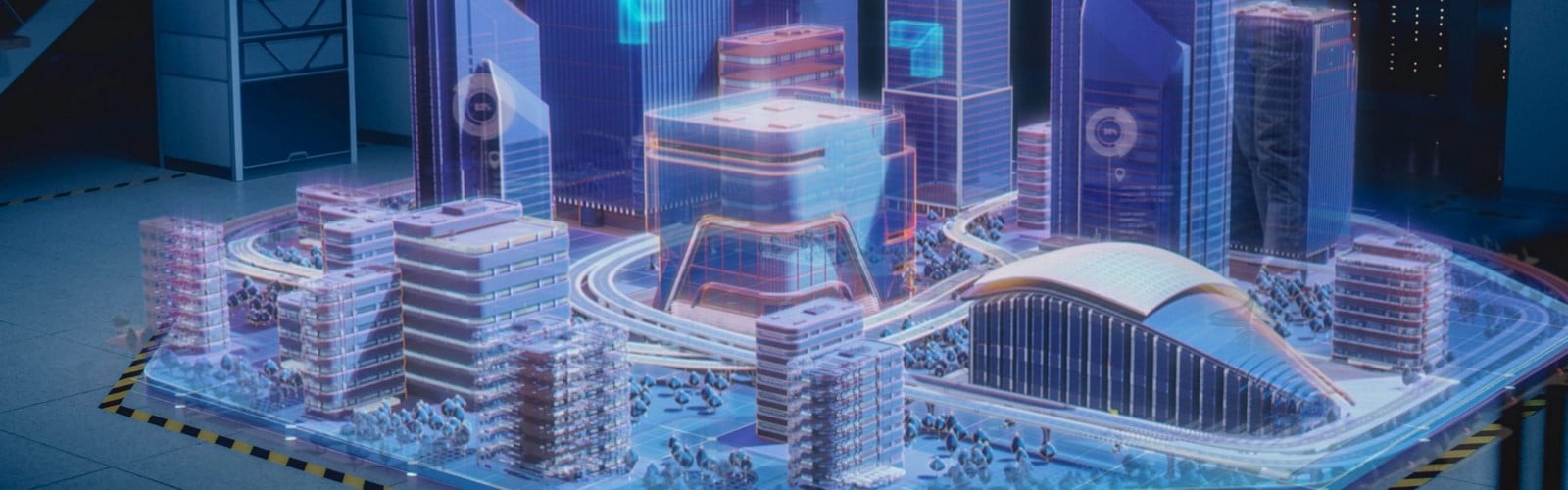
A significant portion of an architect’s time is spent in tasks that are necessary but repetitive and monotonous: documentation, coordination, data processing, repetitive modelling and iterating, etc. While these activities form a fundamental part of practice, they also eat away at an architect’s time at critical activities such as researching, questioning, analysing and designing based on it all. AI has the capacity to take up all of the repetitive workload.
If used appropriately, the contribution AI can make will grant architects that has become increasingly scarce – time. Time needed to understand and analyse a site instead of plainly documenting it. Time to speak to the building’s users and time to test revolutionary ideas instead of settling for a workable solution. Time to gain contextual awareness and to ultimately design fruitfully.
This would fundamentally change the commonly perceived roles of architects as solvers of architectural problems and instead help them become better curators, critical thinkers and designers.
How can architecture use the opportunity to work on improved quality of projects?
Architecture has become increasingly entangled with productivity. The success of architecture practices is evaluated by the number of projects completed, the scales of projects, the speed of completion and the quantity of drawings produced. AI, without a doubt, will make these processes faster. But that is specifically why they should stop being factors of assessment for practices.
If artificial intelligence can produce innumerable iterations and options at an irrational speed compared to the time architects invest in it, then mass production can no longer be a factor of assessing success.
The conversation should instead move to assessing how relevant and valuable each of the options is.
AI could thus help architecture shift from enumerated outcomes to qualitative artefacts. Yet this potential comes with a warning. AI should not be used for purposes of critical thinking and decision-making.
When does efficiency become a risk?
If the profession simply hands over the entire design process to a machine, then the profession altogether risks becoming redundant and unnecessary. Without critical human presence, architecture risks allowing the repetition of what already exists without taking into consideration factors of usability, context, culture, etc.
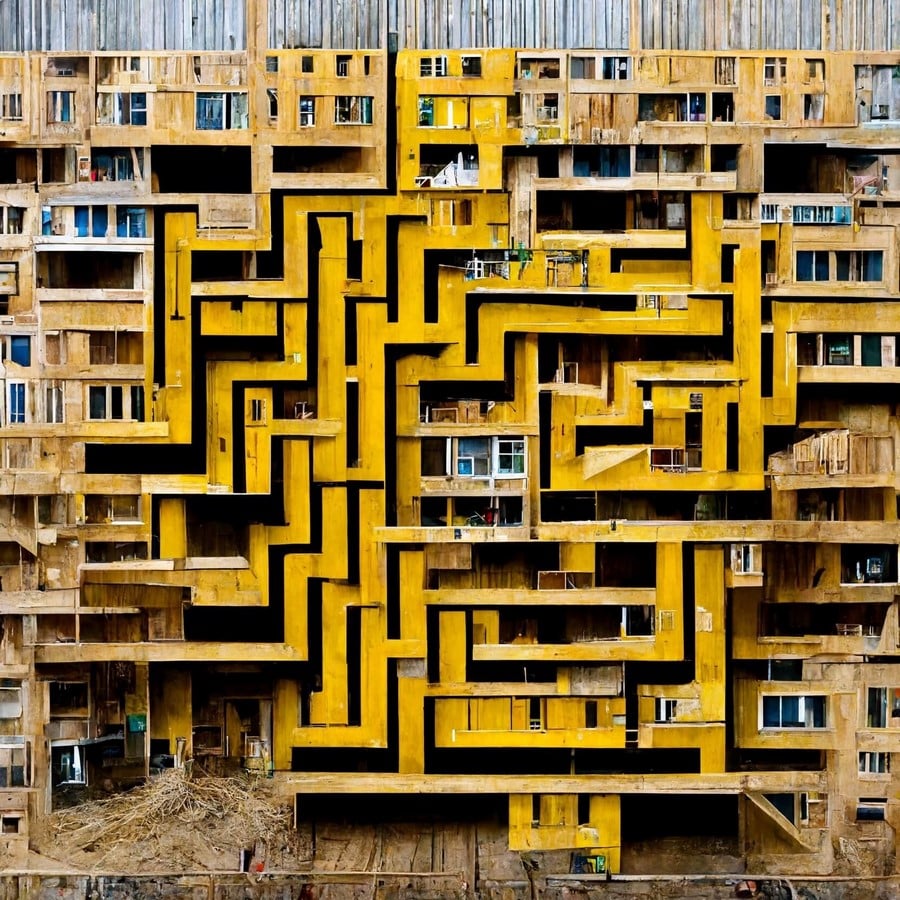
The largest danger of it all would be homogenisation.
A person, for example, may feel uncomfortable in a public space for reasons that are a challenge to quantify. A street may technically satisfy all by-laws and accessibility measures but remain difficult to navigate. A building may perform perfectly as envisioned but fail to instill a sense of belonging in its users. If AI were to take on tasks of technicality that are uniform across projects, architects could instead spend time interpreting. The architect’s role may thus be less about competing with AI’s capacities of taking care of clerical work and instead be more about asking the right questions about usability, durability, materiality, relevance, user belonging and developing the relationship between a space and its users that architects understand is necessary for a space to be considered successful.
Why they work better as a collective:
The distinction and segregation of roles between architects and AI and their functioning as a collective at the end of it becomes more significant as the problems architecture is required to address become increasingly complex.
Cities and populations are constantly growing. The future necessitates the resolution of climate change, environmental degradation, housing shortages, mobility and safety challenges, ageing populations, challenges of accessibility and resource scarcity. The problems are increasing, but the time and resources at the disposal of architects do not seem to be increasing.
Expecting architects alone to process all of this information is extremely unrealistic.
At the same time, leaving it all to AI is equally problematic.

The best solution, therefore, given the complexity of the challenges the future holds, would be for architects and AI to collaborate and work as a collective. AI can analyse enormous datasets, organise information, manage coordination, test scenarios and evaluate alternatives. An architect, on the other hand, can use those findings to design for the physical and social reality of the place. Together, they can achieve what was previously too time-consuming for architects to achieve alone and too risky to leave at the hands of a machine. They do not just provide the gift of time but also provide opportunities to evaluate what is worth pursuing instead of making projects an experiment.
The architect’s responsibility thus isn’t just to ask what can be designed? It also lies in asking what should be designed?
A Tool, Not a Substitute
That distinction ultimately may clarify the relevance of the profession while also redefining the role of an architect, which is particularly in need in countries like ours.
The danger of AI essentially isn’t even that it is too smart for architects to compete with. It is that it might cause architects to become dependent on it; so much so that they become redundant when left on their own. Technology should expand the architect’s capability, not dependency.
Architecture, historically, has evolved with new tools. The origin of the drawing board didn’t alter architectural thinking. The innovation of computer-aided design did not eliminate architects or diminish their relevance. Parametric involvement only helped architects explore design better; it did not diminish their capacity to judge. AI is yet another tool that is here to help architects with the new challenges the generation faces, and how this tool is used will make all the difference. While AI is just another tool, it is still unignorably one of the most powerful ones so far – its rightful usage becomes fundamental in this case.
The future of architects thus does not have to be a fixed choice made between the two parties – it can instead be a collaboration between the two that results in impactful and efficient designing.
And as architecture grapples with the growing populations, challenges and complex demands, this collaboration might just be something it desperately needs!
Citations:
- ArchiVinci (2025). Will AI Replace Architects? The Truth Behind The Hype. [online]. Available at: https://www.archivinci.com/blogs/will-ai-replace-architects
- Medium (2026). AI Will Not Replace Architects. It Will Redefine Their Value. [online]. Available at: https://medium.com/@ys.yogendra22/ai-will-not-replace-architects-it-will-redefine-their-value-5ea98f4c1ebc