The city that forgot to sleep
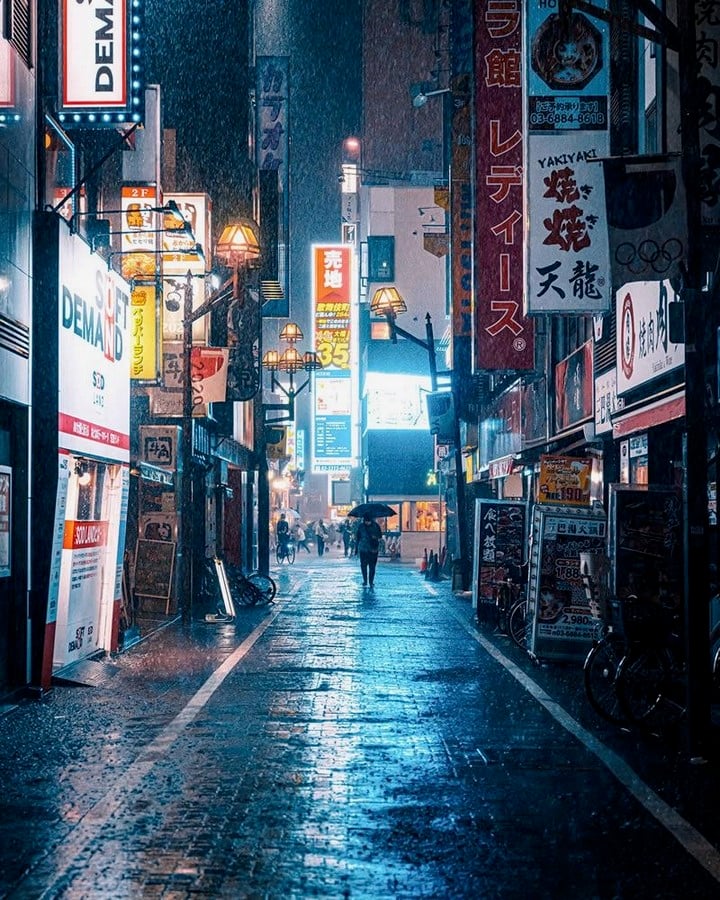
The clock strikes 12. A food delivery driver navigates an empty street. A convenience store restocks its shelves while a tired employee is still staring at their laptop, trying to wrap up a presentation. Apartment lights flicker on and off like the rhythm we so fondly look for in design. The sun has long been gone, but urban life hasn’t called it a day.
Not too long ago, the rhythm of the city was predictable. The familiar rhythm of offices emptying, shops pulling down their shutters, public transport slowing, and streets gradually falling silent. Today, those boundaries are becoming increasingly difficult to identify. Technology has made it possible to work across time zones, order almost anything at any hour and remain perpetually connected. The boundaries which have structured our lives have changed, our expectations have shifted, and the traditional distinction between personal and professional time is beginning to dissolve.
Buildings, however, are still designed around the conventional operating hours. Public spaces become inaccessible after dark and commercial landscapes convert to abandoned landscapes once their activities end. The result is a growing disconnect between how people live and how people around them are designed.
The challenge isn’t to simply keep buildings illuminated or operational. It’s to imagine architecture that can accommodate the changing modes of contemporary life without sacrificing the things that make cities livable – accessibility, community and comfort.
Buildings with Multiple Identities
While mixed-use buildings combine different functions under one roof, a more responsive approach considers how spaces can change their function, users and atmosphere across the day. A space could have different functions at different times, allowing buildings to stay in use longer than the schedules for which they were originally designed.
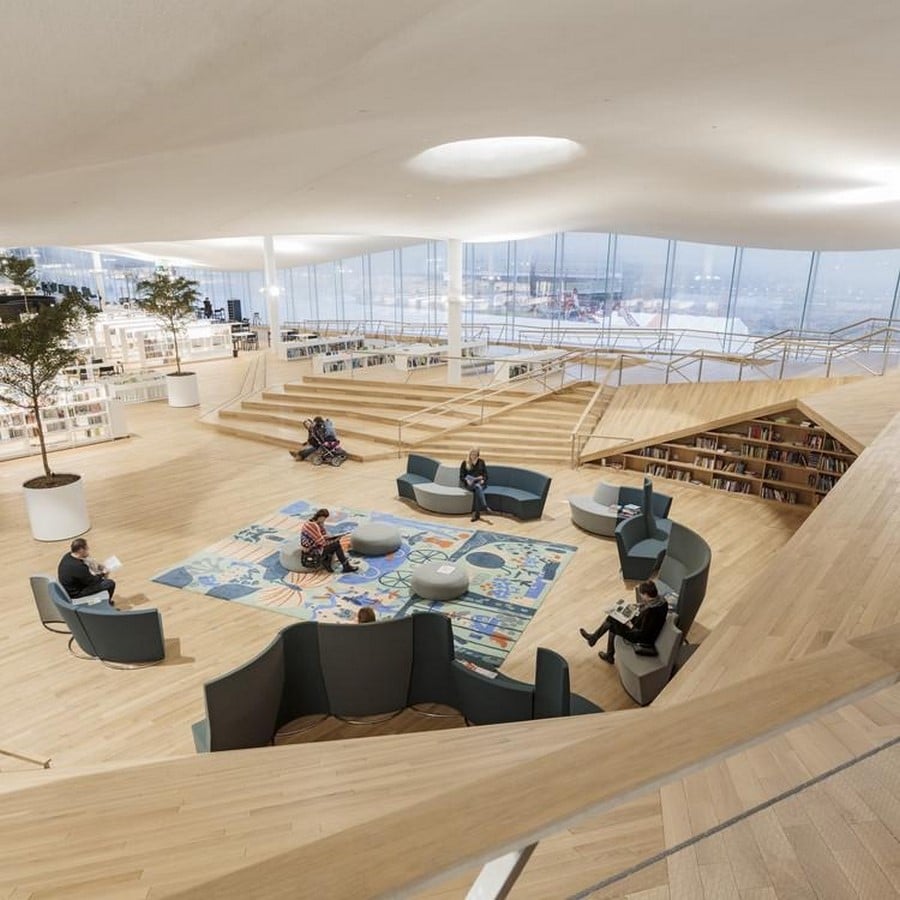
An interesting example is Helsinki’s Central Library Oodi, designed by ALA Architects and realized in 2018. At around 17,100 square meters, Oodi challenges the traditional idea of what a library should be. The three floors provide a range of experiences from an active public ground floor with event spaces, a second floor dedicated to workshops, studios, gaming and collaborative activities, to a quieter upper floor for reading and relaxation. What makes Oodi interesting is not simply the range of activities it accommodates, but how its architecture gives each activity a distinct spatial character. Rather than treating a library as a single-purpose institution, it becomes an extension of the city’s public realm.(“Helsinki Central Library Oodi – ALA,” n.d.)
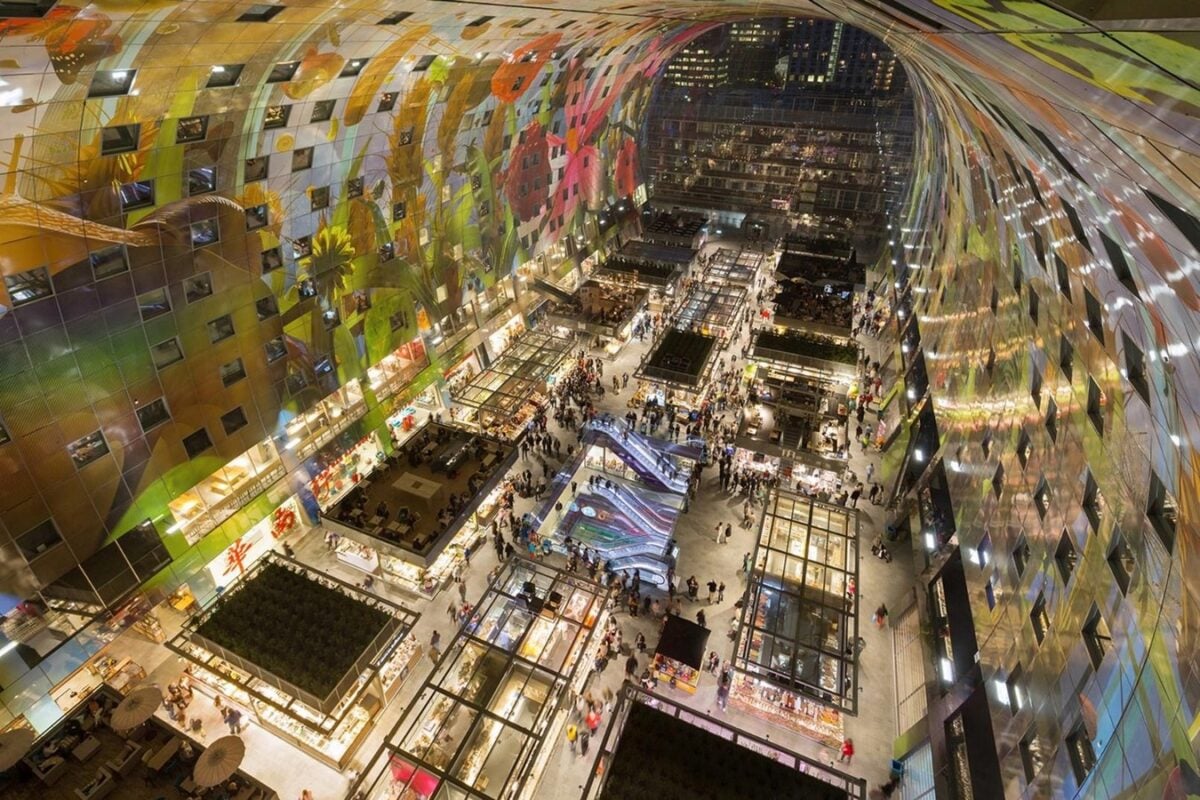
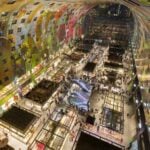
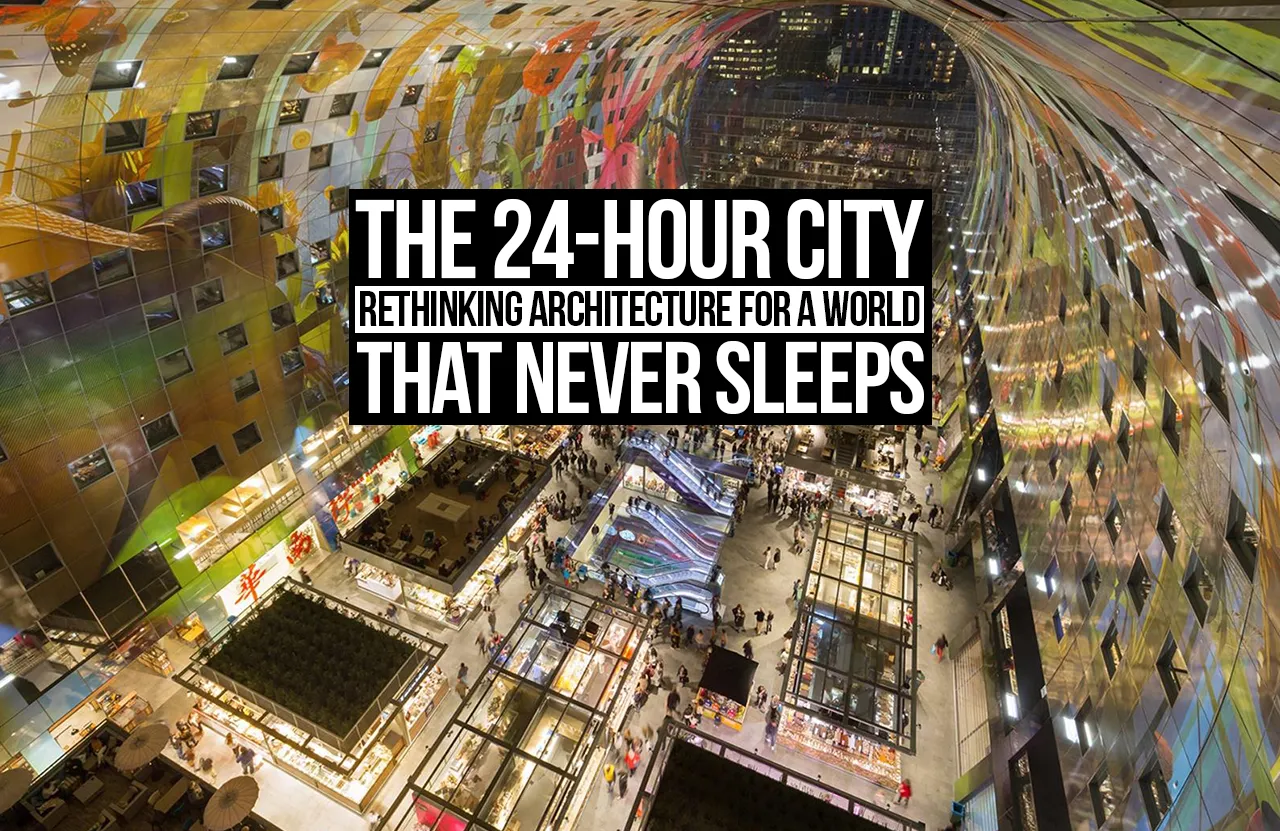
Another example is the Markthal in Rotterdam, designed by MVRDV and opened in 2014. It is a horseshoe-shaped building that houses a covered food market, restaurants, retail, underground parking and 228 residential apartments. The apartments are in the arch above, and its central market hall is a public-facing commercial space. The project is a demonstration of how seemingly disparate programs can be brought under one architectural umbrella, where different activities/communities can occupy the same building.(“MVRDV – Markthal,” n.d.)
The Architecture of the Night
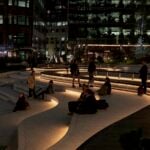
By 7 PM, a well-known street begins to look strange. Shop windows light up, restaurants spill onto pavements, office windows become glowing grids, and building shapes begin to emerge in the night sky. The same streets that carried commuters through the morning now cater to evening walkers, food vendors, late-night workers and people looking for somewhere to spend their time. The city hasn’t changed physically, but almost everything about how we experience it has.
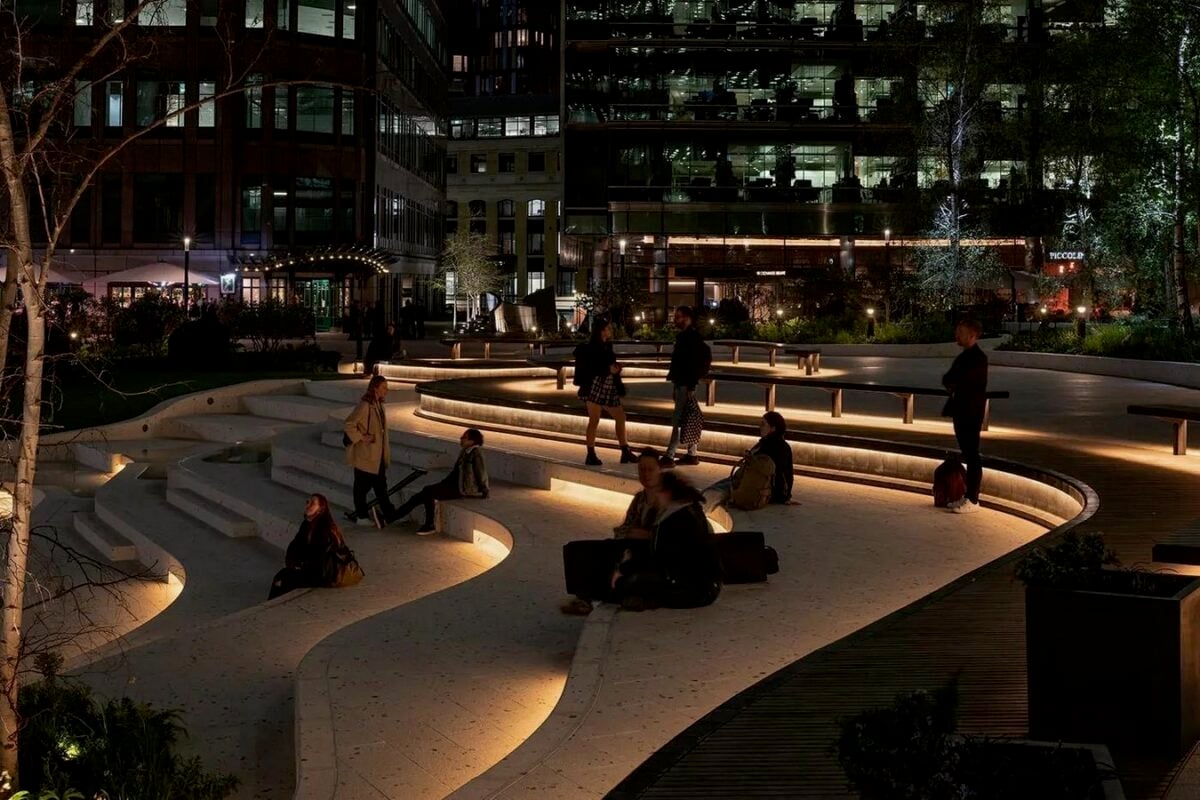
Darkness alters our relationship to the built environment. A brightly lit storefront can be an invitation to enter, but a poorly lit pedestrian underpass can be a space people instinctively avoid, because our perception of safety is often shaped by how visible, accessible and occupied a space feels.(“Urban Planning for City Leaders,” n.d.)
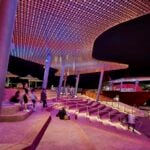
This makes lighting one of the most powerful tools of nocturnal architecture. But designing for night is much more than just making everything brighter. How light is placed, how intense it is, its colour and direction can determine how people perceive a space, where they walk and if they feel comfortable staying there. (“Factors Affecting Pedestrians’ Perceptions of Safety, Comfort, and Pleasantness Induced by Public Space Lighting: A Systematic Literature Review – Tamar Trop, Sharon Shoshany Tavory, Boris A. Portnov, 2023,” n.d.)
In fact, research is increasingly calling into question the assumption that brighter environments are necessarily more successful night-time spaces. A 2021 study in Shenzhen, of 11 neighbourhoods in the journal Building and Environment, found that low-density modern neighbourhoods had higher outdoor lighting, but much lower nighttime activity, than denser urban villages. The latter often enjoyed light spilling out of nearby buildings and shops. This means that the success of a night-time environment is not a matter of how much light is provided, but a matter of the relationship between urban form, human activity and the surrounding built environment.(Pan and Du, 2021)

Just think of the night markets of Bangkok and Taipei. Their vibrancy comes not from elaborate architectural lighting schemes or monumental buildings. It emerges through the interaction between temporary stalls, illuminated storefronts, food counters, casual seating and pedestrian flow. The architecture is often understated, but the interplay of activity, light, sound and movement creates a distinct urban feel. These spaces demonstrate that successful night-time environments don’t need expensive infrastructure; they need places that enable people to occupy, interact with and feel connected to their environment.(Yasmeen and Nirathron, 2014)
After all, a city that never sleeps doesn’t have to be a city that never rests. The challenge for architects is to create environments that are welcoming when the sun goes down, but not to make every hour another extension of the working day. Because the true measure of a 24-hour city isn’t how brightly it shines at midnight, but how comfortably people can live in it.
What Happens to Architecture When the City Stays Awake?
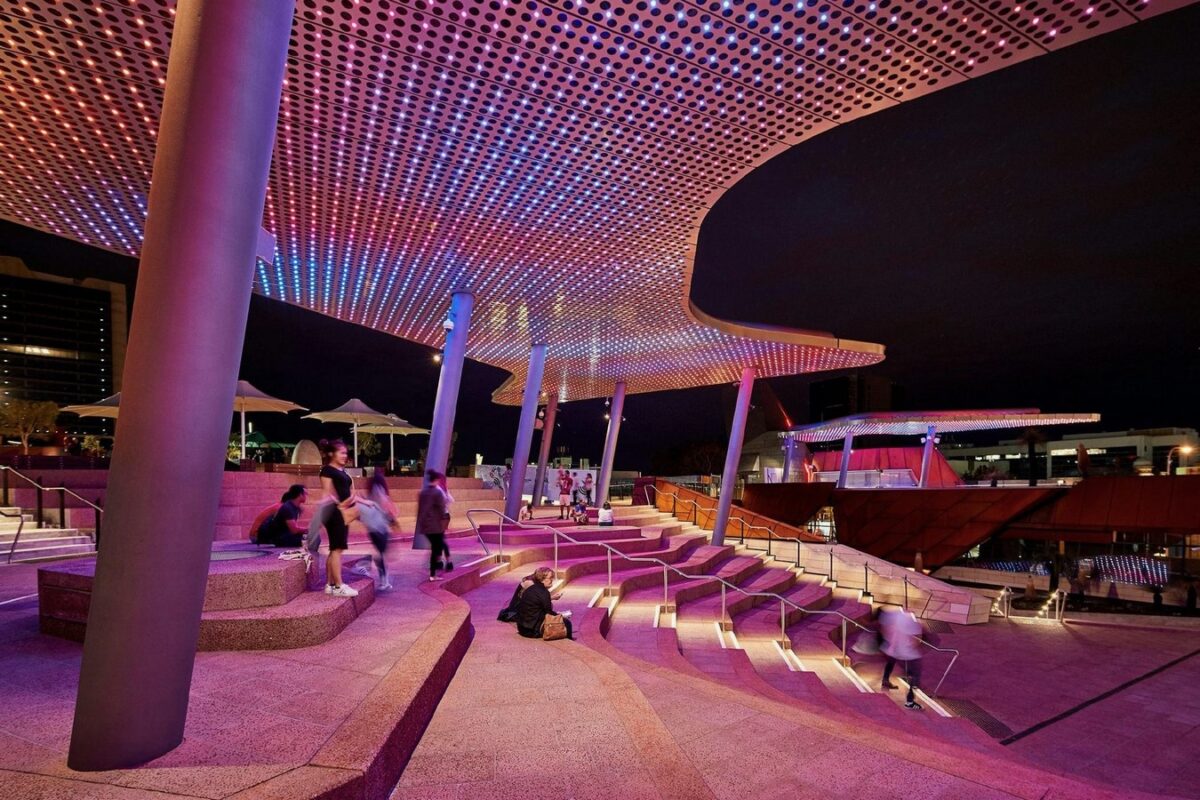
The 24-hour city is not simply about longer opening hours or mixed-uses. So, we must rethink the way buildings, public spaces and urban infrastructure respond to changing patterns of occupation. Can schools be community hubs after hours? Could office buildings be opened to the public on their ground floors in the evenings? Could you build streets and transport networks for those whose days start when everyone else’s end?
But a city that works around the clock must also know the need to rest. The constant activity comes at a price, evident in the excessive artificial lighting, the energy consumption and the demands on night-time workers. Architecture must therefore balance environmental responsibility and human well-being with accessibility and adaptability.
In the end, the 24-hour city isn’t about having everything open or lit up. It is about creating spaces that respond to different rhythms of urban life, accommodating activity, interaction and rest at different times. The real challenge is not to create a city that never sleeps, but one that remains livable through every hour.
Bibliography:
Factors Affecting Pedestrians’ Perceptions of Safety, Comfort, and Pleasantness Induced by Public Space Lighting: A Systematic Literature Review – Tamar Trop, Sharon Shoshany Tavory, Boris A. Portnov, 2023 [WWW Document], n.d. URL https://journals.sagepub.com/doi/10.1177/00139165231163550
Helsinki Central Library Oodi – ALA [WWW Document], n.d. URL https://ala.fi/work/helsinki-central-library/
MVRDV – Markthal [WWW Document], n.d. URL https://www.mvrdv.com/projects/115/markthal
Pan, W., Du, J., 2021. Impacts of urban morphological characteristics on nocturnal outdoor lighting environment in cities: An empirical investigation in Shenzhen. Build. Environ. 192, 107587. https://doi.org/10.1016/J.BUILDENV.2021.107587
Urban Planning for City Leaders, n.d.
Yasmeen, G., Nirathron, N., 2014. Vending in Public Space: The Case of Bangkok Context and Culture.