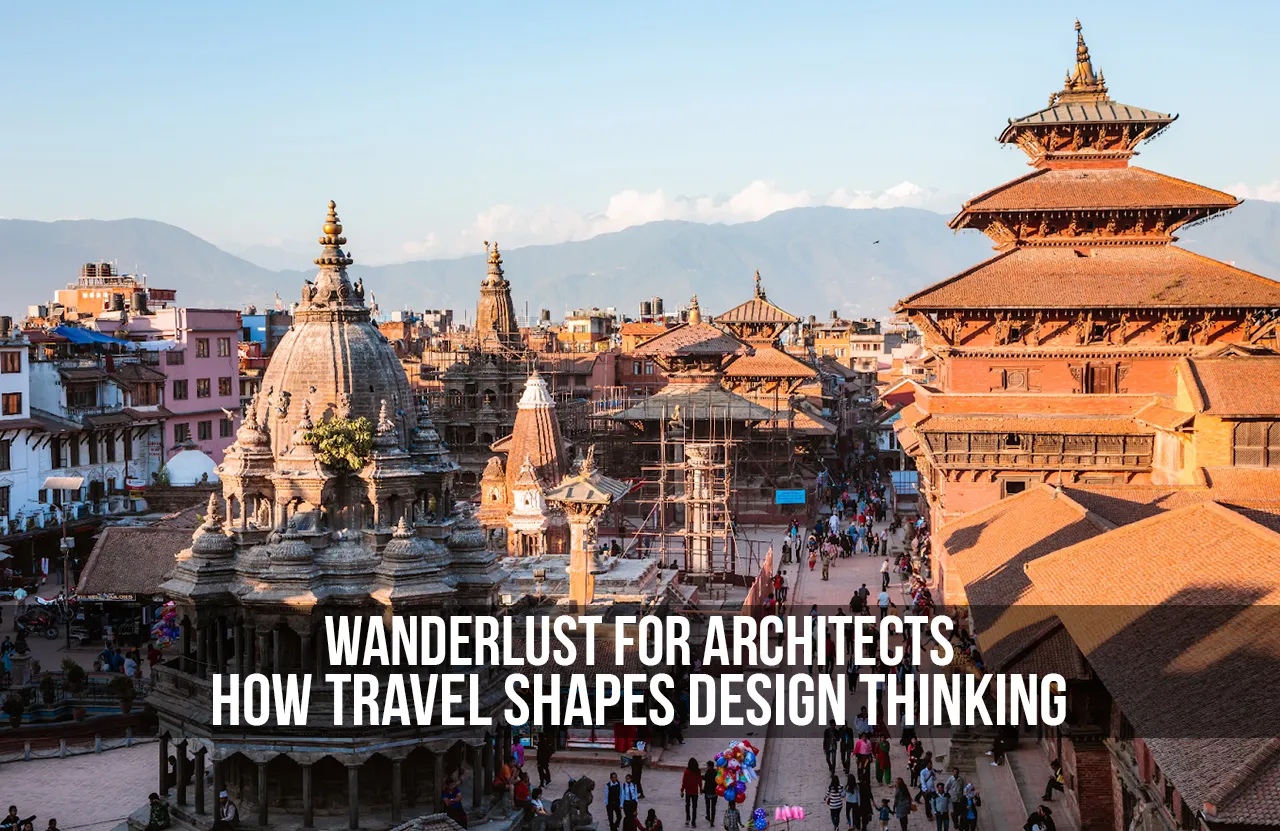
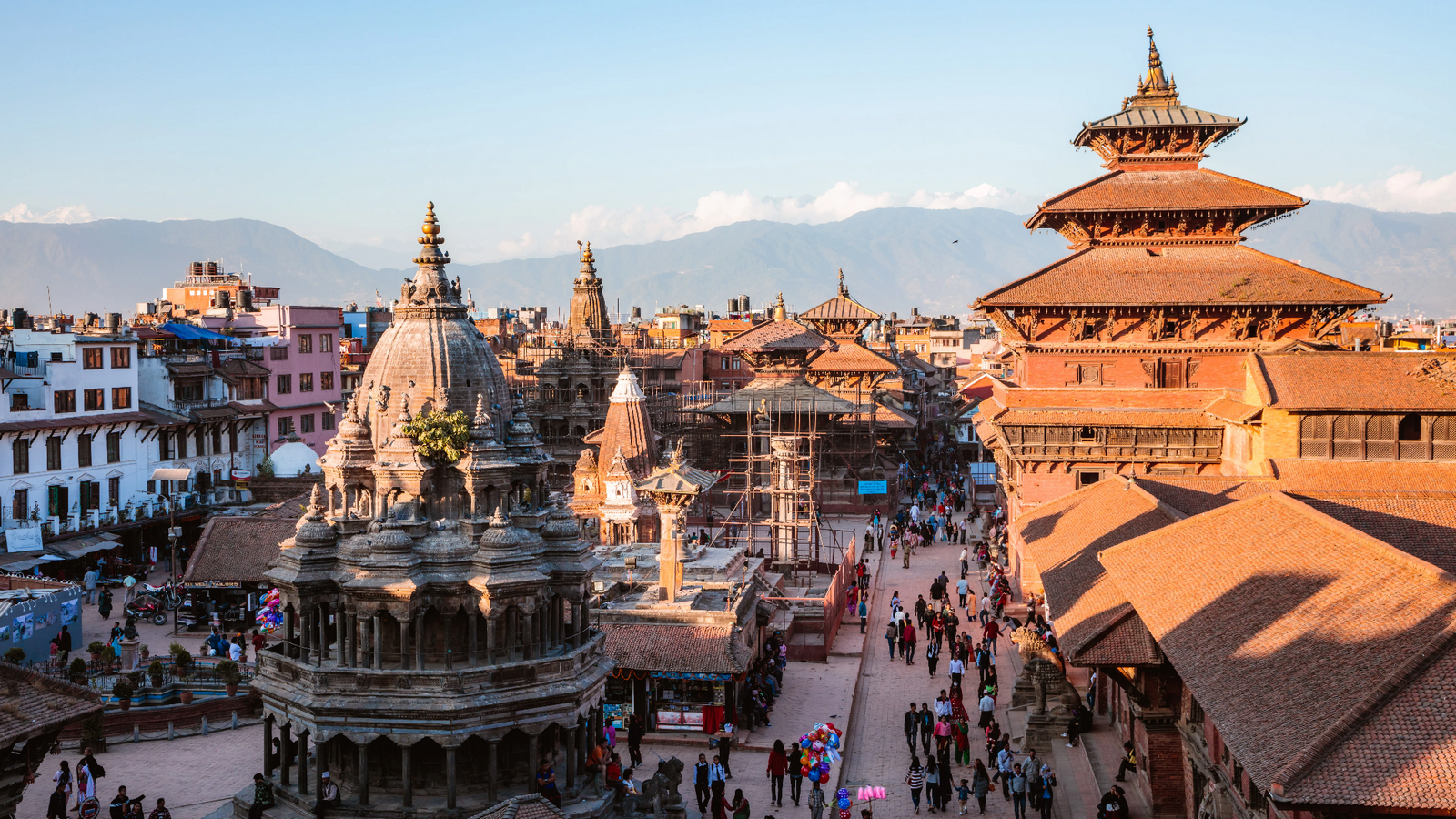
The moment that cracks an architect’s worldview rarely happens in a pristine gallery or atop a modernist skyscraper. It often hits in a moment of profound realization, such as on a dusty, noisy street near the temples of the Kathmandu Valley. As one trained to value newness and structural heroism, the sight of those centuries-old timber and brick structures, the ones that have often swayed but stood firm through countless tremors, forces a pause. The learned rules feel suddenly inadequate.
Textbooks might preach monolithic strength; this ancient architecture preaches flexibility and adaptation. They teach structural solutions from the industrial age; this culture uses complex, interlocking wood joinery, designed not to resist the earthquake rigidly, but to dance with it. This is a profound, humbling moment. Travel, for an architect, is not about sightseeing; it’s an unlearning process, a personal and professional education that compels the realization that one’s expertise is merely a single dialect in a massive, global conversation about inhabiting space.
The Humility of Unlearning
Architects often spend years in school absorbing principles of “correct” design: optimal daylight factors, universal dimensions for comfort, and the structural integrity of modern materials. There is a deep-seated belief that these principles are universal. Then, the traveler steps off a plane, and the world immediately starts breaking all the rules.
One might recall the first time walking through the high-walled streets of a settlement in Jaisalmer, India. The streets are barely wide enough for two people, the stone houses appear to lean into each other, and the scale feels strangely compressed. The mind initially screams inefficient and claustrophobic. Yet, reality is a deeply intelligent environmental strategy. Those tall, narrow canyons were deliberately designed to shade the ground quickly and funnel cool air, creating essential microclimates of relative comfort in the searing desert heat.
This is the humbling effect of travel: realizing one’s training is culturally and climatically specific. The concept of a “comfortable” dimension is revealed to be an average based on a particular history. What feels private or intimate in Kyoto’s narrow machiya is achieved through layers of sliding screens and small, contemplative gardens, not through the sheer physical distance of rooms typical of other, more expansive contexts. The design works because it responds to a different negotiation of privacy, community, and movement. The architect is compelled to swap the certainty of geometry for the humility of observation.
The Visceral Language of Sensory Architecture
If architecture is studied only through photographs and plans, the entire point is missing. A photograph captures a static moment of light and line; it never captures the sensory soul of space.
One might remember standing in an ancient cistern in Turkey. The air is cool and damp, and the sound of one’s own footsteps echoes back, slowly and deep, lending an unexpected dignity to the movement. That sound, that acoustic effect, is an integral, deliberate part of architecture. In contrast, consider the soundscape of a busy train station in Tokyo, a carefully choreographed symphony of chimes, announcements, and the rush of crowds, all designed to move people with maximum efficiency without inducing chaos.
The relationship between light and shadow is another profound lesson. In the sun-drenched architecture of the Maghreb, the core design ambition is to deny the sun entry. The small windows, the thick walls, the deep shadow cast by a courtyard arcade, shadow is the positive, precious commodity. Conversely, in the diffuse, often grey light of Northern Europe, the challenge is to use glass and reflective materials to capture and magnify every available lumen. Travel teaches that light isn’t a constant; it’s a raw material that dictates its own unique design language. It is what one smells, hears, and touches that creates the spatial memory a perfect render can never replicate.
The Archaeology of Layers
Cities are not pristine artifacts; they are stories written and rewritten over time. The architect must learn to read them as palimpsest documents with visible layers of history beneath the surface. One sees this most vividly in places where civilizations have repeatedly built, collapsed, and rebuilt.
In a city like Varanasi, the ghats and the old city fabric show a continuous process where small structures are replaced, built upon, or absorbed into a larger, living organism. These strata of history teach a crucial lesson about materiality and time. It is learned that every material fails eventually, but some fail beautifully. One observes how adaptation and reuse, the constant cycle of subtraction and addition, are not just historical processes but the most fundamental form of sustainable thinking.
Observing a weathered brick wall in a humid climate, its surface mottled with moss and age, teaches more about the life of a material than any product catalog ever could. It strips away the obsession with the perfectly pristine and reminds the architect that a building’s final form isn’t the one left at completion: it’s the one-time leave after a hundred years. This humility before the inevitable passage of time is essential to designing with true longevity in mind.
The Lesson of the In-Between Spaces
The buildings that often teach the most are the ones not considered capital-A Architecture at all: the markets, the public staircases, the informal squares. These are the in-between spaces where life, raw, unscripted human behavior, takes over.
One might spend an afternoon observing the intense social life unfolding in the narrow, communal galli (alleys) of Bhaktapur, Nepal. The alley is not just a path for circulation; it is a kitchen, playground, drying rack, and neighborhood meeting spot. The “architecture” is minimal, but the entire space is dynamically organized by human activity within it. People have collectively authored the circulation patterns, the gathering points, and the temporary thresholds of privacy. This observation highlights a powerful truth: human behavior frequently overrides, subverts, or vastly improves upon a designer’s initial intention.
Architects may design a plaza for “gathering”; people might use it instead to sit on the curb and eat lunch. They might design a grand entrance; people use the back door because it’s two steps closer to the bus stop. The true genius of a place is often found in the gap between the formal plan and the vernacular wisdom of its inhabitants. By getting lost in these unplanned spaces, the designer gains an emotional cartography that maps simply can’t provide, feeling the subtle compression and release of urban sequences and discovering spatial logic through movement, not static observation.
The Embedded Wanderlust
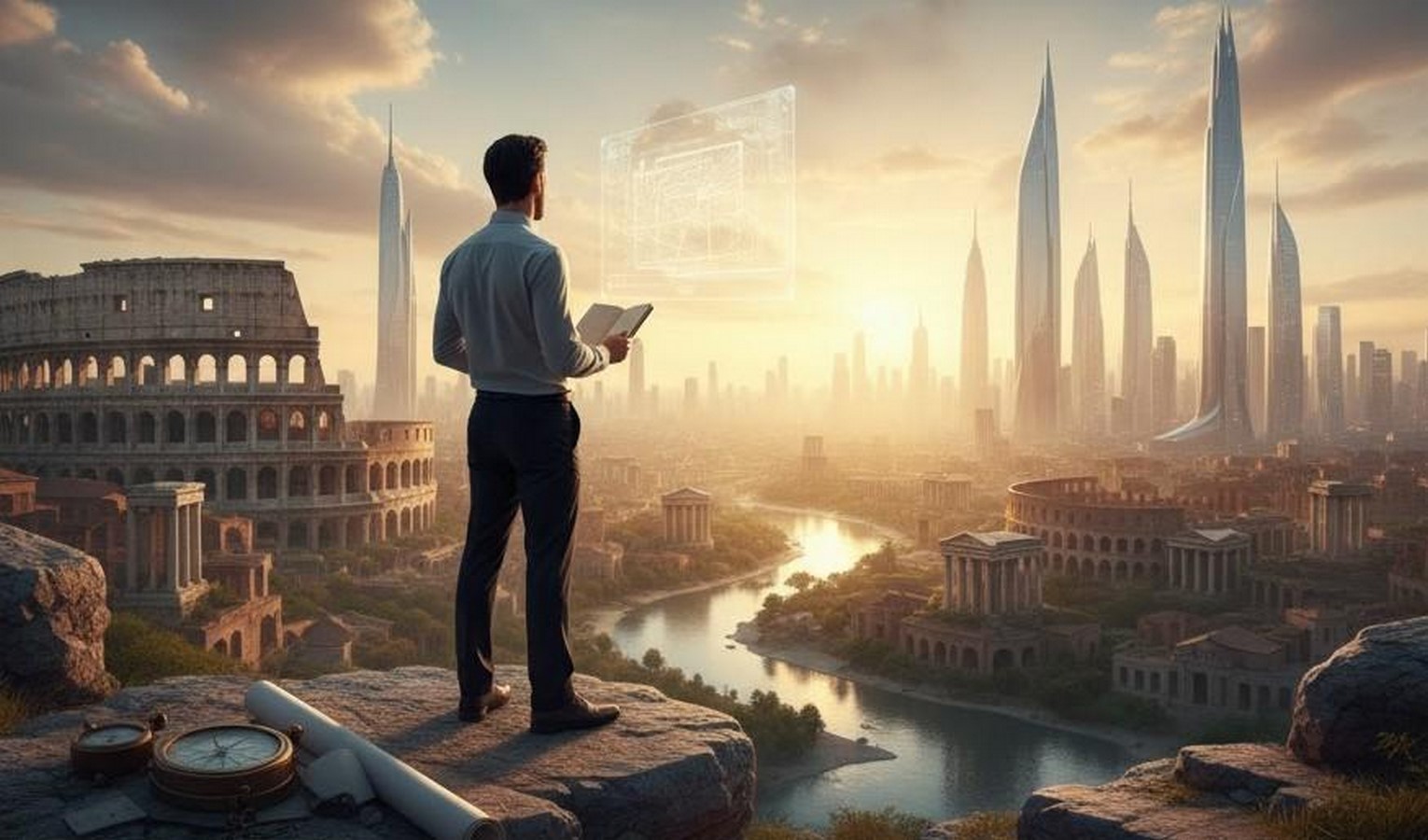
When the frequent traveler returns to their desk, they don’t bring back blueprints to copy. They bring back something far more valuable: a different set of questions. The goal isn’t to make a new office tower look like a Rajasthani haveli; the goal is to design with an embedded wanderlust.
The traveled architect approaches a new project with profound curiosity, asking:
- How does the local climate demand that the walls and roof perform, not just look good?
- What are the local materials, the local craftspeople, and the local traditions that could give this building an honest sense of place?
- What layers of history, social or physical, can be acknowledged or incorporated?
- How will people actually use the space when the architect’s presence is gone?
Travel makes one a better architect because it massively expands the empathy library. It replaces the narrow vision of professional training with a global consciousness. The architect returns with more humility, more curiosity, and the unwavering conviction that there is no one “right” way to build. The journey becomes permanently embedded in the practice, ensuring that every new line drawn is filtered through a vast, rich archive of lived, felt, and utterly human experience.