Plastic Overshoot
Only we humans make waste that nature cannot digest by Charles Moore. Humans make things to benefit themselves, either at the cost of humans or the planet Earth. According to Packaging Insights, Plastic Overshoot Day was recorded on 5th September 2024. Global plastic waste surpasses the world’s waste management capacity. 220 million tonnes of plastic waste will be generated in 2024 that is 24 kilograms per person across the globe. Plastic is not a biodegradable material. It cannot be decomposed by microorganisms and is harmful to mankind, animals, Earth, etc. The future generation will find plastic as their fossil fuel. Are humans ready to accept that their survival is in question if materials like plastic are not refused to use and manufactured?

Alternatives to Plastic
Everything and every situation is not about money generation as some things are fundamentally not right to pursue. Humans have to become conscious about their choices and buying behavior to make Earth free of tons of future trash. What is done, is done. But the next steps can always be planned and strategized practically. Packaging, product, and construction industries use a lot of plastic and from here, the change can start spreading awareness.
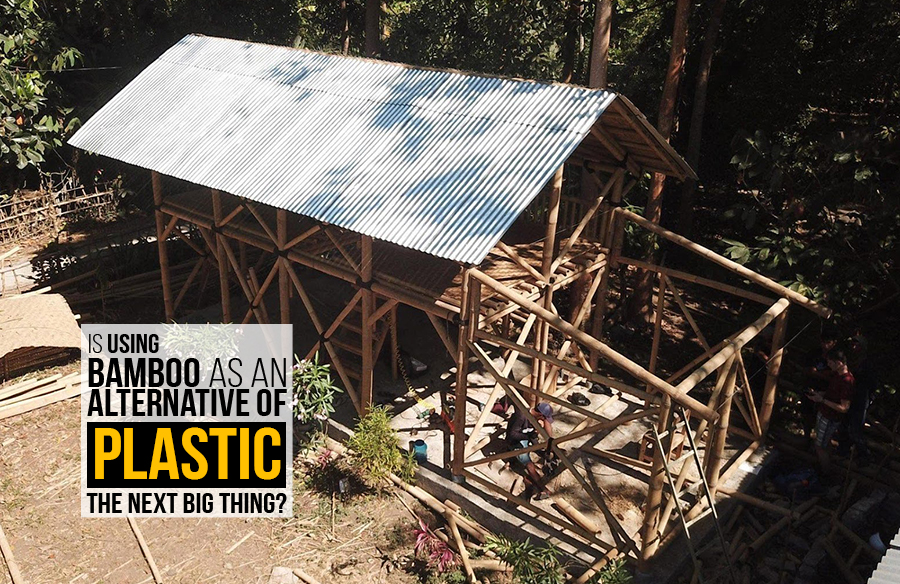
Other materials like bamboo, hemp, coir, mud, etc. can be used as alternatives to make products, packaging, to do construction work, etc. Let us take bamboo as a core material to study and understand what impact it can create on the environment as an alternative. Bamboo is the tallest grass known to humans that grows extremely fast, especially in countries like India, China, Japan, and many more. Bamboo is a sustainable natural material that is highly tensile & has compressive strength and can withstand heavy loads in extreme weather conditions. An average bamboo can resist 10 to 15 tons of compression. It is also a cost-effective and low-maintenance material as it is versatile, easy to transport, and lightweight. This feature can cut labour costs and can increase its economic value. Bamboo is also fire-resistant. It can withstand temperatures up to 4000°C. This is due to the presence of high levels of silicate acid and water. Bamboo is widely used in earthquake-prone areas due to its elasticity. Unlike cement, plastic, concrete, etc. bamboo is not harmful to humans, whereas it absorbs 35% more carbon than other trees or materials and reduces the carbon footprint.
Sustainability is catching attention due to very obvious climate changes and harsh weather conditions on Earth. Therefore, people start searching for conscious products that are light on earth and animals as well as on themselves and can cause minimum or zero harm. Now bamboo furniture, brushes, earbuds, straws, clothing, paper, bedding products, cutleries, lighting, gardening essentials, flooring, building roofs, and many more are introduced to the market to cater to the new requirements. Some construction examples are as follows- The Hanging Bridge in Along, Arunachal Pradesh made up of bamboo and ropes connects tribal communities to the mainland and provides easy accessibility in difficult hilly terrain; after a series of destructive earthquakes in Lambok, Indonesia in 2018, a civil engineering company Ramboll designed and built template houses made from bamboo, etc. There are multiple brands that people need to support and create awareness about such as- Seek Bamboo offers hair care, toilet paper, bamboo straws, cutlery sets, bamboo brushes, etc. products; Skarpari offers bamboo knives, jewelry, and other kitchenware products whereas Kohls provides a wide range of sophisticated eco-friendly lifestyle products such as- bamboo wickers, bamboo laundry hampers, etc.


Changemakers
People, government, architects, interior designers, engineers, environmentalists, sustainability consultants over planners, policymakers, change enthusiasts, etc. Everyone should take one step forward to guide others and themselves to walk on the road that was not taken in the past but ought to be walked in the future. A circular economy and the idea of zero carbon footprint can only be achieved if the public abandons the use of plastic everywhere. In old times, our grandparents carried linen, muslin, bamboo, or paper bags with them when they went outside. Why? Ask them, you will know the answer. They also carry their utensils to get any liquid food substance like milk, oil, ghee, curd, etc. from the market. They were wise and the younger generation considered them old school to follow these customs.
Plastic was introduced when life gets faster than living to compensate for everything with money. There’s no time for anything now. It’s only you who can decide that you want to live a life and not a race. Everyone knows that plastic is not good for anyone, but it has become a habit that is hard to break. Bad habits are made overnight without any effort, whereas good ones always take more effort and time. Teach your children the right way you should, not the way that is easy to follow.