Saltburn: Architecture of Excess
What happens when beauty becomes unbearable? Saltburn (2023), directed by Emerald Fennell, is not just a story set inside a mansion; it is a story built by one. The walls breathe, the mirrors listen, and the house itself seems to know what its guests are hiding. Every step echoes like a secret. Every corridor feels like it is waiting to see who will survive it.
The film draws us into a world so beautiful it starts to decay under its own perfection. The Saltburn estate is not merely grand; it is intoxicating. It seduces with light, overwhelms with space, and suffocates with its symmetry. This is not architecture as a backdrop; it is architecture as a predator. For designers, Saltburn becomes an eerie kind of case study, a reminder that spaces do not just contain emotion. They create it.
Architecture as Character
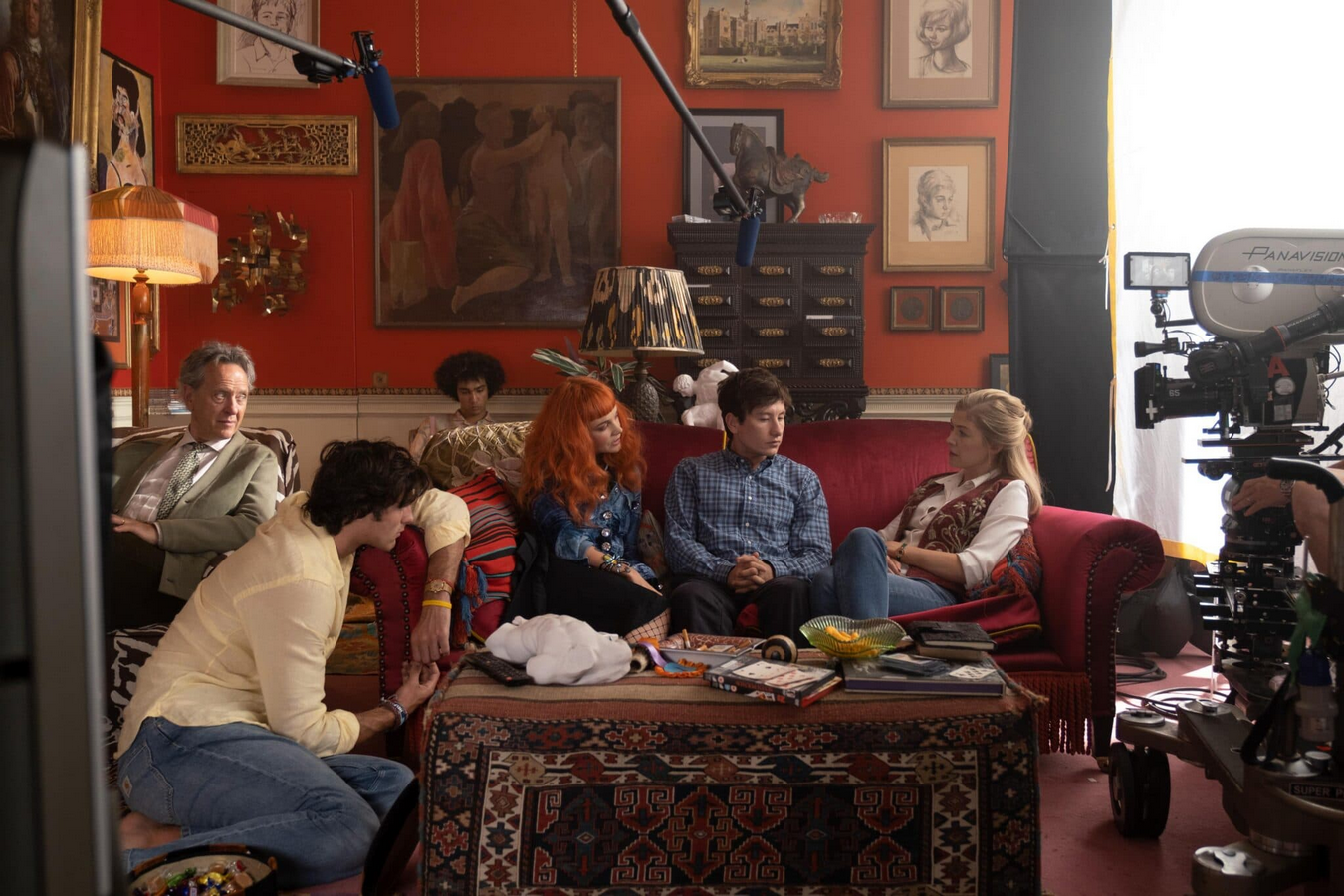
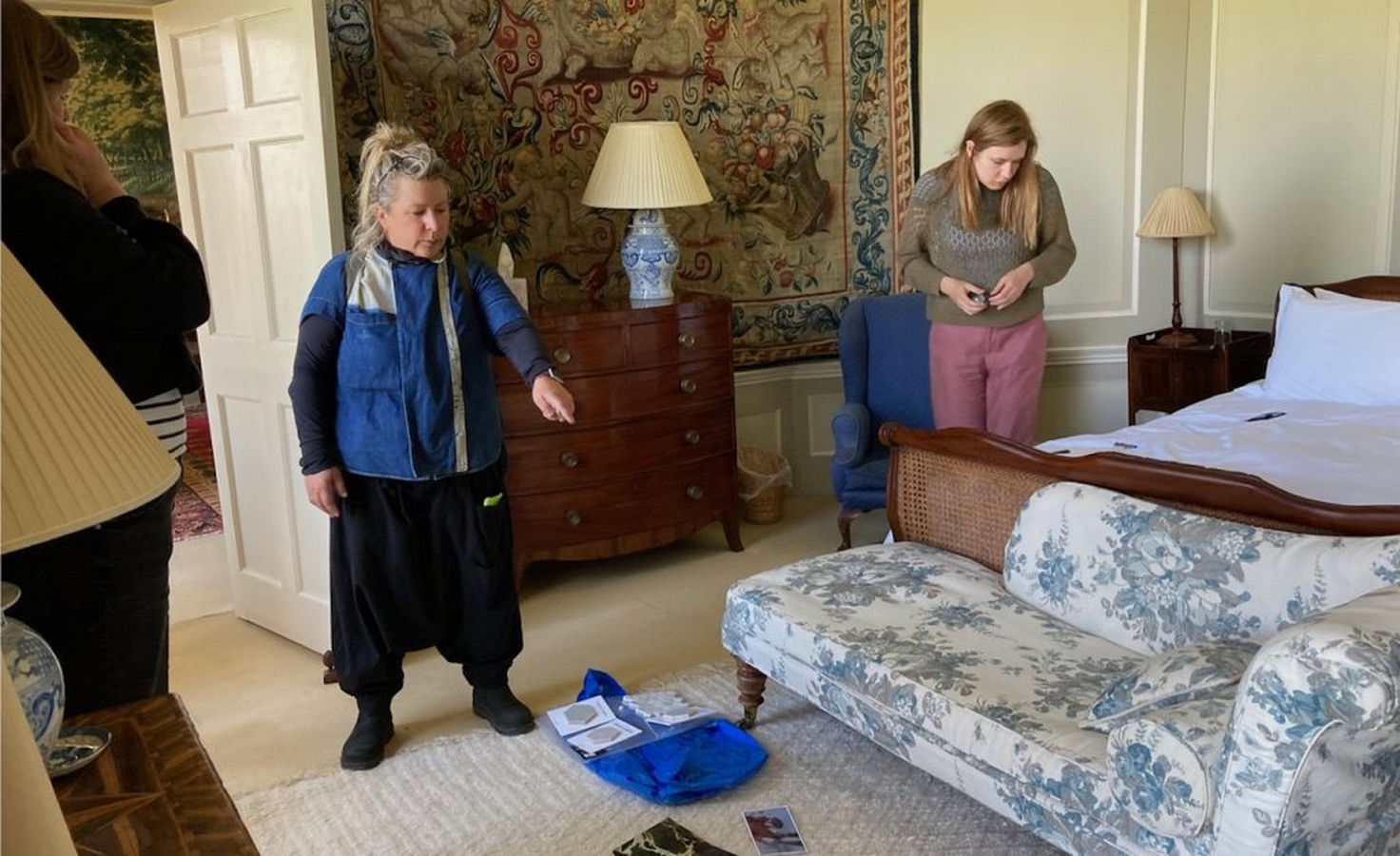
The house is real. Fennell filmed Saltburn at Drayton House in Northamptonshire, a 13th-century estate that barely needed a set designer’s touch (Architectural Digest, 2023). Its history lingers in every uneven tile and creaking floorboard. You can feel the air of time inside it, the weight of lineage and unspoken privilege.
From the moment Oliver, the film’s outsider protagonist, crosses the threshold, the house begins to test him. The ceilings rise too high, the corridors stretch too long. He does not walk through the estate; he is swallowed by it. Reflections stalk him from polished surfaces, reminding him of where he stands in this hierarchy of marble and silence.
Fennell lets the building act. It is not a passive stage but a sentient observer. It does not just hold the story; it directs it. Every threshold becomes a choice, every staircase a descent in Saltburn; architecture breathes, judges, and traps. The experience of moving through space becomes the film’s true plot.

The Spatial Politics of Class
Few films expose class through design as elegantly and ruthlessly as Saltburn. Every inch of the mansion whispers about who belongs and who does not. The drawing rooms impress but never feel comfortable. The smaller spaces, meant to feel intimate, somehow tighten around their occupants. You do not sit in Saltburn; you endure it.
Fennell never states this imbalance outright. She lets the building do the talking. Characters are filmed from below or above, dwarfed or elevated by their surroundings. Power becomes geometry. As Bachelard (1964) once said, architecture shapes how we dream, fear, and feel, but here those feelings curdle. Height becomes arrogance. Openness becomes isolation. Even beauty turns cruel.
For designers, it is a haunting lesson in how spatial hierarchy operates. Ceilings can oppress, corridors can exclude, and luxury can suffocate. Saltburn does not need words to define class; the stone does it for you.
Colour, Composition, and Emotional Geometry
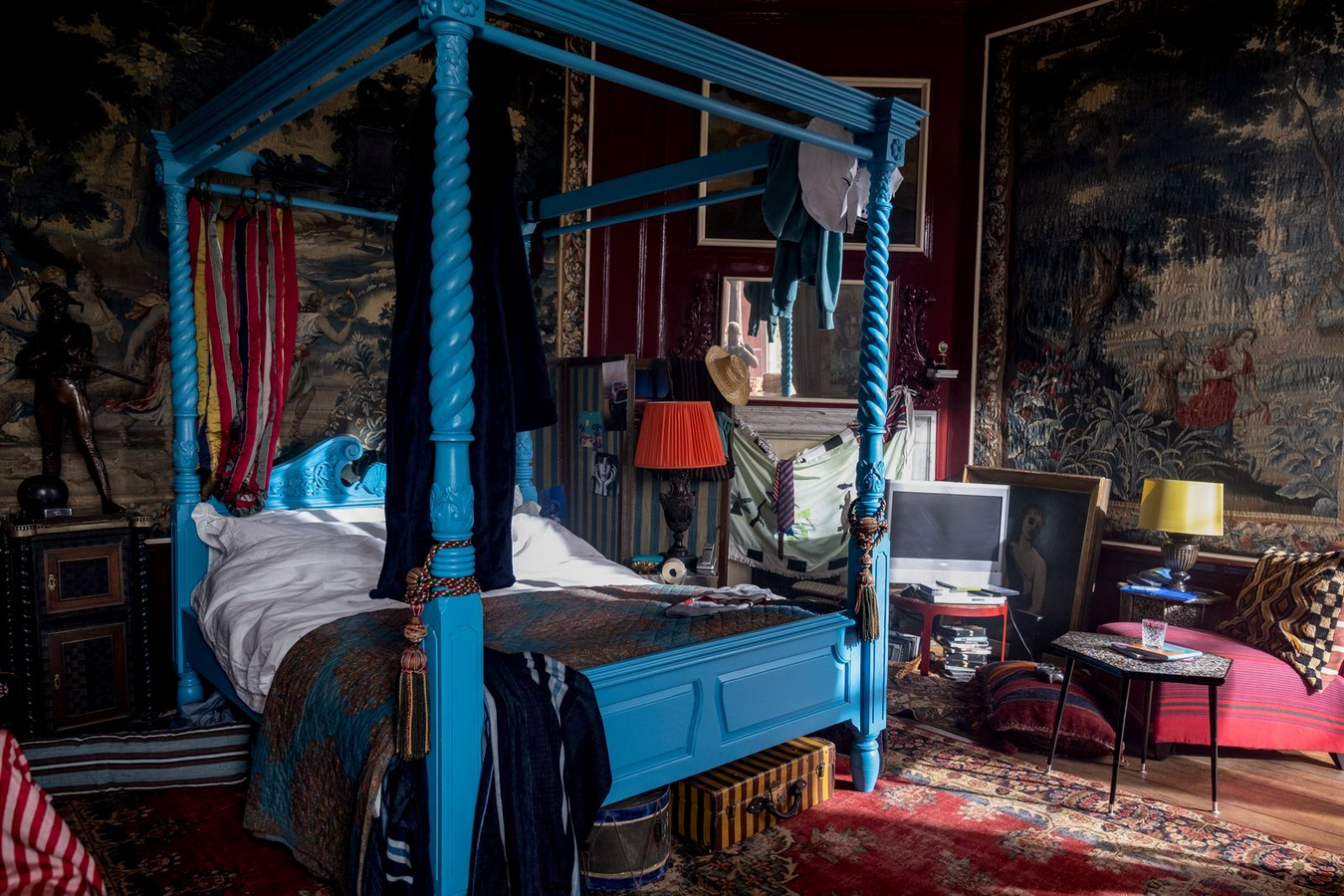
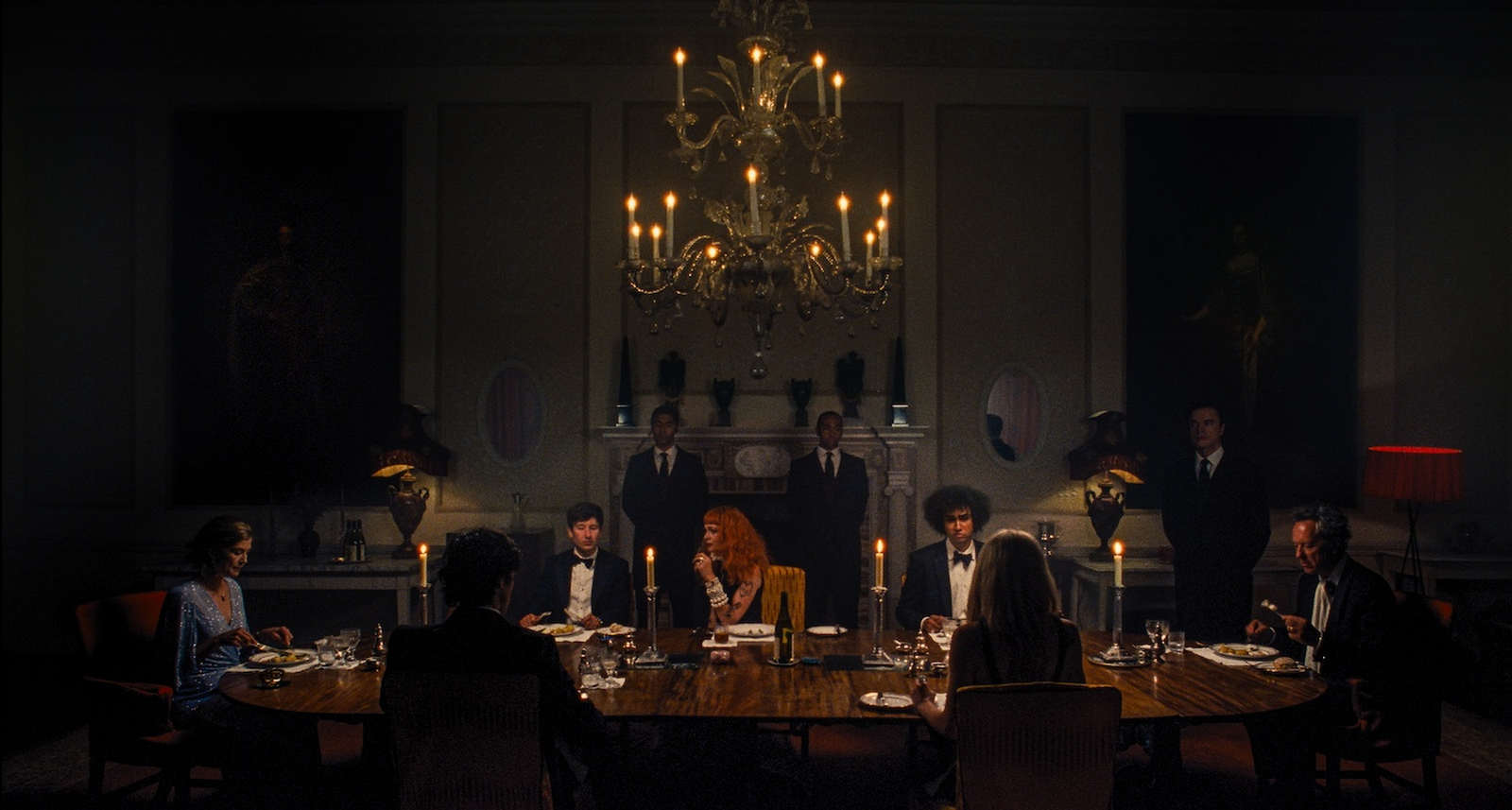
Visually, Saltburn feels like walking through a fever dream in slow motion. Cinematographer Linus Sandgren and production designer Suzie Davies turn the mansion into a world painted with decadence and dread. Golds, greens, and blood reds dominate every frame. The light never feels natural; it burns.
Velvet drapes, mirrored walls, and polished marble create a theatre of surfaces. Everything gleams too much, reflects too often. The symmetry is unnervingly exact, like a room built for ceremony rather than life. Even windows refuse escape; they reflect the characters back into their own delusion.
It is a visual tension that recalls Kubrick’s cold perfection and Antonioni’s existential stillness (Pallasmaa, 2012). The geometry of every shot becomes psychological, the way a corridor narrows, a chandelier overhangs, or a hallway vanishes into darkness. Fennell proves that design and cinematography can sculpt feeling. Architecture does not need to speak; it can ache, seduce, or suffocate all on its own.
Decay Beneath the Grandeur
But if you look closer, the beauty begins to rot. Behind the marble shine, dust gathers. The light flickers unevenly. The gold looks almost sickly. The illusion of control starts to crumble, and that is precisely the point.
Fennell embraces what Dillon (2011) calls “the aesthetics of ruin,” the allure of decay that reveals truth beneath perfection. Saltburn’s splendour hides quiet rot, both moral and material. It is a world obsessed with appearances, terrified of imperfection. The more polished the surface, the deeper the corruption beneath it.
The house becomes its own metaphor: beautiful from afar, hollow within. Like Rebecca (1940) and Parasite (2019), Saltburn understands that homes are emotional landscapes. They reflect their inhabitants’ desires and disguises. For designers, this is where the lesson lies. Architecture gains meaning not from flawlessness, but from the traces of life it cannot quite erase. A crack in the plaster, a warped floorboard, a fading stain; these are what make a space feel human.
Design Takeaways
So what can architects and designers learn from Fennell’s gothic fever dream?
- Space as Story
Every movement through Saltburn tells us something about power and belonging. Spatial sequence is not just a function; it is narrative. Design can guide emotion the same way film guides the eye. - Material Honesty
Marble, glass, velvet; luxury materials carry their own emotional weight. In Saltburn, opulence becomes oppressive. Materials speak; sometimes they whisper, sometimes they choke. - Scale and Emotion
Proportion is never neutral. Grandeur can just as easily evoke awe as anxiety. The mansion’s scale overwhelms, reminding us that dignity and domination often share a ceiling. - Light as Architecture
Light in Saltburn behaves like a character. Soft light hides what power fears; harsh light exposes it. Designers can shape the atmosphere not just with structure, but with illumination that builds tension and release.
The Architecture of Desire
By the film’s end, Saltburn’s house feels eternal, untouched, unrepentant, almost divine. The people fade; the building remains. It stands as a monument to desire itself, seductive, obsessive, and quietly cruel.
For architects, Saltburn offers more than visual indulgence. It is a meditation on emotional architecture, on how space manipulates, seduces, and defines us. Fennell reminds us that buildings are never neutral; they absorb memory, amplify power, and expose who we truly are when the performance ends.
Perhaps that is what lingers most after the credits roll: the sense that the walls of Saltburn are still listening. That beauty, when pushed too far, begins to remember everything it destroyed to exist.

References:
Architectural Digest. (2023) Inside Drayton House: The Real-Life Estate Behind Saltburn’s Opulence. Available at: https://www.architecturaldigest.com/story/saltburn-draryton-house (Accessed: 19 October 2025).
Bachelard, G. (1964) The Poetics of Space. Boston: Beacon Press.
Dillon, B. (2011) Ruin Lust. London: Tate Publishing.
Pallasmaa, J. (2012) The Eyes of the Skin: Architecture and the Senses. 3rd ed. Chichester: Wiley.
Fennell, E. (2023) Saltburn. Metro-Goldwyn-Mayer Pictures.