Devdas, with over 13 remakes in Indian cinema, is one of the most adapted literary works crossing across multiple languages and cultures. Written as a semi-autobiographical book by Sarat Chandra Chattopadhyay in 1901, the novel was not released till 1917 due to his embarrassment over the story. Unbeknownst to him, Devdas went on to be his most popular book and was adapted so many times that Corey K Creekmur stated, “In India, and in the transmission of popular culture through the South Asian diaspora, Devdas has been the vehicle of a continuous process of collective ‘remembering, repeating, and working through.’” Each adaptation borrowed from the story, but was repositioned into the context of those times.
P.C. Barua created three versions of the novel in Bengali, Hindi, and Assamese between 1935 and 1937, before Bimal Roy’s 1955 rendition, which has often served as the reference point for subsequent retellings.
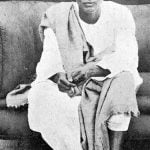
Sarat Chandra Chattopadhyay’s Devdas
Set in colonial rural Bengal, Devdas is a tragic love story of Devdas and Parvati. Both from Brahmin families, the two grew up as neighbours and childhood sweethearts. Due to his mischievous behaviour, Devdas’s father sends him to Calcutta to complete his education. As they grow up, Parvati’s grandmother suggests that they get married, but due to the economic disparity between the two families, Devdas’s mother rejects the match. Devdas refuses to oppose his family and flees to Calcutta. By the time he realises his mistake, Paro’s wedding arrangements have progressed. In Calcutta, he meets Chandramukhi, a courtesan, who falls in love with him and moves to a neighbouring village to begin a new life, leaving behind her profession. As his health deteriorates, Chandramukhi returns to tend to him, but he departs to fulfil his final wish to see Paro before he dies. The novella ends with Devdas dying at Paro’s doorstep while her family prevents her from leaving the house.


Sanjay Leela Bhansali’s Devdas
Sanjay Leela Bhansali is one of the most acclaimed filmmakers in Bollywood today. His work is often highly anticipated with an assured balance of aesthetic, drama, and story. Before Devdas, Hum Dil De Chuke Sanam (1999) provided Bhansali with an opportunity to establish his visual style and ability as a director. Devdas went on to become the highest-grossing film of 2002 and was also the most expensive film made in India at that time.

Several of the changes introduced into the film reflect the cultural context of the late 1990s. Instead of being sent to study in Calcutta, Bhansali’s Devdas, is returning from London after 10 years. This echoes the diaspora centric films that had gained both traction and brought in large economic benefits as a result of liberalisation in Bollywood. In contrast, he created a film so deeply connected to Indian classical music as well as aesthetics. This balance is also profoundly reflected in the modifications Bhansali presents in the story.
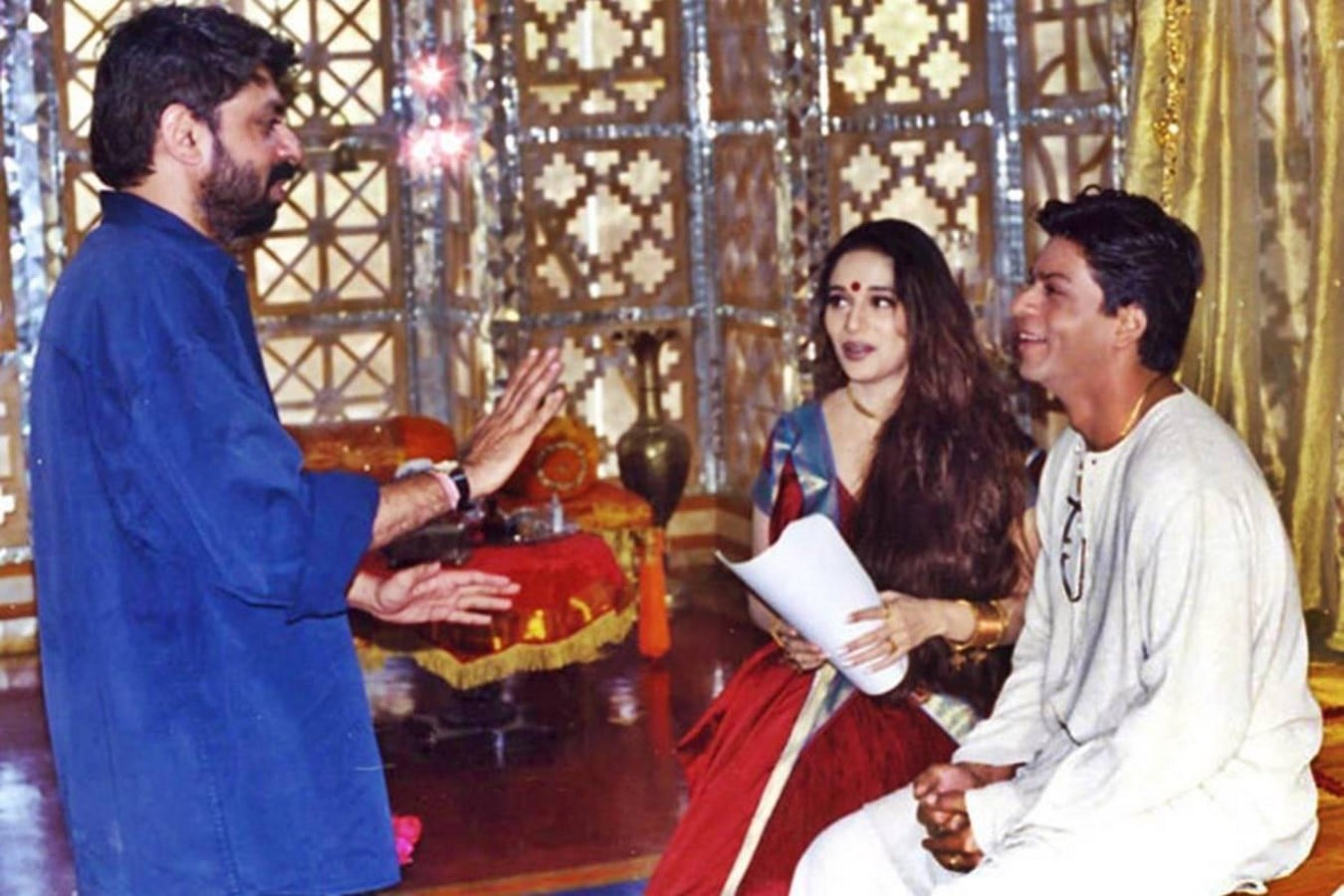
In his retelling of Devdas, Devdas’ family is conflicted about the marriage between him and Paro due to her family’s relation to Nautanki (Indian theatre and dance), which they believe is below their economic status. This theme is reintroduced when Chandramukhi, a courtesan, enters Devdas’ life. As Devdas loses his standing in society due to his alcoholism, Paro finds herself marrying rich and climbing the social ladder. Steering away from the original, Bhansali also produces scenes that bring together Chandramukhi and Paro, bringing the caste and social disparity of colonial Bengal to a common stage. Chandramukhi never gave up her profession, despite Devdas’ criticism. The end follows a similar plotline to the original novel.
Architectural Compositions in Cinema
Architecture has the potential to contribute significantly to a film’s plot and emotion through a variety of approaches, such as
- Mirroring reality – Architecture as a tool for grounding the story in its original context
- Enhancing emotional display – Showcases and reflects the character’s emotions through the context
- Reimagining a different world – Repositioning existing contexts into a unique setting
Transitions within the film are subtly reflected in the changes in the set and production design, emotions portrayed through colours and materials, and storyline changes through a shift in framing.
Sanjay Leela Bhansali has always incorporated visually captivating worlds, using the set design and cinematography to bring his writing to life. He believes each set serves a bigger purpose, to reflect heritage, communicate narratives and evoke emotions, in ways that pure writing and dialogues cannot. Some of the tools that Bhansali uses, strongly and effectively, in his films are colours, cultural motifs, landscapes and carefully curated cinematic frames to unite all the small, intentional contextual references.
Architecture as a Character in Devdas
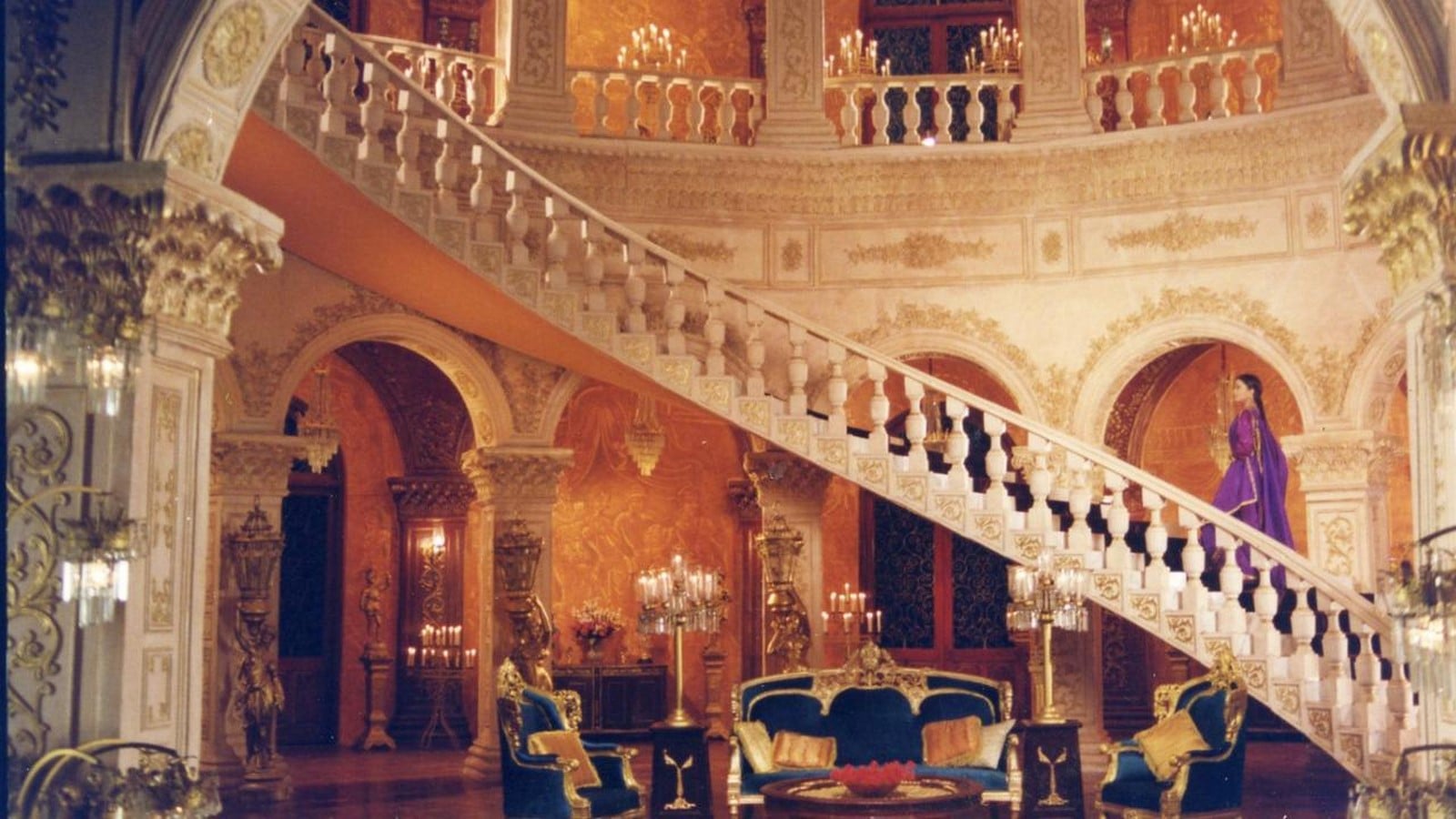
Designed by Nitin Chandrakant Desai, in close collaboration with Sanjay Leela Bhansali and Dheeraj Alkokar, a Pune-based architect, Devdas boasted the most expensive set design up until 2002. Said to have crossed about 50 crores, Devdas is viewed as the realisation and fruition of multiple talents at their peak at the same time. Working closely with the renowned cinematographer, Binod Pradhan, the set designer was able to blend architecture, colour and emotions to create an ethereal world that was grounded in Indian architecture but became so much bigger than it.
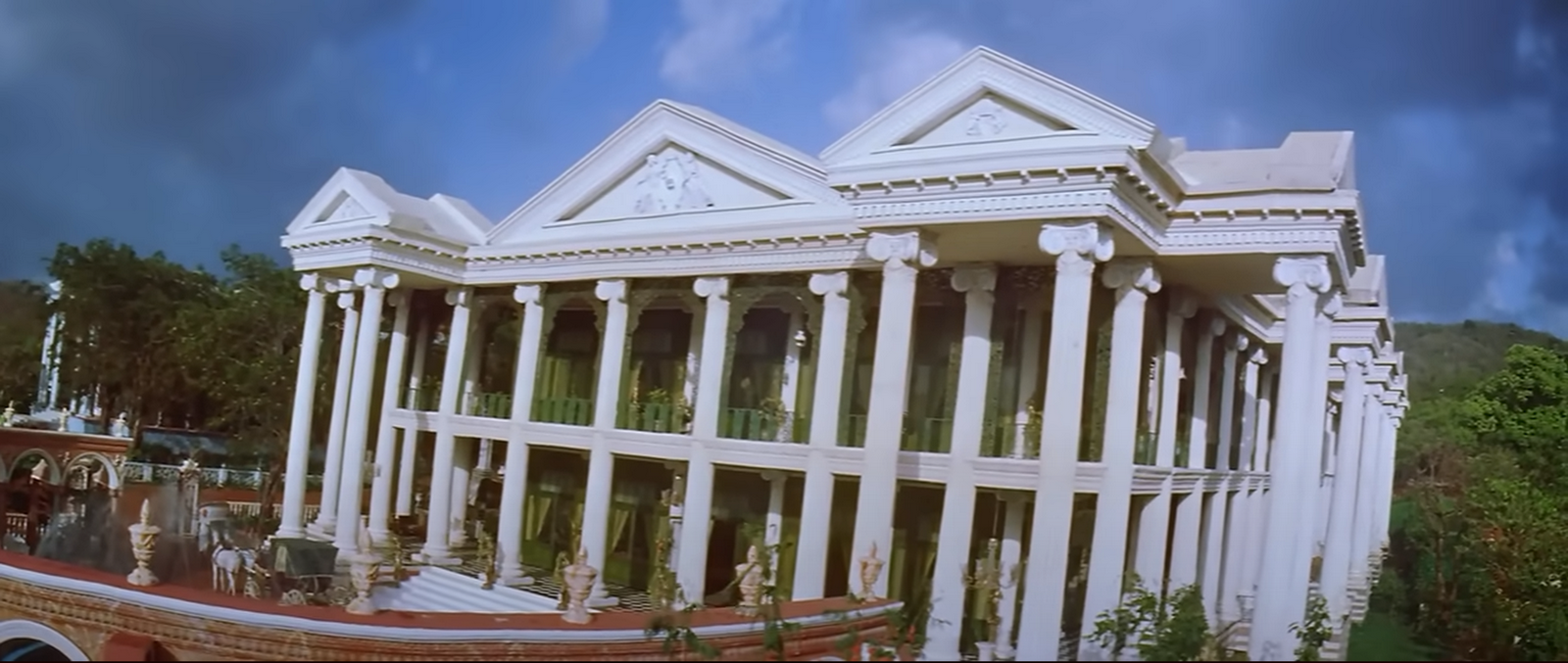
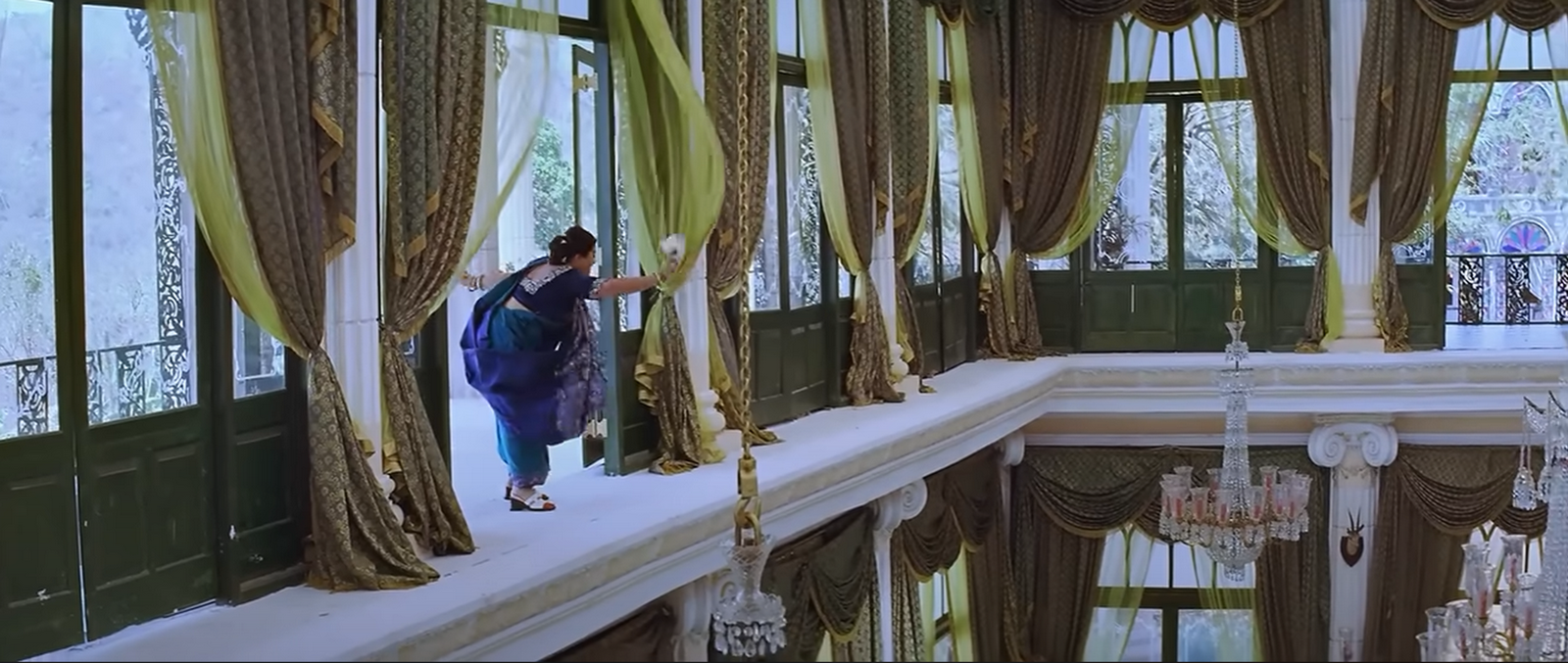
Mukherjee Mansion: Devdas’ family home
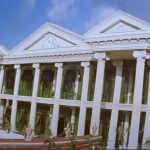
A large, white-pillared, neoclassical mansion, the Mukherjee family home reflected the British colonial architecture of the early 1900s. A rigid plan and elevation, high ceilings, thick decorated curtains, a defined green, white and beige colour palette represent a higher standing in society, patriarchal dominance and an emotional distance. Curated spaces, restrained lighting, and scale are used to show internal conflict and rigidity.
Chakraborty House: Paro’s family home
Though neighbours, Parvati’s family home poses a stark contrast to the Mukherjee family home. Adorned with 1.22 million pieces of stained glass, the equally large, Baroque exterior mansion was designed to reflect the delicacy and fragility of Paro’s beauty. Contrasting the defined palette of the Mukherjee house, Paro’s family home mainly consists of purple and blue hues with old, worn furniture. The lack of overlap of tones, scales, and elements differentiates the two families, creating a subtle conflict through context.

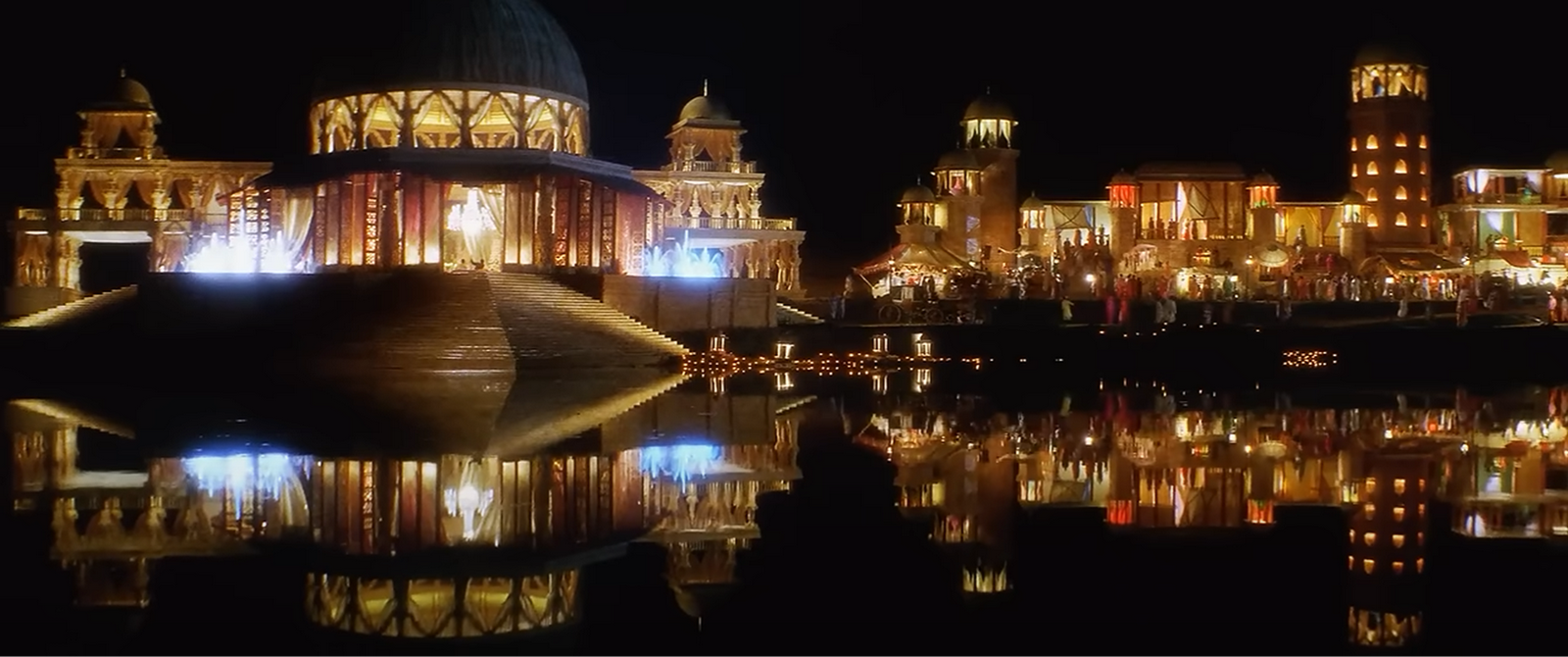
Chandramukhi’s Courtesan House
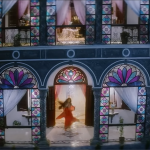
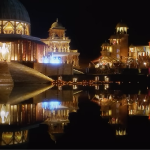
Despite being portrayed as an undervalued profession in the book, Sanjay Leela Bhansali portrays Chandramukhi’s ornate house as one of liberation and liveliness. Inspired by the ghats of Benares and the carvings of the Dilwara Temple, the brothel has terraced pavilions and steps that lead to a lake. Lighting design played a significant role in the set design, with about 2500 lights controlled by 700 lightmen, transforming the sets into a dream-like setting. The choices of architectural style, which are traditionally indicative of sacred spaces, serve as a clever contrast to the brothel.
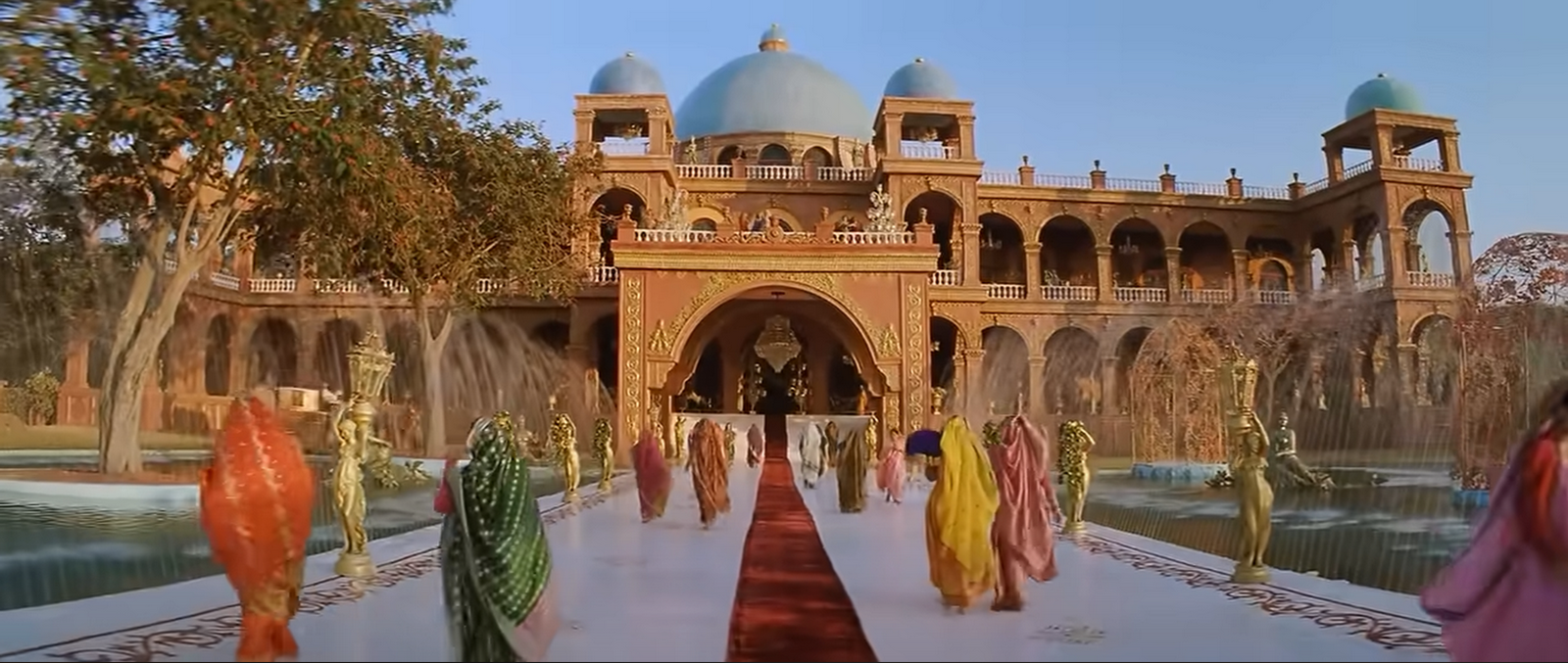
Chaudhry House: Paro’s Marital Home
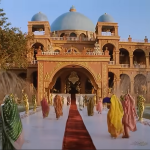
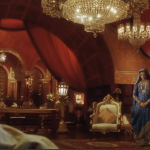
Modelled on the traditional Indian Havelis with arches and domes inspired by Mughal Architecture, Paro’s marital home represents the upper caste homes with palatial interiors with murals and statues. Breaking away from any previously shown material and colour palettes, the Chaudhry House has large chandeliers, high ceilings, a stone exterior and a deep red colour palette. Not only do these differ from all the previously shown settings, but they also reflect the values and emotions of the house.
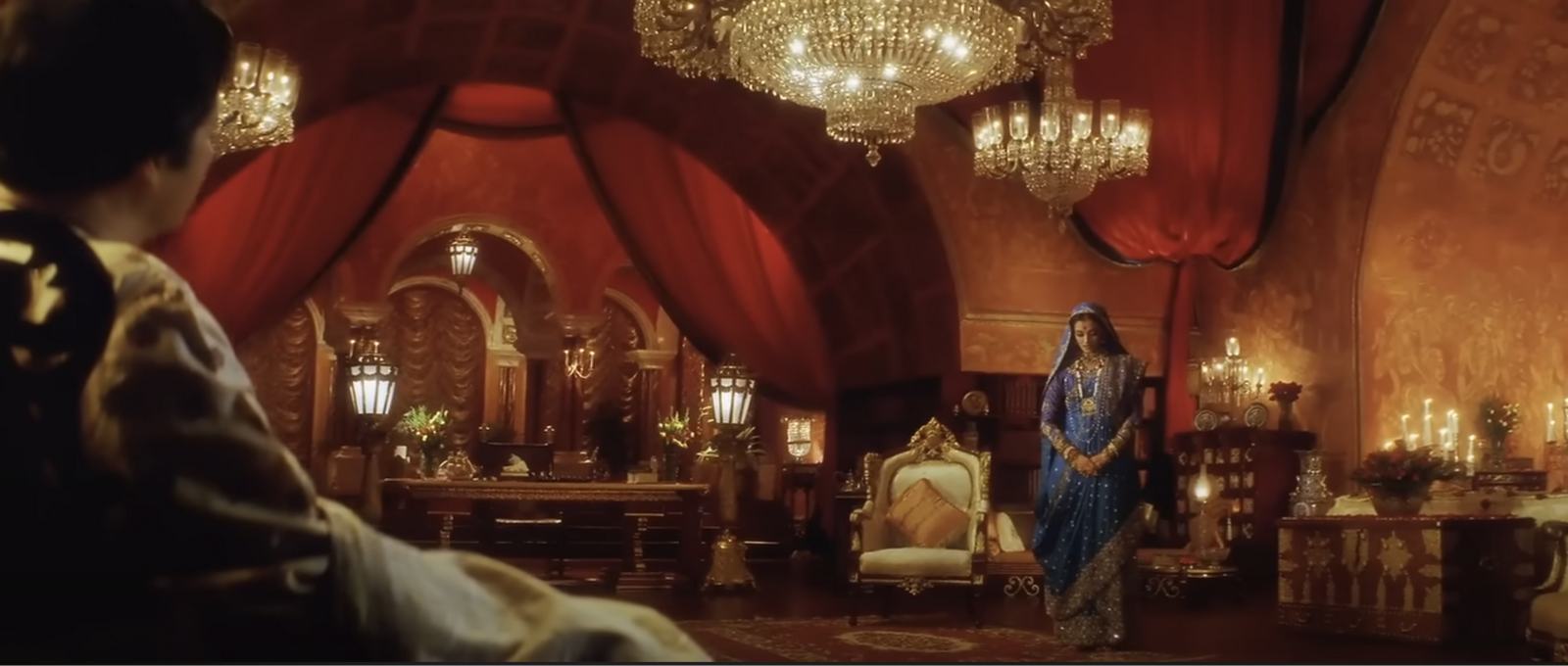
Lasting Impact of Sanjay Leela Bhansali’s Devdas
By creating distinct architectural settings for each character as well as different plot lines, Sanjay Leela Bhansali showcases how impactful set design and architecture are in setting a context in cinema. By transforming architecture into an entity of its own, the story provides an opportunity to explore binaries, especially the housewife/courtesan (Paro/Chandramukhi) binary.
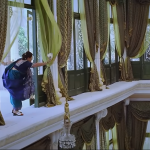
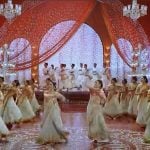
By introducing the storyline where Paro visits Chandramukhi’s brothel, as well as when Paro invites Chandramukhi to a ceremony at her haveli, several parallels can be drawn, both architecturally and cinematographically. Aerial shots of central courts with colourful, decorative flooring, chandeliers, monotone drapes and decoration closely resemble each other’s space, uniting the two characters who could not be further apart in society.
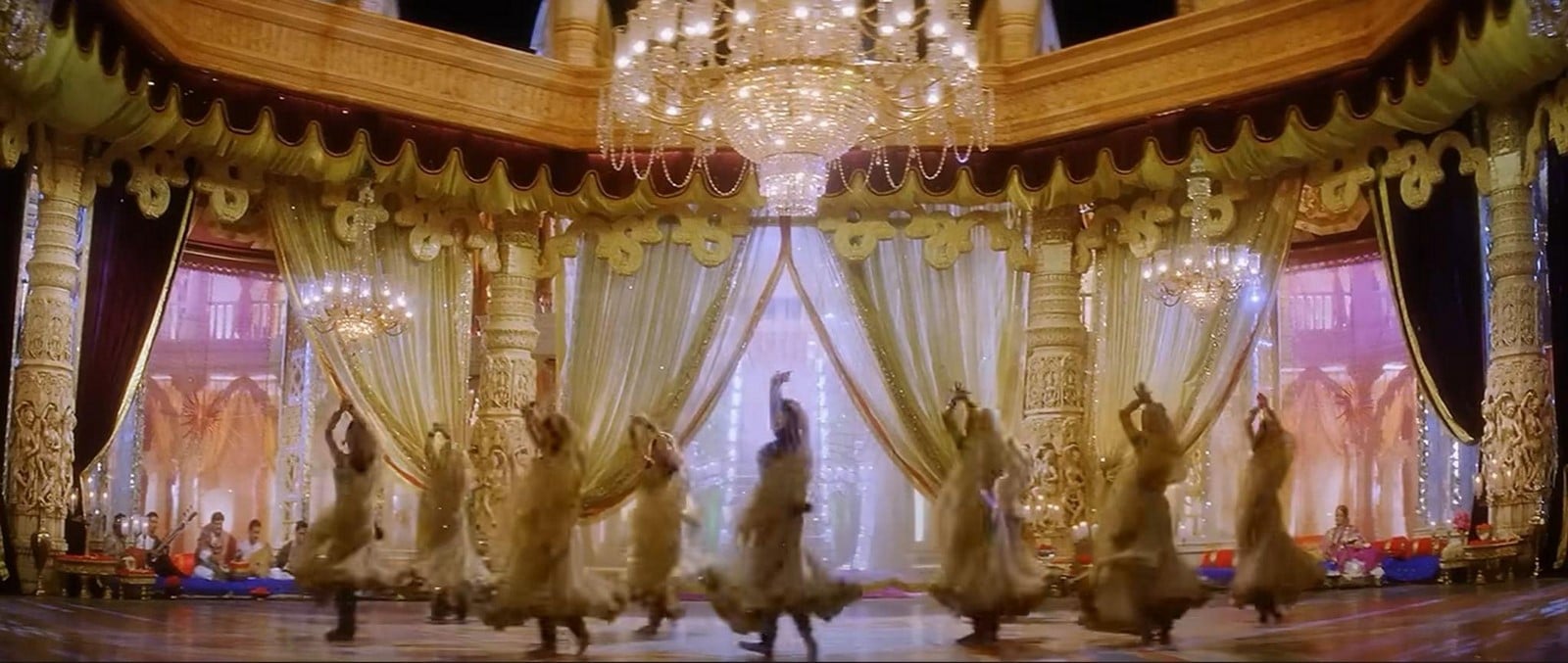

Despite it being 23 years since its release, Sanjay Leela Bhansali’s Devdas remains one of his best works. The deliberate amalgamation of writing, dialogue, cinematography and set design further increases its memorability and symbolism.
References:
Shrivastava, A. and Ghuraiya, B. (2025) ‘Visual aesthetics and cultural representation in the set designs of Sanjay Leela Bhansali’s films’, Journal of Communication and Management, 4(02), pp. 58–64. doi:10.58966/jcm2025427.
Thecinemawalaofficial (2022) 20 years of ‘devdas’ (2002), The Cinemawala. Available at: https://thecinemawala.com/2022/07/13/20-years-of-devdas-2002/ (Accessed: 19 October 2025).
Iamanoushkajain (2025) The enduring appeal of Devdas, Enroute Indian History. Available at: https://enrouteindianhistory.com/devdas-an-immortal-enigma-of-hindi-cinema/ (Accessed: 19 October 2025).
Mistry, J. et al. (2023) Senses of cinema, Senses of Cinema. Available at: https://www.sensesofcinema.com/2022/bollywood/a-devdas-for-every-generation/ (Accessed: 19 October 2025).
Dalvi, S. (2022) Spectacle, Space and the Tragic in the Hindi Devdas Films, Tekton. Available at: https://tekton.mes.ac.in/wp-content/uploads/2023/07/9.2-R-Smita-Dalvi.pdf (Accessed: 19 October 2025).
Sahu, F. and Kasat, S. (2025) ‘Architecture in Cinema’, International Journal of Research Publication and Reviews, 6(5), pp. 2882–2885. Available at: https://ijrpr.com/uploads/V6ISSUE5/IJRPR44934.pdf (Accessed: 19 October 2025).