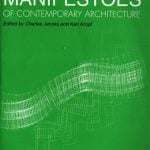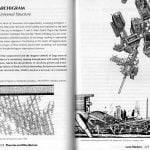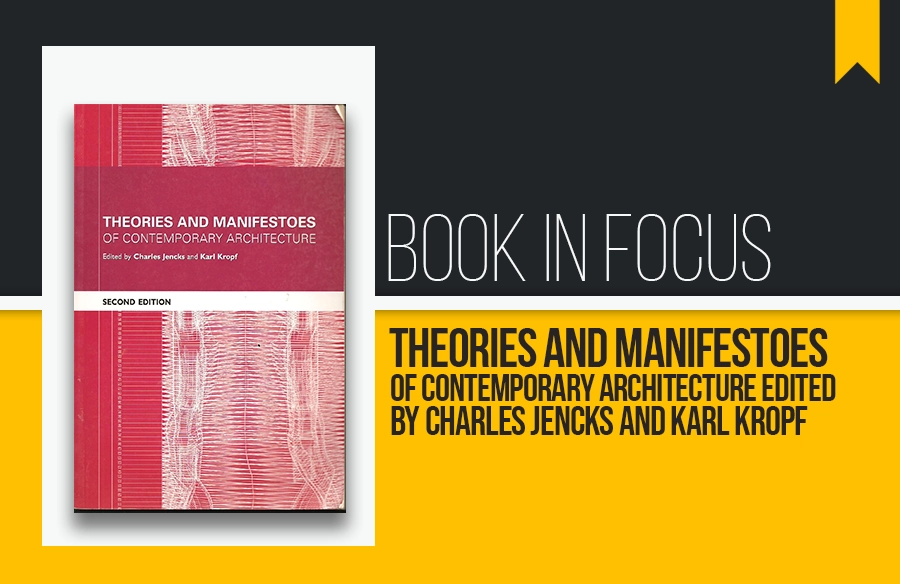
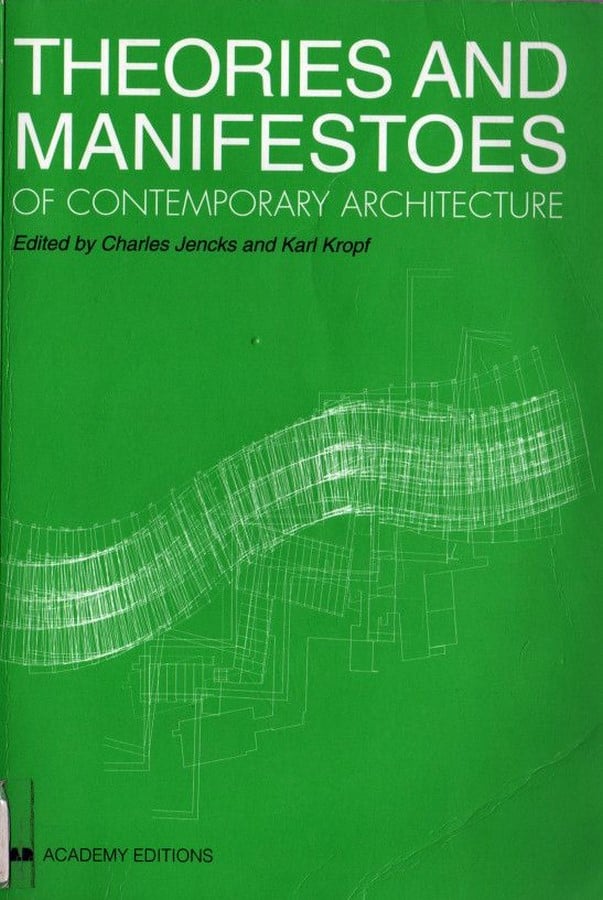
Published in 1997, Theories and Manifestoes of Contemporary Architecture compiles over 120 major architectural works from the late 20th century to explain the evolution of architectural thought. While the book in focus is the first edition, an expanded second edition was published in 2008 by Wiley-Academy. Rather than presenting architecture as a unified progression, the book reveals a field of competing ideas, making it useful for understanding the tensions between modernism, postmodernism, ecology, and complexity.
What the Book Covers
Charles Jencks and Karl Kropf have cleverly presented architecture as a field of debate in this anthology, juxtaposing ideas as they naturally emerged over time rather than compiling a fixed history. It clearly shows how different concepts and themes can coexist and challenge each other, rather than one entirely replacing another perfectly. This approach is useful because it suggests that modern architecture did not simply end and be replaced by a single new style. It instead split into several directions, such as postmodernism, late modernism, ecological thinking, and even complexity-based approaches. In the framing and chronological timeline, Jencks and Kropf have clearly shown that modern architecture fragmented into several streams rather than progressing in one straight line.
This account is valuable for students and academics alike as it helps explain why contemporary architecture looks so diverse. Rather than a single dominant theory, the book presents many competing viewpoints on form, meaning, context, technology, and urban life. It reflects how ideas shape architectural practice and reminds readers that design decisions often come from theoretical positions, not just from aesthetics or function.
The anthology also helps readers understand architectural change as a series of critical responses to modernism rather than a smooth progression, which makes it especially relevant for writing about postmodernism and the shift into contemporary theory. The book is useful because it does not treat architecture as a single linear movement; instead, it shows multiple competing positions and arguments.
Notable Contributors
Charles Jencks and Karl Kropf have cleverly presented architecture as a field of debate in this anthology, juxtaposing ideas as they naturally emerged over time rather than compiling a fixed history. It clearly shows how different concepts and themes can coexist and challenge each other, rather than one entirely replacing another perfectly. This approach is useful because it suggests that modern architecture did not simply end and be replaced by a single new style. It instead split into several directions, such as postmodernism, late modernism, ecological thinking, and even complexity-based approaches. In the framing and chronological timeline, Jencks and Kropf have clearly shown that modern architecture fragmented into several streams rather than progressing in one straight line.
This account is valuable for students and academics alike as it helps explain why contemporary architecture looks so diverse. Rather than a single dominant theory, the book presents many competing viewpoints on form, meaning, context, technology, and urban life. It reflects how ideas shape architectural practice and reminds readers that design decisions often come from theoretical positions, not just from aesthetics or function.
The anthology also helps readers understand architectural change as a series of critical responses to modernism rather than a smooth progression, which makes it especially relevant for writing about postmodernism and the shift into contemporary theory. The book is useful because it does not treat architecture as a single linear movement; instead, it shows multiple competing positions and arguments.
Relevance to Architectural Study
In the studio, the anthology can be useful, as it shows that architectural design does not consist solely of creating forms, but also of the ideas that justify those forms. It helps connect design decisions to the theory that underpins them. This can explain why a project might favour contextual response, symbolism, environmental responsibility, or fragmented composition. These aspects bring value to the studio as students can gain a deeper understanding of their designs and clearly articulate their thought process during a jury.
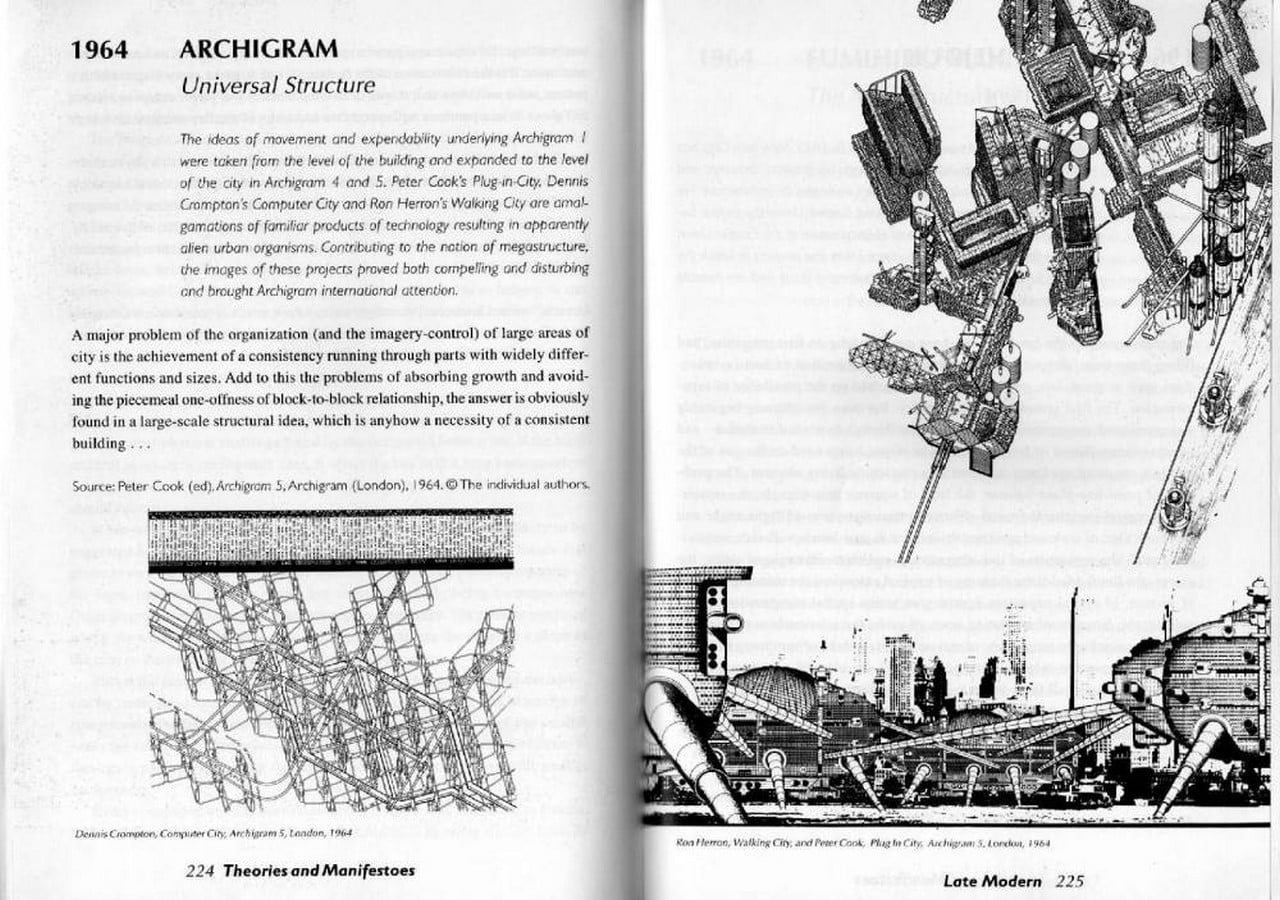
In theory courses, Jencks and Kropf’s book can be used as a record of the history of architectural debate. It places major thinkers in relation to one another, allowing students to compare opposing views within a single medium rather than consulting each thinker independently. This helps understand how architectural thought shifted from universal modernist principles toward more critical, context-sensitive approaches.
Additionally, some of the ideas in the anthology remain popular topics of debate today; referring to these manifestos and comparing them helps create solutions to modern problems, particularly with respect to sustainability, context, and complexity.
Overall, Jencks and Kropf’s anthology provides a useful source of information on the progression of ideas in the post-modern and contemporary age, taking architecture beyond the physical and into the minds of various designers, historians, critics, and theorists. The collection of manifestoes is easily navigated due to its movement-wise and chronological categorisation of texts and remains useful even today, almost 18 years since the second edition.
References:
- Jencks, C.A. and Kropf, K. (eds.) (2008) Theories and manifestoes of contemporary architecture. Chichester: Wiley-Academy.