Architecture Beyond Sight: An Introduction
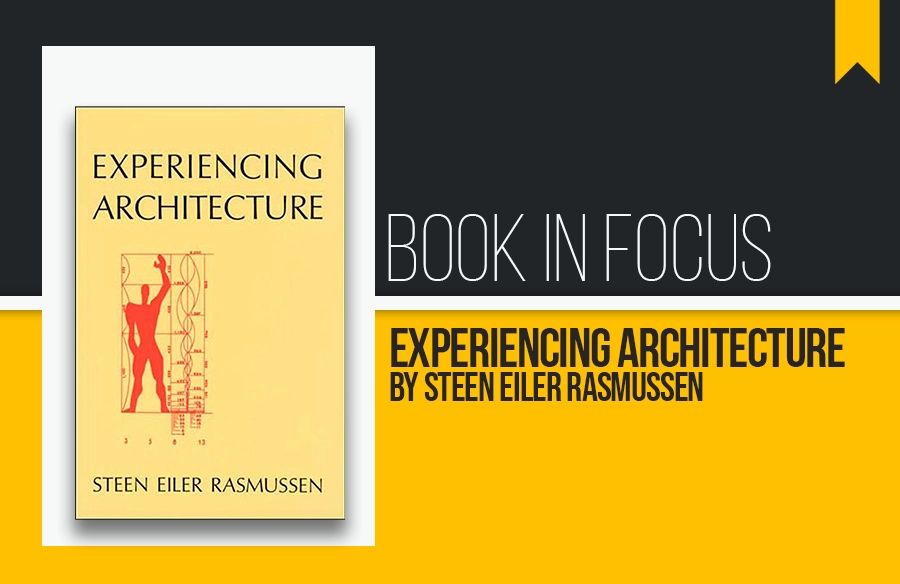
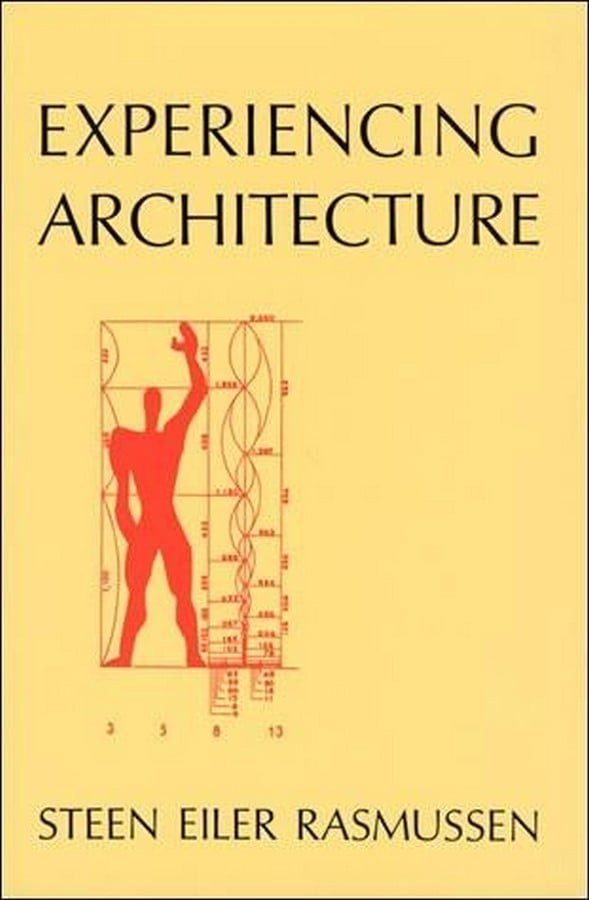
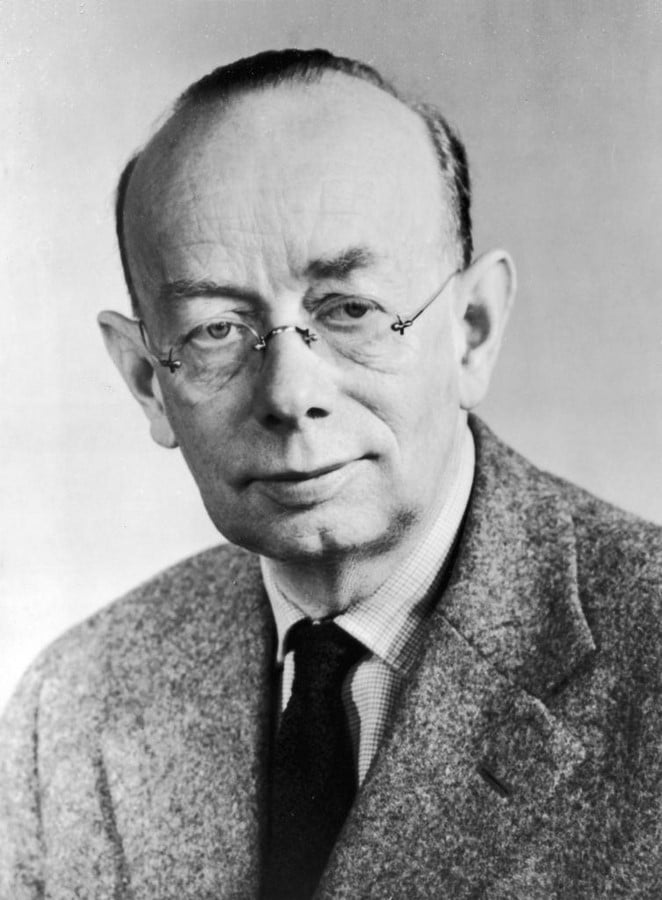
First published in Danish in 1957 and translated into English in 1959, Experiencing Architecture is a standard text for understanding architecture as a multisensory, living experience rather than just a visual art. Rasmussen, a Danish architect and urban planner, wrote the book at the age of sixty-four to teach non-architects and students how to perceive buildings. While other forms of art, such as paintings and sculptures, are merely aesthetic objects, Rasmussen argues that architecture is unique in its utility, creating functional spaces for human beings. While most people evaluate buildings based on their facades, Rasmussen insists they must be experienced from the inside to better understand acoustics, lighting, and materials.
The Structure of the Book: Experiencing Space Through the Senses
The book is divided into ten chapters, each focusing on a dimension such as solids and cavities, rhythm, texture, scale, light, and sound. Together, these chapters invite the reader to slow down and notice the impact of built spaces on the human body. Steen Eiler Rasmussen argues that architecture is an interplay of solids and cavities. He outlines two primary perceptual approaches of structure-minded (focusing on the material mass, like stone or brick) and cavity-minded (focusing on the experience of the enclosed empty space).
Solids and Cavities: Understanding Architectural Space
This perceptual ambiguity is often explained through the “Rubin’s vase” illusion, featuring a silhouette in the center that can be perceived either as a symmetrical vase or as two human profiles looking directly at each other. Similarly, in architecture, while perceiving a Solid, one can look at a building as a sculptural object from the outside (the walls, the roof, the mass like the “vase”). While perceiving the Cavity, one can also perceive a building from the inside out, focusing on the sequence of rooms, hallways, and courtyards (the voids like the “faces”). The building’s solid structures are important; the true success of a building belongs to how intentional voids function.

Rhythm: The Musical Quality of Architecture
Rhythm in architecture functions similarly to rhythm in music, as it relies on the deliberate repetition of design elements such as columns, windows, or colors. Rasmussen suggests that a cadence in a building provides an experience comparable to “rhythmic ice-skating,” where the viewer follows a sequence established by the architect’s own creative process. Modern research has expanded on this, utilizing Henri Lefebvre’s “Rhythmanalysis” to understand building as a dynamic structure rather than a static one. By treating a building’s envelope as a graphic score, practitioners can uncover “hidden” structural rhythms that reveal details about a site’s history and culture. For instance, analyzing the Singapore Art Museum through its “golden ratio” rectangles led to the discovery of repeated cross shapes reflecting the building’s history as a religious school.
Human Scale: Beyond Standard Measurements
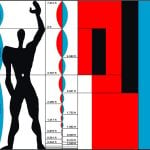
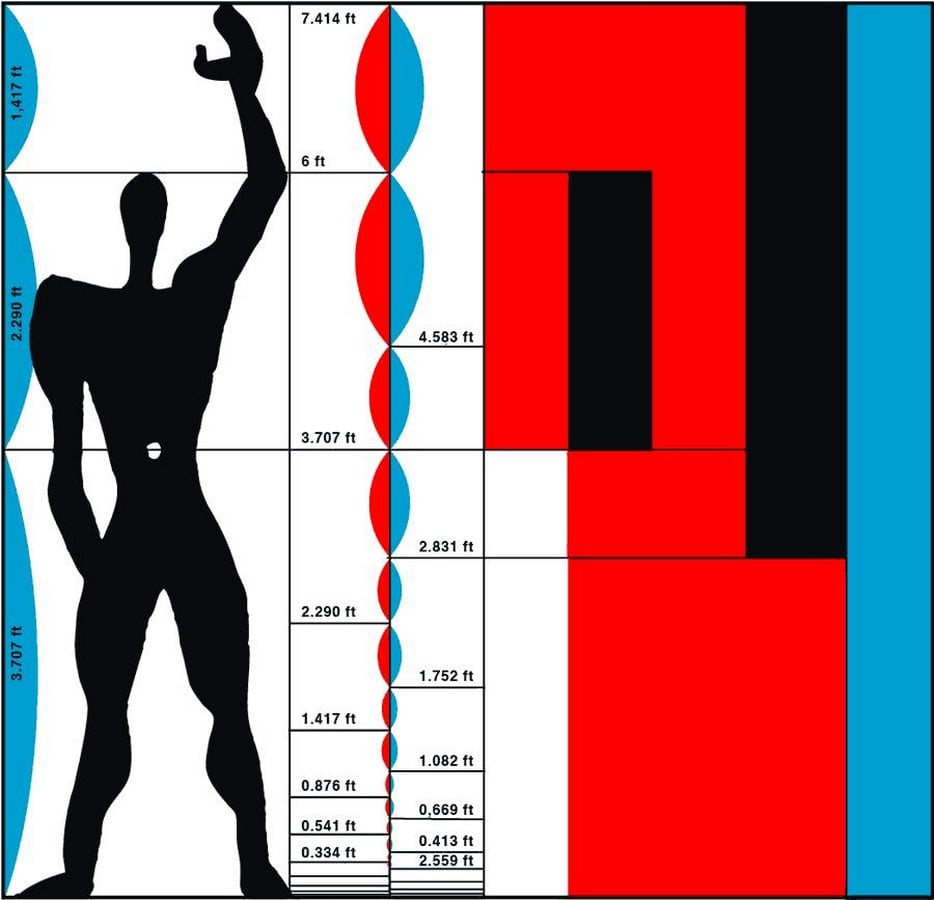
Steen Eiler Rasmussen’s concept of scale in architecture is more fluid. He argues that spaces are scaled by how an individual emotionally and physically connects to them, rather than strictly by dimensions. The book’s cover frequently features Le Corbusier’s “Le Modulor,” a scale based on an idealised six-foot-tall male. However, Rasmussen and contemporary critics point out the failure of the diverse global reality of human bodies. True human scale is found in the intimacy of a space, the “1:1” scale of the personal. Digital tools and spatial sensors can now allow for even greater personalization of scale suitable for an individual’s height, movement, and presence.
Hearing Architecture: Sound as a Design Material
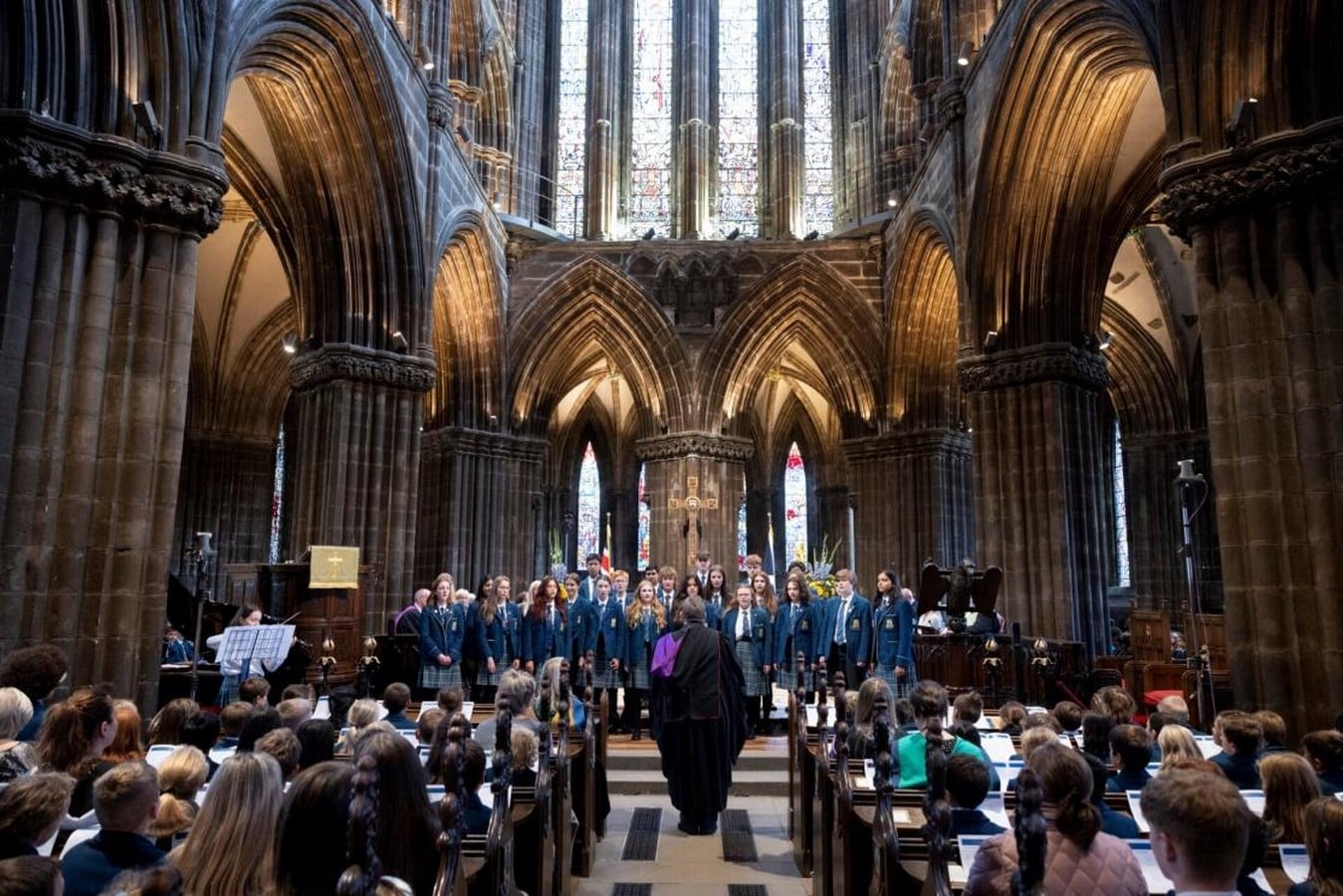
One of the author’s biggest contributions is his effort to make architecture heard. Architecture reflects and absorbs sound just as it reflects and absorbs light. He details how “hear architecture” allows one to form an impression of a space and material through the acoustic “feeling” of a room; for example, a “cold and formal” room is often one with hard, sound-reflecting surfaces. Gothic cathedrals have massive stone volumes with a reflective surface, creating a long reverberation time. This physical property amplifies and sustains musical tones, creating an immersive experience for the audience. Every room has its own melody, and sound is as much a design material as brick or stone.
Texture and Light: The Tactile and Visual Experience
Rasmussen’s focus on texture highlights the tactile nature of architecture. The human body is equipped with millions of sensory receptors that can distinguish between the “hard” and “soft” surfaces. The author also explores how Dutch masters like Vermeer used narrow housing to explain how daylight is of decisive importance, as it is constantly changing and provides a variety of lighting effects. By adjusting the shutters, such artists were able to manipulate illumination and shadow to create intimacy and dramatic moods.
Limitations and Criticism
Despite being a “stone cold classic,” the book is not without criticism. Many reviewers note the lack of a formal conclusion, which would have summarized the book altogether. While the book was intentionally written to be understood by laymen, professionals argue that it lacks technical and theoretical depth. A more significant flaw is Rasmussen’s treatment of Japanese architecture in Chapter 4. He belittles Japanese architecture as “flat” and “primitive,” arguing that Western three-dimensional arts are superior. This allows the critics to point out the fundamental misunderstanding of vernacular architecture. For example, the Katsura Imperial Villa shows an integration of internal and external space that Western Classicism often lacks. Not only this, but the book is also said to fail to address contemporary issues such as urbanization and sustainability.

Conclusion: Architecture as a Living Performance
Ultimately, Rasmussen views the architect as a sort of “theatrical producer” to stage the unscripted “long, slow-moving performance” of everyday people through time. This performance must be adaptable enough to accommodate unforeseen improvisations by the inhabitants. By insisting on physical presence, Rasmussen’s work remains more valuable than ever in an era of screen-mediated architectural experience. A photograph can capture what a building looks like, but physical presence reveals its mood, atmosphere, and scale with respect to a human body. Good architecture is not merely an object to be seen, but an instrument to be played, heard, and lived.
Citations-
- https://www.declad.com/experiencing-architecture-by-steen-eiler-rasmussen-review-and-book-notes
- https://superbook.ai/books/experiencing-architecture
- https://eclass.duth.gr/modules/document/file.php/422320/%CE%92%CE%99%CE%92%CE%9B%CE%99%CE%9F%CE%93%CE%A1%CE%91%CE%A6%CE%99%CE%91%20-%20%CE%92%CE%99%CE%92%CE%9B%CE%99%CE%91/%CE%91%CE%A1%CE%A7%CE%99%CE%A4%CE%95%CE%9A%CE%A4%CE%9F%CE%9D%CE%99%CE%9A%CE%97%20%CE%9A%CE%91%CE%99%20%CE%91%CE%99%CE%A3%CE%98%CE%97%CE%A3%CE%95%CE%99%CE%A3/experiencing%20Architecture%20-%20Rasmussen%20-%20Hearing%20Architecture.pdf\
- Carter, Ed (2019) Rhythm, Scale, and Liminality: Sonic composition and interdisciplinary artwork developed in response to architectural contexts. Doctor al thesis, University of Sunderland, Available at: https://sure.sunderland.ac.uk/id/eprint/13402/1/13402.pdf
- Baratelli G. Steen Eiler Rasmussen, Experiencing Architecture. Beyond Modernity by the Medium of Perception without Manifesto, Available at: https://cloudcuckoo.net/fileadmin/issues_en/issue_42/article_baratelli.pdf
- Coch G.(2020) THE RASMUSSEN, Available at: https://www.nonarchitecture.eu/2020/04/27/the-rasmussen/