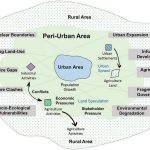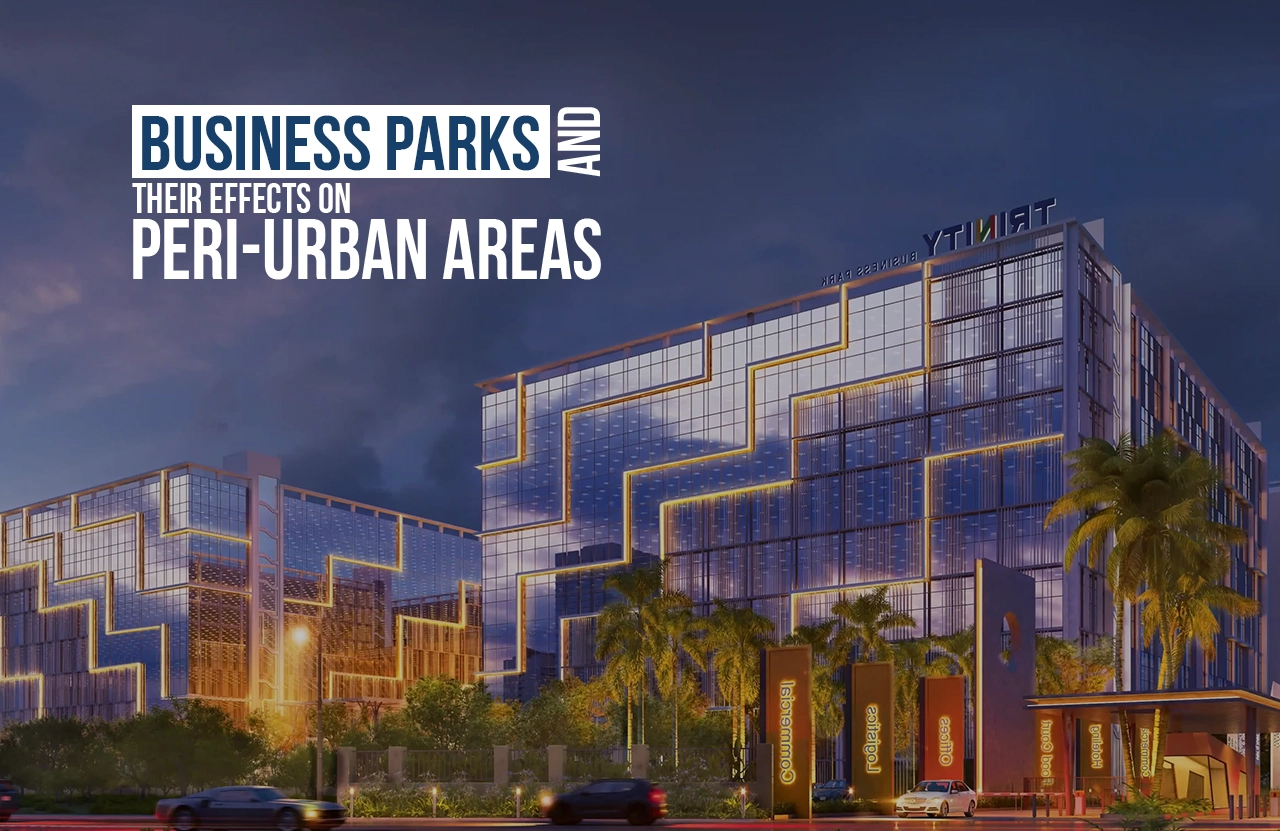
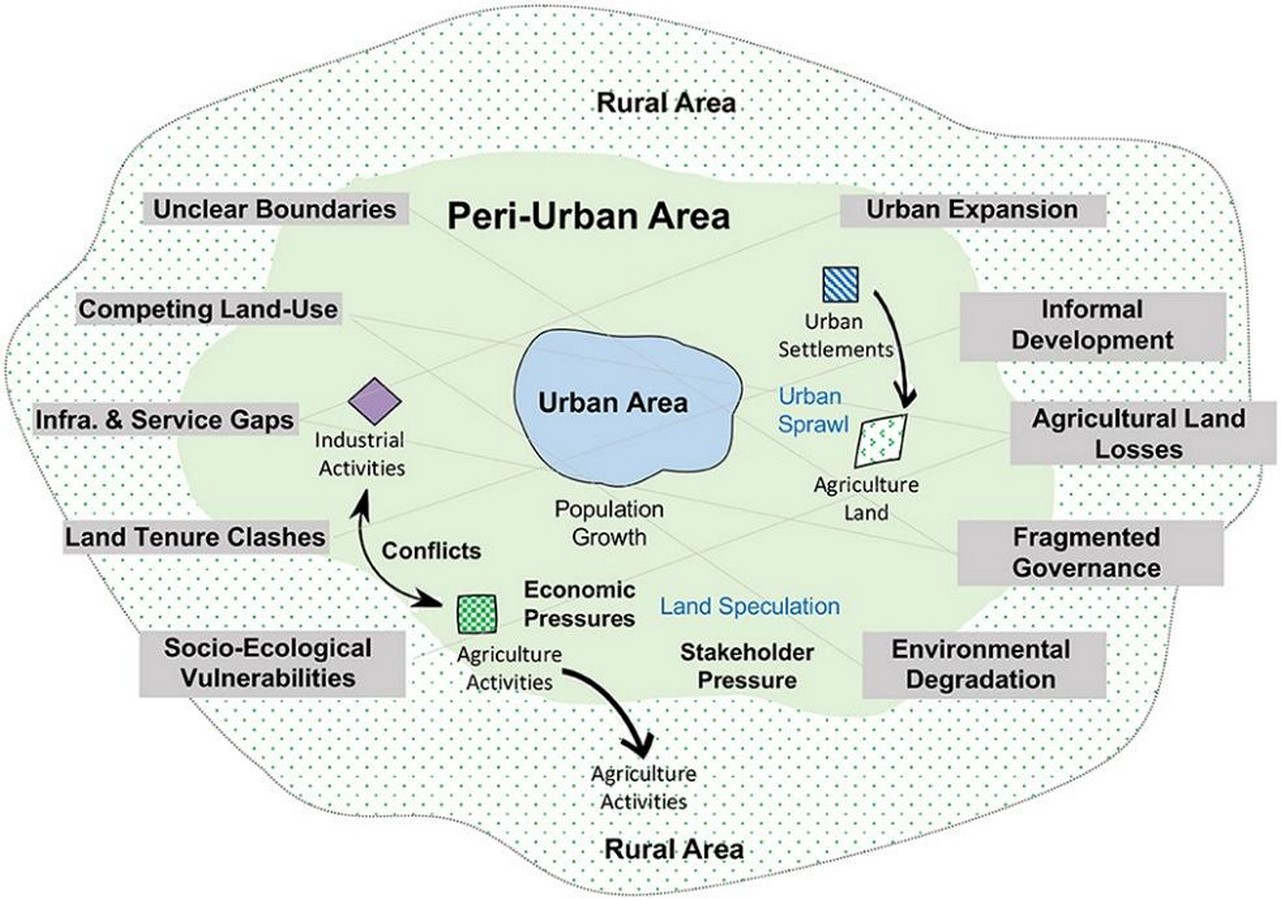
City economies and built environments around the world are being reshaped by the business park development. Typically located on the perimeters of metropolitan hubs, business parks are service-designed agglomerations of offices, software parks, warehouses, and light industry. They are likely to be found in peri-urban areas — locations where urban and rural attributes meet. With the prevailing city developments and the challenges of intracity and land shortage that it presents, peri-urban sites provide the flexibility, value, and market proximity that is highly sought of by today’s businesses.
It is not merely an economic story, it is about society, environment and space related as well. These factors pitch in to create a multifaceted facade of the subject and diversifies the effects on peri-urban areas in terms of employment, travel, local identity and land use. This article considers those factors, weighing pros and cons of business park development for peri-urban areas.
The rise of the peri-urban Business Park
The concept of the business park emerged towards the end of the 20th century when economies were undergoing a shift of direction from mass production to service and knowledge economies. Such economies needed attractively designed flexible office space, matching infrastructure and the convenience of location proximate to transport systems instead of front onto sources of raw materials or marketplaces in central cities.
Peri-urban locations provided an ideal situation. Space was inexpensive and available for the mass development of parking, landscaping, and modular buildings. Additionally, governments and local authorities typically supported initiatives to generate investments, deconcentrate local economies, and relieve pressure on congested urban centers. Examples are Britain’s Thames Valley and Gurgaon just south of Delhi, and Cyberjaya, Malaysia, illustrating how peri-urban business parks subsequently became local engines of local economies.
Economic Impact: Engines of Growth or Enclaves of Poverty?
Business parks bringing in economic prosperity is the most prevalent feature of their growth. However, by being set up in a site of peri-urban context, they open new window of current times in places which might primarily depend on agriculture or cottage industry and bring in jobs, new-money injection and enhance regional competitiveness therefore opening new window of current times
The headlined benefit of these parks in peri-urban sites would be employment creation. The parks normally host a mix of businesses — from IT start-ups to warehouses — of employment ranging from different expertise. The locals in the vicinity are hence provided with newer better job opportunities near their homes. This diminishes their need to relocate into the metropolitan cities which helps ease the extensive population influx into the city. It also helps in building these peri-urban sites with better accommodation, retail and hospitality services being developed.
Nevertheless, their advantages are unequally distributed. High-skill, high-wage positions may be transferred to city-based professionals commuting to the park, leaving local communities confined to or reliant on low-wage jobs or jobs associated with service industries. In the absence of effective skills advancement and local hiring programs, business parks are at risk of remaining economically sealed districts instead of becoming centres of inclusive development.
In addition, a successful business park may drive up land costs in nearby areas generally, entering the geographies of neighbouring activities: old mini-farms, workshop-based ‘cottage’ industries or low-cost accommodation. Gentrification in peri-urban areas cartographically re-arranges the socio-economics of services on the general basis of profit for investors, rather than the native community.
Space and Environmental Changes
Business parks dramatically change the peri-urban landscape. It goes from open farmland, small settlements, and mixed land use, to more urbanized. Roads get wider and utilities get larger, and new housing development is created to house workers.
Whereas sprawling city development is able to refresh infrastructure, it also leads to urban sprawl. Car-centric development of low densities is land consumptive and disrupts ecological connectivity. Greenfields are changed to permeable surfaces, which results in habitat loss, increased run-off, and exacerbated flood risk.
It also causes elevated carbon emissions because of daily commute travel. Since business parks are generally built away from the metropolitan, they are heavily dependent on cars as they remain away from mass transit systems. It is a stark contrast for the dependency on automotives, which many cities are now trying to encourage by sustainability goals.
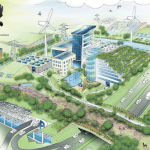
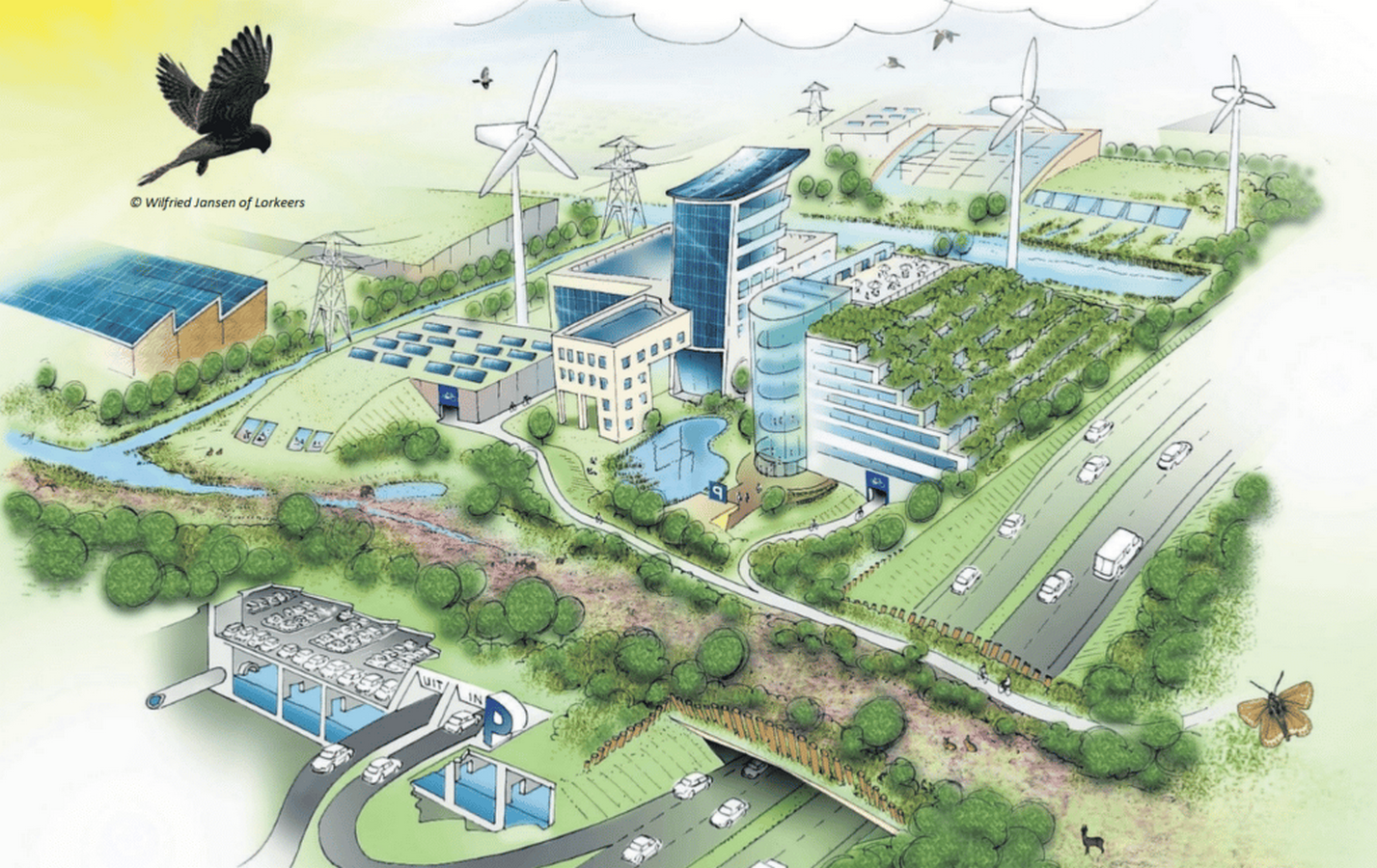
There are several new-fashion business parks that are adopting eco-innovation strategies that merge green building designs, renewable energy and vegetable barriers. Names are Scandinavia’s eco-parks and some East Asian eco-parks, which are good examples of green-designable business parks, lessening potential liabilities and turning them into assets.
Social and Cultural Changes
Beyond agriculture and economics, business parks also greatly influence the social identity for the peri-urban communities. Consumption patterns are substituted for rural ways of life, committed to urban life. Business park development patterns are generally followed by new settlement estates, commercial hubs and recreational hubs to help change the local life’s rhythm.
It creates both opportunities and challenges. For young residents, there are new skilled and semi-skilled jobs, and social mobility. For older residents, however, things like landscape and communal relationships have lost their charm. The introduction of workers from elsewhere, in other posts, simultaneously carves social cohesiveness, delivers diversity, and, at times, segregates “locals” from “outsiders.”
Positively, business parks provide positive avenues to upgrading communally. Upgraded roads, information and communication technology infrastructure, and public amenities associated with those projects have a tendency of spillovers for neighbourhoods to benefit. Local schools, hospitals, and marketplaces tend to expand their capacity to serve larger demands, hence a better-performing local economy.
Infrastructure and Mobility Barriers
One of the considerable disadvantages of peri-urban business parks is transport. Even though these business parks are generally located conveniently by highways or ring roads, their public transport connections are slower to adapt. The net result is a car dependency, leading to congestion, a shortage of parking space, and air pollution — ironically replanting the self-same evils it seeks, by decentralizing industry, to avoid in central cities.
A variety of multimodal transport behaviours- air buses, cycling infrastructure, train connections- make business parks more sustainable. City planners are also moving towards “transit-oriented development” even for peri-urban areas, as a measure to prevent mobility inequality through decentralization of economies.

Policy and Planning Implications
Officials and stakeholders are walking a tightrope between supporting economic growth while promoting environmental and social sustainability. For peri-urban business parks to succeed on a longer-term basis, policies will need to push back resulting on three major fronts:
Integrated Land Use Plan: Business parks should be embedded within a larger regional land use plan which integrates infrastructure, housing, and environmental protection. Creating buffer strips, green belts, and land use regulation are ways to modify unwanted land uses.
Local Skill Development: Collaboration across firms, local government, plus learning institutions will ensure citizens learn the skills needed by employers, creating inclusive growth versus a labour force externality.
Sustainable Mobility and Infrastructure: When planning business park development equity, public transit connectivity, bicycle infrastructure, and green building codes should be incorporated from the outset rather than afterthought adjustments.
Ultimately, their success is not only a product of dollars of investment or number of occupants, but how they make sense in the regional fabric — economically, socially and ecologically.
Business parks are for peri-urban transition. They are symbols of modernization, integration, and 21st-century work geography change. Their impact is a double-edged sword. Poorly thought out, it triggers sprawl, disassociates native residents, and stresses ecological systems. Thoughtfully integrated, it facilitates the eradication of city-countryside divides, promotes prosperity, and introduces cutting-edge infrastructure, in turn transition areas. The future of peri-urban business parks rests on a balancing act — between growth and sustainability, between accessibility and inclusion, and between innovation and identity. It also entails, on the planning-level, a balancing act between not only the planning agencies, but between coordinated planning, long-term perspective, and a willingness to accommodate and see the benefits of development discussed, bleed even out of the park into the surrounding community and ecosystem.
Citations:
https://www.sciencedirect.com/science/article/pii/S0197397524000419
https://www.sciencedirect.com/science/article/abs/pii/S0169204624002433
https://www.tandfonline.com/doi/full/10.1080/02697459.2017.1264191
https://growingscience.com/beta/msl/3616-the-effect-of-industrial-park-development-on-peoples-lives.html