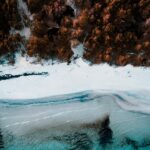
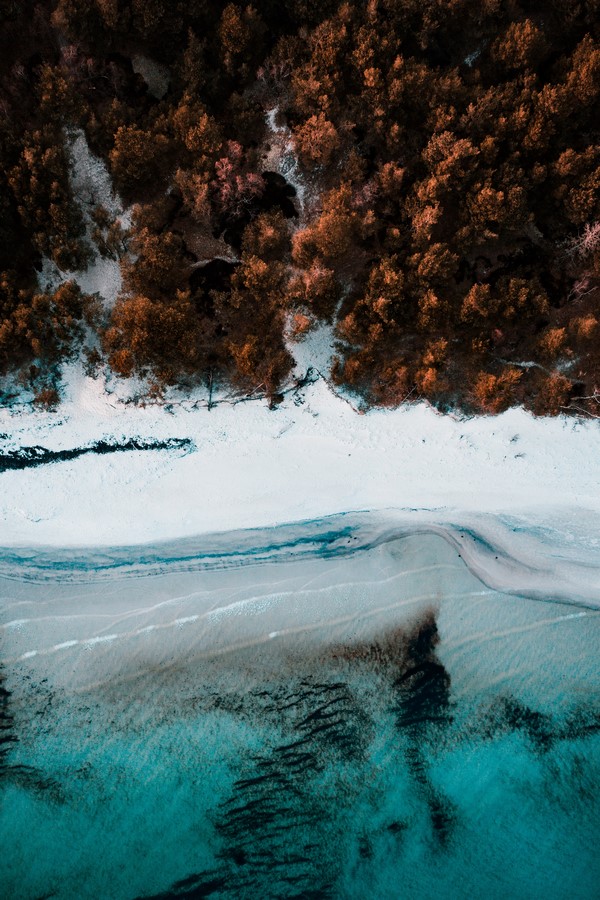
In the middle of the passage of the Baltic Sea that touches the shores of Denmark, Sweden, Poland, and Germany stands a Danish island that was once a Viking stronghold. Bornholm, or the ‘Bright Green Island’, as the official development strategy for the island calls it, looks perfectly undisturbed at first glance. Rocky cliffs of granite rise along the northern coast, and high-lying woods populate the interiors. The south, more friendly to human habitation, features coastal dunes and undulating limestone, sandstone, and shale surfaces.
Architecture Steeped in History
With a history dictated by conquests, negotiations, and commerce, it is no surprise that Bornholm is home to remains built as fortifications and defence structures. Most notable are the Hammershus ruins from the 13th century and the white round churches from the 12th century.
The Hammershus Castle
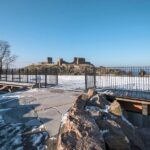
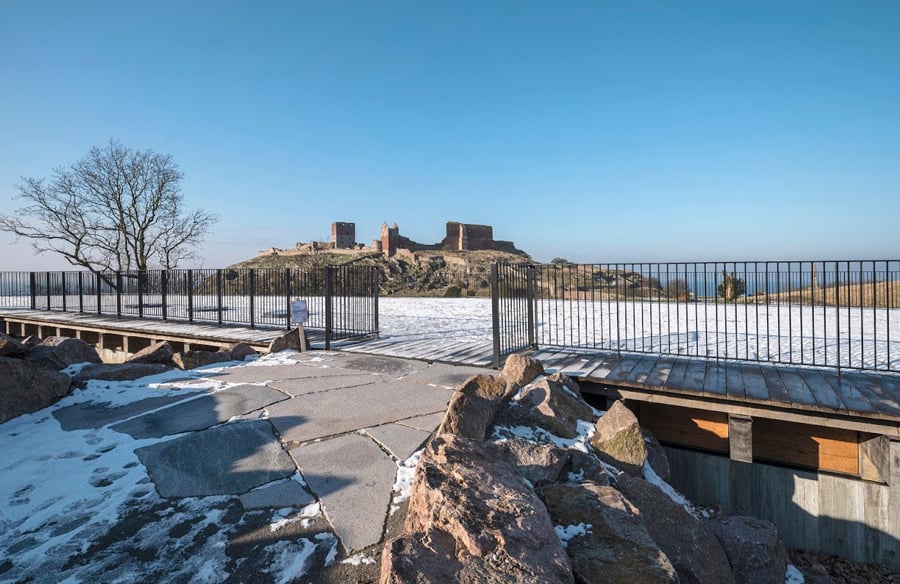
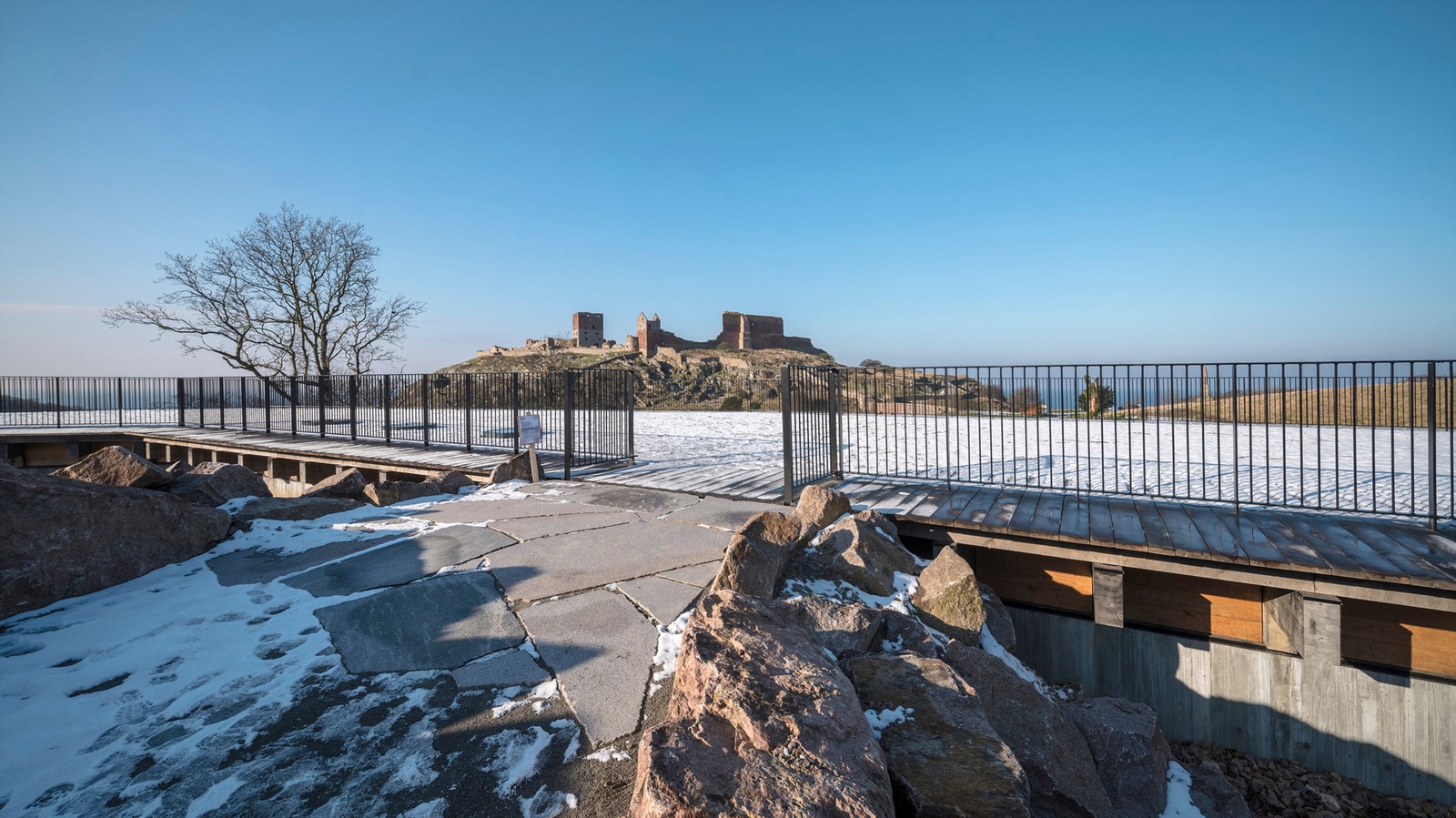
Once an imposing castle and fortress protecting Bornholm, the Hammershus castle or Hammershus ruins are now the largest castle ruin in Northern Europe. Located at the northern tip of Bornholm, this castle, built by the Archbishop of Lund to consolidate power over the island, has its oldest ruins dating back to the 13th century. Constructed with rocks at the base and finished with clay bricks, this fortress has served many roles, including prison for King Christian IV’s daughter and her husband implicated for treason in the 17th century.
The Round Churches of Bornholm
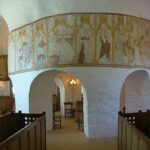
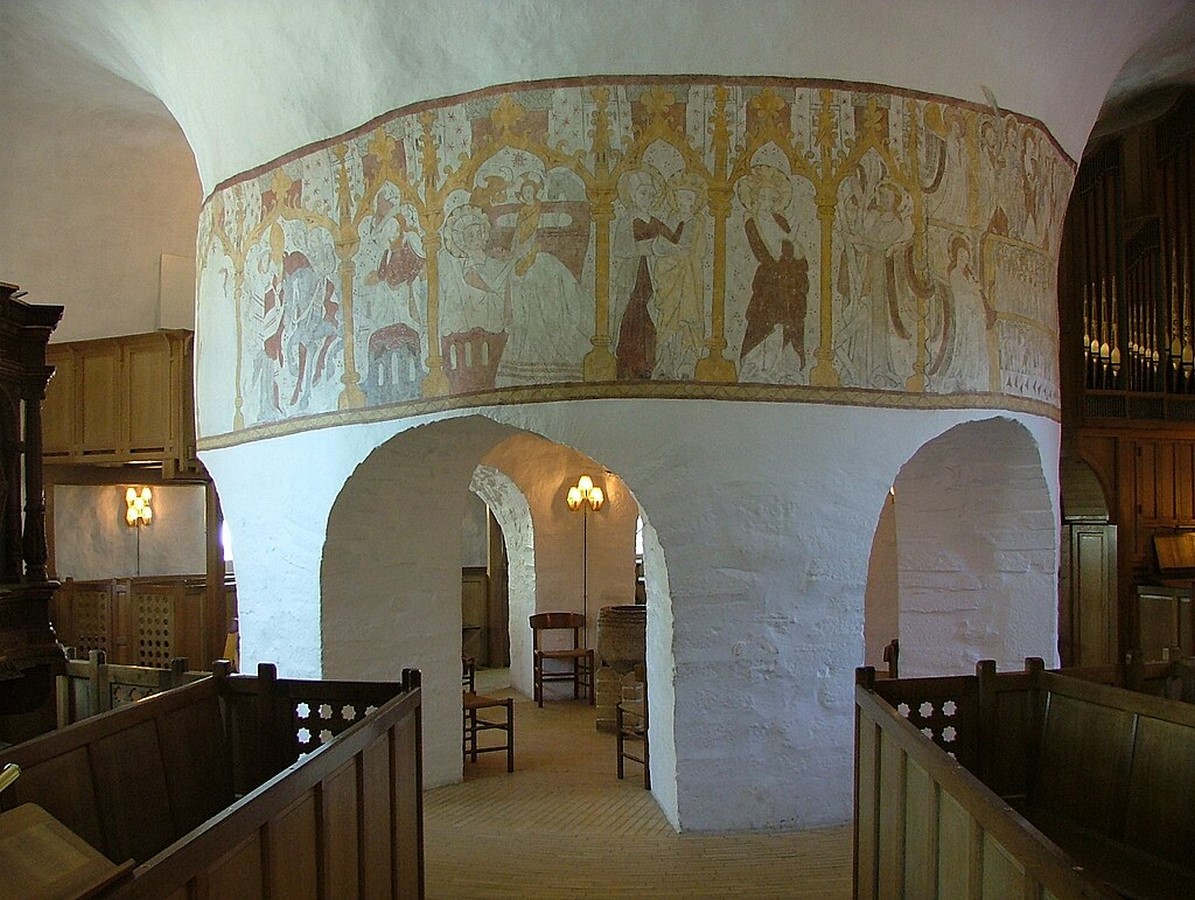
The island of Bornholm features four round churches conceived as religious and defence structures. They have a circular nave and a central core instead of a traditional aisle. Olsker is the tallest, most elegant of the four churches, Nylars has been used for its defensive purpose more than the others, Nyker is the youngest of the four churches and features murals from several periods, and finally, Østerlars is the oldest, largest, and most popular round church in Bornholm.
Østerlars Round Church
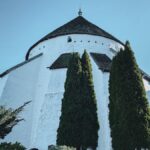
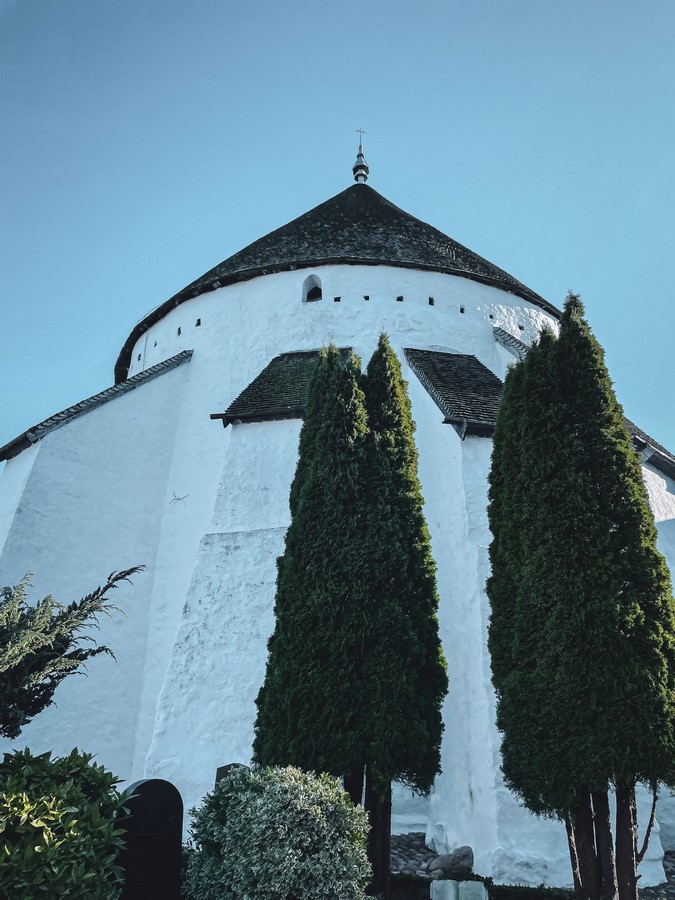
Probably constructed in 1150, Østerlar Round Church is a place of worship and a protective structure to ward off seafaring enemies. It has 2m thick walls with a double wall structure and a cavity filled with soil and gravel. Theories suggest that the shape of the church was a practical measure to make it impenetrable. Others surmise that the structure might allude to an inspiration or connection to the Knights Templar. There’s also speculation that the church might have functioned as an observatory. Another detail of the church’s construction is that the original building featured no roof. The addition of a roof only took place once the structure no longer needed to play a defensive role. Moreover, the present one, featuring wooden shingles made of Bornholm oak, only dates back to 1744.
Looking Forward To A Sustainable Future
Stepping onto Bornholm, one will find traces of its history scattered across the island. But one will also find people adamant about creating a better future. Local politicians, business representatives and citizens of Bornholm have developed eight goals for Bornholm’s sustainable development. Becoming fossil-free by 2040, producing carbon-neutral energy by 2025, and recycling or reusing all waste by 2032 (the year Bornholm’s waste incineration plant is slated to be decommissioned) are three of the ambitious goals part of the “Bright Green Island” strategy. Currently, solar, biomass, and wind power are used to fuel 100% of Bornholm’s energy and about 60-80% of its heat supply.
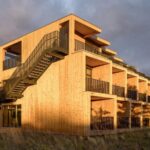
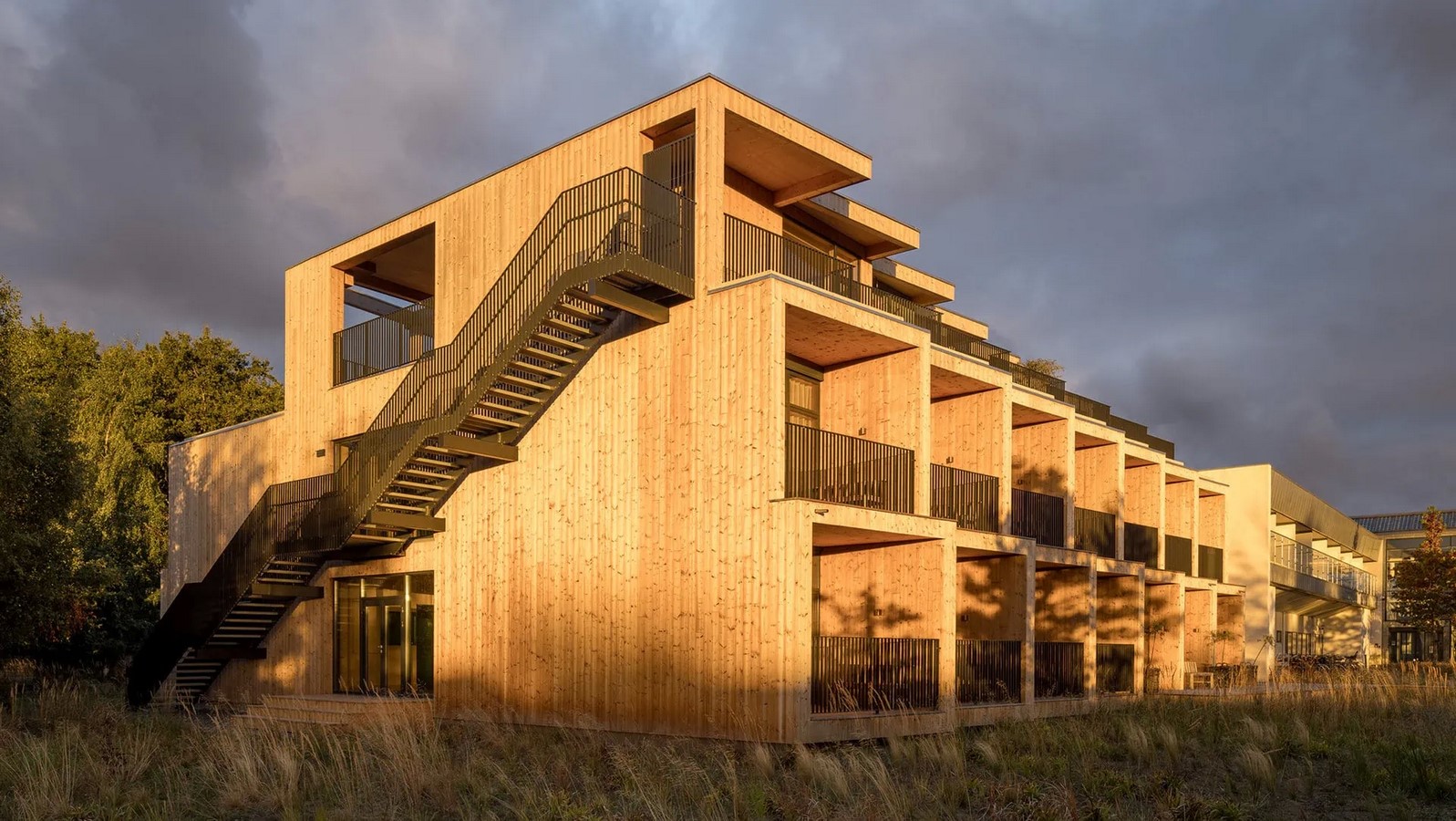
This aspiration has also inspired the architecture in the region. The Green Solution House in Bornholm by 3XN Architects is Denmark’s first climate-positive hotel and conference centre. It has the highest certification for a hotel building (silver in the DGNB system) and is Cradle to Cradle Certified. The latter means that all the materials used in constructing the building are either fully recyclable or biodegradable. The wood-based construction honours local materials and craft, and solar energy, abundant on the island known for its sunshine, runs the building. Smaller-scale examples include compostable couches and a wall decorated using green-speckled tiles made from old bottles.
Apart from all these, Bornholm also has a rich history of arts and crafts. The island’s earliest pottery vessels seem to have been introduced by the first farmers in the Neolithic age. Abundant natural raw materials, picturesque landscapes, great weather, and an artist community that reveres its well-preserved centuries-old techniques and embraces new thoughts and art forms have all helped solidify Bornholm’s name in the world’s ‘Artscape’. It is also the first region in Europe and the first island in the world titled “World Craft Region”.
With such cultural, historical, architectural, and geographical richness, it isn’t surprising that more and more of the world is recognising Bornholm. One can only look forward to seeing how this small Danish island with a population under 40,000 people will affect the course of the future.
References:
Discover Bornholm (no date) Bornholm Holidays Travel Guide | visitbornholm.com. Available at: https://visitbornholm.com/en/bornholm/explore.
Caballero, P. (2018) Hammershus Visitor Center / Arkitema architects, ArchDaily. Available at: https://www.archdaily.com/892314/hammershus-visitor-center-arkitema-architects.
Ellen (no date) ‘ØSTERLARS CHURCH’, HISTORICAL RAGBAG. Available at:
https://historicalragbag.com/2019/04/29/osterlars-church/.
Hammershus (2022) Destination Bornholm. Available at: https://bornholm.info/en/hammershus/.
Holland, M. (2022) This under-the-radar Danish island offers a peaceful-and increasingly sustainable-retreat, AFAR Media. Available at:
https://www.afar.com/magazine/how-danish-island-bornholm-has-become-a-hub-of-sustainable-innovation