James Jones & Sons Ltd are the UK’s largest sawmiller. The plant near Lockerbie is their flagship mill and is frequently used as a showcase for the company and modern sawmilling in general. Visitor groups include customers, the media, industry and government bodies with visitor groups up to 40 people.
– Client: James Jones & Sons Ltd.
– Architect: Konishi Gaffney Architects
– Structural Engineer: Entuitive
– M&E: Irons Foulner
– Project Manager: Asher Associates
– QS: McGowan Miller
– Contractor: David Hardie Engineering
– GIA: 285m2
– Construction Cost: £760,000
– Timber supply: James Jones & Sons
– Flooring / Cladding: Russwood
– Glazing: Gray & Dick, Velfac, Glazing Vision
– Internal Partitions: Scottish Window Solutions
Photography Copyright Dapple Photography
Konishi Gaffney were selected through an invited competition in 2017, with a brief to create a new building to welcome these visitors and provide additional office and ancillary staff accommodation.
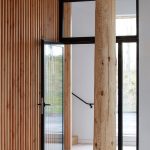
The building’s structure acts as a demonstration project, almost entirely erected from James Jones & Sons’ own products with an approach to minimising the use of steel and maximising timber. Glulam beams and JJI structural I-beams were used throughout the building in the walls, floors and roof, while an unprocessed tree trunk provides loadbearing support to the backbone of the building; a nod to the timber processing cycle.
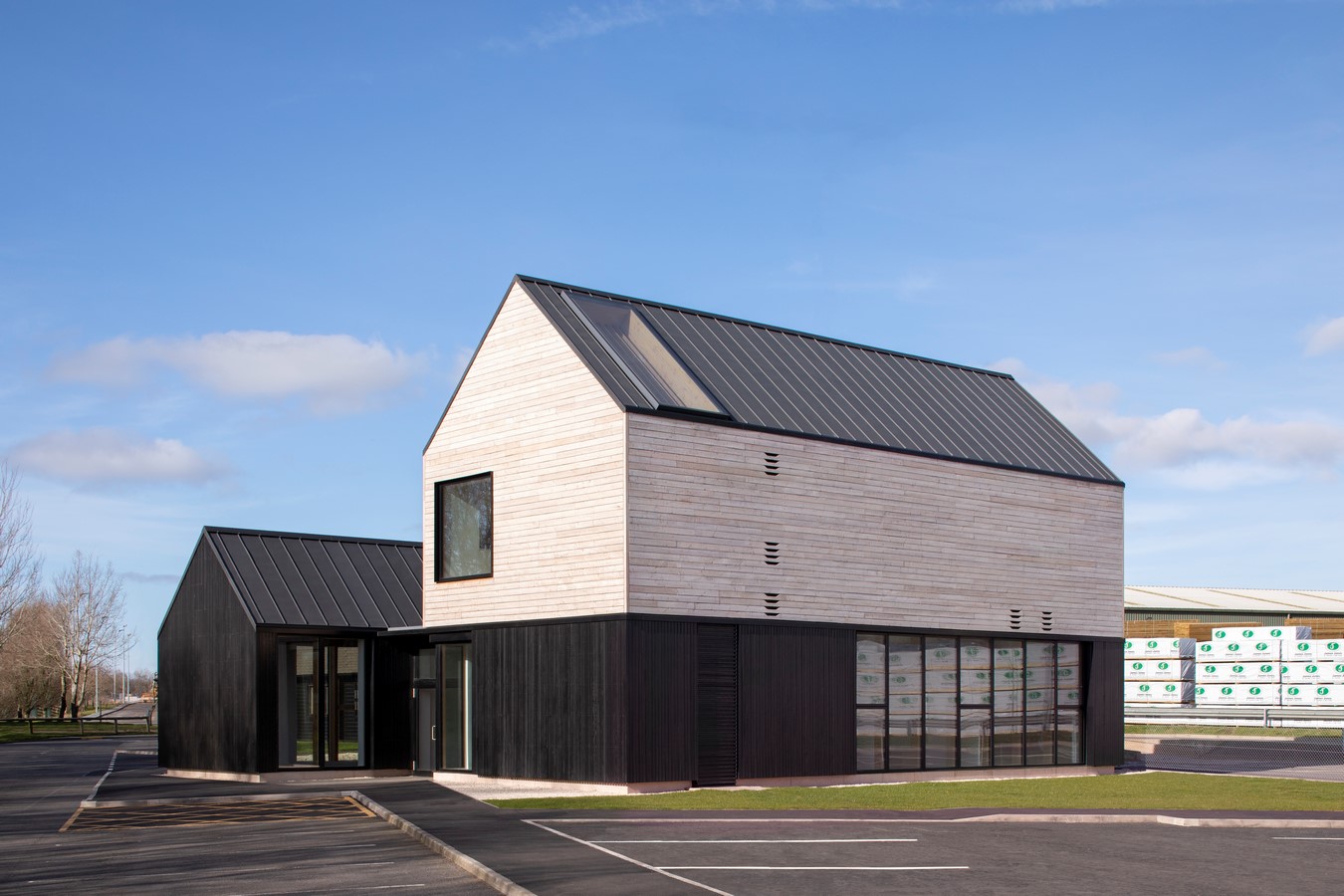
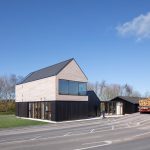
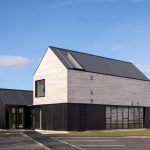
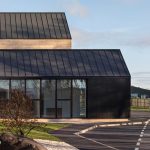
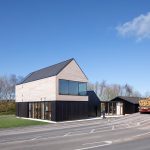
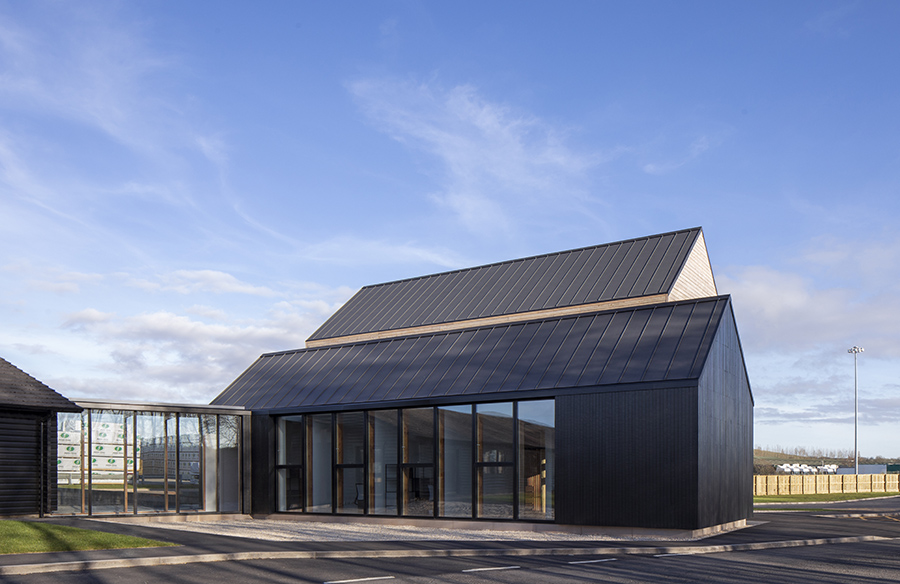
The building takes the form of two offset pitched volumes: a single storey office wing to the north and a two-storey volume to the south which houses the reception, meeting rooms and the conference space above. A simple, unheated, glass link building connects the new building to the old office. The 1st floor is raised to give panoramic views across the timber yard and over the constant stream of unprocessed logs to the mill, which is directly below this space.
The walls are formed with an innovative double-leafed, offset structure, using James Jones & Sons’ proprietary timber JJI joists, to minimise cold bridges. These extra thick walls, at 430mm deep, allowed sufficient depth to use environmentally friendly insulation (not polyurethane foam based) with excellent thermal performance. It also facilitated a deeper articulation of window reveals in an area of Scotland known for its high rainfall.

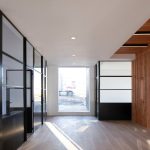
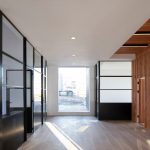
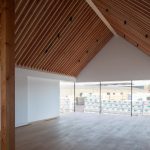
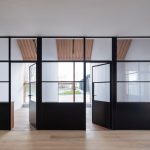
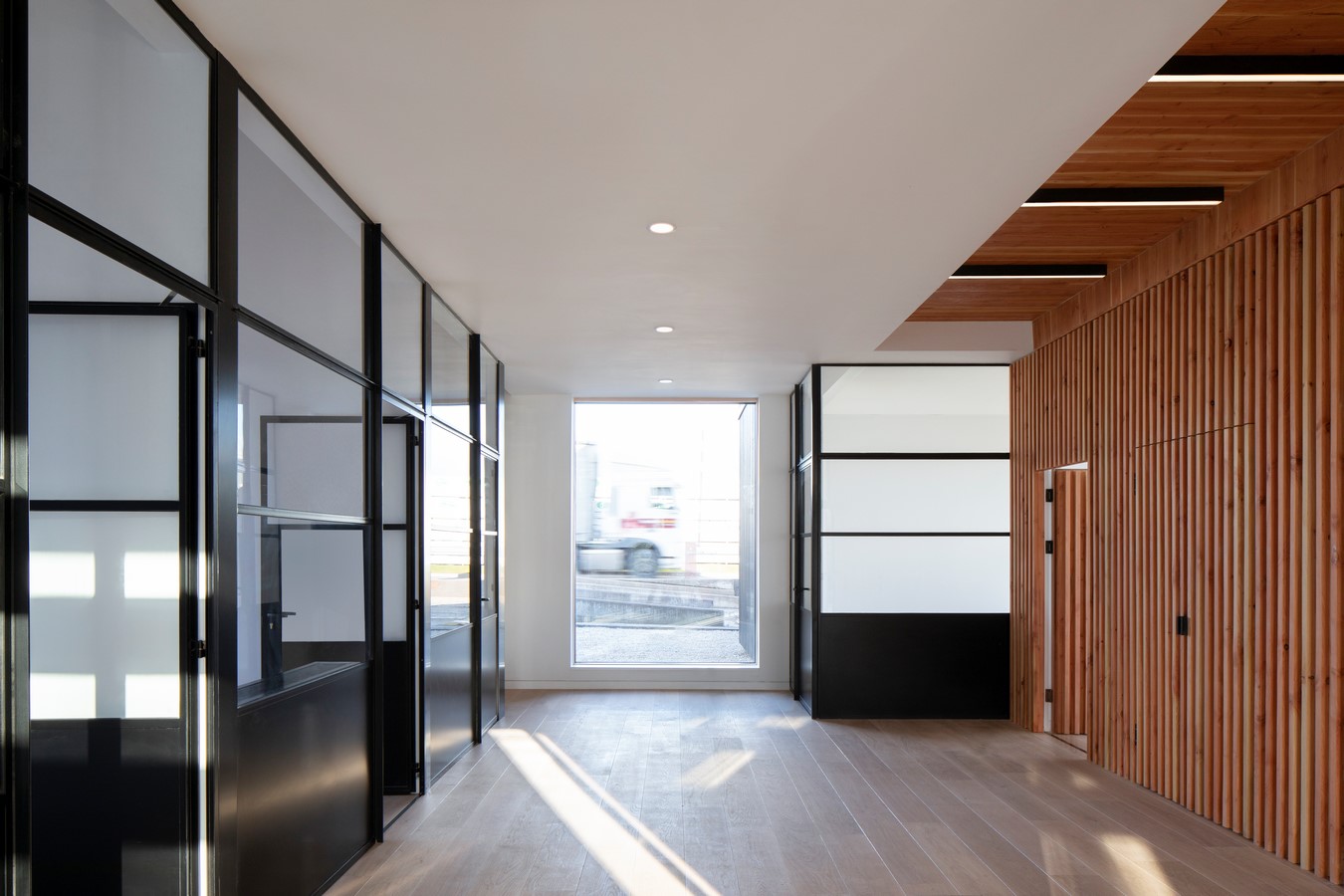
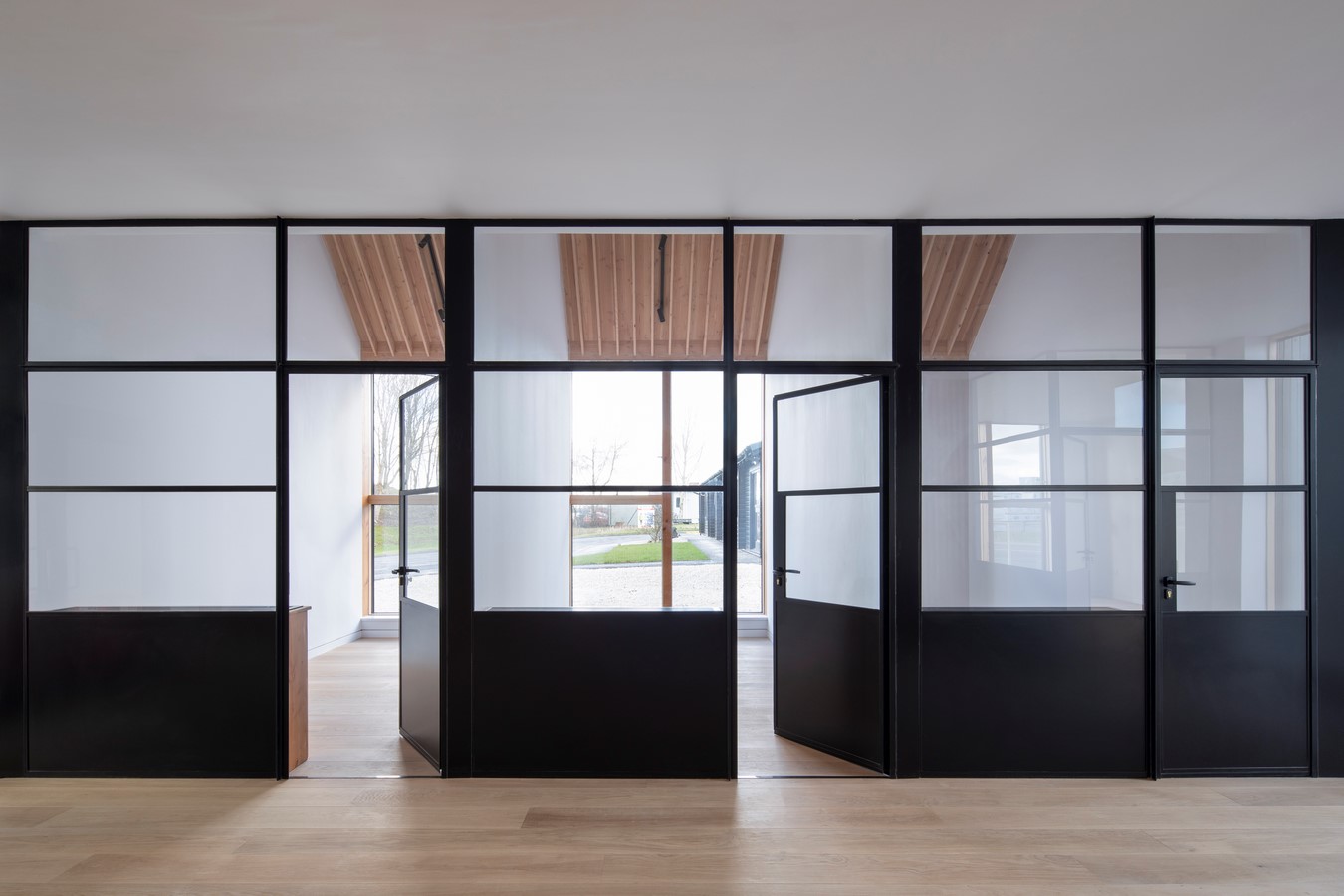
Internally the material palette is restrained; white plaster, black framed Crittall-style doors and whitewashed oak flooring (the only hardwood in an otherwise softwood building). Douglas Fir has been extensively used in the interior for its stability and characteristic pink hue. The pitched roofs feature closely centred and very narrow Douglas Fir rafters, 160mm deep by 25mm wide that bring rhythm and warmth to the spaces. This pattern is echoed in the overclad reception wall and the balustrade to the staircase, top lit by the full length rooflight above.
Externally Scottish larch was specified with black stained, narrow, vertical cladding on the lower storey of the building. Above this, the horizontal larch cladding is finished with a water-based silicate treatment that preserves the timber while accelerating and evening out the weathering.
The ‘Anthrazinc’ roof with concealed rainwater goods and full height black aluminium windows bring a quiet order to the simple form of the building, placing the spotlight on the natural materials.
The building’s environmental agenda goes beyond the extensive use of timber: an air source heat pump provides a renewable source of heating and summer cooling to the building. The various vents and ducts for this system, the bathrooms and kitchen are carefully expressed in the timber cladding on the South Elevation. Electric car charging further demonstrates the company’s commitment to its inherently green credentials.