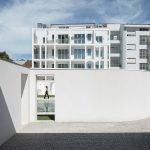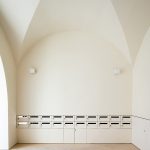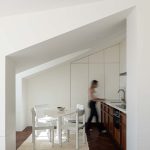
What was once a civil courtroom now unfolds as a place to dwell. The former institutional structure has been reconfigured into 16 long-stay residential units, transforming civic rigidity into domestic spatiality through a position of critical reuse and architectural editing. Rather than erase its past, the intervention reframes it — not as a relic, but as spatial material shaped by memory, geometry, and inhabitation.
Project Name: VILA CATARINA APARTMENTS
Studio Name: MASSLAB
Location: Porto, Portugal
Year: 2018-2024
Gross built area: 2.650 m2
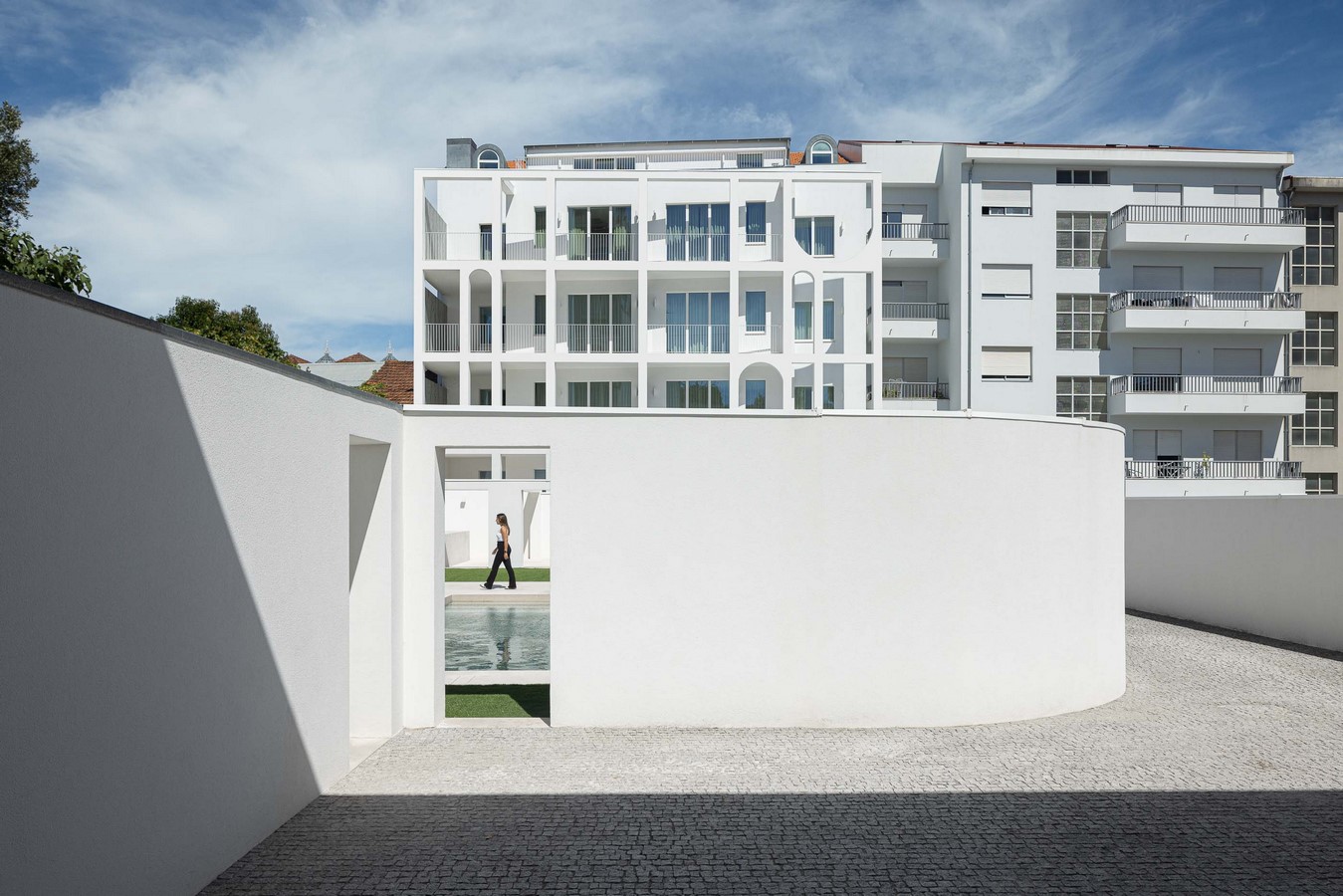
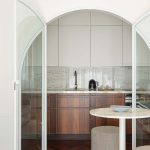
The internal layout draws inspiration from early 20th-century bourgeois homes, where rooms unfolded in sequence, without corridors.
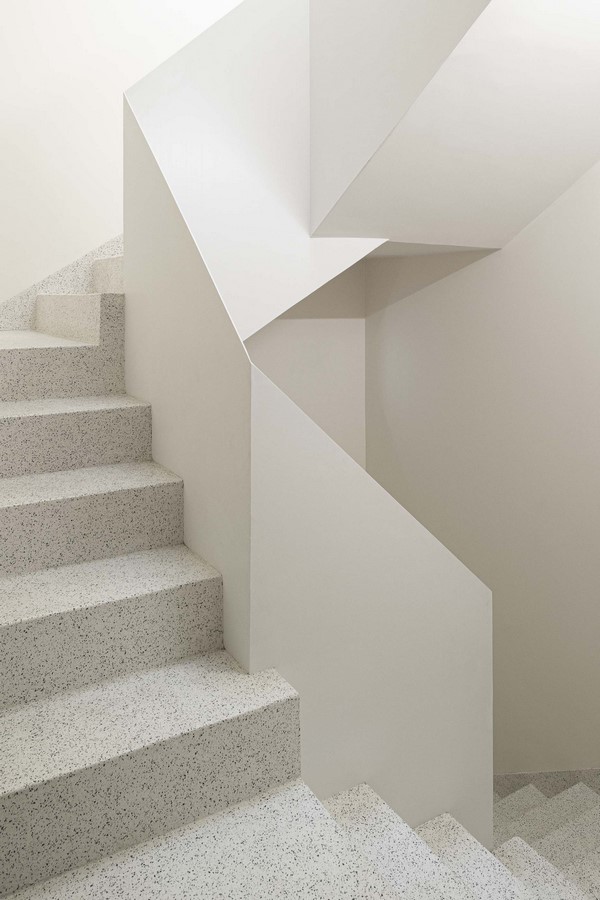
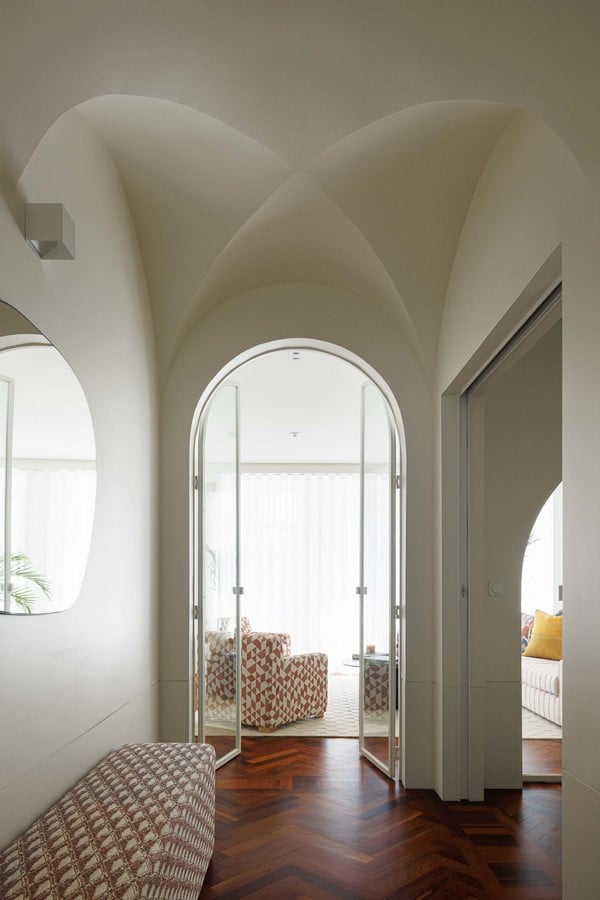
This distributive logic informs the new apartments, in which circulation emerges through spatial transition rather than direct path. Vaulted ceilings punctuate each room, varying in scale and geometry depending on function, introducing a silent hierarchy that renders everyday domesticity into a spatially ceremonial register.
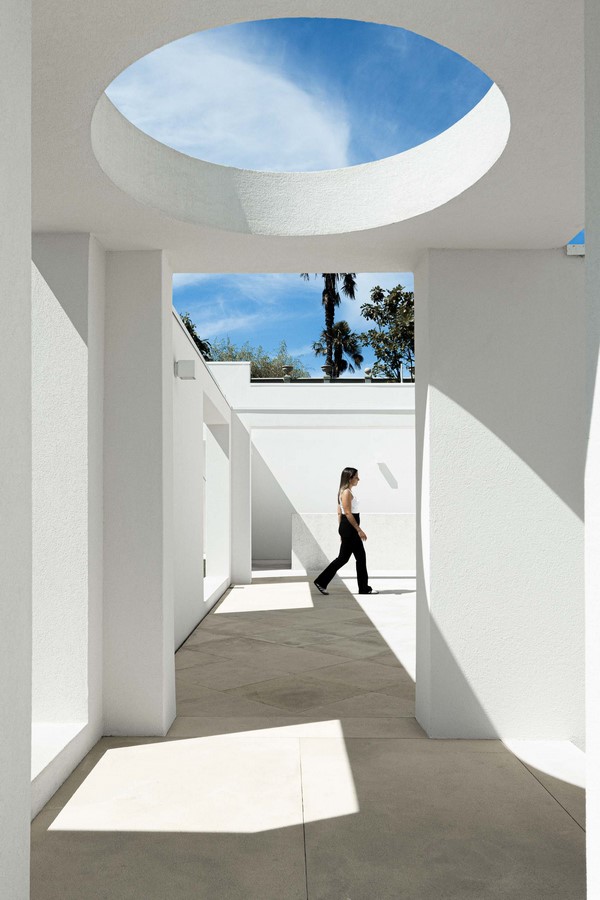
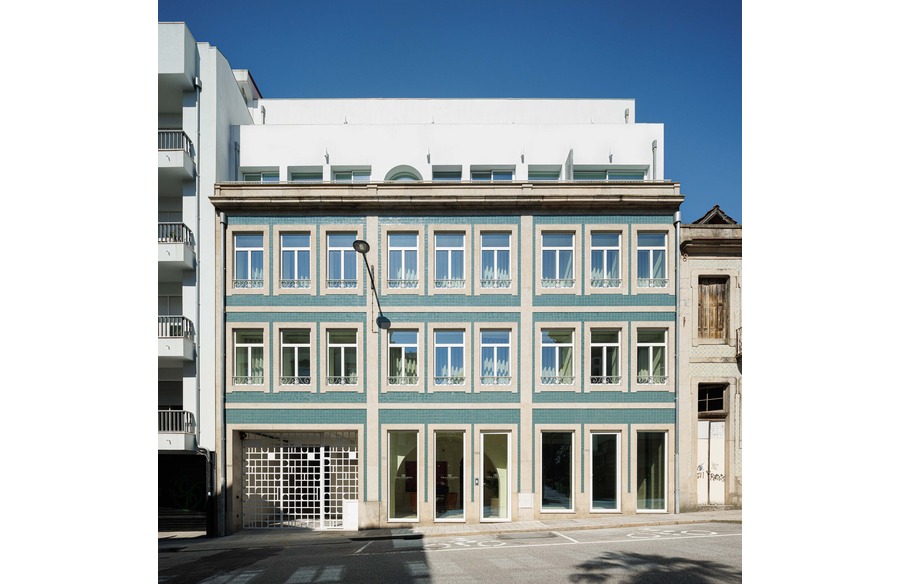
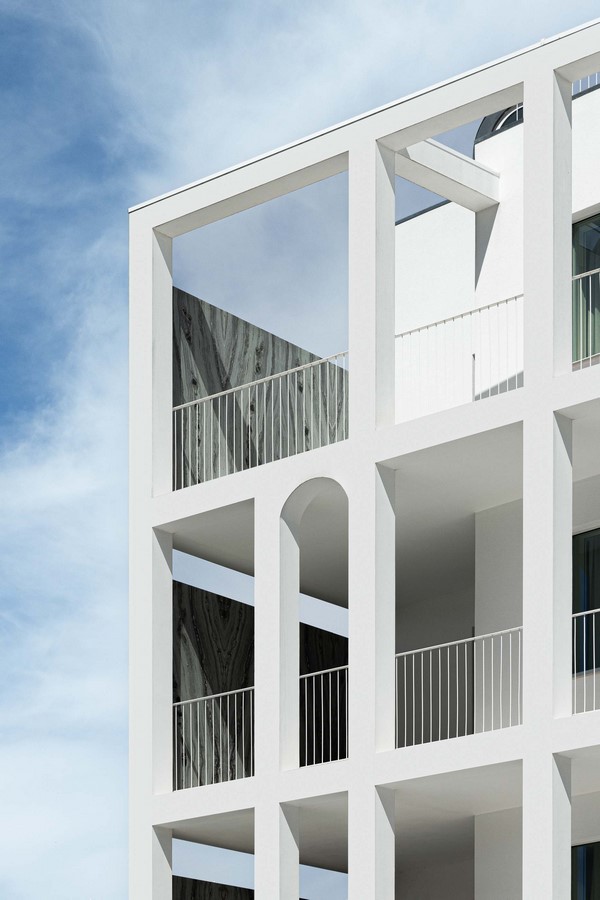
Externally, the intervention articulates dual gestures. The main street-facing façade is restored with composure, respecting its original stonework and introducing new blue ceramic tiling as a subtle reference to its historical identity. The rear elevation (once fragmented and technically overloaded) is reimagined through a second skin: a geometric structure that expands the envelope and projects balconies overlooking the courtyard and pool. This addition echoes the formal vocabulary of the interiors, unifying mass, void, and rhythm.
As an example of how architectural intelligence can reclaim built or obsolete volumes, Vila Catarina is a prototype of adaptive reuse. In a context where the housing question grows increasingly urgent, projects like this explore how domestic space can emerge from what already exists into contemporary programs, without nostalgia, but with cultural and spatial care.