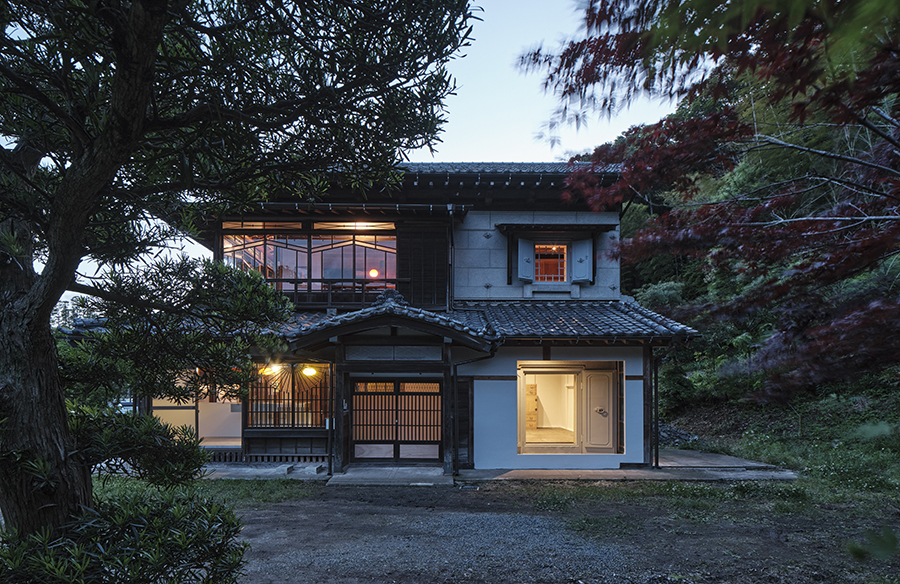
Situated in the quiet surroundings of Kimitsu, Chiba, this 1960s wooden house stood vacant for years before its owner decided to restore it. Initially attempting the renovation himself, he soon realized the project required more time and expertise than he could dedicate.
Project Name: Kimitsu House
Studio Name: Roovice
Year: 2024
Dimension: 104.33 m2
Lead architect & Site Manager: ROOVICE | Koji Kato
Photography: Akira Nakamura
Seeking a way to bring the house back to life, he turned to Roovice’s Kariage initiative—an effort that breathes new life into vacant properties while preserving their history. By revitalizing these spaces at no cost to owners, the initiative offers a practical response to Japan’s growing akiya (vacant property) challenge.
A Home with a Story
This house embodies the region’s traditional craftsmanship, featuring natural materials like wood and stone. Many original elements remained untouched, including a kura—a traditional storage building constructed with stone bricks or tiles and reinforced with iron doors to protect valuables from fire. Rather than introducing drastic alterations, the renovation aimed to preserve and enhance these features while making the home more adaptable for modern living.
Restoring the Kura and Its Extension
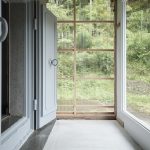
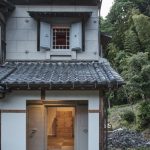
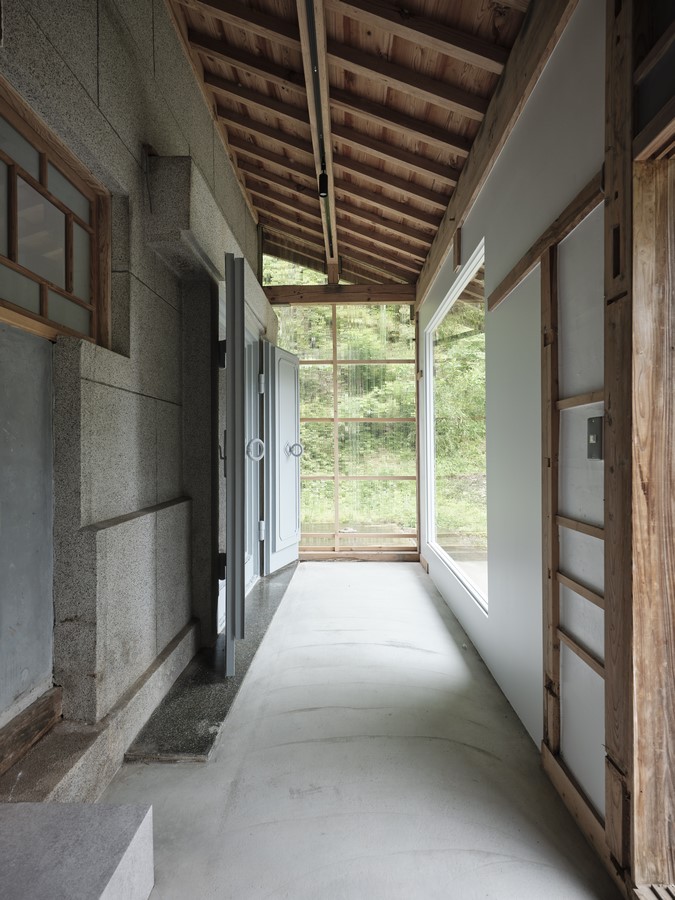
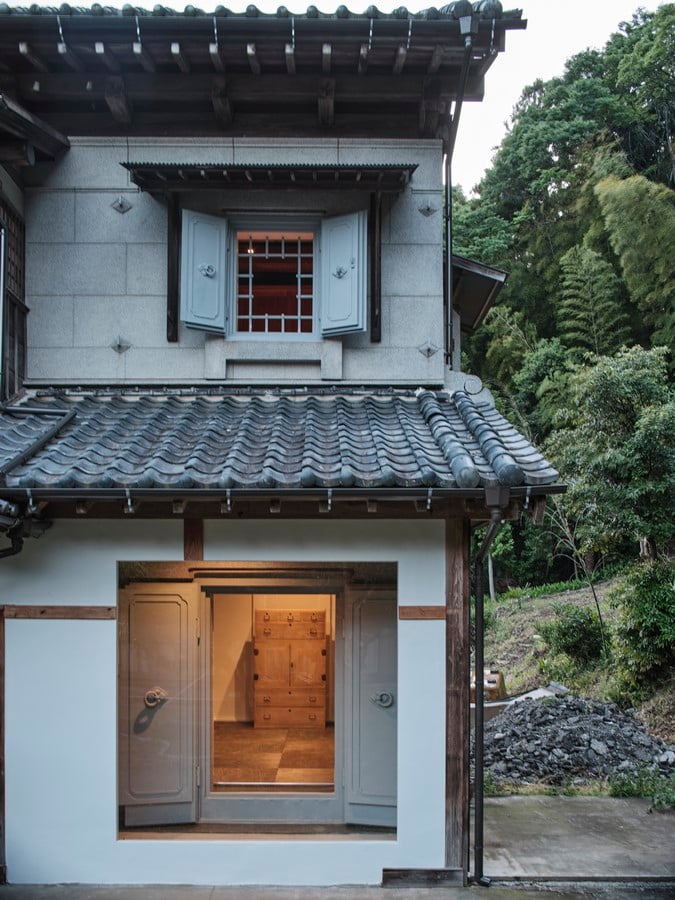
Over the years, an extension partially obscured the kura’s entrance. To highlight its striking double doors, the later-added sliding doors were replaced with a new wall, and a 2m × 2m fixed window was cut into the façade. This design frames the kura and its freshly repainted entrance, making it a defining visual element of the home.
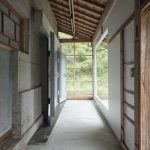
Inside, a larch plywood floor finished in a gray EP wipe-off coating was installed over the original soil floor. Clear corrugated polycarbonate panels were added to the lateral wall of the kura’s extension, allowing natural light to filter in while maintaining a connection to the surroundings.
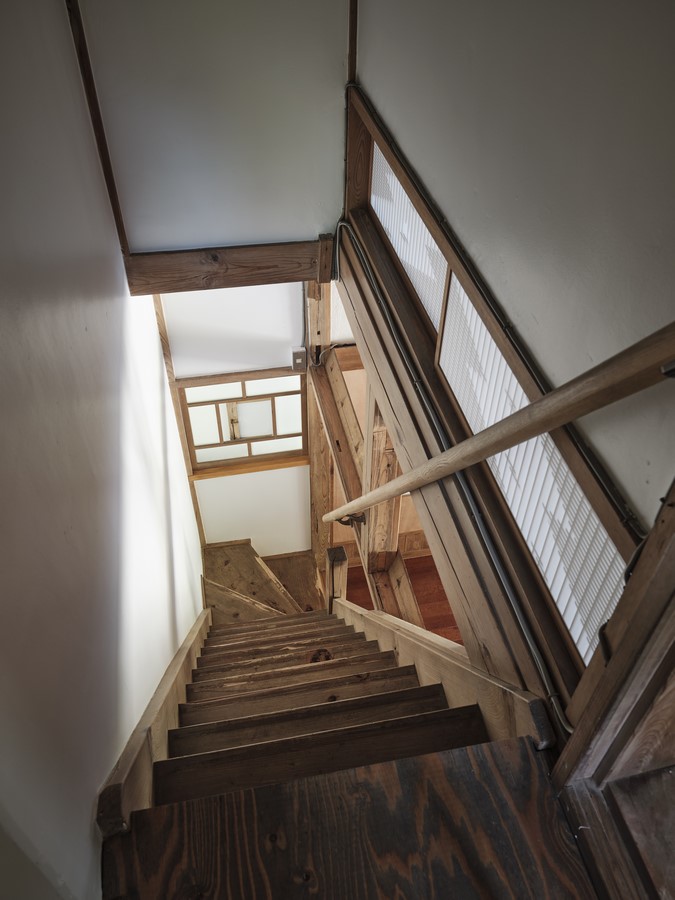
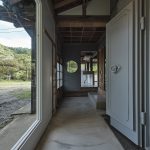
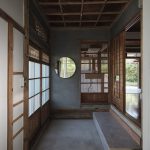
To enhance the space’s functionality, the wall separating the kura from the main house was removed, creating a more flexible layout. The division between their entrances was also taken down, and the extended entrance area was finished with mortar flooring. Additionally, a new opening beneath the staircase on the first floor now connects the kura to the main living area, unlocking new possibilities for its use.
A New Layout for Contemporary Living
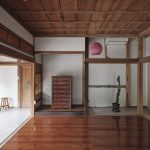
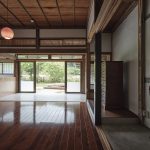
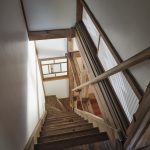
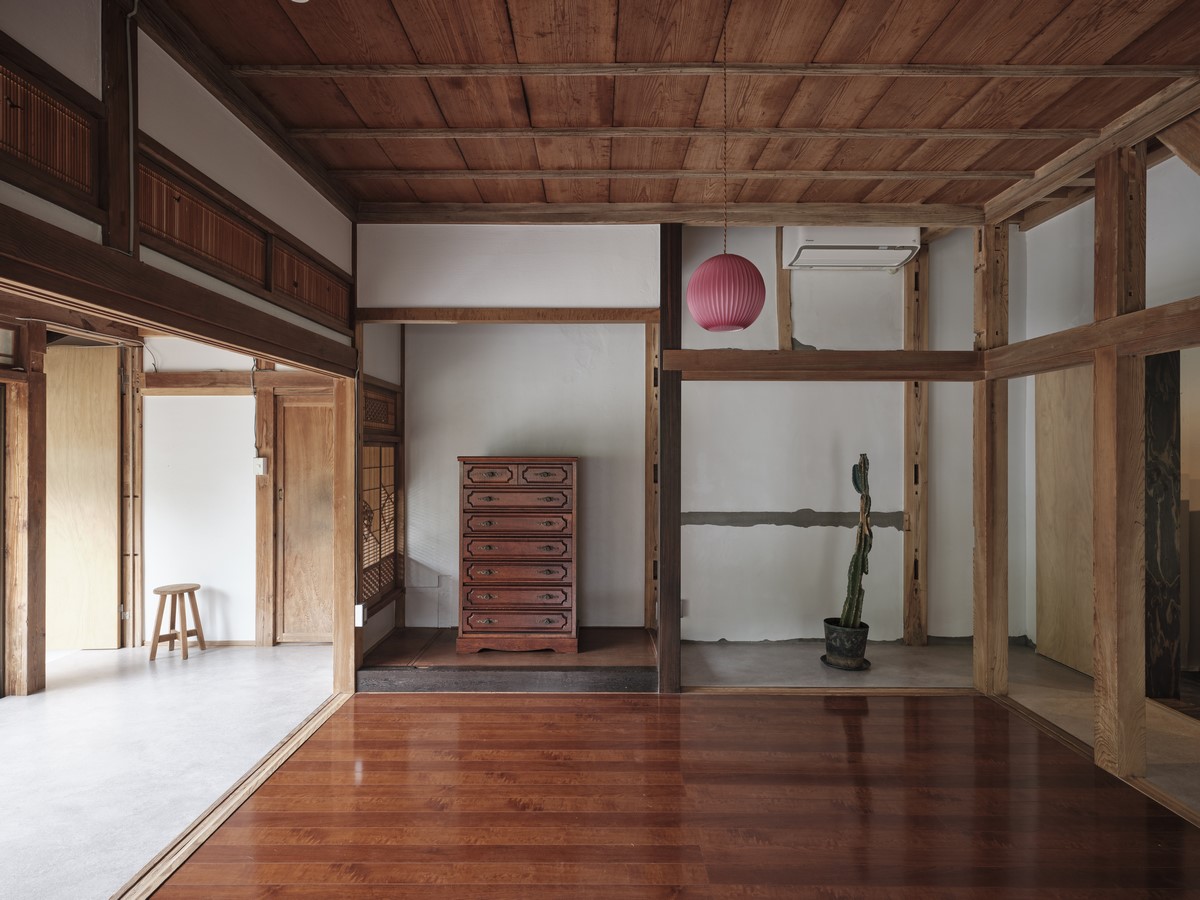
On the first floor, partitions were removed to create a more open-plan living area. The previously enclosed staircase was exposed, allowing more light to flow through the space and improving visual continuity.
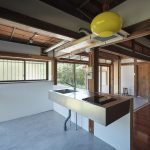
The kitchen was repositioned to face the living room, enhancing the home’s spatial flow. A pony wall was introduced to define the kitchen area without closing it off from the rest of the house. In contrast to the original wooden flooring, gray PVC sheets were applied in the kitchen, the former engawa (exterior corridor), built-in wardrobe, and under the stairs.
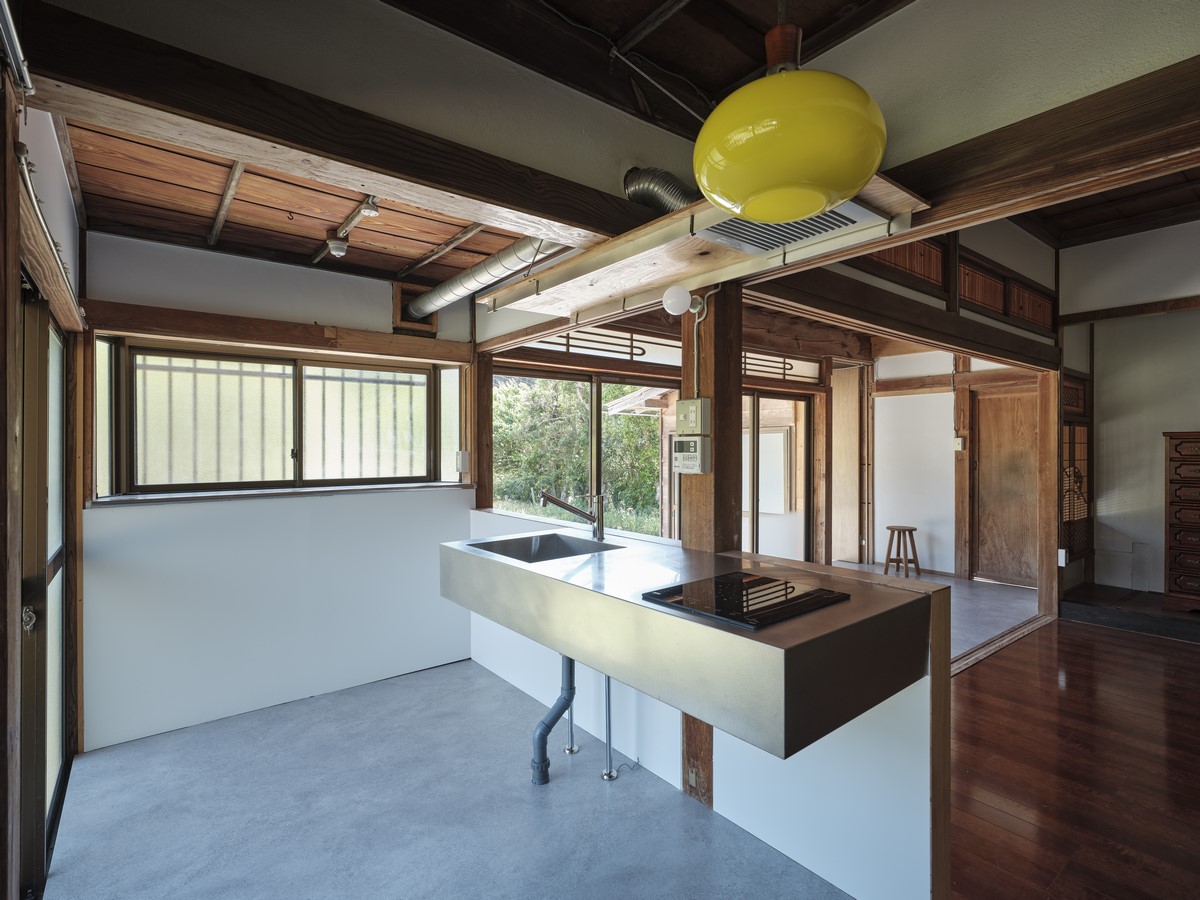
All walls were painted white, but traces of the removed built-in wardrobe were intentionally left visible, accentuated by painting only the surrounding areas—celebrating the home’s history rather than concealing it.
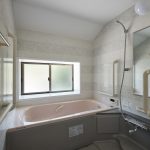
Previously, the laundry room was only accessible from outside. To improve functionality, a new interior doorway was added. In the bathroom, a new sink was installed on the existing counter, while a mirror was mounted directly onto the original ornamental window, merging past and present.
Preserving Tradition on the Second Floor
Minimal changes were made upstairs to maintain its original charm. The tatami in the main room were refurbished, and the space was left largely untouched. In the tokonoma (decorative alcove), a stainless steel pole was introduced, cutting through the partition wall to create a space for hanging clothes—adding a functional element while preserving the alcove’s presence.
The kura storage space, accessible from the second floor, received larch plywood flooring with a red EP wipe-off coating. The ceiling boards were removed, exposing the original structure and revealing layers of the home’s history. The two traditional windows, once fitted with iron bars, were subtly modified by cutting an opening in the center, allowing more light while maintaining their historical integrity. The original sliding doors and window shutters were also repainted.
Blending Tradition with Modern Adaptation
This renovation carefully balances preservation and modernization, ensuring the house remains connected to its past while becoming more practical for contemporary living. By highlighting key architectural features and making subtle yet thoughtful updates, the home is once again a livable, adaptable space. The project serves as a testament to how sensitive, minimal interventions can breathe new life into a long-vacant home—allowing it to be used and appreciated once more.