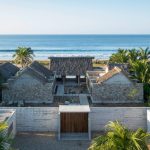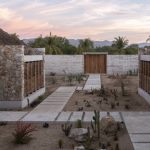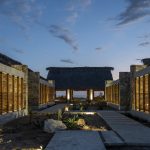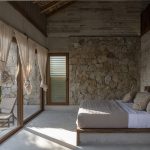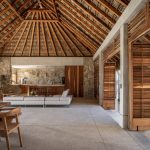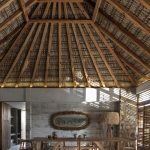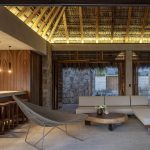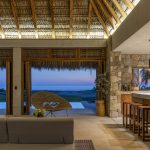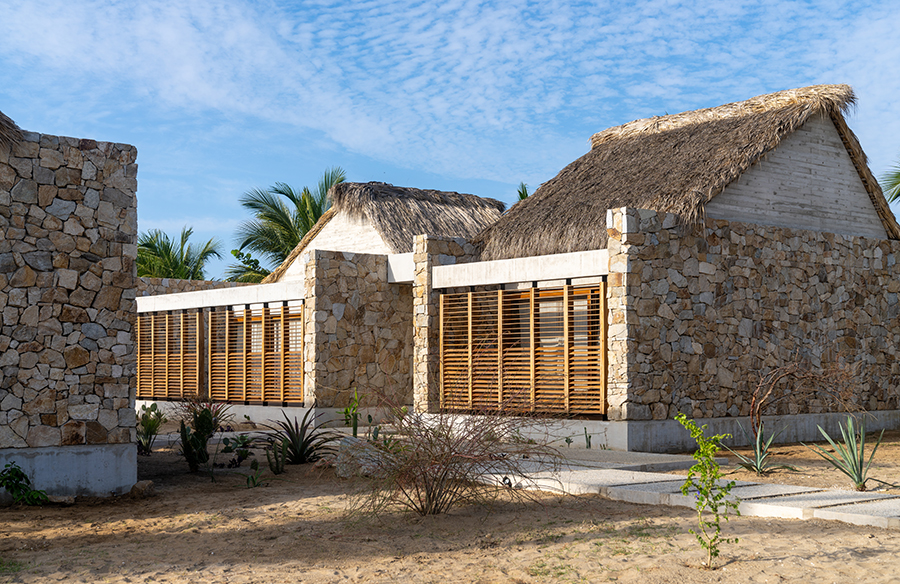
Nestled along the Pacific coast in Puerto Escondido, Oaxaca, Tate House is an architectural exploration of place, materiality, and spatial continuity. Rather than imposing itself on the landscape, the design seeks to uncover and enhance the site’s natural rhythms, framing the surrounding environment through a carefully considered arrangement of pavilions and open spaces.
Project Name: Tate House
Studio Name: Materia+Gustavo Carmona
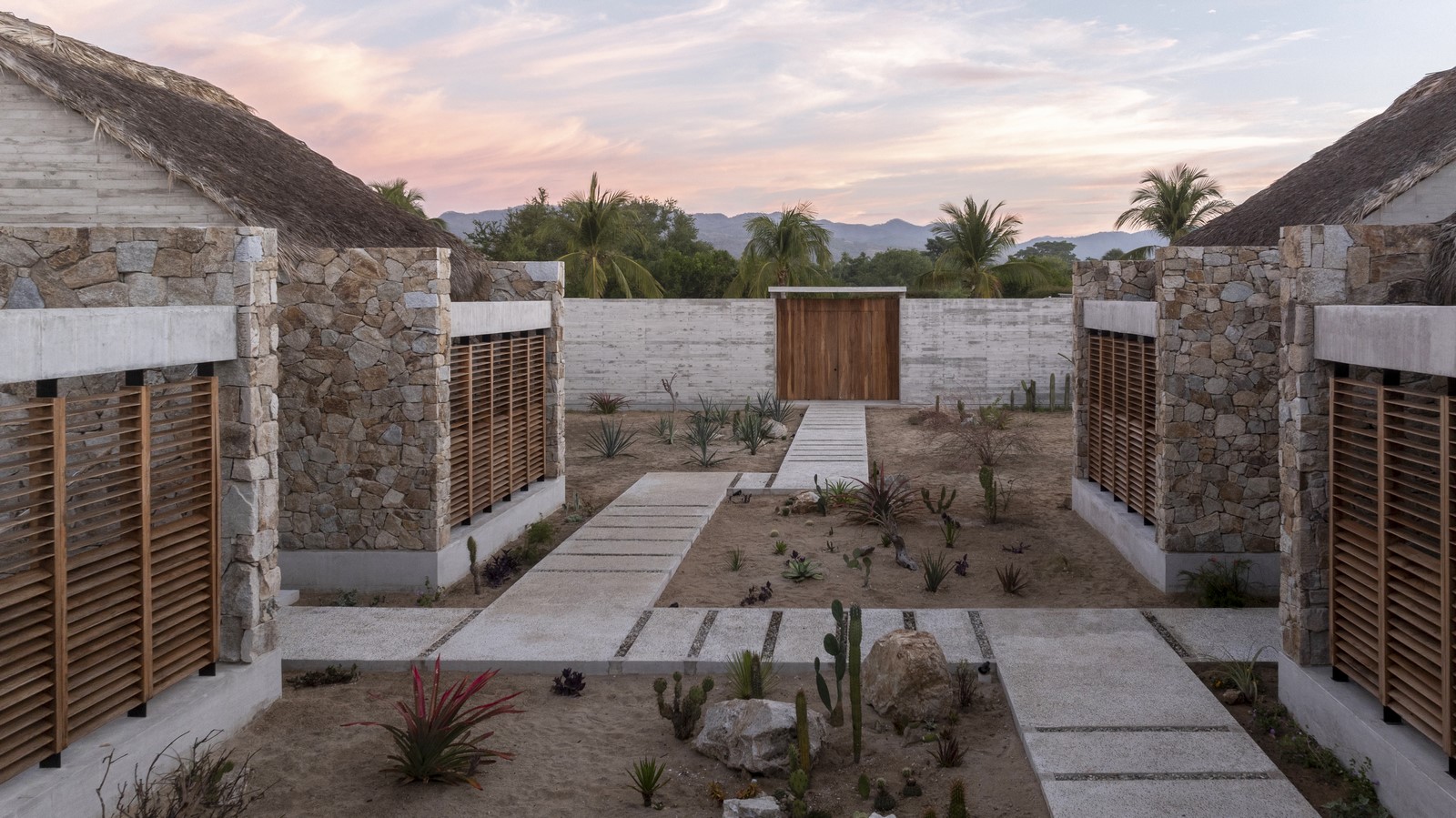
A defining element of the project is its seamless integration with nature. The house is designed as a series of interconnected modules that prioritize outdoor areas, shaping pathways and zones of contemplation. The boundaries between open and enclosed spaces are deliberately blurred, enhancing the experience of the site as a whole.
Three distinct garden typologies shape the landscape strategy. A natural dune extends from the living spaces to the ocean, maintaining an uninterrupted view and a sense of openness. On the lateral sides of the property, denser native vegetation ensures privacy while reinforcing the region’s biodiversity. At the heart of the project, a botanical desert garden highlights endemic species, weaving together agaves, cacti, and tropical trees such as pochote, copal, and guayacán. The seasonal cycles of these plants create an ever-evolving dialogue between the architecture and its surroundings.
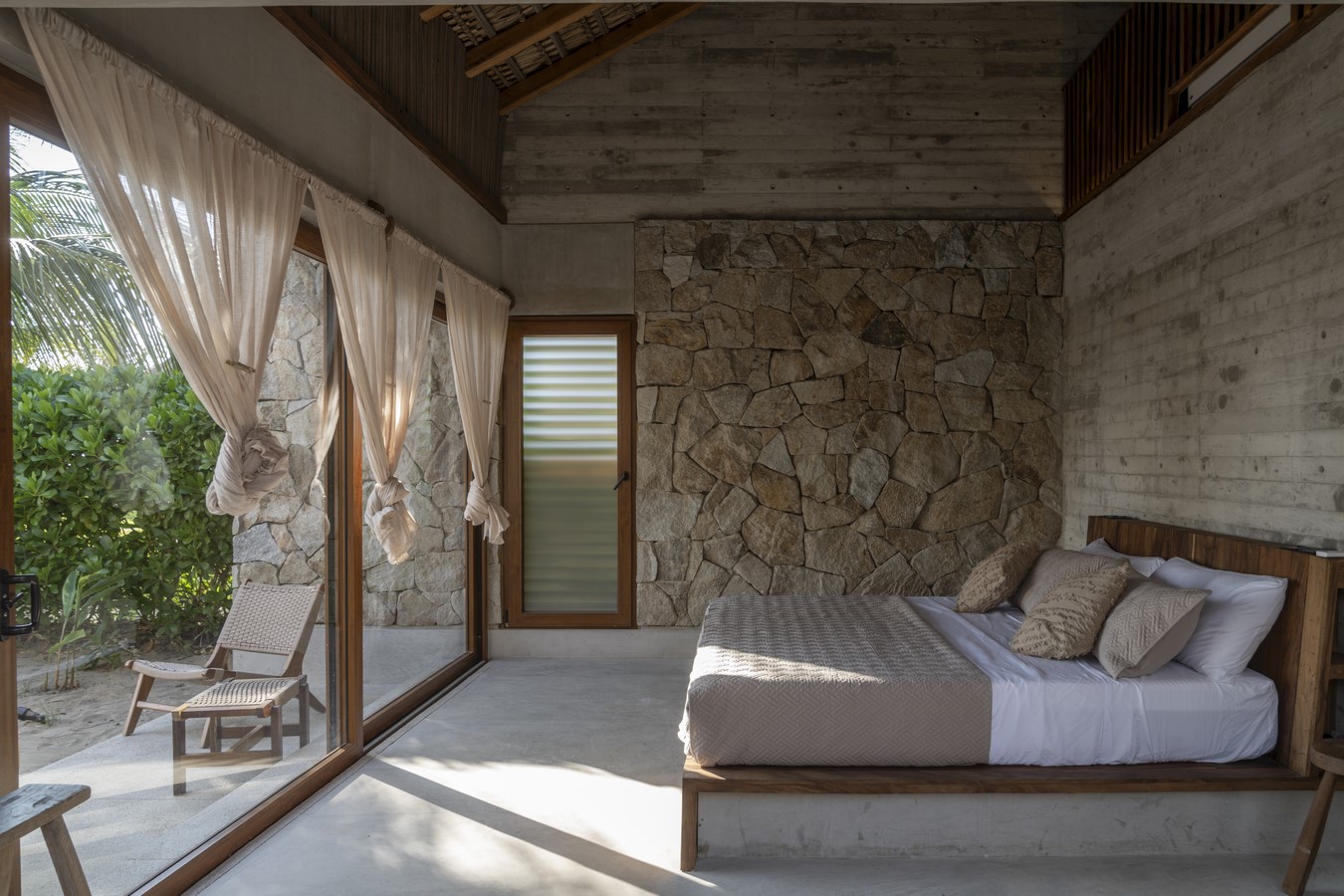
Materiality plays a crucial role in defining the project’s character. Drawing from Oaxaca’s rich craft traditions, the construction relies on local materials and straightforward techniques. Solid masonry volumes rest on a concrete slab, establishing a strong horizontal presence. These are complemented by wooden and palm-thatched palapas, where private terraces are enclosed by wooden lattices. The interplay between solid and void, stone and wood, mass and lightness, reflects a tectonic language deeply connected to place.
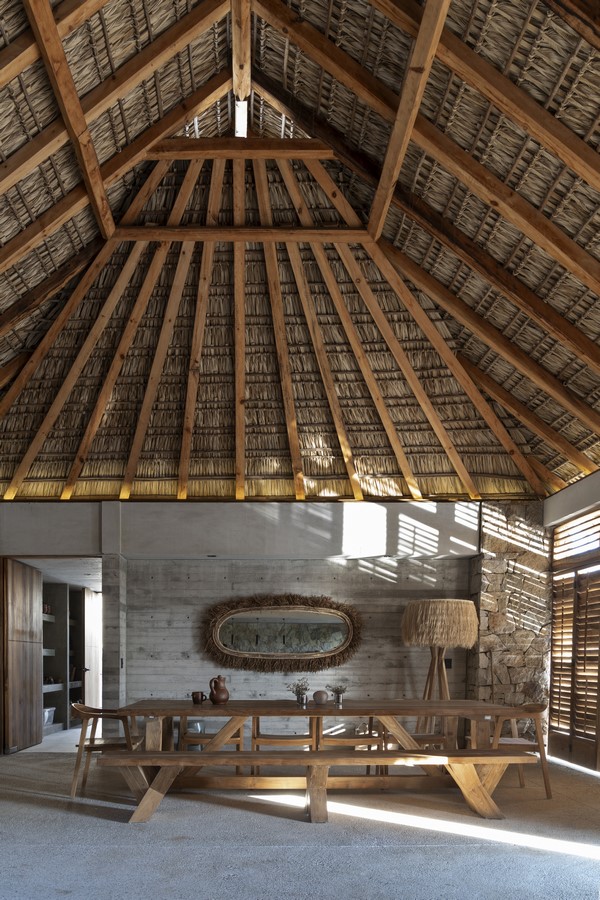
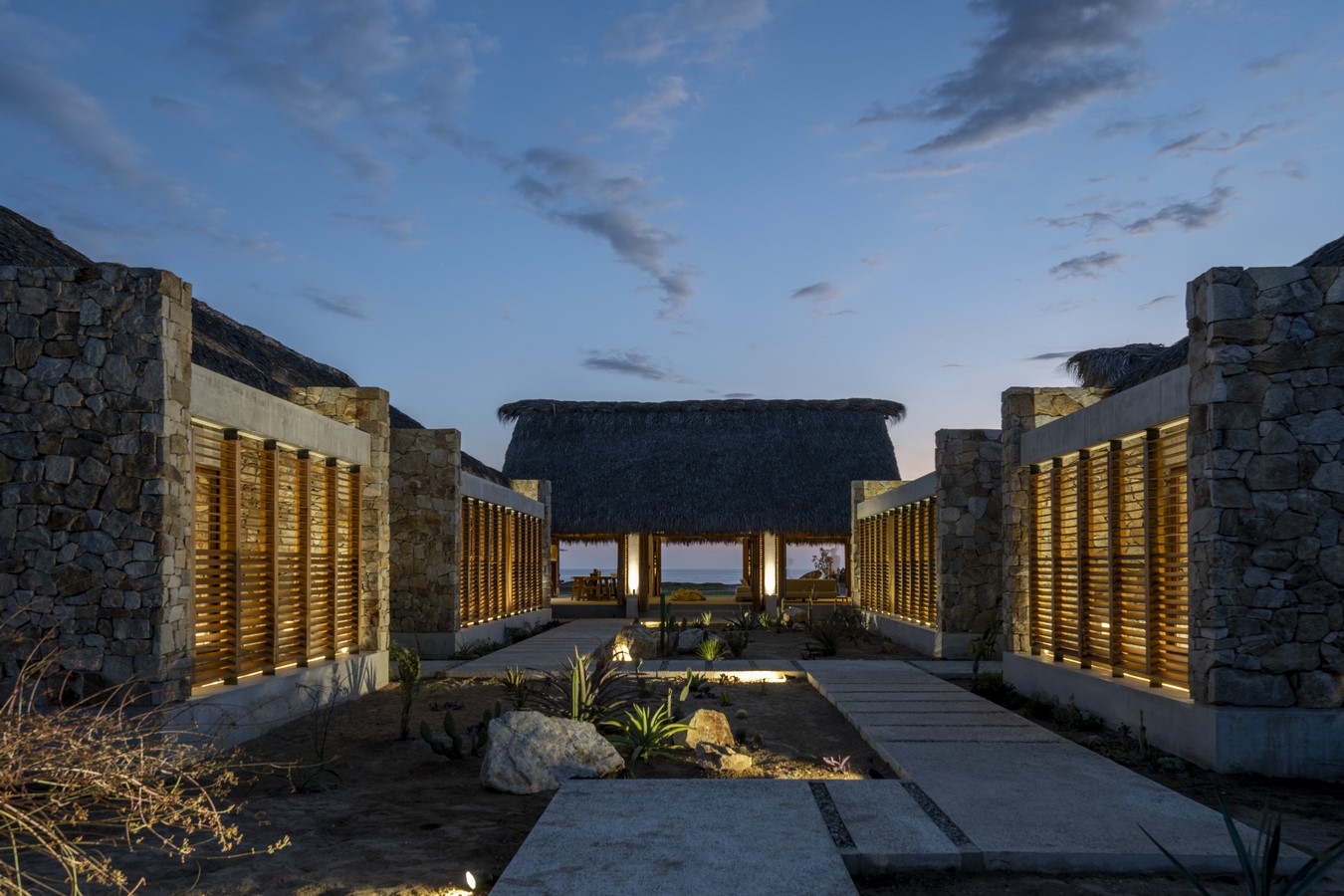
The architectural composition is one of rhythm and repetition, where materials are articulated through the gaps between them, emphasizing the transitions of light and shadow throughout the day. At the heart of the project, the central pavilion functions as a social and gathering space. Positioned as a threshold between the built and the natural, it offers framed views of the Pacific Ocean to the west and the Oaxacan mountains to the east, reinforcing a profound sense of belonging to the landscape.
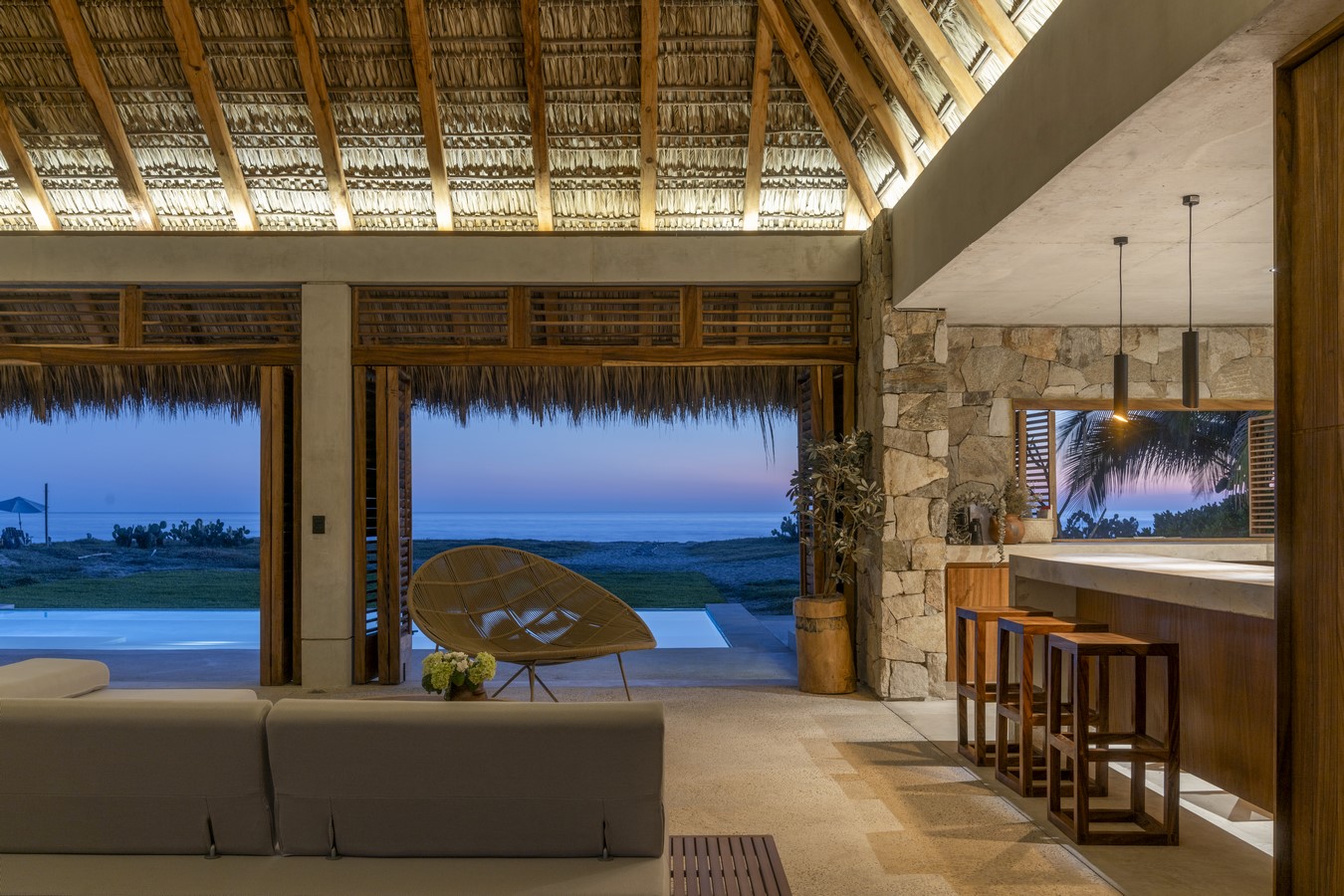
Tate House is more than a retreat—it is an immersive experience of architecture in dialogue with its environment. Through a careful balance of space, material, and landscape, the project creates a living environment that is both rooted in tradition and attuned to the present.