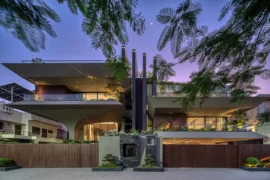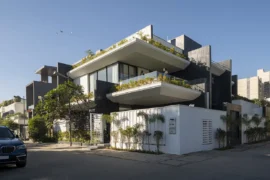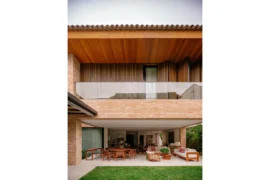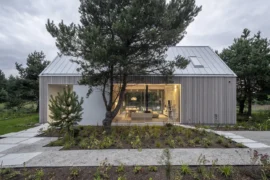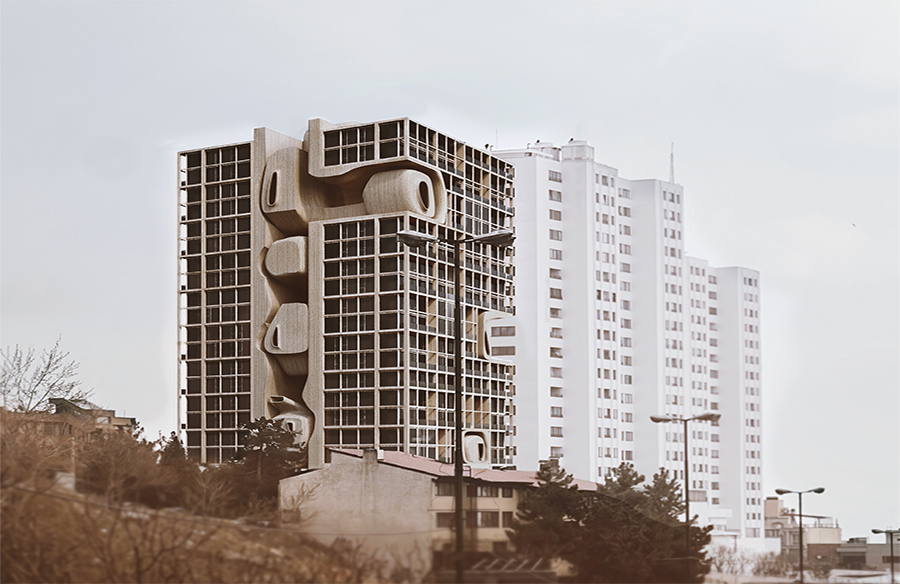
A challenge was issued: to explore the potential of a modern dwelling transformed beyond its basic function. This challenge is embodied in “Object Beyond House,” an experiment in architecture. Here, self-sufficiency is pursued through the maximization of inherent capabilities.
Project Name: Object Beyond House
Studio Name: Kalbod Design Studio
Principal Architect: Mohamad Rahimizadeh
Lead Architect: Shaqayeq Nemati
Architect: Nastaran Shabanzadeh
Presentation: Asha Atashband, Tanaz AhmadiNasab
Visualization: Ziba Baghban
R&D: Pegah Samei, Pardis Ahmadi

The project’s architectural concept emerges organically, free from external influence. Through a process of heterogeneous growth, a novel spatial experience is revealed. A hybrid space unfolds, where the private realm of living is paradoxically intertwined with public gallery areas. As architect Valerio Olgiati suggests, the surprise lies not in theatricality, but in the fostering of a mental dialogue between the user and the building itself.

A dynamic relationship is established between the object and its boundaries. Breaches are made at times, while inward retreats occur at others. Strategic openings welcome light, and a seamless integration with the facade is achieved at specific points. These moments of interplay initiate a dialogue between humans and architecture. The form of the building, no longer solely decipherable from the outside, compels exploration from within.

The concept of “being” within space is prioritized. As one navigates the galleries, a sense of ambiguity is introduced. The confines of the cube are undeniable, yet the experience transcends them. Shifting ceiling heights, the interplay of natural light, and strategically placed voids that subtly reference vertical location – all contribute to a disorienting yet novel spatial experience.

“Object Beyond House” pushes the boundaries of architectural exploration. It does so by independently testing the inherent capabilities and self-organizing potential of its form. Ultimately, a novel experimental path for the future of design is sought.